SOUNDTRACK: NEIL HALSTED-“Wittgenstein’s Arm” (2012).
Halsted was a founder of the band Slowdive, who I knew somewhat. I don’t know anything of his solo work, although his name rang a little familiar.
This is a very pretty, slow acoustic ballad. Halsted’s voice is whispery and with proper folk inflections. The chorus has a very catchy melody. And yet the lyrics are really dark and sad.
And while there is a mention of an arm in the song, there’s no mention of Wittgenstein.
You can check out the video here:
[READ: November 3, 2013] Wittgenstein’s Mistress p. 181-end
This peculiar book draws to a close in much the same way that it started. There are a few interesting revelations or, if not revelations, then perhaps ponderables as to the nature of just what our narrator (who is apparently named Helen) is doing.
As this last section opens, she is revisiting some more of the things that have been on her mind for the book—the waterlogged atlas that lies flat on the shelf and that blasted arthritic should/ankle .
I have been wondering about her constant references to her period. In addition to simply being something that happens to her which she is recording, I have to wonder if it is a nod to her fertility and the fact that since she is the last person alive she will never bear children. On a slightly related note, I also have to wonder if her focus on rape means she was once raped. It’s not necessarily the case of course, but there is a lot of it in the book, like this next mention: (more…)
SOUNDTRACK: PANIC-Requiem for Martin Heidegger (1978).
Panic was a Dutch punk band. Their album 13 came out in 1978 and “Requiem for Martin Heidegger” was the final track. I love the album cover (and no I had never heard of this band either).
The lyrics are wonderfully simple (and no you won’t learn a thing about the man) with the completely singable chorus of “Hi-Degger, Hi-Degger, Hi-Degger, Hi-Degger, Hi!”
There are some other lyrics (including ein, zwei, drei, vier) and “Is he in heaven, is he in hell, where has he gone? no one can tell.”
There’s some introductory chatter which I think is in German, but may be in Dutch. But that’s all irrelevant, because this is three minutes of classic 70s punk. And the video is a hoot too.
[READ: October 30, 2013] Wittgenstein’s Mistress p. 120-180
Although I read the first half of this book rather quickly, I took some time off before reading this section. The good news is that this book does not require constant attention. The bad news is that because there are so many details in the book (whether “relevant” or not) it’s easy to forget if she has talked about the different pieces before. And that is kind of the point from her a well, since she constantly questions whether she has talked about something or not.
I’m breaking from my normal summary for a minute because I wanted to bring up something that struck me as I was reading this. Several times throughout the book I found myself searching the web for ideas and facts that she mentions. And it struck me that, while yes, in her world, the internet wouldn’t be working anyhow—there’s no electricity even—but she would not even have the concept of being able answer her questions with a few clicks. This book wasn’t written that long ago, but when it was, the internet as we know it didn’t exist. So our narrator does not know that she could have answered all of her questions in just seconds. If this book was written now, it might even be seen as a “point” that the world no longer has such easy access to information. But that is not an issue in this book. Rather, our narrator simply knows that unless she is willing to dig through boxes or really wrack her brain to be able to remember where she found the information (and we know that’s not going to be successful), she simply won’t “know” what she knows. And it’s interesting to imagine what it was like to read this book back in the 1980s without being able to quickly confirm that indeed Wittgenstein said this or Heidegger said that or even that any of the artists she mentions really did what she says. And I find that really fascinating.
Vaguely connected to this idea is her wondering about some details of the Savona soccer jerseys and then saying “One is scarcely about to return to Savona to check on this, however.” (122). (more…)
Toulouse Lautrec are an alternative rock band from Romania. Once again, I would not have ever heard of them had I not looked fora song about Lautrec (since he is mentioned in this section of the reading).
Toulouse Lautrec have two albums out, Heroes and their new one Extraordinar. They sing in both Romanian and English and this song (which is the first thing that came up on my search) is entirely in English.
It starts out with some very cool guitar riffs (very math rock–I actually considered it might be an instrumental). Even the bass is doing something interesting behind the guitars. Then about 50 seconds in the vocals begin. And the singer has an almost American twang to him.
The chorus is a simple one, with ooh hoo hoo hoos. But the real fun is at the end of each verse–the I say no I Say no and I say yes I say yes.
I listened to this song a few times and really liked it a lot. It’s simple but solid alt-rock. Then I found their website and watched a few more of their videos. I really like the sound that they get–kind of buzzy guitars but otherwise very clean.
Check out the video for Yesman
and their site (which is in Romanian, but Google Translate will help you navigate)
[READ: October 20, 2013] Wittgenstein’s Mistress p. 61-120
This book is proving to be far less daunting and far more loose and fun than I anticipated. As you can see by my “read” date, I finished this almost two weeks ahead of time. In part it’s easy because unless I am gravely mistaken, there’s nothing really to “remember” about the story. There are details and I think they are ponderable, but there’s nothing that seems to really impact the story. It’s more a series of ideas.
It’s really quite an audacious piece of writing.
Wittgenstein gets his first mention on page 61
“Once Bertrand Russell took his pupil Ludwig Wittgenstein to watch Alfred North Whitehead row, at Cambridge. Wittgenstein became very angry with Bertrand Russell for having wasted his day” [61].
There are some meaty existential issues brought up like
“Surely one cannot type a sentence saying that one is not thinking about something without thinking about he very thing that one says one in not thinking about” [63]. (more…)
SOUNDTRACK: CÓDIGA DE GUERRA-“Wittgenstein Song” (2013).
Códiga de Guerra is from Hidalgo in Mexico. They have one album out (called Peyote). I am having a devil of a time finding anything out about them. You can stream the album on YouTube and you can even buy it from iTunes, but I can’t get any kind of band home page.
It should be apparent that I’d never heard of them before I saw they had a song called “Wittgenstein” and so here they are.
They sing entirely in Spanish, so I don’t really know what this song is about, but i really like it. Indeed I like the whole album. They have an indie rock feel–buzzy guitars and good melodies. Some of the early songs on the album are even kind of mellow which made me think of R.E.M. for some reason.
“Wittgenstein” is the heaviest song on the album. It opens with some echoed guitars (not unlike Kiss’ “Black Diamond”) but when the other guitars kick in, it is much louder (not heavy heavy, but louder). The chorus gets kind of heavy again, but the song fades out entirely at around two minutes. Then a buzzy bass comes back in and the echoed guitar plays the intro and the song starts again. I heard the word logico in there so it may indeed be all about Wittgenstein.
Check out the song
or the whole album
[READ: October 16, 2013] Wittgenstein’s Mistress p. 1-60
Typically for a group read like this (especially the longer, harder books) I like to be a kind of touchstone–noting significant things that happen and trying to wrap my head around the book by summarizing it, without really speculating wildly about what will happen. Well, Wittgenstein’s Mistress seems to studiously resist that sort of approach. I am not typically a “solve it” kind of reader. I don’t usually try to figure things out ahead of time. If the book is well written, I just like to let it flow over me so I can think about it afterwards.
But this book more or less demands you to try to figure out what is going on right from the get go.
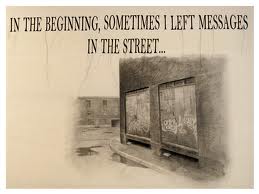
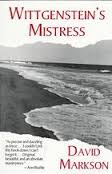
The cover image above shows the opening sentence:
“In the beginning sometimes I left messages in the streets. Somebody is living in the Louvre, certain of the messages would say. Or in the National Gallery.”
followed soon by
“Nobody came , of course. Eventually I stopped leaving the messages.”
Weird, right? And then comes:
“I have no idea how long ago it was when I was doing that. If I was forced to guess, I believe I would guess ten years.”
Whoa. And then the kicker:
“And of course, I was quite out of my mind for a certain period too, back then.” (more…)
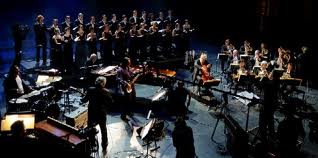
SOUNDTRACK: RON GEESIN & L’ORCHESTRE PHILHARMONIQUE DE RADIO FRANCE-“Atom Heart Mother Suite” (2012).
“Atom Heart Mother” is one of my favorite prog rock songs. And it’s amazing how much I didn’t know about it (which is what this book is for). This recording of the “Suite” is an extended version that Ron Geesin created for Radio France.
I’m fascinated by this version of the song because while it is basically the same (Geesin added a few extra measures for the cello solo), it sounds so “professional.” The original (as the book points out) was kind of slapdash and it has a very loose feel. This version is almost too perfect (although it’s not perfect as you can tell by the guitar solos). Nevertheless, I love that this song has broken free of an obscure Pink Floyd album with a cow on the cover.
You can see and hear the extended 2012 version here:
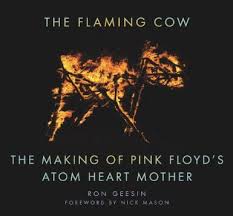
[READ: September 27, 2013] The Flaming Cow
Big news (to me) is that Ron Geesin created the orchestral score for Pink Floyd’s “Atom heart Mother.” He had nothing to do with side two of the album Atom Heart Mother (although he does say where the album title came from, and shows the proof–the first woman with an atomic pacemaker was in the news that day), but he was instrumental (ha) in creating the 23 minute epic.
I actually knew of Geesin from his score with Roger Waters for The Body (a vinyl album I own from when I was really into Floyd, but which I haven’t listened to in decades). But so here is the full explanation of how the crazy beast (which my high school friend Kevin deemed the number one “seriously drug induced” song) came to be.
Except that Geesin has a lot to say about himself first. The book is 120 pages (about half of those pages are pictures) and he doesn’t get to the song until Chapter III. At first I wasn’t all that interested in his biography, but it actually pays off when you see what his musical background was and how it was ideal for him to create the score for “AHM.” His musical background is interesting in his DIY approach and “one man band” esthetic. But really, we got this book to hear about this Epic (which is what it was called first).
And on that front, well, he doesn’t have a ton to say, believe it or not. We learn that Nick Mason (who was friends with Geesin and who wrote the Foreword to this book) and Waters had created the basic structure of the song. And they called on Geesin to flesh it out. So Geesin used his understanding of writing scores to create some really unexpected tones for this otherwise fairly simple song. It also turns out that (for me) recounting someone else’s recounting of recording a song is kind of boring, especially since there were no astonishing revelations.
I did enjoy reading that the band would make more money if the suite was broken up into various parts rather than one 20 minute song, so that’s where the arbitrary section names came from. And Geesin does give a fairly detailed explanation of why he did what he did in the score, but it only last for about three pages. Suffice it to say that although it was a very hectic schedule (and Geesin almost did come to blows with a horn player) the recording was not too dissimilar to other recording sessions that I’ve read about.
What was interesting was that the band had gone from really liking it to dismissing it. And that the band seemed to want to distance themselves from it because they wanted to go in a different direction (Meddle, their next record, also has a 23 minute song (the awesome “Echoes”) but it is very different from AHM).
Perhaps the most interesting thing to me was the life that the song has taken since the recording. In 2008 Geesin wrote an extended version of the suite for the Chelsea festival. The song was performed on two nights and on Sunday, June 15 2008, David Gilmour played guitar for the piece (he wasn’t able to make the Saturday night show).
There is a lengthy video from this concert as well (just below). For the first 20 minutes Geesin introduces the piece (which is basically a prelude to the book). The introduction is a little more dramatic than the book (but not all that much). In this video, the audio is quiet (and not that great) and there’s no actual video (just stills), but it is still entertaining. Then there’s the song itself. And it includes a reprise (with more Gilmour slide guitar) of the end of the song.
Someone also nicely recorded the Gilmour version (and included some video at the end of the piece)
The Radio France version above was commissioned for an entire evening of Geesin works. As I said above I only have his “music from The Body” which he recorded in 1970 and which was his second album. I have no idea what the rest of his work sounds like. But he was on hand to play the piano for “Atom Heart Mother” and the rest is history.
This book proves to be more about Geesin than “AHM,” but it’s still an interesting read.
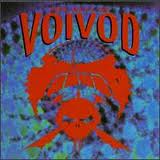
Most Best of records promise you a selection of popular songs from a band. Voivod never really had any popular songs, so this is an interesting choice to start with. This may also be the only Best of compilation of a band where people who like some of the songs almost assuredly will not like other songs.
As my posts about the band have indicated, Voivod changed drastically over their first six records (which is the period this collection covers). And so in twelve tracks and 50 some minutes you get the very diverse history of this very unusual band. I’m not going to talk about each track (already done that), but I will list the songs
Voivod [War and Pain] classic screaming metal.
Ripping Headaches [Rrröööaaarrr] brutal, but I must say sounds a ton better than the original CD. I wonder if this was remastered for the compilation).
Korgull the Exterminator [Rrröööaaarrr] hard to believe they used two songs from this album.
Tornado [Killing Technology] heavy but quite catchy.
Ravenous Medicine [Killing Technology] signs of complexity enter the heaviness.
Cockroaches [EP] a strange inclusion, almost a rarity.
Tribal Convictions [Dimension Hätross] very complex with some heaviness.
Psychic Vacuum [Dimension Hätross] I’m surprised they didn’t pick other songs though from this album.
Astronomy Domine [Nothingface] their hit.
The Unknown Knows [Nothingface] very hard to choose just two songs from this masterpiece.
Panorama [Angel Rat] Their newest single and quite a departure from everything that has come before.
The Prow [Angel Rat] their prettiest number ever. If you buy this CD for this song you’ll hate the early stuff.
Although Voivod fans (like Dave Grohl)
are diehard, anyone who would buy only a Best of record from the band is sure to be disappointed. There are so many phases of the band and they are so radically different from “Voivod” to “The Prow” that it’s almost not even the same band. I’m very curious as to what sales for this album were like. (Even the cover isn’t that inspired)
[READ: September 2013] The Walrus: Tenth Anniversary Issue
It’s hard for me to believe that The Walrus has been around for ten years (even they seem a bit surprised). I still remember hearing about the magazine on Book TV from some Canadian channel that I just happened upon.
When I heard about it The Walrus seemed interesting–kind of like Harper’s and elements of the New Yorker but all about Canada. I’ve been a Canuckophile for decades now, so it seemed like an interesting prospect. And over the ten years of the magazine, while I haven’t written about every issue, I have read every article. I have written about all of the short stories that they’ve published.
This issue eschews some of my favorite elements (the short articles in the front and the arts section in the back), but they make up for it with an oversized issue (twice as long as usual and the articles are all packed with content) and some fascinating articles.
And while there are none of the short articles from the front, there are “Time Capsules,” one page articles about things that have happened in the last ten years: The iPhone, Sports Concussions, Armed Drones, The Residential School Apology, Justin Bieber, Foodies, Hand Sanitizer and Cyberbullying. It’s interesting to read about these phenomena from a slightly different perspective. We know that Canada and the U.S. share many similarities but there are, at heart some core differences. And it’s these differences that make you rethink a subject. (more…)
After Angel Rat, original bassist Blacky left the band. That’s never a good sign. After the tour for this album, original singer Snake left the band. That’s an even worse sign. I still can’t quite figure out exactly why Snake left (personal problems) but he went on to form the band Union Made. For a very detailed history of the band, check out this very cool timeline at Voivod dot net.
The Outer Limits got a pretty big release. I have an original copy that came with 3D glasses and all of the illustrations in 3D. But I was a little disappointed in Angel Rat and I don’t think I gave The Outer Limits much of a chance. It was no Nothingface. But the band was always morphing. Since Angel Rat went very commercial, this album brought things back into the prog realm (with a 17(!) minute song) but also had a lot of commercial songs.
The album opens with “Fix My Heart” which starts out much heavier than anything on Angel Rat. It’s also got some metal guitar pyrotechnics (squeaks and harmonics). Snake’s voice isn’t quite as pretty as on Angel Rat either—he growls a bit, but maintains his nicer voice overall. Nevertheless, “Fix My Heart” is a pretty commercial enterprise (as the title might even suggest). There’s some good “spacey” guitars sounds which bode will for the sci-fi angle of the album (and there’s some cool effects that reward headphone use). “Moonbeam Rider” starts with a very classic rock sounding riff and then morphs into a kind of pretty, mellow verse. But the interstitial guitar is all speed. It’s a nice mix of fast and slow. This song features some interesting bass work—nothing fancy but for the slow parts it is actually keeping the beat instead of the drums. The bassist was a studio musician for this album. There’s also what sounds like a bong during the pre-guitar solo section (the solo is fairly traditional).
“Le Pont Noir” is a mellow, slow guitar song with a very cool delay effect and Snake’s whispered vocals. The bridge gets heavy with a wonderfully weird Piggy guitar riff. It’s one of my favorite songs on the album.
Then the band’s second Pink Floyd cover appears. This time it’s the even more obscure “The Nile Song.” They have rather heavied this one up with crunching guitars and Snake’s distance screaming filling in the void (although in fairness the original vocals are also screamed). It’s not as dynamic or exciting as “Astronomy Domine,” but it’s still a cool cover. “The Lost Machine” starts off heavy with Away’s double cymbal work (a noisy splash and a fast ride cymbal). Then Piggy’s guitars have a slight delay on them which makes the opening chords sound especially odd. The bridge is a place for Piggy to show off some more weird spacey chords and some very cool guitar riffs. There’s even a spoken word narrator in the middle of the song that explains the “mission” “Time Warp” opens with a very bright and up beat sounding verse. But it quickly disintegrates into (intentional) musical chaos as the narrator gets lost in space.
This all leads up to the 17 minute “Jack Luminous.” If anyone doubted their prog rock leanings, this should dispel that immediate. 17 minutes, multiple parts, a sci-fi epic, it is prog (but heavy prog) at its finest. There are some incredibly catchy parts as well as some less catchy parts, and sections seem to change every two minutes or so. The slow down at 10 minutes is very cool—different guitar effects and the suspenseful bass line. There’s repeated sections as well, which means if you like some guitar line (the spacey part near the end) it comes back! It’s not quite as dynamic as say 2112, but it’s a very successful sci-fi epic.
“Wrong Way Street” returns to the normal and more conventional. The bass that opens the song sounds great and the chords are fairly conventional–the chorus is even really catchy. “We Are Not Alone” is a break-neck metal song, The drums are super fast, the guitars are relentless and the chorus even has an echoed “Hey!” that gets you to sing along. The song also features a cool slow, almost jazzy bass and drum section that lets Piggy throw some soloing in before returning to the fast paced verses.
There’s lots of theories about what happened to Voivod after this album. The success they had achieved earlier was now gone and the band seemed like they couldn’t decide to be metal or prog or is they should go for more pop music. The problem of course is that they were too weird to get mainstream acceptance anyway.
So Snake left and then there were only two original members. The next step would be a drastic one.
[READ: July 9, 2013] Grantland #7
This issue seemed to come hot on the heels of #6. But I enjoyed it just as much. A few notes: no Jeremy Lin in this issue. Lots of LeBron James, three articles about soccer! And a few pop culture moments that I had forgotten about.
REMBERT BROWNE AND DUSTIN PARKER-“The Jeopardy! Teen Tournament JUST. GOT. REAL.
Leonard Cooper didn’t know the final Jeopardy answer but he still won and he made a hilarious joke at the end (in cartoon format);
BILL SIMMONS-“Daring to Ask the PED Question”
Simmons talks a lot about PED’s in this forum. Of course, to me PED is my initials. For him (and sports fans) it is performance enhancing drugs. He asks why sports doesn’t do more about it. There are so many people who do it that every time we see someone who might be doing it or who suddenly has a good season, we assume they are doing them too. It would be a service to the players and the fans to have rigorous testing or none at all.
CHRIS RYAN AND ROBERT MAYS-“The NFL Coaches Family Portrait By the Numbers”
A silly analysis of a photo of NFL coaches.
WESLEY MORRIS-“Jodie Foster’s Big Night”
What exactly did Jodie Foster say at the Golden Globes? (This was in January and everybody talked about it and now it’s September and I’ve completely forgotten about it—funny ephemera of pop culture).
JONATHAN ABRAMS-“Out of Africa”
A serious look at trying to bring basketball to Africa. How the culture and language problems make it very difficult to establish any real cohesion in the diverse country. But there are a few examples of boys coming from Africa and benefiting from host families and then heading back to help those who love basketball back home. The main focus is on a 15-year-old Alexis Wangmene who came to the States (and left his family!) to try to gain an education and basketball skills. It’s a heartfelt story.
MOLLY LAMBERT-“Modern Love”
About the show Catfish which just goes to show we can sink even lower as a culture.
CHUCK KLOSTERMAN-“Mental Health Protocol”
About Royce White again. Last time there was a lengthy look at him. Now we get to hear that he thinks that everyone has some kind of mental health issue.
ANDY GREENWALD-“Eat Bray Love”
How cooking shows have gone from educational to crazy and annoying. He dislikes Top Chef and the new Anthony Bourdain show The Taste (which he says is awful) but he likes a decent show called Chopped.
ZACH LOWE-“The Fragile Science of Basketball Chemistry”
Sure the Heat were great this year, but it’s the way they evolved as a team, creating chemistry, that is so impressive.
RAFE BARTHOLOMEW-“The Pariah”
Timothy Bradley beat Manny Pacquiao in a disputed judges call. Instead of rising to fame, he has been avoided like the plague.
BILL SIMMONS-“The All-Manti Te’o Mailbag
Remember that crazy story about the football guy with the dead girlfriend who turned out to be fake? I never really understood the story and while they spend a lot of time talking and theorizing about it I still don’t get it. Did they ever find out the truth about it?
CHRIS BROWN-“Speak My Language”
When you play for the Patriots, you learn their way of doing things—it is simple and efficient, a streamlined version of what other coaches try to do.
KIRK GOLDSBERRY-“The Evolution of LeBron James”
Using diagrams, we see how much of a different player James is in just the last few years with The Heat. This article has made me want to watch James in a game while he is at his peak. So, Heat vs Bulls at the end of October, you’re on my schedule.
SEAN McINDOE-“The Non-Hater’s Guide to the NHL”
Even people who hate everyone in the NHL (which is everyone) can agree that there are some players who are universally admired: Martin Brodeur, Pavel Satsyuk. Teemu Selanne, Jarome Iginla, Jonathan Toews, Martin St. Louis, Gabriel Landeskog, Patrick Elias (Devils get two!), Ryan Smyth, Steve Sullivan, Saku Koivu, Henrik Lundqvist.
ALEX PAPPADEMAS-“God Needs a Hobby”
A look at Dan Harmon and his podcast Harmontown. Harmon seems like he might be a crazy alcoholic, but he’s also pretty darn funny.
MARK TITUS-“Duke’s Ignominious Son”
Everybody hates Christian Laettner, but that’s only because he’s pretty and he made The Shot
MARK LISANTI-“Three Days in Austin”
Dealing with the craziness of the South by Southwest film festival. Sounds awful.
HUA HSU-“The Alien Has Landed”
Soccer legend Ronaldo returns to Old Trafford
BILL SIMMONS-“The Greatest Action Franchise That Ever Was”
Live blogging the Fast and Furious 6 trailer. I admit I may have to see these films after reading this.
ZACH LOWE-“Lights, Camera, Revolution”
There’s some kind of new technology that will change the NBA forever. I pretty much don’t care.
TESS LYNCH-“Nostalgia Bites”
Watching old Real World episodes shows how much things have changed in reality TV, but also how much certain behaviors are not new.
BRIAN PHILLIPS-“Maradona, Then and Now”
Maradona was an amazing kid—at 15 he was remarkable at his ball control. Now at 52 he’s a crazy loon. What exactly happened in between?
ANDY GREENWALD-“From Big to Small, From Movie to TV”
Why not make Men in Black into a TV show—with some other film recommendations.
AMOS BARSHAD-“How Soccer Explains Israel”
I didn’t expect to enjoy this but I found it very interesting. An Israeli soccer team has signed two Muslim players and it has caused incredible animosity and even arson. How this look at a team is like a microcosm of the whole Israeli situation.
LOUISA THOMS-“Back to School”
Missy Franklin won a ton of medals in the Olympics. And then she went back to high school. What’s it like to be on her team at Regis Jesuit?
WESLEY MORRIS-“Run, Frank, Run”
Frank Ocean apparently wasn’t as huge as I thought he was.
MALCOLM GLADWELL AND CHUCK KLOSTERMAN–“The Lies He Told”
More about Manti Te’o. This discussion was a bit more helpful about what happened and how crazy it is.
CHRIS RYAN AND REMBERT BROWNE-“A List of Possible Reasons for Rob Gronkowski’s Arm Infection”
Hypothetical humor.
JORDAN CONN-“The Invisible Man”
Marc Gasol is extremely respected by scouts and agents, but the fans all think of him as Pau Gasol’s chubby little brother.
REMBERT BROWNE-“French Quarter Lessons”
While in New Orleans for the Super Bowl, Browne decided to go to a bunch of used bookstores. This is very funny and enjoyable.
JAY CASPIAN KANG-“Fiercely Disputed”
Mike Tyson’s one man show is weird and strangely affecting.
KATIE BAKER-“Do Svidanya to All That”
Several NHL players went to Russia’s KHL during the lockout. And some don’t want to come back.
CHRIS RYAN-“The All-Star Circus”
NBA All-Star weekend is a crazy circus (and sounds worse than the above SXSW festival).
CHUCK KLOSETRMAN AND ALEX PAPPADEMAS-“The Nobituary”
There was a serious rumor that David Bowie was on death’s door. Klosterman and Pappademas imagine writing his obituary.
DAVID SHOEMAKER-“Glenn Beck vs. WWE”
The WWE has always had racists as part of the act. What happens when some goons start acting like the Tea Party?
DAVID JACOBY-“The Pure Heart Meets The Bachelor”
Jacoby’s grandmother watches The Bachelor and he feels badly for her.
STEVEN HYDEN-“Is This It?”
The Strokes’ fifth album had just come out [really?]. It could be their last, but Hyden thinks their last two have been quite good.
BILL SIMMONS-“The Heat in Hindsight”
The Miami Heat came close to breaking the longest winning streak in the NBA. Simmons looks at the fallout and who “wins” and “loses” in the effort.
CHARLES P. PIERCE-“Bleu, Blanc et Rouge”
I had no idea that Charlie Pierce was a Canadiens fan!
KATIE BAKER-“The Ethics of a Family Plan”
Is it ethical to pretend that you are married to your roommate to get a family discount a ta gym? Hell yes.
EMILY YOSHIDA-“A Dark Force”
J.J. Abrams is going to direct the next Star Wars films. Why, when sci-fi is so multifaceted and so different is everything coming down to J.J. Abrams?
SEAN FENNESSEY-“The Case Against Justin Timberlake”
Timberlakes’s previous album was amazing. Then he took years off to make (bad) film and (good) TV. His star would only continue to rise if he stopped making music and only hinted that he would make another album. But the release of his new album (which isn’t that good) can only hurt him.
BRYAN CURTIS-“Waiting for Bettman”
While many New Yorker’s didn’t care about the NHL strike, Canadian writers camped out waiting for Bettman to announce the strike was over.
WESLEY MORRIS-“30 Rock Landed on Us” 30 Rock was many things, but it dealt with racial issues (at least between blacks and whites) better than any show.
RANY JAZAYERLI-“Fall of the Evil Empire”
The New York Yankees look like they won’t make the playoff this year (this was written in March and as of my writing this they have a slim chance at getting the wild card slot). It will be the firs time in a while, perhaps, just perhaps, it’s the start of a new drought for the Evil Empire.
BILL BARNWELL-“The Master Raven”
Ozzie Davis knows how to pick players for the Baltimore Ravens.
REMBERT BROWNE AND DUSTIN PARKER-The Best Chappelle’s Show Sketches of All Time”
Done as a series of cartoons (by Parker); Browne picks his eight favorites:
Charlie Murphy’s True Hollywood Stories: Prince
Wayne Brady’s Show
Charlie Murphy’s True Hollywood Stories: Rick James
Black Bush (especially now that Obama is president)
Clayton Bigsby: Black White Supremacist
Making the Band (P. Diddy)
The Racial Draft (Tiger Woods Now 100% Black)
The Niggar Family (uncomfortable and hilarious no matter how many times you watch it).
Once again, there’s another great issue of Grantland. Once again, I wish they would follow up on some of their speculative stories. But it’s fun to have a time capsule of events that occurred just a few months ago and yet which I have totally forgotten about.
And here’s the cover of The Outer Limits in non 3D style (which I haven’t see before)
As I said, this album’s art looks much better. And you can hear from the first notes that this album is better produced and is going to be a lot more interesting than the previous two. It’s hard to know just how much of a leap this is from Rrröööaaarrr because that album was so muddy–maybe there were gems of guitar chords under all that noise. Like the previous openings, there’s a sort of prologue to the album. But unlike the previous album’s swirls, this one is beeping with a computer voice announcing “we are connected”
The opening chords are heavy, but man they sound clear—like they weren’t recorded underground. You can also hear all of Piggy’s weird higher notes—he’s playing complicated chords, not just solo notes. And when the chorus of “Killing Technology” rolls around, it offers stop and start rhythms and Snake’s voice even goes up an octave at the end. But the first real indication that Piggy is on to something new comes in the bridge. Underneath the robotic voice, Piggy is playing some really strange-sounding chords. The story is that he had been admiring Robert Fripp’s guitar work and so he added some of those King Crimson-y angular weird chords to his repertoire. And he melds them perfectly with the heavy thrash that the band had been playing.
Lyrically also, this album has moved away from killing and headaches. “Killing Technology” while having “killing” in the title is a very different subject:
The star wars have started up
The new invention is coming out
Making a spider web over the atmosphere
To make them sure that we can’t get out of here
Computers controlling your functions
Seems like we got electronic alienation
Trading children for a new kind of robot
Waiting for the old people to disappear
Quite a departure from Rrröööaaarr’s “Fuck Off and Die”
Stand up, right now, kill
No pleasure, the pain comes down here
No return, don’t look back, there’s no tomorrow
And if you’re a fucker and don’t believe it
I’d say fuck off and die, fuck off and die
“Overreaction” leans more towards the heavier side—Snake screams a bit more—but the subject (nuclear disaster) is thoughtful. Then comes their first truly amazing song: “Tornado.” Not only building like a tornado, this song allows them to talk about violent imagery without resorting to bloodshed. It’s even scientific:
Cumulonimbus storms arrive
Lightning flashes a hundred miles around
Electrical collision course
Creates the elephant trunk
But the best part is the chorus—it’s simple enough (just the word Tornado repeated) but it’s completely catchy and sing-alongable with bright major key chords.
“Forgotten in Space” features some great drumming from Away—he’s really quite underrated both in speed and technique—which explands even more on later albums. “Ravenous Medicine” is another highlight—an interesting series of uncomfortable chords opens this track about scientific research. It’s a pretty fast, heavy song. Although not too complicated except for the occasional breaks as the story progresses.
“Order of the Blackguards” is another fast song, but this one has so many parts that if you don’t like one, just wait a few seconds for the next one. “This is Not an Exercise” ends the disc proper. The middle section has a great heavy riff. But it’s the beginning of the ending sequence which is so perfectly sci-fi that really sets the tone of the album and looks towards the next one. It’s cool to think of Piggy playing these spacey chords on his guitar. And when Blacky’s bass rumbles in to resume the song, it’s quintessential Voivod.
By th way, this disc is a concept album as well. There’s a “Killing Side” (the first three songs) and a “Ravenous Side.” The strange thing about the CD though is that they have added two tracks from their Cockroaches EP which is nice. But they put one song at track 4 (the end of side one). How odd to put a bonus track in the middle of a sequenced album.
The EP came out before the album and it has a slightly different feel from the album proper. Although as a step towards Killing Technology it’s perfectly in sync. “Too Scared to Scream” is heavy and has some interesting time changes—I love the way the song feels like it is crashing to a halt around 3:30. “Cockroaches” feels like more traditional metal. It opens with drums and Piggy playing a typical sounding metal solo. Then the riffing starts and it’s very heavy indeed. Even the staggered section near the end sounds like a mosh section more than the prog time changes that Voivod uses on the album proper. The song ends with Snake screaming as the cockroaches are coming. A good ending to the EP and a pretty good ending to the disc.
The whole album has a very mechanical and robotic feel—the chords that Piggy plays just sound like mechanical failure, it’s very well constructed and foreshadows the music of their future.
[READ: July 9, 2013] Grantland #6
Grantland #6 covers from Sept 2012-Dec 2012. Despite the short time frame, this is the largest issue yet. And it maintains all the quality that I’ve come to expect from the book/magazine thing. Which means, I love the writing (especially about people/sports I’m not that interested in). And it also means that the editing is typically crap. In this issue the editing was crap more because they simply forgot to remove mention of hyperlinks. At least I assume that’s why sentences like “See here for ____” are included in any given article. But yes, there are some very simple typos that Word would correct pretty easily.
But beyond that, I really enjoyed this issue. And I’m finding it amusing how much certain people and shows crop up in a given time frame. So this is a four month period and Kobe Bryant still dominates (there will never be an issue without at least one Kobe article). But this time Homeland is the big show (since Breaking Bad has been on hiatus I gather). Basketball remains the favorite sport here (even though they speak of football as being the most popular sport).
Chuck Klosertman and Charlie Pierce continue to write thoughtful (sometimes funny) articles. And I like how there is still talk of Jeremy Lin even if Linsanity has gone away somewhat. (more…)
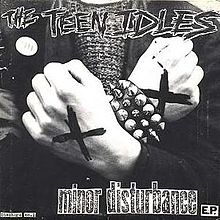
SOUNDTRACK: THE TEEN IDLES-Minor Disturbance (1981).
The Teen Idles were the first band released on Ian MacKaye’s Dischord Records. And this EP was record 001 (MacKaye was in the band and he made his own label to release the record).
There are eight songs, done in a total of 9 minutes and 20 seconds. The final song is a live track and it reaches 2 minutes mostly because of the introduction and crowd noise. Three songs almost reach 90 seconds long. The rest are under 1 minute.
Interestingly, there are earlier demos of these songs that are a little slower and a little less fastinyourfacescreamedlyricswhat??? Perhaps because I’m old I like the slower ones a little better, but I know that this represents the core of DC Hardcore and I respect that. And you can actually make out the lyrics if you try.
Some themes include being too young to go to shows, people trying to grow old too fast, punk music (“you say we need practice, maybe in a couple of years”), and apparently dissing British punk for selling out. (“There goes your fury out the door, don’t expect our respect anymore”).
The acerbic “Deadhead” even has a slow section (but is still overall less than 90 seconds) in which they parody the Grateful Dead—the song is anti-Dead primarily because of the drugs they espoused (The Teen Idles, like Minor Threat were straight edge). I had to look up Fiorucci to see what “Fiorucci Nightmare” was about (it’s a fashion house).
For an early taste of the DC Hardcore scene, it pretty much starts here.
[READ: August 22, 2013] Hard Art DC 1979
Do you like punk rock? Punk rock from the late 70s? Specifically bands from Washington DC? In particular bands that played at three venues? On four specific dates? That’s the focus of this book.
This is a collection of photographs by Pulitzer Prize winning photographer Lucien Perkins. Perkins has been taking pictures for decades, primarily for The Washington Post—covering major events in Russia, Yugoslavia, Iraq, Afghanistan and, in the late 70s, a few DC punk shows.
The book doesn’t say anything about his motive for doing these shows—other than that he was new to the scene and thought it looked interesting. And since Bad Brains are the focus of most of the pictures, I’m certain that race and racism had something to do with his showing up at these events. Especially because the first event was called Rock Against Racism and was held in a public housing area of Washington D.C. (more…)
I can’t get over how much I’ve been enjoying Kanye West’s music as of late. So much so that I went back and bought Late Registration. I wanted to check out his early stuff, so naturally I started with…his second album. And it’s a really enjoyable, soulful, gospel-filled rap album. Complete with Kayne’s bizarre, humorous and often offensive lyrics.
Musically the samples are wonderful—they create a very specific feel of pop soul that both works with and sometime against the lyrics. The album suffers from two things that I’ve found I do not like in rap, and in articular in Kayne’s albums. It bugs me when rappers intro their songs with several “uh, yeah”s. I don’t know why but it does and that’s how Kanye opens the disc.
And, I wish there weren’t so many guests on the record. While I understand the guest singers who provide backing vocals, I don’t get all the guest rappers (and there are a lot: Paul Wall, GLC, Lupe Fiasco, Common, Game, Jay Z, Really Doe, Nas, Cam’ron Consequence). I mean, I’m not here for them, so why devote so much time to others, it makes you seem like you couldn’t thin of enough to say (and we know that’s not true about Kanye). After a few listens, I have grown to appreciate the guests, but I like Kayne’s style so much that the other guys are just distractions.
Late Registration is largely produced by Jon Brion, who has made some amazing music with Fiona Apple and Aimee Mann—and while it is certainly stripped down Brion, the flourishes that Brion often employs are apparent here. Like the tinkly pianos and farty bass that opens “Heard ‘Em Say.” There’s some falsetto R&B-esque vocals from the singer from Maroon 5 here—I had no idea he sang like that. It fits very well with the song. And the instrumental section at the end is very Brion.
“Touch the Sky” uses a long sample (slowed down quite a bit) of Curtis Mayfield’s “Move on Up.” But the sample is so much of that original song that it almost seems like cheating. Except that he has slowed it down and modified it somewhat, and…his raps work perfectly with it. The other really crazy sample is from Gil Scot-Heron which samples “Home is Where the Hatred Is.” The strange thing is that the song is 1:44 and the last 45 seconds of the song are just Scot-Heron’s song playing along by itself. It’s weird to have given up that much to another song…but it sounds great.
“Gold Digger” is a very funny song about, well, gold diggers. The topic isn’t new (the fact that it samples an ancient Ray Charles song attests to it), but the chorus of “I ain’t saying she’s a gold digger, but she ain’t messin’ with no broke niggers” is great. There’s also an intro section with Jamie Foxx doing his now patented Ray Charles. It’s a pointed song but done with a very funny twinkle in his voice (the Kayne twinkle). “Drive Slow” is a cool slow-tempoed number with a great sample from Hank Crawford and an interesting slowing effect at the end of the song. “Crack Music” is a great political song equating making records to selling crack. The metaphor works well. And this is one of Kayne’s strong pro-black songs. It’s really powerful.
The surprising thing is the two really sensitive songs: “Hey Mama” which is a sweet song to his mother in which he promises to go back to school and get his doctorate and “Roses,” which is an angry but beautiful song about his grandmother being in the hospital. There’s a great verse about her being poor and therefore not getting the best care: “you telling me if my grandmother was in the NBA right now she’d be okay” As well as a line about a nurse asking for his autograph while they are worried about his grandmother—although, realistically, how often is a nurse going to meet a star like Kayne? The end of the song has some great soulful crooning by (as far as I can read) an uncredited singer. And I feel like Brandy, who opens up the next song really falls flat in comparison to this unnamed singer (I don’t care for the way newer black singers wail their scales). But the Etta James sample of “My Funny Valentine” that floats through “Addiction” is gorgeous.
“Diamonds from Sierra Leone: is a surprisingly political song that samples “Diamonds are Forever.” There’s two version on the album. I like the remix featuring Jay-Z a lot less, in part because I’ve never been a huge Jay-Z fan, but also because his verses completely interrupt the flow of the song. “We Major” has a very retro, almost easy listening vibe. There’s a lot of backing vocals going on and they remind me somewhat of Ben Folds Five’s backing vocals (which is pretty weird, I suspect). This song is interesting for its talk of worrying about daughters—as with many rappers, women are bitches and hos unless they are your grandma, your mama or you daughter—which is kind of awkward, really.
“Celebration” is perhaps the weirdest juxtaposition of contents. It’s a celebration, bitches. A celebration apparently about the fact that he and a woman (who had a fatty) accidentally had a baby (“You my favorite accident”). That line makes it sound like the child is at the party, which makes the chorus “Grab a drink, grab a glass, after that I grab your ass” hard to fathom.
“Gone” has a nifty piano melody (and some cool interstitials very Brion-infused melodies) that plays under Cam’ron and Consequence’s raps. The song is kind of a muddle (although a funny muddle) until Kanye comes in at around 4 and a half minutes. I really like the way the album ends: with Kayne rapping “Sorry Mr West is gone” and the music completely cutting off.
The bonus tracks include the original of “Diamonds from Sierra Leone” and “We Can Make It Better” (which features Q-Tip, Talib Kweli, Common and Rhymefest). It’s an interesting track (especially the sped up backing vocals) but it seems like a bit of a throwaway (which is surprising given the number of guests). “Late” is a unlisted bonus track which is very strange. There’s lots of “ah ha ha has” in a posh sounding falsetto). But there’s some witty lines in here, especially this verse:
They said the best classes go to the fastest
Sorry Mr. West there’s no good classes, and that’s what yo’ ass get
Not even electives? Not even prerequits?
You mean I missed my major by a couple of seconds?
Now I’m in the shop class or the basket weavin
With all the rest of the muh’fuckers underachievin
So Kayne is clever and stupid. A great rapper and a not so great singer. And amazing producer and a good song writer. And this is as good an album as I’ve heard it was.
[READ: August 8, 2013] The Commitments
I have been reading a number of big, heavy books lately (which I have yet to post about…later in the week), so I decided to take a break with a light, fun book. And one that I’ve read before (and seen the movie of many times). I looked on the inside cover where I wrote the date of acquisition (a thing I did for a while until I realized it was kind of silly, and yet I’m glad i did it here) October 1993, almost twenty years ago.
But aside from Jimmy playing songs on vinyl, there’s very little that’s dated about the album–which may even be the point of the book.
This is the story of a bunch of misfits in Ireland who join together to form a soul band. The nucleus of the band is Jimmy Rabbitte, a local kid who lives and breathes music. He had Frankie Goes to Hollywood before anyone else and he knew they were shit before anyone else.
Some of his mates have started a band (called hilariously And And! And) which plays new wave. Jimmy tells them they should play soul instead. He plays them some James Brown and they love it. Which leads to the talk of music and sex. And they are really into it. And then there’s the oft quoted line from the movie: “The Irish are the blacks of Europe. And Dubliners are the blacks of Ireland. And the Northside Dubliners are the blacks of Dublin. So say it once and say it loud, I’m black and I’m proud.”
And so they begin a quest to find the rest of the band. Jimmy puts an ad in Hot Press (the Irish music magazine) and interviews everyone (some very funny jokes in there). And the recruits form a crazy quilt of characters. (more…)
 SOUNDTRACK: NEIL HALSTED-“Wittgenstein’s Arm” (2012).
 Halsted was a founder of the band Slowdive, who I knew somewhat. I don’t know anything of his solo work, although his name rang a little familiar.











 I Just Read About That...