Feeds:
Posts
Comments

Archive for the ‘Babies’ Category

SOUNDTRACK: LAURA STEVENSON-Tiny Desk Concert #946 (February 14, 2020).

maxresdefault (1)I don’t know Laura Stevenson, but she has a very pretty voice.

She is a singer-songwriter who I gather plays fairly stripped down songs.  But Bob Boilen wanted to spruce things up–I’ve never heard of him directly interfering in a Tiny Desk before–I wonder how often he does,

It was supposed to be so simple. Laura Stevenson, a singer-songwriter whose new material radiates warm intensity, would come in and knock us out with an intimate acoustic solo set … So I came to Bob with the idea … but Bob is nothing if not a pesky dreamer — a man who lives his life in pursuit of beauty and the creation of hard work for other people — so he suggested a wrinkle. What if we commissioned string arrangements for three songs from Stevenson’s newest album, The Big Freeze?

And there they are.

So arranger Amy Domingues, who doubles as a marvelous D.C.-area cellist, dreamed up some charts and gathered a small ensemble (herself and violinists Shelley Matthews and Winston Yu) for accompaniment so gorgeous, Stevenson couldn’t stop remarking on it between songs.

After the first song, “Lay Back, Arms Out” she says “.”  Then she talks about being six months pregnant and how she wasn’t pregnant when she booked this show.  She says she has to move her guitar a bit but it looks cool.

“Living Room, NY” is really lovely–Stevenson’s voice is clear and pure and makes the lyrics even more poignant.

The final song is called “Dermatillomania” (which she doesn’t even define, but which is chronic skin-picking).  She says it’s the saddest one but it is the happiest-sounding.

And that’s true, at least the happy-sounding part–it’s super catchy.

But apparently the most exciting part happened after the set was over

we also got to witness what’s almost definitely the first-ever Tiny Desk marriage proposal. Shortly after Stevenson’s set had ended, Jonathan Zember got down on one knee as unobtrusively as possible and proposed to his girlfriend, Dena Rapoport; the two were attending the show as guests of an NPR staffer, and he figured it’d be a memorable spot for their big moment.

Dena said yes.  No word if Laura will write a song about it.

[READ: March 13, 2020] “The Liver”

I enjoyed Klam’s novel Who is Rich, which I found funny and fun.  So I was looking forward to this story which has a title I wasn’t sure how to emphasize.

Boy, was I surprised to read that this is a story about a premature baby.

In fact, the majority of the story is about the narrator’s stresses about this premature baby.

The story begins with Kathy in the hospital after having given birth–two month before her due date. (more…)

Read Full Post »

30SOUNDTRACK: TANYA TAGAQ-Toothsayer EP (2019).

toothEarlier this year, Tanya Tagaq released a five-song EP to accompany the British National Maritime Museum’s “Polar Worlds” exhibit.

Tagaq’s music doesn’t radially change from release to release but she does vary things quite a bit within the style she creates.

This album feel more electronic than organic.  It’s full of drones and pulsing sounds.

“Icebreaker” opens with a low rumbling drone joined by a pulsing drum beat.  Then her heavy breathing/growling enters and she moved between guttural throat singing and high squeals.  A vocal melody appears around 2 and a half minutes but it is quickly swallowed by the main pulsing rhythm.

Tagaq uses katajjaq which Pitchfork explains is the vocal game traditionally played among Inuit women while men are away hunting. It involves two women standing face to face, exchanging repetitive vocal motifs until one fails to keep the pattern going. In older recordings of katajjaq, it’s easy to sense just how entertaining they were: Many games end with laughter.

When Tagaq does katajjaq she is solo (and not laughing).

 “Snowblind” is next.  with slow pulsing synths (from the Iranian-British electronic musician Ash Koosha) and a delicate piano as she sings a gentle wordless melody. The piano starts to pick up half way through and the low note grow more ominous as her voice grows more urgent.

“Toothsayer” features guttural breathing underneath while her voice soars above.  Midway through, it resolves into some gentle voices and an harsh stabbing guitar solo.

The most exciting track to me is “Submerged,” her katajjaq is delivered over what sounds like Inuit drumming, but Inuit drumming underwater–echoing and slightly underwater sounding.  Deep, slow clicking and heavy gasping breaths make up most of the song until about three minuets when a chord comes crashing in and her voice soars like a scream.  The pulsing continues and her voice sounds more ragged.  As it reaches its climax so does her voice shrieking louder and higher louder and higher until it abruptly ends.

The disc ends with the prettiest song, “Hypothermia.”  It is a quieter song, awash with keyboards.  Her voice soars like a siren.  Like the feeling of hypothermia, you are lulled by beauty when really your body is shutting down.

In “Hypothermia,” her katajjaq takes on the desperate cadence of someone panting, while the crystalline harmonies of “Snowblind” are both a vivid evocation of landscape and a bittersweet expression of pain—the pain of knowing that this could all be gone.

[READ: December 30, 2019] “I Can Speak!™”

The end of the year issue is called the Cartoon Takeover: A Semi-Archival Issue.  So there’s a lot of cartoons, but there’s also some old stories. Like this one.

This was originally published in the January 14, 1999 issue of the New Yorker.  I’ve now read it a few times, but it has been a while and I enjoyed it more this time than any other time.

The story is actually a letter to a customer unsatisfied with her I Can Speak!.  The customer service rep from KidLuv says he is on his lunch break–that’s how much he cares about her satisfaction. (more…)

Read Full Post »

SOUNDTRACK: PEARL JAM-“Someday at Christmas” (2004).

On December 2, Pearl Jam announced that their fan club holiday singles will be released to streaming services.  Their first holiday single was released back in 1991.  It was “Let Me Sleep (Christmas Time).” They are rolling out the songs one at a time under the banner 12 Days of Pearl Jam.

These releases are coming out as a daily surprise.

“Someday at Christmas” is a cover of the Stevie Wonder song.  I don’t know the original, but this version is a delightful Christmas song, one which I’m really surprised isn’t in regular Christmas song rotation.

The song is simple and catchy.  After a little guitar jingle of “I’m dreaming of a white Christmas” the songs moves fluidly along with some nice bass lines from Jess Ament.

The lyrics are really wonderful, too

Someday at Christmas men won’t be boys
Playing with bombs like kids play with toys
One warm December our hearts will see
A world where men are free

Someday at Christmas there’ll be no wars
When we have learned what Christmas is for
When we have found what life’s really worth
There’ll be peace on earth

After the first two verses the song moves up a note and there’s some nice wah wah guitars added in.  There’s no chorus, just a bunch of verses which plead for a peaceful Christmas time.

There’s a slightly downer note at the end, although the song remains ever optimistic and ends with the guitar line playing “I’m dreaming of a white Christmas, once again.”

Someday all our dreams will come to be
Someday in a world where men are free
Maybe not in time for you and me
But someday at Christmastime.

Now that it’s out in the ether, lets mix it in with the standard radio songs, eh?

[READ: December 3, 2019] “Save-A-Lot”

This year, S. ordered me The Short Story Advent Calendar.  This is my fourth time reading the Calendar.  I didn’t know about the first one until it was long out of print (sigh), but each year since has been very enjoyable.  Here’s what they say this year

The Short Story Advent Calendar is back! And to celebrate its fifth anniversary, we’ve decided to make the festivities even more festive, with five different coloured editions to help you ring in the holiday season.

No matter which colour you choose, the insides are the same: it’s another collection of expertly curated, individually bound short stories from some of the best writers in North America and beyond.

(This is a collection of literary, non-religious short stories for adults. For more information, visit our Frequently Asked Questions page.)

As always, each story is a surprise, so you won’t know what you’re getting until you crack the seal every morning starting December 1. Once you’ve read that day’s story, check back here to read an exclusive interview with the author.

Want a copy?  Order one here.

I’m pairing music this year with some Christmas songs that I have come across this year.

This story is by Anthony Doerr.  I thought I had read a lot more by him, but apparently I’m mostly just familiar with his name.  Which is a shame because this story is really enjoyable, even if it starts very dark.

The story is broken into fifteen numbered sections.

I was amused that the first one started “On the one hand there’s Bunny.”  We learn about Bunny’s life–she fled Texas at 17 and earned a nursing degree and a job in Bangor, Maine.  She is beloved at Woodlands Assisted and is so energetic, she is nicknamed The Prius: small, sensible, an a million miles to the gallon.

Then, when Bunny turned 22, Mike Ramirez impregnated her and fled for Tampa.  She keeps hearing her mother’s drunken voice–you’re as dumb as box of hair, you’re not worth spit.

But the baby, whom she names Hanako after the oldest elephant in the world, is very smart.  And Bunny is resilient.  She is doing okay. (more…)

Read Full Post »

SOUNDTRACK: JON BENJAMIN JAZZ DAREDEVIL–Well, I Should Have…* *Learned How To Play Piano (2015).

In 2015, H. Jon Benjamin released a jazz album on which he played piano.  He did this despite not knowing how to play piano.

This album should be a trainwreck.  However, he has employed the talents of Scott Kreitzer (saxophone), David Finck (bass), and Jonathan Peretz (drums) to assist him.  And they are really good.

It’s hard to believe that Benjamin has never played at all before, because while he’s not good by any definition, he certainly knows how to press the keys on the piano in a reasonable way.  Meaning, when he plays a solo he is at least trying to sound like he’s playing a solo.  It’s not like cats on a piano playing utterly random crap.  He’s certainly bad, but he’s bad within the ballpark, which makes this amusing to listen to and not intolerable.

Obviously, part of the joke is that Benjamin hates jazz and this pretty much mocks improv piano.  And yes, his playing sometimes sounds like an improv pianist deliberately plying wrong notes until the right ones come back into focus (although Benjamin’s never do come back in to focus).

The disc is quite short.  It’s under 30 minutes.  It includes a skit at the front called “Deal with the Devil.”  It is a really funny introduction in which H. Jon tries to sell his soul to the devil.  Kristen Schaal as the secretary get a very funny joke or two, but the devil (Aziz Ansari) explains that usually selling your soul is a last resort, not a first step.  There’s a vulgar joke (which I found really funny), but which makes the track unplayable for family gatherings (if you were to do such a thing).

There are four main pieces on the disc “I Can’t Play Piano” Parts 1-4.

“I Can’t Play Piano Part 1” (3:39) starts off with a rollicking sax solo and some bouncing jazz and then Jon’s tinkling at the high end of the piano.  The band even pauses a few times to give him a proper solo or four.  All of the solos are horribly inept and pretty funny.  Midway through the song, bassist David Finck takes a cool upright bass solo and you can hear Jon shout “play it Joe” or something like it.

Part 2 (3:09) has a riff that Jon tries to follow and fails to play spectacularly.  There’s less “soloing” in this one and more “playing with the band.”  At times you almost don’t quite realize that he’s playing with everyone else–something just seems slightly off.  There’s also some nice drum soloing from Jonathan Peretz.

There’s a hilarious skit [not on this record] by Paul F. Tompkins in which he talks about jazz as “a genre of music that is defying you to like it.”  He talks about going to a jazz show (by accident or because you lost a bet) and just at the point when you’re almost asleep, you think the bass player is going to play [blanhr] but instead he plays [blownhr].  And next.. this is the worst thing that jazz guys do.  The other guys on stage start laughing like it was the funniest thing they ever did see.  And you’re sitting in the audience thinking “I don’t get the jazz joke Why is that note so hilarious?  You’ve played many notes this evening, none of them particularly side splitting.”

This album is pretty much a musical rendition of that joke.

“It Had to Be You,” is a pretty conventional cover of the song (at least for the saxophone).  Jon clearly knows how the song goes, he just doesn’t know how to play it or which notes should even be in the song.  The middle of the song is a saxophone solo (no piano) and once again, you are kind of lulled into thinking the song is pretty straightforward, and then Jon comes back for a solo.  It’s a slow solo so at first it doesn’t seem so bad, but once he starts going, you realize how bad he really is.

“Soft Jazzercise” is a skit. Jon talks over a slow piano piece (presumably not by Jon as it is actually melodic).  Jon says that his soft jazzercise is very very very very very very very low impact.  You have to do it slow.  Like a turtle slow, like an opiated panda slow.

Back to the improv with “I Can’t Play Piano, Pt. 3” (4:57).  The song starts as a kind of call and response between the saxophone and the piano (hilariously bad every time).  Jon also gets a solo in the beginning.  He even slides his hand up and down the keys a few times–almost convincingly.  In the middle of the song you can hear Jon really getting into it shouting almost audible encouragement and saying “here we go!” and “dig this!” then the saxophone starts playing a response to what Jon is playing–can he even play that badly?  Jon even says “you can do better” at one point.  The sax almost plays “Have Yourself a Merry Little Christmas” twice before the riffing ends.

The final improv piece “I Can’t Play Piano, Pt. 4 – (Trill Baby Trill)” (5:25) starts with Jon’s piano and the rest of the band apparently trying to follow or keep up.  Once again it’s not as horrible as you might expect.  It’s not good, but it almost seems like it could be a serious improv.  There’s a lengthy bass solo (no funny notes that I can hear).   Then, after the drum solo when the sax takes the lead again, you kind of forget that Jon is even playing.

The final track is a funky/rap about anal sex.

The five instrumentals would be hilarious to mix into any dinner party to see what people thought or if they even notices.  The other three tracks are definitely NSFW.

[READ: June 1, 2018] Failure is an Option

I love H. Jon Benjamin.  Or, more specifically I love his voice.  He has voiced some of my favorite characters over the years including Archer and Bob Belcher.

But I have found that when I watch things that he has created, I don’t enjoy them quite as much.

So, which way would this ode to failure go?

It’s a mixed bag but overall it’s quite funny.

It has an introduction with this appropriate line:

I am writing this at the dawn of the Trump presidency, particularly apropos of failure being an option.  A very horrible and dangerous option in the case of a entire country’s future.

The opening talks, as many of these memoirs do, about how exhausting it is to write a memoir (“when I was saddled with the task of writing a book”). (more…)

Read Full Post »

indexSOUNDTRACK: KAWABATA MAKOTO [河端一]-INUI 3 (2005).

a0649002429_16Kawabata Makoto [河端一] is the guitarist and mastermind behind Acid Mothers Temple. The band is hugely prolific. But he still had time to record solo albums. Often times without any guitar.

This was Kawabata’s third solo LP, now available on bandcamp

Third volume in an acclaimed series by the Acid Mothers Temple leader. INUI 3 focuses on Kawabata’s highly personal brand of epic instrumental drone. Performing on bouzouki, sarangi, electric guitar, viola, and ECS-101, Makoto emphasizes the gradual build of monumental sound structures. Running 12 minutes each, “Sui” and “Ken” are darkly spun tales, with wisps of sound keening over a distant backdrop. Recalling the Speed Guru’s lovely 2001 collaboration with Richard Youngs, the 47 minute “Fuku” is based on a hypnotic arpeggio plucked out on the bouzouki over which Gong-style glissando guitar and other zonked sounds are carefully layered.

Sui (12.33) over a drone it sounds like he’s playing a hammered dulcimer, but I gather it is the bouzouki.  There’s a very pretty melody which seems to morph into a reverse-sounding musical style after about 5 minutes.  These pulsing waves slowly shift into washes of synths over the drone.

Ken (12.35) starts was a drone–whether electronic or acoustic is hard to tell.  Waves of sound like waves swoop through this rather relaxing piece.

Fuku (47.08) has more of that hammered bouzouki style of playing.  It’s a lovely melody with a drone behind it.  After 9 minutes the backing chords change the texture of the song.  Around 11 minutes the melody starts to grow slightly discordant as the backing chords start to morph and the bouzouki plays some discordant notes.

The discord seems to weave in an out–never growing too harsh, just enough to give the song some tension.

Around 30 minutes, waves of electronics start to take over, there’s a slightly sinister sound to them.  By the end things get a little intense and it feels like the closing credits to a dramatic film.

It’s amazing that he can keep this up for 47 minutes.

[READ: September 10, 2019] “What I Saw From the Forest”

In this story Charles and Dulcie have been together for a while.  They lost their baby when Dulcie was six months pregnant.  It was nobody’s fault but Dulcie can’t help but try to figure out what she did wrong.

Their relationship has been prickly ever since.

Dulcie hates to drive on freeways–she doesn’t like that she can’t exit when she wants, so they tend to take back roads.  They had been to a party and Charles was too drunk to drive home so Dulcie drove his car.

He woke up when they were rear-ended.  It was a a group of young men with a gun.  They asked for the keys.  Charles gave them the keys and his wallet and then he and Dulcie ran.  The police promised them they would not see their car again.  When Dulcie worried that they would come to their house since the registration was in the car, the policeman said not to worry, “crackheads never did that.”

Dulcie took a few days off (she was a teacher) so Charles drove her car to work.  When he got home she had moved the mattress into the living room.  There was a rat in the bedroom walls.  They could hear it and had gotten used to it because when they told the landlord he said he would take care of it –which means “there’re ten other people in line for your apartment.”

She insisted on leaving the lights on all night.  She even talked about getting an inflatable person to sit in a chair to let people think someone was home.

The next evening as he was driving home, someone threw an egg at his car.  He freaked out until he realized it was Halloween.  They hadn’t bought any candy, so when he got home Dulcie was cowering saying people kept ringing the doorbell and she couldn’t trust anyone.

A week after the holdup, police called to say their car was found. It was in a lot in South Central.  The policeman asked if he was white.  Charles said yes, and the polieman said to go early in the morning before “wake-up time.”  They arrived and the car was stripped–even the steering wheel–so they turned it in rather than having it towed.

Charles took a day off from work.  He drove to a park and sat, thinking.  He realized he could either stay or go.  He had a decision to make.


Read Full Post »

amazSOUNDTRACK: KAWABATA MAKOTO [河端一]-INUI 2 (2000).
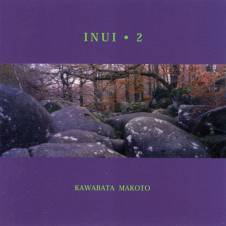
a1729275931_16Kawabata Makoto [河端一] is the guitarist and mastermind behind Acid Mothers Temple. The band is hugely prolific. But he still had time to record solo albums. Often times without any guitar.

This was Kawabata’s second solo LP, now available on bandcamp

INUI 2 was the first widely available solo CD by this prolific Japanese guitarist/composer/bearded guru. Known primarily for his recent work with oddballs Acid Mothers Temple, Kawabata’s career actually goes back to the late ’70s and spans many styles, including solo guitar improv, electronics, folk, and, of course, the deranged acid mayhem associated with the PSF scene. Performed entirely solo on violin, kemenje, zurna, electronics, sarangi, taiko, gong, water, bouzouki, cello, vibes, organ, and sitar, the four tracks that make up INUI 2 are perfectly executed dream-music, equal parts delicately floating and heavily droning. There’s also one all-too-short modal essay for bouzouki that is amazingly beautiful.

“Mou” (9:56) has a drone underpinning the song as he plays a quiet keyboard melody over the top.  About half way through the zurna comes in playing its somewhat harsh melody (although it is less harsh here).  This is a pretty cool chill out song.  [Instruments: Violin, kemenje, zurna, electronics].

“Meii” (11:02) is composed of slowly plucked sarangi strings.  They ring out loud and are accompanied by thumps on the taiko and occasional crashes of the gong. There is also a high pitched feedback/electronic sound that rings out form time to time.   About midway through the bowing become s a little wild and improvisational until it settles back down again.  [Instruments: Sarangi, taiko, gong, water].

“Shi” (3:47) is the ‘all too short” piece and I agree that it is too short.  It features a quietly plucked string melody on the bouzouki that is very pretty.  It has mild drones behind it.  About half way through the melody changes, a faster more deliberate style but still quiet and pleasing.  I could listen to this one for much much longer.  [Instruments: bouzouki, cello, vibe, organ].

“Kan” (14:18) starts as harsh electronic drone with occasional blips of hi frequency sounds.   It’s the first unpleasant sound on the disc.  Although after 2 and a half minutes, the string drones enter and smooth things over.  At some point a pulsing possibly, backwards recorded series of notes comes in to give the drone some drive.  [Instruments: bowed sitar, violin, electric sitar, electronics].

[READ: September 10, 2019] “Ranch Girl”

This brief story was collected in Meloy’s Half in Love.

It starts with the fatalistic sentence:

If you’re white and you’re not rich or poor but somewhere in the middle it’s hard to have worse luck than to be born a girl on a ranch.

The unnamed protagonist grew up the daughter of the foreman of the Ted Haskell Running H Ranch.  Haskell’s brand was a slanted H–she had seen it all her life and didn’t know an H was supposed to be upright until she went to school. (more…)

Read Full Post »

New_Yorker_September_11_2000-2015_02_20_13_56_46-1000x1400SOUNDTRACK: KAWABATA MAKOTO [河端一]-INUI 1 (2000).

a2061426618_16Kawabata Makoto [河端一] is the guitarist and mastermind behind Acid Mothers Temple.  The band is hugely prolific.  But he still had time to record solo albums.  Often times without any guitar.

This was Kawabata’s first solo LP, now available on bandcamp

from way back in 2000 (about 100 releases ago, in Kawabata terms). Originally released by the mighty SIWA label in a tiny, hand printed edition of 300, this has long been the most sought-after Kawabata item, pretty much impossible to track down without a wallet full of ebay slush funds. The music, as on all of Kawabata’s INUI series releases, is intensely personal and introspective, with long tracks built up of soft-focus layers of mid-fi violin, sarangi, oud, sitar, bouzouki, etc.

And that’s what this is.

The credits indicate that he plays violin, sarangi, oud, sitar, bouzouki, lyra, shou, nei, and sings.

There are three tracks.

“Shin” (11:09) is a quiet drone of him playing any or all of the instruments mentioned.  I like the middle eastern drone style paired with a kind of lead bowing improv.  The piece ends with a fifteen second moaning voice.  The voice is French film maker and musician Audrey Ginestet.

Tai (9:45) is combination of drones and plucked notes.  He sings a melody along with a bowed solo, making this song very calming.

Son (21:45) is nearly twenty minutes of unchanging drones.  It can really make you feel transcendent.  After about 16 minutes his voice comes in, echoing and distant.

This album is not for everyone, but it can certainly put you in a different head space.

[READ: August 15, 2019] “Water Child”

Nadine is a nurse.  She has moved to Brooklyn from Haiti and is living by herself.

The story opens wit her receiving a letter from her parents. It is positive and warm and asks her to call them.  Nadine wants to call but does not. For days and weeks.  But she reads the note several times a day, marveling at the lightness of the airmail paper.

Nadine ate lunch by herself.  A fellow nurse, Josette’s lunch began when Nadine’s ended and they crossed paths every day.  But their conversations were brief and functional. (more…)

Read Full Post »

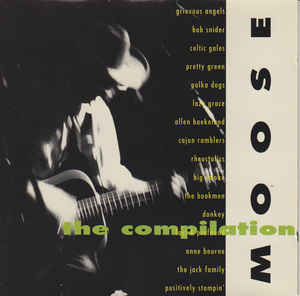
SOUNDTRACK: THE BOOKMEN-“Huggin’ at My Pillow” (Moose: The Compilation, 1991).

Back in the 1990s, it was common to buy a compilation or soundtrack or even a band’s album based on one song.  Only to then find that you didn’t really like anything else on it.

Maybe that single sounded like nothing else on the album.  Maybe the movie was almost entirely one genre, but they had that one song that you liked over the credits.  Or maybe the compilation was for something you didn’t know, but a song you really wanted was on it, too.

With streaming music that need not happen anymore.  Except in this case.

I bought this compilation, used, recently exclusively for one song, Rheostatics’ “Woodstuck.”  It’s a goofy song and this is the only place you can get the studio version.  The actual compilation was not well documented, so I didn’t know what the other bands on it might sound like.  It turns out to be a compilation for Ontario based Moose Records which specialized in Rock, Folk, World & Country.  They put out another compilation in 1992 and that’s all I can find out about them.

The Bookmen were the creation of legendary Toronto musician and independent music promoter Dave Bookman.  This is a fun bluesy stomper that sounds like a song of lost love, although the final line of the chorus might reveal the truth:

I’m huggin at my pillow but it’s just not the same
My pillow don’t know the score of the Blue Jays game.

I really enjoyed this song, so it’s no surprise to see that the rest of the band consists of Tim Mech, guitar tech for Rheostatics, Tim Vesely bassist for Rheostatics, and Dave Clark drummer for Rheostatics.  Shame I can’t find a copy of their only release Volume One: Delicatessen.

[READ: July 20, 2019] “The Love of My Life”

I have really enjoyed the more recent stories from T.C. Boyle.  I haven’t read one of his older stories in quite some time, so I don’t remember if this story is representative or not, but holy crap was this story dark.

And yet it started so sweetly.

It is the story of two high school students, Jeremy and China who are madly in love.  That spring break, they were planning on going camping–a lovely five day stretch of gorgeous weather and solitude.  The first couple of days were wonderful–they didn’t even bother putting clothes on.

They were ever so much in love. He even practiced his AP Spanish on her: Tu eres el amor de mi vida.  She tried to reply but she was taking French.

They were also excellent students–he was heading to Brown (his father’s alma mater) and she was almost but not quite the class salutatorian. (more…)

Read Full Post »

SOUNDTRACK: MATTIEL-NonCOMM (May 16, 2019).

I’ve been hearing a lot about Mattiel–she (they) were even supposed to open for a show I as going to (but they were replaced at some point).  I thought I didn’t know their music, but when they played the last song of this set “Keep the Change” that I realized I’d heard it on WXPN quite a lot.

This is another set where the blurb is off.  It mentions the song “Heck Fire” which they didn’t play and only lists four songs in the setlist when, indeed, there were five.

Mattiel‘s five-song set [gave] their audience a taste of Satis Factory, their upcoming June release. Lead singer Mattiel Brown was backed by a four-piece band that really knows how to rock.

Their set began with “Rescue You.” Brown wasted no time getting started; her energy was immediately through the roof as she commanded the crowd’s attention with soulful yelps.

I am rather puzzled by what Mattiel actually plays.  They are described as garage rock and I guess that’s true.  Although this song has a real honky-tonk feel, bordering on an outlaw country vibe.

The second song “Je Ne Me Connais Pas” is indeed sung in French ( I wondered why I couldn’t understand the chanted chorus.  It’s primarily a sharp repeated guitar melodies.  The full band kicks in during the catchy chorus.

“Food for Thought” opens with a slow bass and a lurching melody.  I really started to like them by this song.  Things slowed down slightly for “Millionaire” which has a grungy riff and a chanted oh oh oh

The set concluded with “Keep the Change”, the first single that Mattiel released.

It’s an obvious single–upbeat and catchy with  a sweet guitar melody and a sing along chorus:

I’ve wasted all my time
Don’t pay me any mind.

I’ll bet they are fun live.

[READ: June 1, 2020] “The Passenger”

This story takes a surprising twist that turns it from one thing into something else–without ever losing the tone and ideas behind the original idea.

I was intrigued to read this opening line.  I guess in 2000 it was timely, now in 2020 it seems so passe.

I have a ring in my nose and a ring in my navel, and people make assumptions about me.  None of them are true.  I’m not a punk or slave, a biker chick or a fashion bug.

A slave?

The narrator, Babe is 23.  She drives a limo around Los Angeles.  Her dispatcher is darkly humorous–possibly the only thing that can get her through the day.

She has a pickup at LAX (Ex-Lax).  They are a couple named Chin.  This was written before 9/11 so it’s interesting how much grief she is given at the airport even before then. (more…)

Read Full Post »

SOUNDTRACK: LULA WILES-NonCOMM (May 16, 2019).

I thought Lula Wiles was a person, but they are a trio.

Contemporary roots trio Lula Wiles shined brilliantly on Thursday night. The young band, consisting of Eleanor Buckland, Isa Burke and Mali Obomsawin — joined by Eli Cohen on drums — [played] a passionate mix of bluegrass, country rock and folk music.

All four members of the group grew up in Maine, and they met while taking lessons at Maine Fiddle Camp, “which I know is, like, disgustingly adorable,” Buckland remarked during the show.  All three singers are also songwriters and instrumentalists, and they displayed impressive group chemistry in several different instrumentations throughout their performance. The trio has always sounded stellar in a traditional bluegrass format — like fiddle, guitar and upright bass — but they added new dimensions to their set when they chose to break out of that format and explore other sounds.

They opened with a traditional country-sounding song, “Hometown”

Lula Wiles’ opener, the poignant “Hometown,” found Burke playing an electric guitar with plenty of added fuzz, which propelled the song forward on top of Cohen’s steady backbeat. Buckland sang three verses from the perspective of an adult returning to her beloved hometown to find her friends and family struggling to make ends meet; the song’s lens gradually moved from personal to historical. “Flip a coin and call it pride or shame / Red and white and the working blues / Welfare, warfare, laying the blame / No matter who wins, someone’s gonna lose,” she proclaimed in her third verse.

“Nashville Man” is even more country, but a more stompin’ country with lots of fiddle from Burke and old-fashioned harmonies.

The album, What Will We Do, which follows their self-titled 2016 debut, fits within the stylistic paradigms for American roots music, but the songwriters also bring personal specificity and a modern edge — they pose questions about identity, history, and the principles of justice. In a statement on Lula Wiles’ website, Obomsawin explains, “We wanted to make an album that reflected, in a current way, what we are all staying up late thinking about and talking about over drinks at the dinner table […] What is everyone worried about, confiding in their friends about, losing sleep about?”

The first two songs seemed kind of fun (musically at least), but things get more serious when Burke introduced “Shaking as It Turns,”

She explained that she had written the song following the violent neo-Nazi rallies that took place in Charlottesville, Virginia in 2017.

She says it’s about how she felt that summer and how I feel about what it’s like to be a person in America today.  Do you all have feeling about that.  We only have a 20-minute set or we’d expound on that longer–you’ll have to pay attention to the lyrics.

“Is this land yours? Is this land mine?” Burke solemnly wondered between plucks on her banjo. “Baby, do you know just who your enemies are?”

Musically, this was the most interesting with its percussion heavy banjo and loping beat.

Up next is the most powerful and affecting song of the night, “Good Old American Values.”

It is a country waltz on which Obomsawin sang and played a touching upright bass solo. Obomsawin, who is Native American and belongs to the Abenaki Nation, wrote the song “about growing up in a country that was built on the genocide of your people,” she explained.  She was inspired to write the song when protests against the construction of the Dakota Access Pipeline occurred on the Standing Rock Reservation in North Dakota in 2016.

She doesn’t hold back on the lyrics, and the slow melody allows the words to stand clearly.

“Indians and cowboys and saloons / It’s all history by now, and we hold the pen anyhow / drawing good old American cartoons.” Then, after a verse about “American tycoons kicking their feet up in Cancún,” the chord changes took a dark turn, leading into a steely fiddle solo by Burke. “On those good old American values / There’s a fortune to be made,” Obomsawin concluded at the end of the song.

Obomsawin also told the crowd that she has been working on an essay for the Smithsonian Center’s Folklife Magazine about her experiences growing up as a Native person in Maine — I spoke with her for a few minutes after the show about her writing. Obomsawin explained that Native people are the “most invisible” of any ethnic group in the United States, and that she wanted to write about the many ways in which she sees Native peoples’ history and culture being made invisible in the twenty-first century.

When she was growing up, she and her family were the only Native people in their community, which was predominantly white. Although she did not remember experiencing explicit discrimination, she remembered times when she felt alienated by other people in some ways that were “fetishizing” and other ways that were “just ignorant.” As she became involved in the folk music community as a young person, she realized that the culture of American folk music bears a legacy of using Native tropes in songs and performances — especially Native clothing and images of Native people. These forms of cultural appropriation by white musicians are sometimes so ubiquitous, she noted, that many people don’t even notice they are happening. Obomsawin concluded by saying that when Smithsonian Folklife publishes her piece later this year, she hopes people will “read it with an open mind,” because sometimes Native peoples’ critiques of American culture are “so fundamental,” and they lead so deep down to the core of our country’s history, that they challenge our deepest notions of American identity.

The final song of the night is “Love Gone Wrong” the first track on the new record.  It’s a more rocking song with a nice guitar sound a great harmonies that reminds me of I’m With Her.  This song is a

vulnerable reconciliation about an imperfect romance. “What you got left when the flicker dies out? / Tell me what we’re gonna do now?” Burke and Buckland asked together. After the second chorus, the song suddenly turned slow and brooding as Cohen’s drums began to thunder. “There’s never gonna be a right time,” all three singers cried out together, their close three-part harmonies at their boldest and brightest.

That shift in tempo makes the song so much more dramatic.  It is a great set-ender.

[READ: May 22, 2019] “Enough”

This is a short story of a woman’s life.

The story begins with her as a young girl, the youngest of six, whose job it was to clean the plates after Sunday meals.  Each Sunday was a feast topped off by dessert. Every fourth Sunday was ice cream, the day she loved best.

She would bring in two dishes at a time (it was the good china) and proceed to lick the bowls clean from rim to rim.  She also delighted in the ice cream in her own bowl, but was always told not to be so unladlylike in her enjoyment.

When she got older, she developed “the problem with the couch.”  The problem was that she kept getting caught with a boy on it.  First when she was fourteen, both children blushing brightly. (more…)

Read Full Post »

« Newer Posts - Older Posts »