Feeds:
Posts
Comments

Archive for the ‘Thomas McGuane’ Category

41

SOUNDTRACK: SWANS-Live at All Tomorrow’s Parties, October 2, 2011 (2011).

swansatpBefore Swans released this year’s amazing The Seer, they toured supporting their previous album (with a number of songs from The Seer included). This set has two songs from The Seer, “The Apostate” and “The Seer, Pt 1” together they comprise 50 minutes of the nearly two hour show.  The set also includes “No Words No Thoughts” (24 minutes) and “Jim” (a teeny 6 minutes) from 2010’s My Father Will Guide Me Up a Rope to the Sky.  The final track is an eleven minute version of “I Crawled” which goes all the way back to 1984’s Young God EP.

I would never have thought of Swans as a jam band, and yet here they are, with 5 songs in 2 hours.  Although unlike jam bands, they aren’t showing off their musical chops or noodling solos, they are created expressive and moody soundscapes–not as scary as in days of old, but very intense nonetheless.

The set sounds great, although I imagine this would be more enjoyable to watch than to listen to (there a great swaths of music where there’ s not a lot happening).  I wonder what Gira is doing during these stretches.  My friend Phil (or Phillipe Puleo as Gira calls him here) plays drums on the album and on this tour, and I have to say he must be exhausted–man he hits the drums hard.

I listened to this show before I heard The Seer, but it didn’t prepare me for what the album would contain.  Now having heard that album, I appreciate this live show even more–they really master these long songs.  I am going to have to try to see them the next time they swing by.  I admit I used to be afraid at the thought of seeing them because their early music was so intense, but this seems to be a different Swans now, one that an old man like myself could even handle.

The set is no longer available on NPR.

[READ: December 10, 2012] McSweeney’s #41

The cover of this issue has a series of overlapping photographs of lightning.  I didn’t really look at it that closely at first and thought it was an interesting collage.  Indeed, Sarah said it looked like a science textbook of some kind.  But when I read the colophon, I learned that Cassandra C. Jones finds photographs of lightning and (without manipulating them digitally) places them together so that the lightning bolts create shapes.  And indeed, that is what is going on.  And it’s amazing!

The cover’s pictures create a greyhound running (front and back covers show different stages of the run).  There’s also circles and a rabbit running.  It’s incredibly creative and very cool.  You can see some of her work at her site.

The feature of this issue is that there are four stories from Australian Aboriginal Writers, a group that I can honestly say I have never read anything from before.  There’s also beautiful art work accompanying most of the longer stories, three gritty non-fiction pieces and some letters, most of which aren’t very silly at all.

LETTERS (more…)

Read Full Post »

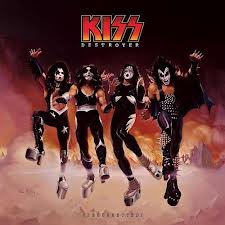
SOUNDTRACK: KISS-Destroyer {Resurrected} (2012).

Bob Ezrin, überproducer, decided he wanted to remaster Kiss’ Destroyer album (for its 35 year anniversary).  If his notes are to believed, this was all Ezrin’s doing with little input from the band.  The notes are interesting and explain Bob’s rational at the time and his rationale for remastering it now.

The remastering isn’t major–the guitars sound more vibrant (there seems to be extra flourishes on “King of the Night Time World”, the vocals sound a little fuller (with some extra echo).  I actually think I’d like the drums to be a little louder–Peter does some great drumming here and it should be emphasized more.  Ezrin explains that do to the limitations of the originals there wasn’t a lot he could do to  re-mix the album.

The most exciting find of the remaster is the new guitar solo for “Sweet Pain.”  It’s not a huge deal, it’s only a few notes, but it is  fun to hear a new take (even if the “real: solo is better).

He adds a “Get Up/Get Down” at the end of the solo in “Detroit Rock City” (which I do not like).  He also repeats an “ahhh” in “Beth” in the middle which just makes me think the song should end.  In the liner notes, he says they added new car crashes at the end of “Detroit Rock City” although  I can’t really hear it. There seems to be more of the little kid’s voice in “God of Thunder” (I always wish they’d provided transcript of what he says).  And overall I think that song sounds the best with the new mix–more intense, more scary, more bombastic.  As for the mellower songs (“Great Expectations,” “Do You Love Me?”) there’s a bit more oomph in the backing vocals.

In the notes he says he fixed something that has been bugging him for 35 years.  The internet boards suggest that it is this: In “Detroit Rock City,” Paul sang “Moving fast down 95,” but 95 goes nowhere near Detroit, so he mixed Paul’s voice to say “moving fast doin’ 95.”  I never really understood which one he was saying to begin with, so I can’t be sure of this.  Overall, is it worth getting this remaster?  Well, probably not. It sounds better and fuller, but not radically different.

The only other  Kiss albums he produced were Revenge and The Elder–Bob, I’d love a remaster of The Elder!

[READ: September 23, 2012] “The Casserole”

This really short story (less than two pages) has a title that’s not terribly exciting.  It also prepares you very little for what will happen and just how the casserole will come into play.

The story is of a trip that a long-married husband and wife take to her family’s ancestral home–a large farm with tons of acres, tons of livestock and worth tons of money.  But he and his wife don’t want the farm (which her parents want to give them), they’re happy in the city, being school teachers who live frugally, saving for a rainy day.

The story is almost all flashback as the couple waits to board the ferry that crosses the river to the house.  He thinks about how they don’t have kids (and never wanted them) and how this drives her parents crazy (they desperately want an heir to their property).  He thinks about how they spend very little money on anything–keeping it squirreled away for their retirement.  Even if his wife might like to go to Belize to show off her still hot body.  He thinks about how the only thing he would spend money on is a beautiful room to house his record collection and maybe to buy an awesome stereo–and how his wife is unimpressed by this. (more…)

Read Full Post »

SOUNDTRACK: CALLA-Calla (1999).

I got this album when a patron donated it to the library.  I had never heard of this band, but the other CDs he donated were really cool so I grabbed this one, too.  This is an almost entirely instrumental album (vocals are whispered when present) that feels like a soundtrack to a futuristic Western.  “Tarantula” opens with some creepy, ghostly sounds and then what sounds like spurs walking across the landscape.  When the guitar comes in it sounds like an old Western.  In many ways this album reminds me of a great band called Scenic, although this one makes more use of electronics, which gives it a more eerie feeling.

“Custom Car Crash” has a very Western feel.  Over creepy scraping sounds, a clean guitar plays very simple guitar lines and chords.  When the keyboard lilts over the noise, it’s quite eerie.  This song has vocals; deep, almost whispered vocals, and I can’t really make them out,  There’s also a live bonus version at the end which really captures the studio version, but which I think is better.  “June” has a slow droney sound: more atmospheric than anything else–it seems maybe ten years ahead of its time).  The 8 minute “Only Drowning Men:” introduces more guitars and a lit of tension.   From the noise a delicate guitar pattern emerges for the last minute of the song.

“Elsewhere” is full of buzzy guitars; there’s a live version at the end of the disc as well.  “Truth About Robots” is my favorite track, a real melody over the noise.  Despite its length (just over 2:30), it tells a full story.

“Trinidad” comes a surprise because it opens with bass (you don’t hear much bass on this album).  But “Keyes” is so quiet as to be almost not there.  “Awake and Under” on the other hand has a great guitar and bass sequence with spoken lyrics (reminiscent of many indie bands of the 90s) but which is very effective here.  There’s a live version as a bonus track and it is a highlight.

This is more interesting music for creating atmosphere, but not something I’d listen to a lot.  I was surprised to find out how many albums they had out.

[READ: March 2, 2012] “A Prairie Girl”

I’ve enjoyed Thomas McGuane stories before, but I wasn’t sure if I’d like this one as it opens with a brothel.  Since I’m thinking about the implications of sex in Gravity’s Rainbow, the last thing I needed was a hooker-with-a-heart-of-gold story.  But this isn’t that.  And it has a brothel with a very funny name: The Butt Hut .  The Butt Hut closes down when the madam dies.  Most of the women moved away (either with local men (to the dismay of many) or on their own).  But one girl who stayed was Mary Elizabeth Foley.

Mary Elizabeth attended church weekly, but most of the people gave her a wide berth—literally an empty pew.  It was finally decided that someone should speak to her since she wasn’t going away.  And so Mrs Gladstone Chandler, wife of the town’s bank owner and all around respected individual, sat near her during the mass.  Afterward, she asked Mary Elizabeth: “Where are you from?”  Mary Elizabeth answered “What business is it of yours?”  And she soon had her pew back. (more…)

Read Full Post »

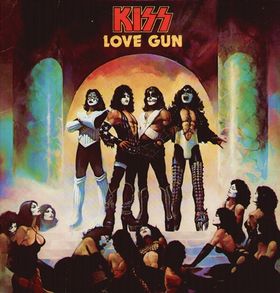
SOUNDTRACK: KISS-Love Gun (1977).

This was the first Kiss album I’d ever heard.  I’ll never forget my cousin bringing it to Long Beach Island in the summer of 1977.  I loved “Christine Sixteen” (of course, I was 8 and had no idea what it was about, I just loved singing it).  And the album has always held a magical mystique for me.

And even now I think the opening guitars of “I Stole you Love” are fantastic–fast and furious.  And the processing (or is that harmonizing) on Paul’s vocals make this song so urgent it’s really amazing.  I also got a kick out of the “guitar!” comment before the solo–certainly not the first band to do it, but surely the first I’d ever heard (they may be the first to say “Listen” at the end of a solo, though).  “Christine Sixteen” is a preposterously poppy song (listen to the bouncy, happy piano!), how could an 8-year-old not love it.  It is, of course, utterly creepy when Gene sings it now, (actually, my calculations show that he was 27 when he wrote the song–still pretty fricking creepy–and in some places, illegal).

The choppiness of “Got Love for Sale” makes the song different from many other Kiss songs, which were all about flow.  The guitars are choppy, the drums are choppy: t’s pretty cool. It’s all hard and heavy (except for the doo wopping “got love for sale” backing vocals).  Ace Frehley finally gets a lead vocal turn on the awesome “Shock Me.”  This has always been one of my favorite Kiss songs although listening to it now it sounds a little weak on this album (really uninspired backing vocals, eh?) but the solo is ripping–and the live versions are much more intense.

My first version of Love Gun had a skip at the beginning of “Tomorrow and Tonight” which made me not like the song very much.  Now I just think of it as a piece of filler–it sounds like it could come from Paul’s solo album (what’s up with the backing singers?).  I assume that they were trying to dip into the anthemic power pop well one too many times with this one.    But all is forgiven with the next song, “Love Gun.”  Yep, sex metaphors abound in Kiss, but this one is pretty awesome.  Beyond that, the sound of the guitars is great: the powerful power chords and the amazingly full chorus are also great.   And the staccato drums (and blistering solo) obviously make the song genius.

The rest of “Side two” is pretty interesting.  “Hooligan” is an odd little number.  It’s Peter’s song and it swings–Peter was always more into older rock than anything else, and this song, if it was stripped of its rougher edges (and cool solo) would fit pretty well on any of Peter’s (not very rocking) solo albums.  Although “dropped out of school when I was 22” is a pretty great line.  “Almost Human” is a weird song with some crazy guitars.  The solo is absolutely insane–I’d love to have seen the recording of it–just noises upon noises, very cool.  And the music itself has an odd eastern feel.  There’s great vocals and effects and all kinds of interesting things going on.  It’s an overlooked gem from this disc. 

Then there’s “Plaster Caster” the song about the woman who makes plaster casts from rock singer’s penises.  I still laugh at the euphemism of “if you want to see my love, just ask her”.   I’ve always loved this song even though listening to it now, it sounds kind of anemic (of course, the guitars were sampled in Tone Loc’s “Funky Cold Medina” so that’s got to mean something, right?) 

The album ends with a cover of “Then She Kissed Me.”  Even though Kiss likes that kind of music, I never did, so this song has always been my least favorite song of all of the first six Kiss albums.  But hey, the album runs 32 minutes in total–without those three minutes, you’re under half an hour.  That’s why I assume it was included.  The solo is nice though.

The album is pretty heavy overall and has some great guitar solos from Ace.  They’re not as anthemic and pretty as on Destroyer but they really show off his guitar skills.  And even though I tend to like Destroyer, Love Gun might be #1 for me on any given day.

[READ: October 4, 2011] “The House on Sand Creek”

This short story was on the surface very funny even though underneath there was exceptional sadness.  The events that set the story in motion are pretty unlikely–a couple rents out a property sight unseen (as if–especially since he is a realtor) and it turns out to hold so much karmic malfeasance that it quickly makes the wife, Monika, flee the god forsaken countryside and fly back to Bosnia. 

The narrator falls into a rhythm with his neighbor Bob (this part of the story reminded me of parts of Wells Towers’ stories–two men, out in the middle of nowhere, bonding despite obvious differences).  But the story quickly moves back out of Tower territory when the narrator gets a call from Monika (about two years after she left).

Her new marriage in Bosnia didn’t work out and she’s moving back in with him and bringing her new son as well.  (Again, it seems unlikely that this could just happen–that she would just call and say she was moving back in with him after two years, but whatever, it moves the plot).  And so, the narrator and his ex-wife move back in together with Monika’s son, Karel.  Karel is the son of an African man and Monika hopes he will grow into a Mandingo (this seems unlikely since the boy’s father is actually a short neurosurgeon from Yoruba–a West African village). (more…)

Read Full Post »

SOUNDTRACK: ROBYN-Body Talk Pt 1 (2010).

Robyn’s Body Talk albums got a lot of praise in 2010.   When I looked at them online, they were really cheap (and considered EPs), so I bought Pt 1.  I was disappointed when I first listened because it seemed like such a sparse album, that I felt there wasn’t much to it.  (Oh, and before I continue, yes, I knew that Robyn was a big time pop singer, but reviewers that I respected–like Sasha Frere Jones raved about the albums).

The opening song “Don’t Fucking Tell Me What to Do” is a really strange song.  The verses are simply Robyn stating that different things are killing her.  It’s strangely compelling despite the repetitiveness.  There’s virtually no music (eventually a single keyboard line keeps a bare melody.  And then the titular chorus.  After two listens I found that I really liked the song even though the first time I heard it I totally blew it off.

“Fembot” is the first proper song, and it’s a simple twist on the stereotype of “woman as robot” since she, the fembot, embraces her sexuality (over a very simple catchy pop melody).  “Dancing On My Own” is an even better song.  Fuller, more complex and with a great chorus.  Two songs seemed like they’d have been destined for Glee: “Cry When You Get Older” & “Hang with Me” they’re a bit too pop for my liking.

The second half of the disk is where it gets odd and interesting.  “Dancehall Queen” has Robyn (a Swedish sing mind you) singing in a Jamaican dancehall accent–which, since I’m infrequently exposed to it, I really like).  It’s super catchy (and I love when she sings “the riddim goes boom boom boom”).  “None of Dem” is another odd song, with a great minor key transition in the chorus and music by Royksopp.

The disc ends with “Jag Vet e Dejlig Rosa” a sweet lullaby sung in Swedish.

The entire EP displays her impressive vocal range and styles.  And even though I really didn’t like it at first it has not only grown on me but gotten my to consider getting Pt 2.  (She released Body Talk Pt 1 (an EP) and Pt 2 (an EP) and then Body Talk which is a combination of some of 1 & 2 with more songs thrown in–a cash in, in my opinion).

[READ: April 30, 2011] “The Good Samaritan”

This was a rather dark story that explores people’s generosity and gullibility.

I was confused through the whole story because the main character’s name was Szabo, and I couldn’t figure out if the ethnicity of the character made a difference (I don’t think so) or even if that was his first or last name.  But that’s a very minor criticism of an otherwise thoroughly engaging story.  I was particularly delighted that while I thought Szabo was going to be a certain kind of character, he turned out to be something else entirely.

As the story opens, it reveals Szabo’s land.  He doesn’t like to call it a ranch (the word is abused by developers), rather he calls it “the property.”  I kind of assumed this story would be about a downtrodden rancher, but that turns out to not be the case at all.  Szabo owns and runs “the property” as a not-very-lucrative side business.  He grows racehorse-quality alfalfa hay for a handful of grateful buyers (he sells in small amounts which most dealers won’t).  It’s true he barely breaks even, but he loves it.  He loves everything about the property–the planting, the reaping and especially the John Deere, which he treats like a baby.

Then one day the baby bites back.  While climbing on the tractor, Szabo slips and dislocates his shoulder.  He calls on his secretary and she assists him to the hospital.  His secretary, Melinda, is from his “real” job, and she is a saintly woman. I was delighted that the story went into so much detail about his “other” life and this woman who helps him.  Szabo’s main career is as a kind of middle man for parts.  He used to manufacture them, but he learned where the money was and took advantage of it  Now he sits in an office (and “the property” is his release).  But Melinda is his saving grace.  She knows everything about him and what he wants and their history together is wonderfully explained. (more…)

Read Full Post »

« Newer Posts