 SOUNDTRACK: RHEOSTATICS-2067 (2004).
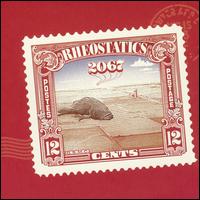
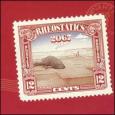 This was the Rheostatics’ final release. I’m not sure if they knew this would be their last disc, but it kind of feels like they are throwing everything they can into it.
It opens with a delicate song from Martin which reminds me of Jane Siberry (the “row upon row” section). Although at about 4 minutes it starts rocking out. It’s a kind of meandering song, which is odd to open an album with.
It’s followed by “Little Bird Little Bird” a great folky song form Bidini. But the disc really come alive with “Marginalized” a song that reminds me in some ways of “Horses,” as it is rocking and a little twisted (it seems surprising that it came from Tim Vesely). It’s got some great guitar and an impressive keyboard solo (!) from new member Michael Phillip Wojewoda.
“The Tarleks” follows (with some fun frog noises). It opens slowly (as Martin songs tend to do) but once it really takes off, its got a great riff with his wonderful dramatic pauses and really funky sound from the bass/keyboards. Then we get the wonderfully odd “Power Ballad for Ozzy Osbourne.” It’s a kind of joke (but not really) about rock performers aging gracefully. Bidini gets a bunch of songs on this disc, and here he gets two in a row, with the bizarrely wonderful “I Dig Music.” The subtitle is “The Jazz Animal” and it tells you a lot about the song…it is indeed a kind of high-octane jazz. But it has many different segments (and a lyric that references Squarepusher).
“Here Comes the Image” is a 6 minute track from Vesely which sounds very much like his more mellow tracks. I’m not sure his tracks belong in the middle o f a disc because they tend to really bring the momentum to a halt. Although it is a pretty song, it’s quite mellow (the organ solo at the end is pretty sweetly retro). It’s followed by the five-minute slow instrumental “Who is This Man and Why is He Laughing?” It really feels like an album ender.
So when “The Latest Attempt on Your Life” comes in, it revitalizes the sleepiness that those two songs imbue. This track has the wonderful repeated chant “Everyone hates you, you sing like a woman”). “Polar Bears and Trees” follows and it’s another kind of crazy song from Bidini. It has such simple verses but the chanted “hey hey ho ho” rocks hard and is wonderfully fun. (The lyrics are clever too).
Vesely returns with the beautiful, wonderfully catchy “Making Progress” which has another great retro keyboard solo at the end. The final track “Praise This Mutilated World” is one of the most beautiful songs in their output. It starts as a fairly simple acoustic track (Bidini knows a good melody). At about two minutes in, the band joins in with amazing harmonies. The quiet parts keep coming back only to be overwhelmed by the harmonies once again. The last two minutes are a spoken section. It goes on a bit long, but is redeemed by another gorgeous chorus.
There’s a bonus track which is a very electronic version of “Record Body Count.” So this disc is definitely overly long in some places. There are some great parts to the disc, but it feels like it could have used a good editor. Nevertheless, since it’s the band’s final release, respect is due.
[READ: March 15, 2011] “Water Spider”
This very short (three-pages) story turned very dark rather quickly.
It opens with an African man, Bokarie, settling into his life as a convenience store clerk in Ottawa. We learn that he was granted asylum, and that he has the scars to prove it. He was quite nervous about leaving his country, and he still puts cinder blocks behind his door, to discourage uninvited guests.
At the same time, the action of the story concerns the accidental drowning of Caitlin, a young girl who presumably got too close to the creek when it overflowed. The town is obviously distraught that one of their youngest and most innocent kids was killed, and they are planning a memorial service. They are encouraging everyone to wear pink to the service and are even hoping to get a wreath put on the town’s crest.
Bokarie looks on this entire scene with a kind of bemusement. His life in Africa was full of death. Most of it horrifying. So he seems somewhat unsure of what to make of the town’s outpouring for one lost child. And then the story slowly reveals a shocking truth.
The truth is NOT that he killed Caitlin. That’d not how the story is going (I didn’t really think it would go there, but it was a possibility). Rather, the truth comes out about Bokarie himself, and his life back in Africa. And it’s frankly horrible.
As the story draws to a close, Bokarie makes a decision that is going to impact the community. It’s a little unclear what his motivation is, but it opens so many possibilities, that it really brings out a whole new realm to the story,
In some ways this story reminded me of Damon Galgut’s “An African Sermon (from The Walrus July/Aug 2004) which also had an African character whose past has a hidden element and which turns out to be much darker than originally laid out.
Read Full Post »
 SOUNDTRACK:





 I Just Read About That...