Feeds:
Posts
Comments

Archive for the ‘Authors’ Category

SOUNDTRACK: IMOGEN HEAP-Tiny Desk Concert #859 (June 20, 2019).

I know of Imogen Heap from a song called “Come Here Boy” that she released way back in 1998.  It was stark and dramatic and somewhat sexual. In short, a quintessential 90s track.

Then she disappeared.

Well, she actually made an album with Guy Sigsworth as Frou Frou.  And then she disappeared a again.

Actually she didn’t disappear at all. She released a song, “Hide and Seek” which was mostly just her singing into a vocoder (and was quite transfixing.  It became a huge hit (which I didn’t know about because I didn’t watch The O.C.).

But in 2011, she started experimenting with these high tech gloves that allowed her to do all kinds of audio manipulation just by moving her hands.

She even says, some people know me because I am interested in block chain technology and some people know me for these gloves.  They don’t even know I make music they just know about the gloves.

But in this Concert, the gloves come last.

Up first is the first song that she and Guy Sigsworth have written together in 17 years.  “Guitar Song” (she tends to leave placeholder names, so that will likely change) is a quiet pretty song with a lot of, yes, guitar from Steve Jones.  It’s a simple melody fleshed out with keys from Sigsworth.  It’s really pretty and very catchy.

Up next is “Speeding Cars” which she says was a B-side that was never released as a single but which her fans really love.  Zoë Keating plays cello and Imogen says she has a terrific album of her own called Snowmelt and she hopes Keating gets her own Tiny Desk someday.  Tim Keiper is on drums and vast array of percussion.  Imogen is on the piano she has an excellent falsetto for this very pretty song.

Then she puts on the Mi.Mu gloves.

Imogen Heap not only has an enchanting voice but also the talents of a world-class audio engineer. She’s completely engrossed in a technology she’s helped to develop, one that makes it possible to alter sounds, create loops and compose tunes all with the wave of her glove-wearing hands. The high-tech gloves, now called Mi.Mu Gloves, were first shown at a TEDGlobal conference eight years ago. Her performances, with her sound-altering arm and hand gestures, resemble a summoning of spirits, a far more compelling live experience than what Imogen said used to look like she was standing behind her laptop checking email.

She gives a lengthy explanation and brief demonstration of these very cool loves.  Then it’s on to “Hide and Seek,” which she had re-imagined for the Broadway play, Harry Potter and the Cursed Child and which she says that if she doesn’t play people throw tomatoes at her.

It really sounds nothing like the original but it is amazing to watch her make the song with her hands waving around.

[READ: June 1, 2019] “The Maid’s Story”

This story introduces us to the Gersons, a family on vacation in a hotel. The husband is small and insignificant. But the wife is larger than life.  Both physically and in personality.

Hannah Kohl, the maid, was taken with Mr Gerson’s red brooch and when she went to clean the room later, she pocketed it.  As she did so, she promised herself it would be the last thing she ever took from a patron.

But Mrs Gershon walked in before the maid had time to close the jewelry box.  She told her it was costume and worth nothing but how could the maid have thought Mrs Gerson wouldn’t notice?

The maid is very apologetic.  She begs not to be ratted out and pleads with the woman.  She says her eight-year-old son has polio (“So did our president, but Eleanor doesn’t go around stealing jewelry).

Mrs Gerson asks where Hannah is from–Wroclaw Poland.  In the camp? No, her father moved them before.  And the hotel owner’s second cousin helped them.  Then Hannah did something unexpected–she opened up to Mrs Gerson about her travels and her life.

Mrs Gerson diagnosed her as a kleptomaniac (she compulsively stile things she didn’t need).  But she was mostly concerned about the boy, Isaac.  She insisted that he receive proper care for his polio  The doctor Hannah’d been going to was an elder in the old country synagogue who showed no evidence that he knew anything about medicine  He said the polio would clear up and go away on its own.

The new doctor was in Manhattan, a lengthy trip for Hannah and Isaac.  Mrs Gerson said they could stay with her family when they traveled in.

The doctor gave many recommendations and said that Mrs Gerson was paying for it all.

The Gerson children were uninterested in Isaac until he told them a story about people dying at the hotel.  They found his story (which was partly made up) to be engrossing.

After dinner Mr Gerson excused himself and left the two women to talk.  Mrs Gerson pulled Hannah on to her lap  She soothed her and stroked her head but soon the stroking became sexual.  This made Hannah very uncomfortable and she froze, enduring the touches which gave her revulsed pleasure.

Hannah and Issac went to Manhattan twice a month.  Each time, the same thing happened.  Mrs Gerson never said anything about it, but it happened nonetheless. It was especially upsetting because Hannah very much liked Mrs Gerson otherwise. She was funny and bold and seemed genuinely interested in their health and prosperity.  And Hannah would put p with anything for Isaac;s welfare.

Soon, Issac was deemed just about normal;–one more visit would do it.

One night, Mrs Gerson revealed that all of their money was her husband’s–her family is as poor as Hannah’s. Nobody least of all Mrs Gerson really understood why Bert chose her.  Plus, he always knew that Mrs Gerson liked girls better.

Bert wants things to be easy.  So Mrs Gerson does everything—raises the kids, takes care of family affairs.

The thing with wives is they can leave. Mothers can’t.

Finally Mrs Gerson declared that she loved Hannah.

Hannah grabbed her things and Isaac and left.

When Hannah returned to the hotel, she was called to the office and informed that a guest said that Hannah had stolen from them.  They had to let her go.

What could Hannah possibly do?


Read Full Post »

SOUNDTRACK: ENSEMBLE SIGNAL PLAYS JONNY GREENWOOD-Tiny Desk Concert #850 (May 20, 2019).

The blurb for this piece is actually by Jonny Greenwood (instead of an NPR staffer), so I’ll keep the whole thing.

I’ve watched a lot of Tiny Desk concerts over the years. It’s good to see musicians in the raw, away from stage lighting and backing tracks — as if they’ve just stopped by an office to play over a lunch break, with desk-bound employees watching on. The performances should expose flaws, but instead they tend to expose musicians being casually brilliant, like the members of Ensemble Signal, who certainly play these pieces beautifully.

Unfortunately, I was nowhere near Washington, D.C. for this recording. And I still find it bizarre that you can put a musical idea on paper and have it reproduced at such a distance — and with such added life. We’re used to sounds and images being shared as exact clones of one another, but the pleasure in using ink and paper is that the music is interpreted rather than just reproduced. All those years of practice, in all those players, distilled into 15 minutes of music. It’s a big privilege — and a continuing motivation to write the best I can.

The first piece, Three Miniatures from Water, was originally a sketch for an Australian Chamber Orchestra commission in 2014. I thought it’d be easier to approach writing for full orchestra by starting with a piano miniature and scaling it up. In fact, only some of the material made it to the final commission, and I always felt the original three miniatures hung together well enough as its own piece of music.

I’m a big admirer of composer Olivier Messiaen, and one of the musical scales he favored was the octatonic mode. It’s a lot like an Indian rag in that it’s a rigid set of notes, yet isn’t necessarily in a major or minor key. There are hundreds of rags in Indian music, but I was surprised to find that Messiaen’s octatonic scale isn’t one of them. Despite this, it sits nicely over a drone — and that was the starting point for this music. That and the glorious sound of the tanpura, the drone instrument that underpins everything in classical Indian music.

The piece is called Water, after the Philip Larkin poem with the same title, and was especially inspired by the final stanza:

And I should raise in the east
A glass of water
Where any-angled light
Would congregate endlessly.

The second piece, called 88 (No. 1), is also in one of Messiaen’s modes in the first half, before becoming a celebration of the mechanical nature of the piano. The performer has to put fingerless gloves on halfway through, partly in tribute to the immortal Glenn Gould, and partly because the technique requires some painful hammering. But don’t let that fool you into thinking the music is dark or angry: It is — or is meant to be — joyful.

“Three Miniatures from Water” features lots of drones from the strings ( Lauren Radnofsky on cello and Greg Chudzik on bowed upright bass).  There’s also the excellent tanpura drones from Paul Coleman and Elena Moon Park. The violin from Olivia De Prato plays a slow melody that seems to appear and disappear while the piano plays a somewhat spooky pizzicato melody.

“88 (No. 1)” is a solo piano piece by Lisa Moore (who played piano on the other piece as well).  It does seem to use all 88 keys in various fashion.  Indeed, she does put on fingerless gloves a little more than half way through the piece where she does play quite possibly every note (I can’t imagine what that looks like on paper).  For the last 45 seconds, she seems to be banging relentlessly (but tunefully–are there chords?) all over the keys.

Neither one of these pieces seem particularly joyful to me–they both seem kind of scary, but I am fascinated at the kind of compositions the guy from Radiohead makes.

[READ: June 1, 2019] “Then Again”

This is an excerpt from The Other Half, a manuscript that Ciment is writing to rebut her own 1996 memoir, Half a Life.

In that original memoir, she wrote about meeting her husband.  At the time she was seventeen and he was forty-seven (and her art teacher).

She asks what should she call him now.  “My husband”?  Yes, if it is the story is about the man she married and lived with for forty-five years.  But what if it is about an older man preying on a teenager.  Should she call him “The artist” or “the art teacher.”

She says he didn’t know what to expect when he kissed her for the first time–she could have screamed or slapped him.  But she had fantasized about him for the last six months, so that was not going to happen. (more…)

Read Full Post »

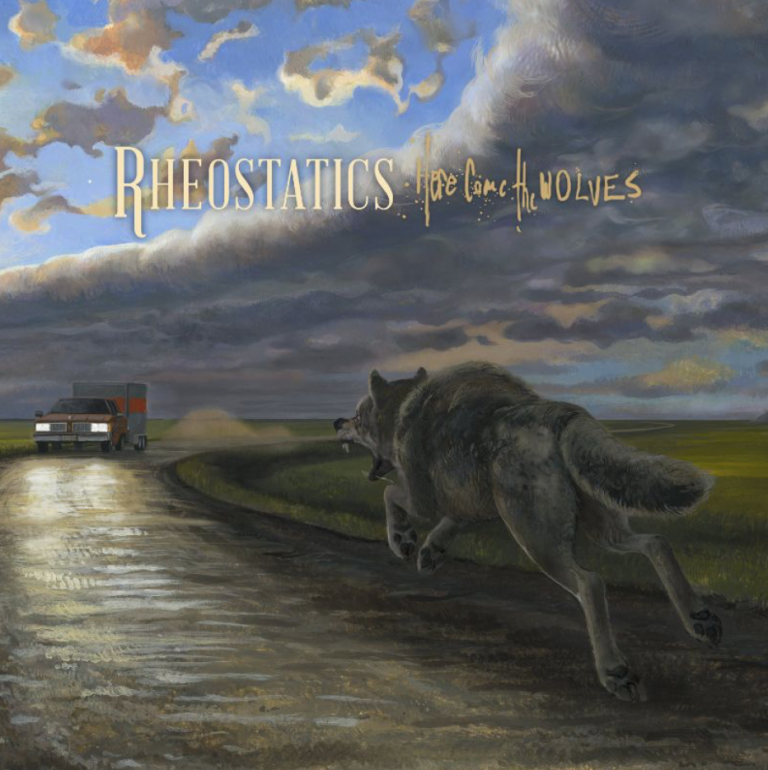
SOUNDTRACK: RHEOSTATICS-“Here Come the Wolves” (2019).

This is the first new officially released Rheostatics song in 15 years.  And it’s a doozy. A six and a half minute epic with a few different parts and styles within.

I’ve heard this song on a few of the the recent RheostatcisLive recordings, but this studio version explores depth and detail in a way that the live version could not.  And it’s really fantastic.

The video is also cool because it shows guitarist/singer Martin Tielli in a timelapse video finishing the cover art.

Starting with a menacing riff including Hugh Marsh on violin (and some interesting whoos! in the distance), the chorus opens the song.  Then comes a stomping series of catchy verses.

After 2 and a half minutes, the song slows down and Martin picks up a quietly sung middle section.  He sings over some eerie violins and keys before the guitars slowly build.  Quietly picked acoustic guitar flesh out the song as Martin continues.

After two minutes of this quieter section, it picks up again with a piano-based version of the melody.  This takes on a more uplifting feel as Martin sings in his whispered vocals.

The song has a nice climax and then a short denouement.

It’s nowhere near as weird as some of my favorite songs by them, although it is far from a guaranteed radio hit.  Nevertheless it is pure Rheostatics, and I love it.

I’m delighted to have them back making new music and holy cow, if I have to go to Toronto to see them play live, so be it.

[READ: June 24, 2019] “Back Then”

This is a story of a woman looking back on her burgeoning adulthood.

In the summers she and her family would go to a lake (in Ohio).  The story begins with them watching the Perseids.  She and her sister wanted to go down to the lake to see them fall into the water, but her mom always said no.

The story is full of sweet details–her sister peeing behind the furnace in her grandmother’s room, walking in flip-flops to buy the paper for their dad, the goat in the neighbor’s yard, even the trailer park.  They had enforced lunch and “quiet time.”  Quiet time was supposedly to prevent them from getting cramps, but it was really just for their mom to have some peace.  And how the last day always brought a double feeling of wanting to stay forever and wanting to go home. (more…)

Read Full Post »

SOUNDTRACK: UraShimaSakataSen (浦島坂田船)-Shoutër (2016).

When I looked up “Shouter” I found this song (I love the umlaut).

I’ve never heard of UraShimaSakataSen (浦島坂田船), or USSS for short.  But I love that this is their description:

USSS is a 4-unit indie pop boy group consisting of Uratanuki (Green), Shima (Purple), Sakata (Red) and Senra (Yellow).

I didn’t spend a lot of time researching this band, but every image of them seems to be manga.  And the video for this song is entirely manga (hilariously only four still images recycled).  Each singer is a color and each singer has a background of that color.  And each time that singer sings the screen turns that color.

I particularly like that Green has a cuddle creature on his shoulder implying some kind of fascinating back story, I’m sure.

Most of the lyrics are in Japanese, but there is an occasional English section like the one that mentions the title:

浦)Unlimited,
島)Success,
坂田)Shining,
船)Shoutër,

For a pop band, this song doesn’t quite sound as poppy as I’d have thought.

It starts with a flute and loud electronic drums as the soft vocals come in.  The flute returns and it segues to heavy guitars and kind of rapped section as the song bounces along.

The chorus has heavy guitars and a grungey stomp before all four sing whatever it is the chorus is.

The melding of heavy metal guitars, traditional sounding flute, dance drums and pop melody and fast singing is (at least for 2016) so uniquely Japanese.

Babymetal has released their first album two year earlier.  While this is in no way a heavy metal song (and sounds nothing like Babymetal), the use of the really heavy guitars in this song has to be attributed to Babymetal’s success.

Then I had to check out the lyrics.  Someone has spelled out the English lyrics online.  Holy cow this is a really dark song.  And, how many pop songs name check Joan of Arc, Aristotle and Nietzche?  Is UraShimaSakataSen some kind of existential anime boy band?  The plot thickens.

Maybe we cry while we’re born
And smile when we die because we’re happy
All our words pile up
Our voices continue to reach its limits as we search for the meaning of shouting
Input, Verify, Accept, Start.
Being raised in a made-up and empty pitch black world
I play alone
A little light shines from the window like a lamp
One or two texts stand out
I wonder what I should play tonight.
Should I talk, dance, or draw…
Walk out to spaces and change
Going back and forth from reality and delusions
All ya flags throw away; struggle through it.
After spending extra time eating dinner and taking a bath
I say the magic words.
Listen to my voice
What should we shout in an empty world?
The people who “encourage” us, like a gallant figure Jeanne d’Arc
What should we shout in an empty world?
We chase after people who cause “conflict”, and want to be like Einstein…
Shout! Yeah Yeah Yeah
Until our voices continues to reach its limits
Stopped, Reload, Reenter, Restart.
I see. It’s because I wasn’t taught to be a good loser?
I only keep on losing my way
So I wonder what I should do with my future?
Right hand, left hand, you, and a survey
Let’s talk more; it’s prolonging the battle
Really, thank you for everything.
Shocking sound and tonight; you’re the guest of honor
Here, so to say, is the electronic secret base
Enjoy tour and travel; I’m the guide
It’s the era for minority groups and puffing out your chest.
These are words to destroy weapons
Listen to my voice
What should we shout in an empty world?
We “petition” to understand people, like the unfortunate Alan Turing.
Comforting people in lamentation about Friedrich Nietzsche…
Shout! Yeah Yeah Yeah
Until our voices continue to reach its limits
If the us that cry while we’re born
Smile when we die,
Then, y’know
I’ll make noise with you all every night
Until our voices reach its limits.
That’s the answer I got from shouting daily.
The empty world disappears and returns to normal.
Each person lives together and waits for reality in a faraway place
In an empty world, I wonder what’s left?
I want to play here one more time.
Please listen to my voice
What should we shout in an empty world?
“Confessions” tie people to the truthful Aristotle.
What should we shout in an empty world?
“Promises” tempt people like Shakespeare…
Shout! Yeah Yeah Yeah
Until your voice reaches its limit

[READ: June 20, 2019] “Shouters”

I think it’s fascinating the way that Shouts & Murmurs tends to make funny people… less funny.  Is it the nature of the New Yorker, that the comedy is such that it’s at a different wavelength?  (Not higher or lower, just different).

Or maybe these pieces aren’t really supposed to be all that funny.

Steve Martin is one of the funniest people ever and yet this idea is so blandly unfunny, that I don’t understand why he wrote it.

I enjoyed the opening… (more…)

Read Full Post »

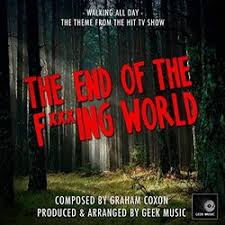
SOUNDTRACK: GRAHAM COXON-The End Of The F***ing World (Original Songs and Score) (2018).

When I saw Graham Coxon live, he played a bunch of songs from this soundtrack.

I assumed that the soundtrack would be one song and a bunch of moody instrumentals, so I never really looked into it. But recently I read that it was really good.

And it is.

There’s 16 songs on the record.  Most are full songs and the few instrumental pieces are just as interesting.

“Walking All Day” is the catchy song that he played live that did interest me in the soundtrack.  It’s a bouncy folk song with a buzzy acoustic guitar solo.  He sings in a quiet whispery voice which sounds different from his usual singing voice.  The lyrics are sweet, if not odd:

Walking all day with my mouth on fire
trying to get talking to you.

“Angry Me” has a punky strum on acoustic guitar.  It sounds like a bratty Blur song from the album that “Song 2” came from.  [He played this].

“Flashback” is 16 seconds of heavy metal noise with saxophones and pummeling drums.  It’s very disconcerting between these two songs, and I feel like it should come later for better sequencing.  But it is only 16 seconds.

“In My Room” is a quiet acoustic song.  It starts with just the guitar.  Then the bass and drums come in as Coxon slowly sings about those outside of his room:

Outside the window they’re singing
Inside the doorway there’s me
Endlessly thinking and working

“Bus Stop” is five minutes long.  There’s a two-minute super catchy instrumental section which is followed by a bouncy verse with rather shoegaze feel.

Then there’s a few really short songs all around two minutes.  “The Beach” starts with a rumbling slide guitar solo and adds picked guitar notes.  It’s got a very Western feeling.  “Saturday Night” is a quiet mournful ballad of acoustic guitar and piano.  He played this live (without the piano).

“On the Prowl” is a garage rock song with a very fifties feel.

“It’s All Blue” is another delicate folk song that Graham played live.  It features his more innocent vocal lines.

“The Snare” is a heavily reverbed noir kind of song with that familiar detective bass line and echoing guitar (very David Lynch).  The last minute or so totally rocks out with a distortion filled solo.

“Lucifer’s Behind Me” is a fast song with bongos and more vibrato guitar lines.  It’s kind of upbeat despite the feeling of pursuit in the lyrics.

“Field” is a lovely instrumental.  A 90 second acoustic guitar piece that is rather relaxing.  A nice contrast to “She Left the Light On– a stark and sinister acoustic song with a lead whistle!  The middle is catchy.  He played this one live.

“Roaming Star” is a 2 minute gentle acoustic piece with soft vocals  About half way through there’s some very old-fashioned sounding horns.  He played this one.

“Sleuth” is a two minute instrumental.  It has a chugging electric guitar with some looping guitar solo work over the top.

“There’s Something in the Way that You Cry” is a slow mournful ballad that he played live.  It’s a pretty sad ending to a soundtrack album that holds together really well and isn’t only instrumental pieces.

I now wish I had heard them before the show so I could have really appreciated them live.

[UPDATE: I watched the show in May 2020 and the soundtrack works really well.  The show is very very dark, as you might guess from the title].

[READ: June 20, 2019] “Superstring Theory for Dummies”

Zev Borow is associated with Dave Eggers.  He worked on their magazine Might and also on McSweeney’s ( I don’t think they work together anymore, but they might).  Since then, has written for just about every publication out there.  He also wrote episodes of and became a prominent story editor in the show Chuck.

This is the first piece of his I’ve read in the New Yorker and, as with so many Shouts & Murmurs, it’s mildly funny.

The bit starts with a quote from the Times in which the author tried to describe superstring theory which looks beyond the three dimensions of space.  Imagine that you are in the book Flatland.  You can move forward and back, left and right but not up or down.

So Borow expands on that.

(more…)

Read Full Post »

SOUNDTRACK: AIMEE MANN-Bachelor No. 2 or, the Last Remains of the Dodo (2000).

Aimee Mann writes really pretty (often sad) songs.  From seeing her play live (in person and on video), she is very upright when she plays.  And I feel like this uprightness comes forth in her music.  She is very serious–not that she isn’t funny, because she can be–but that she is serious about songcraft.  Her songs, even when they are catchy, are very proper songs.  I don’t know if that makes sense exactly.

It also means to me that most of her music sounds similar.  She has a style of songwriting and she is very good at it.  For me, it means that a full album can start to sound the same, but a few songs are fantastic.

“How Am I Different” opens up with a super catchy melody and a guitar hook that repeats throughout.  “Nothing is Good Enough” is a bit slower and less bouncy.  But “Red Vines” brings that bounce back with a super catchy chorus (and backing vocalists to punch it up).  The piano coda is a nice touch.

“The Fall of the World’s Own Optimist” starts slow but adds a cool guitar riff as the bridge leads to a catchy, full chorus.  “Satellite” slows things down as if to cleanse the palette for “Deathly.”

Now that I’ve met you
Would you object to
Never seeing each other again

The chorus is low key but the verses have a great melody.  It stretches out to nearly six minutes, growing bigger as it goes with a soaring guitar solo and better and better rhymes.

“Ghost World” has some wonderful soaring choruses while “Calling It Quits” changes the tone of the album a bit with a slightly more jazzy feel.  It also adds a bunch of sounds that are unexpected from Mann–horns, snapping drums and in the middle of the song, the sound of a record slowing down before the song resumes again.  It’s probably the most fun song on the record–unexpected for a song with this title.

“Driving Sideways” seems like it will be a slower downer of a song but once again, she pulls out a super catchy intro to the chorus (with harmonies) as the rest of the chorus trails on in Mann’s solo voice as we hang on every word.  It ends with a tidy, pretty guitar solo.

“Just Like Anyone” is a quiet guitar song, just over a minute long.  It’s a surprisingly complete song and shows that not only can she pack a lot into less than 90 seconds, she should do it more often.

“Susan” is a surprisingly boppy little number that bounces along nicely on the two-syllable rhythm of the title character.  “It Takes All Kinds” slows things down with piano and gentle guitars and “You Do” ends the album with Mann showing off a bit of her falsetto.

This is in no way a party album, it’s more of a quiet autumn day album.  And it’s quite lovely.  Thanks, Nick, for reminding me of it.

[READ: May 20, 2019] “It’s a Mann’s World”

Nick Hornby wrote High Fidelity and became something of a musical expert because of it.  As such, he wrote a half a dozen or so musical review sections for the New Yorker.

This was his first and, as one might guess from the title, it is about Aimee Mann.

He begins by talking about the British magazine Mojo and how every month they ask a musician what he or she is listening to.  He says that many musicians of a Certain Age seem to have abandoned rock and roll and are listening more to jazz or classical.  They are doing this “for reasons I can only guess as: Prokofiev! Ellington! Take that Hanson and Wu-Tang Clans fans! ”

These performers seem to suggest that pop music is dead.  Much in the way that people say fiction is dead.  Meanwhile good, talented musicians continue to make albums that people continue to listen to and good talented authors continue to write novels that people continue to read. (more…)

Read Full Post »

SOUNDTRACK: SELFISH CUNT-“Britain Is Shit” / “Fuck the Poor” (2003).

I had not heard of this band until reading about them in yesterday’s Nick Hornby essay.  He didn’t name them, but he mentioned a review in which the band were described as combining ‘the hammering drum machine and guitar of controversial 80’s trio Big Black and the murky noise of early Throbbing Gristle.”

The band was formed in early 2003 by Martin Tomlinson and Patrick Constable, and was noted for provocative lyrics, aggressive stage shows, and electronic-influenced rock.  In 2004, The Guardian placed Selfish Cunt at #40 on its list of “top 40 bands in Britain today.”  They broke up in 2008.

This was their first single.  It surprises me that both of these songs are over three minutes long as they seems like they would be about 45 seconds.

“Britain is Shit” opens with a fast electronic drum beat with jagged guitar stabs and shouted vocals.  Big Black is an excellent touchstone.  After a few verses, all the music drops out except for the drum machine–it’s quite a bold musical statement (not to mention the lyrics).  A ringing guitar chord keeps the semblance of melody going.  The lyrics resume:

Are you having fun / when war is on
put your kettle on / cause the war is on.
Britain is shit / it’s full of lies
white men start their shit / in their shirts and ties.

“Fuck the Poor” is quite similar.  A simple drum machine beat with loud distorted guitars as the only musical element.  The lryics:

Fuck the poor / make war

sung in a heavy British accent,  After the first verse a second guitar chimes in with a guitar riff on top. and more distorted guitar.  The melody doesn’t change.  The song ends in a cacophony of noise.

These songs aren’t original (although combining the sharp electric drum with punk guitars is pretty novel) but they are provocative.  Evidently their live show was quite something.

A 2004 thread on Drowned in Sound describes the live show

I saw them last night, not sure if they could live up to the hype. I went with an open mind but thinking they might not pull it off.

But fuck me. They pulled it off. They fucking rocked. The singer was incredible, hypnotic, acrobatic, snarling, wearing a ripped up catsuit and eye makeup, prowling round the crowd and singing in people’s faces, coming on to all the straight boys, singing in the girls’ ears… like some kind of crossover between iggy, rotten and … grace jones or something. he threw himself around, doing these balletic poses, completely confident and… fucking ace.

Songs? yeah, there were some, they were loud and good. Britain Is Shit is the best anti war song I’ve heard. Fuck The Poor is an anthem. And, one more time, for the record, when he says those vile things like “bang bang another nigger dead” it’s not his own opinion, it’s the voice of someone else – soldier, politician, whoever. It’s a PROTEST not an advocation. come on, haters, get with the fuckin programme.

I think racist types are not really going to latch onto Selfish Cunt because Tompkinson is one of the most obviously gay frontmen i’ve ever seen, and i doubt many racist bigots are particularly accepting of gay people… and i honestly think that the disdain with which he spits out the lyrics make it pretty obvious that there’s something more going on than just the straight lyric.

Of course, you’ll never get a song on the radio with a name like that.

[READ: June 3, 2019] “The Male Gaze”

I enjoyed the tone of this story although the main character was a bit of a puzzle.  She is sophisticated and aware of the male gaze, but seems willing to succumb to it anyway.

Phoebe is a young, sexually active New Yorker: “sometimes she felt like hot shit, sometimes just like shit.”

The first section of the story is called The Most Important Artist of the Post-Second World War Period.

At a party, Phoebe meets Pablo Miles who approached her and says “you’re very fuckable.”

Of all the affronts!  But Phoebe knew the game and made big eyes at him and said “Do you really mean it?” (more…)

Read Full Post »

SOUNDTRACK: MARAH-Kids in Philly (2000).

After reading about Marah in Hornby’s post I decided to listen to their Kids in Philly CD.

I totally get why Hornby likes them and I can absolutely imagine what their live show would be like.

They’ve absolutely got the whole Springsteen vibe–good time rock and roll with close harmony backing vocals.

There’s a harmonica instead of a saxophone (I prefer the harmonica) on “Faraway You: and there’s even xylophones like on Springsteen’s Christmas song on “Point Breeze.”  The horns (and the chanted “come ons”) do appear, this time on “Christian Street.”

“It’s Only Money Tyrone” slows things down with slinky groove and a sound that’s less bar-band.  “My Heart is the Bums on the Street” feels like a quieter Springsteen song–classic rock with gentle vibes and a clap-along feel.  Although I suppose like he sounds more like Craig Finn than Bruce Springsteen.

“The Catfisherman” is a stomping honky-tonking song with an Aerosmith vibe.  “Round Eye Blues” slows things down with a simple melody (in the vein of U2s “With or Without You”).  It also recycles all kinds of early rock n roll lyrics into its own melody, which is fun.

“From the Skyline” has a great guitar riff/solo running through it with a bit more distortion thrown on top.  “Barstool Boys” sounds a bit like The Replacements’ “Here Comes A Regular” only with banjo.  “The History of Where Someone Has Been Killed” adds some acoustic guitar while “This Town” keeps the mood with a quiet album ender.

I am genuinely surprised that this band wasn’t more popular.  They would seem to push a lot of classic classic-rock buttons.

I only wish I had some idea why they chose that name.

[READ: June 15, 2019] “Rock of Ages”

After reading Hornby’s 2000 review of Marah I found this 2004 review of Marah.  Since I had seen that they later did a tour together, I was curious what this lengthy review would be about.  It’s about seeing Marah live and lamenting that a band this good should have to resort to “passing the hat” for tips.

He says

Philadelphia rock ‘n’ roll band Marah is halfway through a typically ferocious, chaotic and inspirational set.  My friends and I have the best seats in the house, a couple of feet away from Marah’s frontmen, Serge and Dave Bielanko.  The show ends triumphantly, as Marah shows tend to do, with Serge lying on the floor amid the feet of his public, wailing away on his harmonica.

What I love about them is that I can hear everything I ever loved about rock music in their recordings and in their live shows … because they are unafraid of showing where their music comes from, and unafraid of the comparisons that will ensue

This show was at a small pub in England.  Which seems a shame since a few months earlier (more…)

Read Full Post »

SOUNDTRACK: STEVE EARLE-Transcendental Blues (2000).

I’ve never really liked Steve Earle’s music.  For some reason I always thought of him as a kind of outlaw country.  But the review of this album from Hornby made me want to check it out.  And while there are certainly country music trappings, this is a solid fun rock record.

Earle’s voice isn’t what I thought it was (or wasn’t was it is now)–it’s much softer and much higher than I imagined.  So what’s going on on this record?

“Transcendental Blues” has a great distorted guitar riff running opposite the throbbing bassline.  Earle’s voice sounds like a cross between Dylan, Petty and (anachronistically) Kevin Devine.  “Everyone’s in Love with You” sounds like a rocking R.E.M. song with a very 90s vocal style and even a reverse guitar solo.

“Another Town” sounds like a song that I’ve heard a million times (but I haven’t).  It’s a simple pop song with a crazy catchy melody and it’s barely 2 minutes long.  “I Can’t Wait” slows things down a bit with a real poppy Matthew Sweet-vibe.

“The Boy Who Never Cried” is a dirgey song, slow and story telling.  It has strings with a slightly Middle Eastern feel.

“Steve’s Last Ramble” is a stompin’ song with full on harmonica introduction (which makes it seem even more Dylan).  “The Galway Girl” is a mandolin-based stomper while “Lonelier Than This” is a quiet, sad song.

“Wherever I Go” is only two minutes ling and has a country feel, even though it’s not that different from the other songs.  The guitar solo is totally early Beatles, but the lyrics are pure country:

I could drink corn whisky ’til my brain goes soft
I could run this highway ’til my wheels come off

The harmonica returns on “When I Fall” the start of a trifecta of country songs.  His drawl really comes out here, possibly because of his duet partner (Steve Earle’s sister, Stacey Earle, a country singer in her own right).  It’s a shame this song is so long as it’s my least favorite.

“I Don’t Want to Lose You Yet” is a simple country pop song (the twang remains).  Although “Halo ‘Round the Moon” is a softer song with a gentle shuffle beat.  “Until the Day I Die” continues with the old school country/bluegrass style with a big ol’ banjo intro, close harmonies, and a fiddle solo.  You can imagine a jug solo, hand clappin’ and a hoedown in a live version.

“All of My Life” rocks out again, with some loud bass and distorted guitar, which I desperately needed after those last few songs.

The disc ends with “Over Yonder (Jonathan’ Song).”  From songfacts:

This song is about the execution-by injection of Jonathan Nobles, which Steve Earle witnessed. The alt-country star told Mojo magazine May 2008 about it: “I don’t recommend it. I befriended Jonathan for several months beforehand. Then I saw the execution and later brought his remains to England for burial according to his wishes. But the execution was incredibly toxic to me. It’s hard. You can’t believe it’s really happening. I remember afterwards I thought, ‘did I black out and miss it? I let Jonathan down.’ Then the blank filled in… it was the shock… I realized exactly what I’d seen. I can’t see myself doing it again. I’ve absorbed enough death. And I still work hard against the death penalty.”

So I’m still on the fence about Earle, but I did enjoy this record much more than I thought I would.  Thanks, Nick.

[READ: June 15, 2019] “Alternative Earle”

I am aware of Steve Earle and I really like his lyrics.  I don’t love his music though–too much country in the alt-country.  Although Hornby describes it as Nashville folk and rock n roll hybrid.  But man, his lyrics are great.  I wish I liked him a bit more especially after reading this review.

Hornby is a passionate music lover and anything he likes sounds great when he describes it.

The album in question is Transcendental Blues (and in the photo Earle’s beard is much shorter than it is now).  As of 2000, Earle has been married and divorced six times (to five women–4 and 6 were the same person). In 1994 he was imprisoned for possessing narcotics.  This sentence ending years of heroin addiction. (more…)

Read Full Post »

  SOUNDTRACK: FOXING-Tiny Desk Concert #857 (June 12, 2019).

I saw Foxing live and they were quite different from their recorded output–louder, more intense, a very physical band.  I was curious if they would sound more like their records or more like their live selves.

They have chosen the album sound–quieter, more subtle with gorgeous orchestration.

But I wasn’t the only one to wonder this.

When we invited Foxing to NPR HQ, we wondered how the band’s big sound would translate to such a (forgive us) tiny space. Would Foxing bring a bagpiper to recreate the shrill accent it snuck onto its latest album, 2018’s Nearer My God, or try to replicate the cathartic energy of its live shows over the hum of computers and fluorescent lights?

I didn’t realize that Foxing was

at the forefront of what’s referred to as “emo revival,” a term for today’s crop of bands heavily influenced by late-’90s and early 2000s groups… But with each new LP, Foxing’s ambitions reach beyond the genre’s boundaries, incorporating broader inspiration.

When I saw them, the show was dominated by singer Conor Murphy and guitarist Eric Hudson.  Interestingly, Hudson is on keys for this set.  Caeleigh Featherstone was on keys for my show.  She is on keys here, but her backing vocals are far more prominent here.

For this performance, Foxing expanded its numbers, bringing a saxophonist (Jordan Pettay) and a couple of string players (Gabriel Valle: violin; Nathan Sander: viola) to accompany the band’s touring lineup — and somehow, we managed to fit everyone behind Bob Boilen’s desk.

The first song, “Slapstick” features Conor’s falsetto and Caeleigh’s backing vocals.  Hudson plays the single wobbly notes that float behind the vocals. The strings are quiet but fill in the silences really nicely.  I love the gentle repeating guitar solo that Ricky Sampson plays through the middle.  Sampson plays bass throughout the rest of the show and Brett Torrence plays it on this song.  That sax solo at the end adds a nice touch to the emotional ending.

For its Tiny Desk, Foxing spotlighted three standout tracks from Nearer My God. The quieter instrumentation pushed singer Conor Murphy’s starkly confessional lyrics and shattering delivery to the forefront, especially on the set’s opening song, “Slapstick.”

And even with minimal amplification, the swelling chorus of the title cut “Nearer My God” is just as impressive as performed during the band’s explosive concerts.

“Nearer My God” accentuates Murphy’s falsetto even further and the harmonies sound truly wonderful.  The opening is quiet but it builds really nicely to the middle section which features great drums from the almost never on camera Jon Hellwig.

The set ends with “Grand Paradise” the song that I think makes them sound most like TV on the Radio.  It’s terrific the way the music counterpoints the vocals. The end section of the song just overwhelms with impassioned vocals.  The ending sax solo is pretty cool too although there’ s a nice bass riff around 11 minutes and we don’t get to see Ricky do it.

This is a great set, although I have a little question over the filming–too much attention to the strings and not enough to the rest of the band.

[READ: June 5, 2019] “Conduction”

This is an incredibly powerful story of slavery and freedom.

The story opens with Hiram Walker departing Virginia.  He is a slave with fake papers and a route to freedom.  The writing is excellent.  You can feel the tension, the fear and the sense that anything could go wrong at any second.  Slave catchers, known as Ryland’s Hounds, were at every turn.

He saw the men who were supposed to help him but he couldn’t make eye contact.  The conductor looked at his false ticket which stated that he had recently purchased his freedom.  The conductor didn’t care and he was allowed on.

After two days, he met a contact whom he also did not know.  After one more silent ride, he was in a house in Philadelphia with members of the Underground.

He explains how he knew the white man who helped him as well as the black man named Raymond White who also helped him.  Raymond’s brother Otha was also there–he was more charming, more jovial than Raymond.

For the next few days he wandered the city of Philadelphia, a free man.  Unused to and somewhat unhappy with this new burden.  It was an unsettling feeling, one that carried great deal of responsibility. (more…)

Read Full Post »

« Newer Posts - Older Posts »