Speaking of John Zorn, there was a nother clip on NPR about the release of his album Masada Rock in 2005. Clearly I stopped listening to Zorn’s new stuff around this time because I didn’t know this record. It features the band Rashanim.
This is a wonderful little mashup of surf rock and noir played by a kind of stripped down rock trio. The main riff is very noir, something Zorn specializes in. It’s funny to me that this is a Masada album as it feels decidedly unJewish to me. But it sounds very Zorn. The band packs a ton of stuff into this 4 minute piece. There’s a lengthy, fairly sloppy guitar solo that goes through much of the song. And the end is a frantic workout.
I liked this song quite a bit and thought I’d see just what Zorn has been up to since I last watched his discography. I’d say that in the last ten years he has released around 100 albums of various styles and genres. I think my wallet is happy I stopped paying attention.
[READ: May 16, 2013] “Poker Face”
The five brief pieces in this week’s New Yorker are labeled as “Imagined Inventions.” And in each one, the author is tasked with inventing something.
I didn’t know Nolan before reading this. This was my least favorite of the five essays—kind of like a final skit from Saturday Night Live. Essentially he raves about how useful emoticons are—very current, yes. Well, he precedes this by saying how in texting it’s even harder to detect sarcasm than it was in emails. He has a friend who uses exclamation points to show sincerity, so Thanks. Could be ironic but Thanks! is sincere. I find I do the same thing, so I appreciated that. (more…)
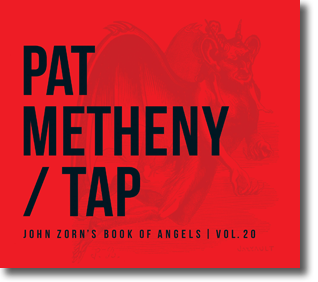
I don’t know all that much about pat Metehny. I know he’s a jazz guitarist held in high regard by some and in less high regard by others. This song is Metheny playing a John Zorn composition–indeed, it comes from an entire album of Zorn covers called Tap: John Zorn’s Book of Angels, Vol. 20. I have been a huge fan of Zorn for decades, and yet some time ago I had to stop following him–his output is just too huge. So this Book of Angels series by the Masada String Quartet is unfamiliar to me.
Knowing what I do about Zorn, this piece is quite an interesting statement–it’s got a lot of the wildness that Zorn throws into his music, but it’s also got the pretty melodies that Zorn writes as well as the Jewish melodies that saturate the Masada albums.
Strangely enough this song reminds me more of Frank Zappa than John Zorn. That may have to do more wbecause it’s a guitar and not a sax, but it also has something to do with the bass guitar that is playing along–it’s got a very Zappa sound to it.
I feel like I’d rather just listen to Masada, but I’d have to really compare the two to see how this holds up. It’s a pretty wild guitar workout though, if you like that sort of thing.
[READ: May 16, 2013] “Vision Quest”
The five brief pieces in this week’s New Yorker are labeled as “Imagined Inventions.” And in each one, the author is tasked with inventing something.
Karen Russell is the first of the five authors whom I did not recognize (although I have read a few short pieces of hers in the New Yorker). She describes her last invention, which was for the seventh grade science fair. It was called the Roller Solar Cream—she poured sunscreen on a roll-on deodorant stick. It got a C+. So she explains that she’s not much of an inventor, but she’s going to give it a try. She also states that she doesn’t know how any of these inventions would work, nevertheless she proposes four.
Number 1 is a “Trapster” for social situations. The original trapster is an app to alert you to speed traps and the like (I’ve never heard of that). Her app would alert you when you are heading into a socially dangerous situation (be careful what you say around this person, her dad is famous). Number 2 is called “Last Wishes Glasses” which upon wearing allow you to know what your dead relative would actually think of your plans/ideas (“she would have wanted it this way” is no longer needed). I have to admit I find this invention to be pretty nonsensical. Number 3 is the one I like most. It’s called “Baby Roshambo” and it’s a program that allows you to see what a baby’s life will be like depending on what name you give him or her—see how Ashley, Bubbles, La’Dynasty and Gertrude would turn out differently just because of their names.
This song has a 70s era metal sound (with a heavy early Black Sabbath feel). It opens with a big riff and surprisingly quiet vocals (the vocals are not really sung loudly, they’re almost whispered, and they are very clean–it’s a nice contrast to the big buzzy guitars). But for al the buzzy guitars (and the wonderfully dated to 1967 keyboard sound), there are passages that are quiet and almost gentle. Indeed, there’s a lot going on in this song. It’s a nice marriage of heavy metal and psychedelia.
I love the way the end seems like it’s uncontained–like they couldn’t control the feedback. It’s interesting that Bob and Robin on NPR relate this more to psychedelic bands of the late 60s and yet I hear more Black Sabbath–of course, Sabbath was a lot more psychedelia than we let on.
I’d like to hear more from these guys
[READ: May 16, 2013] “Cats Robo-Cradle”
The five brief pieces in this week’s New Yorker are labeled as “Imagined Inventions.” And in each one, the author is tasked with inventing something.
Since Atwood wrote Cat’s Cradle, I wasn’t sure what to expect from this piece—the title of which was just kind of odd. As with many magazine titles, I feel like perhaps she didn’t come up with the title because that’s not what she calls her invention–someone just tried to tie it into her famous novel.
Anyhow, she begins her piece by talking about the fascinating-sounding Museum of Failed Products in Ann Arbor, Michigan. She says that there are so many interesting things there, some of which she feels must be better than her own invention, and must be better than Pop-Tarts. She says she predicted the failure of Pop-Tarts because when her family first tried it, the jam exploded all over the toaster. So she knows from good and bad ideas.
Her idea has to do with the death of so many birds and rodents from feral cats. Recall that birds are predators of insects so their dwindling number is affecting forests and garden. When cats kill the birds (and the rodents that larger birds eat), they are permanently impacting the climate. Her idea is for a safe (to the cats) trap which she calls the Robo-Coyote. (more…)
I found out about this band and video because of my recent reading of the Icelandic magazine Séð og Heyrt and this post on I Love Icelandic Music.
This song was listed as one of Iceland’s musical scandals because of the aggressively lesbian imagery.
The song is simple enough. Piano chords play slowly until the tone changes for the bridge and the very simple chorus (which reminds me of Blur’s Boys and Girls in a way, although it doesn’t sound anything like them): “I don’t do Boys, I just do Girls, I just do girls with style and class. I don’t do boys I just do girls I just do girls with kissable ass”). It’s poppy but a little more aggressive than a typical pop song (and not as metal as a pop metal song). There’s an interesting style to the backing vocals that seems to make it more than a pop song as well. I’m not saying it’s good, but it’s more than typical.
As for the video, I can’t tell if this is male fantasy lesbianism or what, but since this story is all about kissing, here’s a video that’s all about kissing. See if it’s as scandalous as Iceland thinks.
[READ: May 16, 2013] “Leaning In”
The five brief pieces in this week’s New Yorker are labeled as “Imagined Inventions.” And in each one, the author is tasked with inventing something.
Mindy Kaling is always funny, especially when you’re not sure how serious she is. As when she begins her essay, “One of the perks of my job is that I regularly get to kiss men—often married men—with zero repercussions for anyone involved.” Of course she’s talking about acting, but as she says—who is to know if she slips out of character while kissing?
She explains that kissing new people is one of the great joys in life and, while being in a committed relationship is also wonderful, she feels that removing the joy of kissing new people is a terrible drag. She agrees that marriage is a serious business but kissing is not. “Kissing in and of itself can’t create offspring or cause life-threatening disease.” She offers an example of how if you just kissed someone you would never be stuck having to listen to his post-coital ramblings afterwards. (more…)
Nickelodeon’s favorite dad has just released a new album. In the lead up to this song on NPR, Bob Boilen said that the live show that NPR streamed from Iggy and the Stooges was a matinée and there were kids as well as adults there. Who takes a kid to see Iggy Pop? Even if he was on The Adventures of Pete and Pete?
So this song is a dopey punk song and I love the guitars as the song starts–just classic punk sound and riffage. And then Iggy’s unmistakable voice “I gotta job…but it don’t pay shit. I gotta job… and I’m sick of it.” Is there any sentiment less authentic than Iggy Pop singing this? Probably not. And yet it’s a fun song for any working class guy to sing along to
And it’s frankly amazing that Iggy and the Stooges are still putting records out.
[READ: May 16, 2013] “Just Drive”
The five brief pieces in this week’s New Yorker are labeled as “Imagined Inventions.” And in each one, the author is tasked with inventing something.
Shteyngart’s is clearly the most practical and is based on something the he knows already exists. He explains that he is unabashedly a terrible driver: “My greatest failure in life has been my inability to drive a car safely between two locations.” This is despite the fact that he has always loved cars. Right from the day that his father bought their first car and he saved up to buy a similar matchbox car (more similar when they painted it the same color), he has loved t he freedom that cars represented. And I loved the idea that he and his family felt that although America was a large country, the road atlas made it seem like you could drive anywhere.
But Shteyngart’s driving problem seem to be more fundamental—an inability to tell left from right (the way his father tried to teach him is quite funny… if misguided). And now that Shteyngart lives in the country, he needs to drive more than ever. (more…)
I learned about Trabant from the magazine pictured to the left. It came with McSweeney’s issue #15 and is completely in Icelandic. Trabant are apparently a pretty huge band in Iceland, and they have a lot of songs on YouTube. And many of their songs are very different sounding so I’m not entirely sure what kind of band they actually are.
This song begins with strange clicks and sound effects and then a big throbbing bass. There’s kind of a funky keyboard background and then a slightly off kilter riff.
Then the big guitars kick in and the vocals (which are “if you want a love song”) don’t start until about two minutes in. There’s a break in the middle where the band starts changing Ma Mo Ma Mo Maria and then the singer starts free associating over some wild guitar riffing and more sound effects. It’s a really weird song and I have no idea if this is representative of the band (they did make a video for it so it can’t just be a throwaway, right?).
I’m really intrigued by these guys, and I’m going to have to look for more.
[READ: May 18, 2013] McSweeeny’s bits.
Over the course of my reading the McSweeney’s issues, there were bits and pieces that I missed for one reason or another. I tried to be complete, but sometimes it wasn’t easy. So, with the publication of The Art of McSweeney’s I have now been able to read two things that I missed earlier. And the third is something I didn’t exactly read, although I tried.
Just as issue 1 had a short story by Dave Eggers on its spine! issue #4 (the box of books) had a brief piece by Ben Greenman ringing the contents list of said box. I never noticed it before (indeed I may not have ever read the back of the box before, shame on me). But anyhow, in very tiny print is “More Notes on Revising Last Night’s Dream” by Ben Greenman. And in this brief piece (which is several bullet pointed items–although arranged as a line rather than bullets) there are several ideas about last night’s dream which include “Egg on breakfast plate need not bloom into flowers” and “Cut out part in which Leslie Nielsen meets Trotsky–silly.” And, of course, “More Invisibility.” This is the kind of short silly thing that the first issues published which have more or less been relegated to the McSweeney’s website now. And while I feel the website is a better place for it (and I need to go read the website more), these silly things are certainly missed.
The second missed item is also found thanks to The Art of McSweeney’s. I mentioned in my review of Issue #20 that the story on the cover was completely covered by art. And I wondered why and I wondered if you could find the whole text anywhere. Well, in The Art of McSweeney’s they print the original cover!
I was delighted by this because it did two things–it explained how the cover was made (the 3D art was not “added on,” rather the white section under the art was “Compressed” which is how it came out 3D. Very cool. There’s also a brief breakdown of costs of the issue. But the bulk of the cover story is about how the author (Eggers, I assume) broke up a fight in New York City. A man and his family are walking down the street when a lady bumped into their little girl. The man freaks out because she didn’t apologize and he gets right up in the lady’s face (really, dude?). Eggers is on the phone arranging to meet someone when he says he has to get involved. So he tells the guy to chill out. Things quiet down a bit, but then the woman starts screaming “You got knocked up!” And that’s when Eggers takes a look at her and realizes that she is homeless and crazy and not ever going to apologize. But the screaming gets the mother involved in the fight which starts up again. Things finally settle down with the family acknowledging that the lady doesn’t understand anything. And they all depart. It’s probably the most exciting editor’s note of them all, and yet it was covered up.
My guess is, from what I know about Eggers, that story may have seemed too self-serving to include Or maybe it was just fun to cover up words with a picture.
The final item comes from Issue #15. It is a small magazine called Séð og Heyrt (Seen and Heard). It is a real weekly magazine, although I’m not sure if our version is complete (I assume it’s not since it’s only 16 pages, but who knows how much tabloid you can fill each week in Iceland). It is a pretty typical scandal magazine For some insight into this magazine, check out this post on I love Icelandic Music.
I can’t even begin to guess what half of the articles are about as the pictures are mostly crazy. There seems to be something about an Idol show, there’s a female body builder, something about some wholesome looking people who may be called Icelandic Pearls. And then the centerfold is called Rokkorgia, which should be easily translated. It features half naked pictures of the guys from Trabant. The next page has Love Guru in strange positions with his lady friend and a big headline Bingo I Beinni. The back page has an ad for Krit Paradis Eyjahafsins which appears to be a nice resort. What a fun, odd addition to the Icelandic Issue of McSweeney’s.
Then as I was glancing through I caught something that said That 70s Show. And sure enough, it was a preview of a new episode tonight (is it dubbed into Icelandic??). So even though I played around with translating bits and pieces of the magazine, this was the only one I did fully. So in Icelandic (excluding some accents)
I kvold hefjast syningar a nyrri syrpu um unglingana i Wisconsin. Jackie þarf ad velja a milli Hyde of Kelso. Red er að ba ser eftir hjartaafall og Eric er með samviskubit yfir þvi að vera að fara i burtu i haskola. þokkadísin Estella Warren leikur gestahlutverk i þaettinum
Which Google tells me means:
Tonight begins exhibiting a new series about a teenager in Wisconsin. Jackie has to choose between Hyde of Kelso. Red is ba after a heart function and Eric is guilty not be going away to college. charm diesel Estella Warren plays a role in the show.
Cool huh? What a strange thing to find in a magazine that was not meant for me. But I’m glad I read it because now I know all about Trabant!
For ease of searching, I include, well, I’m only including the magazine, because there’s way too much otherwise: Sed og Heyrt.
I loved that first Sugar album and even bought the single for “Helpless” (back then singles were ways for record labels to get more money out of fans of a band rather than for people to pay for one song). In addition to “Helpless,” the single contains three songs. “Needle Hits E” is a poppy song–very Mould, very Sugar. The song is a bright and vibrant addition and would fit nicely on Copper Blue.
The second track is an acoustic version of “If I Can’t Change Your Mind” which sounds wonderful. Mould really knows how to record a 12 string guitar to make it sound huge. “Try Again” is the final track. It reminds me of The Who, especially the bass line at the end of each verse. It’s a darker song (especially for his single which is so up). But I love the way the acoustic guitar seems to make it build and build. Then, some time around the two and a half minute mark, a feedback squall starts building. It’s way in the background (and actually sounds a bit like squealing balloons). It continues until the last thirty seconds just degenerate into full blown feedback noise–just so you know Sugar aren’t all pop sweetness. All three songs were later released on Sugar’s Besides collection.
[READ: May 10, 2013] The Art of McSweeney’s
Sarah got this book for me for my birthday and I devoured it. It answers every question I’ve had about McSweeney’s and many more that I didn’t. It provides behind the scenes information, previously unseen pieces and all kinds of interviews with the authors and creators of the issues as well as The Believer, Wholphin and some of the novels.
The real treasure troves come from the earliest issues, when there was very little information available about the journal. So there’s some great stories about how those early covers were designed (ostensibly the book is about the artwork, but it talks about a lot more), how the content was acquired and how the books were publicized (book parties where Arthur Bradford smashed his guitar after singing songs!).
The cover of the book has a very elaborate series of very short stories by Eggers (these same stories appeared on the inside cover of McSweeney’s 23). For reasons I’m unclear about, the rings of stories have been rotated somewhat so it is does not look exactly the same–although the stories are the same. The inside photo of the book also gives the origin of the phrase “Impossible, you say? Nothing is impossible when you work for the circus.”
The opening pages show the original letters that Dave Eggers sent out to various writers seeking stories and ideas that were rejected by other publications (and interesting idea for a journal). (more…)
SOUNDTRACK: THE TRAGICALLY HIP-Now for Plan A (2012).
This is the latest Tragically Hip record and it bounces back from the more country feel of We Are the Same and provides eleven solid rocking songs (two of which are actually ballads and not rocking at all but are still good). “At Transformation” starts with a big bass notes and some feedback, like an alternative indie rocker, but as soon as Gord Downie’s voice comes in it is unmistakably Hip. This is one of their rockier songs and shows that they are back in fine form.
I recently wrote about “Man Machine” and “Now for Plan A” but I think they both work better in the context of the record. “Man Machine” contrasts nicely with “At Transformation” and “Plan A” gives the album a chance to relax before the more rocking second half. “The Lookahead” is the other duet with Sarah Harmer, although I fear she may be a little underutilized here. It’s a great big chorused song that The Hip do so well.
“We Want To Be It” has a recurring “drip drip” section that I find mesmerizing. I like the way drip drip turns into click click and then cricket and how it is alternately whispered and screamed. I’ve never really heard a song where words were used in this way before.
I love the way “About This Map” starts slow but adds a great bridge/chorus that adds a lot of tension. Take Forever” is a straightforward rocker which along with “The Modern Spirit” and “Streets Ahead” really exemplify the modern sound of the Tragically Hip–simple rockers with big choruses and thoughtful lyrics. On the other end of the spectrum, “Done and Done” is a simple ballad that works nicely as the song before the closer. “Goodnight Attawapiskat” (an aboriginal settlement in Northern Ontario) is the kind of amazing minor key, could-be-an epic that Hip fans always love. It’s scaled down to 4 minutes, but it lets us know that they still have this kind of song in them.
The Hip will never release another record like Fully Completely or Day for Night and while there is something sad about that, it’s nice to see a band evolving and modifying their sound. This album isn’t going to blow anyone away, but it is a solid collection of great songs.
[READ: May 15, 2013] Player One
I didn’t really understand what a CBC Massey Lecture was. It was kind of explained, but I was confused how his lecture would have been a full length novel. And while it is described as a novel in five hours, I doubt his lecture lasted five hours (the story takes place in real time over five hours, but surely no one would have listened to him read for five hours). Well, thanks to Wikipedia: Each of the book’s five chapters was delivered as a one hour lecture in a different Canadian city: Vancouver on October 12, Regina on October 14, Charlottetown on October 19, Ottawa on October 25 and ending in Toronto on October 29. The lectures were broadcast on CBC Radio One’s Ideas, November 8–12. Coupland felt that “a narrative seemed like the most efficient and accessible way of putting forth a large number of propositions about life in the year 2010.”
So this turns out to be a story that takes place over five hours, although like many stories with this conceit there are flashbacks (how could there not be). There are five main characters: Karen, Luke, Rick, Rachel, and Player One. Although Player One is a confusing character who may or may not really exist.
Karen is a divorced mom and has decided to travel across the country (from Winnipeg to Toronto) to meet a man in an airport bar for a possible fling. She’s not proud of it but she thinks, why the hell not–she still feels good about herself. In fact, on the airplane a boy takes some pictures of her with his phone, because she looks pretty hot. And in the last one she gives him the finger. (The whole reality of that–that someone may take a picture of you anywhere for any reason is pretty bizarre). She arrives in the airport bar where she meets Rick, the bartender. (more…)
My sister-in-law Karen got me this audio book for Christmas. I had never read any Oliver Sacks before although I have always been amused/intrigued by his stuff (The Man Who Mistook His Wife for a Hat is such a great title). So this book, as one might guess, is all about how music impacts our lives. Music is more than just an enjoyable set of melodies, it is a more primordial form of communication. The key thing for any fan of music to know about this book is that about 97% of the music he talks about is classical. Which is fine, but you’re not going to get any kind of insight into rock. The reason for this is twofold. One–he likes classical (and doesn’t seem to like rock–although he did take one of his patients to a Grateful Dead show) and two–he wants to talk more about music and not so much about lyrics (although again, that’s not entirely true).
I have to admit that while I enjoyed the stories in the book and will certainly talk about it a lot, I found the book a little overwhelming–it was exhaustive and exhausting. Sacks really tries to cover ever aspect of music (and many I never would have guessed) and so I found the nine hours of story a bit tiring by the end.
Part of that may also have been John Lee, the reader, who spoke very clearly and a little slowly and gave the book something of a lecture-feel. Which was fine for much of the book, although again, it was a little exhausting sometimes.
The thing that is most exhausting about the book is that virtually every person he talks to or about has had some kind of trauma which makes their appreciation of music different from the norm. If you are in any way a hypochondriac, this book will make you go insane I’m not, but even I found myself worrying about having a stroke at any second or experiencing some kind of weird brain thing where I no longer like music or god forbid get some kind of long term amnesia. Jesus, I was getting a little spooked by the end. (more…)
This book is set in Kristiansands, and so naturally this song was ringing through my head the whole while I was reading it. I’ve known this song for ages, but had no idea that Chirstiansands was an actual place in Norway.
This song is dark and tense. Over a slinky beat, a spare guitar riff introduces Tricky’s voice as he rasps (his voice is slightly modified to give him a weird echo). And while he’s reciting his verses, the gorgeous voice of Martina Topley-Bird, repeats what he’s saying in a whispered voice until she sings out the chorus “I met a Christian in Christiansands.”
The verses repeat with Tricky emphasizing, “master your language and in the meantime I create my own. It means we’ll manage.”
I honestly don’t know what the song is about, and it feels like it never properly ends–that riff, at once menacing and gripping never seems to conclude. It’s a masterful track and hard to forget once you’ve heard it.
[READ: May 11, 2013] My Struggle Book One
I read an excerpt of Book Two from this series in Harper’s. And despite the fact that nothing really happened in it, I was drawn in by the writing style. This first novel is very similar in that not a lot happens but the voice is very captivating. The translation is by Don Bartlett and it is fantastic–I can only assume the original Norwegian is just as compelling. So, despite the fact that this autobiographical series contain six books (six!) and totals over 4,000 pages (how could this be if Book one is a mere 400? Books 4-6 are over 1,000 pages each), I decided to give it a try. (Incidentally, Book Two has just been translated into English this month).
This series has caused some controversy because it is given the same title as Hitler’s Mein Kampf (Min Kamp in Norwegian), and also because he says some pretty means stuff about people who are still alive (like his ex-wife). Although there isn’t much of that in Book One.
Indeed, Book One basically talks about two things–a New Year’s Eve party when Karl Ove was youngish and, as the bracketed title indicates, the death of his father. (The title A Death in the Family is the same book as My Struggle Book One–from a different publisher. It has a totally different cover but is the same translation. I don’t quite get that). But indeed, these two events take 430 pages to write about.
How is this possible? Because Karl Ove writes about every single detail. (I assume this why the books are considered novels, because there is no way he could remember so much detail about every event). I’m going to quote a lengthy section from a New Yorker review (by James Wood) because he really captures the feeling of reading the book:
There is a flatness and a prolixity to the prose; the long sentences have about them an almost careless avant-gardism, with their conversational additions and splayed run-ons. The writer seems not to be selecting or shaping anything, or even pausing to draw breath…. There is something ceaselessly compelling about Knausgaard’s book: even when I was bored, I was interested. This striking readability has something to do with the unconventionality of “My Struggle.” It looks, at first sight, familiar enough: one of those highly personal modern or postmodern works, narrated by a writer, usually having the form if not the veracity of memoir and thus plotted somewhat accidentally, concerned with the writing of a book that turns out to be the text we are reading. But there is also a simplicity, an openness, and an innocence in his relation to life, and thus in his relation to the reader. Where many contemporary writers would reflexively turn to irony, Knausgaard is intense and utterly honest, unafraid to voice universal anxieties, unafraid to appear naïve or awkward. Although his sentences are long and loose, they are not cutely or aimlessly digressive: truth is repeatedly being struck at, not chatted up.
That idea of being bored but interested is really right on–and it may sound like a bad thing, but it’s not. You can read along thinking that there’s no way he is going to give so much unimportant detail. But you get this description of drinking a cup of tea: (more…)