Feeds:
Posts
Comments

Archive for the ‘Authors’ Category

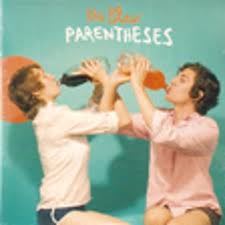
ailisSOUNDTRACK: THE BLOW-“Parentheses” (2006).

blow1I learned about The Blow from NPR Music.  The lads played a new song by them, but this song, which is also available on NPR, is from 2006.  I don’t know anything else about The Blow.  But I do know that “Parentheses” is a delightful little pop confection (with enough elements of weirdness that explain why it was never a hit).

“Parentheses” immediately sounds like something I’ve heard before.  That chorus is just so perfect—“when you’re holding me, we make a pair of parentheses” that I can’t believe no one has thought of it before.  Of course, the bit in the verses about the deli aisle is certainly unexpected.

I normally don’t like the bap bap // bap drum beat, but it’s perfect here.  The stripped down nature of the music (simple chords on a few different keyboard sounds) accompanies this perfectly.  It’s sung with Khaela Maricich’s sweet and almost fragile (but not) voice.

It is so catchy I have now listened to it three times in a row.  And that little guitar tail at the end is very inviting as well.  I can’t believe this song wasn’t huge.

[READ: September 26, 2013] Desolate Heaven

I read this play because of my friend Ailish—I’ve never seen anyone with a name almost like hers—Ailís—before.  And, given the Irish name it is no surprise that the story is set in Ireland.  But rather than Dublin, it is set on a desolate beach.  We see two young girls: Orlaith (13) and Sive (12) messing about.  They are acting like adults—complaining about the beach and “the kids” and how everything is awful.  Despite some tensions, the girls bond over their difficult lives.  Each lives with a single parent and in each case, the parent is an invalid.  Each girl has to do everything for her parent in addition to going to school.  And in the next few scenes we see just how desperate their situations are: Sive’s mother has broken her pelvis (and has been unable to move for two years) and Orlaith’s father didn’t get up at all today because he didn’t feel he was able to.

In the next scene, we see the girls acting out a plan—to meet at the beach with as much money as they can grab.  And just like that, they are off on a road trip. (more…)

Read Full Post »

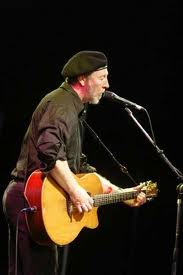
[ATTENDED: October 4, 2013] Richard Thompson at the McCarter Theatre

Back again for the (semi) annual Richard Thompson show at the McCarter Theatre.  RT himself said this was his 15th year playing there more or less every year.  And it seems like quite a lot of the concertgoers were multi-year attendees.

This time, Richard Thompson’s son Teddy opened.  About fifteen years ago I saw Teddy open for Richard in Boston.  That set was really enjoyable and I bought Teddy’s debut album.  But I haven’t thought all that much about him since (he has released a number of albums since 2000).

I spent some time at this show thinking about how strange it must be to tour with your father if he is a guitar wizard.  Teddy is not a guitar wizard and doesn’t try to be one.  [There’s an article that I’m going to be posting about in a few days by Jonathan Franzen which  deals with coping with successful fathers, so it was on my mind].  Indeed, in an article from a few years ago, Teddy said that at first he never listened to his parents music because it was folkie and he like rock.  But after a while: “I started to be more aware of how much people loved [my parents],” he said. “When I started doing (music) for a living, I felt, ‘I’m not as good a guitar player as my dad. My voice isn’t as good as my mother’s.'”  His mother is Linda Thompson who does have an amazing voice.  So it must be intimidating to be on with a guy that is so good and so beloved.

But Teddy has a great voice as well (more powerful than Richard’s), he sounds a bit like Neil Finn from Crowded House.  Teddy played about a dozen songs.  I actually didn’t recognize any of them, but I enjoyed them all.   As I said his voice is strong–and is really the selling point, because while the melodies are very good, they are also rather simple.  I don’t know that anything was as catchy as the songs by his dad, but of course plays a very different style of music–a kind of country folk with an occasional hard edge (both Thompsons only played acoustic guitar for this show).

I don’t know what their relationship is like (I always assume that famous (relatively) people’s children hate them.  But it was clear that Richard was proud of his son when he came out.  (more…)

Read Full Post »

CV1_TNY_09_23_13Brunetti_spine.indd 220px-Alive_IV_KISSSOUNDTRACK: KISS SYMPHONY-Alive IV 2/28/03 (2003)

This CD is a bit out of order in the Kiss chronology, but since I’ve just looked at a few live Kiss albums and looked at “Atom Heart Mother,” the ultimate orchestra rock, it seemed like a good time to throw this in.

This is from a Kiss concert in Melbourne Australia.  The disc (and I assume the concert) is broken into three sections: regular Kiss, Kiss with the Melbourne Symphony Ensemble and Kiss with the Melbourne Symphony Orchestra.

The first six songs rock pretty hard.  It’s an interesting collection of songs from throughout their career.  “Deuce” and “Strutter” sound good.  “Let Me Go, Rock n Roll” is a surprise and one that I like a lot, (although I find it weird that Peter Criss says exactly what he said at the end of the song on Alive! –it was in audible then and it is inaudible now).  Of course I wish they hadn’t chosen “Lick It Up” but it is better than on Alive III (I like the way he turns the “I want you, I need you” into a simple plea “to clap your hands”).  It makes me laugh that Paul is still using the “rock and roll pneumonia” schtick thirty years after I first heard it to open “Calling Dr. Love”.  And then there’s the new song, “Psycho Circus,” I haven’t mentioned that album yet but it’s a new song and they play it with verve.

The one thing about the disc that is especially obnoxious is how proud of themselves they are about doing this tour with an orchestra.  Paul says, ““Some people said we were crazy to attempt this Maybe we are crazy but that’s what makes us Kiss.”  And yet, clearly it’s not an original idea (I mean even Metallica, the most obvious comparison did theirs three years earlier).

When the Ensemble comes out, they play 5 mellow songs.  The first (and most obvious) is “Beth”.  But man does it sound lousy here. Peter doesn’t seem to have any of the oomph to make it sound any good.  (The orchestra sounds good though).  The next obvious song is “Forever.”  What I find odd about these “Ensemble” songs is that it sounds like the band is using acoustic guitars which just add a strange percussive sound (since you can barely hear the guitar over the orchestra).  I understand being unplugged for the Ensemble, but it sounds weird.

The huge surprise comes with “Goin’ Blind” in which Gene sings in a quite pretty falsetto.  He sounds old (for sure), but it’s a surprisingly pleasant voice.  Another huge surprise is the inclusion of “Sure Know Something “ from Dynasty.  And then the craziest surprise of all is “Shandi.”  “Shandi” is one of those songs that I used to joke asking if Kiss played it live.  I cannot believe they played it (even with an orchestra)  I wonder if Australia especially liked the Dynasty/Unmasked era.  Of course, I love that era as well and am thrilled to hear this song live (even if Paul sounds a little stilted singing it).

Then comes the bloat.  Disc two brings in the full orchestra and the sound is…weird.  The orchestra is sort of playing along with the band (mostly like added strings to pop songs and swells as needed). The big surprise is that the strings don’t play the iconic solos—which would be frankly amazing–imagine the whole string section playing the solo to “Detroit Rock City.”  Rather, the sounds that we hear most from the orchestra are the horns, which make it sound kind of like a marching band playing Kiss.  But the real problem is that the band seems to be fighting with the orchestra.  Since the guitar and entire orchestra are playing the same thing, you can’t really hear one or the other very well.  Worse yet, by the end, both Paul and Gene seem to be screaming to be heard over the orchestra, which makes them sound quite bad.

It’s not a total disaster.  Some songs work just fine.

“King of the Night Time World” had orchestration on the album, but in this version, they just seem to be throwing in strings everywhere.  “Do You Love Me?” works great in this setting for the exact opposite reason that I didn’t work in Unplugged—the orchestra brings up the chorus to higher levels.  “Shout It Out Loud” is pretty successful with the orchestra although Gene seems really flat.  The orchestra works well on “God of Thunder” probably because the music itself is so spare that the orchestra fills in the gaps nicely.

I’m always disappointed when Paul plays around with the vocal styling in popular songs—he does it a lot in “Love Gun.”  I’m not saying that every song should sound just like the record, but it’s weird unsettling when he mixes things up in weird ways as he does here. The orchestra is good for this one though.  And, the strings work great with “Black Diamond.”

On the other side of things, It is very creepy to have a children’s choir sing to the groupie-anthem “Great Expectations” but it does sound good—until the end when Gene doesn’t even seem to care a bout the spoken words.  “I Was Made for Lovin’ You” gets less disco and a bit more rock here.   And the set ends with “Rock n Roll All Nite” which is something of a throwaway here.  It’s the inevitable conclusion to the show, with the orchestra being little more than accents.

So the orchestra is not really a very successful addition to the set.  It may have been great to see live (the orchestra in Kiss makeup and all), but the recording leaves something to be desired.  The set list, on the other hand is pretty great and I would love to have these songs in any future show that I see.

[READ: September 25, 2013] “Bad Dreams”

I’ve enjoyed most of the Tessa Hadley stories I’ve read in the New Yorker.  And most of them have had similar themes.  But this one is quite different.

I’ve been finding with a lot of stories lately that I really like the way a story starts out and that I kind of wish it would keep doing whatever the story is doing, but that the author has something else in mind.  It’s hard to complain about that because it is the author’s story, not mine, but it still bums me out a little even if I ultimately like where the author went with the story.

So in this one, a child wakes up in the dark.  We get a glimpse of the house and where she is at, but the crux of her waking up is that she had a dream about her favorite book, “Swallows and Amazons.”  The really cool and spooky thing about the dream is that she dreams an epilogue to this story that she has read so many times.  And the epilogue is disturbing—not horrifically, but just enough to freak out a young girl.  She dreams that that one of the boys drowned, that her least favorite girl, the plainest girl went on to a long happy life, etc.

This is such an interesting idea tha I couldn’t wait to see where it went.  Of course, I can’t even imagine where you could go with that, and maybe Hadley couldn’t either.  Because instead we leave the girl’s room and head to her father’s study.

We learn about her father but during her visit she decides to upend all of the furniture in the room.  Not out of malice, but in a dreamlike state.  And then she imagines her parents’ reaction to this and thinks it will be very funny.   She vows to never admit that she did it.  Then she goes back to sleep. (more…)

Read Full Post »

school spiritSOUNDTRACK: PINK FLOYD-Live BBC 1970-1971 (1970/1971).

pink-floyd-paris-theatre-london-bbc-archives-back-cover-17638Since I am delving deeply into early Pink Floyd, I came across this bootleg of Floyd on the John Peel show.

The first show is Live at Paris Cinema, London 07-16-1970, just before the release of the album Atom Heart Mother (which we know because Peel says the song will be on their forthcoming album).  The first set includes “Embryo” (which only ever appeared on their compilation Works, in a much shorter version), “Fat Old Sun” (from AHM), “Green is the Colour” (from the More soundtrack), “Careful with that Axe, Eugene” (available on Relics and in live formats), “If” (from AHM) and “Atom Heart Mother.”

The version of “AHM” here is interesting  because the cello solo is played by a horn instead.  The reason for this is because it allowed them to have fewer musicians on tour.  It’s the same theme but the horn brings a very different feel than the cello did.  It’s also interesting to hear that the horn players are nowhere near as polished as they might be.  (In Geesin’s book he does talk about the lack of rehearsal the orchestra had for their live shows).

The second show is Live at Paris Cinema 09-30-1971, just over a year later.  They once again do “Fat Old Sun” but in 1970 it was 6 minutes and in 1971 it is now 15 minutes long with a lot of jamming and keyboard stuff thrown on top.  Next up is “One of These Days” (from the forthcoming Meddle) a favorite of mine. From this set I learned that the distorted voice that says “one of these days I’m going to cut  you in to little pieces” is actually that of Nick Mason (and interestingly, in this version, the quote comes at the end of the song rather than the middle).  Then they play “Embryo” again (it was clearly a concert favorite even if it never got a proper release (same length for each show and not drastically different).  Then comes “Echoes,” the big side long epic from Meddle.  And the set ends with “Blues,” which is indeed a blues.  I don’t really expect to hear a blues from Pink Floyd, but here it is, and it’s a good one (Gilmour clearly can jam to anything).

The video below contains the two complete shows running at over 2 hours.

[READ: September 29, 2013] School Spirit

This is the final obscure Douglas Coupland book that I’m aware of and will be the final DC book that I need to hunt down for this blog (I have three other proper novels that I haven’t posted about, but those are proper books and will be dealt with in turn).

This book has about the least amount of information about it that I’ve seen in a book.

The (I assume) official description of the book (which I get from Amazon and Google Books) says

Dis Voir’s Encounters series invites a well-known contemporary artist to choose a subject for a book. The artist also selects a person with “elective affinities”–someone with whom he or she would like to share this exchange. The resulting collaborative volumes serve as an artistic and political laboratory of the present. For this first installment, French artist Pierre Huyghe choose Canadian writer Douglas Coupland, author of Generation X, for the influence that Coupland has had on his generation, and on Huyghe’s own work. Using a high school yearbook as scaffolding for their meditations, they discuss the construction of character, narrative techniques based on chance and the political dimensions of Coupland’s work–themes that are also fundamental questions for Huyghe’s projects.  Using a high school yearbook as the framework for a meditation on memory.

But my copy (which has a different cover and limited publication information so may possibly be a different version) does not have anything to say at all about “the construction of character, narrative techniques based on chance and the political dimensions of Coupland’s work.” (more…)

Read Full Post »

flamingSOUNDTRACK: RON GEESIN & L’ORCHESTRE PHILHARMONIQUE DE RADIO FRANCE-“Atom Heart Mother Suite” (2012).

geesin“Atom Heart Mother” is one of my favorite prog rock songs.  And it’s amazing how much I didn’t know about it (which is what this book is for).  This recording of the “Suite” is an extended version that Ron Geesin created for Radio France.

I’m fascinated by this version of the song because while it is basically the same (Geesin added a few extra measures for the cello solo), it sounds so “professional.”  The original (as the book points out) was kind of slapdash and it has a very loose feel.  This version is almost too perfect (although it’s not perfect as you can tell by the guitar solos).  Nevertheless, I love that this song has broken free of an obscure Pink Floyd album with a cow on the cover.

You can see and hear the extended 2012 version here:

[READ: September 27, 2013] The Flaming Cow

Big news (to me) is that Ron Geesin created the orchestral score for Pink Floyd’s “Atom heart Mother.”  He had nothing to do with side two of the album Atom Heart Mother (although he does say where the album title came from, and shows the proof–the first woman with an atomic pacemaker was in the news that day), but he was instrumental (ha) in creating the 23 minute epic.

I actually knew of Geesin from his score with Roger Waters for The Body (a vinyl album I own from when I was really into Floyd, but which I haven’t listened to in decades).  But so here is the full explanation of how the crazy beast (which my high school friend Kevin deemed the number one “seriously drug induced” song) came to be.

Except that Geesin has a lot to say about himself first.  The book is 120 pages (about half of those pages are pictures) and he doesn’t get to the song until Chapter III.  At first I wasn’t all that interested in his biography, but it actually pays off when you see what his musical background was and how it was ideal for him to create the score for “AHM.”  His musical background is interesting in his DIY approach and “one man band” esthetic.  But really, we got this book to hear about this Epic (which is what it was called first).

And on that front, well, he doesn’t have a ton to say, believe it or not.  We learn that Nick Mason (who was friends with Geesin and who wrote the Foreword to this book) and Waters had created the basic structure of the song.  And they called on Geesin to flesh it out.  So Geesin used his understanding of writing scores to create some really unexpected tones for this otherwise fairly simple song.  It also turns out that (for me) recounting someone else’s recounting of recording a song is kind of boring, especially since there were no astonishing revelations.

I did enjoy reading that the band would make more money if the suite was broken up into various parts rather than one 20 minute song, so that’s where the arbitrary section names came from.  And Geesin does give a fairly detailed explanation of why he did what he did in the score, but it only last for about three pages.  Suffice it to say that although it was a very hectic schedule (and Geesin almost did come to blows with a horn player) the recording was not too dissimilar to other recording sessions that I’ve read about.

What was interesting was that the band had gone from really liking it to dismissing it.  And that the band seemed to want to distance themselves from it because they wanted to go in a different direction (Meddle, their next record, also has a 23 minute song (the awesome “Echoes”) but it is very different from AHM).

Perhaps the most interesting thing to me was the life that the song has taken since the recording.  In 2008 Geesin wrote an extended version of the suite for the Chelsea festival.  The song was performed on two nights and on Sunday,  June 15 2008, David Gilmour played guitar for the piece (he wasn’t able to make the Saturday night show).

There is a lengthy video from this concert as well (just below).  For the first 20 minutes Geesin introduces the piece (which is basically a prelude to the book).  The introduction is a little more dramatic than the book (but not all that much).  In this video, the audio is quiet (and not that great) and there’s no actual video (just stills), but it is still entertaining.  Then there’s the song itself.  And it includes a reprise (with more Gilmour slide guitar) of the end of the song.

Someone also nicely recorded the Gilmour version (and included some video at the end of the piece)

The Radio France version above was commissioned for an entire evening of Geesin works.  As I said above I only have his “music from The Body” which he recorded in 1970 and which was his second album.  I have no idea what the rest of his work sounds like.  But he was on hand to play the piano for “Atom Heart Mother” and the rest is history.

This book proves to be more about Geesin than “AHM,” but it’s still an interesting read.

Read Full Post »

yodaSOUNDTRACK: PINBACK-“Fortress” (2004).

pinbackMy friend Jay just introduced me to this band.  I’m surprised I didn’t know them since they have been on Touch & Go Records and now Temporary Residence, two labels that I like.

He didn’t suggest any particular songs to start with, but this was the first one that came up with a search.

Over a simple guitar line a quiet voice sings near-whispered lines.  The bridge moves up an octave or so, but keeps the gentle sway of the song.  The chorus adds an angular dimension to the vocals but doesn’t change the gentle guitar melody–it’s an interesting example of contrasts working well together.

It’s a very pretty song and what I like about it is that based on just this one song, their other songs could go in any direction from here–more angular, more mellow, even heavier.  I’m looking forward to hearing more from them.

[READ: September 29, 2013] The Strange Case of Origami Yoda

Clark brought home the second book in this series (Darth Paper Strikes Back) and seemed to enjoy it.  I didn’t really know anything about the series so I decided to check it out, especially since we enjoyed Angleberger’s other books so very much.

This is a fairly simple story of some kids in 6th grade.  Tommy is a sort of uncool kid.  He’s shy and has no luck with girls.  He’s not picked on (I liked that this story never got really nasty), but he’s certainly not a cool kid or a jock.  He’s the perfect underdog character.  For this book, he is assembling a case file about Origami Yoda.

Origami Yoda was created by Dwight.  Dwight is a weird kid.  We hear from his neighbor that she used to see him digging holes in his back yard and then sitting in them for hours.  Dwight doesn’t seem to care about much–he wears crazy clothes, doesn’t do great in school and, weirdest of all, he wears an origami Yoda puppet on his finger.  Seemingly all the time (possibly even in the bathroom).

But the thing is that people have been asking Yoda questions and he (well Dwight, with the worst imitation of Yoda ever) answers them.  And, weirder still, the advice seems to be very good.  Which is especially weird because Dwight is not very smart and doesn’t seem to follow any of the advice that Yoda gives to others.  So what gives? (more…)

Read Full Post »

CV1_TNY_08_26_13Drooker.inddSOUNDTRACK: KISS “God of Thunder” (country version from MTV Unplugged) (1996).

unpluggedIn my post about Kiss Unplugged, I mentioned that there are videos online of the entire uncut show.  There’s also a video of this–a country version of “God of Thunder”

Three things: One, it’s weird how hokey Gene gets at the end–for a demon he’s quite goofy.  And two, it’s amazing how good this song sounds when turned into a country song.  On the Kiss covers album Kiss My Ass, I was surprised how much I liked Garth Brook’s rendition of “Hard Luck Woman and now I see that maybe all great Kiss songs are just country songs at heart.  And three, it absolutely does not sound like Gene singing–he does an impressive falsetto.

[READ: September 18, 2013] “Victory”

This is a simple story of infidelity.  The fact that the characters have such similar names bothered me a bit, but it wasn’t terribly confusing.  Lin Hong (the woman) finds a key which her husband Li Hanlin has secreted away in a drawer.  He is away on business, and she tries to figure out what the key is for.  Eventually she realizes it is for a drawer at his office.  I actually would have preferred that the story was mostly about the searching, which I think would have been more interesting.

When she opens the drawer she finds evidence of his infidelity—photo and letters from a woman named Qingqing.  One of the letters includes a phone number.  So she calls it.  She tells Qingqing to leave her husband alone and that she has ruined their marriage.  But Qingqing says that they wouldn’t have gone any further anyway and that she’s not really interested in Lin.

Li calls some of his friends but they deny any awareness of an affair.  Finally, she calls one of her fiends to complain and the friend gives some advice about how she should behave when Lin gets back. (more…)

Read Full Post »

aug2013SOUNDTRACK: KISS-MTV Unplugged (1996).

unpluggedEver ones to jump on a bandwagon, Kiss did an Unplugged special in 1996.  They had been laying low for a while.  Conventional wisdom says they were working on the follow-up to Revenge (and the successful Alive III tour) when they got called in to do this Unplugged.  (The follow-up Carnival of Souls would eventually be released to little fanfare).

And so here we have Kiss in an unplugged setting.  The big surprise for this show was that Peter Criss and Ace Frehley were invited back on stage to play some songs.  And things went so well (and there was clearly money to be made in a reunion) that the original guys got together, made an album and even toured it (which I saw).

But to me the real surprise is what a great set list this is.  I would love to go to a Kiss show and hear these selections because the diversity is fantastic and there’s very few of the obnoxious hits that I’m tired of.  It’s true that the bulk of these songs are their more mellow offerings (which is smart since the heavier ones wouldn’t work so well with the big acoustic guitar sound), but the choices are so unexpected.  I mean look what they start with.

“Comin’ Home” a deep cut off of Hotter Than Hell that, well I won’t say Kiss fans wouldn’t know, but that contemporary Kiss fans may not know.  And it sounds fantastic in this recording.  The heavier songs don’t sound quite as good with the big acoustic guitar treatment—so “Plaster Caster” seems a little odd.  However, “Goin Blind” (however absurd the lyrics) works great in this setting (you can really hear the complex bass that Gene plays).  Surprisingly, “Do You Love Me” falls a little flat here because in the studio version the choruses are so big, but here they are gentle and it kind of undermines the intensity.  I keep reiterating how much I really dislike “Domino” lyrically.  But musically it’s pretty interesting and it works fine in this setting.

The biggest musical surprise comes with “Sure Know Something” from Dynasty.  Even though the original is very discoey, the acoustic treatment sounds great.  “World Without Heroes” is another huge surprise and it also works very well in this setting (I’m trying to imagine how all of them needed to relearn all of these songs).  With the intro to “Rock Bottom” being a sweet melody the acoustic version works well.  Surprisingly the louder part works pretty well here too.  And then woah, “See You Tonite” from the Gene solo album!  They pulled some crazy things out for this show. I suppose this set wouldn’t be very exciting in the full makeup stage show, but it would be very cool to hear these tracks live.

“I Still Love You” is an aching ballad that works well in this context because really the main feature of the song is Paul’s voice which sounds great here.  “Every Time I Look at You “ is a cheesy ballad which of course is tailor-made for Unplugged.

And then comes the surprise—Peter and Ace.  It’s the first time they’ve all played without makeup and the first reunion in years.  And as a nice treat they play “2,000 Man” the track that Ace sang on Unmasked (surprising that they didn’t do “Shock Me,” but that is not really right for an Unplugged).  “Beth” is not really a surprise as it is Peter’s song, although it is surprising to hear it on guitar which changes the song quite a bit and makes it sound quite good.  The real treat is “Nothin’ to Lose” in which everyone comes out on stage and takes a verse.  It’s always fun to hear how into it Peter is.  The set ends with “Rock n Roll All Nite” and even in this more stripped down setting the song sounds good (although they must be so tired of singing this song).

Unplugged albums tend to get forgotten in artist’s catalogs, but this is a really enjoyable set and a must for any Kiss fan.  Incidentally there are some “uncut” versions of the show online that are worth checking out for the extra tracks.

[READ: September 17, 2013] “The Exiled Queen”

This is the kind of story that makes me wonder why someone would write about the things they do.  Not because it’s bad or not worth writing about, I just can’t imagine where the idea came from.  This is a story about a boy named Filippino who is an art prodigy.  He could draw a Madonna before he knew what a Madonna was.  He learned to paint and gild frames before he could talk and his work was impeccable.

This was a challenging story for me to read because there are no paragraph breaks (and I love my paragraph breaks).  It is just an endless stream of prose about this painting prodigy.  But some details do come through the verbiage.

It is 1469 (!), the boy’s father has died, and he was soon taken under the wing of the great painter Battigello.  And Battigello began to teach him more and more, but young Filippino would learn so quickly.  he could just watch the master’s arms and imitate his brush strokes.  We later learn that Battigello would come to be called Botticelli. (more…)

Read Full Post »

CV1_TNY_09_09_13McCall.inddSOUNDTRACK: KISS-Alive III (1993).

alive iiiI’m aware that there are questions about the real “live” nature of the first two Kiss Alive albums.  This naturally makes me suspect the nature of the live-ness of this one as well.  Not that I don’t think the songs are live, but I have to question the volume of the fans, who at times sound artificially enhanced.  I’ve also read that the “I Was Made for Lovin’ You” was taken from the soundboard during soundcheck with cheers added later.  If that’s true I have to give credit to Paul for being so “into it” during soundcheck.

back in the 70s, Kiss made a point for Alive II to not duplicate any songs from Alive!.  Obviously Kiss are much more mercenary now than they were back then–duplication is part of their thing now.  But since this is the first live album since the 70s, there’s a lot of new material to choose from.  Nevertheless, this probably shows a realistic set list for the time, so there are going to be some overlap from the 70s, and that’s okay.  And the band sounds quite good (this was 20 years ago it’s hard to believe).

“Creatures of the Night” is a rousing opener.  It’s hard to imagine they didn’t open with “Detroit Rock City” and end with “Rock n Roll Al Nite”.  “Deuce” is one of their best songs, so it’s a welcome old song.  Then there’s some questionable choices.  “I Just Wanna” is a bad song with a very obvious vocal line.  But it came from the then current album and it’s got the “naughty” singalong section (which was apparently dubbed out to avoid a Parental Warning sticker).  Despite all of the entendre in Kiss, they’ve never really been explicit, so the “I just wanna fuck” seems weird for them (especially when you know how many kids have been going to their tours recently).

“Unholy” fares much better.  It’s one of their cooler new songs.  Paul introduces “Heaven’s on Fire” in a fairly amusing way (and he can still ht those notes).  I don’t especially like that song or “Lick it Up,” but they will always be their bigger hits, so they get played.  Obviously I’m delighted to hear “Watching You” which they do very well.  I dislike “domino” lyrically quite a lot and I feel like Gene’s delivery here is disinterested at best (is it possible he is as disgusted by the lyrics as I am?).  But the song rocks musically.  “I Was Made for Loving You” is updated and sounds far less discoey.  “I Still Love You” is a great concert staple and it’s nice to have it on record.

Probably the biggest surprise on the disc is that “Rock n Roll All Nite” is not the encore (or maybe it was in concert, but it’s not last on the album.  I’d be delighted to see them and have this not be the encore.  I’d also be delighted if I never heard “Lick It Up” again.  I don’t know why this song irks me so much, but it does.  And in this live version, hearing Paul state “I wanna lick you” just creeps me out.  “Forever,” cheesy ballad and all, sounds pretty great live.   but “I Love It Loud” which is a great song sounds off here—too many backing vocals or something?  “Detroit Roock City”sounds great of course, although it’s funny to hear it have an introduction.

The disc is pretty much over for me here because I don’t like “God Gave Rock n Roll to You II” although this version is fine.  And the very end of the disc is, strangely, “The Star Spangled Banner.”  It’s a whole band version (without words) but  simple cannot imagine them doing it live for any reason.

So, this proves to be a pretty decent live album.  Not quite up to the stellar heights of Alive! and Alive II, but a worthy addition to the series.

[READ: September 15, 2013] “The Heron”

This story begins with the statement that the best place to feed herons is in Frederiksberg Gardens because they are tame.  The tone is very much like Julie Hecht–all matter of fact and somewhat indignant.

The story continues to talk about herons and the strange man who often stands on the paths that lead to the Chinese Pavilion. The narrator avoids this man by walking around to Damhus Pond (where the suitcase with the woman’s body chopped up inside of it was found).  He imagines the man who found it (well, technically the dog found it) was never the same again (nor, no doubt was the dog).  Despite the grisly scene (the narrator has never found anything there) he walks out of his way by the pond to avoid the herons.  And the strange man. (more…)

Read Full Post »

aug2013SOUNDTRACK: KEVIN DEVINE & THE GODDAMN BAND-“Nobel Prize” (2013).

PrintI’d never heard of Kevin Devine before (he apparently has 7 solo albums out).  This track is his first single with his new (radio friendly it seems) band called The Goddamn Band.  Interestingly, the album is called “Bubblegum” and it’s that sentiment that sticks out with this song.

Over buzzy guitars and pounding drums, a screamed (but not unpleasant) voice comes piercing through the fuzz.  And once the guitars come in, it’s all bubblegum pop (fuzzy and distorted absolutely, but pure bubblegum chord structures).  The song (including the voice) remind me a lot of Cheap trick–simple, catchy melodies with vocals that are urgent and intense.  Even the quieter spoken word section sounds like Cheap Trick.  The very mellow bridge or chorus or whatever it is mixes things up when it brings in picked strings and a gentle vocal.

It’s catchy as hell and could fit into a lot of playlists of poppy rock.  At only 2 and a half minutes it’s a pop gem.  Too bad no DJ would ever say the band’s name.

You can hear it an NPR.

[READ: September 19, 2013] “The Way Things Are Going”

As the story opens we read the Gwen had insisted that “Ma and I” move to America (from South Africa). Gwen wanted them to move because “sooner or later…it would happen again.”  The narrator says that what had happened was actually her fault.  But really what difference did it make whose fault it was—once they were tying you up.  She only let them in the first place because she was trying to be mannerly.

The story flashes back to what happened. The narrator had been struck across the head with a gun, praying that the men would leave her alone—just take their few valuables and go.  And then she had to worry about her mother, who was upstairs by herself.  It was only the phone call (and the answering machine) which saved them from further damage because a neighbor said she’d be right over. (more…)

Read Full Post »

« Newer Posts - Older Posts »