Feeds:
Posts
Comments

Archive for the ‘Authors’ Category

2008_05_12SOUNDTRACK: QUETZAL-Tiny Desk Concert #378 (August 2, 2014).

tzalQuetzal are a band from Southern California who have been performing in the Chicano scene for about 20 years.

Guitarist Quetzal Flores plays the Mexican jarana for both rhythm and melody, violinist Rocio Marron adds blues licks into Mexican folk runs and bassist Juan Perez provides a nimble and melodic bottom end.  And then there’s lead singer Martha Gonzalez who has a great voice and is quite the activist.

The first song, “Palomo Vagabundo” is pretty and sad.  The song means vagabond Pigeon and is a story about a beaten up pigeon who still tries to find love.  Quetzal says the whole album is about life of urban animals and how we relate to them.

They introduce the second song “Tragafuegor” which is about a fire breather they saw in Mexico.  He was putting himself in harm’s way to make some change but also shining light on reality.  This is a faster, livelier song with Gonzalez dancing on a box–like Saintseneca.  The dancing rhythms, the great violin and the cool robust bass really make this song stand out.  About the stomp box, this is a tarica from Veracruz, Mexico.  Quetzal explains that Martha is a percussionist by trade as well as a professor as Scripps College in Pomona.

The final song, “Todo Lo Que Tengo” is a beautiful ballad.  Again Martha’s voice soars above the music.

It’s always fascinating to “discover” a band who has been around for 20 years.

[READ: February 23, 2016] “A Man Like Him”

This is in unusual story in that the main character is a man who is obsessed with a story in a magazine.  Teacher Fei is an older man, unmarried and now living with his elderly mother.  She needs his care and he doesn’t mind giving it to her.

The story that he has become fixated on is about a nineteen year old girl who is set out to publicly humiliate her father.  The girl’s mother and father divorced three years ago.  And once the girl turned eighteen she sued her father, suspecting that another woman had seduced hm away from her mother.  She said that he should be punished for abandoning his family and for the immoral act of taking a mistress.

She had also created a website to humiliate the man.  She wanted him to lose his job, his freedom and his mistress. And this angered Teacher Fei (who didn’t know any of them) to distraction. (more…)

Read Full Post »

may5SOUNDTRACK: SAINTSENECA-Tiny Desk Concert #377 (July 29, 2014).

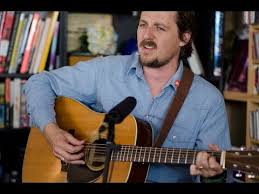
saintsenecaLike Highasakite, Saintesenca is another band who plays instruments that are unusual (and whose Tiny Desk Concert is way too short).  But before the music started, I was fascinated by the hair of the band.  Zac Little’s head is partially shaved and his beard is unshaven, but he also has an incredible mustache.  It’s so thick I couldn’t see his mouth moving when he started singing!  There’s also the co-lead singer, Maryn Jones’ hair which is equally fascinating.

And there’s also their instruments.  On the album, they play: banjo, baglama, bulbul, balalaika, bowed banjo, baritone ukulele, bass and bouzouki as well as a stomp box.  For the first song, “Happy Alone,” In this set there is a baglamas (played by Jones), while Little plays a Paul McCartney style bass.  There’s also drums and electric and acoustic guitars.

And their music is fantastic “Happy Alone” has a kind of Decemberists vibe.  There’s a great chorus (and two acoustic guitars accompanying).  The melody is catchy but by the time it comes around a second or third time, it’s a total ear worm.

Between songs they talk about the stompbox.  It’s a roughly 2’x2′ plywood floorboard meant for pounding the beat. The blurb says that “at a show just before this Tiny Desk Concert… Little put his boot right through that floorboard.”  There’s a hole in the box which Jones seems concerned about falling through.  The box also explains why Jones and Little both seem so outrageously tall at this show.

On “Fed Up with Hunger” Little plays a four-stringed guitar (I wish they would say what all of these instrument are).  He plays some wonderfully elaborate chords on it.  Jones sings lead in a very high-pitched delicate voice.  There’s an electric guitar added for the chorus but for the most part this is a stripped down song with some lovely harmonies in the end section.

The final song “Blood Bath” has three distinct parts and it is awesome.  Jones plays bass, Little plays acoustic and the other acoustic guitarist  plays a tiny triangular instrument (a balalaika?).  Little sings in a kind of broken falsetto.  After the first slow verse the whole band kicks in and the song really takes off.  But soon after, the whole band seems to deconstruct the song, playing a few seconds of utter noise before coming back in and following it with a really fast rocking and equally catchy section.  It’s pretty awesome.

I’m going to have to look for more from them.

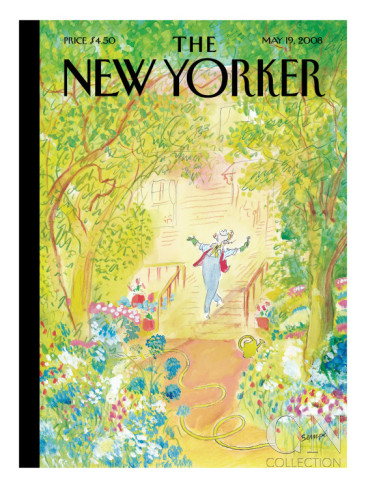
[READ: May 5, 2008] “Them Old Cowboy Songs”

I was looking through older stories and saw that I had not finished a story by Proulx which was written in a June issue of the New Yorker in this ame year.  How did she ever get two stories within a month of each other?  (And they’re both really really long, too).

This story is dark. Very dark and brutal.  It is set in 1885 and looks at a young couple trying to make it out in the wilderness

Archie is a sixteen year old who lies and says he is 21 to try to get better jobs.  He works a cowboy in Dakota Territory.  In addition to being a hard worker, he is a consummate singer with a golden voice.  He marries a young girl (14), named Rose whose parents don’t approve of him or of her getting married at 14, and they settle in.  The narrator notes: “There is no happiness like that of a young couple in a little house they have built themselves in a place of beauty and solitude.” (more…)

Read Full Post »

2008_04_21-400SOUNDTRACK: HIGHASAKITE-Tiny Desk Concert #376 (July 25, 2014).

 highkiteFor some reason, some bands play a Tiny Desk Concert that is very short.  It’s especially disappointing when the band is unusual and interesting like Highasakite.

They play only two songs (for a total of 8 minutes), but they cram a lot of interesting sounds into these songs, including a flugabone.  Kristoffer Lo plays that mournful horn and Ingrid Helene Håvik compliments the yearning with words that are mysterious and somewhat dark.

For “The Man on the Ferry” the song opens with the horn playing mournful notes while the percussionist plays a tiny steel drum and Håvik plays a kind of autoharp.  There’s the fascinating lyric: “It made the Indian in me cry.”  (It’s especially interesting since the band is from Norway).

Håvik has an inflection something like Björk’s (although her singing style is very different) and there are some delightful harmonies.

The melody of the second song “Since Last Wednesday” is familiar to me.  Or the combination of steel drum and horn is just really compelling. It’s fascinating to watch the guitarist wield his horn in one hand while holding the guitar with the other and singing harmonies.  The song is also kind of mysterious (that horn again) with the lyrics:

He would never do graffiti or vandalize that house. And he would never be caught spray painting on those people’s walls. But no one has seen or heard from him since last Wednesday.

As the song progresses some really dark lyrics crop up, all under that beguiling melody.

The blurb lists some of their other titles: “Leaving No Traces,” “I, The Hand Grenade,” “The Man on the Ferry,” “Science & Blood Tests” which really says quite a lot about this interesting band.  I definitely want to hear more than eight minutes from them.

[READ: February 20, 2016] “The Repatriates”

I was fascinated by this story because I hadn’t really heard of the phenomenon of Russian emigres returning to Russia because they felt the conditions were better there than in America

The story starts by telling us that Grisha and Lera’s marriage has dissolved.  In 1994 Grisha’s visa had been processed and he was brought to America by Hewlett-Packard.  He found it demeaning and like servitude ans as soon as it was up her quit and got a new job with Morgan Stanley–building market models for mortgage traders (for those of us who doesn’t know what that is, it’s not rally that important).

But Grisha felt empty.  He said there as no spirituality in America (even though he himself was not spiritual)

Eventually Grisha started travelling back to Moscow (they had not been able to sell their apartment there, so he had a place to stay). He would visit old friends and make news ones.  He started going more frequently.  And then one of his trips lasted for two months. (more…)

Read Full Post »

TNY 4.14.08 cvr.indd SOUNDTRACK: HAMILTON LEITHAUSER-Tiny Desk Concert #375 (July 21, 2014).

hamleitHamilton Leithause was the lead singer of The Walkmen.  When they went on hiatus, the guys in the band made solo records.  For this set, Leithauser is accompanied by The Walkmen’s Paul Maroon on guitar and Hugh McIntosh, who played drums in Leithauser’s old band The Recoys.

Leithauser has a big voice and these songs allow him to really wail (in a restrained and tasteful way).  “11 O’Clock Friday Night” has a very folkie feel to it with a big chorus of “you and me and everybody else.”

“Alexandra” is a bit more uptempo and rocking with a cool rumbling bass line provided by the electric guitar (he really gets to belt out the chorus and the bridge in this song).

“5AM” is a moody ballad which shows he can play mellow as well as big.

Incidentally perhaps it was back in 2014, but Leithauser was doing some kind of concert in Philly and they must have advertised it ten times a day for months.  I was rather tired of hearing his name (I didn’t know who he was at the time). I had to look him up and he was fine.  About the same as I felt during this show.

[READ: February 18, 2016] “The Lie”

I have really been enjoying Boyle’s stories.  He has a way of making his protagonists unlikable and yet somehow sympathetic.  But this time, I felt like his protagonist was just too much of an asshole.  He went too far.

Lonnie is a new dad.  He’s a young guy who has married a woman whose nighttime sleepwear is a Cramps shirt and nothing else.  Her name is Clover, but she hates that her hippie parents named her that and wants to change it to Cloris.  He says that Cloris sounds like a detergent and she hates him for that.

Anyway, he wakes up and doesn’t feel like going to his editing job (I may have been more sympathetic if the job were harder).  He is tired of hearing the same people recite the same dialogue every day.  He says he’s not rally an editor, he’s a logger. (more…)

Read Full Post »

2008_04_07-400SOUNDTRACK: HOLLY WILLIAMS-Tiny Desk Concert #373 (July 14, 2014).

holyHolly Williams is a country singer.  Her lineage is hard to deny: the daughter of Hank Williams Jr., half-sister of Hank Williams III, and the granddaughter of country legend, Hank Williams Sr. (she never met him, as he died long before she was born).

She sings three songs.  “Drinkin'” which is very country.  “Railroads” rocks a bit more and has an interesting sounding chorus.  But it’s “Waitin’ on June,” a story song about her grandparents (not on the Williams side) that is beautiful and touching (although I really don’t like the way she sings the word “June,” but that’s just me).

[READ: February 18, 2016] “The House Behind a Weeping Cherry”

This story is about a young Chinese man, Wanren, who has set out for New York to try to benefit his family.  He is shocked to find that he is working in a sweatshop (he left China for this?) pressing clothes.

He has been living in the upstairs apartment of a house owned by Mrs Chen.  But his roommate has just left because he couldn’t handle the fact that the women who lived down the hall were prostitutes (who paid Mrs Chen).

When the roommate moves out Wanren is afraid Mrs Chen will raise the rent. But instead, she asks if he will drive the girls to their appointments at local hotels.  Mrs Chen assures him that he wont get in trouble with the police and he reluctantly agrees.

The rest of the story unfolds with the narrator becoming more friendly with the three girls.

Lili is the meanest of the three. She speaks the best English and answers the phone.  Nana is friendly, but it’s Huong who is the best cook and the prettiest of the three.  Wanren likes her the best.  Lili suggests that he should buy one of them for the night since he has no girlfriend, but he knows not get involved.  He doesn’t want to play favorites even though he has one.

The two of them wind up eating dinner together and sharing their living space a lot more.

He desperately wishes the girls could stop their life and do something legal, but all three of them have serious debts to pay.  Huong owes a Coyote $2000 a month for the expense of getting her to the US.

He learns about the johns and what type of people they are.  Some are married looking for something different.  Some are widows just looking for advice.  For the most part the girls aren’t ever treated that badly. Sometimes the johns go too far–one bit Huong very hard once, and another client turned out to be two men who were both so rough with her so that she couldn’t walk the next day.

One night when a client wouldn’t leave (some made house calls) Wanren stepped in to help.  And now the women like him even more.

This story is something a of a “hooker with a heart of gold” story, but the added details of their illegal status, their trying to raise money to go home and their having to pay off other men puts an interesting twist on it

Finally, the narrator finds them some honest work, but it will never pay enough.  They go to the coyote to see about changing the terms of her payment but he more or less says that if they try plaything he knows where they live.

The story is hopeless.  But somehow the ending adds a slight ray of hope, as unbelievable as it may be.

In writing about the story it seems less good than when I was reading it, but I really enjoyed the characters, especially Wanren, and seeing how his mind worked.  Even if some parts were rather cliched.

Read Full Post »

2008_03_10-400SOUNDTRACK: JOHN GRANT-Tiny Desk Concert #372 (July 13, 2014).

grantI know and like John Grant from his albums after this one.  These three songs perfectly encapsulate Grant’s pop sensibility with his acerbic wit.  His later albums are also a bit more dancey, so it’s interesting hearing these as straight up piano and guitar songs.

On “Where Dreams Go to Die,” he plays piano in a very dramatic fashion and sings in his slow sometimes whispered baritone voice.  The song is pretty and then the lyrics come in: “I’m willing to do anything to get attention from you dear.”  But it’s not until the chorus (with acoustic guitar added) that the melody gros even more catchy and the lyrics grow even more dark:  “Baby…. you’re where dreams go to die and I regret the day your lovely carcass caught my eye.”  There’s  great bass riff on the piano that he plays during the end of the song which ups the drama even further.  It’s quite a song.

In introducing “Sigourney Weaver,” he says that when he was 12 he moved from Michigan to Colorado and he hoped the move would erase his homosexual feelings.  He changed his mind about that “when he got the hang of it.”  The song doesn’t have anything to do with Weaver except as simile: “I feel just like Sigourney Weaver when she had to kill those aliens.”  Although I think the follow-up simile is even better: “I feel just like Winona Ryder in that move about vampires and she couldn’t get that accent right and neither could that other guy.”

“It Doesn’t Matter to Him” is about the inability to deal with the sudden absence of love.  It features the great lyrics: “I am no longer as awkward as I was when I was younger I guess I’m one of those guys who gets better looking as I age.”

Grant is a marvel and his songs, while caustic, are quite fun.

[READ: February 15, 2016] “Raj, Bohemian”

I really enjoyed this story a lot.

I enjoyed the way the story began with a bunch of wealthy city kids doing all kinds of debauched things with no repercussions.  None of them worked, but somehow they were trendsetters.  “We went dancing whenever we felt like it and watched illegal pre-releases of Hollywood blockbusters… By the time the world caught up we usually got bored and moved on.”

They are smug asses, but they aren’t obnoxious about it–“we despised trendies–fashion kids who tried to hard,”

And then we met the narrator’s friend Sunita who throws the best parties.   She had a gorgeous apartment and lived there rent free (for complex reasons).  For this latest party, which promised to be her best, she cryptically said “dress sincerely.” (more…)

Read Full Post »

2008_03_03-400SOUNDTRACK: FOREIGN EXCHANGE-Tiny Desk Concert #370 (July 5, 2014).

FeIt’s amusing how “religious” lead singer Phonte Coleman comes across in this set given how profane his language is.  He begins the set by telling us what a “church clap” is: a church clap is when you clap for someone when they sing in church but they suck.  It’s a slow clap that says keep trying, baby.

Foreign Exchange is Phonte on vocals, guitarist Nicolay, keyboardist Zo! and percussionist Boogie.  Their music (in this setting anyhow) is a kind of mellow stripped down soul pop.

“On A Day Like Today” is a kind of acoustic r&b with acoustic guitar and gentle keyboards. Phonte is an engaging and fun performer enticing people to clap and singing that he’s gonna wipe the sweat off his face as he does so.

He says he’s “sweating like a preacher here.”  After the first song he hits the gong ans says “when you hear this sound, that means turn the motherfuckin’ page.”   he describes the second song, “Listen to the Rain” as when you need to wind down and things ain’t going right.  It is a delicate ballad full of nice percussion.

Before the final song he says, “You never get a second chance to make a first impression so I hope this is a good motherfuckin impression.”  Then as he is ramping up the song, he tells everyone to turn to your neighbor and say “‘Neighbor, put home in your heart,’ goddamn right.” “Call It Home” is a pretty, smooth rocker.  Phonte has a good solid voice and these songs are all pretty enjoyable.

Phonte is a great front man having fun right up to the end as he jokes about how he “felt it” and was overcome during the final song.

[READ: January 29, 2016] “Leaving for Kenosha”

Richard Ford is a famous writer whom I have never read.  I think of him as writing very large books, so I’m surprised to see this short story here.

I have this image of what Ford writes, but I was rather surprised that this was set in New Orleans soon after the flood.  Interestingly, the main character is not the one leaving for Kenosha.

Walter Hobbes (which is the name of the dad in Elf, by the way) is a lawyer.  He is picking up his daughter from school before taking her to the dentist.  His daughter, Louise, is thirteen and trying to be independent.

I really enjoyed the way the Ford set up the family dysfunction–Louise needs a sleep guard to keep her from grinding her teeth–which she has only started doing since her parents got divorced.  There’s some back story about Walter’s wife leaving him and the fact that she still lives in town.  (more…)

Read Full Post »

may16SOUNDTRACK: MARISA ANDERSON-Tiny Desk Concert #374 (July 19, 2014).

marisaMarisa Anderson may be the most unassuming guitar wizard I’ve ever seen.  There’s nothing flashy about her or her look, but man can she make those guitars sound great.  And she plays an old-timey bluegrass style of guitar with slides and lots of picking.

For this set she plays 5 songs (on four different guitars).  She doesn’t sing, she just lets the music do all the work.

“Hard Times Come Again No More” is done on a hollow-bodied electric guitar.  It’s noisy, and fuzzy.  She plays finger-picks the main melody in the high notes and then in the middle of the song she plays big open string chords–buzzy and noisy–while still playing the melody.  She says the song “gets stuck in my head if I’m driving through snow.”

“Sinks and Rises” is about a swimming hole in Kentucky.  She went there in a car, but she wasn’t driving and she’s never been there since but it was the best swimming day of her life.  For this song she plays a lap steel guitar that looks to be made of ivory.  It’s so much fun to watch her slowly moving that slide up and down the neck (sometimes only playing one note) while her picking hand goes like crazy.

For the third song she plays a different hollow body guitar.  “Hesitation Theme and Variation Blues” was inspired by her favorite guitar player Rev. Gary Davis.  She says this is a deconstruction of his “Hesitation Blues.”  She doesn’t sing so she took it apart and put it back together.  It begins with an almost classical theme before launching into a very cool blues.

Then she switches back to guitar #1.  She says she plays in settings didn’t allow cover songs, she didn’t want to do just originals so she played songs from public domain–like the national parks if we don’t use them we’ll lose them.  In 2013, she released an album that was all songs in the public domain.  “Canaan’s Land Medley” is a medley of three gospel songs.  She plays the melodies with her fingers and a slide on her pinky–which adds some cool textures to the song.

For the final song, “Galax,” she brings out guitar #4, a Fender Strat (or knock off). She says she went to a bluegrass festival and was overwhelmed by all of the good songs being played in the parking lot–she’s not even sure if she got to the show.  This song is about all those songs being played at once.  There’s some really fast guitar playing and slide at the same time.  It sounds great and is even more fun to watch.

Anderson is really a marvel–totally soft-spoken and seemingly shy, but main is she amazing to listen to.

[READ: July 13, 2016] “Call Me Crazy”

The May 16, 2016 issue of the New Yorker had a series called “Univent This” in which six authors imagine something that they could make go away. Since I knew many of them, I decided to write about them all.  I have to wonder how much these writers had to think about their answers, or if they’d imagined this all along.

Of the six articles, Brownstein’s was certainly the funniest.  It’s also the most contemporary and almost the most obvious thing to complain about.  But it suits her comic style very well.

She wants to uninvent the conference call.  She assumes that we all agree that the conference call is a bad idea, but in case we need convincing she offers this example. (more…)

Read Full Post »

CoverStory-KadirNelson-ADayattheBeach3-879x1200-1467305948SOUNDTRACK: LYDIA LOVELESS-Tiny Desk Concert #369 (July 1, 2014).

lovelssI want Lydia Loveless to be a punk singer–Her name is like a combination of Lydia Lunch and a last name that conjures up an asskicking punk.

But not the country singer that Loveless is (even if she is ass-kicking herself). Loveless is a new breed of alt-country which is pretty explicit with noticeably rocking guitar solos.  But her voice is so twangy it’s hard to not call it country (and in fact it’s a bit too much for me to take sometimes).

“Head” features this rather memorable chorus “Don’t stop getting undressed /Don’t stop giving me head.”  It seems especially surprising since Loveless looks like she’s about 12 (she was 23 at the time of this recording).  The buzzy solo is lengthy and more or less runs throughout the song.  Although at some point when Loveless takes her own solo the whole sound seems to fade out and get a little anemic.

Her band is fun with her bassist being very tall and having very long hair playing a very tall upright bass.  And then there’s another guy playing guitar and lap steel.

“Verlaine Shot Rimbaud” has a title that begs for an awesome song.  It’s not an epic masterpiece or anything.  In fact its closer to a pop song, The slide guitar and Loveless’ heavy accent on the chorus place it firmly in the country camp.

“Mile High” has a fun folk riff.  It sounds a lot like The Byrds and the chorus is super catchy.  If I could get her to sing less twangy I would love this song much like I love the punk country of X, or at least the Knitters.

[READ: December 29, 2010] “Who are All These Trump Supporters”

[This essay in the New Yorker also came under the heading “Trump Days.”]

So the title of the essay is a question I myself have been asking as I watch the hatred and vitriol bubble over during the convention.

If there was anyone I wanted to write this piece it would be George Saunders and he is actually the only reason I read it in the first place (I plan to read all of his contributions to the New Yorker eventually, but I’m glad to have read this one when it was timely–I hope it will be utterly irrelevant by the time I get to the rest of his works).  He self identifies as a liberal (although he was a conservative who loved Ayn Rand way back in the Reagan era).  He is a thoughtful and not prone to anger–a perfect foil for the crowd.  And he’s got a great way with words.

So great in fact that I’m just going to be quoting him a lot.  I could have pulled more excellent quotes from the essay, but really you should read the whole thing. (more…)

Read Full Post »

carrieSOUNDTRACK: CATE LE BON-Tiny Desk Concert #337 (February 18, 2014).

cateCate Le Bon has a very interesting style of singing–it reminds me of Grace Slick in her enunciation, but also like someone whose speaking accent is very strong and is somewhat masked by her singing (like the way she sings “reason” as “ree-sun” as opposed to “reezun”).

The blurb explains that her “phrasing is completely tied to her Welsh dialect — in fact, her first record was in Welsh…. The enunciation is completely tied to the loneliness and the questioning.”

 For this concert it is just her and her fellow guitarist H. Hawkline (both wearing super cozy sweaters).  They share the guitar licks very nicely–it’s not always clear who is playing what–with her sometimes finishing his lines (I believe).

“Are You With Me Now?” has a very catchy chorus (with an “ah ha ha ha ha” part that makes it sound like an olde English ballad).

“No God” plays with very simple guitar lines (chords played very high on the neck of her guitar and a simple accompanying riff).  Hawkline plays keys (and sings some great falsetto backing vocals) to flesh out this song.  Everything is so clean you can hear each note from the guitar and her voice.

“Duke” opens with some interesting slightly off sounding from Cate while Hawkline plays a simple chord pattern (his fingers are enormous, by the way).  Hawkline’s falsetto is almost as engaging as the vocal lines that match the guitar line which Cate plays.  And when she says “I’ll see you here” in that unexpected pronunciation, it’s totally captivating.

I like Le Bon a lot and want to hear what she wounds like on record.

[READ: May 18, 2016] Hunger Makes Me a Modern Girl

After finishing Bob Boilen’s book and thinking about how I don’t really love music-based books, I immediately read Carrie Brownstein’s book.  Carrie Brownstein is one of the two guitarists in Sleater-Kinney and Wild Flag.  She is also one of the leads (writer and actor) on Portlandia.  And she wrote for NPR for a while, too.  Basically, Carrie is the shit.

One thing I took away from this book is that I’ve read a few musician memoirs (Mötley Crüe and Marilyn Manson to name a few) and this is the first one I’ve read that was filled with so much sadness.  Not “I was stoned and regret sleeping with that person with an STD sadness,” but like, real family problems and even a dead pet.  And, as Carrie herself jokes, her stories of being on tour and ending up in the hospital are not based on drugs or other debauchery, but on anxiety and even worse, shingles.

The beginning of the book starts in 2006, around the initial break up (hiatus) of Sleater-Kinney.  Carrie is in pain–emotional and physical–and she can’t take much more.  She starts punching herself hard in the face. (more…)

Read Full Post »

« Newer Posts - Older Posts »