Feeds:
Posts
Comments

Archive for the ‘James Joyce’ Category

The edition I’m using.

SOUNDTRACK: KINCH-The Incandenza (2011).

I like this album more than I have any right to like an album that I bought purely for the name.  The album name is The Incandenza which is named after the main family in David Foster Wallace’s Infinite Jest.  The band name is Kinch which is named after what Buck Mulligan calls Stephen Dedalus in The Odyssey. That’s pretty high literary tributes.  So who cared if the music sucked.  But the thing is is that it doesn’t.  And I’ve been having a hard time writing about it because I like it so much and yet I don’t know what it is that grips me about the disc so intensely.  It’s not staggeringly original.  It’s more of an alt rock take on classic rock.  But even that doesn’t work because they use pianos prominently and the classic rock is more sound styles than sounds themselves.  Yet at the same time I hear a number of different band in the mix (and only a few of them use pianos).

“When I was Young” opens the disc with a great loud piano sound and a strong vocal line.  When the chorus comes in, the song picks up tempo and strings add intensity to what is already a catchy song.

“Evelyn” has a great stomping rock guitar sound.  At two and half minutes, it’s an amazing potential single with, again, a great chorus.  “45 Minutes” opens with screaming guitars and a great bass line that sounds like a classic song from The Jam.  “That’s Just the Mess That We’re In” features some horns that accentuate the chorus nicely.

“Once I was a Mainsail” starts like a pretty normal piano based rocker but the screaming chorus adds a great punk feel to the song.  “Tea Party Bomba” unravels its beginning into a great prog rock riff, with shades of Queen via Muse everywhere.  The same is true in “Bye Bye Bye Bye” which has a bombastic bridge (really showcasing the singer’s voice) until we get to the great shift to the quiet “I don’t think he ever knew.”  It’s a wonderful change of pace. It’s followed by the punky buzzy guitars and a simple melody of “Ocean”

“VHS” is another song that is just over 2 and a half minutes.  It begins quietly and (again) simply, this time with some gentle keyboard washes as the song build and builds adding drums and guitars.  It bleeds into “The Incandenza,” the longest song on the disc at just over 5 minutes.  It never feels like it’s 5 minutes long–another great bride with more sing along bits (and a great tempo change after the bridge) and a guitar and whistling solo make the song ever-interesting.  even if I don’t think it has anything to do with the Infinite Jest.

Kinch have a few other short albums out and I’m looking to get them as well, but in the meantime all of these great music can be streamed at their bandcamp site.

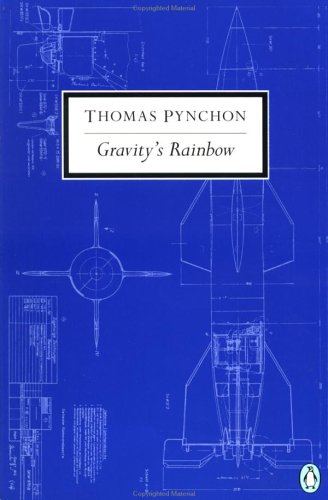
[READ: Week of February 20] Gravity’s Rainbow 1.1-1.12

This is my first time reading Gravity’s Rainbow.  And I know literally nothing about it.   I have always felt like I should read it (being a good modernist and a fan of Joyce and David Foster Wallace), but I never bothered to find out even a basic plot.  And it’s kind of fun going into this thing completely blind.  I had no idea even that it was set in England just Post WWII (1945).  So that was a surprise.  [Interestingly, having just read The Apothecary which was set in London right after WWII, it is cool to read another story set just around WWII and to hear similar things about the living conditions.]

But back to GR.  The only thing I have read before writing this post (aside from a few thoughts over at Infinite Zombies) was a comment (again, on IZ) that you will be confused while reading this book and that’s okay.  Phew.

Having said that I didn’t find it as confusing as I imagined.  (I’ve been intimidated by reading this book for fear of its difficulty).  I admit there are several scenes with pronouns that are somewhat elusive to me, and there’s a few other scenes where characters seem to be there without being fully introduced until later, but overall it’s not that bad.

The first section of the book seems like a lot of exposition–good, thorough exposition, which is also funny—but by section 1.12 we’re still meeting new characters.  It feels like serious plot things will happen later.   The book opens with a more or less famous line (Okay, I knew about that line before reading the book, but that doesn’t give any context).

And so, the screaming comes across the sky and the city is in the midst of an evacuation, but it is too late.  At least for some.  And the opening is a little confusing, as an evacuation might be.  It certainly seems like the end of everything, but then we also find out that some people are sleeping through it.  That this bomb is a localized attack.

Section 1.1 also introduces us to Lt. Capt. Geoffrey (“Pirate”) Prentice.  Pirate is just waking up when he notices that his flatmate Teddy Bloat is about to fall off of the minstrels’ gallery but Pirate manages to shove a cot in the way just as Teddy falls off the balcony.  Pirate is famous for his Banana Breakfasts (he’s the only person in England who has bananas).  And at this point the story settles down into a rather enjoyable domestic scene.  I mention in a post at Infinite Zombies that this opening scene of Pirate on the roof is reminiscent of the opening scene of Ulysses (I won’t go into that here).

The next scene is a raucous affair with a bunch of locals clamoring for their Breakfast plates.  The scene feels like a college dorm, although the participants are (I assume) older—Pirate himself is in his early 40s.

It’s time to mention Pynchon’s astonishing character names. I love them all, they are so weird and evocative without (always) being obvious.  So Teddy Bloat is a good name, but what about Coryson Throsp, the designer of their building.  And with the Breakfast comes names out of the woodwork:  Osbie Feel, Bartley Gobbitch, DeCoverley Fox, Maurice “Saxophone” Reed, Joaquin Stick.  I’m not going to go speculating about names in these posts, but I am sure going to highlight my favorites. (more…)

Read Full Post »

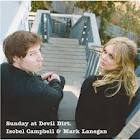
SOUNDTRACK: ISOBEL CAMPBELL & MARK LANEGAN-Sunday at Devil Dirt (2010).

Sarah bought this disc for me for my birthday a few years ago.  I had a hard time getting into it even thought it was supposed to be amazing.  It turns out that it is amazing, but only when I’m in the right mood.

The is a disc of slow, moody songs.  The closest comparison I can think of is Leonard Cohen (even though all of the songs are actually written by Isolbel Campbell)–this disc is at times more and at times less ponderous than Cohen.

The main reason I couldn’t get into it is because the first two songs are really really slow.  “The Seafaring Song” is almost comically slow–as slow as Lanegan’s voice is deep.  And yet there is a very nice melody (and beautiful accompaniment from Campbell).  “The Raven” sounds like an old Western movie.  Indeed, a lot of the disc sounds like an old Western.

“Salvation” introduces the first real up-front melody. “Back Burner” has a very old school chanting chorus which is quite a change for this album (although at 7 minutes, it does drag a bit).

“Who Built the Road” is very much like a Leonard Cohen duet (especially the La la part) while “Come On Over (Turn Me On)” is like a sexy Serge Gainsbourg duet (the album really picks up around here).  “Shotgun Blues” is a big sexy blues (surprising for Campbell who sings lead) while “Keep Me in Mind, Sweetheart” is a country-style ballad.

By the time that “Sally, Don’t You Cry” comes on, I find that I have more or less had enough of the disc.  But that is the last official song.  My copy has five bonus tracks after two minutes of silence. But the bonus songs mix things up a bit more.  “Fight Fire with Fire” is a jaunty piano based song (although it’s still pretty slow-paced).  It’s funny to hear them talking about AC/DC albums in this slow piano song.

“Violin Tango” is just what the title says while “Rambling Rose, Clinging Vine” is probably the most upbeat song on the disc. Finally “Hang On” feels the most like a song from her old band Belle and Sebastian (by way of The Velvet Underground).  It’s also the only one she sings solo.

So yes, I do like this album quite a lot. Lanegan is a perfect foil for Campbell’s sweet voice and songwriting. They made another disc together, maybe I’ll get that in another couple of years, too.

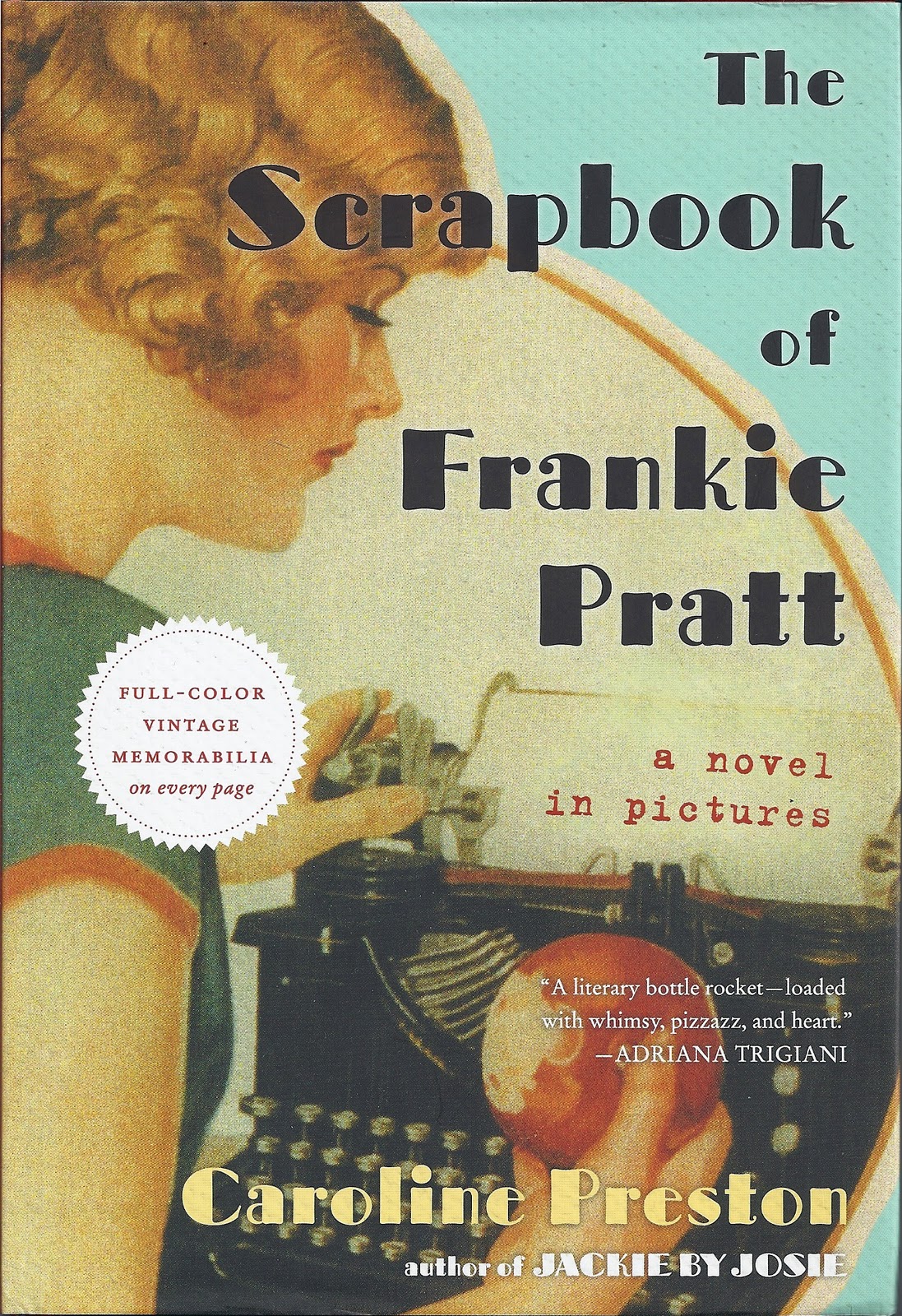
[READ: February 5, 2012] The Scrapbook of Frankie Pratt

This was a wonderful book that Sarah brought home and told me I had to read.  And I’m so glad I did.

The Scrapbook is a very simple story–it’s a biography of a lady named Frankie Pratt from the ten or so years after she gets out of high school.  She went to high school in Cornish, New Hampshire in the early 1920s; that’s when this scrapbook starts.  Over the decade, Frankie goes to college, gets a job in New York City, travels to Paris and then returns home.  That is the basic plot, but that simple summary does a grave, grave injustice to this book.

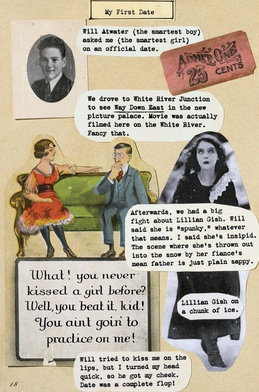
For Preston has created a wondrous scrapbook.  Each page has several images of vintage cutouts which not only accentuate the scene, they often move the action along.  It feels like a genuine scrapbook of a young romantic girl in the 1920s.

Check out the picture on the right.  Every page is like that–full of old photographs or ticket stubs, candy wrappers or advertisements.  And a few words here and there that Frankie has typed to move the story along.  It is a wondrous trip down vintage lane.

Now, as I said, the story is pretty simple (but it is befitting a scrapbook).  It showcases the highlights of Frankie Pratt’s life.  How she meets a man who wines her and dines her and treats her fine, until he reveals a shocking secret.  How she got out of Cornish, New Hampshire and went to Vassar (I admit I found this first section a little slow, but I was so absorbed in the look of the book that I didn’t really mind).

Once she gets to Vassar though, things are much more interesting because Frankie, small town girl with no money, is introduced to the rich sophisticates who attend Vassar–New York and Boston socialites.  She even rooms with one woman (who sends her down a path of debauchery and potential loss of scholarship).

Frankie longs  to be a writer, and she heads to New York to work on a magazine.  There she meets a man who wines her and dines her and treats her fine, until he reveals a shocking secret. (more…)

Read Full Post »

I’ve more or less stopped counting milestones on this site.  But today I hit a quarter of a million views.  Sure, some site get that traffic in a day, but it’s not bad for a site that’s all about the books I’ve read.


And since I’m at 250,000, here’s a snapshot of my most popular posts: (more…)

Read Full Post »

SOUNDTRACK: ULVER-A Quick Fix of Melancholy (2005).

This EP came two years after Teachings in Silence (with a movie soundtrack and “greatest hits” collection in between).  This first track, “Little Blue Bird” is a simple soundscape with echoey keyboards.  When Garm starts singing, his most emotional side comes through (even if I really can’t understand him most of the time).

“Doom Sticks” belies its name and the EP title by being somewhat upbeat.  There are kind of squeaky keyboards that pulsate through the track.  After about a minute and a half, distorted drums keep a martial beat.  But it quickly morphs into a twinkly section that makes me think of the Nutcracker or some other kind of Christmas special.

“Vowels” is similarly upbeat (the music on both of these two tracks has a vaguely Christmastime feel somewhere in there–not that anyone would think these were in any way Christmas songs, or maybe it’s because I’m listening in mid-December).  For this, we get a return of Garm’s choral voice: deep, resonant and hard to understand (although I undertsand the lyrics are from a poem by Christian Bok).   But the poem quickly makes way for some dramatic staccato strings. 

“Eitttlane” begins with some menacing keybaords and staccato notes, creating a feel of a noir movie.  But when the vocal choir comes in, it gets even more sinister.

These Ulver EPs are really true EPs–stopgap recordings for fans.  Their larger works tend to be more substantial, but these EPs allow them to play around with different styles.

[READ: December 1, 2011] “Laureate of Terror”

Two authors I admire in one article, how about that!  In this book review, Martin Amis reviews Don DeLillo’s first collection of short stories and gives a summary of DeLillo’s work.

Amis opens the article by undermining my plans for this blog.  He states point blank than when we say we love an author’s works, we “really mean…that we love about half of it.”  He gives an example of how people who love Joyce pretty much only love Ulysses, that George Eliot gave us one readable book and that “every page of Dickens contains a paragraph to warm to and a paragraph to veer back from.”  Also, Janeites will “never admit that three of the six novels are comparative weaklings (Sense and Sensibility, Mansfield Park and Persusaion).  [I still hope to read all of the books by the authors I like].

Amis says he loves DeLillo (by which he means, End Zone, Running Dog, White Noise, Libra, Mao II and the first and last section of Underworld).  And he also seems to really like The Angel Esmeralda: Nine Stories,(well, much of it anyway), DeLillo’s first (!) short story collection

His main assement is that these pieces are a vital addition to DeLillo’s corpus.  (more…)

Read Full Post »

SOUNDTRACK: SHARON VAN ETTEN-Live at SXSW (2011).

Sharon Van Etten has a lot of sessions at NPR.  Not too many are downloadable, but this one is.  This is a fascinating set because it’s a special breakfast show for KUT. (See in the picture she’s doing Java Jive).  (She also plays a show later that night, but it’s not available here).

The set is four songs (all from Epic) on acoustic guitar.  The really different thing about this set than any of the other things I’ve heard from her is that her voice sounds really gravelly (like she just woke up–which she may have, almost all of her between song banter is about how it’s early–it’s either endearing or annoying).  Normally, Sharon has a really amazing voice–high and soaring.  This time it’s much  raspier.  But the interesting thing is that it works well.  She never misses a note and it brings an interesting growly tone to these (somewhat) angry songs.

It’s a great (although brief) set.

[READ: March 30, 2011] “Mont Royal”

This is a very brief (three column) story that reads like a stream of consciousness piece.  And that is appropriate because it not only references Ulysses, it actually quotes the end of the novel.

There are many fascinating things about this story.  First off, it is written in direct address: “When I moved to the city, ladies, …” but we never find out who the ladies are.  Second, it begins with the humorous idea that the narrator–upon moving to Montreal–believed for many years that the cross on the to of Mont Royal was a plus sign (he is an engineer). (more…)

Read Full Post »

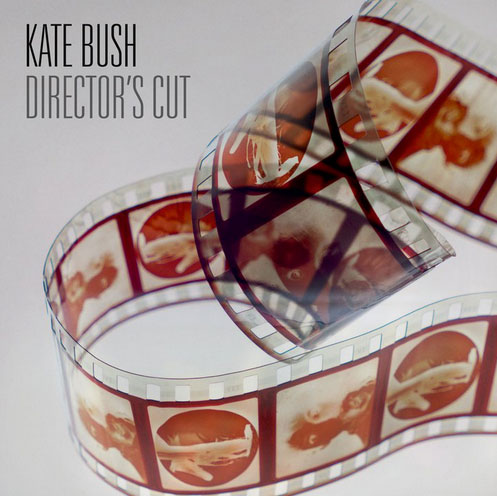
SOUNDTRACK: KATE BUSH-Director’s Cut (2011).

Kate Bush has re-recorded eleven songs from her two least-loved discs, The Sensual World and The Red Shoes.  According to the story at NPR, this seems to have been inspired by the Joyce estate’s granting Kate the right to use part of Ulysses as the lyrics for the song “The Sensual World” (in the original version she paraphrased the book).  So, she decided to re-record a bunch of other songs from those two albums as well.

I admit that neither one of those discs is high on my repeat play list, with The Red Shoes being a particular disappointment.  (Although there are some great songs on each).  When I read that these songs from those two albums I wasn’t terribly excited to hear them.  But I must say that these new versions have really reinvigorated these tracks.

I’m surprised by some of the choices (redoing “This Woman’s Work” is something of a shock, as is redoing her only real hit from The Red Shoes, “Rubberband Girl”), but whether it’s that she chose the best songs, or the new version have more life to them, this is a wonderful collection of songs.

Actually, rechecking the track listing, it does appear to be the best tracks from both discs, but I’m pleasantly surprised to seen how many good songs were actually on The Red Shoes to begin with,

from The Sensual World

  • Sensual World (retitled “Flower of the MOuntain”)
  • Deeper Understanding
  •  This Woman’s Work
  • Never Be Mine

from The Red Shoes

  • The Song of Solomon
  • Lily
  • The Red Shoes
  • Moments of Pleasure
  • Top of the City
  • And So is Love
  • Rubberband Girl

For the most part, the music seems to be the same (although there are some glaring exceptions).  I admit to not remembering the originals for all of them all that well).  But she has mostly rerecorded her voice (and possibly other lyrics, if NPR is accurate).  Her voice is unmistakably Kate, but in some places she sounds noticeably older (which she is, so duh).  She doesn’t seem to be able to hit quite the highs of before, but her voice has a throaty excellence to it now that brings something new to the songs.  It’s not noticeable on every song, although it is most notable on “This Woman’s Work,” which began with high sopranos, and now begins with lower alto notes.  But she can still hit some of the cool screechy notes on “Top of the City”

There are some tracks that are very different, “A Deeper Understanding” (a song about love via modems) replaces the earlier style of singing with a heavily autotuned computer voice.  It’s unsettling but very cool sounding.

The biggest changes come in “This Woman’s Work” and “Rubberband Girl.”

“This Woman’s Work” is a far more sedate track now. It doesn’t have any of the soaring moments of the original.  It seems to have more depth in this version, but I miss the “Oh darling make it go away” moment.  Nevertheless, it sounds really pretty in this more mature version.  It’s simply a very different song now.

As for “Rubberband Girl,” I’ve always had a real fondness for the original, so I don’t know how I feel about the rerecorded version (which is so very different).  The original is very elastic with cool music and weird vocals and is kind of trippy (and may not even be all that good), but I have grown quiet attached to it.  The new version is a simple guitar sound (it reminds me of a sort of unplugged Rolling Stones song now).

Overall, this is an exciting revitalization of Kate’s back catalog, and I hope it inspires her to make another new album in the next few years or so.

[READ: May 14, 2011] Austerlitz

I read about Sebald in Five Dials. And the glowing talk about him made me want to read one of his books (specifically, this one).

Austerlitz is a strange novel which I enjoyed but which I never really got into.  I feel like rather than absorbing me into its words, the book kind of held me aloft on the surface.  As such, I have a general sense of what happened, but I’d be very hard pressed to discuss it at length.

The basic plot summary is that an unnamed narrator runs into a man named Jacques Austerlitz.  Austerlitz talks to him at length about his life. They run into each other at various points over the years, and Austerlitz’ story is continued.  And literally, that is the book.  Now, of course, Austerlitz’ story is multifaceted and complex.  But we will never forget that this is a story within a story (it’s impossible to forget because the phrase “said Austerlitz” appears about 500 times in the book. (more…)

Read Full Post »

SOUNDTRACK: FROU FROU-Details (2002).

Many years ago I bought Imogen Heap’s debut album because it was described as being similar to Tori Amos’ work.  I think that it’s really closer to someone like Heather Nova, but regardless, it was enjoyable, with her cool voice that had an unexpected falsetto thing that I rather liked.

I promptly forgot about her, although the single “Come Here Boy” stuck with me.  I was recently turned on to Frou Frou somewhere even though this album came out almost ten years ago.  Since a decade is a long time I can’t recall if 2002 was the time of this sort of music or not (well, Dido came out in 1999, so maybe this was the tail end?)

Anyhow, this album plays nicely into the continuum of slightly more complex than normal pop songs sung by a woman with a cool if not unique voice.  Heap provides the vocals, and I suppose the most notable quality is her breathiness.  She seems to be able to sing in a whisper, which is pretty neat and, again, there’s that falsetto which doesn’t seem to get higher so much as otherwordly.

She’s an excellent match for Guy Siggworth who creates music (at least I assume he did the music, I’m not sure how it was divided exactly) that is interesting and electronic but also soft and welcoming.  Despite the fact that the music is obviously a dude with a keyboard, his choices are not electronic and dancey, they are more enchanting (although they are also very catchy and dancey).

They work wonders as a team, and if you miss this sort of not-pure pop album (circa 2000), this is a great disc to pick up.  Heap’s voice may be one to get used to, but I find it far more engaging than the autotuned voices circa 2010.

A couple of stand out tracks include: “Must Be Dreaming” which has some especially nifty effects that make the song stand out.  The most Björkian song “Psychobabble” also offers cool sound effects which take it well out of the pop realm (her voice is particularly cool on this track).  And “Maddening Shroud” is probably the best poppy song I’ve heard in a long time.

[READ: January 11, 2011] “The King of Norway”

In my mind Amos Oz is a capital-A Author, somehow promising Thoughts.  Maybe it’s because he writes in Hebrew.  Maybe it’s because of the mystical name Oz, but he seems like a Prophet or something.  And in that respect, I suppose I am simply not full of Grace enough to get the Point of this story.

I know that it is utterly unfair to hold this man up to these made up standards, especially since I’ve never actually read him before.  But that’s all moot, because I feel like there’s more to this than meets the eye and I am just not that interested in finding out what.

It’s utterly coincidental that tonight we watched the first half of A Serious Man (which also features Hebrew prominently), but I am suffused with Jewish thought this evening.  (I enjoyed A Serious Man a lot more than this story, by the way). (more…)

Read Full Post »

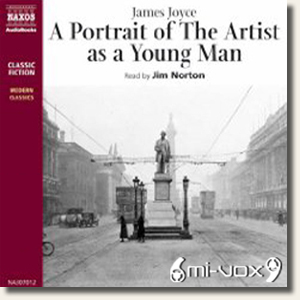
[LISTENED TO: November through December 2010] A Portrait of the Artist as a Young Man

I initially ended this post with: “Even though this audio was unabridged, it felt a bit like hearing an abridged version.  I suspect I shall have to actually read the novel again in 2011 to see what I missed.”  Well, I assumed that the audio was unabridged.  But now I see that there is another recording which is 7 discs as opposed to my copy’s 3 discs.  Gadzooks!  In tiny print on the back of the box, I see now that this is abridged.  NO WONDER I felt like so much was left out of the story.  It actually made me think that the story wasn’t all that coherent.  As such, you can kind of disregard this post until I listen to the unabridged version (which is available free for download here).

So, back to my initial review:

I was listening to this audio book while exercising.  The fact that it took me as long as it did to finish the audio book is more of a testament to my lack of exercising than the book itself.  Although I will say that unlike Dubliners, I found that listening to this book (and again, perhaps it was the distance between listenings) to be somewhat unsatisfying.  And of course, as with all of these Naxos CDs, the vocals are recorded so quietly (except when he starts screaming–the hellfire sermon is so loud it scared my family upstairs) that you really have to try to listen hard to hear the whispers.  The final chapter–Stephen’s diary–is read so quietly it was hard to hear over the exercise machine, even with the sound up all the way.

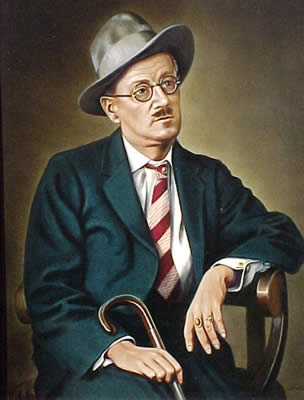
So this is the story of Stephen Daedalus before Ulysses, when he was, as the title states, a Young Man.  My favorite memory of reading this book was when I read the opening aloud to a sick friend who thought that I was messing with her:

Once upon a time and a very good time it was there was a moocow coming down along the road and this moocow that was down along the road met a nicens little boy named baby tuckoo….

Stephen is of course, baby tuckoo, so this novel is more than just the young man days.   But from this baby story, we quickly jump to Stephen at school and we see an episode that impacted his whole life: boys who were teasing him pushed him into a stagnant pool of water. (more…)

Read Full Post »

[LISTENED TO: October 20, 2010] Dubliners Part II

This collection covers the last five stories from the book.  They are all longer stories, especially the fantastic novella “The Dead,” which runs well over an hour.  The titles included in Part II are:

A Painful Case
Ivy Day in the Committee Room
A Mother
Grace
The Dead

These last five stories look at (continuing the theme from my previous post) middle age and later life.  The protagonists are all older, and as with the first part, they all must deal with harsh realities and even death.

“A Painful Case” is the first story in the book where the title doesn’t directly apply to the protagonist (even  though, of course, it does).  Mr Duffy is a solitary man.  He goes out from time to time but is not really social.  At a concert he meets Mrs Sinico and they form a friendship.  Her husband approves of the friendship because he believes that Mr Duffy is really after their daughter.  The relationship grows stronger and stronger and Mrs Sinico feels closer to him than she does to her husband.  Then, Mrs Sinico make a gesture indicating she’d like a more intimate relationship.  Mr Duffy is immediately turned off by this and vows to himself to see her no more.  This leads to a quote that I assume is not original to Joyce, and yet it is still common today: “Love between man and man is impossible because there must not be sexual intercourse and friendship between man and woman is impossible because there must be sexual intercourse.”  The strange thing about this story is that it then jumps ahead four years.  We learn that Mrs Sinico took the dissolution of their friendship very hard indeed.  And naturally, Mr Duffy is made to rethink his life choices.  It’s yet another story of despair. (more…)

Read Full Post »

[LISTENED TO: October 5, 2010] Dubliners Part I

I found listening to Ulysses to be rather satisfying.  And, since I have recently commenced an indoor exercise regime, I thought it would be “fun” to listen to some audio books during the workout.  I started with Dubliners because and because Jim Norton is the reader (and I enjoyed his style on the abridged Ulysses) and because I own it.

It’s disconcerting to read/listen to Dubliners after Ulysses because Dubliners is such a conventional collection of stories.  There’s nothing untoward about them, there’s nothing scandalous (except for drinking and mistreating wives), and there’s nothing to be confused about (except maybe early 20th century Irish political references).  But one thing that  is abundantly clear is that Joyce was a great writer, right from the get go.

This disc’s stories are mostly between 10 and 21 minutes long, although “A Little Cloud” runs to half an hour.  The titles included in Part I are:

The Sisters
An Encounter
Araby
Eveline
After the Race
Two Gallants
The Boarding House
A Little Cloud
Counterparts
Clay

I’m not really going to review the quality of the audio.  It is uniformly very good, with Norton conveying accents wonderfully.  And those accents really bring the stories to life.  There is music in between each story, and the songs are all relevant to the time, if not the individual story. As with most of these audio books, it could be mixed louder, but that’s a minor quibble. (more…)

Read Full Post »

« Newer Posts - Older Posts »