Feeds:
Posts
Comments

Archive for the ‘Chimamanda Ngozi Adichi’ Category

SOUNDTRACK: BLACK COFFEE-Tiny Desk (Home) Concert #180 (March 11, 2021).

Black Coffee is such an excellent name.  And yet the music he creates is nothing like what I was expecting.

Born in Durban and raised in the Eastern Cape in Mthatha, Black Coffee’s subculture of soulful … house music has always been about love. It’s a form of sonic escapism that provides a sanctuary for all beings, regardless of race, age, or gender. Therefore, it’s only fitting that Black Coffee rocks a tee embossed with “I Heart You” across his chest.

Black Coffee stands behind a big mixing board as he generates most of the sounds.  Although next to him is Pansula on the drums.  And Pansula is possibly the real star of this set, with his persistent and powerful rhythms.

Black Coffee, a figurehead of the global South African dance movement, is known for his undeniable DJ sets and AfroHouse anthems that (under normal circumstances) light up dancefloors around the world. He brings that same feeling to his Tiny Desk (home) concert, but with a unique configuration: live instrumentation.

Kicking off the set is “You Rock My World” featuring Soulstar, a classic dance joint from his Africa Rising album whose convergence of pulsating percussion, a calming melody, and the sultry vibes of Soulstar’s voice feels like a spiritual palette cleanser.

It starts with drums and drums and more drums from Pansula.  Black Coffee’s samples provide most of the music with some fleshing out from Nduduzo on the keys.  Then Godfrey Mntambo plays some sultry sax as the lead melody.

The backing singers (Musa Nhlapho, Sandisiwe Sishuba and Bonokuhle Nkala-Mtsweni) start cooing and then lead singer Soulstar sings.

“Flava” is up next with lead vocals from Una Rams and Tellaman.  My favorite part comes at the end of each verse as Black Coffee thumps the bass and Pansula echoes with cymbals.  The gentle keys on this track provide some nice high end amid all the bass.

“Flava” and “Wish You Were Here” come from his new LP, Subconsciously, whose litany of special guests — include Diplo and Pharrell.

“Wish You Were Here” is a bit more mellow and includes a much wider array of samples–guitars, flutes and crashing sounds.  Singer Msaki has an Annie Lennox vibe and sounds really great.  Nduduzo plays a jazzy piano solo as the song nears the end, which adds a fun new component to this house song.

[READ: March 31, 2021] “Real Food”

The September 3, 2007 issue of the New Yorker contained several essays by their writers about the subject “Family Dinner.”

Chimamanda Ngozi Adichie explains that when she was little she hated garri, a food served for lunch every day except Sunday in her house.  Her mother was concerned that she was not eating at all and sat with her to watch her eat the garri.

It was made in various ways, with different ingredients (primarily yams) but was always cooked, stirred or pounded in a mortar until it became a soft mash: “it was jokingly called ‘swallow,’ because one swallowed the morsels without chewing.” (more…)

Read Full Post »

SOUNDTRACK: BORIS with MERZBOW-Gensho (Disc One: Boris) (2016).

In 2016, Boris teamed with Merzbow to create Gensho, a 2 CD package that was designed to have both CDs played at the same time.  Not the easiest thing for many people, but with the advent of digital recordings it’s now pretty easy to play both discs at the same time (this release is on Spotify).

Disc 1 was all Boris.  Disc 2 was all Merzbow.

When you play them together, you get the drumless Boris with all of the glitching electronica of Merzbow sprinkled around it.  The songs are set up in a very clever way with one of Merzbow’s songs being exactly equal to two or three of the Boris songs.

I played the CD of Boris and the stream of Merzbow on Spotify.  It was cool to be able to raise and lower the volunme of one to change the intensity of Merzbow’s glitches.

Merzbow’s “Planet of the Cows” plays over the first two Boris songs “Farewell” and “Huge.”  Farewell’s quiet drone tacks on Merzbow’s squeals and glitches which fill in the gaps quite nicely.  When “Farewell” ends, the Merzbow continues until the loud gongs heavy chords of “Huge” ring out.  The Merzbow chaos sounds almost like a solo over the slow low heavy drone chords.  Atsuo’s low growling even complements the spare noises.  Both parts ends with squealing feedbacking sounds–analog from Boris and digital from Merzbow.

Merzbow’s “Goloka Pt. 1” plays over three Boris songs “Resonance” “Rainbow” and “Sometimes” (the My Bloody Valentine cover).  “Resonance” is mostly percussion–kind of randomly hit in a slow rhythm.  Merzbow’s noises sound like static in a distance echoing signal from outer space.  “Rainbow” is a piece I don’t know.  This version features Boris playing some quiet guitar and a grooving bass with Wata singing vocals. Merzbow’s electronics sounds restrained here, adding louder noises when the vocals back out  This song has some tasty soloing from Wata with the electronics almost keeping pace.  It segues into “Sometimes,” with its loud thumping echoes and eventual wall of noise.  The vocals are pretty well buried but you can hear the melody of the MBV song.

“Goloka Pt.. 2” plays over “Heavy Rain” and “Akuma No Uta.” “Heavy Rain” starts out with noisy stabs of sound–it’s actually hard to tell who is making what, but then things mellow out as Wata sings.  The guitars drone loudly and the vocals mix in with the electronics.  It ends with the noisy guitar buzzing from Boris while the noises from Merzbow continue between songs–sounds of noise and electronic bleeps.  “Akuma No Uta” starts slowly with washes of guitar build up. The glitching Merzbow adds keeps it from being purely a drone.  The drone gets louder and louder and I like the way Merzbow’s glitches seem to back off as the man riff enters the song.  As it nears the end, glitching sounds to me like a menacing voice coming through the static and heavy riffage.

The final song is Merzbow’ “Prelude to a Broken Arm” which plays over “Akirame Flower” and “Vomitself.”  It starts out with watery sounds before the big chords and vocals kick in.  Merzbow’s noise is like a screaming train underneath the slow crooning.   The main riff from Wata has some electronic percussive sounds tacked onto it.  As the final chord rings out the song segues into the musch noisier “Vomitself.”   It introduces a huge wave of low chords as Merzbow’s noise amps up to correspond with a lot of low growling percussive sounds. As the song rumbles to an end the squealing intensifies like feedback added on top of the roar with the last notes sounding like a person raging.

It’s interesting how I don’t really like the Merzbow tracks, but how they add interesting textures to the Boris songs.

[READ: February 19, 2021] Caliente

Matu Santamaria is an Argentinian illustrator and his work is really stunning.

This book has a big warning: 18+ but it’s not fully explicit.  There are drawing of naked women and sex acts, but there’s only a few things that are NSFW.

Santamaria’s work is full of clean lines and and dramatic colors.  I really enjoy looking at it, regardless of the content.

This book contains a lot of his most recent work.  It seems to be split between positive messages about sexuality, body positivity and appreciation for frontline workers during the Coronavirus.  There’s also some celebrity pictures as well.

After some definitions of the word caliente, the book opens with series of pictures of women exploring the sexuality with each other.  Interracial women kissing and a woman taking her top off with the comment–“and without realizing it, it’s poetry.” (more…)

Read Full Post »

CV1_TNY_03_18_13Kalman.indd SOUNDTRACK: THE MILK CARTON KIDS-Tiny Desk Concert #232 (July 16, 2012).

milk-cartonI was unfamiliar with the Milk Carton Kids before seeing them on NPR.  I had always assumed they were a punk band with a name like that. Well, nothing could be further from the truth.  The Milk Carton kids are a delightful folk duo.  And they give the origin of their band name a little later in the Concert.

Joey Ryan sings lead and plays rhythm acoustic guitar.  Kenneth Pattengale plays lead guitar and sings beautiful harmonies.  It’s his guitar work that is so disarming because he plays leads throughout the songs, so rather than having the two guitars doing the same thing, his guitar is all over the place–playing beautiful trills and lines while Ryan is singing.

The first song they play is “Michigan.”  I love how in the middle of the song between the melodies and the harmonies it sounds like about three different bands—there’s a kind of Simon & Garfunkel vibe, a Jayhawks vibe, and maybe even a CS&N vibe–and yet it retains their original sound.  There’s some beautiful melodies in the vocals and the lyrics are really good (but sad).

After the song, Bob asks about the neckerchief on Kenneth’s guitar.  he says, “well it looks good.”

Then he explains that in a technical way, “This guitar is a bit crummy.”  When they play higher chords the strings buzz, so the neckerchief keeps that from happening: “It’s practical and it’s alluring—this is what got Stephen to stop at our concert to listen.”

Kenneth then says that Joey usually talks more than this “I don’t know why he’s so demure today.”  Joey deadpans, “I don’t know what demure means, but I’m, sorry if that’s how I’m behaving.”

Before the next song, Joey deadpans, “This is something we’ve been looking forward to for a long time.  Hence our palpable excitement.”

They’re very happy to be behind this desk so “We’ll play you a love song to the desk.  This song is called ‘To the Desk.'”  The song is actually called “Stealing Romance.”  They sing a duet with Ken taking the high notes.   It’s a slow ballad.  During the song you can hear all kinds of sirens going past the offices.  When it ends, Ken says, “I think Joe Biden drove down the street during that one.”  Joey reacts: “Who’s that?”

Then Joey explains the origins of their band name Milk Carton Kids.  The name comes from one of their songs “Milk Carton Kid.”  The song itself is named after a lyric in the song.  He says it’s an attempt to answer the question that’s one everyone’s mind with a completely unsatisfactory answer.  Then he says they’re not going to play that song.

Rather, they play “their happy song” “I Still Want A Little More”which proves to be really fast and uptempo—a real surprise after the other two songs.  Ken is wailing away on his guitar while they sing in great harmony.  There’s some rollicking guitars and singing.  This is my favorite song of the three.

I don’t love their slower songs. Although as far as slow songs go, their setup is great–the harmonies, the interesting guitar.  But I really like the two of them.  They are great performers and excellent storytellers.

[READ: July 20, 2016] “Checking Out”

This story is bookended with a man planning on marrying woman.

Obinze is African, and he is in London on a work visa.  He is arranging a sham marriage to be able to stay in the country.  The arrangement has been set up by some Angolans. They claim that he is a friend of a friend and they’re doing him a favor, but they are keeping lot of the money that is meant to go to his bride.

When he met Cleotilde, he was surprised to see that she was young and pretty.  And it seemed that she was pleased with him when she saw him as well-0ff.  I guess expectations are pretty low in this situation.  He was kind to her from the start, making sure that she was okay doing this. And she said she was–she really needs the money for her family.

Obinzne and Cleo meet up a few times to get their details straight, and he finds that he is really falling for her–although he knows he can’t really act on it until after the marriage. (more…)

Read Full Post »

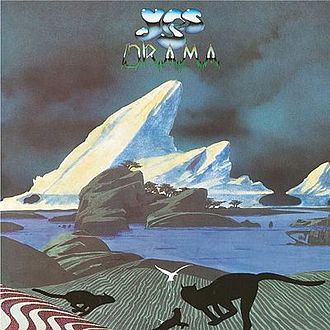
ny13SOUNDTRACK: YES-Drama (1980).

dramaAfter a few albums that seemed to lack the oomph of previous Yes outings, they stormed back with Drama.  And you know it’s proper yes because Roger Dean drew the cover!

It opens with a great dark riff and some big heavy bass—where has that been? And then the vocals come in—band harmonies like Yes has always done, but something is…different.  And around 3 minutes in, you realize what it is, so you check the liner notes (remember those?) and… woah Jon Anderson, the voice of Yes, has defected! And in his place is singer Trevor Horn from…The Buggles?  Trevor and Geoff Downes the creators of The Buggles were fans of Yes and when Anderson and Wakeman (yup, he’s gone too) left, the rest of the gang asked the Buggles to join in.  It seems that they had a few songs already written and the Buggles guys wrote a couple songs and there it is.

Horn’s voice is surprisingly close to Anderson’s (although he can’t reach the high notes.  But he has a lot more bass resonance so when he belts out notes he sounds really powerful.

And it turns out that Drama is very high on my list of Yes albums, even without Anderson  The band seems really interested in making big loud rock again, which I’d rather missed.

“Machine Messiah”  is over 10 minutes long.  There’s some great riffs and time changes and a big soaring guitar solo (Steve Howe is still on board).  There’s a slow middle section about 6 minutes in with acoustic guitar and simple vocals. The final solo repeats the same melody but it seems to swing more.  Near the end they revisit the slow section with new wave keyboard sounds that I imagine Wakeman would never have agreed to play (although he did play some weird sounds on Tormato).  Especially with the group vocals, it’s easy to imagine that this is indeed classic Yes.  A ten minute song with no wasted moments

“White Car” is a 90 second throwaway track.  It feels like they invited the new guys to fill some space. It’s not bad, it’s just a jingle with inscrutable words.  His voice soars similar to Anderson’s but not quite.

“Does it Really Happen?” has a big bass rumbling sound and bright keyboard chords. It goes through several sections before settling into a pretty typical Yes riff.  It really highlights the harmony vocals again. At the end of the song—a complete full stop, a new keyboard riff comes in with a repeat of the rumbling bass. It lasts only for a minute or so and then fades out. But it’s nice that Squire get a chance to wail

“Into the Lens” is a great song that opens side two.  The opening bass and counterpoint keys of is pure Yes, which is why it’s surprising to find out that the main section of the song is pure Buggles.  Indeed, the “I am a Camera” section of the song was written by Trevor and Geoff and they even recorded it with out all the complicated intro on the second Buggles album (it’s called “I am a Camera.”  There’s a cool bass section that may actually be piano? It’s got a cool end section with staccato riff repeated three times and an odd pause signature.  The opening and closing sections (the Yes parts) work really well with the catchy middle part (which really doesn’t sound like Yes at all, but still works and is super catchy).

“Run Through the Light” has fretless bass!  And that bass was played by…Trevor Horn.  What?  Chris Squire is either a total pushover or the most generous founding member of a band ever.  It says Squire played piano on this track, although for the life of me I can’t hear any piano at all.  It’s a decent song but probably the least interesting on the disc.

And them comes the best Yes riff since the early 70s–the wild bass line of “Tempus Fugit.” The song opens with some keyboard phrases that don’t at all suggest there’s going to be something spectacular coming next, but in true Yes fashion, the boppy opening mutates into a super fast bass line with appropriate synth blasts.  While not as great as say Roundabout, it soars over just about everything since then, and is an overlooked Yes gem.

I noticed on 9012live that Squire plays the “Tempus Fugit” riff riff in a bass solo—evidently, Anderson (who returned after this record) refused to sing any sings from Drama.  Which is shame because there’s some good stuff there.

Since almost every Yes album had different personnel, I’m going to keep a running tally here.  This is a biggie, look who has left!

Chris Squire-bass
Trevor Horn (#2, replaced Jon Anderson) vocals
Alan White (#2)-drums
Geoff Downes #4 (replaced Rick Wakeman #2)-keyboards
Steve Howe (#2)-guitar

[READ: April 12, 2015] “Apollo”

This story has two parts, a part set in the present and then a flashback which takes up most of the rest of the story.

As it opens, the narrator is visiting his parents in Enugu.  He says that his parents have changed since they retired.  They used to be critical thinkers (professors both of them).  They often challenged each other in intellectual ways–even seeing who could publish more papers.  But since they have retired, they have become almost comically gullible.  They would often call things “nonsense” but now they believed just about everything they read in the paper.

And on this occasion they are telling the narrator about a robbery that occurred in town.  This is nothing unusual.  But when they say that the leader of the gang was Raphael, it gives the narrator pause.

His parents don’t think he remembers Raphael, but he does.  Raphael was one of the house boys who worked for his parents.  There were a number of them, but this one made an impact. (more…)

Read Full Post »

SOUNDTRACK: SUPERCHUNK-The Question is How Fast (1992).

With a new CD out, and–even more impressive–an appearance on NPR’s Wait Wait, Don’t Tell Me, I thought it would be fun to revisit Superchunk’s output (starting with their EPs).

This is the earliest Superchunk EP that I own.  The title track is a bracing four minute blast of speedy alt-rock.  It has a poppy structure but the guitar is distorted enough to keep the song interesting over repeated listens.  Of course, it’s the catchy chorus that sells the song.  And it sets the tone for future Superchunk tracks: high pitched vocals sung loud and with unimpeachable pop sensibility.

The second track is “Forged It” a more punk-sounding track that, when the chord changes come in, makes it sound like it’s moving even faster.  A blistering guitar solo muscles its way into the song, too.  The final track is “100,000 Fireflies” a cover of The Magnetic Fields song (and one that they play quite often, it seems).  It’s given suitable bratty treatment from the band.

[READ: October 2, 2010] “Birdsong”

Chimamanda Ngozi Adichie is the second to last 20 Under 40 author from the New Yorker. This story has the delightful exoticism of being set in Lagos.

And yet, the basic premise is quite simple: a wealthy married man falls for a woman and they begin an affair.  It’s a fairly typical story of illicit love and jealous.  However, some details are rather different: he allows her to move into his “work” house (he bought it to turn it into condos, but he liked it so much he kept it as an office).  And she lives with him in this way for around 18 months.

Her office mate, a judgmental woman who she would never be friendly with if they didn’t work together is very disapproving of this affair, and always calls him, “your man” knowing fully well that he is actually someone else’s man.

And that, in addition to the love he clearly shows to his wife eats away at her.  So, in many ways, this is a fairly conventional story. (more…)

Read Full Post »

This week’s New Yorker contains a list of the 20 authors under age 40 that they predict we’ll be talking about for years to come.  Their criteria:

did we want to choose the writers who had already proved themselves or those whom we expected to excel in years to come? A good list, we came to think, should include both.

They have published eight of these authors in the current issue and are publishing the remaining 12 over the next 12 weeks.  I’m particularly excited that they chose to do this now.  Since I’m currently involved in two big book projects, it’s convenient to be able to read a whole bunch of short stories to intersperse between big posts.

I’ve read half of the authors already (likely in The New Yorker and McSweeney‘s).  And have heard of many of the others.   The list is below: (more…)

Read Full Post »