 SOUNDTRACK: PUBLIC ENEMY-Fear of a Black Planet (1990).
 NPR recently broadcast a PE show from the All Tomorrow’s Parties Festival. I didn’t know that PE was still touring, so that was a surprise to me. The show was largely a celebration of Fear of a Black Planet, which meant that I had to go back and listen to the original.
Man, is this a solid album. The lyrics pack a punch even twenty years later and what is perhaps more amazing is that the sound collages that Terminator X created, which were something of an oppressive sonic assault are now fairly mainstream-sounding (forward thinking or what?).
What I like about this (and most PE) albums, is that they have little skits between songs, but unlike most rap skits they’re not one-not jokes that you listen to once and then skip every future time. A wonderful skit (for lack of a better word) is “Incident at 66.6 FM” in which we hear an amazing amount of racist epithets thrown at PE apparently on the radio. Or the rather disturbing “Meet the G That Killed Me.” “Anti-Nigger Machine” is a great collage of samples like “Think” and James Brown and a dozen more songs.
“Can’t Do Nuttin for Ya, Man!” is a (sort of) comic song from Flav that is catchy as anything. While “Reggie Jax” is a confusingly titled song that has nothing to do with baseball, but everything to do with funk.
Of course, this disc has some of PE’s best songs as well. From the awesome “911 is a Joke” to one of the best rap songs ever, “Welcome to the Terrordome” (my favorite story of this song is when I was wearing a Welcome to the Terrordome shirt and my philosophy professor asked me quite pointedly, “What in the hell is a terrordome.” That was a fun conversation). “Terrordome” is still amazing–powerful, musically intense and for all of its lyrical acuity, it still has funny moments….boing.
And of course, “Burn Hollywood Burn” is an amazing critique of the movie industry (and it’s catchy too). I got Black Caesar back at the crib, right Lar?
I’ve always been a little confused by “Pollywannacracker.” Not lyrically, but vocally, as Chuck’s (is it really Chuck?) voice is treated in a surprisingly tinny way. I liked the song more on this listen than any other, I guess in the past it just kind of snuck by me.
The album is a little front loaded with greatness. “Power to the People” is another powerful song, but it’s not quite as memorable as the other tracks. “Fear of a Black Planet” has some really cool sounds on it (where did they get that “black man, black woman, black baby” sample?). “Revolutionary Generation” is a great track in which Chuck and Flav stand up for black women: “R-E-S-P-E-C-T, my sister’s not my enemy.” Not your average rap subject.
And the last couple of proper songs, “B Side Wins Again” and “War at 33 1/3” are fast paced and furious, but they don’t really have much in the way of a hook. Nevertheless, lyrically they are really great, and I love to hear Chuck D flow that quickly.
The biggest surprise for me is the censored version of “Fight the Power” (the song that got me into PE in the first place, thanks Spike). It’s really surprising to me that PE allowed their music to be bleeped–unless it was just for a deliberate radio play (which I can accept). Although they also list a title as “Leave This Off You Fu*Kin Charts” (did I buy a Columbia House version or something?)
This is an amazing album, one that still sounds fresh and sadly, is still relevant.
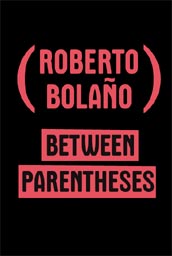
[READ: October 15, 2011] Between Parentheses
I never expected to get so addicted to Roberto Bolaño. And despite his death, there is no shortage of works coming out in English (that is one of the advantages to reading a translated author–even death doesn’t cease the available materials). Indeed, this year alone, New Directions is publishing Between Parentheses, and Tres and FSG is publishing The Third Reich (a collection of non fiction, a collection of poetry and a novel respectively).
When I really get into an author, I fall for his or her works, not necessarily him or her as a person (heck, some author are downright jerks). But there are some authors that I want to know about, personally. Bolaño is a pretty polarizing figure–he seems obnoxious, his works don’t shy away from very specific opinions, and sometimes it’s unclear what kind of views Bolaño himself has in his works (or if he’s even telling the truth about his so-called truths). One thing in particular is the constant use of the word “faggot.” It is used often in 2666 (and I know that is a translator’s choice, but still) and used derogatorily. Now, clearly the context is everything for something like that. But it seems to speak badly of Bolaño. And yet, when reading these essays he is not homophobic in the least. He is obviously well aware of institutionalized homophobia in Latin America, and he is obviously not supportive of it.
But that’s just one interesting thing about this book. So let me back up. (more…)


 I Just Read About That...