Feeds:
Posts
Comments

Archive for the ‘#10yearsof01’ Category

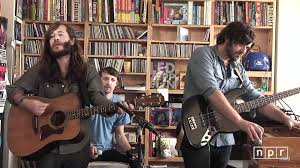
marathon SOUNDTRACK: EIGHTH BLACKBIRD-Tiny Desk Concert #528 (May 2, 2016).

8thEighth Blackbird is described as a “new music ensemble” from Chicago.  That means they play classical music that is new and “different.”  The sextet says that looking at each other–being able to communicate–is essential for playing these complex pieces, which calls for an interesting arrangement behind the Tiny Desk.

The first piece is actually two pieces called “Wave the Sea” and “Brushy Fork” from a suite called Murder Ballads by Bryce Dessner (better known as being in The National) .  The piece opens with a flute solo by newest member Nathalie Joachim, and then some complex series of notes and timings from the rest of the band–this is cerebral music that you must really pay attention to.

“Pulse,” from Robert Honstein’s three-movement Conduit is a much more gentle piece, far less frenetic and more mellow. It opens with Matthew Duvall’s vibraphone, Yvonne Lam’s violin, Lisa Kaplan’s piano and Michael J. Maccaferri’s clarinet which all seem to get added in one at a time until it is all just one consistent piece.  Nicholas Photinos’ cello offers some low end while the flute seems to float above the whole piece.  The song seems like it could just keep going forever as a very slow, beautiful round.

The final piece is by David Lang (an artist they have played for many years).  “learn to fly” returns to that frenetic tempo of the first piece .  Opening with wild syncopated piano notes (it looks impossible to play) and added to by the flute, clarinet and cello.  And just when you think the whole piece will remain in this style of complex syncopation, a violin solo bursts forth and soars for a few bars before returning to the melody.

I don’t listen to a lot of classical music, but I really enjoyed this Concert a lot.

[READ: March 1, 2016] Marathon

While overall I have really enjoyed the First Second books that I’ve read, this one I found really confusing and not exactly enjoyable.

The story begins in 490 BC.  Unbelievably it says the temperature is 106 degrees Fahrenheit (but sure, why not).  A man is running from Athens to Sparta (distance 153 miles).  Then there’s the confusing title: Athens: Twelve Years ago. Which I assume means 12 years before 490 BC–where we see some young boys racing.  Eucles won the race.  It is shocking to everyone that he is the son of a slave.  The slave defeated the Kings “own bastard son Phillipus.”   And so the King cuts off Phillipus’ head.

When he fails a test shortly thereafter, Eucles’ parents are executed.

Yup it’s that kind of story.

The king is Hippias.  He is exiled soon after the events of 12 years ago. (more…)

Read Full Post »

fateart SOUNDTRACK: THEE SILVER MT. ZION MEMORIAL ORCHESTRA-Kollaps Tradixionales [CST063] (2010).

kollaspThis album was released as a CD and as double 10″ vinyl.  Each “side” is about 15 minutes long.  And, interestingly, each side has a kind of theme, I guess.  It also includes the shortest song the band has recorded.

“There Is a Light” is one of my favorite songs they’ve done.  The guitar and strings play off each other perfectly and the song ebbs and flows very nicely.  Efrim sounds pretty drunk in his vocals, which gives the whole thing a shambolic quality that contrasts nicely with the elegance of the music.  Of all of their songs, I think this one really captures the intensity that these band can generate with the swelling strings and pounding drums.  At 6 minutes, the whole thing slows to a halt but is then resumed with a new, even more interesting section.  Over reverbed guitars, a series of horns and backing vocals singing “la las” flesh out the lead vocals.  I really enjoy the way the strings swirl around the vocals only pausing to let the words “One Step Two step” come out in staccato vocals.  But the main strings riff that follows these verses is so pretty, I could listen too just that.  This all ends around 9 minutes, when the final part begins with slow guitar and horns.  The vocals come in singing the title “there is a light.”  It starts quiet but soon enough the full choir of voices joins in as the music swells.  After a few round of verses, the song ends with the female choir singing, “Tell me there is a light.”

The second “side” is the “metal bird” side.  It stars with “I Built Myself a Metal Bird” which opens with rocking guitar chords and fast drums–the most overtly rock song they’ve done so far.  The vocals are screamed and staccato.  Things never really let up for the whole six minutes–there’s a concurrent violin solo while the lyrics are sung.  The second half of the song changes things a bit–with more dramatic strings playing.  In the last thirty seconds the tone changes a bit and things do mellow out for the conclusion.  That leads into the second bird song

“I Fed My Metal Bird the Wings of Other Metal Birds” is quite different from the first.  It opens with slow electric guitars and quiet strings.  There’s noisy guitars and other strange atmospheric sounds for the first three and a half minutes when it finally settles into an uptempo string song with more great violin riffs.  At fiver minutes (of 6) the bowed bass takes over the main line and the accompanying strings help to move things along.  There’s only about 30 seconds left when the vocals come in and they are nearly drowned out by the music.

The third side is the “Kollpas” side with three songs.

For “Kollapz Tradixional (Thee Olde Dirty Flag)” the piano comes back with quiet chords and gentle strings accompanying quiet vocals. .  The song stays quiet as different instruments come to the fore.  At around 5 minutes (of 6 in total) a guitar solo winds its way to the end of the song.

After this there is a 1 and half-minute song “Collapse Traditional (For Darling).”  It’s a gentle ballad played on strings with layered vocals.

“Kollaps Tradicional (Bury 3 Dynamos)” opens with pizzicato strings and a fuzzy meandering guitar.  About 2 minutes in, the loud chords strike and the drums kick in with a fairly complex rhythm.  About half way in, one guitars start playing in each speaker and the vocals begin.  Two voices begin singing against each other keeping an interesting rhythm with their staccato phrasing and the thumping drums,.  The last two minutes feature a guitar solo and vocals following a similar pattern as the guitar.

The final side has one 14 minute song “‘Piphany Rambler.”  The song begins with distant guitars and plucked strings.  The vocals are quiet, nearly whispered.  A refrain of “don’t sleep” surfaces from the quiet.  At around 5 minutes the guitars and strings grow louder and the song properly starts.  But even this section is fairly slow, as if preparing to build up to something else.   It’s the strings and their insistent three note melody that really unites the song.  About midway through things slow down even further (with some cool retro organs sounds amidst the strings).  And the song turns into a very catchy string filled section with the vocals working very nicely with the melody.  This section grows louder and more raucous as it heads to the conclusion.

SMtZ has made many diverse styles of albums over the years, and this combination of rocking songs and delicate strings is probably my favorite.  For this one, the lineup has shrunk to a five piece of

Thierry Amar: Upright bass, electric bass, plucked piano, vocals
Efrim Menuck: Electric guitar, acoustic guitar, mellotron, vocals
Jessica Moss: Violin, plucked piano, vocals
Sophie Trudeau: Violin, plucked piano, vocals
and David Payant has taken over for Eric Craven on drums, organ, piano and vocals

[READ: March 15, 2016] The Fate of the Artist

I didn’t love Eddie Campbell’s Black Diamond Detective Agency, and that was manly been because of the art.  That didn’t really bode well for this story.

But Campbell does an incredible thing with this book.  He mixes text and many different kinds of pictures–including comic strips and photographs, to create a fascinating story of his own disappearance.

The story begins “One day the artist wakes up with the disquieting feeling that it has all gone wrong….  It is difficult to obtain sympathy for this condition.”

And then the Artist disappears and all that is left is a picture.  “Most people would leave a note.” “Yes, well he left a picture.” (more…)

Read Full Post »

silence THEE SILVER MT. ZION MEMORIAL ORCHESTRA & TRA-LA-LA BAND-13 Blues for Thirteen Moons [CST051] (2008).

330px-13_Blues_for_Thirteen_MoonsThis album opens with 12 tracks of a kind of feedbacking noise.  The total time for this is about a minute before track 13 begins.  And this album feels very different from the more acoustic Horses.  Whereas Horses felt acoustic and organic, this album is noisy and raucous and very electric.  After the 12 brief tracks there are four lengthy ones that comprise the album.

“1,000,000 Died to Make This Sound” starts with scratched notes and pizzicato strings.  The choir quietly begins singing the title “one million died to make this sound.”  Their voices grow louder and then at about 3 minutes in there’s a great bowed riff that introduces the more rocking section–a guitar “solo” and drums as that bass riff continues.  About mid way through the song it takes on a real rocking feel–the guitars rock out and the steady beat keeps up.  The song feels sloppy and intense–like they couldn’t wait to get this out.  I would describe the song as fun (except that it’s pretty bleak).  Efrim’s voice sounds a bit like Johnny Rotten or some other British punk) on this song and the punk style suits it well.  I really love the way the violin-swells make the riffs even bigger until about 9 minutes when the song shifts dramatically again and it feels like a Crazy Horse jam–big, sloppy, noisy guitars.  The song reaches a sort of natural stopping point as the music all fades away and the voices resume–I love the choir of voices at the end of the song (although perhaps Efrim’s voice could be a tad quieter?  Efrim’s voice seems to be a polarizing thing for fans of this band.  I’m even polarized about it on different songs–sometimes I think it’s too much, but other times I think it works well.

“13 Blues for Thirteen Moons” is 16 minutes long.  It begins with thumping drums and bass before Efrim’s voice comes chanting in.  The song is noisy and chaotic–lots of drums and cymbals and then the backing vocals start a call and response with the lead vocals.  The song continues in the same vein–with a refrain of “I Just Want Some Action” but then around 5 minutes a big distorted guitar plays a kind of concluding riff before a quieter guitar begins a new section with some quiet picking.  And its in this section that the album title is sung.  This quiet guitar section goes on for quite a while with Efrim shouting various parts–and then second voice joins him.  It’s unusual that the band will play the same riff through so much of a song, but it’s a good riff.  The whole band picks up the riff as it grows louder and more rocking.  The final two minutes are filled with feedback and quiet guitars with Efrim shouting syllable after syllable until it feedbacks to an end.  It’s a pretty intense song.

“Black Waters Blowed/Engine Broke Blues” opens in a much quieter way with slow revered guitars.  The vocals are also slow and accompanied by a lone cello.  But after a minute and a half chaos erupts in the song–feedback squalls and wild guitars accompanied by chaotic drumming make the song sound like it is tripping over itself , but it soon resolves to a quiet part like the intro–this time with two singers.  The song builds again, with the chaotic drums fighting for dominance over the string section.  But they both cede again to the quieter vocals once more.  The band then acts in concert building the song and allowing the vocals to continue.  And after a musical interlude, the vocals begin again over a quiet organ.  And this next section builds as strings accompany the louder vocals and the drum gets a pounding martial beat.  The final section, which appears to be the “Engine Broke Blues” is a repeated refrain of “Building Trainwrecks in the Setting Sun.”

The final song “BlindBlindBlind” also opens quietly, with a simple guitar motif.  As the vocals continue, a ringing guitar and a feedbacking guitar join the song (each in a different ear).  And then a violin adds to the melody.  About 4 minutes in, the melody shifts to an organ heavy section with the lead vocal followed by backing vocals.  A pizzicato section begins next.  What’s interesting is that the vocal melody hasn’t really changed this whole time (in this song Efrim again sounds a bit like a British punk rocker).  At around 7 minutes, the song turns towards the end, with strings and drums.  This end bit is my favorite part on the record, not only for the melody, but for the excellent backing chanting.  The backing vocal melody is very cool in itself–I love when they add the high notes–repeating the refrain “Some hearts are true” over and over.  A guitar solo interrupts the proceedings for a bit and then they resume singing all the way to the end.  It’s a very cathartic conclusion.

For this album, the lineup stayed the same although Eric Craven replaced Scott Levine Gilmore on drums.

Back in 2009, I wrote a post about this album.  It’s pretty brief and mostly talks about the singing.

[READ: March 1, 2016] The Silence of Our Friends

This was the final First Second book that I had in a huge stack that I took out from the library.  I had been putting this book off because I was nervous about reading it.  Nothing pretty is going to happen in a Civil Rights book and I had to prepare myself for it.  Obviously, the era is staggeringly important–even more so today with the kind of political rhetoric being shouted around.  That’s not why i didn’t want to read it.  I was afraid about how ugly this book might get.

But in fact, this book doesn’t go in that direction at all.  It is a factual story and while it looks at racism, it also shines a light of hope on race relations. It’s another excellent graphic novel from First Second [#10yearsof01].

What I did not know is that this story is based on actual events–the author’s father was a journalist in Texas during a serious Civil Rights confrontation.  And his father was able to help offset a travesty of justice.  He risked his career and even his own safety to do the right thing.

Set in Houston in 1968, we see some kids playing army in the yard.  This is also during Vietnam, so that’s probably not a very uncommon sight.  When the kids go inside, their mom is watching the Saigon execution on TV.  She is horrified and begins crying. The talk that night is of the atrocities of war. (more…)

Read Full Post »

leotardSOUNDTRACK: THEE SILVER MT. ZION MEMORIAL ORCHESTRA & TRA-LA-LA BAND-Horses in the Sky [CST033] (2005).

This album is described as 330px-Horses_in_the_Sky_album_cover “6 busted ‘waltzes’ for world wars 4 thru 6” … the “first song’s about war and drug addiction, fourth song’s about kanada, and the rest of it is all love songs.”

This album proves to be their folkiest and most organic sounding album.  The songs are mostly pretty mellow, including one that was recorded at a campfire.

“God Bless Our Dead Marines” opens the disc.  It’s 12 minutes long and begins “They put angels in the electric chair, the electric chair.”  The melody is pretty catchy and the accompanying minimal strings accentuate the song nicely.  About 90 seconds into the song, the drums come in and the song takes on a rumbling field.  The vocals are repeated a lot, and Efrim’s voice is placed nicely in the mix.  The middle of song takes on a kind of shanty quality with lots of clapping and a loud electric guitar.  Around 3:30 the song stops and a new melody comes in, primarily on bowed bass.  The sound of this section is spare but very cool.  The piano returns (this is one of the first songs in a while to rely so heavily on piano) and a new melody (including the title of the song) is sung (again, a very catchy folk-song kind of melody) with occasional guitar chords.   The lyrics are also pretty straightforward and poetic.  While in no way suggesting this song could have been popular, it is certainly approachable and fairly conventional (even at 11 minutes).  At 9 minutes the song is stripped of all music except piano.  And several rounds of voices begin singing “when the world is sick, can no one be well, but I dreamt we were all beautiful and strong.”  When the third set of voices (these are bass) come in, it really sounds great.

“Mountains Made of Steam” opens with guitar harmonics and a contrasting simple guitar melody.  The vocals come in about 90 seconds in.  The song is also surprisingly stripped down.  The voices and bass grow a little louder at around 3 minutes, but not in a building and building kind of way.  After a few rounds of “Ya di da di di’s,” the instrumental section swells.  It is loud and soaring but not big the way GYBE is.   The low resounding bowed bass in this song is really fantastic–it’s very big and round and really satisfying

“Horses in the Sky” opens with acoustic guitars and Efrim singing quietly.  It sounds like a very traditional folk song.  There’s a second voice singing harmony (just about everyone is listed as doing vocals).  The lyrics sum up the tone of the song, “Schools look like prisons and our prisons look like malls / Downtown just a sick parade where no one cares at all.”  This is one of the few songs from the band that doesn’t really change over the course of the whole song (some keyboards are added, but it is otherwise pretty much just guitar and voice).

“Teddy Roosevelt’s Guns” starts with echoed guitars and strings and the vocals: “Kanada oh Kanada I ain’t never been your son.”  Strings slowly fill out the melody as more voices start singing that above refrain and Efrim’s indictments mount.  This continues with some swirling strings until about 7 minutes when the drums start pounding out three note blast.  When the vocals come back in, they are the harshest on the album, both from the lead and backing vocals.

“Hang on to Each Other” was recorded “next to a campfire by the river” … “at Garfield’s fire pit.”  You can hear the fire crackling as the song begins.  There’s some simple “ba dum da da dum” vocals before a harmonium grows louder.  Aside from that instrument, it’s otherwise almost entirely a capella with various voices singing different parts, primarily “hang on to each other,” “any fucking thing you love” and “birds toss precious flowers from the murky skies above” in various rounds and harmonies.  It’s really quite a moving song.

“Ring Them Bells (Freedom Has Come and Gone)”  is 13 minutes long.  The song opens with slow strings.  A voice, which follows  a piano melody, sings the “freedom has come and gone” part.  The song feels fuller than the rest of the album with strings and bass filing the background.   The instrumental part is the biggest and most dramatic on the record with swelling strings and occasional guitars ringing out until 4 minutes in when everything drops out except for one violin and a bass and a new vocal melody.  But soon enough a buzzy electric guitar comes in to add more drama to this song.  And then it quiets down again, with staccato guitar and strings getting softer and softer until it fades out entirely for a few seconds.  And then a new guitar line begins.  It is replaced by single piano notes and wild (but quiet) feedback.  Efrim sings over as the feedback builds louder and louder until the screeching end.

This is definitely one of my favorite overall SMtZ albums.  Even if it is quieter and less diverse than other ones, the melodies and song structures are really solid.

The band is back up to seven people for this recording with all of the former players playing but with Scott Levine Gilmore on drums.

  • Thierry Amar – contrabass, glasses, harmonica, voice
  • Becky Foon – cello, voice
  • Ian Ilavsky – guitar, harmonium, voice
  • Scott Levine Gilmore – drums, percussion, guitar, mandolin, voice
  • Efrim Menuck – guitar, piano, voice
  • Jessica Moss – violin, piano, glasses, voice
  • Sophie Trudeau – violin, trumpet, glasses, voice

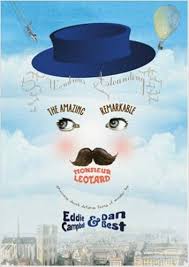
[READ: May 3, 2016] The Amazing Remarkable Monsieur Leotard

Eddie Campbell wrote The Black Diamond Detective Agency which I enjoyed, and The Fate of The Artist, which I enjoyed even more.  Both were pretty unusual–lots of different things going on.  Well, this book has even more stuff going on in it.

I genuinely didn’t know what to expect from this.  I assumed it would be a biography of Jules Léotard, the daredevil acrobat who developed the art of trapeze, popularized the one-piece item that bears his name and was the inspiration for the song “The Daring Young Man on the Flying Trapeze.”

But in this book that Jules Léotard dies on page 12.  Upon his deathbed, with no will written, his worldly possession (a fake mustache) is bequeathed to his nephew, Etienne.  So Etienne puts on the mustache and flies to Paris (in a hot air balloon, of course) to join Leotard’s troupe of circus performers.  When he finds out that they have eaten most of the animals because they were starving, his plans change somewhat.

And so this book is all about Etienne pretending to be the (possibly reincarnated) amazing Léotard and the fascinating adventures he gets up to. (more…)

Read Full Post »

glorkpieSOUNDTRACK: OTHER LIVES Tiny Desk Concert #150 (August 18, 2011).

otherlivesI didn’t know Other Lives before this Tiny Desk, but I really liked this one a lot.  It’s a little hard to get past the lead singers incredible facial hair, but his voice is great and the backing vcoals are excellent too.  I loved the combination of instruments and, yeah, pretty much every thing else about this set.

I enjoyed that at the beginning of the first song, “For 12,” the drummer is playing his lap.  The female backing vocalist (whose voice is great) is playing the cello.  The chorus–when everyone sings high notes—is wonderful.  And I love that the drums, once they kick in, are predominately floor tom and rims.

After the song and the polite applause the singer comments, “It’s so somber in here, we need a dance party after this.  And a bunch of caffeine.”

For “Old Statues” the cellist switches to autoharp, which makes a wonderful harp-like sound.  Again the backing vocals are lovely.  I love that she does a series off perfect oooohs as a backing note for his singing on the first verse.  There’s also a harmonium on this track (I can’t believe how many bands use the harmonium).    I love the intensity of the middle section too.

It’s amusing to see them use an iPhone tuner before the final song

“Dust Bowl III” has a cool picked guitar riff (reminds me a little of Neil Young).  There’s more harmonium on this track.  The cellist plays the autoharp upright instead of flat for this song—I wonder why.  The rumbling floor toms are great for this song as well.  And when the full band does the haunting ooohs at the end, it’s really great.

I definitely need to check out more by them.

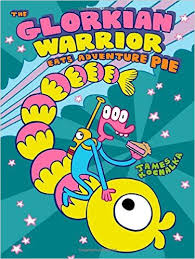
[READ: January 26, 2016] The Glorkian Warrior Eats Adventure Pie

This Glorkian Warrior story is similar to the previous one in that it is pretty crazy.  As it opens, the Glorkian Warrior and his backpack are riding a giant worm.  They are trying to destroy the worm, but while they are riding it, the tail pieces start popping–they are being shot by Buster Glark (who looks like the Glorkian Warrior but has only one eye).  He also a has a talking backpack (who says “they’re stupid, right boss”) to which the Glorkian Warrior’s backpack says “Don’t say stupid, it’s a swear”.

The head of the worm flies off to destroy another pie factory.

When the Glorkian Warrior gets home, baby alien (from the previous book) lands on his head and starts sucking his brains.  Backpack is concerned about this, but Glorkian Warrior says that all of his intelligence comes from his elbow anyhow.  And there is much fighting by the elbow. (more…)

Read Full Post »

glorkpizza SOUNDTRACK: NELLIE McKAY-Tiny Desk Concert #117 (April 4, 2011).

nellieNellie McKay is a singer I’d never heard of.  She is a blonde woman in a kind of yellow kimono and looks like she might be a funny folk singer as she plays a ukulele which is cut to look like an electric guitar.  But rather unexpectedly, she and her band burst into a reggae song.

McKay is, according to the blurb, an audacious artist who once devoted an entire album to Doris Day songs.  And now she writes a pretty authentic sounding Caribbean jam.  “Caribbean Time” has all the trappings of an island song–reggae guitars, bongos, and heavily wah-wahed guitars.

Between the songs, she makes some unexpected comments.  Like she says that she decided that a good sketch would be people sitting around a table asking for things and confessing at the same time, “Pass the syrup my father beat e as a child.”

When they start “Beneath the Underdog” the guitarist doesn’t start on time.  He says “Sorry, I forgot where we were for a second.”  She replies, “We’re in Washington D.C. fighting the man.”

“Beneath the Underdog” is a little less reggae influenced but still has a very tropical, light sound.  And her lyrics are wry and amusing, “beneath the underdog, that’s where I’m comfortable.”  It’s poppy and fun.  She even plays a keyboard solo with notes that sound kind of like steel drums.

“The Portal” is a ballad.  It’s much more traditional sounding, although with the same inflections that McKay has used on the other songs.  Her voice is quite distinctive without being unusual.  This is a somber song, but even while singing it she looks like she’s about to laugh.

And she caps off the set with an other weird  moment where she introduces her band and mispronounces her guitarists last name and seems to have a really hard time saying it.  She apologizes, “I was stoned when I met him.”  As the camera dims she says, “Thank you for fighting the good fight.  We are the silent majority but not so silent, we’re just quiet and tasteful.”

I found her to be quite engaging and charming.  I wonder if she’s still making music.

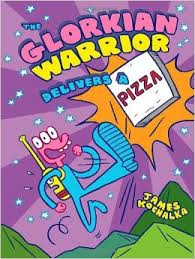
[READ: January 17, 2016] The Glorkian Warrior Delivers a Pizza

I have enjoyed everything I’ve read from John Kochalka.  His drawings are deceptively simple and his books are stupid but ultimately clever (and funny, either way).  His adult books are pretty over the top vulgar (don’t let your kids see them), but his kids books are very funny and perfectly juvenile.

This is his first book for First Second, and the first in a trilogy about the Glorkian Warrior.

Our copy also has an autograph for C.–our Vermont cousins sent it for his birthday (Kochalka is the artist laureate of Vermont, you know).

The premise of this book is painfully simple.  We meet the Glorkian Warrior who is, well, dumb.  His backpack talks to him and tries to get him to be less dumb.  And to be more heroic. (more…)

Read Full Post »

walkerSOUNDTRACK: THE CIVIL WARS-Tiny Desk Concert #137 (June 27, 3011).

civilMany Tiny Desk performances just show the band playing.  But there’s evidently a lot of time before hand where the band sets up and has fun.  I love seeing that, and it’s kind of a shame they cut so much of it out.

As this show starts, Joy Williams is holding the film clacker with Bob.  He tells her to give it a loud clack.  She kind of lets it go on its own accord and then says she didn’t do a good job.  John Paul White then says “I could have done it so much better,” to much laughter.

The Civil Wars are Joy and John Paul and they have terrific chemistry.  The first song is “Barton Hollow,” John Paul plays a loud percussive resonator guitar and the two sing great harmonies.  He sings loudly with her nice harmonies, but the middle part is quieter with her gorgeous voice singing out the lyrics.   I really like the down step chords in the “walking and running” section at the end of the song.

Before “Twenty Years” Bob asks if they ever had a desk job.

Joy says no: daycare, rock climbing.   John Paul says No: forklift driver, seed cleaning, (she asks what that means, but he doesn’t hear her which is a shame as I’d like to know too) cleaning out chicken houses.  He pauses…. I wanted a desk job.

For the song, John Paul switches to a simple acoustic guitar and plays less percussively for this somewhat quieter song.

It’s really fun to watch the two of them play together.  As the blurb notes: “There’s blissful, swooning chemistry as they stare into each other’s eyes and sing magnificently together.”  So it’s a bit of shock that they are not married to each other (they each have spouses, though).  Turns out that they met at a songwriting session at a Nashville studio in 2008.

Before “Poison & Wine” John Paul asks if they are all so quiet and respectful or if Bob rules with an iron fist.

Joy plays the keyboard for this song while John Paul plays a quiet guitar.  This song has wonderful harmonies in the beautiful if puzzling chorus , “I Don’t Love you, I always will.”

I didn’t know The Civil Wars before this set and I am really hooked.

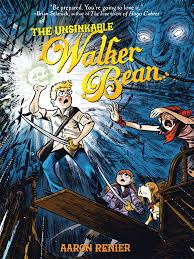
[READ: February 2, 2016] The Unsinkable Walker Bean

This book has some pretty great blurbs attached to its (from Brain Selznick and Jeff Smith) but I found that I couldn’t really get into it.

A lot of the problem was the artwork.  Interestingly, the artwork on the cover (which I assume is also one by Reiner since it looks like his style) is really great.  But the interior art feels like a sloppy version of this cover art.  And while it’s not sloppy, of course, it just doesn’t look as nice as it might.  Couple that with text that is hard to read, a story line that is full of weird little details and twists and it all wound up being a story that felt way too long for what it was.

There was a lot that I did like about it.  I liked the general premise and I liked two of the crew members that Walker Bean befriends, and of course I loved the various gadgets that they created.  I just didn’t enjoy the story all that much. (more…)

Read Full Post »

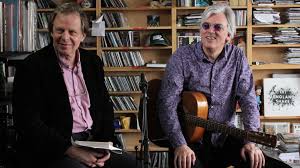
fairytaleSOUNDTRACK: JOE BOYD AND ROBYN HITCHCOCK-“Tiny Desk Concert #142 (July 18, 2011).

robynThis is one of the more unusual Tiny Desk Concerts because it is not just music.  It is music and a recitation.  Joe Boyd (who I didn’t know) is a producer of many classic 1970s albums, including albums by Pink Floyd, Syd Barret and Nick Drake.  Robyn Hitchcock is an unusual and often funny singer songwriter.

Hitchcock opens the concert by stating (in his wonderfully British broadcaster’s voice) “All my life I’ve been Robyn Hitchock [and I’m here with] Joe Boyd who has been Joe Boyd even longer than I’ve been me.”

Joe and Robyn were doing a tour together in which Joe would talk about his experiences with these artists and then Robyn would play a representative song.

Robyn plays two songs.  The first is Syd Barrett’s “Terrapin,” a song I’ve always like.  His cover sounds a lot like Barrett’s version while still retaining Hitchcock’s distinctive singing quality.

The second song is one that Hitchcock wrote for the tour called “I Saw Nick Drake.”  It was planned as the first encore. It’s very much a Hitchcock song, a little trippy and strangely  catchy about him seeing Nick Drake and Nick being fine.

Between these songs, Boyd talks for about fifteen minutes, telling about working with Syd and how amazing he was…until he wasn’t.  And then about working with Nick and how every recording he did was perfect and how big his hands were.

If you care about either of these musicians or about British rock from that era, this is a great performance to check out.  It’s informative and a little funny too.

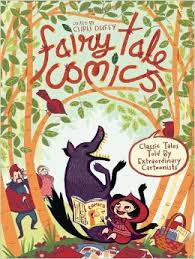
[READ: January 19, 2016] Fairy Tale Comics

This book follows on First Second’s Nursery Rhyme Comics book. Perhaps because this was a thinner volume or perhaps because Fairy Tales are a bit more substantive than Nursery Rhymes, I found this book even more enjoyable than the other.

And even though I (and possibly you) think that you know every a fairy tale, there were quite a few in here that I didn’t know.  In his editors note, Chris Duffy notes that he encouraged the artists to pick stories other than Grimms (although Grim is well represented).

Brothers Grimm stories include:

“Sweet Porridge,” which I’d never heard of.  This is done in a classic cartoon style by Bobby London.

“The 12 Dancing Princesses” seemed vaguely familiar.  This was done in a very pretty style by Emily Carroll.

“Hansel and Gretel” I did know, of course.  It’s fun to see Gilbert Hernandez doing a children’s story since I think of his stories as very adult.  But his simple drawing style works perfectly for this story.

“Little Red Riding Hood” has a very simple almost anime style from Gigi D.G.  It ends with a happy ending.

“Snow White” was done by the other Hernandez brother, Jaime.  His style is so peculiar and yet so perfect for this tale (the fact that the baby is actually white is a wonderful touch.

“Rumpelstiltskin” is done by Brett Helquist whom I know from the Lemon Snicket stories.  I can see his style a bit in these drawings but the colors really bring his interesting style to life.  It’s a great version.

“Rapunzel”  I have recently become a huge fan of Raina Telgemeier, and I love what she does with this story.  Although as I finished it I had to wonder if this is how the story is usually finished.  This seemed much more positive than what I imagine the Grimms intended.

“Bremen Town” I had never heard of this story.  And I can’t believe that this was how it was originally written. In this story a group of animals forms a band.  They frighten away bad guys so that they can jam.  How weird.  Karl Kerschl’s style suits it well.

“Give Me the Shudders” is another Grimm story that I had never heard of.  It’s about a boy who can’t shudder or shiver and so every one assumes he is fearless. He keeps asking people to teach him to shiver, but when they see he can’t they keep promoting him to better stations in life. David Mazzucchelli’s style works nicely with this because of the simplicity of his design amid the craziness of the story.

In addition to stories from Grimm, there are these fairy tales

From Charles Perrault:

“Puss in Boots” makes me wonder if I don’t know the story all that well.  I was quite intrigued by the way this one turned out.  Vanessa Davis has a kind of sloppy style.

From 1001 Nights Tales:

“The Prince and the Tortoise.” I had never heard of this story.  It’s pretty wild and weird.  The drawing style by Ramona Fradon reminds me of adventure comics from the Sunday papers.

From a Japanese Tale:

“The Boy Who Drew Cats” is a wonderfully cool and interesting story about the powers of fantasy and doing what you are meant to do.  Luke Pearson’s drawing is perfectly old school and nearly monochromatic for the Japanese landscape.

From Bre’r Rabbit”

“Rabbit Will Not Help”  I don’t know this tale but I do know some Bre’r Rabbit.  He’s such a bastard, and the drawing style by Joseph Lambert works nicely with that.  It’s a little weird and dark–perfect for this tale.

From an English Tale”

“The Small Tooth Dog”  I had never heard of this tale.  It’s pretty weird from start to finish, and that includes the art by Charise Mericle Harper whose style is very dramatically cartoony and also a little weird.

“Goldilocks and the Three Bears” I didn’t realize that this wasn’t a Grimm story.  This was my favorite in the book because of the way Graham Annable chose to do it.  There are no words just wonderful illustrations and great looks by both Goldilocks and the bears.  I suppose it helps if you know the story already–it may not be ideal for those who are seeing for the first time (whoever that may be) but as an interpretation, I loved it,

From the Russian Tale:

“Baba Yaga”  Russian Tales are always so dark.  And Jillian Tamaki represents this very well. This story has a house with chicken legs, wolves, talking cats and much more.  I really like Tamaki’s work a lot and I enjoyed her interpretation.

From The King and His Storyteller:

“Azzolino’s Story Without End” is another story I’d never heard of.  In it, a boy king wants to be told a story without an end.  And the king’s story-teller think of a great way to do it The story is short but Craig Thompson’s style is right on.

I really enjoyed this collection a lot.  And I love getting introduced and reintroduced to these stories that I’ve known for quite some time.

Thanks First Second. #10yearsof01

Read Full Post »

dragonsbewareSOUNDTRACK: GIVERS-Tiny Desk Concert #144 (June 22, 2011).

giversGivers play a light on poppy tropical kind of music.  Their music feels summery and light.  Between the sorta reggae guitar and the tons of percussion, the songs are fun and danceable.

As “Meantime” opened the show, I was really struck by the bass.  The bass plays a lot of high notes and some seamless riffs.  It’s really the lead instrument.  And there’s also percussion all over the place.  The sound the great is really full for so few instruments.  Of course, it really comes as no surprise to hear there’s a flute solo, even though it wasn’t apparent that anyone had a flute–it’s as if a wandering flute minstrel happened by just at the right time.

The band has two singers, Taylor Guarisco and Tiffany Lamson.  On “Up Up Up” the two duet in the beginning and then switch off vocal lines.  Taylor’s voice is higher, while Tiffany’s is deeper, raspy and interesting (although I’m not quite sure it works with their sweet music, or perhaps she’s just not loud enough).  There’s more fun bass lines in this song (I’m intrigued that he switches from a pick to pickless playing).  This song features some xylophone which also sounds perfect with their music.  Perhaps it’s the way he sings the “up up up” part but it definitely gives the song a reggae feel (especially with that afropop bass).  I really like this song, especially the surprise ending of one, two, three, four-xylophone slide-five.

For the final song, “Atlantic” there’s much switching around.  Tyler and the bassist switch instruments and Tiffany picks up a large ukulele.  She sings lead and you can really hear her raspy voice (again, not loud enough).  This song is mellow and as such the bass isn’t quite as fun (although Tyler does have a similar bass sensibility).  I’m curious to hear what they sound like when they are not unplugged.

Although frankly, I can do without Tyler’s crazy faces.

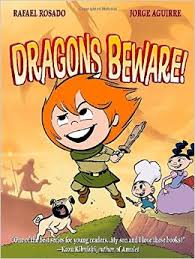
[READ: March 27, 2016] Dragons Beware

After the successes of Claudette in Giants Beware, everyone is back (with a new problem created by Claudette) in Dragons Beware.

As the book opens, Claudette is telling the story of a great sword made by the great blacksmith Augustine (her father).  The sword was called Breaker and no magic could defeat it.  One day Augustine went to fight the fearsome dragon Azra the Atrocious.  Sadly for him, the dragon is the one who did the damage that we saw in the first book (missing an arm and a leg..and the dragon swallowed the sword too).

When she finishes the story, she says that she can go fight Azra herself, with her own little wooden sword.

In the next scene we see that the evil Grombach is amassing an army–he has been magically converting ravens into giant walking gargoyles.  So although Claudette has invented a problem to solve, the village has a real problem coming their way. (more…)

Read Full Post »

bewareSOUNDTRACK: YACHT-Tiny Desk Concert #136 (June 22, 2011).

yachtYacht is a synthy band with a dramatic and charismatic lead singer–Claire Evans.

There are tons of synth and funky synth sounds on “Dystopia (The Earth is On Fire)”.  But what really sound great are the excellent harmony vocals.  There is some guitar but it’s pretty overshadowed by the synth (and synth drums).  I don’t love the line “The earth is on fire.  We don’t have no daughter.  Let the mother father burn.”  But I’m willing to accept it because the synth solo is pretty cool.

The keyboardist and programmer switch places for “Psychic City (Voodoo City).”  The guitar is more prominent in this song primarily because the song is practically a capella–the chorus is principally Aye Yi Yah Yah HOOH, Aye Yi Yah Yah HO HO, which would probably be a lot of fun to sing along to live, but feels a little tedious here.

After this song it is revealed–horrors–that there was gum under Bob’s desk and Jona Bechtolt gets some on his nice pants.  There is talking of sending them the dry cleaning bill, but Claire grimaces and says “too soon.”

“Shangri-La” opens with an interesting synth riff (and the guys in back switch places).  The chorus “If I can’t get to heaven let me go to L.A.” is pretty funny.

I’m not sure what the band sounds like when it is not stripped down (the blurb talks about how long it took them to get settled), but I feel like their lyrics don’t support the stripped down sound.

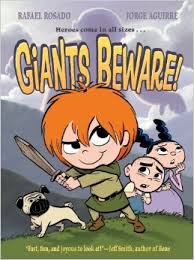
[READ: February 17, 2015] Giants Beware

This is a First Second children’s graphic novel.  It is quite long for a children’s book (200 pages) but it’s a lot of fun and the design is fantastic.

The story opens with an old storyteller telling a story to a bunch of kids.  It’s the story of the Baby Feet Eating Giant.  The giant liked to eat the feet of all the babies in the village.  No one was safe until the brave leadership of the great Marquis Pierre the XXXII. He chased the giant into the mountains and built a wall around the village to keep it secure.

The end.

Except, as the young girl on the cover of the book says…  Well?  How did he kill the giant?  Did they “tell the evil giant a pointless story and he died of boredom?”  This is Claudette; she wants to hear action.  She wants to hear about giant slaying.  She thinks that leaving the giant outside and simply building a wall around the city is irresponsible.

As the story teller walks away he mumbles that she is just like her father and look where that got him. (more…)

Read Full Post »

« Newer Posts - Older Posts »