[LISTENED TO: July 2023] The Future is Yours
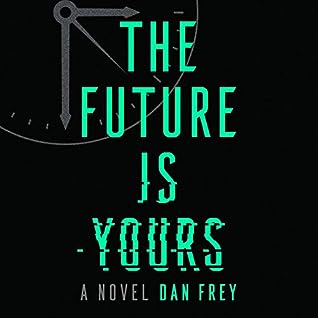 I didn’t know much about this book, but the blurb sounded good.
And wow, was it a a well-told future/time-travel story. I also really enjoyed that whole cast that was employed for the book. Usually a single narrator is fine, but there were so many different voices in this story that having multiple narrators was great.
I had known Cary Hite from a Mike Chen novel so his familiar voice was great. He reads the part of Ben Boyce a young entrepreneur who has great ideas for how to get startups to work. He is best friends with Adhi Chaudry (read by Vikas Adam).
Adhi is a once-in-a-generation genius. He writes a thesis that postulates creating a kind of time travel machine using quantum computers. Fortunately, there’s not a lot of hard science here, so you don’t really have to know what they’re talking about (I also have no idea if what they postulate is feasible in reality). The thesis is so theoretical that Stanford doesn’t want him to defend it because they think it’s more philosophical than computer science based.
Adhi struggles with things a lot (he is bipolar) but Ben is always there for him. Ben believes in him 100%. So when Adhi gets a job at Google (and hates it) and Ben has tried a few startups (that have failed), Ben asks Adhi about that thesis. And what they might be able to do with it.
Adhi says that it’s still pretty theoretical, but that Google has tech that is far more advanced than he knew about and maybe they could try to work something out.
Before going any further, I’ll clarify that it’s not a time machine per se. What the technology does is, you use a computer to search for the same computer one year in the future. You can then download any information that you can search for on that machine. So, no, it’s not a person going back and forth in time, but it is a way to see the future. They don’t intend to simply look for stock tips or Super Bowl results, they want everyone to have access to this tech so that it can level the playing field for everyone–no advantages for just the rich. They also believe they can use the tech to help stave off global warming and other crises. Heck, they have already used the tech to see that they will become billionaires from it.
The other thing worth noting is the way this story is told.
I did the audio book, so I don’t know what it looks like. But the story is told in a series of text messages and emails and…most importantly… Congressional hearing transcripts.
For indeed, when the tech is this powerful, the government is going to get involved.
One of the cool things about this story is that the two main guys are both persons of color–so there’s some playing around with conventional Silicon Valley stereotypes. There’s also a discussion of feminism–or the lack of it in Silicon Valley.
I’m not exactly sure if the book passes the Bechdel test because, while there are a lot of very successful women in the story, most of them don’t talk to each other. However, Ben’s wife Leia (actually, I’m not sure how it’s spelled, but he jokingly calls her “Princess” — read by Kyla Garcia) is a kick ass lawyer who saves them on several occasions. One of the programmers is a woman and there are many women in the Senate hearings. So the story is nicely inclusive.
The rest of the cast (the book itself wasn’t great about saying who was who) includes Rob Shapiro, Catherine Ho, Aneesh Chaganty, Dion Graham, Joshua Kane, Thérèse Plummer and Natasha Soudek.
Back to the story.
The tech seems impossible, but by scraping together funds and tech space, Ahdi is able to make a prototype.
What was especially fun about the audiobook (which might translate in text messages, but was so overt here) was the way they could read the various responses. Ben is a loud, passionate guy–so you can hear the excitement or anger in his voice. Ahdi is largely quiet and almost repressed, so when he gets passionate about something you can really feel it.
The story also unfolds in a really interesting way because at first we think that the only obstacle that is stopping them is Congress–a bureaucracy trying to keep them from succeeding. But as more and more details unfold, we see that there were many many obstacles in the way:
- Getting funding with a nonsensical sounding product
- Fending off a buyout from Google
- Fending off a lawsuit from Google
- And personal obstacles as well.
Ben is a warm and exciting character, but he is not perfect. And he may just be too driven by the desire for success that he can overlook some realities. Like that some people who get hold of the prototype have killed themselves when they saw their future. And how come in the future, Ben’s not wearing a wedding ring? And how come there’s no information when they try to move out to two years in the future?
I enjoyed the way the story set up rules which were gradually broken (with good explanation) and an ending that was as surprising as it was thoughtful.

 I Just Read About That...
Leave a comment