Feeds:
Posts
Comments

Archive for March, 2021

SOUNDTRACK: TH1RT3EN-Tiny Desk (Home Concert) #146 (January 18, 2021).

I had never heard of TH1RT3EN before this Tiny Desk Concert. But I was hooked from the beginning.  I liked everything about them.  The fuzzy distorted guitar from Marcus Machado, the excellent delivery of Pharoahe Monch and especially the fascinating drumming and drum style of Daru Jones (look at the way his drums are set up!).

Both the moniker TH1RT3EN and supergroup were born out of a frustration with the veneer of American society that underestimates the darkness of white supremacy.

“I knew 5 years ago where we headed,” Monch shared over the phone. “Sure, we’ve always done socially and politically aware music, but I’m tired of this “love will win” nonsense. Love may be the most powerful vibrating force, but consciousness is spreading and it’s impossible not to be more aware of the evil that has kept the world in complete darkness. TH1RT3EN is the musical personification of me and my comrades at combat.”

“The Magician” is based around the riff from Yes’ “Roundabout.”  Machado plays the riff throughout which I find much more interesting than if it was sampled.  Monch’s lyrics are smart and pointed.  There’s an incredibly fast rapping middle section with some amazing drumming.  I really like his delivery.

Moinch says that that song is about a student who was bullied and grew up to be a school shooter.  Ironically there hasn’t been any school shootings because we’re in the middle of a pandemic–a pandemic that has taken the lives of 250,000 Americans.  And yet Americans reman more afraid of Black Lives Matter than of COVID 19.

TH1RT3EN recorded this set in August 2020, as evidenced by Monch’s interlude, this four-song set still channels the discontent outside our windows today.  Shot in a padded “panic” room, this Tiny Desk (home) concert reflects the rage felt by this three-man battalion.

Monch continues “We are in need of cleansing and an exorcism.  “Cult 45” opens with a sample of a horn riff.  It’s quieter musically so it’s mostly vocals.  When the guitar joins in it’s mostly to add free jazz noises along with some wild drumming.

“Scarecrow” returns to the slow dirgy, aggressive guitar sound behind some fast rapping.

He says he started the band because he wanted a bit more authentic aggression by finding these two musicians.  And the set ends with “Fight” which has a nice big riff and crashing drums.

How’s this for an aptly aggressive verse

Burn a cross, water hose, dogs and nightsticks
Yeah, that’s what it used to be, see, they would usually
Just hang a nigga, fuck ’em
Now they don’t have the time to decorate the trees so they buck ’em

I’m going to have to check out this album.

[READ: February 28, 2021] You’ll Never Believe What Happened to Lacey.

Amber Ruffin is a writer and comedian, most notably from “Amber Says What” on Late Night with Seth Meyers and The Amber Ruffin Show on Peacock.  Amber is hilarious.

But Amber is also righteously angry about the way Black people are treated in America.  Somehow she manages to take the most horrible things you can imagine and report about them with enough humor to make you listen and laugh and still get outraged.

This book is a collection of stories of racist things that happened to her sister Lacey.   Lacey lives in Omaha, Nebraska, where they grew up.  I don’t know anything about Nebraska or Omaha.  Apparently Omaha is a big city and has sections that have a lot of Black folks.  White people who are not from the city find the thought of going to Omaha scary.  It also means that when Lacey gets jobs outside of Omaha she is typically the only Black person in the building.

Which seems to make all of the white people there think it is okay to say whatever crazy racist shit they want to say.  But even outside of work, it seems like Lacey is a magnet for racist comments.  Is it because she is tiny and good natured?  Maybe.  But she is a also a bodybuilder, so watch out.

About this book Amber says:

When you hear these stories and think, None of these stories are okay, you are right.  And when you hear these stories and think, Dang, that’s hilarious, you are right.  They’re both.

There are going to be a lot of time while you’re reading this book when you think There is no motivation for this action. It seems like this story is missing a part because people just aren’t this nonsensically cruel.  But where you see no motivation, you understand racism a little more.  It’s this weird, unprovoked lashing-out, and it never makes any sense. It’s why it’s so easy for people to believe the police when hey beat someone up–because no one would be that cruel just because the person was Black.  But the are!  So as you read this book, when you see there’s no motivation, know that there is: racism.

The Preface has an anecdote that really sets the tone for the rest of the book.  Lacey paid at a store with a check. The checks had Black heroes on them.  Lacey paid with one with Harriet Tubman on it.  The cashier who had been very nice up to that point said “Wow you have checks with your picture on ’em.”  There is then a hilarious juxtaposition of the check with Tubman and one with Lacey’s photo.

Amber contrasts her life in New Yorke City.

Everyone I work with is stark raving normal. We don’t have any crazy bigots (dumb enough to run up) and I’m no one’s first Black friend.  Now I’m not saying no one ever says anything crazy to me–I’m still a Black woman in America–it’s just that we all know there are consequences for talking to me as if you’ve lost your mind.

But in the Midwest it is an unchecked tsunami of dumb questions and comments.  People think it your job to answer “Why can’t I (insert the most nonsense shit you’ve ever head)?”

Lacey chimes in (in a different font) from time to time with things like that she’s happy her little sister is successful in New York:

where someone would get fired for out-and-out racism.  I love that that really happens.  Never seen it, but I love it.  Like Santa Claus.

Amber ends the preface by saying

Hopefully the white reader is gonna read this, feel sad, think a little about it, feel like an ally, come to greater understanding of the DEPTH of this type of shit, and maybe walk away wit a different point of view of what it’s like to be a Black American in the twenty-first century.

And I did.  Boy did I ever. (more…)

Read Full Post »

SOUNDTRACK: ROKIA TRAORÉ-GlobalFEST Tiny Desk (Home) Concert #136 (January 14, 2021).

Rokia Traore.GlobalFEST is an annual event, held in New York City, in which bands from all over the world have an opportunity to showcase their music to an American audience.  I’ve never been, and it sounds a little exhausting, but it also sounds really fun.

The Tiny Desk is teaming up with globalFEST this year for a thrilling virtual music festival: Tiny Desk Meets globalFEST. The online fest includes four nights of concerts featuring 16 bands from all over the world. 

Given the pandemic’s challenges and the hardening of international borders, NPR Music and globalFEST is moving from the nightclub to your screen of choice and sharing this festival with the world. Each night, we’ll present four artists in intimate settings (often behind desks donning globes), and it’s all hosted by African superstar Angélique Kidjo, who performed at the inaugural edition of globalFEST in 2004.

The final artist of the fourth and final night is Malian singer Rokia Traoré.

Rokia Traoré performed at globalFEST in 2005, the music festival’s second year, and it’s a thrill to present her meditative performance as part of Tiny Desk meets globalFEST. Her work is rooted in the Malian musical tradition, but defies the confines of a single culture. Born in Mali to a diplomat father, Traoré had a nomadic upbringing that exposed her to a wide variety of international musical influences. She joins us from Blues Faso, a theater inside her Foundation Passerelle in Mali, which she created to support emerging, interdisciplinary artists, from music and the performing arts to visual arts and photography.

She plays three songs that more or less segue into each other.  I don’t know a lot about music from Mali, but the little I know I can recognize from the Ngoni played by Mamah Diabaté and the guitar played by Samba Diabaté, with lots of speedy runs.   In “Souba Lé” melody is played on the balafon by Massa Joël Diarra (although I wish they’d have shown us it up close).  Both this song and “Tiramakan” feature subtle bass from Aristide Nebout.  The final song “Fakoly” is a little louder and drummer Roméo Djibré is a bit more prominent.

But all of these songs are all about Rokia Traoré’s vocals which soar and ring out.

[READ: February 25, 2021] March Book 3

Each book has gotten longer.  Book one was 121 pages, Book 2 was 187 and Book 3 is 246.

This book begins right after the bombing of the Sixteenth Street Baptist church in Birmingham, Alabama in 1963.   You meet the victims before they were killed.  It continues through until the passing of the Voting Rights Act in 1965.  Holy cow was there a lot of violence in these two years and the amazing art by Nate Powell never shies away from showing it.

Eagle Scouts at Klan rallies who then go on to kill Black teenager’s, hicks in pickups celebrating the deaths of the girls in the church with anti-integration chants and, as we see more and more in this book, police killing innocent people and not getting in any trouble because of it.

This book has opened my eyes to what Black people have known all along about police forces.  That they are completely corrupt and need to be restructured from the ground up.  When you see that it was their job to be racist in 1963, is it any surprise that they are still racist in 2021?

Reading a book like this I can’t help but think that the best thing we could have done for our country would have been to let the south secede.  Bring all people of color north and let the racists fester in their own lack of diversity.  Because their racism poisons the whole country.  And yet that is exactly the opposite belief that this book is based upon.

I’m embarrassed at how naïve I am. (more…)

Read Full Post »

SOUNDTRACKELISAPIE-GlobalFEST Tiny Desk (Home) Concert #136/156 (January 14, 2021).

ElisapieGlobalFEST is an annual event, held in New York City, in which bands from all over the world have an opportunity to showcase their music to an American audience.  I’ve never been, and it sounds a little exhausting, but it also sounds really fun.

The Tiny Desk is teaming up with globalFEST this year for a thrilling virtual music festival: Tiny Desk Meets globalFEST. The online fest includes four nights of concerts featuring 16 bands from all over the world. 

Given the pandemic’s challenges and the hardening of international borders, NPR Music and globalFEST is moving from the nightclub to your screen of choice and sharing this festival with the world. Each night, we’ll present four artists in intimate settings (often behind desks donning globes), and it’s all hosted by African superstar Angélique Kidjo, who performed at the inaugural edition of globalFEST in 2004.

The second artist of the fourth and final night is First Nations singer Elisapie.

Elisapie returns to Tiny Desk for a show-stopping performance from Montreal, with the disco globe of our dreams helping to light her set. Elisapie, in both her songs and work, is a resounding advocate of First Nations culture in Canada. In her set, she harnesses an incredible energy with electrifying, emotive vocals.

I had really enjoyed Elisapie’s previous Tiny desk.  I found her to be a less extreme, but no less dramatic performer than Tanya Tagaq.  Her band is outstanding creating all kinds of textures to surround her voice.

The first song is “Qanniuguma.”  It starts quietly with a single ringing guitar note from Jean-Sébastien Williams and little taps of percussion from Robbie Kuster.  Joshua Toal adds some quiet bass as the guitar plays some higher notes.  After a minute Elisapie starts singing.  Another 30 seconds later the drums get louder and Jason Sharp start sprinkling in some raw bass saxophone.  As the song grows more intense, Elisapie adds some breathing and chanting–throat singing.  Things quiet down and then build again with the sax and the guitar soloing as the drums and bass keep things steady

Behind her you can see Mont Royal, which has a lot of history.

The second song “Wolves Don’t Live by the Rules” is “a small song” but very meaningful.  It starts in a similar way with ringing notes an thumping drums.  She sings this one in  English and it feels like a much more conventional sounding song.  It’s pretty quiet but the instrumental breaks adds huge guitar chords and the end is really loud.

Introducing the final song, “Arnaq” (which means Woman) she says women tend to forget that we have a lot of strength and we should celebrate it loud and clear.  This one opens with a loud raw sliding guitar like an early PJ Harvey song.  The song’s chorus builds with an “ah ya ya ya” as the instruments add chunky noises–scratches from the guitar and skronks from the sax and all kinds of precious.  It’s a cool noise fest, although the guitar could be a smidge louder.

I’d really like to see her live.

[READ: February 25, 2021] March Book 2

Book Two picks up John Lewis’ life.

Like the first, it starts with Lewis’ preparations for the inauguration of Barack Obama.

Then it flashes back.  Lewis was in college and had moved to Nashville where the growing student movement was gaining strength.

The visuals are even more striking in this book.  The panels of the white woman pouring water and then soap (or flour) on the quietly sitting Black diners and then hosing them down is really arresting.  As is the sequence (which is almost entirely black) of a room full of peaceful protestors being locked in a room when the fumigator was set off.

I couldn’t believe that a man couldn’t really left us there to die.  Were we not human to him?

Then next round of protesta was at the segregated movie theaters.  I love that they chose the Ten Commandments to protest (the irony was lost on the whites in Alabama).  The Black protesters would line up and would be refused seating.  Hundreds of people who would then get back on line and be refused seating again.  Whites would throw things at them and hurl abuse at them. (more…)

Read Full Post »

SOUNDTRACKEDWIN PEREZ-GlobalFEST Tiny Desk (Home) Concert #136/155 (January 14, 2021).

Edwin PerezGlobalFEST is an annual event, held in New York City, in which bands from all over the world have an opportunity to showcase their music to an American audience.  I’ve never been, and it sounds a little exhausting, but it also sounds really fun.

The Tiny Desk is teaming up with globalFEST this year for a thrilling virtual music festival: Tiny Desk Meets globalFEST. The online fest includes four nights of concerts featuring 16 bands from all over the world. 

Given the pandemic’s challenges and the hardening of international borders, NPR Music and globalFEST is moving from the nightclub to your screen of choice and sharing this festival with the world. Each night, we’ll present four artists in intimate settings (often behind desks donning globes), and it’s all hosted by African superstar Angélique Kidjo, who performed at the inaugural edition of globalFEST in 2004.

The first artist of the fourth and final night is Edwin Perez.

From the basement of the Bowery Electric in downtown Manhattan, composer and vocalist Edwin Perez and his 10-piece band come together to put on a show. With a strong backbeat and enough room to move around, Perez’s up-tempo energy brings the party and keeps it going. The theme of the night is salsa dura music, which originated in New York in the 1970s and gained acclaim thanks to acts like the Fania All-Stars and Spanish Harlem Orchestra.

This set is a lot of fun (even with the seriousness of the second song).  Cuban music is so full of percussion and horns it’s hard not to want to dance to it.  And this band has three percussionists: Nelson Mathew Gonzalez: bongo, cowbell (from Puerto Rico); Manuel Alejandro Carro: timbales (from Cuba); Oreste Abrantes: (from Puerto Rico).  The horn section is also pretty large: Leonardo Govin (from Cuba) and Michael Pallas (From Dominican Republic): trombone; Jonathan Powell (from USA) and Kalí Rodriguez (from Cuba): trumpet.

They play three songs. “La Salsa Que Me Crió” has lots of percussion and a great trumpet solo.  Perez even dances during the instrumental breaks.  And throughout, Jorge Bringas (from Cuba) keeps the bass steady.

After introducing the band, he says “Say her name Breonna Taylor.  Say his name Philando castile.  Say his name George Floyd.  End the abuse.”  This is the introduction to the quieter “No Puedo Respirar” (I Can’t Breathe).   Despite the subject, this song is not a dirge.  I don’t know what the words are but there is joy in the music as well.  There’s a jazzy keyboard solo from Ahmed Alom Vega (USA).

Yuniel Jimenez (From Cuba) opens the final song “Mi Tierra” with a fantastic introductory solo on the Cuban tres guitar.  The rest of the song brings back the Cuban horns and percussion. There’s even a drum solo (or two) in the middle.

[READ: February 25, 2021] March Book 1

I had heard amazing things about this trilogy of books.  I don’t know why it took me so long to get around to reading them.  Now that John Lewis is dead for almost a year, it was time to read them.

This is essentially a biography so it’s not easy to write about.  It’s also an incredible story of selflessness, fortitude and unbelievable courage.

The framing device is very well executed.  After a brief prologue that shows John and is marchers getting attacked by police, the book shows us Washington D.C. January 20, 2009, the day that Barack Obama is being inaugurated President.  Since John is (in 2009) in office he will be attending the ceremonies.

As he is preparing and getting ready to leave, a woman and her two children walk into his room hoping to look at Mr. Lewis’ office–a inspirational moment for her young boys.  But it happens that John (or Bob as he is called) is still in his office. They are embarrassed to interrupt, but he welcomes them warmly and shows them some of the things around his office.

Like photos of him meeting President Kennedy when Lewis was 23.  And from the March on Washington in 1963, where Dr King gave his “I have a dream” speech.

Then the boy asks him why he has so many chickens in his office.

The story then flashes back to young John (called Bob by his parents).  His father purchased 110 acres in Pike County, Alabama for $300. John was incharge of the chickens on the farm.  He also loved preaching.  He learned to read at 5 and began preaching to the chickens (they never said Amen or anything).

He also loved going to school.  He would even away from his house on the days his father insisted all the children work in the field because he didn’t want to fall behind.  (Even if it meant getting in trouble).

One of the first being moments in his life wa when his Uncle Otis drove him North.

Otis knew which places offered colored bathrooms and the ones where you would never get out of the car: “Alabama, Tennessee, Kentucky.  These were the states we had to be careful in as we made our way North.”

It wasn’t until they got to Ohio that his uncle relaxed.  They arrive in Buffalo 17 hours later and John was amazed to see white and black people living next door to each other. (more…)

Read Full Post »

SOUNDTRACKMARTHA REDBONE-GlobalFEST Tiny Desk (Home) Concert #135/154 (January 13, 2021).

Martha RedboneGlobalFEST is an annual event, held in New York City, in which bands from all over the world have an opportunity to showcase their music to an American audience.  I’ve never been, and it sounds a little exhausting, but it also sounds really fun.

The Tiny Desk is teaming up with globalFEST this year for a thrilling virtual music festival: Tiny Desk Meets globalFEST. The online fest includes four nights of concerts featuring 16 bands from all over the world. 

Given the pandemic’s challenges and the hardening of international borders, NPR Music and globalFEST is moving from the nightclub to your screen of choice and sharing this festival with the world. Each night, we’ll present four artists in intimate settings (often behind desks donning globes), and it’s all hosted by African superstar Angélique Kidjo, who performed at the inaugural edition of globalFEST in 2004.

The fourth artist of the third night is Afro-indigenous appalachian performer Martha Redbone.

Martha Redbone performs her Tiny Desk Meets globalFEST performance from her home studio in Brooklyn’s Navy Yards. Native and African-American singer-songwriter Martha Redbone is known for her mix of folk, blues and gospel from her childhood in Harlan County, Ky., which she infuses with the eclectic grit of pre-gentrified Brooklyn. Inheriting the powerful vocal range of her gospel-singing African-American father and the resilient spirit of her mother’s Cherokee, Shawnee and Choctaw culture, Redbone broadens the boundaries of American Roots music.

“The Garden of Love” starts with Martha playing percussion sounds.  Keyboardist Aaron Whitby is playing some backing chords while guitarist marvin Sewell is playing some interesting slide guitar sounds.   Martha sings in a very traditional style.  Then the song starts proper with an old sounding blues riff and the song feels old and gospel-like.

She tells us her inspiration is the Appalachian mountains where she grew up–rattles, soul music, the blues.

“Talk About It” is a prayer for stronger communication around the world.  It’s a more conventional sounding soul song, with heavy keyboards and Redbone’s vocals taking the fore.

“Underdog” is a very pretty ballad with slide guitar sounds and gentle keys.  But it’s all about her gorgeous voice.

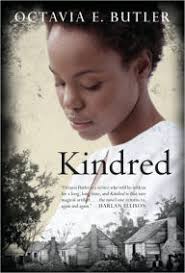
[READ: March 1, 2021] Kindred [prelude-the fall]

I’m always happy to start a new group read with the fine folks at Infinite Zombies. Normally we read big books by white men.  So this time it was decided to pick a different kind of author.

I was pretty pleased to see that Octavia E. Butler would be the new reading choice.  I had only recently heard of her and had recently read Mind of My Mind, which I really liked.  So it was a great opportunity to read more from her.

Kindred is Butler’s most famous book.  I was looking forward to reading something different from Mind (although I do intend to read the rest of that series).

I didn’t know what this book was about.  The cover of this book gives absolutely no indication is what’s going inside.  In fact, it looked pretty much exactly like what is not happening in this book.

I was blown away by the first sections of this book.  Butler’s style is not fancy and I found this direct writing to be really effective at conveying what is going on.

Butler basically puts a horrifying slave narrative into a science fiction story.

It starts very abruptly with the prologue.  The narrator, Dana says that she lost her arm on her last trip home.  The police question her husband Kevin but she assures them it is not his fault.

Then the story resumes with The River.  It flashes back to when this all started–June 9, 1976.

In The River, Dana and Kevin are unpacking books in their new California home when suddenly Dana feels dizzy.  She is pulled through space into a river where a young red-haired boy is drowning.  Dana thinks quickly and stomps into the river to rescue the him.  She even does some mouth to mouth

The boy’s mother starts blaming Dana for what’s happening even while she is trying to resuscitate the woman’s son.  Dana succeeds and just as the boy, whose name is Rufus comes to, his father holds a shotgun at Dana’s head.  What is the black woman (who is dressed like a man) doing with her mouth on his son?

Rufus’s father is Southern and they seem very, very old-fashioned.  But just as Dana fear the worst from the shotgun, she flies back to her bedroom.  She is covered in mud and soaking wet, but Kevin says she was gone maybe ten seconds.  He has a hard time believing her (who wouldn’t) despite the proof of the mud on her clothes.

What in the hell just happened? (more…)

Read Full Post »

« Newer Posts