 SOUNDTRACK: ORQUESTA AKOKÁN-“Mambo Rapidito” (2019).
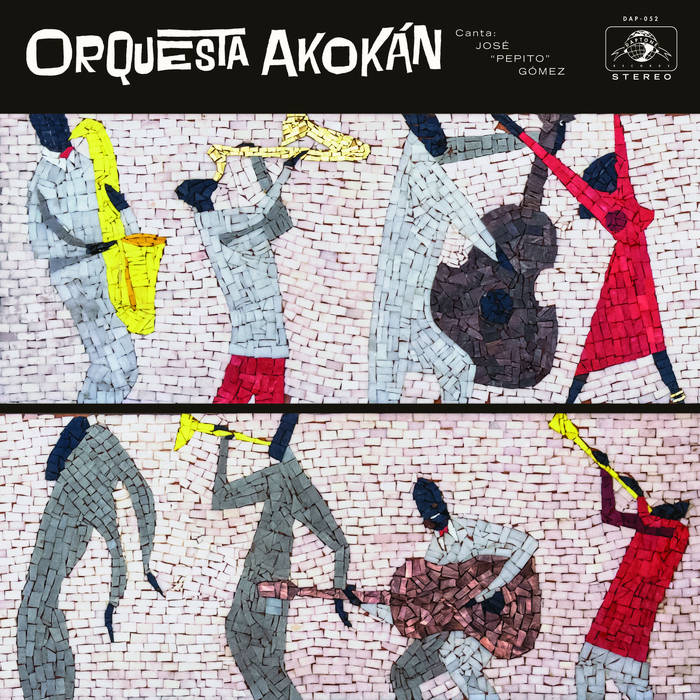 Since this story is about something shameful in Cuba, I thought I’d tie it to something that is wonderful in Cuba: Orquesta Akokán
Orquesta Akokán is a band comprised of Cuban musicians and “Latin music freaks” from New York. They play the kind of Cuban music that filled New York nightclubs in the 1940s and 1950s. As their website explains:
Robust, time-tested musical architectures of son cubano and mambo are honored and modernized through a synthesis of the rich compositional styles of Havana, New York, and beyond.
This song begins with a descending piano riff that quickly gives way to horn hits and a cowbell that doesn’t stop for the whole three minutes.
The main melody comes in as a swinging, wholly danceable riff with shouted refrains of “baile!”
Then lead vocalist José “Pepito” Gómez shows where the rapidito comes in as he sings an insanely fast vocal part ( I wouldn’t even guess what he’s saying).
The song is fun and swinging and should make everyone want to baile!
Then comes an awesome flute solo. There’s a cool swinging instrumental sections in the middle before the call and response of the backing vocalists and Pepito.
Then a wild and cacophonous piano solo sprinkles the end of the song. It is a ton of fun. The NPR blurb says that
when globalFEST decided to host this year’s edition at New York’s Copacabana nightclub — a venue with a history that stretches back nearly 80 years and boasts a long association with Latin music — the festival’s organizers decided that Akokán had to be the first group they invited this time around.
Mambo!
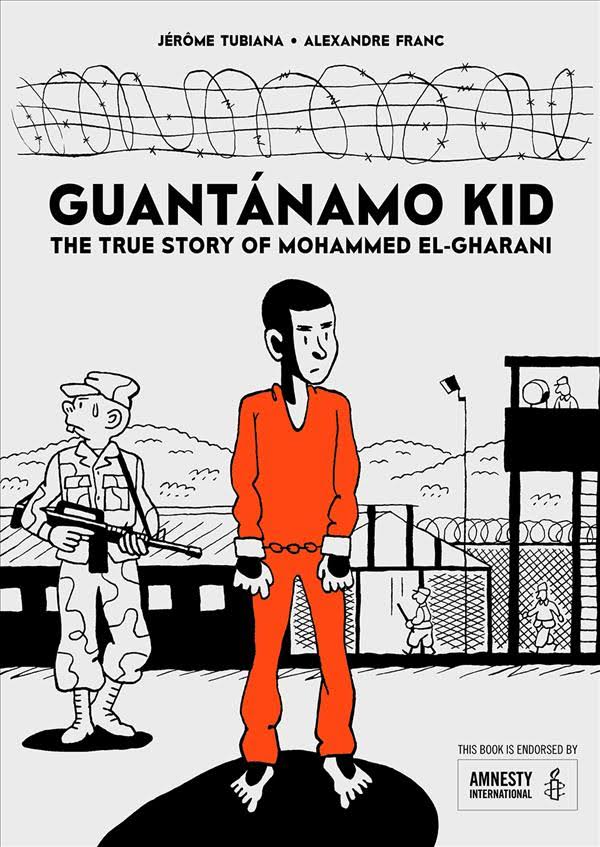
[READ: December 23, 2019] Guantánamo Kid
This is a story of injustice.
Injustice at the hands of Americans.
Americans should be humiliated and outraged by this injustice.
Injustice that is utterly horrific to behold–and I suspect that this graphic novel holds back a lot of the really unpleasant details to make it readable.
This is the story of Mohammed El-Gharani, an innocent kid who was sent to Guantánamo Bay for seven years.
At the age of 14, Mohammed El-Gharani made money in the streets of Medina, Saudi Arabia. His family was from Chad and, as such, he was treated like an outsider in Saudi Arabia. He wasn’t allowed to go to school and the locals treated him badly. He and his friend knew this was no way to make a living.
One day his friend told him that if he went to Pakistan he could learn how to fix computers. He even knew people there who would put him up while he studied.
His parents didn’t want him to go to Pakistan, but he went to the Chadian consulate in Jedah to get a passport. Because he was underage he had to lie which meant changing his name. This fake name would be a huge difficulty for him later on.
He planned to go to Pakistan for six months and stay with Ali’s cousins. His parents were furious that he did it without their blessing, but it was too late. He was already there when they found out.
He was there for two months when the attacks of September 11, 2001 happened. Soon after, he was grabbed by the Pakistani police. They asked if he was Saudi, he said he was from Chad, bu they didn’t believe him and they arrested him along with dozens of others.
They told him that Americans were going to interrogator him and if he said he was from Al-Qaida the would send him home with money. He refused, so they hung him by the arms and beat him. They asked him where Osama bin Laden was and, obviously, he had no idea and didn’t even know who he was. But that didn’t stop the brutality.
Then they began torturing him. While he was there, he learned that some of the guards were kind, but others were vicious.
After a while he and the other prisoners were told they were going to be sold to the Americans. Mohammed was pleased about this because from watching TV he he believed that Americans were just. The other prisoners were not so sure.
The Americans were not just and they were not kind. When he got to Guantánamo Bay his troubles really started.
Every day was a demeaning spectacle. They threw cold water on him, they called them names, the stripped him naked. They even threw his Q’oran into the shit bucket.
They tried all manner of thing to get him to “admit” what he did. They asked him what he was doing in Afghanistan. They brought him delicious food as a bribe, they even tried to bribe him with a beautiful woman. They asked him why he was in London in 1993, to which he could honestly reply that he was 6 years old in 1993. They did not believe him.
He was with other prisoners in a tiny cell. They taught each other words in English or French which upset the guards to no end. They prayed when they could–it was hard with no clocks.
Soon enough Mohammed learned that the guards were doing the worst they could to him, so he started acting up. They were going to do horrible things to him whether he did or not, so he started to stand up for himself.
They gave the prisoners one bucket for drinking and washing and the other for pissing and shitting in. But the soldiers had to clean the buckets. He started throwing their shit and piss at the guards and made up a song called “No 2.”
I will never regret what I do
You will never forget it, no 2
Human beings we will treat you as human
If you treat us as animals so will we.
There was one guard who was nice to them. They called him Mike Tyson because he was a boxer. He used to fist bump Mohammad. Tyson commiserated with what was happening–he knew that it was unjust. They talked for hours. He even brought ice cream or snacks when he could. When his time was up he told Mohammed he was leaving the army and converting to Islam (I hope he reads this book).
Things got so bad he considered killing himself. But then he remembered a passage form the Q’oran that says that anyone who kills himself is condemned to fire.
Before 2004 there were no lawyers in Guantanamo, just interrogators posing as lawyers. Finally, in 2004 Mohammad saw a lawyer. And while the lawyer couldn’t get him out quickly he did obtain proof that Mohammad was a minor when he was arrested. He should have been sent to a different camp.
In 2008–SEVEN YEARS AFTER HE WAS PUT IN PRISON–he finally secured trial. It was in the US while he was still in Cuba. They had little hope but he was found innocent and he was transferred to New Iguana–a camp for people found innocent and were getting ready for a transfer. It was better–for the first time in seven years he had a pillow and a blanket and he was finally able to talk to his family. But people still treated him badly there.
When Obama was elected in 2009 he promised to shut down Guantanamo Bay. But things didn’t close down and things were still terrible.
One day Mohammed asked a guard for a cell phone. He made a call to Sami-al-Hajj a former detainee now working for Al-Jazeera. He called him and told him as much as he could about his conditions in a short phone call. This enraged the guards, but also exposed them to what was going on there.
Finally, seven years after being arrested–literally a third of his life–he was to be let out.
But his troubles didn’t end there.
He wanted to go home to Medina, but Saudi Arabia didn’t consider him a citizen. They were going to send him to Chad–although he’d never been there and knew no one there.
When he arrived in Chad despite the promises of a warm welcome for a Chadian citizen, they threw him in jail. This was no Guantanamo Bay and he easily escaped.
He decided to leave for Sudan. He wasn’t allowed in so he had to stow away on a truck. He was welcomed in Khartoum. But after two weeks of friendliness, the authorities grabbed him and put him in jail … again.
He is still followed and under suspicion wherever he goes.
The last ten or so pages are a typed up account of the trials and misfortunes that have befallen Mohammed El-Gharani since he was left out.
By the end of 2018 he was still looking for asylum.
I can’t believe the life this guy has had. This story was a real challenge to read because the truth was so horrible. The art was done really well. Very simple and very effective–really helping to see the horrors (with being too graphic).
This is a must read. The book is also endorsed by Amnesty International.

 I Just Read About That...
Leave a comment