 SOUNDTRACK: PHISH-New Year’s Eve 1995 – Live at Madison Square Garden (2005).
 Phish has always made New Year’s Eve shows special (I have tried for a few years now to get tickets but have failed). These shows are usually long, full of surprises and something of a spectacle (this was especially true when they were younger, like in this show–Rolling Stone named it as one of the “Greatest Concerts of the ’90s”). The concert features a cover of The Who’s “Drowned” and “Sea and Sand” as well as a substantial number of songs from Phish’s mythic and hardly ever played Gamehendge cycle.
“Punch You in the Eye” opens the show with a funky groove and some great sing-alongs (this is a tangential Gamehendge song). If you watch the video, you can see Trey and Mike dance during the salsa moments, which is pretty amusing. As the song ends, Page gets a lengthy piano solo while Trey plays percussion.
“The Sloth” is an interesting second song–its chugs along and is very heavy (it’s also the second song in a row to mention getting sliced on the nipple). (this is a proper Gamehendge song). “Reba” sounds great—and at 14 minutes, it’s got a good stretching out guitar solo. “The Squirming Coil” is one that I want to see live. This version is mellow with a lengthy piano solo–it segues perfectly into “Maze” which has a long keyboard solo and then a guitar solo. (20 minutes total).
Then things settle down into the Gamehendge saga. It begins with “Colonel Forbin’s Ascent”in which he talks all about the Gamehendge Time Lab where the Phish guys work when they are not touring, They say that they used the Helping Friendly Book to learn how to make time move forward–otherwise we’d be stuck in 1994 all the time and you’d hear the same songs on the radio (they play a minute of Collective Soul’s “Shine”). This is all part of lengthy “Fly Famous Mockingbird)
“Sparkle” sounds great with a super fast ending. And the first set ends with an 8 minute “Chalk Dust Torture” which has a great solo.
Set two opens with the audience chess move in which the audience member defeated the band by capturing its queen. Score at the end of 1995: band 1, audience 1.
Then they play a great version of The Who’s “Drowned” (even is Mike can’t hit all the notes). It segues into a rocking “The Lizards” (part of Gamehendge) and an even more rocking “Axilla, Pt. 2” (tangential Gamehendge). “Runaway Jim” is a 16 minute jam with a middle part that slows down to just bass and audience clapping–and then some 70s funky keyboards while Trey plays his own percussion kit. Things settle down with a pretty “Strange Design” and an a capella “Hello, My Baby” (which is totally audible hooray).
And they end set two with a great 20-minute “Mike’s Song.” The first jam is Page and Mike and its long and groovy and the last five or so minutes ends in very trippy sequence with trey jamming on his digital delay pedal.
Set three begins with the end of the year countdown. The notes for the disc talk about the Gamehendge Time Machine (you can watch the Countdown and celebration here–as well as the whole show). Fish is dressed like baby new year.
Once the countdown finishes, they launch into an instrumental version of “Auld Lang Syne” which segues into a fun 17 minute “Weekapaug Groove” (Trey throws in some “Auld Lang Syne” notes into the solo). It turns into a surprisingly stark piano melody of The Who’s “Sea and Sand” (sung by Page). This is followed by a 25 minute “YEM.” There’s a big long keyboard solo and then some lengthy guitar solos before the song settles to complete silence. The silence ends with a whispered ”washufeet” that morphs in and out of Trey whispering and everyone muttering and making noises and becomes a vocal jam that is mostly harmonies.
They come out of the that with a bright version of Sanity. It starts really rocking especially when they all start shouting “BOOM, POW.” The set ends with an awesome version of Frankenstein (complete with one more “Auld Lang Syne” solo nod in the middle).
After nearly three and a half hours of playing, the band still had time for an encore—a rollicking version of “Johnny B Goode.”
Now that’s a way to welcome in the new year!
[READ: March 30, 2017] “The Sympathizer”
I really enjoyed this excerpt, but I was puzzled about what direction the story would go after this section.
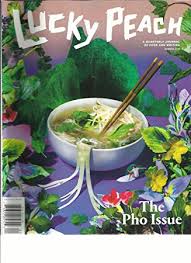
I was also puzzled at first as to why this story was in the Pho Issue of the magazine (stories don’t necessarily correspond to issue themes). It starts off in Vietnam, so I figured that was the tenuous connection. And that was fine.
The narrator is reading a screenplay of a movie set in Vietnam. He has been called in to counsel the auteur (whom he agrees is, in fact, talented) on the Vietnamese-ness of the story. But the narrator is not to be swayed. He himself wants to work in Hollywood, but he is immediately on guard against the racism that he encounters. Or maybe it’s all in his head–he is certainly prepared to be offended by everything.
Not least because the screenplay, while good for the white heroes, treats every Vietnamese person exactly the same. None of them have any lines [cut to villager speaking in their own language], most of them simply scream, and if they’re not getting killed (bad guys) they are thankful to the white people for saving them.
The narrator gets right in the auteur’s face with a very dramatic demonstration of how people scream differently in different circumstances.
The auteur does the verbal equivalent of slow clap at his performance and then asks how many movies the narrator has made. The answer, of course, is zero–“so thank you for telling me how to do my job.” But when the narrator tries to explain that the villagers in Vietnam would be akin to the Native Americans in a Western. Wouldn’t people want to know if they were Apache or Comanche? In Vietnam they could be Bru or Nung or Tay. “The auteur looked at hims and told him a secret: ‘No one gives a shit.'”
The narrator is stunned as he walks home. And that’s when the pho comes in to it.
Madame tells him to have some pho, it will make him feel better. He says that the Madame has never cooked before coming to this country. But being in exile made her have to learn–it;s not like the Vietnamese men would do anything domestic to help.
The pho is transportive–sending him back to a time when his mother’s pho would have beef only on special occasions.
The excerpt ends with him telling her sh should open a restaurant.
So, what direction is this story going in? Restaurant or Hollywood? I do wonder.

 I Just Read About That...
Leave a comment