Feeds:
Posts
Comments

Archive for January, 2017

tny 12.08.08.indd SOUNDTRACK: DRIVE-BY TRUCKERS-Tiny Desk Concert #574 (October 24, 2016).
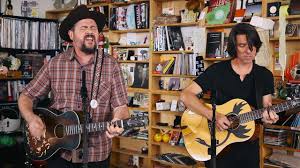
drivebyI have never listened to this band.  Their name turned me off right from the start, so I’ve never given them a chance.

I never even knew exactly what they sounded like.  And I’m still not entirely sure if this is what they typically sound like.  But this set is full of mostly uptempo folk rockers that explore some pretty intense subjects.

The first two songs are sung by Patterson Hood with his gravelly voice.

I am somewhat surprised to see that there were two Tiny Desk Concerts in a row with the word Umpqua in it.  But while Blind Pilot’s “Umpqua Rushing” is about a relationship, Drive-By Truckers’ “Guns Of Umpqua” is about the horrific shooting at Umpqua Community College in rural Oregon last year.

There’s apparently always been a serious political current in their music, but it’s been somewhat hidden. But for this album, they started writing songs that address what’s going on right now.  For “What It Means,” he explains, “I wrote this song a couple years ago. I’d honestly be really happy if it was just outdated and something we could leave in the past, but that’s certainly not the case right now.”  It is about the killing of young black men like Michael Brown and Trayvon Martin.

The final song “Once They Banned Imagine” is sung by Mike Cooley who has a much deeper voice.  He says this song is “about things staying the same, and not necessarily in a good way.”  This has more of a country feel, but with some pretty piano.

I wouldn’t say I’ve become a fan, but I’m far more open to their music than I was before hearing this Concert.

[READ: March 14, 2016] “Waiting”

This is only the second Amos Oz story I’ve read (this was translated by Jill Sand D’Angelo and Amos Oz).

It is very simple story, in which not a lot happens (hence the title).

Set in the old village of Tel Ilan, this story follows Benny Avni, the head of the District Council.  He was a considerate man and was well liked by the people of the village.  As is stated any times, “he walked pitched forward, with a stubborn gait, as if he were fighting a strong headwind.”

Benny was sitting in his office in the afternoon when a knock came at his door.  A man named Adel brought him a note from his wife.  Adel has seen her sitting on a bench in the park.  The note cryptically said “Don’t worry about me.” (more…)

Read Full Post »

nydec SOUNDTRACK: BLIND PILOT-Tiny Desk Concert #573 (October 21, 2016).

blind-piot

I really only know Blind Pilot because of NPR–they are favorites of a few of the hosts of All Songs Considered.

I don’t know their music well, but I remember enjoying what I’ve heard.  But I was still surprised by this Tiny Desk Concert because in addition to guitar and drums, there’s an upright bass (bowed and plucked), a ukulele, the ubiquitous Tiny Desk harmonium and a set of vibes!

Evidently since 2008 the band has expanded from a duo to a sextet.

The band plays four songs.  They are lovely folk song.  The vibes add a cool touch to some otherwise simple melodies.  “Umpqua Rushing” is a pretty song with a very catchy bridge.

Introducing “Packed Powder,” Israel Nebeker explains that it stems from when he was a teenager and they used to modify legal fireworks to make them more interesting.  This is my favorite of the four songs primarily because of the wonderful backing vocals during the chorus–when everybody sings “I want to see how the POWDER BURNS!”  It’s a great moment (or three) in the song.

“Don’t Doubt” is a mellow song, quite pretty, with some more lovely harmonies.

They planned to play three songs, but when Israel asks how many they should play, someone on the staff says “…four.”  So someone in the band then says, should we play, “Hot for Teacher” or “Jingle Bells.”  They decide to play “Joik #3.”  Israel explains that it was his first  attempt to write a song called “Joik.”  “I could tell you what that is, but you have Google…and an amazing team of researchers here.”

He says that before the album came out, Ari Shapiro aired it on NPR.  It’s a pretty song and Israel’s voice sounds especially powerful on it.  And, again, when the band sings the loud harmonies, it sounds terrific.

[READ: March 15, 2016] “In Other Rooms, Other Wonders”

Many authors seemed to get two stories in the New Yorker in 2008, but this has to be the closest gap between stories–Sept 15 to Dec 1.

Like the previous Mueenuddin story, the actual story part is pretty simple to recap.  And the sizable length of the story is mostly taken up with details and interior feelings.

And like the previous story, this one is set in Pakistan and looks at someone who might be able to move up a level of class, but who knows that it is a hard road.

The story begins simply enough. Husna needed a job. (more…)

Read Full Post »

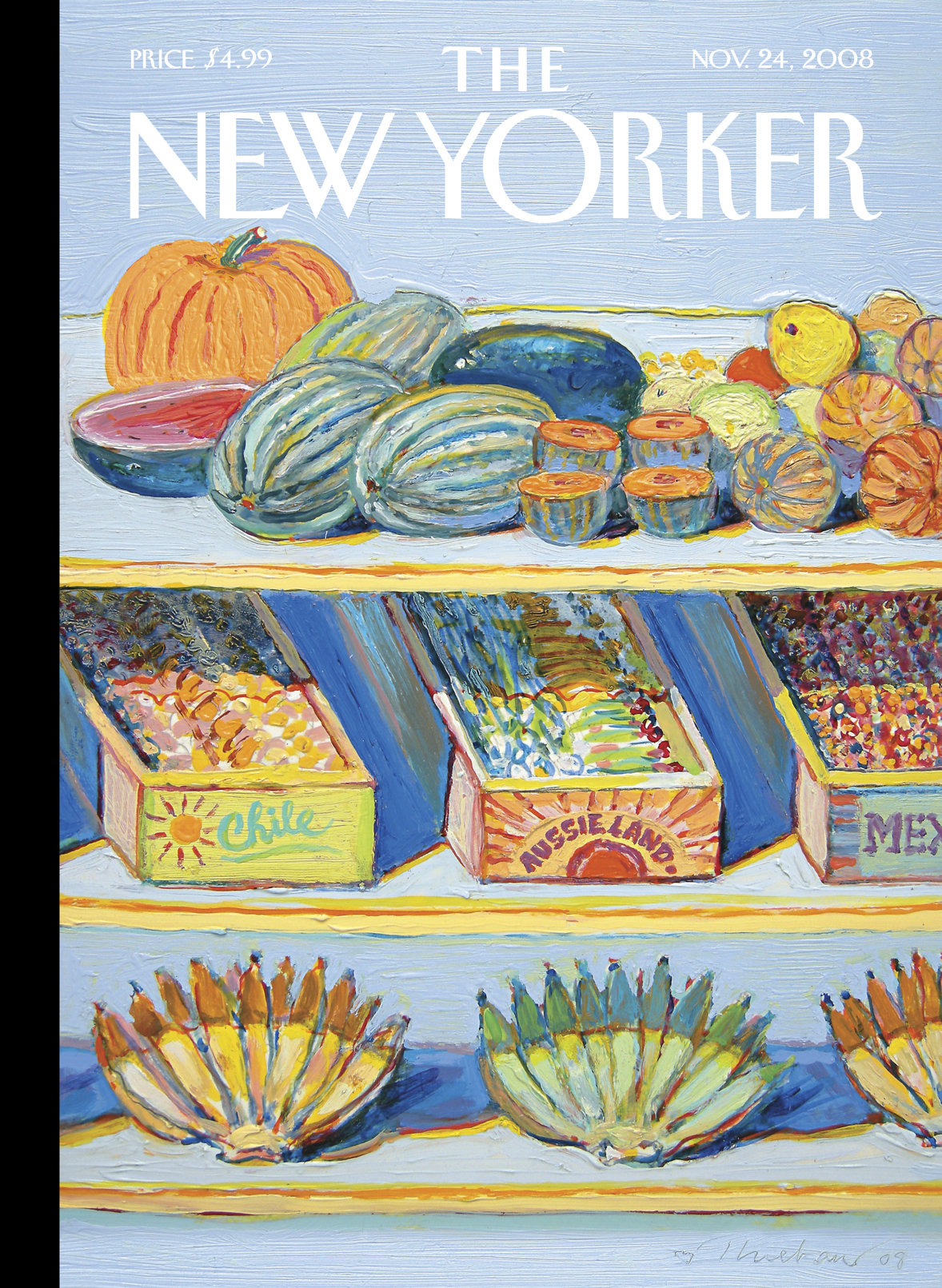
TNY 11.24.08 cvr.fnl.indd SOUNDTRACK: BILLY BRAGG & JOE HENRY-Tiny Desk Concert #572 (October 17, 2016).

bragg-henryI don’t really know who Joe Henry is (although I see that he has released 13 albums).  I’ve heard his name mentioned a bunch of times, but I can’t really place him to any specific music.  Billy Bragg, on the other hand, I know very well.

The two recorded an album this year.  And the NPR blurb is pretty interesting:

Earlier this year, Billy Bragg and Joe Henry set off on a journey. They boarded a train in Chicago, bound for Los Angeles. Each time the train stopped for more than 20 minutes in cities like St. Louis and San Antonio, they’d grab their guitars, hop off, find the waiting room and record an old railroad song. The result of this journey is an album called Shine A Light: Field Recordings From The Great American Railroad.

Their voices sound very different and as a result they play off each other very well.

The duo used Lead Belly as a jumping off point for much of this music.  Bragg explains that the jumping off point for this music is a book he has been working on about when British pop music went from being jazz influenced to being guitar led.  In 1956 Lonnie Donegan became the first Briton to get into the charts playing the  Lead Belly song “Rock Island Line.”

On the second song “Hobo’s Lullaby” Henry explains, the railroad is a mythic poverty–railroads conjure a romance in all of us even if we’ve never ridden a passenger train.  As they start, Bragg hasn’t re-tuned his guitar.  He says it’s always him who messes up.  But he usually plays solo, so “If I put something in the wrong key I just sing it in that key and hope no one notices–fortunately my audience… no one comes to hear me sing.”

As they are about to start, he says, “Sorry mate it was a beautiful intro.”  Henry looks at him and says, “It was,” to much laughter.

Before the final song, Henry says he was listening to Lead Belly since he was 15.  “Midnight Special” was a train that ran past Sugarland Prison in Texas.  The story was if the train’s light shined on you as it swept across the yard, that you would be the next to get paroled.

Even though these songs are old,

This concept record could be seen as a nostalgia trip, but both Bragg and Henry will emphatically say that it’s not. These songs and this journey celebrate the modern railroad as a major economic engine and a still-vital form of transportation.

[READ: March 10, 2016] “Ghosts”

Danticat often writes about Haiti and the troubles that arise there.

This story is set in Bel Air–the Baghdad of Haiti. Children in the neighborhood enter art contests by drawing posters that say “It’s not polite to shoot at funeral processions.”

The protagonist is Pascal Dorien.  He is a good kid who tries to stay out of trouble.  His parents own a small restaurant which has the unfortunate location of being in the heart of gangland (his family lives in a nearby town which is a little safer).  Luckily for them (sort of) the gangsters who make the restaurant their evening hangout are kind to the family and think of their place as their haven.

The family originally sold pigeons (both live and as meat) but then the gangsters started buying them to use in a ritual which involved drinking the pigeons’ blood mixed with evaporated milk.  His parents hated this and eventually stopped selling the bird.   Nevertheless the money they made for this ritual allowed them to expand and make even more money.  Which they hoped would allow their children to flee Haiti for safer locations. (more…)

Read Full Post »

6616 SOUNDTRACK: GLEN HANSARD-Tiny Desk Concert #225  (June 17, 2012).

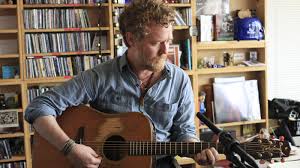
glenWhat can I say about Glen Hansard that I haven’t said already—he’s a powerful singer and a great storyteller.  This is his second appearance on Tiny Desk (although his first solo) and his fourth or fifth concert on NPR.

With The Swell Season, they played for 34 minutes (a Tiny Desk Record).  And this Concert is no shortie either at nearly 22 minutes.

He’s playing songs from his solo album (on that same beat up guitar).   Although he is distinctly himself, without the band(s), he sounds a bit like Cat Stevens and sometimes like Van Morrison (and he looks like Gordon Lightfoot).

He sings rather quietly and then impressively loudly–powerful and passionate.  He is clearly into what he does.

“Love Don’t Leave Me Waiting” is rocking folk song (he throws a coda of RESPECT at the end) in which he really belts out a few parts.  He’s got a delightful “La la la” middle section, and the overall melody is great.

“Bird of Sorrow” is  much more mellow song.  It builds through some verses and allows him to belt out a few lines near the end.

“Come Way to the Water” has him on a 4 string tenor guitar.  Although it is quite clearly a Glen Hansard song, the guitar is much more timid sounding compared to his voice.  And it really does give the song a very different (darker) feeling.  In fact when it’s over, he says, “that was kind of depressing wasn’t it?”

“Lucia” is a “song he hasn’t finished yet” but he’s going to play it because “it’s a little bit happier.”  Although the lyrics are “Lucia, you’re letting me down again / Lucia, your heart’s not in it babe…. And if your heart’s not in it, then your heart’s not in it, babe.”  Not exactly a happy song.  But very pretty.

“The Song of Good Hope” is slower with no big powerful singing, but it’s really heartfelt and intense.

And as always, he is unfailingly polite and thanks everyone for listening.

My friend Jonathan says that he will always try to see Hansard live, and it seems like I should be doing the same next time he comes around.

[READ: January 12, 2017] “At Home in the Past”

The June 6 & 13, 2016 issue of the New Yorker was the Fiction Issue.  It also contained five one page reflections about “Childhood Reading.” 

As soon as I started reading this, I knew that Sarah would want to read it as well.  For although I have not, Sarah has read The Secret Garden, which is what Tessa Hadley is writing about here.

Tessa says that she didn’t own many books as a child–mostly she borrowed from the library.  But the ones she did own she read over and over and “some of them soaked in deep under my skin, composing my private mythology and shaping my mind.”

She says she had a Puffin paperback of Frances Hodgson Burnett’s The Secret Garden.  The cover picture of a dark-haired girl in a white coat standing among thorny bare rose bushes looks just like Mary Lennox is described in the book.

Although it was published in 1911, she felt no separation from the Edwardians.  She felt at home in the past and often preferred it to modernity, which seemed somehow inferior. (more…)

Read Full Post »

30daysblack

Read Full Post »

6616 SOUNDTRACK: PATRICK WATSON-Tiny Desk Concert #221  (May 31, 2012).

pat-watsPatrick Watson is a Montreal-based singer songwriter with whom I was unfamiliar.  But he has received many accolades, including being nominated for the Polaris prize many times (and winning once).  It turns out that Bob Boilen also really likes him a lot. And I can see why.

Watson and his band make sounds that are quite unexpected (but are still melodic and pretty).  The first song “Adventures In Your Own Backyard” itself is amazing the way it unfolds.  The first sounds we hear are the drummer using a violin bow on Boilen’s Emmy statue (which I’m sure Bob was genuinely delighted by).  There’s two acoustic guitars and the violinist’s beautiful ooohs.  About one minute in, there’s a big drum sound as the drummer starts playing snare and bass.  And then the acoustic guitar is is put through some kind of filter to give it a very electric sound.  Once you get used to the acoustic guitar sounding electric and the electric guitar sounding acoustic, the violin comes in (sounding like a violin).  And then there’s backing vocals oohing until Watson comes back with more vocals, but this time through a microphone that is hugely distorted and mechanical-sounding (he and the violinist shared oohing duties and their voices get processed together).  All of this sounds like chaos and yet the melody is catchy and constant (and yes, the song ends with the drummer bowing that Emmy one more time).

Watson explains that for “Words In The Fire” the band was “nine hours north of nowhere” north of Quebec with these kids who invited them to a campfire party.  They had nowhere else to be so they went.   The kids requested a Bob Marley song, but they didn’t know any.  So they wrote this song.  For the start, it’s just Watson singing with the acoustic guitar.  Midway through the song, the percussionist plays a saw, giving it an eerie quality.  Despite the craziness of the first song, this song is delicate and pretty and Watson’s voice is high and sweet as well.

“Into Giants” opens with some lovely guitar intros and lots of harmonies.  This song is especially fun to watch because the five of them are all squeezed in behind the desk and seem more crammed than before.  Watson even has to move out of the way to let the violinist take her solo.  The whole band sings in a big folksy chorus “started as lovers don’t know where it’s gonna end” with appropriately big bass drum sounds.  The song seems like it’s going to end with Watson’s oooohing, but with a minute left, the song picks up again, with Watson playing a cool riff on the keyboard.  He even gets out that distorted mic again to build the song back up.

I love watching a Tiny Desk by someone I don’t know and immediately falling for a band.

[READ: January 12, 2017] “The Book”

The June 6 & 13, 2016 issue of the New Yorker was the Fiction Issue.  It also contained five one page reflections about “Childhood Reading.” 

Matar’s story is quite different from the others.  He says that his earliest memory of books is being read to, not actually reading.  Many of the classics were read to him: One Thousand and One Nights, and the Arabic literary renaissance of the twentieth century.   But there were hardly any books for children in the house.

He says that during his life he has had a passionate affair with books in English and Arabic.  And he makes this wonderfully succinct comment about youthful reading: some books were “undeserving of my youthful fervor, a few … I encountered at the wrong moment, [but there were] plenty of others that still light up rooms inside me.”

But, for him the book that affected him the most if one that he hasn’t read.  He doesn’t even know the title or author. (more…)

Read Full Post »

6616 SOUNDTRACK: DANIEL JOHNSTON-Tiny Desk Concert #224 (June 11, 2012).

danDaniel Johnston makes me uncomfortable.  I find his music to be simple and his voice isn’t very good.  And yet he is beloved by so many other people.  The fact that he is schizophrenic makes me worried that there’s some kind of exploitation going on.  But who knows.  He has had rather a lot of (relative) success.

The blurb tells us

Johnston has been diagnosed with bipolar disorder and schizophrenia, and he’s been institutionalized, but these days he travels and performs. It’s amazing to see and hear a spark of candor in what he does, all while he’s shaking like a scared child. There’s an odd sort of curiosity to watching Johnston perform, but it’s easy to root for him: He’s endearing and sloppy and unmistakably talented.

He and his guitarist Friend McFriendstein (actually Shai Halperin who plays under the name Sweet Lights) play four songs.

“Mean Girls Give Pleasure” is a pretty funny fast romp.  “Sense of Humor” is a slower song.

Between songs, they show off Johnston’s book Space Ducks.  There’s an iPad app and video game which is “Much beter than checking out Starbucks on yelp.”

“American Dream” is a clever song that’s full of monsters as metaphors.  “True Love Will Find You In The End” is a pretty, uplifting song.

His songs are short and unadorned, and surprisingly catchy.  But I don’t think I’d ever listen to him intentionally.

[READ: January 12, 2017] “Uninhabited”

The June 6 & 13, 2016 issue of the New Yorker was the Fiction Issue.  It also contained five one page reflections about “Childhood Reading.” 

Young says that when he was in fifth grade he read Robinson Crusoe (not the abridged version) in one weekend.  But he wasn’t showing off.  He saw an image or cartoon of the book and picked it for a book report not realizing how massive the actual book was.  He delayed until Friday for a report due Monday and thus had to cram in an entire novel.  He did the same thing with Gulliver’s Travels, “Who knew Gulliver met more than just Lilliputians?”

But he says that these masterpieces didn’t seem that different from non-fictional travelogues like Thirty Seconds Over Tokyo, the gory account of the U.S. bombing of Japan.

Crusoe is apt because he says he felt shipwrecked when they moved from New York to Topeka, Kansas.  (more…)

Read Full Post »

6616 SOUNDTRACK: YANN TIERSEN-Tiny Desk Concert #219 (May 21, 2012).

yannYann Tiersen scored the soundtrack to Amélie.  But he also writes and sings lovely chamber-pop music.

The first song “The Gutter”  opens with Tiersen playing a swirling violin melody accompanied by an acoustic guitar, a ukulele and keys.  Tiersen doesn’t sing, but the lead singer’s voice is yearning and delightfully accented as well.  (No names are given for the rest of the band).  I liked the way the song built in intensity even while his voice retained that quiet style of singing.

For the second song, “Monuments” everyone switches around.  Tiersen plays a lead 12 string acoustic guitar, the ukulele player is on keys and all four sing harmony lead.  You can tell that Tiersen is not American because of the way the word “Monuments” is sung “all monYOUments…” which adds an exotic flavor to the song.  The delicate keyboard sounds float nicely over the acoustic guitars.

They stay with this lineup for “Tribulations.”  The singer from the first song and the acoustic guitarist sing lead.  And everyone else joins on harmony.  “The Trial” opens with the four singing a beautiful “ooh” in harmony.  Then the other three sing a complex backing vocal while Tiersen sings lead.

There’s some really lovely melodies in this concert.

[READ: January 12, 2017] “Where is Luckily”

The June 6 & 13, 2016 issue of the New Yorker was the Fiction Issue.  It also contained five one page reflections about “Childhood Reading.” 

Having a child is like rereading your own childhood.

Galchen has a young daughter and that daughter has a some favorite stories.  One is a Moomin (which I love), another is a Piggy & Gerald.  Galchen says that if you read children’s book enough times, “they start to seem like Shakespeare.”

But she says that her daughter doesn’t read in a linear fashion.  “What happens next” doesn’t seem to cross her mind.  She reads them more like eternal landscapes: “In that sense, nothing is happening, and she reads for that nothing.” (more…)

Read Full Post »

6616 SOUNDTRACK: CHUCK BROWN-Tiny Desk Concert #217 (May 16, 2012).

chuckI’m puzzled by a few things with this Tiny Desk Concert.  The first is a note that This story originally ran on Sept. 28, 2010.  The second is the note that Chuck Brown, the Godfather of Go-Go music, died Wednesday. In 2010, he brought his full band to the NPR Music office — and put on a party like no one else.

That isn’t confusing in itself, but I have to wonder why it took them two years to air this concert, which is quite a fun rave up.  Are there other shows they didn’t air?

Okay, so I had no idea who Chuck Brown was.  And the blurb anticipated that

The name Chuck Brown might not mean a whole lot to people outside the Washington, D.C., area. … In D.C., Brown is widely known, even revered, as the Godfather of Go-Go, a title he’s held since the late ’70s. Though he started out as a jazz guitarist, Brown invented go-go, a style that incorporates funk, jazz, R&B, hip-hop and dancehall, and has mostly stuck with it ever since.

So, Go-Go, huh?  I never heard of that either.

No one in D.C. can really explain why go-go hasn’t traveled beyond the city’s environs — we love it here, it’s all over our commercial R&B and hip-hop radio stations and, at least when I was in high school, a go-go in a school’s gym was the most packed party of the weekend. Chuck Brown is a local hero. A few days after he played our offices, Brown and his whole band played at the Redskins’ stadium for the halftime show.  So to have Brown play a corner of our office — not a 90,000-capacity football stadium — was like a dream come true for a lot of NPR staffers. Sweat started pouring immediately, between the 11 musicians (that’s congas and a stripped-down kit; saxophone, trumpet and trombone; two backup singers and a rapper) and all the go-go-heads in our building.

Brown played four songs for about 25 minutes.

Go-go is mostly about the groove, though, and Chuck Brown just settles in and leans back. He showed up looking like a million bucks in a vest, Dior shades and his signature hat, and then he did what he does best — get the crowd on his side and hand its members something to dance to.

Go-go is based on a syncopated beat and the use of congas in addition to drums.  So “Senorita” is like a combination of reggae salsa and 50s singing (I can’t help but think he sounds like Frank Zappa when Zappa does his rather funny voice).  The song is slow but smoldering and fun to sing along to.  There’s a Santana guitar vibe too.

“Chuck Baby” is the hip hop element of his music.  His rapper is not very inspiring though.  She seems a little stiff.  And the song is a little flat when he’s doing the call and response–he sounds cool and seductive and they sound more bored than “naughty.”

Before the third song everyone starts chanting “wind me up chuck!” which he lets everyone know www.windmeupchuck.com is his website. “Wind Me Up!” / “Bustin’ Loose” starts with lots of call and response.  “Bustin’ Loose,” is a funky song with very James Brown accents and everyone singing the refrain: “Gimmethebridgenow, gimmethebridgenow.”  The song has been a hit in D.C. since 1979.  The backing vocalist on this song feels a bit looser (apparent as she sings “I feel like bustin’ loose).

The crowd was yelling out requests, too: “Chuck Baby” and “Run Joe,” a go-go cover of the Louis Jordan song.  “Run Joe” / “It Don’t Mean A Thing.”  “Run Joe” has a Jamaican flair “Policeman is on the premises.  What is he doin’ here?”  His guitar playing is really inspired throughout the set, but especially at the end of this song.   He does a lot of playing the same melody as he sings.  The song segues into a version of “It Don’t Mean a Thing” in which he slips in “It don’t mean a thing if it ain’t got that go-go swing.”

This set was really a party.  And Brown was just full of energy.

[READ: January 12, 2017] “Surrendering”

The June 6 & 13, 2016 issue of the New Yorker was the Fiction Issue.  It also contained five one page reflections about “Childhood Reading.” 

This reflection beings with Vuong explaining that his family moved to the U.S. from Vietnam when he was two.  He was an ESL student from a family of illiterate rice farmers who saw reading as snobby.

When he entered kindergarten, he found himself immersed in a new language.  He quickly became fluent in speech but not in the written word.  In fourth grade his class was given an assignment to write a poem in honor of National Poetry Month.  Normally his poor writing skills would mean that he was excused from such assignments.  He would spend time copying sentences out of books in the classroom.  But this time he decided to be ambitious and write a poem. (more…)

Read Full Post »

tny 10.27.08 cvr fnl.inddSOUNDTRACK: RDGLDGRN-Tiny Desk Concert #571 (October 14, 2016).

rdgldI’d never heard of RDGLDGRN before this show.  The colors in the band’s name represent the band members: Red (Marcus Parham), Green (Pierre Desrosiers) and Gold (Andrei Busuioceanu), and they wear their respective colors all the time (although I didn’t realize that Andrei’s shirt was gold until after reading this).

The blurb tells us that “if you go to a RDGLDGRN show, you’ll see a traditional stage set-up with a full complement of instruments… you can hear and feel the excitement of a full-blown band and a full drum set.”  However, with “their recent experimentation with Brazilian-style percussion over acoustic versions of their songs, they decided that an all-acoustic set infused with Brazilian vibes would make for the perfect Tiny Desk concert.”

They start with their new single “Karnival” a fun song played on ukulele with lots of percussion.  Green does most of the rapping although everyone sings.   After this they played unplugged versions of some of their best-known songs (although not known by me, obviously).

Before starting “Chop U Down” they say don’t sing along with this one, you’ll mess us up!  Gold plays a scratchy guitar and red plays a simple melody on the high notes while Green raps away.  It has a very catchy chorus especially the way the other singers add parts to the song.

When it’s over Gold tells us that the best part of a RDGRNGLD show is when Green forgets a verse (I don’t think he did, but it seemed like he almost did).  Green says the last time he forgot words, he freestyled a verse and no one noticed the mistake.

“Doing The Most” is more sung than rapped—they have great voices.  I really like the melodies of this song.  This is the song where the audience is meant to sing along (to the insanely catchy buh bah bah bah part).  All the while, Gold was keeping the beat on the guitar body.

They had only prepared three songs, but they were having so much fun, they decided to do a fourth. For this last song they semi-freestyle something.  Green started rapping and they played along.  It’s not very long and for some reason is called “No Pixar” (Freestyle) (I didn’t hear them say the word Pixar at all), but it’s a fun song and his freestyling is quite impressive.

I still don’t know much about RDGLDGRN, but it was a fun show.

[READ: March 10, 2016] “The Boy Who Had Never Seen the Sea”

J.M.G. Le Clézio won the Nobel Prize in Literature in 2008.  Which pretty much means I’d better like this story, right?  Well, it turns out that this particular story was written in 1978 (and was translated by Deborah Treisman) so that gives me a pass, I think.

Actually I did enjoy this story, although I found it most unusual.

It didn’t read like a 1970s story, but it certainly had a much less plot-driven feel.  It seemed relaxed and like it wanted to just unfold around the reader.

It begins in the first person.  The unnamed narrator is talking about a boy called Daniel.  Daniel (who had a jaw like a knifeblade–I didn’t like that this specific detail was mentioned twice and then not put to any use) wanted to be called Sinbad.  He had read the Adventure of Sindbad many many times.  It may have been the only book he ever read and he carried it with him everywhere. (more…)

Read Full Post »

« Newer Posts - Older Posts »