Feeds:
Posts
Comments

Archive for August, 2016

gus makingSOUNDTRACK: MAKING MOVIES-Tiny Desk Concert #403 (November 8, 2014).

Making Movies is a multifaceted band.  The lead singer/guitarist (Enrique Chi) and bassist (Diego) are brothers from Panama who grew up in Kansas City.

In addition to these two, the band has a keyboardist who also plays the bongos, as well as a drummer/percussionist who busts out a guitar at the end.

Enrique, upon explain the band’s origins says “Our music is all messed up.  Sometimes it comes out in English, sometimes in Spanish.”  The rhythms are from Panama but are mixed in with the keyboardist’s Mexican heritage.  They even have some interesting instruments like the tiny acoustic bass guitar a Panamanian guitar and a donkey jawbone.

“Pendulum Swing” has a cool guitar riff (chords played very high on the neck, giving a distinctive alt 90s feel).  The vocals even do some simple “oh ohs.”  Enrique’s voice sounds strangely familiar (but I can’t figure out why and I know he’s not someone I’ve heard before because he also sings in Spanish).  I love that the keyboardist plays the bongos during the verses and then adds textures to the chorus.

“Cuna De Vida” starts with some more high-pitched guitars and looped voices before some dancey rhythms are added from the bongos and drums.  Enrique mostly plays very high chords on the guitar and there’s more “Oh oh ohs.”  The song is sung entirely in Spanish and sounds very different from the other two (but still with that alt 90s feel).  By the end of the song there are bongos, drums and cowbells as the song builds. It’s fun to her the chorus sung in Spanish as it ramps up at the end.

“Chase Your Tail” opens with looping high notes on the guitar.  It sounds much more alt rock–except that the drummer is playing the donkey jawbone and cowbells.  The song is really catchy and fun.  When it seems like the song is over, the drummer grabs his guitar and Enrique plays the tiny Panamanian guitar.  They play a very fast rhythm and he sings in Spanish with fun loping bass notes (and great Mexican style oh oh backing vocals).  And when you think it’s all over, the drummer steps up on the zapateado board and does a rhythmic tap dance.

Making Movies was putting out their debut album at this time.  I hope they had success with it.  I’d like to hear more.

[READ: May 15, 2016] Gus and His Gang

I’m fascinated by First Second’s relationship with French artists. It seems like half of their early releases were originally published in French.  And this one is no exception.

What’s also funny is that the French artists seems to have a very distinctive style.  Even if they don’t look alike, there’s something very “French” about the way they draw.  I did consider that this book might have been drawn by Joann Sfar, but it was all done by Blain,  And like many of those other book this was translated by Alexis Siegel.

This book has 13 chapters, although they may also be independent stories.  I’m unclear about that. In fact I’m unclear about a lot of this story.  Like why does Gus, the lead character have a nose that would be about 18 inches long?

It’s funny and makes him instantly recognizable, but it’s such a weird idea.  And why does the titular Gus disappear about half way though never to return?  Is this an excerpt?  Is it only part one?  The colophon is very uninformative. (more…)

Read Full Post »

dawnSOUNDTRACK: BANKS-Tiny Desk Concert #401 (October 30, 2014).

banksI’d never heard of Banks before this Tiny Desk Concert.  The blurb says that “Banks’ terrific full-length debut, Goddess, is constructed out of layer upon layer of electronics, beats, samples and other means of submerging the singer’s voice in swirling accoutrements…. On record, she’s placed at the center of lavish productions, each suitable for throbbing remixes and banks of swirling lights.”

In this version, it is just a keyboard and a drum box, so her voice is exposed.  But I actually found her voice was a little annoying.  Especially during the verses, where she uses too much vibrato.

On the first song, “Beggin For Thread,” I enjoyed the choruses where she sang loudly and with less affectation.  Although it was during “Alibi” that I particularly didn’t like her voice–too much yea yea yea with a ton of vibrato.

For “Brain,” the accompaniment is acoustic guitar rather than piano.  It has a very different feel although I liked it even less.  I’m curious to see what their record sounds like with her voice buried, but I’m not going to find out.

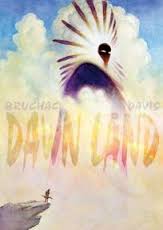
[READ: June 1, 2016] Dawn Land

Dawn Land was a novel that Joseph Bruchac wrote in 1993.  The novel (as explained in the afterword) details the oral traditions of his people as filtered through a fictional story that he was inspired to write over a burst of about six weeks.

I may have enjoyed this graphic novel more if I’d known the original story first (I also didn’t know that Bruchac was Abenaki Indian, so I wasn’t sure what to think about the story in the first place–appropriation is such a hot topic these days.  Of course having said that, I’d never heard of the Abenaki Indians before either (they lived in what is now New England).

I found the story a little confusing.  But before getting into the story, I loved the artwork.  In black and white, Will Davis conveyed so many amazing scenes and scenery–perfect depictions of people and animals and yes, giants. (more…)

Read Full Post »

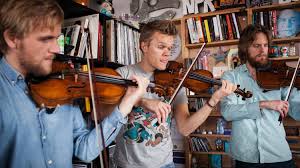
newSOUNDTRACK: DANISH STRING QUARTET-Tiny Desk Concert #399 (October 25, 2014).

danishI always enjoy hearing a string quartet that I’m unlikely to hear anywhere other than a Tiny Desk Concert.  It’s fun to listen to them before reading anything about them to try to imagine where they’re coming from musically.   The opening notes of the first song made me think they were a modernist quartet playing music that was repetitive and mildly atonal.

But they quickly swing it around into what turns out to be the first of many traditional Danish wedding folk songs!

While the quartet does play classical pieces as well, for this Tiny Desk Concert, they focus only on songs from their then recent album Wood Works.  The blurb says “the group recently took a musical detour that landed them in the foggy inlets of the Faroe Islands (a Danish outpost halfway between Norway and Iceland) and various Nordic hamlets where folk tunes are played and passed on.”

The first piece is actually three melodies: “Traditional: Ye Honest Bridal Couple — Sønderho Bridal Trilogy Parts I & II”  The piece begins somewhat atonally, but about 2 and a half minutes in the somber tones give way to a spritely melody that sounds like a great lost Irish jig.  But soon enough with the addition of the other strings it sounds very romantic indeed.  In what I presume is part II, around 6 minutes, the cello plays a wonderfully upbeat and catchy rhythm. The violins play staccato notes that keep the rhythm going while the viola and cello continue the melody–it’s pretty awesome.  Especially as the song fades and each of the strings plays the riff in succession.

The second piece is in fact two pieces: Traditional: Sekstur from Vendsyssel — The Peat Dance.”  Once again the two melodies sound kind of like Irish dances (I guess it’s time to call them Danish dances).  The second half of the first part sound great as the full quartet plays a wonderful melody.  But when the second part of the set comes and the super fast fiddling begins, it s hard not to dance (you can even hear someone tapping his foot as he plays).  The big difference between this and Irish dance is the rather formal sounding and lovely ending melody.

The final piece is the third part of the Bridal Trilogy from the first piece: “Traditional (arr. Nikolaj Busk): Sønderho Bridal Trilogy Part III.”  He says that these melodies date back many 100 years and are still used today.  It begins very slowly and almost somberly.  It doesn’t feel very wedding-like to me and of the three this is my least favorite.

The quartet sounds amazing. The players are Violinists Rune Tonsgaard Sørensen and Frederik Øland, violist Asbjørn Nørgaard and cellist Fredrik Schøyen Sjölin.  It’s also kind of funny since three of the four have beards–not something you typically see on a string quartet. They acknowledge this on their website: “We are simply your friendly neighborhood string quartet with above average amounts of beard.”

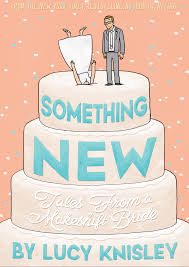
[READ: June 20, 2016] Something New

Knisley has made a rather successful career out of writing graphic novel memoirs.  She has covered food and travel.  And, in a somewhat surprising twist (if you have been following her books), she just got married.

This is surprising because the man she married is the man she broke up with in one of the previous books.  The story basically tells how they were on an off sorta kinda for years until they finally tied the knot.

So this book is the story of their relationship and their engagement. But beyond that it is also an interesting and helpful guide-book for those who want to get married but who may not be totally on board with all of the conventions and trapping of the wedding industry. (more…)

Read Full Post »

dirkSOUNDTRACK: ANTHONY D’AMATO-Tiny Desk Concert #398 (October 20, 2014).

damatoI’d never heard of Anthony D’Amato before this Tiny Desk Concert, and yet his music sounds vaguely familiar.  D’Amato sings fast, upbeat acoustic folk rock with a full band behind him.

“Was a Time” starts out with just him and his guitar.  But after the first verse the whole band kicks in and the song really takes off.  There’s some harmonica between verses and a big Whoo! before the end of the song.  The song is a fun romp, fun to sing along to until you realize the chorus: “there was a time that I loved you / I don’t love you any more.”

He introduces the second song “Good and Ready” and says “we’ll start whenever Derek is… good and ready.”  This song sounds very different as it opens with a cool soulful bassline.   After that opening the song proper begins with Amato’s acoustic guitar and the electric guitar playing a loud slide guitar riff.  This song is a bit more positive, despite the repeated line of I don’t wanna wake up,” the chorus is “I don’t wanna wake up if it ain’t next to you.”

All three of these songs use the same verse style with the first words of every line being repeated over and over.  In the first song, every libe starts, “There was a time….” In the second, each line begins “I don’t wanna wake up….”  The final song, “Ludlow,” changes things a little bit although each verse stats with the opening “First the…  then the….”

I felt a little  for his backing vocalist Katy Pinke, because while everyone else is doing things, she’s just standing there occasionally sinking a word or two.  Although for “Ludlow” he and Katy sing a quiet duet.

D’Amato writes catchy, rather pleasing songs.  I wonder why I haven’t heard of him before.

[READ: July 2, 2016] Delilah Dirk and the King’s Shilling

Much like I wrote about the first book: I enjoyed this story quite a lot.  Cliff’s drawing style which was peculiar but ultimately very satisfying.  And more importantly, he tells a great story.

But this book was even more satisfying than the first.  I have also changed my opinion of Cliff’s artistic style somewhat in that I think it is really fantastic.  It is definitely unusual–realistic but not exactly–and he has such amazing control of expressions.  Even moreso in this book in which Delilah goes into polite society and so much must be conveyed through expression.

Plus there’s a lot of action, too. (more…)

Read Full Post »

sweater SOUNDTRACK: ÁSGEIR-Tiny Desk Concert #397 (October 18, 2014).

asgeirÁsgeir Trausti Einarsson is an Icelandic singer songwriter.  He has a beautiful soft soaring voice.  He released his debut album Dýrð í dauðaþögn in Icelandic (it became the biggest-selling debit in Icelandic music history).  A year later he reissued it in English (with translation help from John Grant who was living in Iceland) as In the Silence and finally (the version I have, as a 3 disc set with the Icelandic and English discs as well as a selection of bonus songs.

“On That Day” is a pretty, guitar based song (Ásgeir plays the main melody line and has guitar accompaniment (and backing vocals) from his childhood friend Julius Róbertsson.

For the final two songs, Ásgeir switches to piano.  “Torrent” has gorgeous vocal harmonies. It’s interesting how much more deliberate this song feels–not quite staccato, but the piano chords don’t really ring out, letting each note stand on its own.

For this Tiny Desk, he stripped down the songs, getting to their core.  They’re not flashy, they’re just lovely.

The final song he plays, “Higher” is the first song on the record (interestingly “On that Day” is the final song on the record).  It has a very slow, delicate piano melody and is also soothing and beautiful.

And in a cool synchronicity at the end of the show Bob tells Ásgeir  that he’s playing at the same piano that John Grant played on a few months earlier.

[READ: July 2, 2016] Sweaterweather

Back in 2003, Sara Varon published her first book called Sweaterweather.  This collection includes all of the original 8 stories as well as a few more.  Each story gets a brief introduction from Varon which makes me like her even more (she’s quite funny).

Most of the stories are short(2-3 p[ages) and most don’t seem to have a title.  The contents page is actually thumbnails from each story.

When I first saw Varon’s style, I wasn’t sure what to make of it.  It is so innocent and childlike.  And I have really grown to love it–especially when these sweet animals characters (they’re pretty much all animals) tackle some intense feelings. (more…)

Read Full Post »

robotSOUNDTRACK: THE BOTS-Tiny Desk Concert #396 (October 14, 2014).

botsThe Bots are a duo–guitar and drums–who play noisy garage rock.  They are brothers Mikaiah Lei (21) on guitar and vocals and Anaiah Lei (17) on drums.  The Bots put out their first album 6 years earlier (do the math).  You can hear a lot of more famous rock duos in their sound, (fill in the blank with prominent two person rock bands) but despite their rocking noisy sound Mikaiah’s voice sets them apart for being kind of sweet and smooth rather than angular and yelling.

The first song is “All of Them (Wide Awake).”  It has a simple rocking riff interspersed with delicate verses.  The middle section has a wild and raucous solo.  There’s some fun moments in that solo–stops and starts as well as a wall of noise.

Before starting the second song, they chat and say they “didn’t know people were actually here when you watch the videos online–there’s somebody at a desk right there.”  Mikaiah then says, “I’m incredibly chill right now.”

“Blinded” has a great, slow, stomping riff and some backing bluesy keyboards–the drummer (I love that he is using a stick and a mallet) has a synth type of contraption next to him.  The solo is interesting with no other music behind it but the drums.  The chorus of “I I I I I  want to know” is super catchy.

He says “All I Really Want” is an ‘alternative’ version of their song.  Although it’s not really acoustic since he’ll be using distortion.  It opens with a wild synth riff from the synth machine but the song proper is very fast and heavy with a big riff and fast verses.  The chorus gets even more punky with a great riff and vocals.  Mikaiah plays a cool echoing solo and then it’s all over.  11 minutes of great rock.

As the camera fades, Mikaiah says that he’s wanted to play Tiny Desk fora  while and now this was something he could cross off his list.  Bob asks what else is on his list.  He thinks for a minute and then quietly he says “Playing softball with Mariah Carey.”

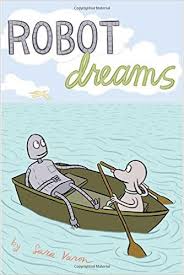
[READ: May 2, 2016] Robot Dreams

This largely wordless comic is both funny and sad–not bad for a book about a dog who builds a robot.

Varon’s drawing style (which is delightfully unique) complements the sweet but slightly odd contents of the plot.

As the book opens, a dog receives a box which says Tin Robot Kit Build It Yourself.  The dog does so and then he has a new friend.  The two do everything together: take naps, go to the library and then go to the beach. They go in the water and splash around and have a great time.  But after lying on the beach, the robot suddenly can’t move.  He has rusted!

The dog feels embarrassed about it but goes home, leaving the robot on the beach (!). (more…)

Read Full Post »

bourbonSOUNDTRACK: RAQUEL SOFIA-Tiny Desk Concert #395 (October 11, 2014).

raquelRaquel Sofia has been a backup singer for Juanes and Shakira and has no come out front to make really catchy songs about breaking up with people.

She sings in Spanish (although her English is excellent) about love and loss and the blurb correctly notes “it’s hard to believe that feeling bad can sound this good. ”  Her songs are all acoustic, but with a fiery punk flair (to match her partially shaved head).

Of the first song, “No Me Importas,” she says she wrote this song about a guy who didn’t call me.   It is a rollicking fun song which starts out with a big HEY! before rocking out.  Her voice is awesome–loud and powerful and for this blow off song, she’s got a great sense of bite in her voice.  And again, for a break up song it’s really fun and even has a with a clap along section

“Agridulce” (which means Bittersweet) is a more mellow ballad.  She says she was in a relationship and was about to get dumped.  Too much damage had been done to say she was sorry so she had to write a song.  She says it’s her next single.  It’s a pretty song and at he end, she says that the look on his face when she told him she wrote the song made the trouble worth it.

She says she wrote “Te Amo Idiota” which means “I love you, Idiot” in the darkest, darkest hour of her life.  It’s an impassioned song.  Not quite as fun as the others, but really good.  The end is really great.

She wasn’t expecting to do a fourth song, but they ask her to and she plays “Hombre Como Tú.”  She says she was mad at a guy and was sure she was never going to see him again.  So she wanted to make sure he knew exactly what she thought about him.  We never find out what he thought of that one.  She says it’s her next single (even though the other song was also her next single).  It’s incredibly catchy and even if you don’t know what she’s saying.

Hearing how great her songs are, it make me want to have a bad break up with her so she can write some more great songs (especially since I wouldn’t know what she’s saying).

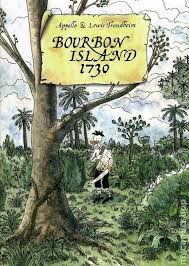
[READ: June 11, 2016] Bourbon Island 1730

I joked with Sarah about the disclaimer at the beginning oft his book which says that “Bourbon Island 1730 is not intended to be a historical account.  It is a fictional narrative, freely inspired by historical events.”  And I joked because one of the main characters is a bird and the other looks like a dog or something.  So clearly not historically accurate.

But I soon learned that this is a more or less accurate account of piracy  and slave trading around Bourbon Island in the 1730s.

Although as with a lot of Trondheim’s books I found this one to be lacking focus somewhat.

I wasn’t always sure exactly what was happening.  And one of the problems to me especially was that the book deals with racism and slavery, but it wasn’t always clear who was who because the characters were animals–how do you depict racism with animals if the animals don’t seem to conform to a race? (more…)

Read Full Post »

guibertSOUNDTRACK: JACKSON BROWNE-Tiny Desk Concert #394 (October 6, 2014).

jbI don’t really think much of Jackson Browne.  He’s always been a staple of classic rock radio, but I never especially sought him out. His voice is unique and recognizable although if pressed I can’t think of the names of any of his songs (but I’d know them immediately if I heard them).

Bob Boilen talked with Browne in his book and that’s where I learned that Browne dated Nico from The Velvet Underground fame and even wrote songs for her.  I also learned that he is quite the activist.  And that he plays a lot in California with various performers (the blurb says “he’s largely free of obligations”–that’s a nice phrasing).

He plays three songs here.  I assume they’re all new as I don’t recognize them.  And they all sound very much like Jackson Browne.  He voice is largely the same although it does crack and break a few times (could that be the setting or the time of day or does he just accept that he’s getting older?).

It’s also interesting that Browne plays the rhythm guitar for most of the songs–allowing Val McCallum to play the lead guitar and Greg Leisz to play “all manner of stringed things” (including the slide guitar solos).

The three songs are “Call It A Loan,” “The Barricades Of Heaven” and “Long Way Around.”  I’m surprised at just how long these three songs are (the whole set comes in around 20 minutes).

Before “Long Way Around” (which is quite political), he says that they’re “Lucky to play for such an informed group.”  Bob says they stopped the news–there’s no news being made–so that Browne could play.

Some of the lines in “Long Way Around” are: “It’s hard to say which did more ill, Citizen United or the gulf oil spill” and “It’s never been that hard to buy a gun, now they’ll sell a Glock 19 to just about anyone.”

The songs are nicely accentuated by the backing vocals of Jeff Young who also plays keyboards for them but which they couldn’t bring.

This is a delightful, mellow (and thoughtful) set of music (with a huge crowd watching).  And there’s a funny moment at the end where someone triggers a James Brown doll and Browne does a pretty good “hit me!”

[READ: March 2, 2016] How the World Was

I was intrigued to read this book by Emmanuel Guibert because I’ve really enjoyed his work lately.  But how was I to know that How the World Was is a prequel of sorts to Alan’s War?  It was also translated by Kathryn Pulver.

This book is a”loving, immersive portrait of Alan Cope.”  Cope was born in 1925 when California was still the frontier and life was simpler and harsher.  And Guibert felt that it was a gift for Cope “in the last moments of his life” (unlike in Alan’s War there’s no word on whether Cope saw this book).

So this book is indeed all about Cope’s childhood.  And while he did have some pretty interesting things happen to him, his childhood was in no way extraordinary.   This is just a simple portrait of growing up in Californians in the 1920 s and 1930s as seen from one man’s eyes. (more…)

Read Full Post »

solomonSOUNDTRACK: RYAN KEBERLE & CATHARSIS-Tiny Desk Concert #393 (October 4, 2014).

keberleWhen Trombone Shorty played the Tiny Desk I said that I was surprised to see that the leader of the band was a trombone player.  Well, perhaps it’s not that unusual as Ryan Keberle is a trombonist as well.  But unlike many recent jazz performers, Keberle & Catharsis aren’t showing off. As the blurb puts it, “he’s not after any high-concept framing. He’s just targeting the sweet spot where a nifty arrangement meets a solid groove.”

This band plays pretty traditional jazz (complete with upright bass solos and everything). Although, interestingly, their first song is a cover of  Sufjan Stevens song (turns out that Keberle toured with Stevens).  “Sister” is my favorite of their three songs.  I really enjoyed when the full band kicked in after the intro riff from Keberle.  The band has a vocalist, Camila Meza, who mainly does wordless vocal sounds.  As the song nears its end she does sing lead vocals, and it’s quite pleasant.

Her vocals work pretty well for this song, but I didn’t like it is much later.  That could be because “Sister” is a catchy pop song, where the other songs are jazzy.  And I find her singing style to be a little lite-Fm for my tastes.

“Gallop” is a bit faster than the first song.  It moves along at a nice clip and then stops for a bass and drum solo–very very jazzy.  There’s a trumpet solo in the middle of song too (no trombone solos which is interesting, I guess).  The other guys in the band are Michael Rodriguez on trumpet, Jorge Roeder on bass and Eric Doob on drums.

“Zone” opens with two contradicting three note riffs on both trombone and trumpet which is pretty cool.  Then the song settles down to just bass drums and voice and Keberle playing the melodica (beloved instrument of Tiny Desk Concerts) which works but sounds odd in the mix.  It seems like the song is going to end as the music fades to just bass, but it soon picks up again with anew trumpet solo.

I don’t love mellow jazz like this, but these players are excellent.

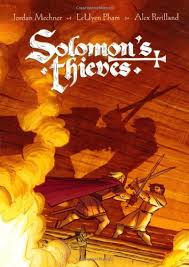
[READ: April 13, 2016] Solomon’s Thieves

I had this book on hold for quite some time.  When it finally came in, I thought, hey this art looks familiar.  And then hey, this book is about the Templar knights, what a strange thing that First Second would have two book about the Templar Knights.   And then as I flipped through it I realized the author and artists were the same.  And for a split second I though, they wrote two books about the Templar Knights?

And then it came to me that the first part of Templar was called “Solomon’s Thieves.”  And that this is indeed the First Part published long before Templar actually came out in full.

So even thought I had read the whole of Templar not too long ago, I decided to read this as well   As far as I can tell it is exactly the same as the first part of Templar.  Although it’s possible that there are some minor changes, I wasn’t sure if things that I didn’t remember were just because I can’t remember everything, you know?

Perhaps because I had read the full book not too long ago, I really enjoyed this run though again.  Since everything looked familiar, it was fun to pick up on things I missed the first time, and to see how things made a little more sense once I could tell who everyone was and what their roles were (there is something to be said for re-reading).

I’m including what I wrote about the first part of Templar here because it’s the same, but if you want more about the whole book or background about the Templar Knights check out the full post.

As the story opens we see Martin, a Knight, looking longingly at a woman, Isabelle.  We learn that he had been “dating” her (or whatever they called it back then) and then one day he found out that she left to be married to the brother of King Philip.  So he joined the Knights.  As they march through the city, we see that they are drunkards and carousers.  They get in all manner of trouble.  And one evening they were heading back to Paris when suddenly the above dictum was established–all Knights were to be arrested.  And Martin is one of them.

But through some excellent machinations (and good fighting) he escapes.  And he soon joins together with a very unlikely band of merry men, including Brother Dominic (a real priest with the tonsure and everything) and Brother Bernard, a loutish drunken man who is not above thieving from people.  Martin is offended at the thought of working with him, and they wind up at odds with each other from the start.  Before the end of the first book, we see that they have a letter revealing where all of the Templar gold and jewels are hidden.

There’s a great bit of accounting work done in which the bookkeeper shows on his ledger that rooms were empty when in fact it appears that the gold was taken out on hay carts.  The bookkeeper, even under torture, swears he knows nothing of the fortune’s whereabouts.

Mechner tells a really exciting story with humor and sadness.  The fact that it’s linked to history is just a bonus.  Another winner for First Second and their #1oyearsof01 anniversary.

Read Full Post »

stuffedSOUNDTRACK: BIO RITMO-Tiny Desk Concert #392 (September 29, 2014).

bioritBio Ritmo is a nine-piece band that has played salsa music for 23 years (as of 2014).  The back beat and rhythm is pure salsa–there’s a drummer (who has that classic salsa drum sound) and two bongo players.  There’s shakers and scrapers and timbales and congas and a cowbell.

The four horns players (two trumpets, sax and trombone) punctuate all o the right notes to get you moving along.

The first song is “La Via.”  The main driving force seems to be the keyboard, which was unexpected–it adds a kind of Latin jazz feel to the proceedings.  I love the way the keyboards shift from a Latin feel to a more groovy 70s feel before the vocals start.  There’s a cool break in the middle of the song when it stops and we get a few pounding notes before the song resumes.  Classic salsa.

“Picaresca”has fun dancey rhythm and a lengthy trumpet solo, giving it another interesting salsa/jazz feel.  The keyboard solo sounds a little cheesey here–like they need better sounds on that program, but it’s the drums “solo” in the middle that makes this song so much fun.  It’s a great instrumental.

“Perdido” goes through many different genres.  He explains that it begins like a Puerto Rican dance from the 1800s and then goes “into other stuff.”  The opening does indeed sound like an old song and after a few verses it morphs into modern salsa once again.

I really enjoyed this set a lot.  Most salsa music sounds the same to me, but I really like it when I hear it. On the downside, this is the first Tiny Desk Concert where I felt like the band wasn’t mic’d effectively.  The vocals are really quiet (almost inaudible at times), and when the trombonist does a solo it’s also a little too quiet.  But the main focus is the percussion and that’s plenty loud!

[READ: May 10, 2016] Stuffed

I have had to interlibrary loan a lot of the rest of the First Second books because my library system doesn’t have them.  Usually if a library doesn’t have an older book it’s because not many people read it any more so they got rid of it.  That doesn’t necessarily mean the book is bad, but it doesn’t  give you a ton of confidence about it.  But this book defied every expectation and wound up being outstanding!

I assumed this title would be a cautionary tale about someone eating too much.  I had no idea what I was actually in for!

As the book opens, we meet Tim. He works for a benefits department of an insurance company (it sounds awful).  He gets a call that his father is dying.  He rushes to the hospital just in time  to see his father insult him once more before breathing his last.  His father’s estate is to be split between himself and his half-brother, Ollie.  No one has seen Ollie in ages.  When they do track him down, he is now known as “Free Spirit.” (more…)

Read Full Post »

Older Posts »