 SOUNDTRACK: FOO FIGHTERS-There is Nothing Left to Lose (1999).
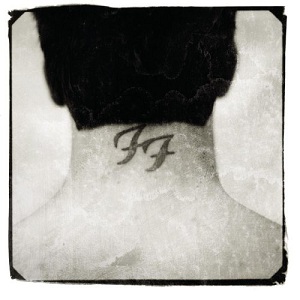 This album introduces drummer Taylor Hawkins and is considered the first “band” record from the Foo Fighters. The album was recorded as a trio—Grohl, Hawkins and Nate Mendel on bass (who played on Colour as well). As with a bunch of these middle Foo Fighters records, I feel that it starts really strong and then kind of fades a bit by the end.
I love the big fuzzy sound that opens this record. It doesn’t sound like anything Grohl has recorded before. “Breakout” is a poppy song with a very summery opening. It’s propulsive and super catchy. “Learn to Fly” is another wonderfully poppy song with a great chorus (and a hilarious video).
The opening riff of “Gimme Stitches” has a total classic rock radio sound, which really shows the diversity they were going for here. “Generator” opens with a talk box—toally retro man. Even though it a silly thing to add to the song, the song is really catchy.
“Aurora” is a lengthy mellow song. I guess I never really thought to much about it, but on reading about it, it proves to be one of the bands’ (and Dave’s) favorite songs.
I feel like the second half of the album suffers a little bit as the songs don’t really stand out.
“Live-In Skin” is a solid song although there’s nothing too special about it (especially given the other songs on the album). The riff is pretty cool though. “Next Year” is a mildly catchy mid tempo song. It seems like it could have been Foo Fighters’ version of Green Day’s “Time of Your Life” if they had played their cards right.
“Headwires” has an interesting 80s sound in the guitar and Grohl’s whispered vocals. But the big chorus returns to the Foo Fighters sound.
“Ain’t It the Life” is a mellow ballad. It doesn’t quite reach the heights of the Foo’s other ballads though the slide guitar solo is a nice touch. “M.I.A.” opens quiet as well. It has a chorus that is pretty typical of the Foo Fighters, but it seems to either lack some oomph, or it gets stuck at the end of the album.
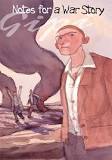
[READ: February 10, 2015] Notes for a War Story
I’m fascinated by how many translated works First Second publishes. And it seems like a great resource for non-English writers to get published in the United States.
Gipi is an Italian artist and writer (this book was translated by Spectrum) and as with many other European artists, I could tell right away that the style here was not done by an American. I wonder why that is.
In general, I don’t really care for Gipi’s books. They are a little too bleak, a little to “ugly” for my tastes. And yet the stories are quite compelling. This one revolves around an unspecified war that is happening around the countryside (but not, for some reason, in the city).
The protagonists are young men adrift in a world where they are clearly lost. Guiliano is a slightly richer kid than the other two and he is the narrator. The other two are his friends Christian and Little Killer.
They learn about a man named Felix, who is leader of a militia. When they go see him, he immediately takes a shine to Little Killer. They talk and bond while Giuliano and Christian feel left out (and are rather naive I feel–I mean its obvious that Felix is a killer).
Felix sends them to the city on a job. Christian and Giuliano are thrilled just to go to the city (Christian embarrasses himself with his gushing thanks). They drop off a package and get some money–a lot of money. And they are hooked with Felix now.
Of course things turn bad, and people are hurt and worse.
But by part three the story takes an interesting turn and the title of the story reveals itself.
There’s some interesting visuals here, but it is so dark and, as I say, ugly (Gipi’s drawing style lends itself to a very ugly look). I didn’t dislike the story but I didn’t really enjoy it that much either. Of course as I’m thinking back on it, I do feel more fondly towards the story. Maybe it’s a grower.

 I Just Read About That...
Leave a comment