 SOUNDTRACK: RHEOSTATICS-Vertigo, Victoria British Columbia, (January 21, 2000).
 I recently learned that the Rheostatics Live website has added dozens of new (old) shows. It has been almost exactly a year since I last did a tour of some of these live shows, so it was time to move into 2000 (with one new show added since I last looked).
As of 2000, the band is still touring the Harmelodia album, and the set has a lot of songs from that album. I recently relistened to the album (something I don’t listen to all that much). I was surprised to hear how many songs had narration–which pretty much precludes them from playing them live. So that explains why they focus on just a few songs live.
Lucky’s notes for this show state: The Rheos were on a short west-coast swing and they played in Whistler the night before this show. In fact, the inspiration for ‘Satan Is The Whistler’ (from their following album) came from this trip, as Martin remarked something along the lines of ‘They are a bunch of Fascists in Whistler!’.
This is a really good set. The sound quality is excellent and the band is in very good form. There’s some great harmonies on “Loving Arms” and Martin really rocks the guitar on “I Fab Thee.” “Junction Foil Ball” sounds awesome here–a good breakdown in the middle. And it’s a rare sighting of “Oneilly’s Strange Dream” and a replay of “Good Canadian.”
It’s always fun when the band is feeling chatty. In this show they joke about the Crash Test Dummies and even sing, “Superman never made any money saving the world from Crash Test Dummies.” They also have fun with “My First Rock Show” with talk of blood on the seats.
The band has some technical failures, and they play a Stompin’ Tom song (“Bud the Spud”) while they get fixed. But it doesn’t mess them up as they play a killer version of “Stolen Car” with a great solo.
Luke Doucet (now of Whitehorse, then of opening act Veal) plays during “Legal Age Life” and the band jokes about the Vealostatics.
The whole show ran for nearly two hours. It’s a great set and the first of two nights at Vertigo.
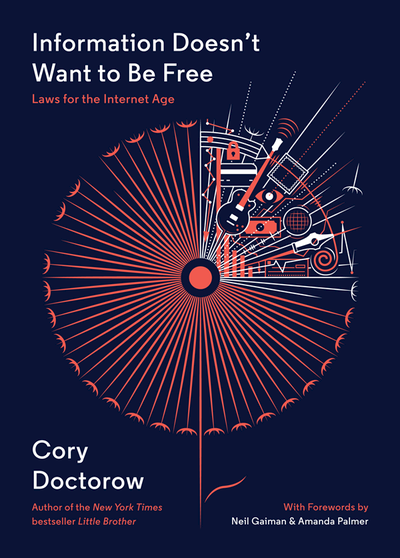
[READ: February 10, 2015] Information Doesn’t Want to Be Free
This short book is Doctorow’s plea for Copyright common sense, Net Neutrality and internet freedoms (among other things). Of course Net Neutrality just passed–hurrah!– which makes this book less urgent but no less spot on and worth remembering while going forward.
Doctorow starts each section by stating his three laws:
- “Anytime someone puts a lock on something you own, against your wishes, and doesn’t give you the key, they’re not doing it for your benefit.”
- “Fame Won’t Make You Rich, But Yo Can’t Get Paid Without It” (or as Tim O’Reilly said “The problem for most artists isn’t piracy, it’s obscurity.”)
- “Information Doesn’t Want to Be Free, People Do.”
The important thing that Doctorow wants to get across is that copyright in and if itself isn’t a bad thing. In fact he thinks it’s a good thing when used the way it was initially designed–to protect the artist and also their publishers from other people profiting from their creations
I found the first section to be the most powerful–it talks about how any kind of digital locks, be they DRM codes, or codes in your DVD player that prevent you from watching (or copying) things, is essentially the seller’s way of telling you that they really own whatever it is you think you own. For instance, if someone hacks a DVD player code, the company can change the locks which may make it impossible for you to play something you own on a future player.
I enjoyed his discussion that digital locks always break–someone will always try to hack them and will usually succeed.
I was also intrigued by his observation that computers–machines which are essentially designed to copy things–are in everything. So to try to create blanket rules for all computers does no one a service. He explains that every time a computer loads a web page it is copying it to your screen. It’s main function is to take information from some place and copy it to another place. The internet code and locks are there to prevent you from copying everything you want.
The second section was more geared towards artists. And as a fan of artists it was interesting, although not really applicable to me.
His idea that fame won’t make you rich is true. But it’s his second part that is more relevant–without fame (however you want to define it), you can’t make money. If people don’t know you’re a musician no matter how good you are, no one will buy your records. The internet has made free distribution a great way for musicians to get recognized.
There’s a lot of information about independent production and going it alone and how disorganized channels are so much better for creators. If there’s only YouTube for videos, you have to follow YouTube’s rules (be they good or bad) to get on it, but if there are many sources, there are more options. He also talks about how YouTube is used more by individuals posting things for themselves and for family than for people trying to break copyright infringement. I myself have posted videos of my kids set to copyrighted soundtrack. Of course, I had no intention of getting any money from them, yet YouTube has removed my audio. He also points out that there are 96 hours of video uploaded to YouTube every minute–clearly only a small portion of that is copyrighted already.
And what about artists who wish to sample–something that has been done for time immemorial In order to sample you need to get permission. His bullet points:
- Every sample of a recording that’s still in copyright must be cleared.
- Nearly every recording you’ve ever heard of is still in copyright.
- If it’s in copyright, the labels probably own it.
- The labels won’t license to you unless you sign a contract with them.
Extending the scope and the duration of copyright doesn’t just criminalize a whole genre of music–it also puts the labels in charge of the only legal route open to musicians, effecting a massive wealth transfer from artists to labels.
The third section is the angriest (and should make you the angriest too). He talks about the copyfight–the desire to keep regulation fair for everyone. For instance, the original copyright laws were useful when the only ones who could break them (ie copy and distribute your work) were other companies and corporations. When the laws were written, no individual could copy books or movies or TV shows–it simply wasn’t possible. So, putting laws in place to protect creators and distributors from others was a sensible thing. But now, with copying so easy for the average person to do, the laws are obsolete and excessively punitive. If Warner Brothers copied and distributed a Mirimax film, Miramax would stand to lose a fortune. But if I distribute a Miramax film they stand to lose about $3.
As the book nears the end, Doctorow adds more and more serious accusations to the pile. As people push laws that aim to make more and more entities responsibly for online piracy, it seriously impedes the right of free speech. If ISPs or search engines are found responsible for everything that goes on in their purview, then they are going to seriously curtail anything that is even remotely dangerous. This will of course cause all kinds of trouble for anyone wishes to express him or herself.
Sometimes it seemed like Doctortow was being a little excessive and a little fear mongery, and yet he lives in the technological world, and certainly knows a lot more about what’s happening than I do, so I’m inclined to trust him. It seems like some of these laws could be passed with good intention and then used for nefarious purposes. And it’s always harder to overturn a law than to enact one.
The book could have been a lot shorter (not that it is long at all), but Doctorow’s examples are always excellent and fun (if not funny) and make a great contribution to the book. Since he is a fiction writer, he really knows how to weave a story that’s germane to his argument.
If you’ve been wondering what all of this net neutrality business is about (or DRM, for that matter), this is an excellent place to look.
Incidentally, Wil Wheaton reads the audiobook of this (which I have not heard). And Neil Gaiman and Amanda Palmer both offer introductions to the book.

 I Just Read About That...
Leave a comment