 SOUNDTRACK: NICK BUZZ-Circo (1996).
 Nick Buzz is a side project of Rheostatics singer/lead guitarist Martin Tielli. This album was reissued in 2002, when I bought it But it came out in 1996, right around the time of the concerts I’ve been posting about. Martin says that this album is pure pop, and that he is genuinely surprised that people don’t see this. Of course, when your album has screeching monkeys, cars honking and circus music, pop is not the first thing that comes to mind. There are certainly pretty songs on here, but it is an album that resists easy entrance. There are short manic pieces, slow, languorous, almost lounge music pieces, and an improved cover of Joni Mitchell’s “River.” And then there’s the instrumentation: piano, violin, guitar, voice (no drums, although there is percussion on some tracks) and other weird sound effects.
“Step Inside” opens the disc. It seems like a normal, mellow song (with slightly falsettoed vocals). But 34 seconds in the circus music starts—a deviant and unsettling circus that pushes its way into the song briefly then vacating and allowing the pretty melody to return. It’s like a mild form of Mr Bungle (with more actual circus). It’s unsettling at first but then strangely catchy after a few listens. There is fanfare as the song ends, interrupted by the sound of a tape speeding up (or going backwards) until song two bursts in.
“That’s What You et for having Fun” is less than three minutes and while weird, it is certainly accessible and funny. The guitar sounds like he is slapping the strings rather than strumming them. The refrain of “there’s a monkey in my underwear” gives a sense of the absurdity (especially when the President of Canada (sic) says he has one too). “Just Because” mellows things out a lot—simple guitar with a kind of lullaby feel (it’s a bout wishing on stars). It’s so slow after the craziness of the first two songs. After 3 minutes of a lounge type song, it ends with a distant radio sound of an even more loungey song which melds into the live version of “River.”
The mellow “River” is followed by a raucous bass clarinet solo and wild guitar solo that is interrupted by the long (nearly 6 minutes) “Sane, So Sane.” This is the most conventional song on the record—a simple piano melody with repeated lyrics (conventional aside from the weird distant music in the background of course). Although it does gone on a bit long. “A Hymn to the Situation” is an eerie two-minute wobbly song.
“Fornica Tango” is indeed a tango presumably sung in Italian. This song features a crying baby, an interesting sounding “Italian” chorus and the screeching monkey at the end. “Love Streams” is a pretty, slow ballad. “Aliens Break a Heart” is another pretty song. Although this is the song that ends with traffic sounds. “The Italian Singer/Just Because I’m Nick the Buzz” has a kind of Kurt Weill atmosphere to it with spoken words and falsettos.
It took me several listens before I could really find purchase with these songs. I find that I really enjoy most of them now–some of those slow ones are a little too meandering for my liking. But it seems like a fun outlet for Tielli’s songcraft.
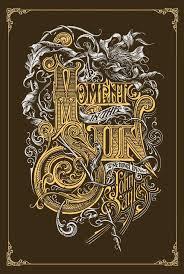
[READ: October & November 2013] A Moment in the Sun
I read this book last year…finished it just before Thanksgiving, in fact (I was proud of my pacing). But it was so huge that I didn’t want to write about it until I had a good amount of time. And now here it is four months later and I probably have forgotten more details than I should have and the post will be nowhere near as in depth as I was saving time for in the first place. Bah.
When people see this book, they say, “That’s a big book.” And it is a big book. It’s 955 pages (and they are thick pages, so the book itself is nearly three inches thick–see the bottom of this post for an “actual size” photo); it’s got three “books” and dozens of characters whose stories we read about in full. It is about the United States, racism, The Gold Rush, the assassination of a President, the Spanish American War, a World’s Fair and even the exploration of moving pictures. This is a fairly comprehensive look at the Unites States from the 1890s to the early 1900s. And, man was it good.
John Sayles is known more for his movies than his books (18 films directed, nearly as many different ones written and only 4 novels), but the cinematic quality that is clearly in his blood comes through in this book as well.
The book opens (and I had read this in an excerpt in McSweeney’s #37 some time ago) with Hod, a man who has traveled north from Seattle to take part in the Yukon Gold Rush. After making the arduous trek, he befriends a man who, after several pages, steals everything from him, leaving him penniless and alone.
Chapter two opens on Clarence, a black worker in the South. He has a way with horses, but is basically treated with contempt by the white men who are afraid of losing their power (you will see the word “nigger” a lot in this book). These Southern sections are set in Wilmington, North Carolina, a hotbed of post 15th Amendment racism and a city that had a majority black population until the riots forced them out.
Chapter 3 opens with Royal (and it was here that I wondered if we’d ever see Hod again or if every chapter was about someone different–it’s not). Royal is joining the army at Fort Missoula. He is there with his friend Junior Lunceford.
Chapter 4 is about Diosdado, who is the most confusing character to me, primarily because I didn’t understand where he was from or exactly what his role was (he seems to be a spy or a translator or something). His sections were also full of racist epithets that i didn’t know well enough to be able to tell how the other people were.
Hod returns in chapter 5 working outside of Skaguay when he is approached by Niles Manigault (whose nickname later is Manlygoat). Niles wants to know if Hod has ever fought. Niles introduces him to Jeff Smith, informal mayor of Skaguay and owner of the biggest gambling house. Smith offers him $100 to fight that evening. But he must go by the name Young McGinty. Smokey is his “trainer” for the night and he gives Hod sound advice in how to lose to the brute Chrysanthemum Joe. Smokey proves an invaluable companion for the next few chapters. After hitting Hod a few times, Joe whispers that Hod has to last 6 rounds or they don’t get paid. The fight sequence was totally riveting.
Next we meet Dorsey, a black barber who cuts white men’s hair. They speak in front of him as if he isn’t there although they occasionally chime in suggesting that he better stay in his place. And these white men, led by Judge Manigault (Niles’ father) are very upset that the number of coloreds outnumbers the number of whites and that they have the temerity to exercise their right to vote. They even joke about someday women getting the vote. They’re shocked that the coloreds even have their own paper run by the Manly brothers. Dorsey, who has always voted, states loudly that he would never consider voting. We also meet Miss Loretta who is teaching Jessie Lunceford (Junior’s sister), a young black girl to play the piano (Jessie is excellent, which also upsets some whites).
When he return to Hod he is in the Smith fold and now is pining for a dancing girl named Addie Lee. He loves her and she seems to not mind him.
In the next chapter we see a letter from Junior to his father. He is eloquent talking about his war experience. We also learn that he is crazy about Jessie, but that her father thinks very poorly of him.
Interspersed with all of this are headlines from the newspapers–yellow journalism designed to enrage the readers and urge them in to a war with Spain.
Historical footnote:
The Spanish–American War was a conflict in 1898 between Spain and the United States, the result of American intervention in the Cuban War of Independence. American attacks on Spain’s Pacific possessions led to involvement in the Philippine Revolution and ultimately to the Philippine–American War. The newspaper sections are incredibly enlightening and frightening.
Jeff Smith takes advantage of these stories by encouraging people to sign up for his army, The Skagauy Guard (even though they couldn’t be further from the conflict).
But in the meantime, Hod is called upon to fight Ox Knudsen, the angry Swede. Smokey has wrapped his fists with plaster. After the fight, Hod must flee ASAP. After a lengthy journey Hod meets some other lost souls like the Indian who is called Big Ten but who says his Indian name means “Walks Far But would Sooner Ride.”
Back in Wilmington, Royal and Junior have been given a brief trip home from the war effort. Judge Lunceford is barely more impressed by Royal after his service, and he makes no bones about not wanting him to see Jessie. Nevertheless, the two give each other the signal that they will meet that night. Which they do.
This is interspersed with Harry Manigault (Niles’ brother) who is waiting for Niles in a theater. Of course, Niles is late and of course he asks for money, but then Harry was always the responsible one. The show is largely minstrel, with lots of racist jokes and political stirrings including a performance by Teethadore Roosevelt, a midget who looks just like Roosevelt (and has big teeth). Niles is long gone by the time Harry goes down stage to learn how the theatrics were done. He is very interested in theater (and later cameras) and the theater folk are happy to tell him.
Hod and Big Ten try making some money but they seem marked. And they eventually run into Niles and Smith once again. Niles doesn’t realize Hod knows Big Ten so he sets up a fight between them (Big Ten is now called Chief Strong Bear). But rather than fight, they enlist. As does Niles, who, much to their dismay, becomes their commander.
Diosdado’s story continues through this. He is in the Philippines. He is startled to see the American Armada appear on the horizon.
Royal and Junior have been sent to Tampa, which is like a fever dream, in preparation for the war in the Philipines.
And that’s just Book I (Manifest Destiny)!
Book II (A Moment in the Sun) focuses on Royal and Junior getting shot at and the The Wilmington Insurrection of 1898 in which white men charged through the town killing blacks and forcing them to flee.
Historical footnote:
On November 10, 1898, nearly 1500 white men, led by the Democrat Alfred M. Waddell, an unsuccessful gubernatorial candidate in 1896, marched to the offices of the Daily Record, as they had been angered by its publisher Alex Manly. The mob broke out of control, shattering windows and setting fire to the building. Violence later broke out across town in Brooklyn, the black neighborhood that was attacked by mobs of whites. Waddell and his men forced the elected Republican city officials to resign at gunpoint and replaced them with men selected by leading white Democrats. Waddell was elected mayor by the newly seated board of aldermen that day. Prominent African Americans and white Republicans were banished from the city in the following days.
Whites attacked and killed an estimated 10-100 blacks. No whites died in the violence. As a result of the attacks, more than 2100 blacks permanently left the city, leaving a hole among its professional and middle class. It became majority white, rather than the majority black it was before the white Democrats’ coup.
Following these events, the North Carolina legislature passed a new constitution with voter registration requirements for poll taxes and literacy tests that effectively disfranchised black voters, following the example of the state of Mississippi. Blacks were essentially disfranchised until after Congressional passage of the civil rights acts of the mid-1960s.
The book depicts this in startling, unsettling vividness. The Luncefords (including Jessie, who is now pregnant) flee from their homes for the north.
Book III (The Elephant) features a cameo visit by Mark Twain and opens with the conquering of the Philippines.
We also see the Luncefords in New York where a pregnant Jessie tries to make ends meet as a cleaning woman (with two young Irish women, Molly and Brigid trying to help her). She eventually becomes a toy soldier painter, and there’s wonderful closure with this job later in the book. Harry Manigault finds himself in New York there as well, working on his motion picture ideas.
Meanwhile Hod and Big Ten are also in the Philippines although Hod is currently in the infirmary getting treated for VD. He falls hard for Mei, one of the nurses and spends a lot more time than he should in the venereal ward (with some really gross details).
Then we start to see the effects of the McKinley Presidency and his desire to go to war (I had at around the same time read about McKinley in an article about the Iraq wars). And then in the story we witness McKinley’s assassination.
Historical footnote:
McKinley defeated Bryan again in the 1900 presidential election, in a campaign focused on imperialism, prosperity, and free silver. President McKinley was later assassinated by Leon Czolgosz, a second-generation Polish-American with anarchist leanings, in September 1901, and was succeeded by Vice President Theodore Roosevelt.
We meet Czolgosz several chapter before the incident, learning his motivations. I love that we learned about the fate of McKinley through notes passed in a prison. (New characters, like Kelso and Shoe keep popping up even 820 pages into the book).
Still reeling from the war, we see Royal as he is nearly assassinated by Diosdado’s men. Through a twist of fate he winds up with a Filipino woman named Nilda. She cares for him and teaches him how to get foot and make shelter. And Royal imagines himself never returning home, living in this tropical paradise. We also see that Niles was captured (in a very gruesome scene) and even though we like seeing him punished at this point, it may be even too much to witness.
There are some happy endings, but there are also some major sad ones as well. Beloved characters are killed, plans are scuppered, and as in real life, hell lands on the undeserving. But some of the characters come out okay. One unexpectedly rises from certain death and another seems to float above the rabble. And another, whose story seemed so sad, may actually have a happy ending after all. And Diosdado, for all I didn’t fully understand his role until late in the book has a wonderful end section–totally unexpected.
The book proper ends with the story of Topsy, the subject of Thomas Edison’s film titled Electrocuting an Elephant (a film no one with a heart should watch).
This book was staggering in scope and detail. This outline is but a skeletal frame of all the people you’ll meet and begin to care about. You’ll be shocked at the things that happened in this country at the turn of the 20th century. You’ll be startled at the way history looks at our Presidents and heroes and how brutal the racism was. But mostly you’ll learn a lot (I certainly leaned more about this period in American history from this book than I did in school). It is 955 pages that are absolutely worth the read. Because even though I make it sound like a history lesson, Sayles is a master storyteller, and he creates compelling and well-rounded characters who are swept up in the vents of history. And even if you can’t follow the twisted machinations that lead people to end up where the end up, you will still care about what happens to them. I could have seriously read 900 more pages of it.
I stole this picture from E.M. Keeler’s Reading Blog because I didn’t feel like taking a picture myself. But look how massive this thing is.


 I Just Read About That...
Leave a comment