 SOUNDTRACK: BOOTSY COLLINS-“Sleigh Ride” (2006).
I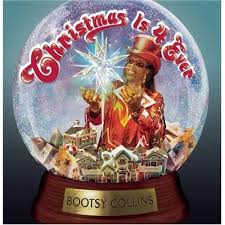 n 2006, Stephen Thompson from NPR made a list of the Best, Worst and Weirdest Holiday Albums. One of the weirdest is Christmas is 4-Ever by Bootsy Collins. Starting with the wonderfully weird cover art.
Bootsy starts out by thanking Mrs Claus and then calls himself Booty Claus. He tells us also that he named his weird reindeer Chucky coz he’s funky.
Once the song itself starts, the verse is pretty straightforward, but it’s interspersed with Bootsy’s peculiar sultry talking. About 2 minutes in (the song is 6 minutes long) a new singer introduces some new lyrics, although it quickly gets back on track. The song also features a crazy fiddle solo from Charlie Daniels.
What I find so weird about this song is the presumed funk doesn’t really seem to be in the music. Bootsy’s speaking is certainly funky, but the music itself doesn’t have a lot of funk. And yet, by around 4 and a half minutes I was starting to feel it (perhaps it was the bow wow wows).
Experience it yourself
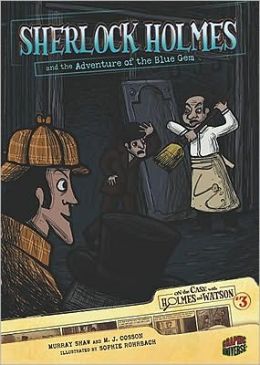
[READ: December 7, 2013] Sherlock Holmes and the Adventure of the Blue Gem
Since I’m going to write about a few of these, I’ll keep up this little intro bit so I don’t have to re-write the general ideas/criticisms.
These are indeed the actual Arthur Conan Doyle stories just severely edited and truncated. In other words, a lot of the story is cut out and yet the original language is still in place (at least I hope it is, I hope contemporary writers didn’t write the dialogue), so for young kids I think the wording is a little confusing. The drawings are a little too simple for my liking as well. They do effectively convey the story, but I didn’t like the very basicness of them. I feel they make the stories seems a little more childlike than they actually are.
Having said all that however, I found the graphic novels to be a compelling introduction to Sherlock Holmes’ shorter stories (although not for my 8-year-old apparently).
This was one of my favorite of the five stories I read because of the humorous (in my opinion) way that the titular blue gem was hidden–and ultimately found.
As the story opens, Holmes learns of a man who was carrying a goose. He was knocked over, losing both the goose and his hat. Watson recovered the animal and the hat. Holmes uses the hat to track down the man (through an ad in the paper–a very common thing for Holmes). Of course, Holmes and co. eat the goose, as there would be no point in holding on to that for him. But after cooking the goose, they find a blue gem in the goose’s innards.
When the man comes for his hat, Holmes naturally tries to deduce if he is the rightful (or wrongful) owner of the gem. The man proves to be innocent and gratefully takes his hat back. They ask him where he bought the goose and that leads to suspect number two. Suspect number 2 is quickly dismissed as well (through a wonderful ploy–a bet that Holmes knows he will lose). This all leads back to the original owner of the goose and the occasion for the theft of the blue gem.
I think one of the “problems” with these adaptations is that the stories are told a little too quickly. The convoluted nature of finding the thief in this story is really smoothed out a little too easily. Part of the fun of Holmes is seeing how he figured it all out. But these stories seem a little too easy. When I get around to reading the originals I’ll see how they compare.

 I Just Read About That...
Leave a comment