Feeds:
Posts
Comments

Archive for August, 2013

bossSOUNDTRACK: THE OCTOPUS PROJECT-“Sharpteeth” (2013).

octopusThe Octopus Project play largely instrumentals, but this track has vocals.  It begins with a very synthy keyboard sound–very retro.  But it soon grows huge with big swirling sounds and a ton of other instruments.

I’m not sure why they do so many instrumentals because their vocals–male and female playing at odds with each other–work wonderfully together.  They’re kind of a talkie singing which works well in this song.

Bob Boilen says one of the musicians is a great theremin player.  I assume that that’s what the solo is although it doesn’t have the eerieness of a theremin–perhaps that’s just the production?

By the middle of the solo, the whole band kicks in and it is a noisy cacophony but with a pretty melody still going on.  It’s a very cool song, and I’m bummed that I’ve never heard of them before (they’ve been around over a decade).

[READ: August 20, 2013] The Boss

This is the fifth book in the McSweeney’s poetry series.

I don’t know Chang’s poetry (although I have apparently read it in The Believer) and two things struck me.  She really sticks to her theme and she likes playing with words.

What I found initially very exciting but then a little exhausting (perhaps her poetry is better taken in small doses) was the play on words.

Like the vibrancy of “I Once was a Child” (more…)

Read Full Post »

misswyomingSOUNDTRACK: THE TALLEST MAN ON EARTH-Live at KEXP (September 8, 2012).

tmoeThe Tallest Man on Earth is Kristian Matsson a Swedish singer songwriter.  His albums have a very full sound, but when he plays live, it’s just him and his guitar.  And man, is he a compelling performer.  His guitar playing (primarily classical-sounding but often heavy and mostly rocking) is gorgeous–fast and pretty.  And his voice is gravelly and powerful.  I’ve enjoyed the studio songs I’ve heard, but he is transcendent live.

This set opens with a buzzy guitar that sounds like the show is not recorded well.  But that quickly goes away and the songs shine.  Matsson is a charming and self depreciating performer and when he has a malfunction as in “Love is All”and at the end he says “that was kind of embarrassing.”  But he not bothered by it and plays on with a great, short set.

The set includes some (then) new songs and a few older ones as well: “A Field of Birds,” “King of Spain”, “Tangle in This Trampled Wheat,” “Thrown Right at Me,” “The Gardener” and “Like a Wheel.”  It’s a great introduction to the guy and his amazing voice. which you can enjoy at KEXP.

 [READ: August 20, 2013] Miss Wyoming

I first read the book during my trip to Vancouver on the eve of Y2K (the best flight I’ve ever had—mostly empty and we were given champagne).  I started reading it on the plane and then in the second chapter the heroine is in a plane crash.  So I stopped reading.  I’m sure I finished it later, although I didn’t remember much of anything about it.

I read it again now and I was a little disappointed when I started reading it.  The first few chapters are so full of similes it is insane.  The word “like” is tossed around at an incredulous pace.  Like:

  • John’s teeth were big and white, like pearls of baby corn
  • …his skin like brown leather.
  • His eyes looked like those of somebody who’s lost big.
  • They crossed San Vicente Blvd, passing buildings and roads that once held stories for each of them, but which now seemed transient and disconnected from their lives, like window displays.
  • Susan was wrapped in a pale light fabric, cool and comfortable, like a pageant winner’s sash.
  • John was sweating like a lemonade pitcher,
  • …his jeans, gingham shirt and black hair soaking up heat like desert stones.
  • John felt as close to Susan as paint is to a wall.
  • Staring at the pavement, like Prince William behind his mother’s coffin.
  • This man with sad pale yes, like snowy TV sets

That’s all in the first chapter!

Now, I have come to see that the story is cyclical and it’s about people looking for their real selves.  So it’s possible that the simile heavy beginning is meant to reflect the fact that the protagonists are looking for themselves—they have no substance so they can only be compared to other things.  But man, it is hard going with that many comparisons.

The other major problem I had with the story was the really aggressive use of coincidence.  Susan and John both end up eating out of fast food dumpsters; just as Susan’s mother wants to sell their house, a pile of garbage from an airplane falls on it.  Right after we learn of a guy hoarding gasoline, the house explodes.  Again there are arguments for why these things might happen in this story (numerology is an important aspect of the book), but it seems too…easy.

But once the story starts moving the actual plot is really interesting and compelling. (more…)

Read Full Post »

snapperSOUNDTRACK: KISHI BASHI-“Philosophize In It! Chemicalize With It!” (2013).

kishiI’m still really enjoying Kishi Bashi’s debut album 151a, so it’s a treat to get a new track from him.  This one is a 7″ (and apparent digital download).

It doesn’t depart radically from Kishi Bashi’s formula (high vocals, violins and bouncy, exuberant melodies).  Although this song just has…more.  More instruments, more layers, more everything.

The biggest surprise comes around two minutes in when some of the layers drop out and we get this really cool bass (which reminds me of Paul Simon) that propels the song along.  But that’s a fleeting moment amidst the swirling and swelling violins.

Kishi Bashi is one of those artists who seems to release a lot of singles and digital releases and unless they get compiled somewhere, NPR podcasts are the only place I’ll ever hear them.  Nonetheless, I’m delighted to get to jam to this one.

[READ: August 19, 2013] The Snapper

When I first got into Roddy Doyle (around 1993), I read all three of the books that are considered the “Barrytown Trilogy” (which I have just learned, thanks Louise, that there’s going to be a fourth) very quickly.  Doyle’s writing in these books is very fast and very funny–tons of dialogue that flow easily and wittily.

The Snapper was also made into a film (not as popular as The Commitments, but much funnier–check it out just to see Colm Meaney down a pint).  And Doyle’s writing is just as sharp and screenplay-friendly as The Commitments was–which makes it a real joy to read.

Although this is considered part of a “trilogy” there’s very little connection to The Commitments.  The family is the same but Jimmy Rabbitte, the protagonist of The Commitments, is a minor character in The Snapper (I’m actually not sure if it is set before or after The Commitments).  [Oh and in the movie, the family name had to be changed from Rabbitte to Curley because the company that made The Commitments owns the rights to Rabbitte (Jaysus!)].  This book is about Jimmy’s sister Sharon and, for the most part, their da, Jimmy Sr.  [There’s a slew more members of that family–Veronica their mammy, Darren, the twins Tracy and Linda, Les, and of course, Larrygogan, the new pup.

So, what the hell is The Snapper about?  Well, “Snapper” is a slang for baby (apparently).  And it seems that young Sharon (19) has gotten herself “up the pole” (pregnant).  The surprising thing about the story is the family’s reaction.  It is largely positive.  She won’t say who the father is, and after the family accepts that, things seem largely fine.

Sharon is afraid to tell her friends, but even they, including her best friend Jackie, take it well (especially after a few drinks).  So where is the conflict? (more…)

Read Full Post »

questionableshapeSOUNDTRACK: PHISH-Live Bait Vol 09 (2013).
live bait 9I just recently realized that Live Bait 9 has been released.  So I grabbed it just in time.  Vol 9 is full of long jams.  The shortest track here is 10 and a half minutes and there are three over 30 minutes (true, some of them are actually multiple songs melding into one track, but they still retain that long jam feel).

What I especially liked about this set was that it included a few songs that I feel like aren’t represented all that well in the Live Bait catalog.  Like “Foam” from 1994—a solid rocking jam (at 10:47).  And “A Song I Heard the Ocean Sing” (from 2004—I like how they splice the cuts together, so in this case they jump a decade but it doesn’t sound it).  I feel like this song is not played as much, so it’s nice to hear.  And then there’s a lively “The Moma Dance” from 2000.

There are a number of quirky moments in many of the songs.  Like “Split Open and Melt” which comes in at 31 minutes.  Around 11 minutes, they morph into “Kung,” and what’s weird about this version (aside from the fact that the song itself is bizarre) is that instead of it just being them making noise and shouting, there’s actually music behind it—mostly drums—I’ve not heard it done like that before.  During the jam, at around 15 minutes, Mike plays Collective Soul’s “Shine” riff on the bass, but the rest of the guys don’t join in.

“Mike’s Song” (from 1999) begins a 40 minute jam.  The song seems slower than usual, which I find odd.  But it works well for the very mellow jam that constitute the big instrumental section—they even use the echoey guitar the runs for a few minutes keeping the beat and setting a pace.  At 17 minutes the song morphs into a rousing version of “Twist”.  Then at 31 minutes they morph into “Weekapaug Groove” (with Gordon’s great bass opening.  At 36 minutes Trey starts playing the Macarena, although not exactly right, which is pretty funny in and of itself.

“David Bowie” (from 1995) is a 25 minute jam that gets pretty dark in the middle.  Then comes the most interesting juxtaposition of songs jam.  From “AC/DC Bag” one of their earliest songs to “Ghost” one of their then newest ones.  “Tube” a, to my mind, underplayed song is next.  It has a funky jam and is appreciated.

This free set ends with “Undermind,” one of my favorite new songs (this one recorded n 2012). It opens with a staccato riff which gives it a kind of reggae feel.  But it soon returns to its normal sound and proves to be a great ender to this “set.”

I can’t say enough good things about the Live Bait series.  I’m not one to buy many concert sets, but having free samples is really cool.

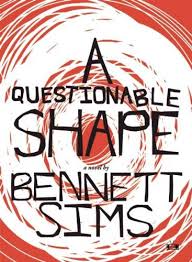
[READ: July 28, 2013] A Questionable Shape

Karen read this book and not only raved about it, she personally recommended it to me. So imagine my surprise to find out that it’s a zombie novel!  But it is a zombie novel like no other.  If Colson Whitehead (in Zone One) made a zombie novel that was literary, Sims has gone one step further, making a zombie novel that is philosophical.

The story is set in Baton Rouge and takes place some time after a zombie epidemic has broken out. In the time since the zombies started appearing (worldwide, it is suggested), the police and emergency teams have managed to contain the worst of it (already that’s something new).  Panic has subsided somewhat and the government has even released a pamphlet on how to deal with everything that’s been going on (called Fight the Bite–I never checked to see if there was a version online, it would make a great “online extra” (having now read Karen’s review, I’m glad to see she agrees)).

The book focuses on two primary characters: the narrator (Michael Vermaelen–referred to mostly as Vermaelen whose name is not given until very long into the story) and Matt Mazoch.  There is a third important character–the narrator’s live-in girlfriend, Rachel, who plays as something of a foil.

The simple plot takes place over a week.  Mazoch is searching for his father.  Mr Mazoch died just before the epidemic and Matt believes that he is among the walking dead.  And so Matt has asked Michael to go with him to try to find him.  There’s a couple things to note right off the bat (the pun was not intended, although Matt carries a bat with him as his line of defense and who knows what else).  Matt and Mr. Mazoch had a weird relationship, one which fell apart considerably over the last few years. Mr Mazoch let himself go completely and seems opposed to everything that Matt believed in–physical fitness and intellectual pursuits (or, as Michael points out, perhaps Matt pursued them to be the exact opposite of his father). The second is that while Michael is happy to go along with Matt, he has no idea and is even afraid to ask what Matt plans to do should he find his father.  And this issue comes to a head later with Rachel.

Matt has given them exactly one week to find his father, with the explicit instructions that after a week thy give up pursuit so that it doesn’t drag on indefinitely.

Okay so far so good–they are going zombie hunting.  But the thing is, the zombies have become a part of the landscape, but they have been tamed.  It is illegal to kill them (what an interesting twist).  Despite their zombie-ness (it’s actually considered an insult to call them zombies), and their desire for human flesh, rather than eradicating them, they are being rounded up and put in camps.  Naturally there are still a number of stragglers (zombies get everywhere), but there is a hotline to call if you see one and within minutes the police come and quarantine them.

So, what’s one to do on a day long adventure hunting zombies–or more specifically, one zombie–if you aren’t actually hunting them?  Well, mostly, you talk.  Michael is a philosophy student (he intended to read all of the important philosophical works although the outbreak has taken him off his goal somewhat), Matt is a literature student (Rachel is an art history major), so the discussions get very philosophical.  In addition to quoting Heidegger, Kant, Nietzsche and many other big names, they also talk video games and seek for metaphors for the zombie invasion.  The video game discussion was quite fascinating–Matt imagines the grid of zombie takeovers to be like a video game–going into blank nothingness. But Michael imagines it more like a filmy haze.

Indeed, since this is all told from Michael’s first person point of view, we learn a lot about what is in his head.  And it turns out that Michael is obsessed with the zombies (which is understandable, really).  But his obsession is different.  When the outbreak first happened he, like everyone else, refused to go outside.  But soon, when the government gave the all clear, Rachel not only went outside, she volunteered at the facilities. But Michael refused–seeing potential contamination everywhere. Indeed, even though he goes out with Matt every day, he still imagines and worries what would happen if and when someone he knows is infected. When they go to a diner, Michael won’t even eat the food, imagining some kind of contamination.

He even tries demilitarization exercises with Rachel (which she is understandably freaked out by).  But as the story moves on Michael’ footnotes (did I say there were footnotes? There are–almost one per page) spend more and more time wondering what the zombies are experiencing–he seems to be trying to pick the best one.  And he goes over and over these ideas in great detail.

After a few days (each chapter is a day) Rachel needs to know what Matt is intending to do if (when) he finds Mr Mazoch, especially since Matt suddenly believes he has some “evidence.”  Michael doesn’t want to know, which enrages Rachel.  She assumes the worst (that he wants to kill his father).  She assumes he would kill him out of malice towards zombies, but Michael suggests it would be to put him out of his misery).

Rachel has a personal stake in this issue.  Her father died before the epidemic, but she was convinced that he would be turned (before they proved that the longer-dead weren’t rising, it was only the recently dead).  So she waited at his graveyard, with the intent of digging him up if need be.  She proves to be a real bleeding heart on the issue.  To make her case, she gives the recent example of a scientist training a  zombie to speak.  She discusses the emotions of the woman whose father was the zombie.  She says this shows that these creatures still have humanity in them and to kill them all would be genocide.

By the end of the book, Matt has taken a polar opposite position–hurricane season is coming and these things are a security risk for all the living.   They should all just be killed.  For the safety of everyone.   Michael–always the intellectual–has a somewhat more nuanced position–he feels that perhaps they should be spared because we have so much to learn from them. And each case is made rather convincingly.

There are some wonderful passages–the discussion about leaves and greenery and the amazing description of Michael’s first encounter with a zombie (not at all frightening, just chilling) show what a great writer Sims is.

The strange thing about this book (aside from the whole “it’s about zombies, but not” premise) is that for such a short book (just over 200 pages), it’s a pretty slow read.  Between the footnotes and the philosophy, the book doesn’t exactly flow quickly.  It’s not light reading by any stretch.  And at times it’s a little…dull?  too in its own head?  Something?  But those moments seem few and far between, because ultimately the language is so interesting and fulfilling.

The end is one of those endings that’s not a real ending–it’s more of a “what would you, the reader, do?” kind of ending.  That’s always unsatisfying.  And yet at the same time, I have not stopped thinking about what I would do in his case.  And so it almost becomes the perfect ending.

Bennett Sims was a student of David Foster Wallace and although this book does have footnotes, the author he resembles most is Nicholson Baker–where not much happens in the body of the work and all of the “action” (which is really thought) is in the notes.

Karen put Bennett Sims along  with Seth Fried and Manuel Gonzales on her “magnificently weird” list, a list that I am intrigued enough by to hunt down these other two authors (and Sims’ story “House-Sitting” which i don’t seem to be able to find online.  So thanks Karen, i wouldn’t have found this one on my own.

Read Full Post »

catSOUNDTRACK: LORDE-“Royals” (Live on KCRW, August 2013).

lordeLorde is evidently a huge hit in her native New Zealand.  Not bad for a sixteen year old.  And, indeed, her voice is not bad at all for a sixteen year old–she sounds much older (and perhaps it’s not even worth mentioning her age, but KCRW did, so I will too).  She has a deep and sophisticated voice (in the way that young Fiona Apple blew me away with the intensity of her voice on her debut).

The song itself is quite plain (as are all of the songs on her entire KCRW performance).  There’s primarily percussion (some really interesting choices there), simple keyboard notes or washes and (quite often) multi-layered voices–all prerecorded).  And she sings over the sparseness with her powerful throaty voice.

Interestingly, for being a popular success, her songs aren’t all that poppy.  They are certainly not bubblegum and some of the tracks are quite dark.  (Although lines like, “let’s go down to the tennis court, talk it up like yeah” certainly don’t speak to any depth).  And yet the songs are “topical” according to Lorde herself.

“Royals” might be the least interesting of the tracks during the set, and while I like it, I’m not sure why it became so huge.  But fair play to her.

[READ: August 8, 2013] “Four O’Clock”

This book is a collection of H.P. Lovecraft works and items associated with him.  Like this story from his wife Sonia H. Greene.  In theory Lovecraft did not edit this piece (I venture no opinion) and so it stands as her own story.

It is a very simple story.  Indeed, there is hardly any plot and only one character.

In this story the narrator (never identified as man or woman) says that at about 2 in the morning she knew it was coming.  And it is coming at, yes, four o’clock.  The narrator is terrified of what is coming and for much of the story, we don’t learn a thing about what it is.  We just know through ever escalating fear, that it is coming.

At four o’clock. (more…)

Read Full Post »

TNY 10.6.08 palin cvr.inddSOUNDTRACK: WEED-“Silent Partner” (2013).

weed-deserve-0f8161c881e522aba0f28701cda87e9a558f9727-s1This song started off a recent All Songs Considered podcast and it starts with a bang–a big wall of fuzzy guitars and the vocals mixed way back in the song.  It has a very early 90s vibe–a slow song despite the loud buzzy guitars.

It reminds me of a lot of bands from that 90s era–Swervedriver, Screaming Trees–although it has a few moments (bridges maybe) in which the guitars plays faster, almost a heavy metal riff.  And yet the chorus is expansive (if still distorted)–bringing together a lot of interesting elements.  And I love the way the song ends with nearly 30 seconds of feedback.

I definitely want to hear more from these guys.

[READ: August 9, 2013] “The Idiot President”

This story seems to be referenced in Alarcón’s recent short story “Collectors.”  In “Collectors” we meet Henry, the author of the play “The Idiot President” and we hear how he was jailed for performing the political piece.

In this story, apparently written five years before “Collectors,” we meet an actor who has worked with Henry and who has acted in “The Idiot President” (which was well received by audiences, especially the big reveal at the end).  They were in an acting troupe called Diciembre and for this “tour” three of them–Henry, the narrator and Paralarga–went to small villages to perform the play.

While Henry and Patalarga were in Diciembre for real, the narrator knew he was going to be leaving the country soon.  His brother lived in California and promised him a visa…soon.  So the narrator just assumed that nothing he did had any real consequence.  And while traveling around and acting seemed like a good idea, doing it in the winter with very little in the way of provisions was not the best idea.  He lost weight and was always chilled and sickly.

There are a number of brief episodes in this story (which I assume is actually an excerpt). The first involves Tania.  Tania is Patalarga’s second cousin and Henry’s ex-wife (from many years ago). After their performance in Tania’s city, she sings for them during the after party (with a beautiful voice that the narrator falls in love with).  It is clear that the narrator is bewitched by her–while the other two just seem bemused by everything.  She takes pity on him and walks him back to his bed.  And just when he thinks she is “interested,” she makes it clear that she was just walking him to his bed. (more…)

Read Full Post »

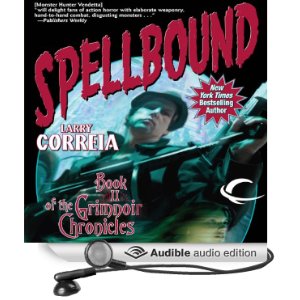
[LISTENED TO: July 27, 2013] Spellboundspellbound

I enjoyed Book I of The Grimnoir Chronicles immensely.  I wasn’t really sure what Correia could do to top it.  There’s the inevitable dread for sequels that everything has to be bigger bigger bigger with the cost to the heart of the story.  (That’s more true in movies, but books can suffer as well).

And indeed, Correia does go bigger, but he loses nothing.  Indeed, the higher stakes make this story all the more exciting without sacrificing the characters in any way.

As the story opens, we learn that it is a few months after the events of Book I.  The Grimnoir are dispersed somewhat, with things falling into a somewhat logical place.  Francis Stuyvesant is the head of United Blimp.  Faye and Francis are more or less dating and Heinrich is more or less his bodyguard. The other team members are up to assorted states of resting and recuperating.  And Jake Sullivan is lying low.

But no matter how low he thinks he is lying, he’s still very big.  And he is soon found by a woman named Hammer.  Of course, at first the story maintains the trappings of noir, with Hammer being a (beautiful) woman in distress.  Surprisingly, she is in distress at the library and she asks Jake for help (he is there studying magic and, well, lying low).  He tells her to ask the librarian.  But later when he is leaving, he sees her being robbed by some thugs.  He goes to rescue her (and easy job for a big guy like him), and Hammer uses her power to determine that he is indeed Heavy Jake Sullivan.  And he can still do what he can do.

Hammer wrangles him into a government facility where he accepts a phone call from the dead Chairman.  This whole section is lovingly described and far too cool to try to summarize.  So let’s just say that Alexander Graham Bell created a phone that could talk to the dead–but only if they wanted to talk to us.  The Chairman found the phone and, of all people, he wanted to speak to Jake.  (I’m skipping so much stuff here that it hurts me, but I don’t want to spoil the story or the humor). (more…)

Read Full Post »

Miskatonic University Press Weird Tales compendiumSOUNDTRACK: YUCK-“Rebirth” (2013).

Yuck-Rebirth-608x608-88e4ecb86a2dbcb086211620179bd14d6dbe5221-s1Yuck put out a great albumin 2011.  And then a principal songwriter and singer Daniel Blumberg left the band.  So they regrouped and are coming out with Rebirth (due in the fall).  This track is very My Bloody Valentinesque–big echoey guitars with gentle vocals on top of them.

The big difference comes in the bridge which seems a little more pop than most MBV songs. The chorus also has a few guitar notes that stand out as unechoed notes which also break the shoegaze vibe in a very interesting way.  The biggest surprise comes at the end when the song turns into mostly drums with a bit of a keyboard/dancey feel. It’s just a touch to show that they are not simply mimicking shoegaze, they are using it in their own way.

I’m excited to hear what else the come up with.

[READ: August 8, 2013] “The Horror at Martin’s Beach”

This short story was written by H.P. Lovecraft’s wife, Sonia H. Greene.  Apparently Lovecraft then edited/reworked it before publication in Weird Tales (when it was titled “The Invisible Monster”) although it seems every anthologized version has the “Martin’s Beach” title.  For more about Weird Tales issues, check out Yankee Classic.

I’m not sure how much work Lovecraft did on this story as it doesn’t have any of the hallmarks of his own work.  Indeed, it is a fairly straightforward story with none of the gods and supernatural eerieness that Lovecraft puts in his work.  Which is not to say that this story doesn’t have  supernatural elements, it’s just not Lovecraft’s supernatural elements.

In this short story, a group of sailors of the coast of Gloucester fought with an undersea beast for 40 hours before subduing it. The beast was huge–nearly fifty feet long and ten feet in its cylindrical diameter.  Although it was clearly a fish, it also had small forelegs.  Its skin was thick and, most peculiarly, it has one, giant eye.  After it was dissected, scientists determined that despite the enormity of the creature, it was only a baby–simply a few days old. (more…)

Read Full Post »

snSOUNDTRACK: FORGET ALL THAT AND JUST WAIL: New Music That Orbits Around Jazz (compilation The Believer July/August 2013).

bel This compilation came as a digital download with The Believer’s 2013 Music Issue (you need to get a physical copy of the issue to get the download code). Ross Simonini, the compiler, explains that he used to like jazz, but that he really doesn’t anymore.  And he finds himself attracted to these pieces that hover around jazz but which really aren’t jazz.  You can read Simonini’s thoughtful comments about all of these tracks here).  I enjoyed this compilation quite a lot and am considering getting a  few of these discs, or at least investigating them further.  And that’s want you want from a compilation.

COLIN STETSON-“The Righteous Wrath if an Honorable Man”
Any compilation that opens with Colin Stetson is okay with me.  This track was my introduction to the man last year and I still love it, in all of its insanity.

KARRIEM RIGGINS-“Double Trouble” is only 2 minutes long.  It’s got flutes and vibraphones and is super cool and retro sounding.  I really like it, although this track ends abruptly and I can’t decide if the actual song does or if it was cut short for the disc.

THUNDERCAT-“For Love  I Came” has some echoey keyboards and some great bass lines and cool/cheesy keyboard lines (it all sounds so gloriously 70s).  When the vocals come in, the whole track feels like Yes if Yes were inspired by jazz instead of classical (and had no drums—until about 2 minutes when the drums kick in and the song takes off and bass solo makes it very Yes-like).

THE BEN MONDER TRIO-“Red Shifts” is a classic style jazz guitar workout—the echoed effect is very jazzy.  And yet there is something very angular about the playing that keeps it from sounding smooth.   It’s a great track (which once again seems to get cut off very abruptly).

DAWN OF MIDI-“Ymir” is another trio—piano bass and drums.  The piano is muted (the pianist puts his hand on the strings) which makes it sound like another percussive instrument while it is also creating  the melody.  It’s very cool.  And I like the way over the 8 or so minutes the melody changes slightly, giving it a new sound almost accidentally.

GLOWS IN THE DARK-“Up and Down” starts as a fast but quiet guitar piece with some cool subtle horns over the top.  It features a rap by Count Bass D which i do not care for (The “I’m pissed/L.L. Cool J” verse is really awkward).  This is the first track on the disc that i really don’t like, which is a shame because the music is really cool.

STEVE RAEGELE-“Traingle (Daedalus)” is a weird, cool experimental sounding track.  Sounds are overlaid on each other with a lot of echoing that gives it a very dense structure.  Whether or not this is jazz is hard to say but it’s very intriguing.

MARY HALVORSON QUINTET-“Sea Cut Like Snow (No. 26)” Halvorson is a guitarist and this live track features some of the most traditional jazz on the compilation.  The song has cool melodies and some nice improvsiing (on various instruments).  It runs a little long though (I wish this had been truncated rather than the earlier ones) but it’s enjoyable.

FLYING LOTUS-“German Haircut” this is an electronically manipulated pastiche of songs with a sax solos placed over the top.  It’s an interesting concoction.

CHRIS CORSANO-“Famously Short Arms”  This is one of the most amazing drum videos I’ve ever seen–it is so creative and original.  As an audio track it is basically a  drum solo, but watching him and what he does on the drums is really mind expanding.

MATANA ROBERTS-“lulla/bye”  I have this track as well (two tracks from Constellation here).  It’s full of saxophones and longing in the singing.  It’s hard to define but it’s very evocative.

MICROKINGDOM-“Peppermint Crab” This is a weird and wild piece.  It opens with some manipulated and spacey vibes and electronics and then gets assaulted by a wild and screaming sax solo that would make John Zorn proud.

DIAMOND TERRIFIER-“Kill the Self That Wants to Kill Yourself” This song opens with some simple keyboard chords and some odd unsettling sounds thrown over them (waves of static and squeaking saxophone). Then comes some wild soloing.

This is a solid compilation of jazz-like music.  It veers into more extreme forms of jazz and will certainly alienate some listeners, but it’s an introduction to what else is out there on the fringes.

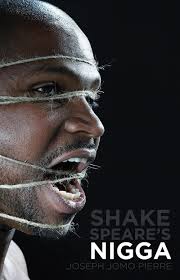
[READ: August 8, 2013] Shakespeare’s Nigga

The artistic director of the Obsidian Theatre Company (which put on this play) explains in the intro that with a title like that, you’re going to get attention.  In fact he initially said that they couldn’t use that title, because it was too much.  But they changed their mind because it really was…right.

This story looks at the two most prominent black men in Shakespeare: Othello (the Moorish general who is ruled by violent emotion) and Aaron (a Moorish slave who is basically pure evil—in Titus Andronicus).  As the artistic development coordinator of the Obsidian Theater says, Shakespeare is the authority on writing characters, thus these two men have become entwined in Black masculinity.  Which is a shame because “Moor” could basically be anyone who did not live in Europe and because Shakespeare likely didn’t know any black people (except as slaves).  It’s not really a good sample.

Playwright Joseph Jomo Pierre doesn’t seek to rectify this or upend this or decry Shakespeare.  What he does is much more subtle and much more powerful.

There are five characters in the play: Othello, Aaron, Tyrus (an older black male), Shakespeare and Judith (Shakespeare’s daughter).  Shakespeare and Othello are comrades (I won’t say friends, but it seems like Shakespeare relies on Othello for protection and advice).  Meanwhile, Aaron has tried to escape from his slavery and is currently chained up and beaten (usually by Othello). (more…)

Read Full Post »

commitSOUNDTRACK: KANYE WEST-Late Registration (2005).

I lateregcan’t get over how much I’ve been enjoying Kanye West’s music as of late.  So much so that I went back and bought Late Registration.  I wanted to check out his early stuff, so naturally I started with…his second album.  And it’s a really enjoyable, soulful, gospel-filled rap album. Complete with Kayne’s bizarre, humorous and often offensive lyrics.

Musically the samples are wonderful—they create a very specific feel of pop soul that both works with and sometime against the lyrics.  The album suffers from two things that I’ve found I do not like in rap, and in articular in Kayne’s albums.  It bugs me when rappers intro their songs with several “uh, yeah”s.  I don’t know why but it does and that’s how Kanye opens the disc.

And, I wish there weren’t so many guests on the record.  While I understand the guest singers who provide backing vocals, I don’t get all the guest rappers (and there are a lot: Paul Wall, GLC, Lupe Fiasco, Common, Game, Jay Z, Really Doe, Nas, Cam’ron Consequence).  I mean, I’m not here for them, so why devote so much time to others, it makes you seem like you couldn’t thin of enough to say (and we know that’s not true about Kanye).  After a few listens, I have grown to appreciate the guests, but I like Kayne’s style so much that the other guys are just distractions.

Late Registration is largely produced by Jon Brion, who has made some amazing music with Fiona Apple and Aimee Mann—and while it is certainly stripped down Brion, the flourishes that Brion often employs are apparent here.  Like the tinkly pianos and farty bass that opens “Heard ‘Em Say.”  There’s some falsetto R&B-esque vocals from the singer from Maroon 5 here—I had no idea he sang like that.  It fits very well with the song.  And the instrumental section at the end is very Brion.

“Touch the Sky” uses a long sample (slowed down quite a bit) of Curtis Mayfield’s “Move on Up.”  But the sample is so much of that original song that it almost seems like cheating.  Except that he has slowed it down and modified it somewhat, and…his raps work perfectly with it.  The other really crazy sample is from Gil Scot-Heron which samples “Home is Where the Hatred Is.”  The strange thing is that the song is 1:44 and the last 45 seconds of the song are just Scot-Heron’s song playing along by itself.  It’s weird to have given up that much to another song…but it sounds great.

“Gold Digger” is a very funny song about, well, gold diggers.  The topic isn’t new (the fact that it samples an ancient Ray Charles song attests to it), but the chorus of “I ain’t saying she’s a gold digger, but she ain’t messin’ with no broke niggers” is great.  There’s also an intro section with Jamie Foxx doing his now patented Ray Charles.  It’s a pointed song but done with a very funny twinkle in his voice (the Kayne twinkle).  “Drive Slow” is a cool slow-tempoed number with a great sample from Hank Crawford and an interesting slowing effect at the end of the song.  “Crack Music” is a great political song equating making records to selling crack.  The metaphor works well.  And this is one of Kayne’s strong pro-black songs.  It’s really powerful.

The surprising thing is the two really sensitive songs: “Hey Mama” which is a sweet song to his mother in which he promises to go back to school and get his doctorate and “Roses,” which is an angry but beautiful song about his grandmother being in the hospital.  There’s a great verse about her being poor and therefore not getting the best care: “you telling me if my grandmother was in the NBA right now she’d be okay”   As well as a line about a nurse asking for his autograph while they are worried about his grandmother—although, realistically, how often is a nurse going to meet a star like Kayne?  The end of the song has some great soulful crooning by (as far as I can read) an uncredited singer.  And I feel like Brandy, who opens up the next song really falls flat in comparison to this unnamed singer (I don’t care for the way newer black singers wail their scales).  But the Etta James sample of “My Funny Valentine” that floats through “Addiction” is gorgeous.

“Diamonds from Sierra Leone: is a surprisingly political song that samples “Diamonds are Forever.”  There’s two version on the album.  I like the remix featuring Jay-Z a lot less, in part because I’ve never been a huge Jay-Z fan, but also because his verses completely interrupt the flow of the song.  “We Major” has  a very retro, almost easy listening vibe. There’s a lot of backing vocals going on and they remind me somewhat of Ben Folds Five’s backing vocals (which is pretty weird, I suspect). This song is interesting for its talk of worrying about daughters—as with many rappers, women are bitches and hos unless they are your grandma, your mama or you daughter—which is kind of awkward, really.

“Celebration” is perhaps the weirdest juxtaposition of contents.  It’s a celebration, bitches.  A celebration apparently about the fact that he and a woman (who had a fatty) accidentally had a baby (“You my favorite accident”).   That line makes it sound like the child is at the party, which makes the chorus “Grab a drink, grab a glass, after that I grab your ass” hard to fathom.

 “Gone” has a nifty piano melody (and some cool interstitials very Brion-infused melodies) that plays under Cam’ron and Consequence’s raps.  The song is kind of a muddle (although a funny muddle) until Kanye comes in at around 4 and a half minutes.  I really like the way the album ends: with Kayne rapping “Sorry Mr West is gone” and the music completely cutting off.

The bonus tracks include the original of “Diamonds from Sierra Leone” and “We Can Make It Better” (which features Q-Tip, Talib Kweli, Common and Rhymefest). It’s an interesting track (especially the sped up backing vocals) but it seems like a bit of a throwaway (which is surprising given the number of guests).  “Late” is a unlisted bonus track which is very strange.  There’s lots of “ah ha ha has” in a posh sounding falsetto).  But there’s some witty lines in here, especially this verse:

They said the best classes go to the fastest
Sorry Mr. West there’s no good classes, and that’s what yo’ ass get
Not even electives? Not even prerequits?
You mean I missed my major by a couple of seconds?
Now I’m in the shop class or the basket weavin
With all the rest of the muh’fuckers underachievin

So Kayne is clever and stupid.  A great rapper and a not so great singer.  And amazing producer and a good song writer.  And this is as good an album as I’ve heard it was.

[READ: August 8, 2013] The Commitments

I have been reading a number of big, heavy books lately (which I have yet to post about…later in the week), so I decided to take a break with a light, fun book. And one that I’ve read before (and seen the movie of many times).  I looked on the inside cover where I wrote the date of acquisition (a thing I did for a while until I realized it was kind of silly, and yet I’m glad i did it here) October 1993, almost twenty years ago.

But aside from Jimmy playing songs on vinyl, there’s very little that’s dated about the album–which may even be the point of the book.

This is the story of a bunch of misfits in Ireland who join together to form a soul band.  The nucleus of the band is Jimmy Rabbitte, a local kid who lives and breathes music.  He had Frankie Goes to Hollywood before anyone else and he knew they were shit before anyone else.

Some of his mates have started a band (called hilariously And And! And) which plays new wave.  Jimmy tells them they should play soul instead.  He plays them some James Brown and they love it.  Which leads to the talk of music and sex.  And they are really into it.  And then there’s  the oft quoted line from the movie: “The Irish are the blacks of Europe. And Dubliners are the blacks of Ireland. And the Northside Dubliners are the blacks of Dublin. So say it once and say it loud, I’m black and I’m proud.”

And so they begin a quest to find the rest of the band.  Jimmy puts an ad in Hot Press (the Irish music magazine) and interviews everyone (some very funny jokes in there).  And the recruits form a crazy quilt of characters.  (more…)

Read Full Post »

« Newer Posts - Older Posts »