 SOUNDTRACK: RA RA RIOT-“Is It Too Much” (2013).
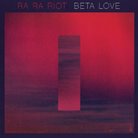 I loved the first Ra Ra Riot album The Rhumb Line. This song expands on some of the ideas from that album, but I fear that it goes in the one direction I would have preferred they not go. The album had strings, nice harmonies and a great singer all melded into an interesting rock structure.
This song retains all of the elements that were interesting, but it removes it from the rock structure, making it sound much more lightweight. It’s pushing too far into easy-listening. And do I hear autotune on the vocals? The instrumental middle section is the most interesting part of the song. But Ra Ra Riot seems to have removed the riot part of their sound. If this is the direction of the album, I’m afraid I won’t be following.
[READ: January 8, 2013] “Consider the Writer”
I just finished the D.T. Max biography of David Foster Wallace. I was curious what kind of reception it received. And lo, here’s a review by Rivka Galchen (something I would have read anyhow since I enjoy her so much).
Galchen opens with two main points–the biography is gripping (and it is, I’ll be saying more about that tomorrow, too). She writes: “In writing a chronologically narrated, thoroughly researched, objective-as-imaginable biography, Max has created a page turner.”
The second idea is that you keep thinking “that you just don’t find Wallace all that nice” (which I also thought). But then she wonders if it is fair to be worried about that. We should not judge others after all. Especially since, as she points out, “We don’t always find ourselves asking whether a writer is nice. I’ve never heard anyone wonder this at length about, say, Haruki Murakami or Jennifer Egan.” So why is that a concern about Wallace? Because niceness is what Wallace wrote about, tried to encourage. And perhaps “One understandably slips from reading something concerned with how to be a good person to expecting the writer to have been more naturally kind himself.” But that is not necessarily the case–people strive for things that they cannot achieve. I like her example “the co-founder of A.A., Bill W., is a guru of sobriety precisely because sobriety was so difficult for him.” And her conclusion: “Wallace’s fiction is, in its attentiveness and labor and genuine love and play, very nice. But what is achieved on the page, if it is achieved, may not hold stable in real life.”
And Galchen talks a bit abut DFW himself (the book is a biography after all). How he wore the bandana because he sweated so much–how self conscious he was about that and by extension nearly everything he did. This mitigates his not-niceness somewhat. It also ties in to his alcoholism drug use and depression. And his competitiveness, which is obvious in the biography. She enjoys the pleasure of Wallace’s correspondences, “especially with his close friend and combatant Jonathan Franzen, but also with just about every white male writer he might ever have viewed as a rival or mentor. Aggressive self-abasement, grandstanding, veiled abuse, genuine thoughtfulness, thin-skinned pandering — it’s all there.” I rather wished that the authors’ own reactions were included (of course it’s not biographies of them, and they are still alive), just to see if they sparred back with Wallace or if they were put off by yet indulgent of his needs.
She also talks a bit about his writing–how his writing has impacted the culture–whether you have read him or not you have read things because of him. I enjoyed this comment about Wallace’s talent, “Readers are correct to sense, in Wallace’s elaborate grammars and data fields, not only a generous show but also a tacit petition for our recognition of his intellect. This really annoys some people.” That is evident especially from some critics who refer to him as showing off. But Galchen undermines this complaint with this awesome analogy: “(Although if you saw someone juggling 40 flaming torches, would your main response be, Who the hell does he think he is?)”
Galchen makes a claim I have not heard before: “Wallace’s best work, perhaps by far, is “The Pale King,” an unfinished novel about I.R.S. employees that was assembled posthumously by Wallace’s editor, Michael Pietsch.” That’s a shocking claim to make about something that is unfinished and that is clearly not his most famous and well-deserving of praise release. She doesn’t follow up on that, doesn’t defend it, just lets it hang there. I’d be very curious to hear more about that, but that is not the purpose of this review.
Galchen concludes with this precis of Wallace something agree with wholeheartedly: “Wallace’s writing is not as difficult to read as it is famed to be, nor as pandering to entertain as he worried it was. Wallace writes in grammatically correct sentences; he tells jokes; and his work, if you are wired a certain way, will affect you emotionally. People who find Wallace’s books lacking in heart often object to his thinkiness. But often a thought is an emotion and an emotion is a thought; thinking, like humor, may be an intellectual defense against emotion, but it is a wonderfully advanced defense.” He was not perfect, not by a long shot, but he was thoughtful and talented and I appreciate Galchen’s ability to summarize this in such a simple and convincing way.

 I Just Read About That...
Leave a comment