Feeds:
Posts
Comments

Archive for 2012

SOUNDTRACK: COLIN STETSON-Those Who Didn’t Run (10″ vinyl) [CST084] (2011).

This 10″ vinyl contains two more of Stetson’s amazing bass saxophone solo monstrosities.  Each is over ten minutes.  And while ten minutes can be a bit much to take for one of these songs, the music is so powerful and so jaw dropping to listen to that, frankly he could play for days (and maybe he actually could) and I’d enjoy it.

The amusing thing about this 10″ is that when I played it on my record player, I didn’t know what speed to play it at.  And, since the whole platter is full of bass saxophone blasts, and all of the percussion is clacking from the saxophone, I honestly couldn’t tell what speed it was supposed  to be played at.  It wasn’t like a song with vocals or anything.  And the first song I played was the B Side “The end of your suffering ” which is played on a low alto sax–meaning it’s higher than his usual stuff, so the 33RPM actually sounded like it might be right!

After knowing the proper sound (you can stream the music here), it’s funny to hear the slow version–which just sounds meaner and angrier (especially around the 6 minuite mark of “Those Who Didn’t Run,” when he’s really hitting some crazy notes.  But I was so intrigued by the slow version that I went back and listened to both sides at the slow speed, just for fun.  In the dark.  By myself.

[READ:May 22, 2012] “About the Typefaces Not Used in This Edition”

This seemed like a perfect piece to put next to Rivka Galchen’s piece about the future of paper.  This is listed as a short story, and in a way it is, although not in any conventional sense.  This was published in 2002, long before Safran Foer’s book of cut up text, Tree of Codes was even conceived, so it’s obvious that he has been interested in type, in the way words play off of each other, in the way words appear on the page for quite some time.

This short piece (two pages) discusses the eight fonts that the editor chose not to use for publishing “this book.”  I don’t know if this references a specific book or not, although he does include character names and broad concepts from “the book”: Henry, Elena, an unsafe wooden bridge, the last word is “free,” and many times the words, “I love you.”

The typefaces are: (more…)

Read Full Post »

SOUNDTRACK: THE FLAMING LIPS AND HEADY FWENDS Walkthrough (2012).

This is not a review of the album, because I haven’t listened to it all yet.  This is a link to a hyper video in which Oklahoma’s Wayne Coyne rambles on and on about the new Flaming Lips Record Store Day 2012 album.

For a lead singer and frontman, he seems strangely uncomfortable here–barely looking at the camera (unless, as the comments say, he’s stoned).   He explains all of the details of the album and who they’ve collaborated with.  He also explains about the super rare and crazy expensive ($2500.00) vinyl that will contain the collaborator’s blood mixed into the vinyl.  Ew.

There’s not much in the way of samples of the music, but with just a few clicks around you can find a bunch of the songs.

And no, I didn’t buy the $2500.00 version.  Although since I see that they are already selling for $75 on ebay, I wish I had purchased an extra copy of the regular version.

[READ: May 1, 2012] “The Future of Paper”

This Land is an Oklahoma-based publication with a lot of content online. It is inspired by Oklahoman progressive thinkers (the name comes from Woody Guthrie).  It’s a pretty neat online resource, with all kinds of good articles (and a TV show apparently).  Rivka Galchen is on the Editorial Board.

This is the final article by Rivka Galchen that I have uncovered.  I don’t really know what this is—although the fact that it was also collected in The Last American Novel: Writers on the Future of Books, helps to discern more of its intention.  When I say I don’t know what it is, I don’t mean I’m completely ignorant, what I mean is, it’s a strange little meditation to get published.

I enjoyed the opening in which the avian flu is eventually transmitted to paper cranes and then ultimately all books.  For this is how the books died. (more…)

Read Full Post »

[ATTENDED: May 18, 2012] Ringling Bros. and Barnum & Bailey Circus

The last time I saw Ringling Bros. and Barnum & Bailey Circus was in the mid 70s.  My parents took me two years in a row (and I still have the program books somewhere to prove it).  I didn’t realize that the circus was still around, to be honest.  I knew about all of the other circuses, but RB&B&B (what an awkward name) seemed like maybe it just went away.  Well, that is not the case—apparently once you have kids who are old enough to enjoy it, the circus comes to your town.

Or more specifically, to Trenton.  We thought about going to the show back in March when it was in East Rutherford and Newark but that seemed too far (and pricey).  When it came to Trenton (which was actually further than we anticipated) and I could get tickets for $15/ea, that was all I needed to hear.

If anything was worth $15 it was this circus.  Indeed, the joy we got out of it was worth much more than $15.

If you’ve been following along here, you know we’ve been to a number of circus-type shows over the last few months, so we are jaded circus-goers at this point.  But this show was called Dragons, and that’s hard to pass up, especially if you have a soon to be 7-year-old boy (and you used to play D&D).  When as the show opened and several performers came out with dragons attached to the front of Segways, I knew this was going to be fun.  And that it wasn’t the circus from 1977.

And yet, it kind of was.  Because once the circus proper started, it had all of the elements of circuses of yore:  elephants, tigers, trapeze artists, springboard jumpers, hoops of fire and more.

The theatricality was quite spectacular both old school (the ringmaster and clowns) and new school (remote controlled (I guess) platforms and floating screens to project pictures).  And, yes it was all about Dragons–the ringmaster sang a long over the top song about being a dragon (I think–the sound was really quite poor).  And they explained the four qualities of being a dragon (or maybe the four qualities you needed for the dragon to come out?  That’s what seemed to happen anyhow).  Each of the four qualities (Courage, Strength, Wisdom, Heart) was represented by a color and, tenuously, by the performers in a certain section.

And I cannot keep straight who exemplified which quality so, as my memory allows, here’s what we saw. (more…)

Read Full Post »

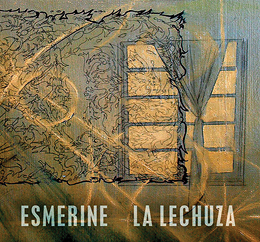
SOUNDTRACK: ESMERINE-La Lechuza [CST080] (2011).

This album is a wonderful surprise.  I had not heard of Esmerine before this CD (they have put out two previous records on a different label).  All I knew about them was that violinist Becky Foon (who is all over the Montreal scene and who is really good) was one of the founders of this band.  So I expected some epic instrumentals ala all of the Constellation Recordings bands that she has played with (Godspeed, Silver Mt Zion, etc).

I was delighted by the opening fast marimba notes of “A Dog River”.  I’m not sure if the marimba can play minor key notes, but the melody that co-founder Bruce Cawdron plays is uplifting and mesmerizing.  When Becky adds her strings, it takes on a new element–a kind of wistfulness.  Then at nearly 3/4 of the way in, some loud guitars come in to give the whole song a feeling of urgency.  And all the while it is very filmic.  It’s a wonderful opening.  “Walking Through Mist” is a much slower piece, and the marimba adds contextual pacing–they’re still not minor key or sad marimba notes, but they are not as uplifting as on the first track.  “Last Waltz” introduces a vibrato’s piano as the primary instrument.  It is at once unsettling.   It’s also the first of three songs with vocals.  The vocals work well on this song–they fit the mood perfectly–especially the wordless singing at around 4 minutes.  But I have to admit that I like the instrumentals better.  The same can be said for “Snow Day for Lhasa” (another song with vocals) which I find a little too slow to be impactful (it actually reminds me of a very slow version of Broken Social Scene’s “Lover’s Spit”).

“Trampolin” introduces a harp and some vibrant percussion.  It’s uplifting and feels like a perfect song for a theatrical dance company to perform to.  “Sprouts” is an uplifting new-agey sounding track.  By itself it might veer uncomfortably into the new age scene, but amidst the songs of the album it works very well.  “Little Streams Make Big Rivers” returns to that slower sound from earlier.  But this song is short and feels like a slow building march.  By the half way mark when the drums kick in, the song is unstoppable.  The album proper ends with “Au Crépuscule, Sans Laisse” a slow filmic song that returns the album to the quiet sound it was toying with earlier.

I mentioned Lhasa earlier.  Lhasa was a Canadian singer who had international fame (from my own experience, I know that X-Files creator Chris Carter wanted to go see her live–I know this because I was friends with his assistant and she told me the tale of trying to find tickets for this show).  I checked out her stuff but it wasn’t for me.  Anyhow, Beckie and Bruce were supposed to tour with Lhasa for her 2010 album, but sadly, she died of breast cancer (at 37, Jesus), right after the album came out.  So this album is dedicated to her.  The final song “Fish on Land” is a previously unreleased version of a Lhasa song that was made with Bruce and Beckie.  I wish I liked it more, but as I said, she’s not my thing.

I absolutely love the instrumentals on this album and I’m going to have to check out their earlier releases, too.

[READ: May 24, 2012] “Referential”

This story is like a kick to the stomach.  When you’re lying on the floor.  After you’ve thrown up.  And I mean that as very high praise indeed.

You know you’re in for trouble when the story opens: “For the third time in three years, they talked about what would be a suitable gift for her deranged son.”  We quickly learn that the woman’s son was fine until he was about twelve years old when he stopped brushing his teeth and began muttering to himself.  By then Pete had been dating the woman for about six years.

Pete and the woman had been coping with her son’s placement in the institution for over three years now.  There were so many rules they had to follow when visiting the boy–almost nothing could be brought in for fear of its being used as a weapon–even the homemade jam was taken because it was in glass.  Similarly, the woman has stopped wearing accessories, as a kind of solidarity–she would just have to remove them anyway.  She is now aging naturally and (she fears/admits) not very prettily.  An amazing slap in the face comes at the end of the first section with this amazing sentence:  “‘To me, you always look so beautiful,’ Pete no longer said.”  [Ouch!].

Pete has lost his job and is clearly unable to handle the strain of her son any longer (there’s a wonderfully painful scene where the boy asks Pete why he hasn’t come to visit lately). (more…)

Read Full Post »

SOUNDTRACK: EVANGELISTA-In Animal Tongue [CST082] (2011).

Evangelista is probably my least favorite band on the Constellation label.  I’m especially surprised/disappointed in this because I loved Carla Bozulich’s earlier bands.  I’ve said before that I find her vocals to be weirdly and wonderfully disconcerting.  And when it’s played over aggressive confident music it works wonders.  But when it’s paired with music that is also kind of abstract and untethered, it just sounds like a mess.

After that introduction, I’ll say that this album is their best release yet.  Her voice (the Constellation site suggests her melodies are “largely improvised” (!)) sounds like it always does–unsettling, haunting, compelling, drawing you into whatever world she is invoking.   The title track is the most intriguing–the music is subdued, drawing you in even more.   “Black Jesus” is also compelling in that it is one of her more subtle releases.

“Bells Ring Fire” has the catchiest section, practically a singalong.  “Die Alone” reverts back to that old nebulous style where there’s just nothing to grab on to.  Indeed, “Enter the Prince” and “Hatching” both have interesting sound effects (especially “Hatching”) but they’re not really compelling as songs.

I think the real problem with these songs is that they’re all too long.  Since they don’t have any hooks in them, since there’s nothing to really grab you and make you want to like them, having them come in around 5 minutes is just too much to ask of the listener.  Some of these songs would be inetresting for two or three minutes, but by 5 I’ve given up.

Check it our for yourself here

[READ: May 15, 2012] “Reading Graffiti in the Early Modern Book”

This may be the most current scholarly article I have read from JSTOR.  Part of the fun of reading the JSTOR scholarly articles is that they are usually old enough that you can have either a) contemporary knowledge about what the author got right or wrong or b) a fun nostalgia based upon the word choices or references that are in the text.  So with this one, which is not even two years old, there’s neither of those possibilities.  What’s also interesting is how the article is clearly current–the references that Scott-Warren uses are contemporaneous (“the Banksy of his day?”)

So what is this article about anyhow?  Well, Scott-Warren looks at the notes and scribbles that people have written in their books.  But not just your average textbook or library book, he goes back very far to the “early modern” period and sees that people have been graffiting their books since there were books.  He mentions how anyone studying books from that era will see all kinds of things on the pages of the book, from scribbles to pressed flowers to even the rust outline of scissors.  But he wants to focus on what people have written.  And he wants to see of any of these notations are comparable to graffiti in the current sense of the word.

He discusses current definitions (including tagging) to explain that graffiti is all about saying “I am here.”  (He even interviews a graffiti artist named Claw).  Then he goes back to 1434 and sees a Latin inscription from Jan van Eyck on his painting Arnolfini Double Portrait that more or less says “Jan van Eyck has been here.”  Although it is his own painting it has a feel of graffiti, of making a public note that you exist.  Similar inscriptions can be found in many books of the period as well.  There is a 1565 edition of a book with a heavily flourished signature, there’s a 1548 edition book with a doodle that may include a self-portrait.  There’s even a bible that has been inscribed by every member of the family (daughter Mildred’s is stunningly ornate).  Another book has the owner’s signature about fifty times throughout the book.  Are these words to the world?  Public notations?  or something else?

Scott-Warren wonders if these markings can be considered “pen-trials”–pens were hard to use back then, the ink was homemade and paper was scarce.  Another possibility is that they were an attempt to prove and expand on literacy.  A third possibility was ownership. Like the graffiti in a 1685 Indian Bible, written in Massachusett: “I Nannahdinnoo, this is my book…I, I Nannahdinnoo, own this forever.  Because I bought it with my money”

I especially enjoyed the book that had written, under the name Walter Vaughn, “This book belongs not to Walter Vaughn but to James Vaughn because his later father John Vaughn gave this book in his last will and testament to the same James Vaughn and therefore the said James is the true owner of the book” (1582).

In addition to the I of graffiti Scott-Warren looks at the “was here” aspect.  In a 1549 History of Italy, there is an inscription noting that the owner had been to Venice.

The key to all of this seems to be its public-ness.  Some inscriptions were prayers that were clearly meant for others to read.  In another case, the person wrote his opinion about the booksmith where the book was purchased.  There’s even some graffiti that is like trash talking of others.

I enjoyed this article because there were lots of pictures of the inscriptions, although i could have used a few more, frankly.  It was also curious to think about why people wrote things in books long ago–who exactly did they think would be reading their copy of a book?  Was it just a public act of disobedience at a time when a public act had to be very self-contained?

Read Full Post »

SOUNDTRACK: EFRIM MANUEL MENUCK-Plays “High Gospel” [CST078] (2011).

Efrim Manuel Menuck was a co-founder of Godspeed Your Black Emperor and the main force behind A Silver Mt. Zion.  In some ways it seems odd that he would release a solo album, but I guess Silver Mt Zion is enough of a collective for him to want to do his own thing.  Efrim has been singing a lot more on Silver Mt Zion records, and I find his voice to walk a fine line between interesting and annoying–well, not so much annoying as inappropriate to the music he makes.  For this solo disc, though, there’s something different about the music that works well with his voice.  There’s eight songs on the disc.  Some of them are pretty much unlistenable, but others are really enjoyable.  The opener “our lady of parc extension and her munificent sorrows” is 7 minutes long and has the kind of epic feel of his previous bands, but there’s a lot more keyboard (making cool space sounds).  Meanwhile, “a 12-pt. program for keep on keepin’ on” is described as a “hauntingly processed field recordings and ominous tape-delayed sound-sculpture.”  That’s true for the first minute or so, but after that it’s mostly just an unpleasant cacophony…that lasts nine minutes!  And while it’s great that it was all done with analogue equipment, that doesn’t make it any more listenable.

“august four, year-of-our-lord blues” is a much more enjoyable instrumental, slow vibrated notes, a real western sound.  Efrim sings again on “heavy calls & hospital blues” and his angsty, hesitant voice works very well on this piano ballad.  “heaven’s engine is a dusty ol’ bellows ” is a 2 minute instrumental/introduction that sounds a lot like the guitar opening from Radiohead’s “Electioneering.” “kaddish for chesnutt” is a slow, mournful dirge.  It’s quite moving.  It’s 7 minutes long, and the length is saved by the second half where the chanted vocals bring the song back from the edge.

“chickadees’ roar pt. 2” is mostly feedback noises and squeaks.  It’s less unpleasant than other instrumentals, but it’s not something you’d seek out.  Although it does work as an introduction to the closer: “i am no longer a motherless child.”  After about 2 minutes of dissonant introduction, the group begins singing an uplifting ending hymn.

So this boils down to a self-indulgent solo project, with a few tracks that are among his best.  You can stream it here.

[READ: May 22, 2012] “Mrs Blue”

I really enjoyed Joshua Ferris’ first novel.  So I thought I’d see what else he had written. He has a number stories published but most of them are unavailable for free reading at this time.  Thanks to my JSTOR account I was able to read this one from The Iowa Review.

This was  pretty confusing story–and since its one of his first, I don’t really know what else to compare it to in his work.  There’s all kinds of disturbing images and as you delve more deeply into the story, the images turn more disturbing but in different ways.

It opens with a youngish boy being seduced by Mrs Blue, a teacher in his school.  He warns her about the dangers of unprotected sex and she says that she’s the one who convinced the PTA to hire the guy who gave the lecture, so she knows all about it.  He’s 13 and he keeps telling her he doesn’t want to (her locations of choice include under a railroad car and in a burned out building).  Each paragraph or so is set off by a star, indicating a new section.  So section 2 has the narrator and Gus (friend? brother?) go to the track where Mrs Blue runs laps. Gus walks his dog, Mr Yackley, while the narrator (whose name is Woodrow Williams) talk about Cole Porter and how she’s looking for a new “daddy.” (more…)

Read Full Post »

SOUNDTRACK: SANDRO PERRI-Impossible Spaces [CST085] (2011).

This album has become one of my favorite releases of the year.  I simply can’t stop listening to it.  And the funny thing is that on first listen I thought it was too treacly, too “sweet,” especially for Constellation Records (home to the over-the-top Godspeed You Black Emperor amongst other wonderful bands).  But after a listen or two, I heard all of the genius that is present in this record–so many different layers of music, and so many interesting instrumental choices. Indeed, it does come off as sweet, but there’s really nothing wrong with that.

This album gives me a happy pick me up without being cloying in any way.  That’s a great accomplishment.

“Changes” opens kind of all over the place, with some noisey guitars and really high bass notes.  But once the shk shk of the shakers comes in, the sing settles into a great groove (and there’s a cool bassline that really holds the song together).  After about 3 minutes, it turns into a cool light funk jam, with retro keyboards, buzzed out guitar solos and some funky drums.  It’s unlike anything you’ll hear anywhere else.  “Love & Light” is one of the shorter pieces at just under 4 minutes.  It’s different from the other tracks, in that Perri’s vocals seem to be the dominant motif, rather than the cool music.  I like the song, but it’s probably my least favorite here.  “How Will I?” uses a similar multi-tracked vocal style but it has some wonderful flute moments (yes flute) that make the song bubbly and happy.  The song kind of drifts around the ether in a kind of jazzy world until about 5 minutes in, when the bassier notes anchor the song with great contrasting notes.  And the electronic ending is as cool as it is disconcerting.

“Futureactive Kid (Part 1)” is a shuffling minor key number that’s just over 3 minutes, it features a cool bass clarinet and backwards guitars to propel the song.  The backwards guitar solo segues into the uplifting (literally, the keyboards just go higher and higher into space. “Futureactive Kid (Part 2)” features fretless bass, a flute solo and My Bloody Valentine-esque sound effects (although radically simplified from MBV’s standards).  It fades out only to introduce my favorite song in forever–“Wolfman.”  I can’t get enough of this song.  It’s a simple structure, but at ten minutes long, it deviates in amazingly complex ways.  It has so many cool aspects that I love–I love the chord changes at the end of each verse.  I totally love the guitar solo that goes up and down the scale for an impossibly long run–well over 100 notes by my count.  I also love that the end of each section features a different guitar style playing the simple chord progression–from acoustic to loud solo to full band playing those same notes–so by the end of the ten minutes you ‘re not sure what to expect.   By the time the flute solo comes in at nearly 7 minutes, I’m totally committed to the song and wherever it’s going to take me.  So when it gets a bit of an electronic ending, I’m ready to go there with it.  Oh and lyrically the song is just as curious as the music.

The final song “Impossible Spaces” is a beautiful, quiet guitar song which is actually easy to sing along to.  It quiet a departure from the rest of the record, but it ties things together very nicely.  I have listened to this record so much lately, I just can’t get enough of it.

You can stream the whole thing here.

[READ: May 10, 2012] Conversations with David Foster Wallace

This is a book that collects interviews with David Foster Wallace.  Although DFW was reticent about d0ing interviews (as the introduction states), he did do quite a lot of them–often at the same haunts.  This book contains 22 interviews that span from 1987-2008.

The conversations are in chronological order, which is really a treat because you get to see DFW’s opinion (and his addiction to nicotine) evolve over the years.  You also get to see the topics that he was really focused on at one time and whether or not they stayed with him until the final interview.  DFW was outspoken about certain things, especially entertainment, which is unsurprising.  But he was also a big advocate of truth, honesty, realness.  It’s amazing seeing him when he lets his guard down. Although his honesty is there for all to see in his work, he is better known for his difficulty with language or his humor.  So seeing him without the multiple revision is quite enlightening.

The first pieces, “David Foster Wallace: A Profile” published after his first novel The Broom of the System launched Viking’s paperback imprint actually looks into his classroom a little bit and shows him interacting with a student (I wonder if she knows she is in this book?).  It seems sweet and almost naive compared to what is to come next.  And, for anyone who is familiar with him from later in, it’s a wonderful look behind the scenes.  There’s also a number of pieces from The Wall Street Journal.  Like the second piece in the book, the worryingly named, “A Whiz Kid and His Wacky First Novel.”  It’s not a bad piece at all, but man, headlines can be delicate matters. (more…)

Read Full Post »

SOUNDTRACK: HELLBENDER-Con Limón (1997).

Con Limón was Hellbender’s final CD.  It shows a lot more depth and variation than one would have expected from the debut.  “Fake I.D.” opens really really quietly for two verses so that you have to turn it up loud.  And then the song kicks in and explodes your speakers.  There are more such dynamics on this song, including the verse ending on a high guitar note and pause that adds a bit of quiet punch to the otherwise fast song.  “You Gutted Me with a Switchblade Shaped Like a Telephone” opens with some quietly spoken words (which I have not as yet been able to understand), but the verses and chorus have quite an emo feel.   “Long Distance Phone Bill Runner” has a catchy chugging riff with some screamy vocals.  “Untrusted You” introduces acoustic guitar (and a cool off-key note).  The vocals sound like Bob Mould.  Indeed the whole thing has a kind of Hüsker Dü feel to it.  “I-95 is Tattooed on My Brain” also opens slowly, with dark, quiet lyrics and a cool riff once the guitar kicks in.  The guys clearly have a way with song titles.

“Song About Some Girls” is perhaps one of the cheesiest songs I’ve heard in a long time (although as one reviewer points out, it does anticipate radio friendly emo by about a decade).  Coming from Hellbender it is super-cheese.  I’m surprised they allowed it to be released (and I’m surprised it wasn’t a huge hit).  Check out the lyrics (and this coming from a band with two lyricists who are currently published authors): “This is a song that I wrote about some girls/That I met at the beach back when I had the Jeep.”  Really.  And the chorus is a series of staggered “Right” “Right” “Right” “Right.”  It is so insanely catchy–I hate myself for liking it so much.  (The lyrics to their other songs are much better).

“Graveyarded” returns to the more angry type of song, dark with interesting riffs.  It’s a fitting ending to the last release by this under appreciated (they don’t even have an entry in allmusic?) band.  Oh wait, there’s a bonus song on the disc.  After a few seconds of silence, there’s a strange bass-heavy riff (and kind of dancey drums).  The lyrics are all spoken (I won’t say rapped).  It sounds nothing like them, but I’ll bet they had fun making it.

[READ: May 21, 2012] “Fun Won”

Sometimes a title confounds you until you see it in the context of the story.  I couldn’t even figure out how to say the title (which isn’t hard, but looks so peculiar) until I read it from one of the characters.  I also had no way of anticipating what this story might be about.

Imagine my surprise that it was about the 90s, and about a woman who worked for Conde Nast, when money and drugs were plentiful and the fun never stopped.

It’s funny how context is everything.  If I had read this story in the 90s, I would have hated everyone in it for their glamorous life, their quarter pound of weed, their expense accounted fancy dinner and even the fact that they work for a fashion magazine (Gaultier and Naomi Campbell are name-checked).  And yet now that the bubble has burst and the fun has stopped and I never got to be a part of it (not that I would have…but still), I read this story almost wistfully.

This story is set up in a tricky way.   Meaning that it starts out by talking about marriage but then shifts gears.  The marriage discussion is all about how her friends married such squares in the 90s (while now women marry interesting men who have job but are defined by their hobbies).  And it is a nostalgia piece for the 90s (“when you could still dream of being a writer, when writing for magazines and then writing books and all of that added up to a good life.”) [Sigh].

For background we learn that the narrator, her brother and their father were big dopers (their mother abstained–from the dope and the family).  Her brother Ed is visiting from California with a quarter pound of awesome pop (this was before everyone had access to awesome pot).  The bulk of the story concerns this visit.  Ed and the narrator get high, then they share the pot with Marni (who is famous, although whose actual title is unstated–she’s the one who calls Gaultier).  They end up all going for dinner at a fancy restaurant (with shaved truffles).

They also meet the narrator’s boyfriend who is a real estate mogul–he sells building for tons of money (and yes, is likely the reason the bubble burst).  And then they go to a record studio to hear a famous singer make her album and watch it get mixed. (more…)

Read Full Post »

[ATTENDED May 19, 2012] Out of This World

My four-year old daughter T. was in her first recital last night.  Of all of the shows that our family has attended over the last few months, none has been as full of emotional highs and lows, laughter, shock and cuteness as this one.

None.

Not bad for two minutes of a song called “Disco Galaxy.”

I have no intention of critiquing any performances on the stage tonight.  Every girl and boy tried his or her best and they all did better than I could do.  However, since this is my first amateur performance that I’ve seen as an adult, I want to make some general observations about on-stage performance.

TV shows and movies about performance always talk about basic rules for being on stage: SMILE SMILE SMILE!  Smiling on stage and exaggerating your movements and crazy makeup are all essential.  It actually gets a bit tedious (as I’m sure it does for the performers).

So based on TV and my recent live experiences I’ve taken some notes: (more…)

Read Full Post »

SOUNDTRACK: LAMBCHOP- “2B2” (2012).

I don’t have much exposure to Lambchop.  I know of  them mostly as a slow, country-type band.  And that’s why I haven’t listened to them much.  So I picked one song from their latest album, Mr. M, to talk about (because they are associated with Five Dials, see below).

And, indeed, they are slow.  I wouldn’t say country so much as roots, maybe, traditional folk or something.  It’s certainly slow.  This song reminds me in someways of Tindersticks, although a very stripped down Tindertsicks.  Of course, what I like about Tindertsicks is that they are not stripped down.  So this song kind of leaves me a little flat.  I like it, but I’ve already got music that’s like this ti listen to.

I’ll bet though, that it would make great background music to an engaging story (see below).  I wonder what song they chose to remix.  It’s be crazy if I picked it.

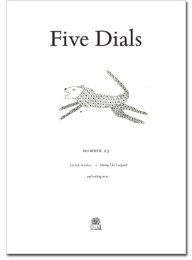
[READ: May 3, 2012] Five Dials 23

Five Dials 23 was recently released with quite little fanfare.  That may be because it is like an appetizer for the soon to be released Issue 24 which promises to be very large.

Five Dials 23 contains only one piece (and an Letter from the Editor).  The piece is by Javier Marías, whom I’ve read and enjoyed and have put on my list of authors to explore more.

CRAIG TAYLOR-“On That Fiction Feeling and Lambchop”

Craig Taylor’s introduction wonderfully encapsulates why I prefer to read fiction to non-fiction.  I have friends who say they only like to read non-fiction because at least they’re learning something (or some variant of that).  And while it’s compelling to argue that you learn stuff from fiction too, it’s not always easy to prove.  So Taylor’s Letter from the Editor is where I can point people in the future:

I remember it happened when I read part of Runaway by Alice Munro, specifically the three linked short stories ‘Chance’, ‘Soon’ and ‘Silence’. I remember the names of the North London streets I was compelled to walk – from Messina Avenue to Woodchurch Road to Greencroft Gardens – just to free myself from the sensation that had blossomed within me after I set down the book. During that walk, the neighbourhood seemed raw and responsive. I was unsettled, but in the best possible way; I was in the midst of experiencing the kind of sadness that can only be induced by fiction, which is more potent sadness than most. Also in this jumble of sensation brought on by Munro was a vow to live better, to somehow dodge the mistakes of her characters. There was a bit of a ‘what the hell am I doing with my life?’; a bit of a ‘pay attention to the details’; a bit of an ‘appreciate life more’. In short, the great inner churning that comes at the end of a few extraordinary pieces of fiction.

The details aren’t relevant, it’s the overall mood and idea that he conjures that is.  Although he mentioned Munro, he begins to talk about The Leopard by Tomasi di Lampedusa.  How this debut (and only) novel has left a strong impact not only on him and many more who have read it but also on Marías.  And that that it was Marías’ essay is about: The Leopard.

The second half of his introduction talks about the next issue and that a 10″ vinyl album will be released with it.  It will feature a double A side with author Hollis Hampton-Jones reading from her novel Comes the Night, while backed by Lambchop.  The other side features a remix of a song by Lambchop from their Mr. M album.  The end of the Letter from the Editot is given over to Hampton-Jones and her remembrance of the recording session.  (It’s very cool).

EMILY ROBERTSON and TUCKER NICHOLS drew the cool pictures of leopards.

JAVIER MARÍAS-“Hating The Leopard

This essay, translated by Margaret Jull Costa,talks about the novel The Leopard and how as a novelist, Marías hates it, even though as a reader, he loves it.

I love the surprising way he opens this: There is no such thing as the indispensable author or novel.”  Because even if the best novelist in the world never wrote, the world woul dnot be different.  I also love this insight, which I actually used recently when talking about Ulysses to someone (yes, I’m that guy) that books which “aspired to being ‘modern’ or ‘original’… leads inevitably to an early senescence or, as others might say, they become ‘dated.’  …. They can sometimes seem slightly old-fashioned or, if you prefer, dated, precisely because they were so innovative, bold, confident, original and ambitious.”  But he quickly points out that The Leopard does not fall into this dated category.

Before explaining why The Leopard has stayed with him, he gives some basic background about its publication and near lack of publication.  Indeed, Tomasi di Lampedusa (how do you say that last name?) died before it was published (but not before receiving several rejection letters).  What’s especially surprising is why he wrote the novel in the first place: “the relative late success of his cousin, the poet Lucio Piccolo…led Lampedusa to make the following comment in a letter: ‘Being absolutely certain that I was no more of a fool than he, I sat down at my desk and wrote a novel.'”  Nothing inspires like jealousy!  He also wrote because he was a solitary person.  He was married, but he seems to spend a lot of time alone.  He wanted the book published but not at the expense of his heirs (that’s nice).

Marías talks a bit about why he finds the book so extraordinary (although he says that so much has been written about the novel that he is reluctant to add more).  But one thing that impressed upon him was how the book is about preparing for death, but how, “Death stalks the book not in any insistent way, but tenuously, respectfully, modestly, almost as part of life and not necessarily the most important part either.”  As far as hating the book, Marías feels that perhaps some novelists have earned the right to hate it.

I always enjoy Five Dials.  I can only hope that my posting about it here can get more people to check it out.  Now to see why my library doesn’t have a  copy of The Leopard.

For ease of searching I include: Javier Marias.

Read Full Post »

« Newer Posts - Older Posts »