 SOUNDTRACK: RUSH RADIO (rushradio.org) (since 1998).
 How can this online site have been around for fourteen years and I’ve only just heard of it the other day. And only by actively searching for a streaming Rush site. Crazy talk!
So this site is what it says–streaming Rush 24/7. After listening for a little while I determined that it’s basically this person’s iTunes playlist of every Rush song on shuffle. It has that telltale iTunes shuffle–hey, didn’t I just hear that song two tracks ago, or as i na recent example, wasn’t that the song that just ended?–But there’s also a chance that you’ll hear a song that you haven’t heard in forever. There’s even a chance you’ll hear a song you don’t like (!) “Dog Years” is easily my least favorite Rush track ever, but I heard it!
Of course it’s more exciting to randomly hear “The Necromancer,” which just happened.
I don’t understand how come this person is allowed to do this. I don’t understand how he secured a .org domain name. I understand even less how he got a PSA with Geddy Lee talking about something (I forget what already). And I don’t care, I have been listening to this for the last few days and it totally resurrected my love of Rush.
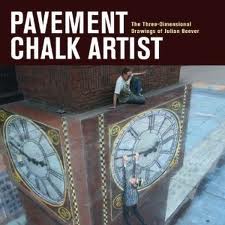
[READ: May 3, 2012] Pavement Chalk Artist
If you’ve never seen a three-dimensional chalk drawing, you’re really missing out. But they’re all over the internet, so it’s easy to find one. Like this one. http://www.moillusions.com/category/3d-sidewalk-drawings-optical-illusions The most recent one I’ve seen is a Lego drawing, and this site http://www.mymodernmet.com/profiles/blogs/incredible-making-of-the-3d-lego-chalk-drawing shows you how they were done, too.
The design style is called anamorphic and it all depends on the angle at which you are looking at the picture. Literally. If you look at it from the wrong angle it looks like complete nonsense. And in the case of this book (and Beever’s work in general), the designs were specifically created for his camera. In other words, he set up the camera and looked through it to get the exact effect he wanted. I can’t quite imagine how you have to look at it in real life for them to look as good as this.
So this book shows some fifty pieces of amazing 3D art. It’s not chronological, so there are some “less awesome” pieces in the middle of the book—which is totally fine, they are still mind-blowing. But it’s fun to see different styles as he learned and grew as an artist.
Beever has travelled all over the world to produce these designs. He started out just doing things for fun–trying to make “hat money” on the streets. Then he started pitching his ideas to companies to try to get “advertising” jobs. And I will say that some of his best work is advertising—the bottle of Ballatine’s that has crashed through the brick is stunning.
Each drawing has accompanying text which gives a little explanation of what he was doing, who he was doing it for and some complications that arose. There’s also a lengthy introduction which explains his background, how he got started doing this and the other “street” jobs that he’s had.
 I really enjoyed looking at these amazing pictures and it has inspired me to do some of them myself (not in chalk, I don’t have four days to do pictures (some took that long for him). I do mine on paper, and my first attempt came out pretty well (if I ever get around to scanning it I’ll post it here). However, I do have a couple of complaints about the text. There is some repetition in his descriptions—as if the book wasn’t written all at once. Some picture acknowledge others but then other pictures are described as if they were standing alone. Not a big complaint, obviously, just a little surprising. Also, I would have liked some less technical details about the process—some of his talk is practically gibberish, and I’m a pretty knowledgeable artist, so I can’t imagine what the lay person thinks. I could have also used a bit more explanation of just how these drawings were accomplished. I’d also liked to have seen some of these pictures from other angles. There’s only two in the book—one shows a sort of view but not really and the other is of a globe which doesn’t really look that strange from the side view. There’s one or two that you know must look insane from a side view, and I’d liked to have seen them.
But criticisms aside, the art is great. And to think that he does all of his work by simply looking through the camera and eyeballing it. (The Lego guys I mentioned above are very precise with their measurements and prepared a lot a head of time. This is not to sat that Beever “wings it” but he does a lot of his stuff simply by using his artistic eye, and that’s amazing.
Also, it must be singled out that his drawings of water are phenomenal. Water is very hard to create realistically and he does a staggering job. Even if this weren’t great 3D art, Beever would be amazing for his waterwork alone.

 I Just Read About That...
That art is seriously amazing. I kept staring at the Legos trying to figure it out – but it’s beyond me. And the elevator is downright sadistic – I’m surprised anyone actually got in.
It’s mind boggling. Even when you see the side view, you still think, huh?