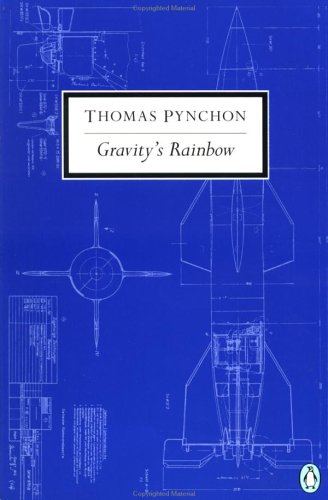
The edition I’m using.
SOUNDTRACK: KINCH-The Incandenza (2011).
 I like this album more than I have any right to like an album that I bought purely for the name. The album name is The Incandenza which is named after the main family in David Foster Wallace’s Infinite Jest. The band name is Kinch which is named after what Buck Mulligan calls Stephen Dedalus in The Odyssey. That’s pretty high literary tributes. So who cared if the music sucked. But the thing is is that it doesn’t. And I’ve been having a hard time writing about it because I like it so much and yet I don’t know what it is that grips me about the disc so intensely. It’s not staggeringly original. It’s more of an alt rock take on classic rock. But even that doesn’t work because they use pianos prominently and the classic rock is more sound styles than sounds themselves. Yet at the same time I hear a number of different band in the mix (and only a few of them use pianos).
“When I was Young” opens the disc with a great loud piano sound and a strong vocal line. When the chorus comes in, the song picks up tempo and strings add intensity to what is already a catchy song.
“Evelyn” has a great stomping rock guitar sound. At two and half minutes, it’s an amazing potential single with, again, a great chorus. “45 Minutes” opens with screaming guitars and a great bass line that sounds like a classic song from The Jam. “That’s Just the Mess That We’re In” features some horns that accentuate the chorus nicely.
“Once I was a Mainsail” starts like a pretty normal piano based rocker but the screaming chorus adds a great punk feel to the song. “Tea Party Bomba” unravels its beginning into a great prog rock riff, with shades of Queen via Muse everywhere. The same is true in “Bye Bye Bye Bye” which has a bombastic bridge (really showcasing the singer’s voice) until we get to the great shift to the quiet “I don’t think he ever knew.” It’s a wonderful change of pace. It’s followed by the punky buzzy guitars and a simple melody of “Ocean”
“VHS” is another song that is just over 2 and a half minutes. It begins quietly and (again) simply, this time with some gentle keyboard washes as the song build and builds adding drums and guitars. It bleeds into “The Incandenza,” the longest song on the disc at just over 5 minutes. It never feels like it’s 5 minutes long–another great bride with more sing along bits (and a great tempo change after the bridge) and a guitar and whistling solo make the song ever-interesting. even if I don’t think it has anything to do with the Infinite Jest.
Kinch have a few other short albums out and I’m looking to get them as well, but in the meantime all of these great music can be streamed at their bandcamp site.
[READ: Week of February 20] Gravity’s Rainbow 1.1-1.12
This is my first time reading Gravity’s Rainbow. And I know literally nothing about it. I have always felt like I should read it (being a good modernist and a fan of Joyce and David Foster Wallace), but I never bothered to find out even a basic plot. And it’s kind of fun going into this thing completely blind. I had no idea even that it was set in England just Post WWII (1945). So that was a surprise. [Interestingly, having just read The Apothecary which was set in London right after WWII, it is cool to read another story set just around WWII and to hear similar things about the living conditions.]
But back to GR. The only thing I have read before writing this post (aside from a few thoughts over at Infinite Zombies) was a comment (again, on IZ) that you will be confused while reading this book and that’s okay. Phew.
Having said that I didn’t find it as confusing as I imagined. (I’ve been intimidated by reading this book for fear of its difficulty). I admit there are several scenes with pronouns that are somewhat elusive to me, and there’s a few other scenes where characters seem to be there without being fully introduced until later, but overall it’s not that bad.
The first section of the book seems like a lot of exposition–good, thorough exposition, which is also funny—but by section 1.12 we’re still meeting new characters. It feels like serious plot things will happen later. The book opens with a more or less famous line (Okay, I knew about that line before reading the book, but that doesn’t give any context).
And so, the screaming comes across the sky and the city is in the midst of an evacuation, but it is too late. At least for some. And the opening is a little confusing, as an evacuation might be. It certainly seems like the end of everything, but then we also find out that some people are sleeping through it. That this bomb is a localized attack.
 Section 1.1 also introduces us to Lt. Capt. Geoffrey (“Pirate”) Prentice. Pirate is just waking up when he notices that his flatmate Teddy Bloat is about to fall off of the minstrels’ gallery but Pirate manages to shove a cot in the way just as Teddy falls off the balcony. Pirate is famous for his Banana Breakfasts (he’s the only person in England who has bananas). And at this point the story settles down into a rather enjoyable domestic scene. I mention in a post at Infinite Zombies that this opening scene of Pirate on the roof is reminiscent of the opening scene of Ulysses (I won’t go into that here).
The next scene is a raucous affair with a bunch of locals clamoring for their Breakfast plates. The scene feels like a college dorm, although the participants are (I assume) older—Pirate himself is in his early 40s.
It’s time to mention Pynchon’s astonishing character names. I love them all, they are so weird and evocative without (always) being obvious. So Teddy Bloat is a good name, but what about Coryson Throsp, the designer of their building. And with the Breakfast comes names out of the woodwork: Osbie Feel, Bartley Gobbitch, DeCoverley Fox, Maurice “Saxophone” Reed, Joaquin Stick. I’m not going to go speculating about names in these posts, but I am sure going to highlight my favorites.
In Section 1.2 the party ends when Pirate gets a call from his employee (which later we learn is S.O.E. or The Firm) who will “use anyone, traitors, murderers, perverts, Negroes, even women, to get what They want”) (33). And on his way to his office we are given this piece of information–which on a first read seemed…crazy? …irrelevant? …not something to be taken seriously? But as you read on, it becomes evident that this is very meaningful. Pirate Prentice can “get inside the fantasies of others…take over the burden of managing the [fantasies].” It is all quite surreal. Especially when you get to this detail: “He had known for a while that certain episodes he dreamed could not be his own…then came the day when he met the real owner of a dream he, Pirate, had had.” The real owner was a dirty old man who enjoyed watching girls drink from water fountains—something he was not at all interested in. Later on, he sees the fantasy of a coworker at the Firm (H.A. Loaf) and quickly word spreads about his “gift” which The Firm quickly figures out how to use.
His first official success if dealing with a giant escaped adenoid (the fantasy of Lord Blatherard Osmo). The adenoid is enveloping all of the city. Somehow (I’m a little mystified at the details here), Pirate saved Europe “from the Balkan Armageddon the old men dreamed of.”
Section 1.3 introduces to Teddy Bloat, now that he is awake. Because of the way this is written (those unspecific pronouns) it takes a read or two to realize that Teddy’s mate works for ACHTUNG: Allied Clearing House, Technical Units, Northern Germany. Teddy looks for his friend Lt Oliver (“Tantivy”) Mucker-Maffick.
Tantivy (no idea where this nickname comes from) shares an office (and lunch) with an American Lt. Tyrone Slothrop (Tantivy is a neat fastidious man while Slothrop is super messy—the details of the mess are wonderful). Slothrop becomes a huge player in the book just before the end of our reading.
Bloat photographs a map of London on Slothrop’s wall. On the map are stars at various locations around London. Each star has a woman’s name on it, which we learn are some kind of sexual conquest. The stars are different colors but we don’t know if that means anything (yet). Slothrop started the map last autumn, when he started looking at rocket bomb disasters for ACHTUNG
Section 1.4 introduces us to Tyrone Slothrop. ACHTUNG is the poor relative of Allied Intelligence, and they are turned away when they sent men to investigate the latest bomb blast. But Slothrop sees Pirate take a cylinder from the blast (and burn his fingers on it) and secret it away to S.O.E. (who will assuredly not share it with ACHTUNG).
Initially Slothrop was really scared about the bombs—how you can’t hear them to get out of the way. And that’s how Tantivy got him assigned to investigate exploded bombs—so he could see exactly what happened (and they could get information as well). And at first Slothrop cared about his job. Eventually he started making bets about where the next bomb would hit. And then he started keeping track of the ladies he was with (the star colors correspond to his mood that day (from blue to golden) nothing more).
Then we investigate Slothrop’s dossier to find out that he has some kind of sexual turn on from the things in the sky.
In my first reading of this section, I didn’t see so many details that would prove to be important later. Like that this is (hopefully) Tyrone’s last bomb. As an additional note. The time is listed as 6:43:16 British Double Summer Time (this, obviously, reminded me of DFW’s year naming).
 Section 1.5 opens with a séance at Snoxall’s. Roland Feldspath is the spirit, Peter Sachasa is the control, Carroll Evntyr is the medium and Selena is the wife and survivor. There are three people observing the séance: Jessica Swanlake, Milton Gloaming and Roger Mexico. Milton is planning to graph the words that are spoken most frequently at the séance (the most frequent word is always death).,
Roger Mexico talks with Pirate about the reinstitution of the Witchcraft Act and is worried that Carroll Eventyr could be taken away at any moment.
This section introduces operation Black Wing, which pirate thinks Mexico only partially supports. We get a little clue on the workings of things: Bloat goes out and microfilms things. He gives them to Pirate who in turn gives them to Roger Mexico who presumably gives it to “The White Visitation” an arm of PISCES (Psychological Intelligence Schemes for Expediting Surrender). The White Visitation is devoted to psychological warfare and has on its staff a behaviorist and a Pavlovian (who we will meet).
Then a little Pirate history. In 1936, when he was 33, Pirate was in love with an executive’s wife named Scorpia Mossmoon. She’s married to Clive Mossmoon and Pirate ached for her to leave him. But she never did, despite all of his attempts. Pirate thinks about this because Roger Mexico is going through the same thing with Jessica Swanlake (whose man is named Beaver). He alternately wants the same thing to happen to Mexico, but also kind of hopes it doesn’t.
Section 1.6 follows Roger and Jessica as they drive. But they are not off to a cozy hotel room, they are off to see Pointsman, a vivisectionist who captures his own dogs (he would be the Pavlovian mentioned above).
Bicycle Repair Man, not really relevant, but funny.
We learn how Roger met Jessica. Her bicycle broke down at the side of the road and he drove up in his fancy convertible (and ran over the bike) and whisked her away as a rocket fell nearby. And now they have an (illicit) house together in the middle of nowhere. And they cannot wait for the war to end.
Roger is part of The White Visitation, but he is the “dour young man” who doesn’t believe in ESP or any of the mystical things that the White Visitation looks for—he is a numbers man, a man of science. He also doesn’t think much of the séance that was taking place above.
Section 1.7 Introduces us to Vladimir, a stray dog. First we see him in an abandoned house. It also introduced us to Edward Pointsman, the Pavlovian who is holding a jar of ether. In a slapstick scene the good Dr Pointsman gets his foot stuck in a toilet while trying to capture this dog. And later, Roger Mexico crashes head first into a baby pram while high on ether. All of this while trying to capture this dog, Vladimir (with the intention of counting his saliva drops). Vladimir escapes.
Pointsman is saddened by this, but he cannot dawdle. He has to meet Dr Kevin Spectro a resident of St Veronica of the True Image for Colonic and Respiratory Diseases. Spectro is one of seven owners of The Book—a mysterious book that rotates among its seven owners.
Roger and Jessica’s portion of the evening’s activities are over and they head home.
Section 1.8 takes us inside St Veronica’s. Dr Spectro calls all of his patients “Fox”. Spectro begins talking about Slothrop (see I told you he’d be important later). Spectro considers him a classic case of some kind extra sensory skill or perhaps some pathology Spectro believes that Slothrop can “feel the [bombs] coming days in advance. But it’s a reflex. A reflex to something that’s in the air right now. Something we’re too coarsely put together to sense. But Slothrop can” (49).
Pointsman argues that it is not extra sensory but Spectro considers that maybe it is a “sensory cue we just aren’t paying attention to. Something that’s been there al long” (49).
And so much of the rest of this section debates what Slothrop can or can’t so. Is the whole war some kind of laboratory to do experiments on him. While Pointsman ponders, he realizes that Spectro is offering him an octopus to experiment on—and he is aghast. Forget the tanks, the pumps filtering special food—the company would never go for it. But his main objection is that monitoring Slothrop is all about auditory signals. If he hadn’t noticed, octopi have gigantic eyeballs. Although Spectro reminds him that they don’t bark.
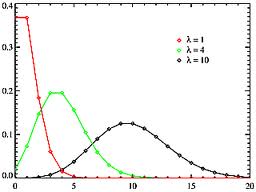 Section 1.9 opens with Jessica waking up and thinking about Roger’s Poisson distribution of bombs. This was Roger’s discovery and he looks like a prophet but it’s not precognition, it’s simple math [Poisson’s equation: Δφ = f where Δ is the Laplace operator, and f and φ are real or complex-valued functions on a manifold. When the manifold is Euclidean space, the Laplace operator is often denoted as ∇2 and so Poisson’s equation is frequently written as ∇2 φ= f.]
So Roger has created a map with 576 squares. The Poisson equation will tell, for a number of hits arbitrarily chosen, how many squares will get no bombs, how many one, two, three and so on. Even Pointsman can’t see the obviousness of this. But then Pointsman is a binary either /or kind of guy; he can’t live in gray areas the way Roger can. Nobody understands that the Poisson map doesn’t predict future bombs it just shows the likelihood of how much other places will get hit. This is eminently fair.
Jessica is fed up with this war business–she can’t remember what it was like before the war. Roger tells her “One took lots of aspirin. One was drinking or drunk much of the time. One was concerned about getting one’s lounge suits to fit properly. One despised the upper classes but tried desperately to behave like them.”
 Section 1.10 opens with a letter from Slothrop to the Kenosha Kid and several numbered sections all dealing with the Kenosha Kid. Each has a kind of punchline that ends “bet you never did the “kenosha” kid, or bet you never did the “Keosha kid.” And I really don’t get it (yet, I’m sure—but that’s okay, there’s a post at Infinite Zombies about this very thing!). Indeed, this whole section has a hallucinogenic quality (that I found reminiscent of Trainspotting). Slothrop goes to the Roseland Ballroom (in Boston)and because he has pockets that don’t stay closed, his mouth harp (which is a jive accessory for a white boy to carry around) falls into the toilet. And Slothrop goes in headfirst after it. I guess. But first he has his pants pulled down and his ass lubed up by a bunch of negroes (as they are wont to do, according to Slothrop). And much of the rest of this section is a detailed look at shit covered pipes, dingleberries, toilet paper and all manner of things.
When the hallucination comes out of its fog, somewhat, we get an introduction to Crutchfield or Crouchfield, the westwardman. There follows a poetic list of all of the people that Crutchfield has “conquered” (all races colors and sexual orientations). His little “pard” at the moment is Whappo, a Norwegian mulatto lad. Is all of this a joke to ask if Crutchfield never “did” the Kenosha Kid?
Section 1.11 is very short and had me laughing out loud. I was so puzzled by the introductory definition of Kryptosam (created by Dr Laszlo Jamf). Until it is revealed later in to be a kind of invisible ink that you can only read by releasing semen on to it. Pirate receives a correspondences labelled geheime kommandosache [Top Secret]. It is a drawing of woman who looks just like Scorpia Mossmoon. Strangely the drawing is all about fantasies that he didn’t think anyone knew he had. He is so turned on by the fantasy that the picture proposes that he almost doesn’t get it on the paper in time. The message tells him a time and place and a request for help.
This week’s final section, 1.12 talks about The White Visitation. It starts with an incident: in 1925 Reg Le Froyd escaped from The White Visitation and ran to a cliff. After some cursory discussion with the scientists, he leapt off into the sea. This was very exciting for the townsfolk of Ick Regis, but that’s pretty much all The White Visitation has ever done for them.
Then we learn that Operation Black Wing was sponsored by the BBC’s Myron Grunton. He had been trying for years to work on this plan against the Germans, but it wasn’t until the Americans (and an arrangement known as SHAEF PWD (Psychological Warfare Division)) came and threw money at it that it took off. And everyone worked on it, all the way up to Eisenhower himself.
P irate discovered that there were Africans (Hereros) living in Germany active in the secret weapons program. Grunton began broadcasting questions, wondering where are those Hereros now? “What are they doing, this instant, your dark secret children?” (75). They even got an American by the name of Slothrop who was willing to go under light narcotics to help illuminate racial problems in his own country (this helps to explain Section 1.10 somewhat). All of this information came back under the title Schwarzkommando [black command] although Grunton preferred “Wütender Heer” [angry army] inspired by Wuotan.
Then this section moved to Poinstman again and his major disappointment in the idea that the war was going to be adjourned and what did he have to show for it? His Abreaction Research Facility (ARF) early on got him some funding and underlings and lots of dogs to experiment on, but as the war proceeded, his colleagues now get more abreactions during heavy V-bombardment that earlier doctors did in lifetime.
Then we meet Old Brigadier Ernest Pudding, now 80 and reactivated because he couldn’t stand what had happened to his country between WWI and WWII, wonders aloud what enemy disliked him enough to assign him to Political Warfare—and the horrifying labyrinth of confusing acronyms and initials (the New Dealers of OWI, the moneyed Republicans of OSS—all of them keeping dossiers on tea-taking habits and erogenous zones).
Pudding is disturbed by all the crazy goings on in this building where he works, including all that work on the dogs. And here we see a dog, Vanya, and the saliva that he produces [details are left out of this post]. Pudding gives out what he calls “The Weekly Briefings” a “most amazing volley of senile observations, office paranoia, gossip about the War which might or might not include violations of security…” and much much more (79). Which culminates in a discussion of Ernest Pudding’s Gourd Surprise which I mention here because of this outstanding observation:
there is something sadistic about recipes with “Surprise” in the title, chap who’s hungry wants to just eat you know, not be Surprised really, just wants to bite into the (sigh) the old potato, and be reasonably sure there’s nothing inside but potato you see, certainly not some clever nutmeg “Surprise!”, some mashed pulp all magenta with pomegranates or something… (80).
Then we meet a few more coworkers—Webley Silvernail and Rollo Groast who are trying to sneak cigarette butts and Géza Rózavölgyi (a proofreader’s nightmare). Rózavölgyi is a refugee and virulently anti-Soviet (which causes some strain in ARF). He is also concerned about the state of his funding after V-E Day. “Rosie” as they call him shows the latest scheme centered around Slothrop and his psychopathic and unwholesome tendencies (based on his MMPI test).
The MMPI test means nothing to Reverend Dr Paul de la Nuit who wants a more religious scale. But no, the MMPI was created in 1943 to test a man’s readiness for war. And next they are going to give Slothrop Rorschach tests.
Pointsman is in agreement with the test although Dr Aaron Throwster thinks it is out of Pointsmans’ area of comfort. But Pointsman admits that they hope to expose Slothrop to the German rocket to judge a Pavolvian response.
Our reading ends with a wonderfully bizarre scene—the inside of the The White Visitation and how it has been altered over the years by its residents. The ceiling has a Methodist version of Christ’s kingdom painted on it, but it painted just slightly off—wee creatures leer, the fierce beasts look sedated and none of the humans make eye contact; there is also a room designed like a harem; a wallow (a pit that was filled with mud). Rooms are triangular or spherical, portraits of Cyclops, centaur and humanoid giraffe; gargoyles with fangs that cut heads but barely drain water.
It’s a strange ending, but it is very vivid. And it is quite compelling. I’m really looking forward to the rest of the book because, even though I now have a foundation of what’s happening, I can’t imagine where he’s going to go with this.
For ease of searching, I include: Wutender Heer, Geza Rozavolgyi

 I Just Read About That...
The names are definitely fun. Weisenburger goes into the meanings/backgrounds of some of them.
Thanks Daryl, I figured there was a lot behind it (no, Pynchon didn’t really THINK about any of that 🙂 )
Re “Kryptosam”: Likely based (somewhat) on a WWII cryptographer, who made an invisible ink from semen. Proof that history’s nearly as good at names as Pynchon, he was called Mansfield Smith-Cumming.
https://en.wikipedia.org/wiki/Mansfield_Smith-Cumming
Dude you’re off on your understanding of what’s taking place in GR.