 SOUNDTRACK: The Beatles-With the Beatles (1963).
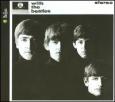 Reading the liner notes to these discs gives me a greater appreciation for what the Beatles did. They put out these first two records in the span of eight months and recorded both of the discs in a matter of like 26 hours each. That’s pretty amazing.
I’m also starting to think that mono may be the way to go with these early discs. I mean I’m a stereo guy, but I’m listening to these discs in the car, and it’s weird to have all the instruments on my side and all the vocals over by the passenger seat.
As for this disc itself, again, I was surprised by how many songs I didn’t know on it. It’s also funny to hear so many cover songs (although it makes sense this early in their career). Especially since, for the most part, their originals are quite a bit better. It’s also funny how many of these covers I think of as Beatles songs. Especially, “Money.” This disc closer is like “Twist and Shout” in that it really rocks the house down at the close of the disc. It’s not quite as intense as “Twist” but it’s close.
The only real dud on the disc is “Roll Over Beethoven” which is remarkably stiff for a song about rock and roll.
Whether it’s the production or the amount of time they spent in the studio, this disc sounds more accomplished than the first. And I can really see what all the excitement must have been about. Four good-looking guys singing about love. What could be better than that?
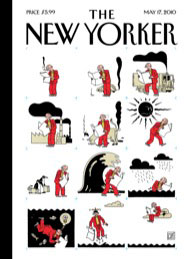
[READ: May 11, 2010] “Free Fruit for Young Widows”
After reading the Holocaust-based story in McSweeney’s (post coming soon), and the Holocaust section of 2666, the last thing I was ready for was another Holocaust story. And what a doozy this one is.
Sometimes, when reading a Holocaust based story, I worry that my emotions about the Holocaust will overshadow the quality of the story. In other words, is it a cheap ploy, an easy setting to get a reaction from the reader. This story definitely is not.
It opens with a story of a man at war. Shimmy Gezer is in the Israeli army. And round about this time, through a switching of Allegiances by the French, the Israeli army and the Egyptian army (the Israeli army’s enemy) are wearing the same uniform. When Shimmy sits down, he is joined by four other soldiers. Moments later, Profesor Tendler, Shimmy’s fellow soldier, up and kills all four other men point blank. Shimmy is horrified, and says that at least he could have captured them or done anything to spare their lives. Tendler proceeds to beat the crap out of Shimmy to get him to shut up; he leaves him alive but looking far worse than the four Egyptian soldiers.
The story shifts to the present. Shimmy owns a fruit and veg stand and his son helps him run it. Every time that Tendler comes to the stand, Shimmy gives him free fruit (he also gives free fruit to war widows, as the title implies). Shimmy’s son, can’t understand why he does this. Over the years, Shimmy reveal more and more information about why. Finally, when his son turns 13, Shimmy tells Tendler’s whole story.
And, man is it awful. At 13, he is put in a camp. He survives the concentration camp in an unfathomable way; he eventually manages to get back to his home. And waiting there is his nursemaid and her family. And things turn unexpectedly even more grim from there.
This was a pretty brutal story (albeit rather short). It raises some intense philosophical questions. Difficult questions that you don’t often face in a short story. And, all along, we are reminded of the acts of charity that Shimmy offers.
This was a really powerful piece of fiction. It’s available here.

 I Just Read About That...
It really is a great story. I wrote some of my thoughts about it here:
http://theoncominghope.blogspot.com/2011/08/salute-your-shorts-nathan-englander.html