 SOUNDTRACK: KATE BUSH-Never for Ever (1980).
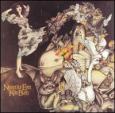 With this disc, Kate Bush totally blew me away. The leap from Lionheart to Never for Ever is monumental. And Never for Ever was the first record by a solo British female to go to number 1. Even 29 years later, this album still sounds fresh, current, a little bonkers, and totally amazing.
Kate is still pretty out there (there’s some wild screams and howls on a lot of songs), but she has really mastered the art/prog rock sound. The disc starts out with “Babooshka” a wild romping rocker that, once again, sounds simple, even silly (chorus: “all yours babooshka babooshka babooshka ya ya”), but which has a rather sophisticated premise (of a married couple looking to cheat on each other but actually dating themselves). The next song “Delius (Song of Summer)” shows some of the fun new sonic elements she’s added to her repertoire. She adds a deep bass vocal singing along with her (it’s as absurdly deep as her voice is high). The “ta ta ta” section, the operatic chorus, and the jaunty piano play off each other perfectly. I have no idea what the song is about, but I adore it.
“All We Ever Look For” has a wonderful part where footsteps walk across your headphones and open different doors. Behind each door is a different sound (a chorus singing (but I can’t place what), birds singing, the rapturous applause, until the song kicks back in. It’s very cool.
Side Two opens with “The Wedding List” a wonderfully weird, intense song that has interesting whispery bits (headphone friendly again) but then ends with awesome banshee howls. It’s inspired by François Truffaut’s film The Bride Wore Black.
But for me the song that distinguishes this disc is “Violin.” It’s an ode to, yes, the violin, (chorus: Get the bow going! Let it scream to me: Violin! Violin! Violin!) and it is theatrically over the top. It references Paganini (which completely makes sense).
but it also features a blistering electric guitar solo. It’s entirely possibly that listening to the song a lot leads to madness, but I’m okay with that.
It’s followed by the dreamy delicate, “The Infant Kiss” which, lyrically is about a woman who falls in love with a little boy because the spirit of an adult man is inside him. (Yea, that’s pretty wild, but it’s inspired by the film The Innocents). The disc ends with “Breathing” a look at life after a nuclear blast. It’s creepy and weirdly compelling and absolutely catchy (“chips of plutonium are twinkling in every lung”).
Musically, the disc contains a wonderful variety of sounds and textures. Kate has her bassist play some awesome watery fretless bass, and there’s some great use of the Fairlight CMI (the first digital sampler). There’s orchestration, synths, analog instruments, whistles and pianos and all manner of things. Why, her brother Paddy alone plays: Harmonica, Mandolin, Balalaika, Sitar, Koto, Banshee, Saw and Mando.
And there’s not a bad song on the disc. There is so much experimentation that it runs the risk of losing track of itself, but Kate is an artist and she knows exactly what she wants. And she keeps the disc from getting out of control.
On her next couple of discs, she picks the best experiments and embellishments and really fine tunes her sound. But for me, it’s the courageousness of this disc that makes it one of my favorites. You have to suspend some disbelief, to really enjoy the disc but if you get it, it’s pretty amazing.
[READ: November 5, 2009] “Procedure in Plain Air”
I feel like this story is political but I can’t tell just how political it is trying to be. The simple premise is that, while hanging out in front of his local coffee shop, Stevick watches a jumpsuited group of men dig a large hole in the street. They block of much of the road, but cause somewhat minimal commotion with their efficiency.
Once they have finished, the jumpsuited men force a similarly jumpsuited man (who is bound and gagged) into the hole. The rest of the story concerns the narrator’s interest and ultimate involvement in the situation.
The jumpsuits made me think of Guantanamo. And I wondered if Stevick represented the average American’s observance of what went on there. I don’t know if I’m reading too much into it (and I’m not sure if that even works as a metaphor). Perhaps it’s just a surreal yet fascinating story about digging holes in the street and putting people into them.
Lethem’s stories are always thought-provoking, even if I’m not entirely certain that I’m thinking what he wants me to think.
It’s available here.

 I Just Read About That...
Leave a comment