 SOUNDTRACK: Songs That Got Us Through WW2 (1993).
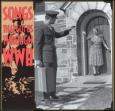 My dad was in World War II. He was a Navy man, and he worked on airplanes. He was stationed in the South Pacific. When I was growing up, he listened to a lot of big band music (while most of my friends’ parents were listening to folk music).
This collection of songs is a favorite of mine whenever I’m feeling nostalgic for my parents. Although not every song on this disc was one I knew, the majority are greatly familiar. My dad even had a lot of these records on 78 vinyl (and I have begun a small 78 RPM collection of my own).
When I think of a lot of these songs and what they meant to the people back home they go from being upbeat fun dance songs to being songs that people held onto during such a tough time. There hasn’t been a lot of documentation about what families hold onto during our current wars (emails I gather are pretty important), and I suspect that with popular culture being fragmented so much, there aren’t really any unifying songs like in WWII. I’m not sure if that’s a shame, but it does mean less that nostalgia like this isn’t as likely 60 years from now.
[READ: July 19, 2009] “Kinds of Killing”
Normally I don’t write about book reviews. However, since I enjoyed William Gass’ The Tunnel, and I am fond of his writing in general. In fact, Gass is such a powerful writer, and he spends such a great deal of time honing his words, that anything he writes is worthy of a read. And since this book review was something like 8 pages long, it seemed worthy of a few words.
 So William Gass goes beyond just reviewing Richard J. Evans’ The Third Reich at War. He talks a lot about the Nazis in general. And, I was surprised by how much I didn’t know about what the Nazis did in Poland and environs before they had even built the gas chambers and what that we think of when we think of the Holocaust.
Gass lays out all of the numbers of people (not just Jews) killed by the Nazis (and they are horrifying). But Evans also lists the “mundane” and basic aspects of the Nazi war plan: bullying, denigration, blame. As the Nazis began marching on Poland, looting and pillaging every house became standard. The higher up military brass were so greedy that in addition to the slaughter, (which obviously is horrific) they also went for humiliation of the survivors and eradication of people’s cultures. So they not only stole artifacts, they wanted to create museums and galleries of their trophies. Evans writes, “Even the Warsaw Zoo’s collection of stuffed animals was taken away.” One inhabitant of occupied Athens commented, “Where is the traditional German sense of honour?” In almost every way that seems like a minor quibble compared to the slaughter of innocents, and yet Evans’ point is to go beyond the global horror to look at the details. For indeed, when we speak of the holocaust, it tends to become somewhat abstract. It’s the details that really highlight the horror.
I’m not sure exactly what connection William Gass has with Nazi research (The Tunnel has a long section about the Nazis), and a cursory search reveals nothing. And yet, Gass’ sympathetic reading of this book, and his stunning prose make the horros of the War come to life in graphic detail.
One aspect of Gass’ review is that films and literature have recently begun to, if not absolve Germans’ activity in the war, than to lessen the guilt. He notes, “A number are currently operating in the guise of (fraudulent) memoirs or romanticizing movies.” His point is that the further the Holocaust moves away from us, the more it’s being exploited to create a narrative of redemption. Evans’ book says that this redemption story is simply not true, and that most Germans only began opposing Hitler once it was clear that they were losing the war.
I was horrified and quite affected by this review. I can say in all honesty I will never read Evans’ book. The snippets that Gass quotes, and the information he relates was graphic enough, thank you. And yet, despite all of that, the point is very well taken: distance tends to soften the hard edges of reality. And it is important to never forget that evil can very easily come to power.

 I Just Read About That...
Leave a comment