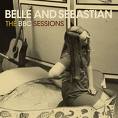
 SOUNDTRACK: BELLE AND SEBASTIAN-BBC Sessions & Live in Belfast 2001 (2008).
 Virtually every review of the BBC Sessions says the same thing: these tracks barely differ from the original recordings. And, for better or worse, that is very true. In fact, even the trumpets and other instruments sound so perfect, you tend to forget it’s a live recording. Clearly this sends a positive message about their live playing. But if that’s the case, why would you buy this?
Well, clearly Belle & Sebastian devotees will buy it even if there’s only marginal differences. But really the selling point is the last 4 songs, all of which are brand new (at least to me). It’s also amazing to me how on the first batch of live songs from 1996, the band sounds so delicate it’s as if they would fall apart just by looking at them. The opening songs are soft, and Stuart’s voice is barely a whisper. And yet through all of that the choruses are still catchy, and the songs are amazing.
But really the main hook for this set is the Live in Belfast disc. It comes from 2001, and is a surprisingly rollicking set. I saw B&S several years ago at a small club in Manhattan. It turns out to be one of my worst concert experiences. Not because of the band, but because it was so overcrowded (B&S were the “IT” band at the time) that I had to keep moving back to stop getting crushed. I eventually spent time in the lobby trying in vain to hear the set.
So this is the next best thing for me.
The set is an interesting mix of covers (and surprising ones at that–“The Boys Are Back in Town!”) and B&S rarities (with a couple of popular songs like “The Boy with the Arab Strap” and “Legal Man” thrown in as well). There’s also a fun rendition of The Velvet Underground’s “I’m Waiting for the Man” by a fan named Barry who requested the song and then came up on stage to sing it. The band is loose, a little shambolic and apparently having a lot of fun.
It’s a remarkable collection of tracks for any fan of the band and certainly overcomes the similarities of tracks on the first disc.
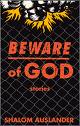
[READ: May 24, 2009] Beware of God
I read this book exclusively because of my authority as a librarian. I received an email saying that the person who had put this book on hold no longer wanted it (her book club was last week and she had to buy the book…that’s a book club I want to be in, actually). When I took it off the hold shelf, I saw who it was by, and since I have wanted to read his stuff (and this book was fairly small) I thought I’d take it home with me. When we canceled the hold, I learned that someone else had a hold on it, so technically I couldn’t take it. However, I broke a rule. Since it was Saturday and Memorial Day weekend this book wouldn’t be shipped out to the net person on line until Tuesday morning! Surely I could read this in time with no one the wiser. Well, imagine my surprise to have read it by Sunday night…it could have gone back even if it wasn’t a long weekend! Huzzah!
I hope that doesn’t get me fired.
So onto the book.
Actually, first, onto the author. Shalom Auslander cannot possibly be a real name. It sounds like something that Thomas Pynchon would make up. It means literally Peace Foreigner. And whose last name is Foreigner? Auslander grew up in Spring Valley, NY, an orthodox Jewish community that my friend Al grew up near. He told me that if you drove though Spring Valley on Shabbos, the Jewish folks would get in your car and demand a ride, since they couldn’t drive on that day. I don’t know if this is true or a horrible stereotype. I’m sure someone will correct me either way.
Quite a long way to get to the book.
When I read that Auslander was raised Orthodox, I realized that to my knowledge I haven’t read any stories by an Orthodox Jew that I knew of. I wondered how much impact that would have on the story and my ability to relate to it. Well, aside from a few Talmudic details (humorously, painstakingly argued by protagonists) and some real Yiddish words, it didn’t make an awful lot of difference).
And the stories were hilarious!
There are 14 stories in all, each about ten or so pages. I’m not going to go through each one, because that would most likely reveal too many punchlines.
The first story is the most Orthodox, in which a man and his wife argue (and behave accordingly) about the virtues of getting into heaven. The detail into the things you can and can’t do (and can you trick someone into behaving badly to avoid heaven) were pretty intense. After that story though, the book loosens up quite a bit. We get masturbation, sentient apes, dead dogs, golems, and two instances in which God is called a dick or a prick. That’s right this is some blasphemous stuff here.
There are a few stories that follow conventional story format (with a plot, that is). These are all very funny and involve either being young and afraid of God or being older and feeling hard done by for following the rules so strictly. Or, indeed, maybe God is just a bastard.
“The Metamorphosis” (playing with Kafka) transforms a nice young Jewish man into a muscular carpenter with tattoos (and a penchant for fixing things) which instantly gets him excommunicated from schul. “Prophet’s Dilemma” looks at the very real consequences of heeding God’s voice. And “God is a Big Happy Chicken” should be taken literally.
The two stories that differ from the plot-driven style are “Holocaust Tips for Kids” which is an exercise of a young kid making sense of the Holocaust and tying it in with things he knows (Florida and Martial Arts movies). “Smite the Heathen, Charlie Brown” is a very true-to-comics story of Charlie Brown, as he and his friends get into a religious war.
I enjoyed and laughed pretty hard at the bulk of the book. I have some mixed feelings about only one story: “Startling Revelations from the Lost Book of Stan.” The story is very funny. [Somewhat spoiler alert] In it, Stan discovers a heretofore unknown tablet of the Old Testament which reveals “The following is a work of fiction. Any resemblance to persons living or dead is entirely coincidental” Pretty darn funny. However, in the Red Dwarf episode Better Than Life (from 1988) we get this joke:
Here is the news on Friday, the 27th of Geldof. Archeologists near Mount Sinai have discovered what is believed to be a missing page from the Bible. The page is currently being carbon-dated in Bonne. If genuine, it belongs at the beginning of the Bible and is believed to read, “To my darling Candy. All characters portrayed within this book are fictitious and any resemblance to persons living or dead is purely coincidental.” The page has been universally condemned by church leaders.
Now, I’m not saying Auslander took the joke from Red Dwarf, in fact for all I know, the joke has been around as long as the New Testament. But I was a little bummed that the reveal of that joke came four pages into the story as if it was an original hilarious joke. Having said all that, what he does with the story is absolutely fantastic. He moves beyond the joke, into a new terrain and he takes it much further than the Red Dwarf guys ever did.
Overall this book was really very funny. It reminded me of some of the best religious Woody Allen stories. It also reminded me in tone of Simon Rich, although I like Rich’s short pieces better than Rich’s longer stories. David Sedaris’ name is bandied about as a comparison, but I don’t really see it. Auslander’s stories are more pointed and religiously funny and don’t come across as reality-based.
If his novel Foreskin’s Lament is anything like these stories, I can’t wait to read it.

 I Just Read About That...
Leave a comment