 SOUNDTRACK: CITY AND COLOUR-Live (2007).
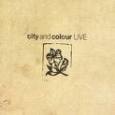 City and Colour is the solo project of Alexisonfire singer Dallas Green (get it?). I was really impressed by Dallas’ voice within the noisy metalcore of AOF. And I wondered what his solo stuff would sound like without the dissonance of the rest of the band. I saw this disc was available from Maplemusic and it was considerably cheaper than on Amazon. A live record isn’t always the best venue to check out an artist but in this case, I figured his solo stuff probably translated fine live as well. (Still haven’t actually heard a solo record so I can’t say). The set is also not entirely solo, as he calls out an accompanist for a few tracks (the DVD gives more information about who he is).
In AOF, Dallas’s voice is strong and powerful and yet totally catchy. His voice is the reason that I like AOF so much. So I was a little disappointed in the live release because he seems to be holding back. As I said, I haven’t heard the original discs, so I don’t know how it compares. But on some of the songs, he seems too restrained.
The songs are all very catchy, and the between-song banter is fun (it was excised from the CD but is available on the DVD) . But as I said for some of the songs it’s almost as if he’s inhaling rather than exhaling when he sings. I guess I find it weird for a punk rocker to be so restrained. Despite that, several songs do stand out as excellent. “Comin’ Home” (there are two versions on the disc), “Save Your Scissors” (the second version on the disc is especially fun because the crowd sings along). And lyrically Green is very interesting. “Comin’ Home” has some nice name-checking of cities around North America (poor fans in Lincoln, Nebraska, though).
Despite my reservations about his singing, his voice still sounds great. I’m interested in checking out a studio release to see how it compares.
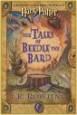
[READ: December 18, 2008] The Tales of Beedle the Bard
There’s two funny stories about this book:
1) At my library, we received a notice from Scholastic Books that this book COULD NOT be put out before the release date of December 4. We had to sign a release form promising it would not go out any sooner. We all laughed about that because, while we knew that Book 7 of the Harry Potter series was going to be HUGE (and we had the same release form to sign for that book) we also knew that this was, at best, an esoteric addendum to the series for die-hard fans only. (As of this writing our copies haven’t even arrived yet, and there are only eleven holds in our entire system).
2) Entertainment Weekly‘s review of the book starts out with “J.K. Rowling’s The Tales of Beedle the Bard should come with a consumer warning label: ”May disappoint if read with great expectations.”” Again, I don’t think anyone who was planning to read this book thinks it’s some sort of sequel or epilogue or anything, or that any major secrets about Harry are coming in this book.
This book has been advertised since day one as an old manuscript that was mentioned in Deathly Hollows. Nothing more. Anyone with higher expectations was given misinformation.
What this very brief book is, is a collection of fables written by the thirteenth century writer Beedle the Bard. This collection is translated by Hermione Grainger, and it has commentary by Aldus Dumbledore (which was written before the events of Deathly Hollows).
I really enjoy the fact that Rowling put this much effort into a more or less trifling books. I like that she bothered to create commentary by Dumbledore, in character. And I like to think of her “translating” it ala Hermione (although, obviously, as a translator, Hermione is absent from the book itself).
There are five tales in the book: “The Wizard and the Hopping Pot,” “The Fountain of Fair Fortune,” “The Warlock’s Hairy Heart,” “Babbity Rabbity and Her Cackling Stump,” and “The Tale of the Three Brothers.”
Each tale is basically a fable about using and misusing magic. The “Hopping Pot” story has a wizard punished for no helping non-wizards (Muggles in Potter’s world). “Fair Fortune” actually teaches about believing in yourself, and that magic isn’t necessary. “Hairy Heart” is about finding true love. “Babbity Rabbity” is about misusing magic and “Three Brothers” is about accepting death.
Even though the book is designed for die-hard Harry Potter fans, these stories could appeal to just about anyone–Potter fan or not. Despite the magical elements of some of the stories, they all basically teach a simple moral lesson.
It’s the Dumbledore sections that might confuse non-Potter fans (although J.K. Rowling does a good job of clarifying a lot of Dumbledore’s comments for those out of the loop. But Dumbledore’s comments are fun for those who have read the series. He references a lot of the “bad” characters, especially the Malfoy family. They disapprove of a lot of the tales because Beedle the Bard encourages fraternization between wizards and Muggles and also because he suggests that wizards use their magic to assist Muggles.
The final tale, “The Tale of the Three Brothers,” is actually designed as something of the impetus for the entire Potter series. In it, Death promises three brothers a reward for being cunning. The eldest asks for an unbeatable dueling wand. The middle brother asks for a stone that has the ability to resurrect the dead. The youngest (and most clever) brother asks for a cloak of invisibility to hide from Death. Dumbledore suggests that readers who have taken these stories literally believe that if they can find all three of these items: the wand, the stone (the sorcerer’s or philosopher’s stone (and the start of the series)) and the cloak, they will be invincible. I like the way Rowling has structured all of this.
And so, in sum, it is a small book, but it is a fun addition to the series. It may also serve as a good introduction to the series (or to the way Rowling deals with magic) for those wondering whether they want to read it or not. Not an earth-shattering release by any means, but certainly enjoyable.

 I Just Read About That...
Leave a comment