Feeds:
Posts
Comments

Bunheads (2012-2013)

[WATCHED: 2012-2013] Bunheads

bunheadsIt’s no secret that Gilmore Girls was one of my favorite shows.  It was well-written and funny, often sweet but sometimes not and with a liberal dose of quirk.  The show was Amy Sherman-Palladino’s baby and over the seven years it developed an awesome cast and was easily one of the most consistently enjoyable shows on TV.

But all good things must come to an end–and as in the case of Gilmore, often times it must come to an end before its natural arc has finished.  This led to a rather forced and frankly unsatisfying conclusion to the show.

But ASP is back on TV on, of all places, ABC Family (which has some astonishingly mature shows for a “family” network).  Her new show (which began last year) is called Bunheads.  It’s a terrible name for a TV show.  Even if it is an actual slang term used for ballet dancers (which the show features), it’s still a terrible, unappealing name.  There’s also the opening credits–also terrible.  The Gilmore credits were fun–a new version of Carole King’s “If You Lead” playing behind scenes from the show.  The Bunheads opening is a black and white scene of ballet dancers (again, it’s what the show is about, but blah), with a color ribbon swirling around them until it lands on Sutton Foster, the lead actress, who explodes in a frame of color looking a little stunned.

Neither of these two things (title and credit sequence) should impact your decision to watch the show, which is delightful–heartfelt, funny and with a healthy dose of quirk.  And like Gilmore, the show is very women-centric, rather a rarity on TV.  I feel it’s very subtly done as well–in this case, the show is about ballet dancers who are predominantly girls, so it makes sense.  And since ASP writes mother-daughter situations very well, it’s also a natural fit.

So yes, the show feels a lot like Gilmore Girls.  The amazing Kelly Bishop is back as the matriarch (she’s much the same character although she is a bit more fun in Bunheads).  Sutton Foster plays her daughter in law.  Foster looks so much lie Lauren Graham that she may as well be her. What’s cool here and what makes it not just Gilmore redux is that the dynamic is not mother-daughter-daughter, it’s widowed mother-in-law–daughter-in-law–four teenagers so while the roles are almost the same, ASP is not simply rewriting what has happened before.  As for the young characters, we have four teenagers–the bunheads.  From the get go they formed a believable foursome–sometimes annoying, and over the top, but never unreal. Continue Reading »

mirkaSOUNDTRACK: MATISYAHU-“Chop ‘Em Down” (2004).

matisyaMatisyahu was something of a novelty when he appeared in 2004–a Hasid who performed dancehall reggae.  And yes, it does look very strange.  But he is quite adept at the style.  And lyrically it works really well.  Reggae is (often) a very spiritual music so Matisyahu’s own spiritualism works with the beats he lays down.  Instead of Jah, we hear about Egypt and Pharaoahs.  And the “scatting” that he does is like the scatting found in more typical reggae but it has a more Middle Eastern feel.  It’s a neat concept and well executed.

This is not a style of music that I like a lot (one song is usually enough for me), but I really like the sound he has conjured.  It’s clear that he transcends the novelty and is a genuine fan of the music.  It’s an interesting way to expand people’s horizons (on both sides).

Interestingly, in 2011, Matisyahu shaved off his beard and dropped his Orthodoxy.  He is still spiritual, but without the trappings of his faith.  Fascinating.  Here’s a before and after photo.

matismatisy

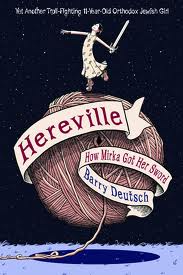
[READ: January 18, 2012] Hereville: How Mirka Got Her Sword

I enjoyed the second book in this series quite a lot.  So I found the first one to read too.  Who can pass up a book subtitled: Yet another troll-fighting 11 year-old Orthodox Jewish girl.  I had said that you didn’t need the first one to enjoy the second one.  And that’s true, although I now know that the first one would have laid down a foundation for me to enjoy the second one even more.

What is neat about this story is that there isn’t a lot of exposition up front.  We learn that Mirka is an 11-year-old Orthodox Jew living with her family (which contains many siblings).  She is a little wild and not interested in being “good.”  She’s not bad at all, just spirited–she really wants to fight a dragon.  It’s not until later in the story that we learn that she has a stepmother (unless that is obvious to Orthodox readers from the way Mirka addresses her) and that there may actually be dragons in this world.

The book presents Orthodox life and its day to day realities.  It doesn’t explain or justify the details, it just shows them (with occasional translations of Yiddish terms).  Although it must be admitted that Hereville, where the family lives, is a bit unlike other communities.  Everyone who lives there is Orthodox and non-Orthodox reading materials are not permitted.  And indeed, when a pig shows up, the children don’t know what it is. Continue Reading »

tobo3SOUNDTRACK: iMOGEN HEAP-Speak for Yourself (2005).

heapI really liked Heap’s first album i Megaphone, but I didn’t really think to much about her after that.  Sometime last year I heard a track she was in with Frou Frou, which I liked.  So I thought I’d get this album which was highly regarded.

The problem with it is that I have listened to it a bunch of times, often several times in a row and it really just never sticks with me.  I keep relistening to see if it ever does but it’s just a kind of nebulous dancey pop.  Heap has an interesting voice–she can hit major highs, but she can also do a raspy voice that is unusual and intriguing.  But I suppose the problem is that there’s so much going on that she is effectively lost in the sound.

The standout track is “Hide and Seek” but that’s because her voice is manipulated by a vocoder, making her sound like a machine. It’s a very cool effect, especially when she hits a very high note, but it can’t really be a good sign that the most memorable track on the album is the one where you sound like a machine.

This is not to say that the album is bad–there are a number of interesting moments on it, unfortunately there aren’t a lot of great songs.  When I was looking this disc up to see other comments about it, I see that it was very highly regarded in the dance genre.  And maybe given those parameters I should revise somewhat as well.  As dance music this is more interesting than your average four on the floor stuff.  I can see how it led to the duet of Frou Frou.  And yet, compared to i Megaphone, I fear that it’s a lot less exciting.

[READ: January 12, 2013] The Dangerous Animals Club

I don’t often read autobiographies or memoirs.  I really never even look for them.  But I was waiting online at the library and this book jumped out at me.  I don’t really know why.  The title is kind of interesting and catchy.  And the author’s named seemed, if not familiar, then at least compelling in a very-long-and-Polish-or-Russian way.  So I started flipping through it.  And it sounded interesting.

But who the hell is Stephen Tobolowsky?  Well, if you have seen just about any movie or TV show, you have seen him.  He has been in a ton of things.  He was in Groundhog Day, he was in Heroes, he is in Glee, he was in The Mindy Project briefly.  Community? yup.  The New Adventures of Old Christine?  you bet.  Deadwood for a lot of the show.  That 70’s Show for one episode.  He was in the unaired pilot of Buffy the Vampire Slayer.  He was even in a 1976 movie called Keep My Grave Open!

So who is he?   Continue Reading »

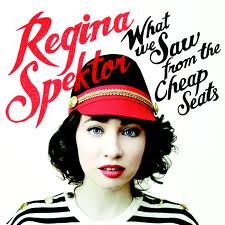
CV1_TNY_01_21_13Blitt.inddSOUNDTRACK: REGINA SPEKTOR-What We Saw from the Cheap Seats (2012).

spektorRegina Spektor’s latest album has gotten rave reviews this past year and deservedly so.  It’s catchy and more than a little weird.  The songs could be huge but they don’t have the gloss that makes for big sellers.  Which is fine, because Spektor’s niche is perfect with her in it.

Amidst the quirk, there are some wonderful piano pop songs with unexpected lyrics.  There’s a great phrase in the opener “Small Town Moon,” “Today we’re younger than we’re ever gonna be.”  But after the pretty piano intro, Regina’s full band kicks in for some rocking verses.  “Firewood” is a gorgeous piano ballad dealing with a common theme in her songs: death (but with jaunty piano lines and a beautiful instrumental section).  And “Open” falls into this category as well–achingly beautiful (and a touch Ben Foldsy in the piano).  Although there’s some really crazy sounds on “Open” too, like Spektor dramatically gasping for breath after lines of verse.

The album is full of electronic “drum” sounds that are what I assume is really Spektor going “doo doo” and then electronically manipulated.  You can hear them on one of the weirder songs, “Oh Marcello” which has Spektor singing in a crazy Italian accent and has a chorus of “I’m just a soul whose intentions are good”–but not in the manner in which it was originally sung).  This drum sound is really prevalent of “All the Rowboats” a fascinating song that seems to offer pity for paintings in museums.

“How” is also filled with theatricality–and Spektor’s gorgeous soaring voice.  “The Party” is another big blockbuster number–lots of instruments and a big soaring vocal.  Wonderful.

“Don’t Leave Me (Ne Me Quitte Pas)” has one of the catchiest choruses that I have no idea what is being said (because it’s in French).  It also has great orchestration giving it a very worldly feel.  “Patron Saint” is another pretty song, with lovely strings.  The disc ends with an acoustic guitar/piano tune.  A simple song to “Jessica.”  This album is gorgeous and deserves a wider audience.

[READ: January 16, 2013] “Experience”

Tessa Hadley had a story in the New Yorker back in June (she seems to be a favorite of theirs.  I liked that one, and I like this one as well.  Hadley creates interesting scenarios for her stories, scenarios that I can’t really imagine happening (unless things are different in England).  But I feel like that scenario’s set up is neither here nor there for the point of the story.  So in this one, a woman who has very recently divorced from her husband is looking for a place to stay.   A friend of a friend who is going to America for a few months agrees to let her live in her house rent-free.  Now I’m not saying that that kind of thing can’t happen, indeed there is a lot of fiction based on the idea of staying in someone’s house while they are away, but I’ve never heard of it happening in real life.  And despite my saying this, I don’t have a problem with it.  I’m willing to believe it happens all the time.

So the narrator, Laura,  makes herself at home in Hana’s house.   She doesn’t have a ton of money so she is more or less subsisting on what’s around the house until she has to get a job.  She checks out all the rooms and enjoys the comforts of Hana’s well-off lifestyle.  Then one day she finds a key to a locked attic room.  She decides to explore the room and see what kinds of secrets it hides.  It contains largely the ephemera of a successful woman: porn videos, a wetsuit, coffee table books and a number of paintings (Laura believes Hana made her money in the art world).  But then she finds a box that contains more personal effects.  Including a diary.

The diary reveals that Hana had been having an affair with a man named Julian.  Hana describes Julian, who is married, as rough and as someone who hurts her, but that the s*x is great.  I found it charming that Hana wouldn’t curse in her own diary  writing “f****d in the shower” and “Then X and you know what.”  The last words in the diary were “He makes me so happy.”

Reading this makes Laura feel despondent–she has never had any experience like that–she married young, was dutiful and is now divorced.  Her husband was smart and gentle and rather boring–even when they split up it was reasonable.  This causes Laura to mope around a bit.  Until one day Julian knocks on the door. Continue Reading »

seamSOUNDTRACK: ELFIN SADDLE-Devastates [CST087] (2012).

elfinElfin Saddle continues their streak of oddly juxtaposed music that works very well.   The band specializes in a kind of Middle Eastern folk music (there’s a lot of Jewish-style singing), but with Emi Honda singing Japanese-style vocals it really alters the overall sound.  They also use a lot of raw sounding “instruments” many of which are found or quite simply, junk.  Check out the instrumentation list: Jordan McKenzie: voice, guitar, half-accordion, drums, varied percussion, membrane pipes, organs, piano, pvc processing, tapes, phonographs, speakers, etc.  Emi Honda: voice, ukulele, drums, half-accordion, musical saw, extra percussion.  It’s that extra percussion and etc. that you hear a lot, rattling around in the background of these songs.

They play complex rhythms (with lots of low end drumming) underneath ethereal noises (music boxes and the like).  And all the while, Honda and McKenzie trade off their unusual vocals.  It’s mesmerizing.  When the band really starts rocking, like in “The Changing Wind” you hear how well it all works together, and how well the two play off each other.  The slower pieces, like “Boats” are very cinematic, probably because everything sounds so real–you can see the items that are making these odd sounds.

The music is definitely not pop, but with just a listen or two, you can really appreciate what they’re doing.  If you like your folk a little noisy or your rock a little experimental, this is a great record to check out.

[READ: January 13, 2013] The Seamstress and the Wind

Things that I have said about every book of Aira’s that I have read: they are all short, he writes a lot of books (according to Wikipedia he has written at least 45 books since this one came out about twenty years ago), and they are all nonlinear.

And so it is with this 130 page book.

As the book opens, a young boy named César Aira is playing with his friend in the back of their neighbor Chiquito’s truck.  They are playing a game of ghosts when suddenly, César finds himself walking in a trance back to his house.  Turns out his friend Omar couldn’t find him for hours (and when César snaps out of it, indeed hours have passed).  And yet, despite this story, it turns out that really Omar is missing (what? who knows?).  Omar is the son of the local seamstress, Delia Siffoni.  She is sewing a wedding dress for the art teacher, Silvia, who is (scandalously) pregnant.  When she hears that her son is missing, she freaks out and calls out a search party.

She concludes that Omar was hiding in Chiquito’s truck when he left for Patagonia.  So she takes a taxi to chase after Chiquito.  Since the dress is due to be finished right away, she takes it and her supplies with her in hopes of finishing it on the road.  When Ramón, Delia’s husband realizes what she has done, he chases after her.  And when Silvia realizes that her dress is driving away in a taxi she follows Ramón.  And so it becomes a road novel in which none of the characters are together.

By the end of the story there has been a terrible accident with a taxi crashing into a truck.  There has been a poker game where one of the two women has been lost in a bet (unbeknownst to her) and we have met The Wind (Sir Ventarrón) who helps the seamstress with her problems.  Indeed, Sir Ventarrón becomes an integral part of the story, including a flashback when Sir Ventarrón assisted a snowman in his quest for eternal life (yes). Continue Reading »

capnSOUNDTRACK: THE DEAD MILKMEN-“The Puking Song” (1989).

smokin_banana150I usually try to pair kids books with kids music.  And this song might be a little inappropriate for kids, but it’s in the spirit of Captain Underpants, right?

“The Puking Song” is, yes all about puking (How I love to sleep in vomit, you don’t know the joy I get from it, waking up to the smell of puke…makes me shout I love you!).  It’s doesn’t get any more vulgar than that, although it is of course, pretty gross.

It’s sung by Joe Jack Talcum, with his rather whiny/slightly out of tune/childish voice.  It comes from a B-Side (really??) on the Smoking Banana Peels EP.  Yes, it is pretty gross, but I’ll bet it’s fun to sing along to in a crowded theater.

[READ: January 14, 2013] The Adventures of Captain Underpants

Captain Underpants is perpetually on the list of banned books, which is really quite funny (except that banned books are not funny), because honestly how bad could it be.  I had never read the book before, but Clark has been reading them all lately so I thought it would be interesting to read it as both a librarian (anti-banning) and as a parent (pro-ensuring-that-it-is-appropriate).  And what I learned is that I understand why people want to ban the book, but I think it’s utterly foolish and wrongheaded to do so.

So what’s so bad about the book?  Well, it’s silly and vulgar (and full of pictures of a superhero in his underpants, gasp), but the thing that I assume bugs authority figures is that it totally mocks and abuses authority figures–which is exactly what makes kids laugh and exactly what humorless authority figures hate.

So the story is about George Beard and Harold Hutchins, two mischievous kids.  Within the first two pages, they pass by a sign that says Pick Your Own Roses and they rearrange the letters to spell Pick Our Noses.  [I have to say that the other day Clark drew a comic in which a storefront said Come Visit Our Awfully Good Store.  A boulder smashed through it which left the result: Come Visit Our Awful Store.  And I was very proud of his creativity and thanked Pilkey for that direction of his comedy].  But that’s the level of mischief we’re talking about: putting soap bubbles in the band instruments and putting helium in the football. Continue Reading »

tintin americaSOUNDTRACK: THE DIGGITY DUDES-“My Science Project” (2012).

diggityThe Diggity Dudes are getting a lot of airplay on Kids’ Corner on WXPN.  I like them in theory but I don’t really like the style of music they play–it’s a little too generic.  That being said, I do rather like the lyrics of this song.

It’s all about doing, yes, a science project.  “Measure twice or you’ll have a disaster.”  The problem is that the verses are done in a  rap style that’s not very good.  And the rhymes are awful.

I give them credit for writing about cool subjects for kids (like “To the Library” which I would have reviewed but they didn’t have it playing on their site).  But if they weren’t a kid’s band, I wouldn’t like them at all.  Despite that, I imagine they put on a great live show–they seem like they’d be a lot of fun.

[READ: Jauary 10, 2013] Tintin in America

I have known of Tintin for years (Sarah and I even have an inside joke about the boy journalist).  When we went to Brussels, we went to the art museum and saw the history of Hergé’s works (Hergé’s real name is Georges Prosper Remi) and the tons of souvenir Tintin things that are for sale. And yet I’d never read any of his stories.

I saw some in the library and decided to check out volume one.  Interestingly, this volume starts with Tintin in America. While reading it I quickly determined that this was not the first book in the series.  Indeed, America is the third book after Tintin in the Land of the Soviets and Tintin in the Congo (neither of these two are readily available in the US–the first because Hergé later felt it was too crude to redo for collections and the second because the depiction of Africans was deemed offensive).  So, most collections begin with this book (which is only a little odd because he is already well-known and the story seems to start in the middle because he dealt with some of these thugs in book 2).

But on to America. Continue Reading »

literarySOUNDTRACK: CHELSEA LIGHT MOVING-“Burroughs” (2013).

chelsea-light-moving-albumChelsea Light Moving is Thurston Moore’s new band [no comments about the state of Sonic Youth/Kim Gordon will be included in this post].  I don’t know anything about the other members of the band; I’ve not heard of any of them.  “Burroughs” is one of four new songs streaming on the Matador Records site.

The song is spot on for the noisy/sloppy style of Sonic Youth.  Fans of Sonic Youth will certainly detect some differences–the counterpoint of Lee Ranaldo is definitely absent, indeed, the entire low end sounds very different from what SY would create given this song.  But man, if you’re jonesing for some chaotic noise, this song has it in spades.

Moore is capable of creating some traditionally beautiful songs (see his Trees album), but here it’s all about discord.  The song is over six minutes long and the last 3 or so are devoted to some noisy guitars in both chords and solos.

While SY has not shied away from long songs, this song doesn’t feel like an epic–it’s not multi part or “extended” exactly.  It’s a fairly straightforward rock song with an extended solo section.  It’s really great.  I’m looking forward to the whole album (and I love the cover, too),

[READ: March 23, 2012] The Literary Conference

This has been my favorite Aira book so far.  And that’s probably because it is wonderfully over the top, mixing fantasy, sci-fi, genetics and literature.  All in 90 pages.

The story is about César Aira, translator.  He has been invited to a literary conference in Venezuela.  While there, he solves the age-old problem of The Macuto Line.  The Macuto Line is, essentially a rope which is attached to a pirate treasure.  For generations, people have tried all kinds of  things to impact this line–but it has proven to be unsolvable and indestructible.   Aira happened to be staying near the Line in a hotel.  He claims that he is no genius, but it just happens that the elements of his life have given him the exact information he needs to solve the puzzle.  And with a simple touch of the rope, the treasure is his.

But that’s just part 1 and has nothing to do with the rest of the story, really.  For despite his newfound wealth, he will still be attending the literary conference.  Primarily because he knows that Carlos Fuentes will be there (Fuentes is a real person, a Mexican author who died in 2012).  For, you see, Aira is planning to clone Fuentes in his bid to take over the world.  (In addition to being a translator, Aira is a mad scientist). Continue Reading »

dtmaxSOUNDTRACK: TOM WAITS & KEITH RICHARDS-“Shenandoah” (2013).

roguesgallery-f8be47f3887d51de57ea842a129f0a722e53ef74-s1This tune comes from the album Son Of Rogues Gallery.  The album is, of all things, a sequel to the album Rogues Gallery.  The full title is Son Of Rogues Gallery: Pirate Ballads, Sea Songs & Chanteys.  The first album was a kind of novelty–I can’t even say novelty hit as I don;t know if it was.  But it must have had some success because here’s a second one (and there’s no Pirates of the Caribbean movie to tie it to).

The album has 36 songs (!) by a delightful collection of artists, including: Shane MacGowan, Nick Cave, Macy Gray, Broken Social Scene, Richard Thompson, Michael Gira and Mary Margaret O’Hara (among many others).  I enjoyed the first one, but I think the line up on this one is even better.

“Shenandoah” is not a song that I particulalry like.  Because it is traditional, I have a few people doing versions of it, but I don’t gravitate twoards it–it’s a little slow and meandering (like the river I guess) for me. And this version is not much different.  What it does have going for it is Waits’ crazed warbling along with even crazier backing viclas from Keith Richards (there;s no guitar on the track).

[READ: January 7, 2012] Every Love Story is a Ghost Story

I had mixed feelings about reading this biography.  I’m a huge fan of David Foster Wallace, but I often find it simply disappointing to read about people you like.  And yet, DFW was such an interesting mind, that it seemed worthwhile to find out more about him. Plus, I’ve read everything by the guy, and a lot of things about him…realistically it’s not like I wasn’t going to read this.  I think I was afraid of being seriously bummed out.  So Sarah got me this for Christmas and I really really enjoyed reading it.

Now I didn’t know a ton about DFW going into this book–I knew basics and I had read a ton of interviews, but he never talked a lot about himself, it was predominantly about his work.  So if I say that Max is correct and did his research, I say it from the point of someone full of ignorance and because it seems comprehensive.  I’m not claiming that he was right just that he was convincing.  And Max is very convincing.  And he really did his research.

It’s also convenient that DFW wrote a lot of letters–Max has a ton of letters to quote from.  And DFW wrote to all kinds of people–friends, fellow authors  girlfriends, colleagues….  Aside from old friends, his two main correspondents were Don DeLillo, whom he thought of as a kind of mentor, and Jonathan Franzen, whom he considered one of his best friends and rivals.  I guess we can also be thankful that these recipients held on to the letters. Continue Reading »

SOUNDTRACK: RA RA RIOT-“Is It Too Much” (2013).

raraI loved the first Ra Ra Riot album The Rhumb Line.  This song expands on some of the ideas from that album, but I fear that it goes in the one direction I would have preferred they not go.  The album had strings, nice harmonies and a great singer all melded into an interesting rock structure.

This song retains all of the elements that were interesting, but it removes it from the rock structure, making it  sound much more lightweight.  It’s pushing too far into easy-listening.  And do I hear autotune on the vocals?  The instrumental middle section is the most interesting part of the song.  But Ra Ra Riot seems to have removed the riot part of their sound.  If this is the direction of the album, I’m afraid I won’t be following.

[READ: January 8, 2013] “Consider the Writer”

I just finished the D.T. Max biography of David Foster Wallace.  I was curious what kind of reception it received.  And lo, here’s a review by Rivka Galchen (something I would have read anyhow since I enjoy her so much).

Galchen opens with two main points–the biography is gripping (and it is, I’ll be saying more about that tomorrow, too).  She writes: “In writing a chronologically narrated, thoroughly researched, objective-as-­imaginable biography, Max has created a page turner.”

The second idea is that you keep thinking “that you just don’t find Wallace all that nice”  (which I also thought).  But then she wonders if it is fair to be worried about that.  We should not judge others after all.  Especially since, as she points out, “We don’t always find ourselves asking whether a writer is nice. I’ve never heard anyone wonder this at length about, say, Haruki Murakami or Jennifer Egan.”  So why is that a concern about Wallace?  Because niceness is what Wallace wrote about, tried to encourage.  And perhaps “One understandably slips from reading something concerned with how to be a good person to expecting the writer to have been more naturally kind himself.”  But that is not necessarily the case–people strive for things that they cannot achieve.   I like her example “the co-founder of A.A., Bill W., is a guru of sobriety precisely because sobriety was so difficult for him.”   And her conclusion: “Wallace’s fiction is, in its attentiveness and labor and genuine love and play, very nice. But what is achieved on the page, if it is achieved, may not hold stable in real life.”

And Galchen talks a bit abut DFW himself (the book is a biography after all).  How he wore the bandana because he sweated so much–how self conscious he was about that and by extension nearly everything he did.  This mitigates his not-niceness somewhat.  It also ties in to his alcoholism  drug use and depression.  And his competitiveness, which is obvious in the biography.  She enjoys the pleasure of Wallace’s correspondences, “especially with his close friend and combatant Jonathan Franzen, but also with just about every white male writer he might ever have viewed as a rival or mentor. Aggressive self-abasement, grandstanding, veiled abuse, genuine thoughtfulness, thin-skinned pandering — it’s all there.”  I rather wished that the authors’ own reactions were included (of course it’s not biographies of them, and they are still alive), just to see if they sparred back with Wallace or if they were put off by yet indulgent of his needs. Continue Reading »