Feeds:
Posts
Comments

CV1_TNY_06_10_13Schossow.inddSOUNDTRACK: JAMES BLAKE-“Retrograde” (2013).

retrogradeI don’t know anything about James Blake.  Indeed, I always assume he is a country singer.  Which he isn’t.

Daft Punk raved about this song as well, so I’m giving it a listen.

There’s not a lot to it, but I love the hummed melody–it’s catchy and distinctive.  The whole production of the song reminds me of Seal’s bigger hits.  Blake has a very beautiful voice as well.

 Even though I probably won’t listen to it again, (although now that it’s over I kind of want to hear it again), I’ll bet I have that hummed melody in my head all day.

[READ: June 17, 2013] “Slide to Unlock”

This was a short story rather than a True Crime, but it was very short, so I’m including it here at the end of the week.  I have complained before about stories that are more or less lists–series of words or phrases that don’t really create a story, just a series of ideas.  This story takes that premise of a series of ideas and actually makes a story out of it and I liked it very much.

As the title suggests. the story is about passwords.  And it begins (in second person) “You cycle through your passwords.  They tell the secret story.  What’s most important to you.”

And he gives some examples: Continue Reading »

CV1_TNY_06_10_13Schossow.inddSOUNDTRACK: PAUL WILLIAMS-“The Hell of It” (1974).
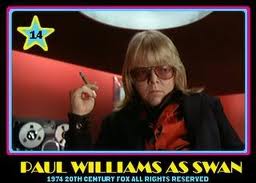
pwI learned of this song because the guys in Daft Punk said it was one of their favorite songs.  I don’t know all that much about Paul Williams except for a few things:

He wrote a bunch of songs that you don’t know he wrote, like: “Rainbow Connection,” “Rainy Days and Mondays,” “We’ve Only Just Begun,” and “An Old Fashioned Love Song.”  And, back in the 80s a random customer at the grocery store that I worked at said I looked like him (which I did not consider a complement).  I have since been told I look like Philip Seymour Hoffman, so I’ve got that going for me.

So this song starts with a rather dark and dramatic guitar riff.  When Williams starts singing, the lyrics are really dark and mean:

Winter comes and the winds blew colder
While some grew wiser, you just grew older
And you never listened anyway,
And that’s the hell of it.

But then the bridge comes in and it’s bright and uplifting (with chipper backing vocals and bouncy pianos). Although the lyrics remain dark dark dark:

Good for nothing, bad in bed
Nobody likes you and you’re better off dead
Goodbye, we’ve all come to say goodbye (goodbye)
Goodbye (goodbye)
Born defeated, died in vain
Super-destructive, you were hooked on pain
Though your music lingers on
All of us are glad you’re gone.

And then there’s another very short section section that is even more musically uplifting.  And yet the lyrics: are the most ruthless:

If I could live my life half as worthlessly as you
I’m convinced that I’d wind up burning too.

The music returns to that sinister guitar riff and the verses continue:

Love yourself as you loved no other
Be no man’s fool and be no man’s brother
We’re all born to die alone, you know, that’s the hell of it.

The last minute of the song  is all instrumental with that dark guitar sound underpinning a bright vaudevillian piano.  And since the song was from a  movie, I wonder if the end if all closing credits?

This song was written for the movie Phantom of the Paradise.  I have never heard of the film.  But I see that it was made by Brian DePalma, is a musical, starred Williams and was a mixture of of The Phantom of the Opera, The Picture of Dorian Gray and Faust, with hints of Frankenstein, Psycho and The Cabinet of Dr. Caligari.  Who would have guessed why it flopped (or why it now has a cult following).

Enjoy the strangeness:

[youtubehttp://www.youtube.com/watch?v=xuYdFYltUr0&feature=player_embedded#!]

[READ:June 17, 2013] “After Black Rock”

Joyce Carol Oates has the final True Crimes story in this weeks New Yorker.  And her story is quite different from the others.  Indeed, it was quite delightful how varied the topics of this special series were.

This piece concerns JCO’s historical family.  Back in 1917, her mother’s father was killed in a bar fight (he was Hungarian and prone to violence).  This devastated their family because he was the primary source of income.  Her mother’s mother had nine children.  Most of JCO’s siblings already worked (long hours for little pay, because immigrant kids didn’t go to school and there were no labor laws at the time).

And then came the shocking thing:  JCO’s mother’s mother gave JCO’s mother away.  She was none months old, they couldn’t afford to feed her, so they gave her to newlywed relatives who desperately wanted a child.  They were John and Lena Bush (the Americanized version of Bùs).  She was raised by them–given some school and some farm work and basically treated as their own. Continue Reading »

CV1_TNY_06_10_13Schossow.inddSOUNDTRACK: TEGAN AND SARA-“Closer” (2013).

Tegan and Sara have teganandsarabeen making interesting folkie pop music for years.  While they’ve toiled in indie-land for years, their last album had a couple of songs that fell squarely into the pop world.

Well, “Closer” says, hey pop world, here we are.  It’s got everything that Tegan and Sara do well–catchy melodies and great harmonies–and it adds all manner of treacly delights to it.  There’s little keyboardy sound effects that sprinkle around the song.  There’s a big swirling keyboard chorus, and the song even slows down briefly so that it can build back up.

It’s frankly hard to swallow.  Aalthough I can appreciate just how well written it is.  And I hope they can make some cash off  of it.

[READ: June 17, 2013] “The Crime of Our Life”

Roger Angell’s True Crimes story talks about crime in New York City in the 70s and 80s.  I recall growing up and being afraid of the City (and for all that we complain that it has been Disney-fied and cleaned up, it is nice to not be worried about getting mugged on every dark street).  And Angell, who lived through it, has some less than cheery anecdotes to relate.But he opens with the good news: burglaries and street robberies are down 80% since 1990!  And, as he puts it, “even lifelong Manhattanites like me have almost forgotten the mixture of anxiety and scary anecdote we all shared back in the seventies and eighties.”

He gives some examples: leaving any place at night and immediately walking in the street if you saw someone even remotely suspicious on the sidewalk.  The friend of his who heard “Sorry, Mister, you’re going down” just before he did go down.  The friend who took karate lessons–and then wound up in the E.R.  And the other friend who took to carrying a sword/umbrella and had a chance to use it (with much success it turns out–“Yow–a fuckin’ sword”).  Even the Angells were broken into (their door taken off the hinges and leaned against the wall. Continue Reading »

CV1_TNY_06_10_13Schossow.inddSOUNDTRACK: BOSNIAN RAINBOWS-“Torn Maps” (2013).

bosnianBosnian Rainbows are the collaboration of Omar Rodriguez-Lopez (At The Drive In, Mars Volta) and Teri Gender Bender (Le Butcherettes).  Interestingly, I normally think of Omar as being the dominant force in the music he makes, but for this song, it seems to be all Teri.  Teri is a Latina singer who takes no shit.  In her Tiny Desk concert, she is fierce and intense, and that comes across here as well.

Perhaps the biggest surprise is how synthy this song is.  It has a very retro feel–like a lot of 80’s bands (Missing Persons and ’til Tuesday’s darker moments and of course, there’s an element of Siouxsie in her voice as well).  But there is something especially intense that Teri brings to this song that takes it out of the realm of safe synth pop (perhaps it the dark bridge).  Omar peeks through a bit during the instrumental break which has a pretty wild guitar solo and some intriguing effects that I wish were more prevalent.

I’m fascinated by this song (although I wish I could hear the vocals more).

NPR is streaming this whole album as I write this, although I’m not sure if it will still be available as of this posting.

[READ: June 17, 2013] “The Ripper”

The second in the “True Crimes” series is from David Peace (an interesting name, hmmmm).  In this one, the year is 1977 and young David is obsessed with Sherlock Holmes (and I would assume Encyclopedia Brown, but he doesn’t mention the boy detective).  Peace was ten years old and set up his own detective agency, intent on solving all local small crimes.

And then he learned of the Yorkshire Ripper.  In the piece he says “I was a lonely ten-year-old boy who found the Yorkshire Ripper” which proves to be untrue.  That was a real bummer because that would have made a great story.  As it turns out, he thinks he has found the Yorkshire Ripper, but he hasn’t.

For those of us not following English serial killers, the Yorkshire Ripper was a man who killed dozens of women from 1977 to 1979.  Peace spent his time poring over clues, certain that he could find what the police could not.  And then came the breakthrough—a tape sent in to the local police station stating “I’m Jack.  I see you are still having no luck catching me.”  Peace listened to that tape (which was available at the local police station for the public to see if they could identify the voice) dozens of times.  And his prime suspect became his science teacher “Jock” Carter.  Continue Reading »

CV1_TNY_06_10_13Schossow.inddSOUNDTRACK: ANNA VON HAUSSWOLFF-“Funeral for My Future Child” (2013).

anna-von-hausswolffThis was selected as one of NPR’s favorite songs of the year (so far).

It’s probably hard to like a song with a title like that, but there’s something strangely compelling about the whole proceeding–the great intricate percussion and drums that start the song, the ponderous pipe organ that lays down the melody, and then Anna’s voice which has a country-ish feel (kind of like Neko Case), but also has a kind of Dead Can Dance vocal style.   Or perhaps that’s just because she is Swedish.

By the time the chorus comes around, the ache of the song is apparent.  And the end has more of that amazing percussion.  I rather like the beginning and the end of the song more than the middle, which I guess doesn’t say a lot for it, but it is intriguing.

Evidently this album is primarily full of pipe organ, an interesting choice for a rock album.  I’d be curious to hear more.

[READ: June 17, 2013] “Twisted”

As if anticipating that I would not be able to write posts this week, the New Yorker has supplied me with a series of very short “True Crimes” pieces.  In fact, the whole issue is a fiction issue, which means a half a dozen or so stories as well.   But it’s these “True Crimes” that will keep me posting this week.

The first is from George Pelecanos, and it’s a story of his own crimes.  He explains that when he was younger, he did all manner of illegal things but had never been caught (aside from a few minor infractions).  He broke into houses and stole records from someone he didn’t like.  He rode in a stolen car, stole wallets from strangers at stores (at this point I really don’t like this guy).  But he doesn’t try to make excuses for himself.  He was a boy and he was having fun.

But the crimes continues long past adolescence.  In 1985 he was 28 and got involved in a high-speed chase.  He was drinking and smoking pot at a wedding.  He and his fiancée stopped at a convenience store where he backed  into someone’s car.  A gang of people came out and the threat of violence was imminent.  But he hopped in his car, drove on the sidewalk and sped off with the police in pursuit. Continue Reading »

hpl;oveSOUNDTRACK: PINKISH BLACK-“Razed to the Ground” (2013).

pinkishblackAfter playing No Age, Lars Gottrich came in to show what real heaviness is with a new song from Pinkish Black.  Unlike most of Lars’ songs, this was neither death- nor speed- metal.  Rather it has a very 80s goth sound.  But it’s more Birthday Party than Sisters of Mercy.

There’s no guitars, just loud drums (with a lot of cymbals), a pulsing bass keyboard riff and some spacey high keyboard notes thrown along the top of the song.  There are elements that I liked about the story.  However, the synths in the solo give it a very cheesy horror movie feel and I have to admit that although I like a lot of bands from the era, this feels like a pale imitation.

[READ: June 20, 2013] “The Call of Cthulhu” and “The Whisperer in Darkness”

Both of these stories appeared in Michel Houellebecq’s H.P. Lovecraft book, but I wanted to treat them separately for ease of searching and discovery.

After my long history with Lovecraft and after reading Houellebecq’s book, I anticipated being blown away by these stories.  And so, with my expectations so high, I was naturally disappointed.  I was especially disappointed with how normal these stories seemed.  Houellebecq made me think the stories were practically non-narrative in form—that they eschewed all manner of conventional storytelling.  That his writing was so weird that no one would publish it.  But in these two stories everything seems completely normal.  Psychologically these stories are different, but aside from content, they are fairly conventional stories.

Maybe they aren’t mind blowing because they were written nearly 100 years ago and the entire world has changed drastically since then.  It may also be because I have read all of the derivatives of Lovecraft enough that there’s nothing new in his work.  And it may also be that in the past 80 years, we have thought of things that are much scarier than these, in part because of Lovecraft himself.  Or maybe I would have been into them a lot more had I read them when I was a teenager.

“The Call of Cthulhu.” Continue Reading »

hpl;oveSOUNDTRACK: NO AGE-“No Ground” (2013).

An ObjectI’ve been hearing a lot about No Age lately, but I don’t really know much about them.  I keep thinking they are a different, older band (although I can’t think of which one for some reason).  Anyhow, this new song from their new album is a simple, propulsive rocker.  It starts out with some echoing guitar notes until the fast, fast bass comes in.

It’s followed by some quickly strummed guitars and low sung, almost chanted vocals.

The song feels like it builds speed throughout, although I don’t think it actually does.  I didn’t realize that there were only two guys in the band—and that explains their limited musical sound.  But unlike a number of other two person bands that I’ve really enjoyed as of late, this song feels a little flat.  There is some appeal to it, but overall I want a little bit more.

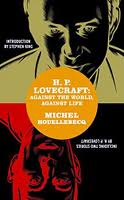
[READ: June 16, 2013] H.P. Lovecraft: Against the World, Against Life

I have been “into” H.P. Lovecraft for about thirty years.  Interestingly, I had never read anything by him in that time.  I got into him via Dungeons and Dragons which had a whole selection of monsters from the Cthulhu mythos.  And then Metallica did a song called “The Call of Cthulhu” and even though I bought several of his paperback collections and proudly displayed them, I never read them.  When McSweeney’s imprint Believer Books published this little title by the practically Lovecraftianly named Michel Houellebecq, I was excited to read it, too (because at this time I had assumed that I had actually read some Lovecraft).  But like my Lovecraft books, it languished on the shelf.

Until now.

I decided that it was time to finish off some of those McSweeney’s books that have been sitting on my shelf for years.  And this was on the top of my list. Continue Reading »

CV1_TNY_06_10_13Schossow.inddSOUNDTRACK: NEKO CASE-“Man” (2013).

neko-case-the-worse-things-getIt was Neko Case who got me out of my NPR summer music doldrums. From her new,  wonderfully titled album The Worse Things Get, The Harder I Fight, The Harder I Fight, The More I Love You, comes this fast, rocking track.

It has everything that Neko does great—fast, clever lyrics over a simple but propulsive beat.  There’s a cool, unexpected guitar squiggle at the end of each verse that just makes the song seem that much faster.  But it is just an uptempo stomper from the great Case.

The song slows down in the middle with just a bass and drums and then as Case starts singing about her manliness, a harpsichord plays over the back giving it a nicely pompous air.  Which is quickly deflated by the buzzy guitar solo.  The song is clever and pointed and very well done.

The only thing missing is a great Neko Case wail, but the song (and the lyrics) are too fast for her to hold any notes for too long.  I’m really excited about this new album from her,.

[READ: June 18, 2013] “Scenes of the Crime”

The New Yorker doesn’t often tell you when something is an excerpt, but this time they tell us right up front.  This is an excerpt from an upcoming Ridley Scott film written by McCarthy called The Counselor.

Although I am told that I would love McCarthy, I have never read him with any seriousness.  And from what I have heard of his writing I don’t think I would like him.  This excerpt is more or less a useless attempt to try and get any sense for McCarthy as a writer.

There is no dialogue.  Rather, it is just a series of scenes–shot after shot, establishing the action of the movie.

I have no idea if there is dialogue in the movie or not.  I would be really impressed if there was no dialogue during these scenes and this whole sequence took twenty some minutes–with no dialogue at all.  That would be pretty cool. Continue Reading »

CV1_TNY_06_10_13Schossow.inddSOUNDTRACK: GAUNTLET HAIR-“Bad Apples” (2013).

stillsThis was the third song that NPR played in their summer preview show and I was a little concerned about the state of summer music because I didn’t love any of the first three songs.

Gauntlet Hair (what a crazy name) plays a kind of early-sounding Depeche Mode music with rather sedate and uninspired vocals.  I liked the second half more than the first half, probably because there was more instrumental music.

Indeed, as the song ends and the Depeche Mode-vibe comes to the fore, I rather got into it.  Especially the pianos at the end.

Shame about the vocals.

[READ: June 18, 2013] “Happy Trails”

I haven’t read a lot by Sherman Alexie, but I have enjoyed what I’ve read.

This story was quite short and was all about the disappearance and presumed death of his Uncle Hector.

One day Hector said he was going to hitchhike to Spokane.   He walked out the door and was never head from again.  The narrator says that Hector was his favorite relative (although he later says that he really wasn’t that great of a guy).

As the story picks up, it is four decades later and the narrator has decided to have a funeral for him.  His mother says that she doesn’t think he’s actually dead but the narrator says that it has been forty years, he could have come back or written a letter.  Or called. Continue Reading »

CV1_TNY_06_10_13Schossow.inddSOUNDTRACK: ScHoolboy Q “Collard Greens” (2013).

colalrdgreens-f7ef9a5569c897652952a2688c4af9911361663a-s1NPR opened their summer preview show with two rap songs.  This was the second.  The bass line is very neat—propulsive and continuous and there’s this little keyboard sprinkling across the top.  This is West Coast rap style and I like the music quiet a bit.

The rapping is unusual—some amusing voices and nonsense words, but I admit I didn’t really get into it until about half way through when the rapper (ScHoolboy Q or guest Kendrick Lamar I don’t know) comes in with an unusual-sounding voice—sped up and goofy.  And he does one of my favorite rap things—singing really fast in a high voice then ending with a low word (Gawd).

The song feels atmospheric, although overall, I’m not a fan.  The DJ who introduced the song says that he is part of the “supergroup” Black Hippy, along Ab-Soul, Jay Rock and Kendrick Lamar.  She describes ScHoolboy Q as the darkest of the bunch, which makes me think I should check out the rest to see what other kinds of things they do.  [I did, and I didn’t like them–lyrically they are remedial at best].

[READ: June 18, 2013] “Rough Deeds”

This story is set in New France, (also known as Canada).  Duquet is a timberman, seeking his fortune by amassing the largest area of woods to be exported both to the Americas and back to Europe.   He connected with a man named Dred-Peacock (I included him mostly for his name) who set him up with a connection in Scotland.

Duquet wasn’t exactly sure about trading with the enemy, the English, but money is money and they had lots of it and need for lots of wood.  And soon a fortune was made.

Then Dred-Peacock encouraged him to head to Maine where thousands of acres were there for the asking.  Indeed, Duquet was able to buy twenty thousand acres at 12 cents an acre.  But when he and his man Forgerson went to investigate, they found a crew cutting down trees on his property!  When he accosted them, they fled.  The youngest member of the thieving team had a limp and fell behind–which gave Duquet the opportunity to hurl his tomahawk at him, felling him instantly.

When the boy won’t talk, Duquet cuts off two of his fingers (Duquet does not mess around) and the boy reveals that he works for McBogle.  The boy already had an infected leg and Duquet had no intention of healing him, so he allowed the boy to die, ultimately killing him and burning his body in McBogle’s makeshift mill.

While Duquet was doing this, Forgerson was off scouting a new way to get the timber to the mill and finding people to work with them.  When he returned, he wondered where the boy had gone, but said nothing.

And there were no consequence for Duquet. Continue Reading »