Feeds:
Posts
Comments

Archive for the ‘Work’ Category

SOUNDTRACK: SAN FERMIN-Tiny Desk Concert #315 (October 28, 2013).

When I first heard San Fermin I was immediately grabbed by the female lead voice (the song was “Sonsick”).  It was so powerful and gripping. I didn’t realize then that the female leads were the lead singers of Lucius (who I also didn’t know at the time).  San Fermin is the creation of Ellis Ludwig-Leone.

Since then I have enjoyed other songs by them as well, although I find that the songs sung by Allen Tate to be somewhat less exciting to me– I feel like his voice could one day hit me as amazing but it’s almost a little to understated for me.  And yet musically I love the orchestration and chamber poppiness.  As Bob writes:

San Fermin’s music bursts with ambition, talent and extreme joy. Its self-titled debut is charged with great storytelling and amazing vocals by both Allen Tate and Lucius singers Holly Laessig and Jess Wolfe. Then there are the arrangements: little gems that turn these songs into cinematic vignettes using trumpet, sax, keyboard, violin, guitar and drums.

San Fermin is the musical vision of Ellis Ludwig-Leone, who wrote these songs with Tate’s dark, rich voice in mind. Here at the Tiny Desk, Rae Cassidy makes the album’s female vocal parts her own.

So it’s interesting that the songs were meant for Tate.  I want just some more oomph from him.  especially here in this set.  And that’s because Rae Cassidy absolutely rules this set.

“Oh Darling” begins with a gentle piano and Cassidy’s pretty, delicate voice.  After a verse from her, Tate’s voice comes in and it’s almost comically low and formal (and actually perhaps a bit too quiet).  But when they all come in and sing it is just beautiful–the women in particular.

For “Sonsick” Cassidy sings lead with just drums.  As the song builds there’s a great chorus where the backing vocals (including Tate) sing in falsetto.  This version is quite stripped down compared to the recorded version and it really allows Cassidy’s voice to shine.  When she hits those incredibly high notes with such power, it gives me chills.

In the final song, “Renaissance!” Tate sings lead over a slow piano and violin.  The women sing backing vocals.  I like the way that the song builds in intensity with more instruments, but his voice is a little too flat for me–although he does kick in extra at the end.

There’s a really stunning version of the first two songs with the band singing live in a street and cafe and France.

Incidentally, Cassidy has since left the band and gone solo, and I wish her much success.

[READ: December 28, 2016] Humans of New York Stories

Sarah got me this book for Christmas.  I knew of Humans of New York, of course, but I wasn’t a follower of it.  So while I knew of it I didn’t really know that much about it.

There’s a brief introduction to this book (which is his second HONY book) in which he explains that HONY grew from five years of experimenting.  It evolved from a photography blog to a storytelling blog.  His original inspiration was to photograph 10,000 New Yorkers.  But then he decided to start including quotes from some of them.

He started interviewing people and found their stories became the real heart of the blog.  Of course, he thanks the community of readers and participants, because without them, he has nothing.

The rest of the book–425 pages–collects the photos and the stories. (more…)

Read Full Post »

2016-12-05-21-06-09SOUNDTRACK: RUFUS WAINWRIGHT-Tiny Desk Concert #237 (August 20, 2012).

I’d published these posts without Soundtracks while I was reading the calendars.  But I decided to add Tiny Desk Concerts to them when I realized that I’d love to post about all of the remaining 100 or shows and this was a good way to knock out 25 of them.

rufusPreceding his sister by a few months at the Tiny Desk was Rufus Wainwright.  I love Rufus’ delivery and style.  I really like his voice too.  The problem is I don’t really like his music all that much.  I wish I did, because I love hearing him sing.  But for some reason it doesn’t do anything for me.  We even saw him live (on a bill with Guster and Ben Folds) and left half way through his set because it’s such a different energy than the other two.

But I love this little bit of information about this show:

We’d never tried to squeeze a piano behind the Tiny Desk, but when I saw a chance to have Rufus Wainwright play here, I wouldn’t — and he probably wouldn’t — have had it any other way

That’s particularly funny because now some five years later they have had all kinds of things behind his desk.

He plays three songs on the piano.

“The Art Teacher”is a sad story about, yes an art teacher.  Really listening to the lyrics (full of art references) makes the song come alive.

Before the second song, he says I’m promoting my new album Out of the Game…yes, you may applaud if you wish.  Covers a lot of genres of music, one is, briefly, country.  Today is a lazy hazy day in the South–while we’re near the South.

“Respectable Dive”is a slow song (the country song, but not sounding country here) and again, the lyrics are great.

“Montauk” is about several people.  His daughter Viva Katherine Wainwright Cohen and his fiance.  Viva’s bilogical mother is Lorca Cohen who is Leonard Cohen’s daughter.  The last verse is about “my mother, the great Kate McGarrigle” (Rufus’ father is Loudon Wainwright III).

This song is, as the blurb says:

Wainwright at his best. The piano lines flow with forward motion in a Philip Glass way, and there’s also a hauntingly beautiful story. Wainwright sings to his daughter Viva, [imagining her] grown up and visiting her two fathers in Montauk, a small community on the eastern tip of Long Island.

So I am torn between really liking his voice but feeling that his delivery is a little too slow to fully understand the great lyrics.  There’s so much greatness in his stuff, and yet I can’t find my way in.

[READ: December 20, 2016] “Defamer”

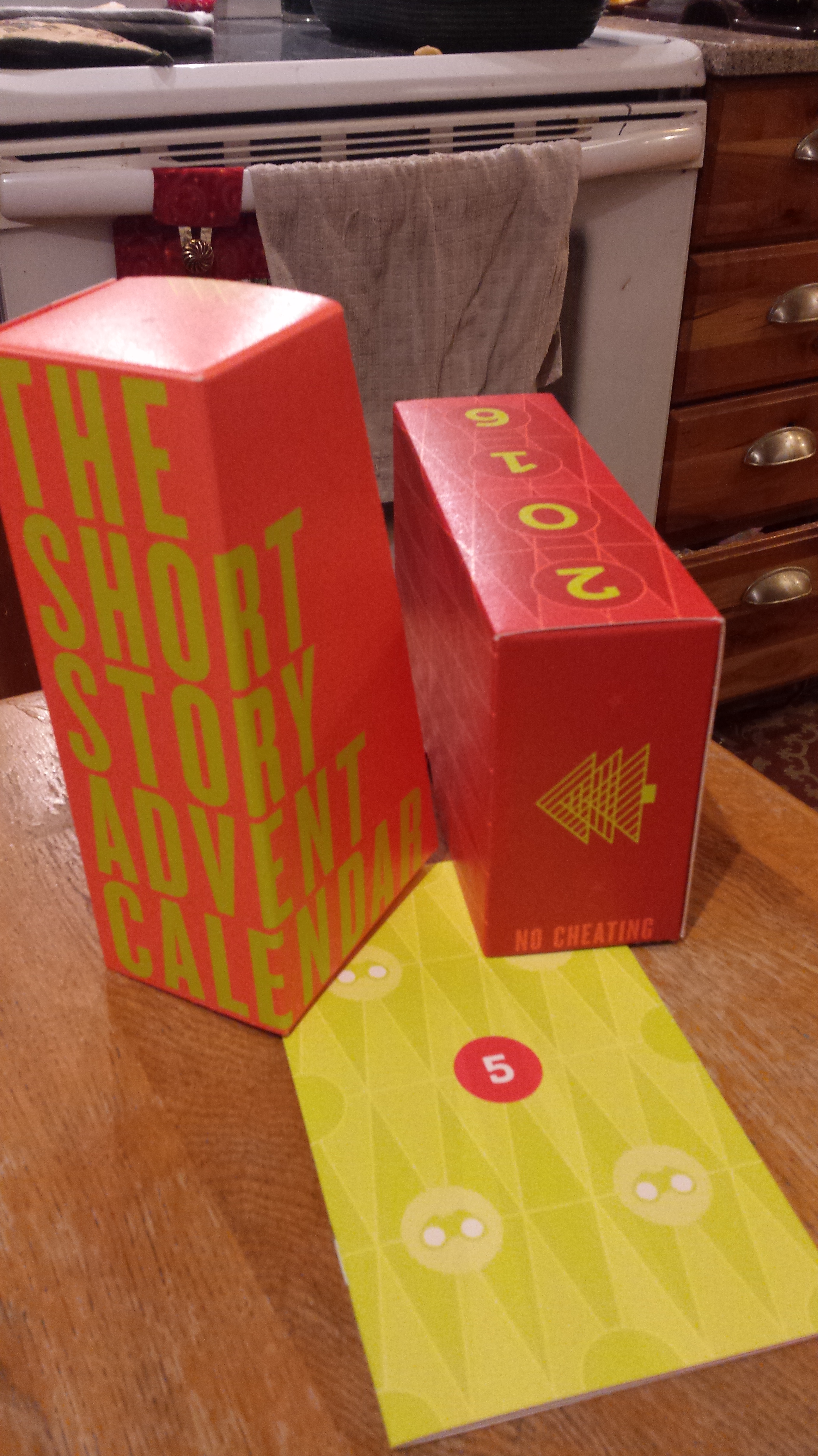
Near the end of November, I found out about The Short Story Advent Calendar.  Which is what exactly?  Well…

The Short Story Advent Calendar returns, not a moment too soon, to spice up your holidays with another collection of 24 stories that readers open one by one on the mornings leading up to Christmas.  This year’s stories once again come from some of your favourite writers across the continent—plus a couple of new crushes you haven’t met yet. Most of the stories have never appeared in a book before. Some have never been published, period.

I already had plans for what to post about in December, but since this arrived I’ve decided to post about every story on each day.

I really liked yesterday’s story and I really liked this one as well, even though it is very different.

This is a the sad story of a woman named Birdie.  Boy oh boy everything goes wrong in her life.  She works at an office.

Big boss takes a four-hour lunch.  He has suffered no major disasters in his life.  [He and his wife plan] their vacation to Maine a year in advance.  This is one way to live.

Birdie works in a corner cubicle near Bog Boss’ office… [She] makes $20,000 a year forwarding emails to people who make $15,000 a year.

Birdie assumes that her boss is having an affair on his four-hour lunches.  But one day she see him during his lunch break working at a deli, frantically making sandwiches for customers.  Nothing makes sense. (more…)

Read Full Post »

harpaugSOUNDTRACK: LAND OF KUSH-The Big Mango [CST097] (2013).

mangoOsama Shalibi is how Sam Shaibi is credited on this album.  He is the composer and creator of The Big Mango, although he does not appear on it.

Some background that may or may not be useful.  This comes from Popmatters:

“Big Mango” is the nickname for Cairo and The Big Mango is a love letter from composer Osama (Sam) Shalabi to his new home, Cairo, and all of its tumults and contradictions…. Reveling in free-jazz noise, rock rhythms, and the radical propulsion that Shalabi encountered on trips to Dakar, Senegal, the album weaves the divine spirit unleashed through fury and joy and dance into an utterly fascinating whole…  This pinging between controlled pandemonium and something beautiful, strident, transcendent, is not accidental. Shalabi is tackling the nature of change and the place of women in Arab culture on Big Mango, and by so clearly blurring the strange and the celebratory, he suggests that even sweeping, radical change need not be a revolution, but perhaps a way of life, movement as vital force in the universe.

With an introduction like that it’s hard not to want to love this record.  But a with everything Shalibi does, he is always trying to push boundaries and attitudes.  And so, this album has some songs that are really fun ad/or pretty and some songs that feel like (but apparently are not) wild improvisations that test the limit of your patience for experimentation.

As I mentioned, Shalibi doesn’t play on this –I would have loved to hear his oud, but instead we hear all kinds of interesting Western and Eastern instruments: setar (is a Persian version of the sitar), flutes, saxophones, piano, balafon (a wooden xylophone), hand drums: riqq (a type of tambourine), darbuka (goblet drum), and tablas (like bongos) and of course, guitars and bass.

“Faint Praise” opens the disc with 3 and a half minutes of Middle Eastern music quietly played with a rather free form vocal over the top.  The vocals are a series of wails and cries (and almost animalistic yips).  It sounds like an orchestra warming up, and indeed, the Constellation blurb says:

These opening six minutes are an inimitable destabilizing strategy of Shalabi’s – his lysergic take on an orchestra ‘warming up’ – that serves to introduce most of the instrumental voices and the montage of genres that will form the rest of the work

It comes abruptly to a halt with “Second Skin,”  a much more formal piano piece—structured notes that end after a few minutes only to be joined by a saxophone solo that turns noisy and skronking and nearly earsplitting.

After some dramatic keyboard sounds, “The Pit (Part 1)” becomes the first song with vocals (and the first song that is really catchy).  It begins with a jolly sax line which is accompanied by another sax and a flute before the whole band kicks in with a refreshingly catchy melody.  For all that Shalibi likes exploration, he has a real gift for melody as well.  The lovely lead vocals on this track are by Ariel Engle.  It’s very catchy, with a somewhat middle eastern setar riff and those voices.  When the song stops and it’s just voices, it’s really beautiful.  The song is 7 minutes long and I love the way the last 30 seconds shift gears entirely to a more dramatic, slower section.  This section is so great, I wish it lasted longer.

“The Pit (Part 2)” is only two minutes long.  It’s a quiet coda of piano and flute.  After about a minute, a low saxophone melody kicks in, it is slowly joined by other instruments and Engle’s voice.  Unfortunately I can’t really tell what she’s singing, but it sounds very nice.

“Sharm El Bango” is a jazzy song with hand drums and all kinds of space age samples spinning around the song.  I really like when the flute melody takes over and the song become quite trippy.

“Mobil Ni” is the second song with vocals.  It begins with some strings instruments and hand drums over a slow bass line.  Then Katie  Moore;s voice come s in with a gentle lovely vibrato.  Her voice is a little smoother than Engle’s.  The song ends with a mellow section.  And then there’s a trumpet blast that signals the beginning of “St. Stefano.”  The trumpet gives way to brief explorations off free-jazz type before turning giving way to a bowed section with resonating bass notes.

“Drift Beguine” returns to catchy territory with a full Middle Eastern musical phrase and Elizabeth Anka Vajagic’s lovely voice raging from high to scratchy and breathy.  Around 4 minutes when the pace picks up, it’s really quite fun.

The final track is the only one that really rocks.  “The Big Mango” has a big catchy guitar riff and hand drums filled in by Molly Sweeney’s rock vocals.  The song ends the disc as a kind of fun celebration.

As with most of Shalibi’s releases, it’s not for everyone.  But there’s a lot of great stuff hear, if you’re willing to experiment.

[READ: August 25, 2016] “Don the Realtor”

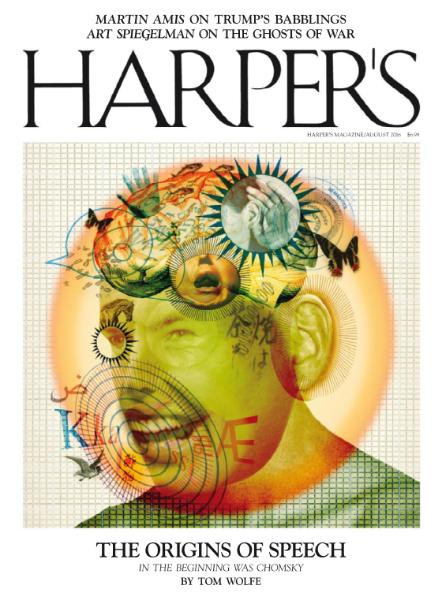
I hate to contribute anymore attention to Trump.  But it’s hard to pass up a chance to read Martin Amis, especially when he eviscerate his targets so eloquently.  Hopefully Trump’s voice will soon disappear from the airways and we can go back to forgetting about him.

Ostensibly this is a review of “two books by Donald Trump,” The Art of the Deal (1987) and Crippled America (2015).

Amis begins, as he usually does, by getting to the point: “Not many facets of the Trump apparition have so far gone unexamined, but I can think of a significant loose end.  I mean his sanity: What is the prognosis for his mental healthy given the challenges that lie ahead?”

Some basic questions come up about Trump: “Is his lying merely compulsive, or is he an outright mythomaniac, constitutionally unable to distinguish non-truth from truth.  Amis adds that “Politifact has ascertained that Donald’s mendacity rate is just over 90 percent, so the man who is forever saying he ‘tells it lie it is’ turns out to be nearly always telling it like it isn’t.”

But the Trump lying machine has grown from the rubble of the G.O.P. which “has more or less adopted the quasi slogan ‘there is no downside to lying.'” (more…)

Read Full Post »

spoilsSOUNDTRACK: GABY MORENO-Tiny Desk Concert #149 (August 15, 2011).

gabyGaby Moreno surprised me in this set.  Her first song “No Regrets,” begins like a gentle bossa nova sung in Spanish.  The song switches to English about midway through, but it retains that lovely bossa nova feel.  Morena’s voice is lovely and clear. She plays guitar and sings and is accompanied by Adam Levy, also on guitar.

So far, so good.

The second song, “Ave Que Emigra” begins as a gentle ballad, but quickly morphs into a kind of upbeat folk song also sung in Spanish (Moreno is from Guatemala).  It is a lovely song with some beautiful oooohs.

It’s the third song the surprised me.

“Sing Me Life” opens in a much darker vein–rough strummed guitars and a blues solo from Levy.  Even Moreno’s voice has gotten deeper and bluesier.  The song is sung in English and although she sounds like herself, she also sounds really different–not exactly angrier, but less sweet, more intense.  The “Hey hey hey’s” are a far cry from the sweet “ooooohs” of the previous song.  Levy plays a nice bluesy solo on this song as well.

Moreno has a great deal of diversity in her set and she handles it all really well.

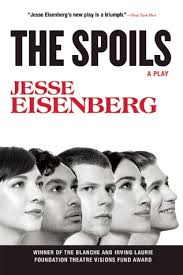
[READ: October 20, 2015] The Spoils

I have enjoyed Eisenberg’s writing in the past.  But this was the first full play I had read by him (he has two others). It is very funny (and surprisingly vulgar).

There are five characters. Ben (played by Eisenberg when it was performed) owns the apartment where the action is set. He is the son of a wealthy man, going to college for “film” and basically enjoying himself as much as he can. He drinks, he smokes pot and he picks on his roommate (who might just be his only friend). His language is shockingly vulgar, dropping curses left and right.

His roommate is Kalyan (who in the performance was played by Kunal Nayyar (from The Big Bang Theory). Kalyan is from Nepal. He has come to NYU to study business and has even written book about economic conditions in Nepal. Kalyan is a bit dorky (he loves PowerPoint, which is used to great comic effect throughout the story). And he is trying to win over Reshma.

Reshma is Indian, but she has lived in the States all of her life, so she is really American.  She has high hopes for Kalyan, but it seems she fears he might not live up to his potential.

In the opening scene Kalyan is showing her a PowerPoint and being incredibly sweet to her.  When Ben walks in he is all crass and vulgar—funny but very unlikable.  He essentially makes Reshma leave (although as soon as he shows up we know she wants to leave anyhow) and then begins his tale. (more…)

Read Full Post »

cubeSOUNDTRACK: MARTIN TIELLI-Richard’s On Richards Vancouver BC (March 30, 2002).

rich The download for this show is notable for being (in my opinion) out of sequence.  After the second song it seems pretty clear that the concert is now over. Looking at some of the other shows at the time, I wasn’t sure if I could reconstruct the actual order. It was a bit harder than I anticipated, but I think the show actually went like this

World in a Wall
CCYPA
Double X
Love Streams
My Sweet Relief
That’s What You Get for Having Fun
Voices from the Wilderness
OK by Me
That’s How They Do It in Warsaw
I’ll Never Tear You Apart
Winnipeg
Beauty On

I’m guessing “World in a Wall” is first because before playing it he does a brief intro of “CCYPA,” and it seems unlikely that he would do it again after he just played the song. For this set he is solo for the first three songs . He’s kind of all over the place in “Wall” throwing in some extra lyrics and repeating verses—I’m surprised he didn’t get mad at himself.f

Then the band comes out and he introduces them as Operation infinite Justice (incidentally, “Operation Infinite Justice,” was the name of the military intervention that the U.S began after 9/11.  Muslim groups protested the name on the basis that their faith teaches that Allah is the only one that could provide “infinite justice”.  Thus, “Operation Infinite Justice” was changed to “Operation Enduring Freedom” on Sept. 25, 2001).  So clearly, Tielli was making a point.  The band consists of Greg Smith on bass, Barry Mirochnick on drums and Ford Pier on guitar and keys.

For “Ok By Me” he gets that great chorusing guitar (that sounds like Queen) just like on the record.  For “Love Streams” it’s just him and the piano (presumably Ford Pier) who at the line about being “stoned’ play a riff from Eric Clapton’s “Cocaine” (did anyone know that was a cover of a J.J. Cale song?)

“Shaved Head” stays in the delicate style of the previous show and for “My Sweet Relief,” he starts the song solo and the band kicks in about 1/2 way through.

After playing “That’s What You Get for Having Fun” someone in the band says that they have merch in the back of the room and that they will be flogged by their manager if they don’t mention it.

In “Voices in the Wilderness,” he sings the actual Rush lyric “if you choose not to decide” (rather than “if you choose not to be free”) and has fun with the word “squeaky” in squeaky voice.  There’ as mellow jam at the end of the song.

The penultimate song is “Winnipeg.” It’s the first live version of this song on the site. I like that since it was a new song the guys who recorded the shows didn’t know what it was called.  And it’s such a peculiar song with different things that could be choruses that the author of this recording calls it “Anyday” and in the next show they call in “I’ve Had Some.”  But it sounds great live.

The show ends with “Beauty On,” the opening track from his upcoming album (although he leaves out the humorous “Cincinnati” bit–which makes sense).

It’s another great show, running just about an hour.

[READ: October 19, 2015] Cube Squared

I found this book at work and judged it by the cover.  I decided it would be fun. And it was.

This is the sequel to McPherson’s first novel (which I have not read) Cube People.  I thought that perhaps there would be zombies in this novel (given the cover) and there are, but not in the way one might suspect.

The basic set up is this: Colin MacDonald works for the Canadian government.  He is in a tech job which is not very techie.  He works in a  cubicle, deals with his co-workers and plans to write the great Canadian novel (if such a thing exists).  He has already written two books.  The first one was successful, the second one less so.  And he would very much like to get a third book written.

But he is now married with three little kids, he has to paint his house and his father just died.

This last bit is pretty important to the story.  Even though his father was never a very good father to him (he was an intense drunk and then an intense convert to Christianity), he has mixed feelings about his father’s death.  Worse yet, his father seems to be talking to him a lot more now than he ever did when he was alive.  And he is fairly certain that his father thinks he’s a waste of time and effort with little to show for himself (or at least that’s his take on his father). (more…)

Read Full Post »

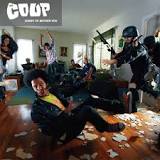
sorrySOUNDTRACK: THE COUP-Sorry to Bother You (2014).

coup On the inside cover of this book it says that you can download The Coup’s new record online.  Evidently that was a limited time only because the link no longer works.  Every time I tried recently, the download failed.  I was therefore unable to follow the request:

Let it be known that the editors will look favorable upon those who listen to the soundtrack and read the script at the same time.

Which I would like to have done, since I like The Coup and have Party Music.

You can listen to some of their songs (which are quite dancey even when they are subversive) on their website. (and streaming as well).

I have been listening to the disc online while writing this post and I like the way The Coup makes their songs catchy and the way Riley’s rapping is fast but clear.  “Violet” which is rapped over a lovely violin and strings piece.

My one gripe about the album is a consistent gripe with a lot of rap albums–there’s too many guests.  I don’t listen to The Coup to hear other singers, I listen for Riley and his band.  If I can get the download to work I’ll review the album properly in the future.

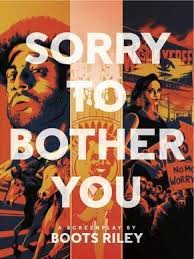
[READ: August 15, 2015] Sorry to Bother You

Sorry to Bother You came with McSweeney’s Issue #48.  I have just gotten around to reading it and I’m bummed that I waited because this screenplay is fantastic.

Boots Riley is the creator of The Coup and an activist in general (I love the quote that “a Fox contributor (whose name I simply don’t want to appear on my blog) called his work ‘a stomach-turning example of anti-Americanism disguised as high-brow intellectualism.’  Boots was surprised and elated by the compliment”).

The opening of the screenplay is a note from Boots himself in which he explains that “every scene, every character, every word–is true.” And that McSweeney’s has forced him to change the names of those mentioned.

And then the screenplay begins.  Cassius Green (known as Cash) lives in a garage bedroom (in which the garage door opens some time unintentionally). He has just scored a job at a telemarketing office (his faked resume was hilarious). His girlfriend, Detroit, is an artist.  She wants what’s best for him, but also doesn’t want him to suck up to the man.  But at the same time, they do need some money.

In their neighborhood there are billboards everywhere for WorryFree.  There’s also a TV ad that plays during the movie in which we learn that WorryFree “guarantees you employment and housing for life” (the TV shows six bunk beds, like a prison done up by a hip interior decorator).  The concept of WorryFree permeates the movie. (more…)

Read Full Post »

CV1_TNY_10_14_13McCall.inddSOUNDTRACK: JASON VIEAUX-Tiny Desk Concert #17 (June 15, 2009).

viaeuxJason Vieaux is the first to break the mold of folk singers playing the Tiny Desk.  Vieaux is a classical guitarist.  I don’t know a lot about classical guitar, but when it’s good I know it’s gorgeous.  And man, is this gorgeous.

I don’t know anything about Vieaux, but in the little blurb, they say that in 2002 they invited him to spend a week as a young-artist-in-residence on their classical-music program Performance Today.

I would have been grossed out by his long fingernail if they hadn’t pointed out that he glues a slice of a ping-pong ball to the underside of his right thumbnail as a kind of extended, “press-on nail” guitar pick.

He plays 3 songs and they are all simply stunning.

Bach: Prelude (from Prelude, Fugue and Allegro, BWV 998)

Maximo Diego Pujol: Candombe en Mi

Francisco Tarrega: Capricho Arabe

You can visit the NPR site to hear about the ping pong ball thing, and you can watch the video below.

[READ: January 7, 2014] “Pure Bleach”

This New Yorker has several small essays about work.  They are primarily from people who I wasn’t familiar with–only Amy Poehler saved the five from being unread.  When after reading all of them I enjoyed them enough to include them all here.

The pieces are labelled under “Work for Hire” and each talks about a humiliating job.

This final installment was the shortest.  Ruscha is an artist, whose name sounds familiar to me–he worked in pop art. His lame job was working in a laundromat “mixing bleach and water together in brown glass bottles for the customers to use”  If you didn’t know better you would say, that sounds like an old job, and you’d be right–that job existed in 1951.  Geez.  He made 50 cents an hour. (more…)

Read Full Post »

CV1_TNY_10_14_13McCall.inddSOUNDTRACK: GREAT LAKE SWIMMERS-Tiny Desk Concert #16 (June 8, 2009).

swimmI knew of the Great Lake Swimmers from NPR, but only a song or two.  I found them to be pretty but a little too mellow for my liking.  In this Tiny Desk Concert, Great Lake Swimmer’s vocalist Tony Dekker stops by for a solo acoustic set.  His voice is delicate sounding and yet is powerful in its own way.

He plays three songs, the first two “Everything Is Moving So Fast” and “Pulling on a Line” both come from Great Lake Swimmers’ then recent album, Lost Channels.  Both Bob and Robin compliment his voice, which is really something (he says he grew comfortable with it about a year ago).   And there’s something about the way he sings that really draws you in here.

He is one of the first performers who talks about working in an office in Toronto. (He liked it and says people brought in guitars from time to time).

Then Bob mentions the “yelp machine”–the harmonica stand that Tony pulls out.  Bob says when a guitarist takes it out it makes fans go crazy, but Tony says that he finds it the banjo that makes people go nuts.  The final song, “Various Stages” features the harmonica, which although he says is easy for anyone to play, sure sounds good here.

[READ: January 7, 2014] “Labors”

This New Yorker has several small essays about work.  They are primarily from people who I wasn’t familiar with–only Amy Poehler saved the five from being unread.  When after reading all of them I enjoyed them enough to include them all here.

The pieces are labelled under “Work for Hire” and each talks about a humiliating job.

Rush is an author.  He has the longest article in this series (four whole columns!)  Rush talks about a number of jobs that he had over the years.  But mostly he says he chose jobs that would offer him free time enough to write.  Like picking cherries (?). (more…)

Read Full Post »

CV1_TNY_10_14_13McCall.inddSOUNDTRACK: BENJY FERREE-Tiny Desk Concert #15 (May 29, 2009).

benjyI had never heard of Benjy Feree before this Tiny Desk Concert, and I have still never heard of him.  I don’t know a thing about him, and I kind of like that.  Where did they find him?  They seem to know him very well.  (He grew up locally to D.C., so I guess that’s it).

He plays four songs and he is very funny.

“I Get No Love” opens with Benjy whistling and playing a guitar in a Spanish style (not fingerpicking but that fast strumming style).  But when the song proper begins, it’s a bouncy acoustic song.  Benjy has a nice voice.  He also encourages everyone to get out their pens a make a beat.  The whistling is truly amazing. It’s strong and powerful and very catchy.

In the second song, “Fear,” Benjy pulls out a great falsetto—it’s a wonderful combination of his regular powerful voice and some cool high notes too.  Then he tells the story of working in an office.  He says his boss looked like Clarence Clemmons.  It’s a very funny story.

Then he starts talking to the “chat room.”  He messes up the tuning of his third song, “When You’re 16.”  But he pulls through with a very solid acoustic song with more good whistling.  After the song he says he’d like to take lessons from Andrew Bird in whistling.  And then he curses which leads to a lengthy and funny story about going to school at a Baptist Church.

“The Grips” is the final song, it’s a slower, very nice song, which really shows his range.

He is a charming and very funny and the end (the David Letterman joke) is especially amusing.  And I have to say that I thought his hair looked totally fake and then I read that it was a wig.  Ha.

[READ: January 7, 2014] “Take Your Licks”

This New Yorker has several small essays about work.  They are primarily from people who I wasn’t familiar with–only Amy Poehler saved the five from being unread.  When after reading all of them I enjoyed them enough to include them all here.

The pieces are labelled under “Work for Hire” and each talks about a humiliating job.

So Poehler’s essay is all about working at an ice cream shoppe as a young girl–a typical summer job.  I’ve often seen young girls working in ice cream shoppes for summer jobs and I always imagined that they would get the hugest arm muscles from scooping out in those awkwardly deep freezers.  But Poehler focuses more on the cleaning–every night anything that wasn’t nailed down got cleaned.  Ugh. (more…)

Read Full Post »

CV1_TNY_10_14_13McCall.inddSOUNDTRACK: HORSE FEATHERS-Tiny Desk Concert #14 (May 8, 2009).

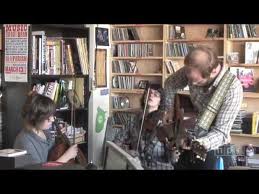
horseI’d never heard of Horse Feathers before this Tiny Desk Concert.  Justin Ringle is the lead singer and guitarist of the band (which in this incarnation includes a violin and cello).  Ringle’s voice is soft and kind of high-pitched.  They seem very well suited to the Tiny Desk, (and are in stark contrast to Tom Jones!).

They play three songs, “Working Poor,” and “Curs in the Weeds” are beautiful with the wonderful strings accenting his voice and guitar.

In their interview they talk a little about their instruments (all of which are very old!).  Indeed the guitar is old, but the violin (one of only 4 made) is even older and the cello is nearly 100 years old.  Very impressive.

For the final song, “Heathen’s Kiss, ” the violinist busts out singing saw.  It’s awesome.

I really enjoyed this simple and beautiful set.

[READ: January 7, 2014] “Caught Napping”

This New Yorker has several small essays about work.  They are primarily from people who I wasn’t familiar with–only Amy Poehler saved the five from being unread.  When after reading all of them I enjoyed them enough to include them all here.

The pieces are labelled under “Work for Hire” and each talks about a humiliating job.

Nicole Holofcenter is a filmmaker.  She has directed a number of films that I have liked (including Walking and Talking) and most recently James Gandolfini’s last movie (which I haven’t seen), Enough Said.

In this essay she talks about a job working for “Mr. Stone” (which I’m not sure if we’re supposed to assume is Oliver Stone or not).  At any rate the job paid a fortune at the time ($500/wk) and all she had to do was answer the phone. (more…)

Read Full Post »

« Newer Posts - Older Posts »