Feeds:
Posts
Comments

Archive for the ‘Violence’ Category

SOUNDTRACK: FIRE-TOOLZ-“mailto:spasm@swamp.god?subject=Mind-Body Parallels” (2019).
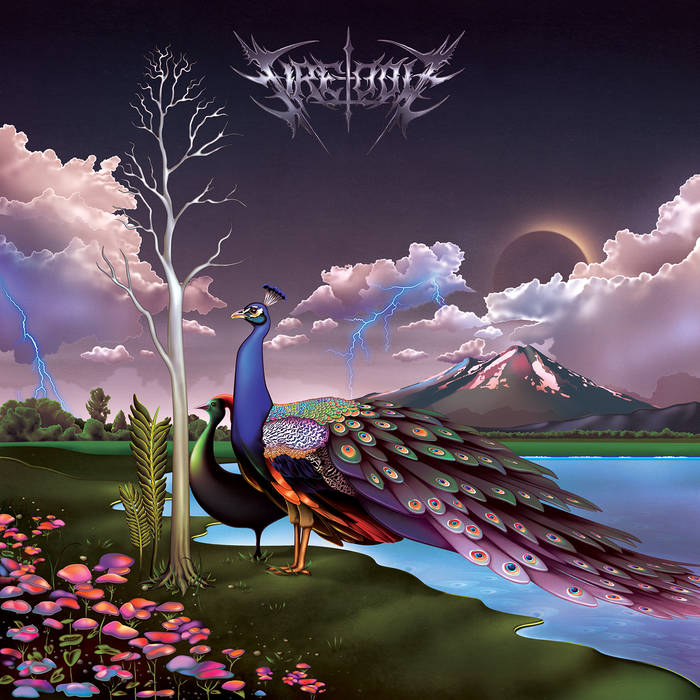
Every year Lars Gotrich publishes his list of favorite music in an NPR podcast called Viking’s Choice: The Year In The Loud And The Weird.  I always listen to these songs because I’ll never hear them anywhere else (he mostly seems to scour bandcamp for unknown music.

One that he especially liked was by this band Fire-Toolz.  He says:

When I try to describe the simultaneously fantastical and obliterating sounds of Fire-Toolz to folks, I usually throw my hands up — not out of frustration, but from awe. Angel Marcloid has clashed New Age synthscapes, clubby raves, jazz fusion and metal shrieks for a few years now, but Field Whispers (Into the Crystal Palace) goes beyond the mash-up, into an idiosyncratic master’s pure creation.

The album credits indicate: Angel Marcloid: voice, drums, electric & acoustic guitar, fretless bass, virtual studio technology, field recordings, circuit-bent junk, composition, lyrics, recording, production, mixing, mastering.

The only other musician is Ian Smith: who plays what can only be described as a smooth-jazz saxophone solo.  Oh, and her cat, Breakfast, gets a vocal turn.

I have listened to some of the whole record, (a lot of tape manipulation on track 2), but nothing sums up the project like the first song, “mailto:spasm@swamp.god?subject=Mind-Body Parallels” (yes, that’s the title).  In 2 minutes and 11 seconds, she includes more genres than I can name.  And the amazing thing is that unlike other artists who squeeze many genres into one song (there are those who do this well and those who do not), these shifts feel at once hairpin but also natural. 

The song starts with a skittery electric melody that almost sounds like digital pipe organ.  It’s very new-agey, but with heavier drums than you might expect.  The quiet death metal growling is certainly unexpected, but somehow it doesn’t feel out of place (and is low enough in the mix to feel more like another sound than vocals–I have no idea what she’s saying).

After the first verse the music shifts to a kind of jazzy new age followed by a punishingly fast electronic drum and a scorching heavy metal solo and the song devolves or crescendos with inhuman growls.

Welcome to 2020!

[READ: May 2019] The Long Mars

I found the first book in this series rather compelling–almost surprisingly so given that it’s not a fast-paced book and, to be honest, not a lot happens.

But it was really well written and the things that do happen are compelling and fascinating.  And I couldn’t wait to read more.

In the first book:

A man creates an invention (The Stepper) which allows one to step into a parallel world that is next to ours.  There are a possibly infinite numbers of parallel worlds in each direction (East or West).  The worlds that are closer to ours are almost identical to our Earth (known as Datum Earth).  The further you go, the greater the differences.  But none of them have experienced humanity before Step Day (aside from earlier hominids).

The main character is Joshua Valienté.  Joshua is a natural “Stepper.”  He doesn’t need the device to Step from one word to the next, nor does he feel the nausea and other side effects that most people feel as they travel.  Most of the book follows his exploits.

The Black corporate has a ship with an entity known as Lobsang who claims that he was a human reincarnated as artificial intelligence.  Joshua is sure that Lobsang is a computer, but Lobsang’s human skills are uncanny.  This ship has managed to Step as an entity, meaning everything in the ship can go with them.  Normally you can only bring what you can carry (aside from metal).

The novel more or less is an exploratory one with Joshua and Lobsang Stepping through millions of Earths.  Not a lot happens, but the novel never grows boring.  The interactions between Joshua and Lobsang are often funny.  And the writers have infused the Earths that they stop in with just enough differences to make each stop strangely compelling (this must be Baxter’s hard science leanings).

I found the second book less compelling on a story level, but no less compelling on a conceptual level.  There was still some cool stuff going on.

Joshua Valienté has settled down in a town called Hell-Knows-Where.  He has a wife, Helen, and a child, Daniel, and lots of regrets about what happened at the end of book one.  He is embedded with the rest of the community.  They show off what a successful community can be way out in the Long Earth.  It is more or less cut off from Datum Earth, which means that everyone needs to work for the community to survive.  Since trust and companionship are key to survival, people don’t really try to take advantage of others and crime is pretty much nonexistent.

This independence is a major concern for the governments of Datum Earth.  In fact, some of the more thriving distant communities (like Valhalla) want to declare independence from Datum Earth altogether.

Another issue is human (or alien) rights.  The trolls from the first book have become a part of most communities at this point.  And yet, the way they are treated seems largely dependent on who they are with.  Some are welcomed like family members, other are treated like animals, slaves or worse.   And the mistreatment of a mother and son troll are what set a series of events in motion.   Maggie Kauffman is a new character introduced to speak on behalf of the trolls.  Before their otherwise peaceful nature gets pushed too far.

Another plot line (and there are quite a few) concerns Roberta Golding, a young genius who goes on an exploratory mission with the Chinese.  The Chinese are exploring the “East Earths” (most of the other travelers went West).  Roberta is an odd child, who anticipated jokes and therefore finds nothing funny. She is cold and emotionless.  Her story remains unresolved by the end of the book.  But her crew managed to get to Earth East 20,000,000 with the crew.

When Sally tries to get Joshua involved in an adventure once again, he is reluctant, but Helen is the one who spurs him on–as long as she and Dan go with him. This adventure is a bit of backtracking, though–an attempt to use Joshua’s name and status back on Datum Earth–where he is not welcomed by everyone.  He tries to prevent the government from harming trolls–because he knows what is at stake if the trolls grow angry.

In their adventure, they also encounter a race of beings known as Beagles.  It is a pretty dark and disturbing world, with Joshua getting tortured and Sally and Monica being the only things keeping him from a brutal death.   There’s a lot of brutality now, which is not unexpected given the reality of the situation, but it does often seem rather harsh

That’s a lot of summary to prepare for Book Three.  But book three does continue the saga, just another twenty years or so later.

(more…)

Read Full Post »

SOUNDTRACK: MEREBA-Tiny Desk Concert #916 (November 27, 2019).

Who the heck is Mereba?

Very few artists get to return to the Tiny Desk, and fewer still return twice in the same year. But after contributing background vocals behind the desk for Dreamville artist Bas in early 2019, we invited Mereba back for a solo set that puts her eclectic, major-label debut The Jungle Is The Only Way Out into sharp focus.

As with many singers I’ve never heard of, I’m not sure if these songs sound like this on the record or if they are more dancey.  I do quite like the simple, organic sounds that accompany these songs.

The stripped-down soundscape Mereba achieves live with her four-piece band is equally dreamlike here, drawing from influences as wide-ranging as the many places she’s called home (Alabama, Philly, North Carolina, Atlanta, Ethiopia). As she pulls from genres as seemingly disparate as folk, rap and spoken word, her set reflects the years she spent perfecting her craft on live stages in Atlanta cafes and clubs, where she attracted the attention of the indie creative collective Spillage Village  before joining them in 2014.

She sings three songs and recites a poem (all on the album).

When “Black Truck” started I thought she sounded exactly like Alanis Morissette.  The way she says “and I said world would you please have some mercy on me” sounds very uncannily like her.  The song is a quiet, mellow piece that starts with a simple bass line (including some harmonics) from Chris James and guitar washes that turn into a nice picked melody from Sam Hoffman.  After a minute or so, Aisha Gaillard plays a simple drum beat and the song kicks into higher gear.

Through all of this, the backing vocals from Olivia Walker were just beautiful.  The end of the song turns into a kind of rap as the guitar and bass fade out.  I say kind of a rap because Mereba is also a poet and she has more of a poet’s delivery than a rapper’s delivery.

For “Stay Tru” the guys switch instruments and the bass takes on a slightly more lead role.  But this song is also very mellow.  Mereba’s vocals sound a bit more Jamaican in his song.  Midway through, James switches to violin and Mereba plays keys which adds a whole new texture.  I didn’t like this song as much because the chorus is kinda lame with a lot of repeating of “cut the bullshit, this time” sung in a sweet voice.  It also seems to drag on for a really long time (although it is very pretty).

“Dodging The Devil” is a poem she wrote when things just didn’t seem to be going right.  After a couple of verses, a quiet guitar line fills in the background.

On the last song, “Kinfolk,” Mereba plays the main guitar line while Sam plays single soaring notes.  The song kicks into gear with a simple guitar riff and some prominent bass.

I really enjoyed this set.  I thought the music was beautifully restrained and her voice distinct enough in each song to show such a range of sounds.  It’s always nice to be surprised by a new musician.

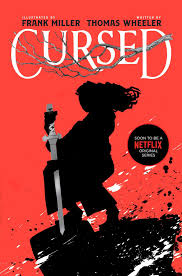
[READ: November 15, 2019] Cursed

I saw this book in the new YA section at the library.  I was attracted by the cover and fascinated by the “soon to be a Netflix Original Series” sticker.

I have known of Frank Miller for years.  I’m sure I’ve read graphic novels by him, although I don’t know if I’ve read Sin City (maybe a long time ago?).  Mostly he drew superhero comics which is not my thing.  Turns out I really don’t like his artistic style in this book (at least for the way he draws the heroine–I rather like the way the bad guys are drawn).  If the series was in any way designed to look like the art in the book I don’t think I’d watch it.

But the story itself is petty darn good.  It took me a while to read it for some reason. I guess maybe the opening was a little slow because there’s so much going on it takes awhile to really get settled in this universe.

But the description of the story is pretty intriguing: Whosoever wields the sword of power shall be the one true king.  But what if the sword has chosen a queen?

For this is a story of Arthurian legend with many many twists.  My knowledge of Arthurian legend is surprisingly minimal.  I love the story and I know the main participants, but there is a lot of information in here that I didn’t know about–or even how much Wheeler is making up. (more…)

Read Full Post »

SOUNDTRACK: IGOR LEVIT-Tiny Desk Concert #914 (November 22, 2019).

Igor Levit is a 32 year-old Russian-born pianist.  I really don’t know anything about him, although the blurb implies that he plays Beethoven and little else.  It says that he

has been playing the German composer’s music for half his life. He recently released a box set of all 32 Beethoven piano sonatas and once again he’ll be performing complete cycles of the sonatas in various cities to mark the 250th anniversary of Beethoven’s birth in 2020.

Most of us know many Beethoven pieces whether we realize it or not.  And, of course most of us know them by their “nickname” rather than their full name.  So when you see “Piano Sonata No. 14 ‘Moonlight,’ I. Adagio sostenuto” it’s easy to forget that that means “Moonlight Sonata,” the beautiful piece that is familiar with the very first notes.

Levit’s “Moonlight” emphasized the mesmerizing qualities in the music, with its oscillating pulse, smoldering low end and tolling bells.

After saying that “Moonlight” seemed like a good beginning to a Tiny Desk, he says he’s about to disrupt the situation as much and as hard as he can with anther sonata–this one a little bit earlier.  This one has no nickname, no title, no marketing gag, nothing.  Just G major sonata (officially “Piano Sonata No. 10, II. Andante”).

Levit says that this it is one of the funniest, wittiest pieces that Beethoven ever wrote. And…wait til the end.

The second piece proved Beethoven wasn’t always the grumpy guy he’s made out to be. His sly sense of humor percolates through the set of variations in a jaunty march rhythm, punctuated with a final, ironic, thundering chord.

After this, he returns to the familiar with “Bagatelle in A minor, ‘Fur Elise'”  Everyone knows ‘Fur Elise’ from the moment it starts.  Levit even jokes about playing it:

Sure, it’s a “total eye-roller,” Levit admits, but he also describes it as “one of the most beautiful treasures in the piano literature.”

He says people argue whether it was Beethoven’s piece–he thinks it is.

His playing is beautiful–I love that you can hear everything so distinctly.  He makes the familiar songs sound vibrant and alive.  And the unfamiliar piece (while not rolling-in-the-aisles funny or anything like that) does have little moments that will induce a smile.  He is also quite subtle in “Für Elise”–not emphasizing the most familiar parts.

Although many people have performed Beethoven over the years, I would absolutely look for his name if I wanted to hear a great performance.

 [READ: August 2019] American Housewife

This book had been sitting around our house for a few years.  I feel like I saw the cover of the woman on the toilet doing her nails every time I went into the spare room.  Then a TV show came out called American Housewife.  I knew that Sarah Dunn, the creator of the show, had written novels, but I had forgotten her name.  So I assumed that this book was the basis for the show.  Whatever the case, this book has nothing to do with the TV show.

This book is a collection of very short pieces and somewhat longer pieces.

Generally speaking, I found the shorter pieces a lot less funny as they seemed more like bullet point lists than actual jokes. (more…)

Read Full Post »

SOUNDTRACK: RHIANNON GIDDENS-Tiny Desk Concert #891 (September 16, 2019).

I have been aware of Rhiannon Giddens for some time.  I knew she played the banjo, but I didn’t know much else about her.  I saw her (as part of an ensemble) at the Newport Folk Festival.

For some reason I was sure that she had performed a Tiny Desk Concert before, but evidently not.  Maybe I watched this when it came out?  That doesn’t seem right either.

So I’ll stop thinking about it and write about this Tiny Desk Concert instead.

There is an intensity to Rhiannon Giddens I could feel from the moment she arrived at the Tiny Desk, and her songs reflect that spirit.

Giddens is a founding member of the Carolina Chocolate Drops (and Our Native Daughters, who played at Newport), an old-timey string band.  But for this Tiny Desk Concert, she is accompanied by upright bass (Jason Sypher) and a whole bunch of other instruments played by Francesco Turrisi.

Giddens and Turrisi had recently collaborated on an album which World Cafe Live describes:

While Rhiannon’s work has focused on the influence of African traditions on what we think of as American music, Francesco is an expert in the often unacknowledged influence of Arabic and Middle Eastern music on what we think of as European sound. They found common ground in their quest to dispel false cultural narratives and turned it into gorgeous music on a new collaborative album called there is no Other.

For the first song, Turrisi plays banjo (although this one looks different from a typical banjo) while Giddens sings and Sypher adds deep slow resonating bass notes.

“Ten Thousand Voices,” the first song in the set, was inspired by Rhiannon reading about the sub-Saharan slave trade.

The combination of Giddens’ lyrics with Turrisi’s middle-eastern sounding banjo is wonderfully compelling.

She explains that the second song, “At the Purchaser’s Option”

was inspired by the American slave trade and a New England newspaper ad in the late 1700s of a young woman “for sale” and her 9-month old baby who was “at the purchaser’s option.” Rhiannon Giddens’ thoughts of this young woman and how her life and her child were not under her control.

That is a pretty intense introduction and inspiration for a song.

Despite its weightiness, Rhiannon Giddens’ music is entertaining, and her voice, the melodies, and her accompaniment are engaging. But it is music infused with lessons and deep purpose — something all too rare in popular music in my opinion.

Turrisi switches to piano which really changes the texture of the music. Sypher plucks the strings on this songs which gives it a bit more of a “song” feel than a “composition” feel.  The chorus is also memorable both for the melody and the powerful lyrics.

My favorite track is the third one, “I’m On My Way.”

Rhiannon picks up a replica of an 1858 banjo for “I’m On My Way,” which she says helps her access her ancestors. “So much beauty and so much horribleness wrapped up together seems to be our story,” she says.

While Turrisi is certainly an excellent banjo player, it’s great to hear Giddens play as well.  Especially this fascinating fretless banjo.  Turrisi plays the frame drum–different from an Irish bodhran in that it seems to have snares in it.  The plucked bass along with the addition of percussion and the great banjo melody are just fantastic. When Sypher switches to bowing, for a solo, it adds a whole new dimension–especially when he slides all the way up the neck to get the highest note possible.

T final song is the gospel tune, “He Will See You Through.”  Giddens puts down the banjo again (awww).

For her closing number, she focuses on the beauty. “You can call it whatever you want, ‘gravity,’ ‘God,’ whatever. There’s a force that I believe in, and that’s what I focus on.”

[READ: July 3, 2019] “Stuart”

I love the way that this story unfolded.  It begins in one location and moves only a few blocks by the end.  But the kicker is that it starts with one character and ends with someone else.  It read kind of like an early David Foster Wallace story.

The story opens by telling us about two Greek immigrants working at a hot dog truck.  They are described in vivid (rather unflattering) detail.  While they get their food ready, three teenage boys walk up.  They are pretty much identical except for the color of their shirts  She describes them vividly as well.

They have man-sized hands sprouting from elongated, spindly limbs like the extremities of flamingos, and their feet are so huge they might be prehensile.  There’s nothing in the backside of their immense, baggy jeans.

They boys order hot dogs and ask for them quickly “before they fucking catch up with us, eh?” (more…)

Read Full Post »

SOUNDTRACK: JOSH RITTER with AMANDA SHIRES and JASON ISBELL-Tiny Desk Concert #896 (September 27, 2019).

I enjoyed Josh Ritter’s previous Tiny Desk Concert.  I liked his voice and found his lyrics to be quite thoughtful.

For this Tiny Desk he is accompanied by “musical soulmates,” Amanda Shires on fiddle and Jason Isbell on acoustic guitar who both play on Josh’s 2019 album Fever Breaks.

The three songs he plays in this concert are even more thoughtful, they are also pointed, powerful and painful.  The songs are not enjoyable, exactly.  They are accomplishing something other than joy.

As the blurb says

Honestly, it was a draining concert with challenges to who we are and who, as a country and a people, we wish to be.

The music is quiet and subdued and are there to lift up the lyrics, which are clearly the most important part of these songs.

“All Some Kind of Dream” is

filled with frustrations regarding the treatment of refugees, immigration, politics and our hearts…. He sings, “There was a time when we were them / Just as now they all are we / Was there an hour when we took them in? / Or was it all some kind of dream?”

Every word his sings is one that should change the way Americans view what is going on, and yet some will never be convinced by lyrics like

I saw the children in the holding pens
I saw the families ripped apart
And though I try I cannot begin
To know what it did inside their hearts
There was a time when we held them close
And weren’t so cruel, low, and mean
And we did good unto the least of those
Or was it all some kind of dream?

Ritter took a moment to encourage everyone to fight back

When the song ended, Josh stared into the NPR crowd. “I feel like the big thing that we all have to fight against is this notion that we’re not all human beings,” he said. “And they’re trying to break us in every number of ways, all different little groups, and that we have no power, but we have power!”

The next song “The Torch Committee,” is slightly more cryptic in construction but hardly cryptic in intent

Wait, suppose that we untie
Your hands to sign upon this line
To pledge that you have always been
A patriot and citizen
Please ignore the legalese
Lawyers are my right now see
Why we’re so happy that you came
Appendix three and list of names

It features a nice solo from Isbell and a raw violin solo from Shires.

They ended the set with a new song,”The Gospel of Mary.”

This is a long song ().  Like the other two it is something of a story song which “imagines Joseph, Mary and their child as refugees.”  The verses are interspersed with solos from Isbell and Shires.

As the applause faded Josh hugged his bandmates, thanked the crowd, smiled and said, “America, we love you, but you’ve gotta change!”

Ritter is an amazing songwriter and I hope that these songs hit the ears of those who need to hear them.

[READ: August 9, 2019] Labor Days Volume 2

Book 2 picks up a little over a month after Book 1.

Bags and Vanessa are still on a quest for the Face of History (which suspiciously keeps leading them to bars).  But they know that the Face of History is a leader of a vast conspiracy.  And of course Rick Stryker is hanging about being rather useless and hilarious as always.

Vanessa is annoyed with Bags for dawdling and wasting their time.  Bags is annoyed at Vanessa because she keeps hurting people in extraordinarily violent ways.  She seems to have no compunction about doing the violence she does.

A chance discovery sets them aboard a ship.  The captain makes Bags do grunt work and makes Vanessa something of a captain’s aide (much to Bags’ dismay). (more…)

Read Full Post »

SOUNDTRACK: JONAS BROTHERS-Tiny Desk Concert #897 (September 30, 2019).

I actually don’t know anything about the Jonas Brothers.  I think for a while I thought that the Jonas Brothers were some kind of offshoot of another pop band–someone named Jonas, maybe?  So I don’t know them and I had no idea they were still popular.

But the blurb says

The Jonas Brothers announced their reunion in February after a six-year hiatus and soon dropped a new single, “Sucker,” which debuted at number one of the Billboard Hot 100.  During their time apart, Kevin [vocals, guitar] focused on family, Nick [vocals, keys, guitar] went solo and Joe [vocals, in the pink hoodie] formed the band DNCE.

and also that

The line of NPR staffers waiting to see the Jonas Brothers’ Tiny Desk concert began forming four hours before the scheduled performance.

But I still didn’t know any of their songs or even what they sounded like.

However, they seem like really nice fellas and that goes a long way with me.

So the first song they played, “Sucker” seemed really poppy.  In fact, their vocal style screams pop music (which is code for “I don’t like it”).  And yet their instrumentation was primarily acoustic here.  Is that a part of being at the Tiny Desk or is this what the song sounds like?  I thought that the song had a pretty jazzy feel and the blurb concurs calling the version a “jazzy rework” so i guess they don’t normally sound like this.

The second song “I Believe” is really poppy and I didn’t really like it.

But between songs they were pretty funny.  Nick says he likes the “Nick pin” he sees and the audience member says she’s had it since 7th grade…she’s 23 now.

Earlier they had mentioned that this tour they were surrounded by toys (because of Kevin’s kids).

As the trio approached the desk, they were immediately drawn to the knickknacks and toy instruments scattered throughout the area. They ended up working them into their performance, adding a little childlike flair to “Only Human” from their latest album, Happiness Begins.

Nick says they made a video for the song in which they “took it back to the ’80s, which is long before I was born.”

I admit that this song is incredibly catchy and I love the way they use the toys to good (and humorous) effect through the song.  Although I hate the “eye eye eye eye” part, I’ll bet it’s a lot of fun live.

Joe asks where his Leos are at and they announce that it is his birthday today.  They say that last year on his birthday he said that next year, he wanted to play the Tiny Desk and now, amazingly, wink wink, this year it happened on his birthday.

so our video producer (and proud Joe-Bro fan), Morgan Noelle Smith brought a cake, and the large crowd serenaded him with “Happy Birthday.”

Jonas Brothers are not alone for this show.  They are accompanied by Jack Lawless on drums, Tarron Crayton on bass, Tom Crouch on guitar and Michael Wooten on keys.  Wootens’ piano parts are excellent and the full band accentuates these songs quite nicely.

[READ: August 8, 2019] Labor Days

I have clearly had this graphic novel in my house for over ten years.  I has assumed I’d read some of the early issues of it but it was all new to me.  And boy did I enjoy it.

The book is set in London where a goofy, somewhat likable guy named Bags is talking to his girlfriend.  She is inexplicably hot.

Fate interferes with Bags though in the form of a video tape.  Bags had put up a flyer “Bagswell household chores for hire” and this person is taking advantage of the services.  He offers 20 quid to look after the tape. But this tape will prove to be the start of something huge and terrifying for Bags.  One that will take him across Europe with tons of guns pointed at him.

Bags heads to his local where Warren the bartender tells him it’s one of those days.  He swears he used to push the handles to make the beer come put but today he has to pull them.  Bags has gotten a letter from his girlfriend.  The bartender gives him six shots and says to read it aloud.  “Bagswell—I hate you .  Have done so for a long time. –Kelly.” (more…)

Read Full Post »

20000 SOUNDTRACK: LOU REED-“A Gift” (1976).

reedThis “soft rock” song features a slow guitar song with shuffle beat as Reed speaks his mind.

There’s not a lot to the lyric (most of which are repeated a few times), but they are either really funny or really obnoxious depending on your take:

I’m just a gift to the women of this world

Responsibility sits so hard on my shoulder
Like a good wine, I’m better as I grow older, and now –
I’m just a gift to the women of this world
It’s hard to settle for second best
After you’ve had me, you know that you’ve had the best
And now you know that– I’m just a gift to the women of this world.

This song comes from his 1975 album Coney Island Baby. Apparently, many of the album’s songs were inspired by and dedicated to Reed’s girlfriend and muse at the time, a trans woman named Rachel Humphreys.  Well done Lou!

[READ: September 10, 2019] “The Women of This World”

Dale and Nelson are married and are living in a house while its owners, a philosophy professor and his wife, are in Munich until next year.  They chose this place away from it all because Nelson is writing a book.

It’s Thanksgiving and they are hosting Nelson’s stepfather, Jerome, and Jerome’s new girlfriend Brenda.

They did not come on Thanksgiving day became Jerome’s ex-wife (Nelsons mother), Didi was coming on Thanksgiving and they’d rather not see each other.

Nelson loved Jerome and felt indebted to him for arriving when Nelson was five and saving him from the life that Didi has planned for him.  Nelson admired Jerome and they still got along very well. (more…)

Read Full Post »

indexSOUNDTRACK: KAWABATA MAKOTO [河端一]-INUI 3 (2005).

a0649002429_16Kawabata Makoto [河端一] is the guitarist and mastermind behind Acid Mothers Temple. The band is hugely prolific. But he still had time to record solo albums. Often times without any guitar.

This was Kawabata’s third solo LP, now available on bandcamp

Third volume in an acclaimed series by the Acid Mothers Temple leader. INUI 3 focuses on Kawabata’s highly personal brand of epic instrumental drone. Performing on bouzouki, sarangi, electric guitar, viola, and ECS-101, Makoto emphasizes the gradual build of monumental sound structures. Running 12 minutes each, “Sui” and “Ken” are darkly spun tales, with wisps of sound keening over a distant backdrop. Recalling the Speed Guru’s lovely 2001 collaboration with Richard Youngs, the 47 minute “Fuku” is based on a hypnotic arpeggio plucked out on the bouzouki over which Gong-style glissando guitar and other zonked sounds are carefully layered.

Sui (12.33) over a drone it sounds like he’s playing a hammered dulcimer, but I gather it is the bouzouki.  There’s a very pretty melody which seems to morph into a reverse-sounding musical style after about 5 minutes.  These pulsing waves slowly shift into washes of synths over the drone.

Ken (12.35) starts was a drone–whether electronic or acoustic is hard to tell.  Waves of sound like waves swoop through this rather relaxing piece.

Fuku (47.08) has more of that hammered bouzouki style of playing.  It’s a lovely melody with a drone behind it.  After 9 minutes the backing chords change the texture of the song.  Around 11 minutes the melody starts to grow slightly discordant as the backing chords start to morph and the bouzouki plays some discordant notes.

The discord seems to weave in an out–never growing too harsh, just enough to give the song some tension.

Around 30 minutes, waves of electronics start to take over, there’s a slightly sinister sound to them.  By the end things get a little intense and it feels like the closing credits to a dramatic film.

It’s amazing that he can keep this up for 47 minutes.

[READ: September 10, 2019] “What I Saw From the Forest”

In this story Charles and Dulcie have been together for a while.  They lost their baby when Dulcie was six months pregnant.  It was nobody’s fault but Dulcie can’t help but try to figure out what she did wrong.

Their relationship has been prickly ever since.

Dulcie hates to drive on freeways–she doesn’t like that she can’t exit when she wants, so they tend to take back roads.  They had been to a party and Charles was too drunk to drive home so Dulcie drove his car.

He woke up when they were rear-ended.  It was a a group of young men with a gun.  They asked for the keys.  Charles gave them the keys and his wallet and then he and Dulcie ran.  The police promised them they would not see their car again.  When Dulcie worried that they would come to their house since the registration was in the car, the policeman said not to worry, “crackheads never did that.”

Dulcie took a few days off (she was a teacher) so Charles drove her car to work.  When he got home she had moved the mattress into the living room.  There was a rat in the bedroom walls.  They could hear it and had gotten used to it because when they told the landlord he said he would take care of it –which means “there’re ten other people in line for your apartment.”

She insisted on leaving the lights on all night.  She even talked about getting an inflatable person to sit in a chair to let people think someone was home.

The next evening as he was driving home, someone threw an egg at his car.  He freaked out until he realized it was Halloween.  They hadn’t bought any candy, so when he got home Dulcie was cowering saying people kept ringing the doorbell and she couldn’t trust anyone.

A week after the holdup, police called to say their car was found. It was in a lot in South Central.  The policeman asked if he was white.  Charles said yes, and the polieman said to go early in the morning before “wake-up time.”  They arrived and the car was stripped–even the steering wheel–so they turned it in rather than having it towed.

Charles took a day off from work.  He drove to a park and sat, thinking.  He realized he could either stay or go.  He had a decision to make.


Read Full Post »

amazSOUNDTRACK: KAWABATA MAKOTO [河端一]-INUI 2 (2000).
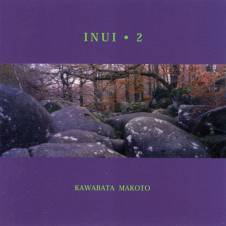
a1729275931_16Kawabata Makoto [河端一] is the guitarist and mastermind behind Acid Mothers Temple. The band is hugely prolific. But he still had time to record solo albums. Often times without any guitar.
This was Kawabata’s second solo LP, now available on bandcamp

INUI 2 was the first widely available solo CD by this prolific Japanese guitarist/composer/bearded guru. Known primarily for his recent work with oddballs Acid Mothers Temple, Kawabata’s career actually goes back to the late ’70s and spans many styles, including solo guitar improv, electronics, folk, and, of course, the deranged acid mayhem associated with the PSF scene. Performed entirely solo on violin, kemenje, zurna, electronics, sarangi, taiko, gong, water, bouzouki, cello, vibes, organ, and sitar, the four tracks that make up INUI 2 are perfectly executed dream-music, equal parts delicately floating and heavily droning. There’s also one all-too-short modal essay for bouzouki that is amazingly beautiful.

“Mou” (9:56) has a drone underpinning the song as he plays a quiet keyboard melody over the top.  About half way through the zurna comes in playing its somewhat harsh melody (although it is less harsh here).  This is a pretty cool chill out song.  [Instruments: Violin, kemenje, zurna, electronics].

“Meii” (11:02) is composed of slowly plucked sarangi strings.  They ring out loud and are accompanied by thumps on the taiko and occasional crashes of the gong. There is also a high pitched feedback/electronic sound that rings out form time to time.   About midway through the bowing become s a little wild and improvisational until it settles back down again.  [Instruments: Sarangi, taiko, gong, water].

“Shi” (3:47) is the ‘all too short” piece and I agree that it is too short.  It features a quietly plucked string melody on the bouzouki that is very pretty.  It has mild drones behind it.  About half way through the melody changes, a faster more deliberate style but still quiet and pleasing.  I could listen to this one for much much longer.  [Instruments: bouzouki, cello, vibe, organ].

“Kan” (14:18) starts as harsh electronic drone with occasional blips of hi frequency sounds.   It’s the first unpleasant sound on the disc.  Although after 2 and a half minutes, the string drones enter and smooth things over.  At some point a pulsing possibly, backwards recorded series of notes comes in to give the drone some drive.  [Instruments: bowed sitar, violin, electric sitar, electronics].

[READ: September 10, 2019] “Ranch Girl”

This brief story was collected in Meloy’s Half in Love.

It starts with the fatalistic sentence:

If you’re white and you’re not rich or poor but somewhere in the middle it’s hard to have worse luck than to be born a girl on a ranch.

The unnamed protagonist grew up the daughter of the foreman of the Ted Haskell Running H Ranch.  Haskell’s brand was a slanted H–she had seen it all her life and didn’t know an H was supposed to be upright until she went to school. (more…)

Read Full Post »

indexsep18SOUNDTRACK: RADIOHEAD-“Paperbag Writer” (2004).

I had recently read a review of Radiohead’s Kid A by Nick Hornby.  he really did not like the album at all.  He bemoaned their lack of musicality and, I gather, catchiness.  The bass line in “Is Chicago” reminded me a tad of this song and I thought it would have been a funny dig at him to include this modern Radiohead song that is almost a Beatles song but in fact nothing like a Beatles song.

Washes of strings and jittery quiet percussion open the song as Thom Yorke quietly mumble/sings:

Blow into this paperbag,
Go home, stop grinning at everyone.
It was nice when it lasted,
But now it’s gone.

After about a minute a bass comes in.  A series of two notes followed by the one main melodic moment of the song–a bass line that ascends a scale.  The song follows this pattern–strings, clicks and this bassline.

There’s a middle instrumental section which is just the strings and clicks.

Then Yorke returns, muttering “Blow in to this paper bag,”

The end of the song is pretty much all this bassline, now modified to not include the melody part just a repeated Morse code kind of sequence.

It’s not always easy to know what Radiohead are playing at. But the title of this song is strangely funny.

[READ: September 10, 2019] “Issues”

It’s hard to read a story about a man who hits a woman.   Even if he feels badly about it. Even if the woman doesn’t seem all that perturbed by it.  Even if he does get his comeuppance.

The story begins with Steven Reeves and his wife Marjorie driving to a party.  This observation about them was interesting: “They were extremely young, Steven Reeves was twenty-eight, Marjorie Reeves a year younger.”  Twenty-eight is “extremely” young?

As the story opens, Marjorie confesses that she had an affair with George Nicholson, the man of the house they are going to right now.  She doesn’t confess that the affair went on for a while–until they got tired of it.

I liked that the women in their neighborhood didn’t care for Marjorie.  They thought she was a bimbo who wouldn’t stay married to him for long and that his second wife would be the “right” wife. (more…)

Read Full Post »

« Newer Posts - Older Posts »