Feeds:
Posts
Comments

Archive for the ‘Short Story’ Category

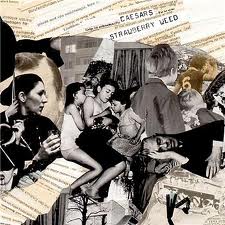
SOUNDTRACK: CAESARS-Strawberry Weed (2008).

This Caesars disc is the final of the donated library discs that I received.  And the guy who donated these has some great taste. I feel like I need to track him down and see what else he likes.  I was initially skeptical of this disc because it is so crazy poppy, but it has a few cool elements to it that make it more interesting than typical pop music.  I’ll claim that it’s because they’re from Sweden, where they skew things a little differently.

The melodies are wonderfully catchy, and yet “Fools Parade” starts with some crazy noises and wild drumming before switching over to pure pop sensibilities.   “Waking Up” features that sure-fire sign of a pop hit, the word “alriiiiiiiiiiiiiiiight” sung with many changes in pitch.  It’s not always easy to pull off but they do it perfectly.

“Boo Boo Goo Goo” is as crazily catchy as its title suggests it would be.   The lyrics aren’t as inane as the title suggests with the catchy ender: “you’re not gonna get that far climbing those monkey bars”.  “Crystal” has some great old-time Farfisa organs on it which make it sound simultaneously retro and (because of the guitars and such) very contemporary.

It’s actually hard to write about this disc effectively because there are so many great catchy pop songs on it–it would just be “this is poppy and fun” over and over again.

I think the poppiness of Caesars can be summed up by “Stuck with You” in which there’s a wonderful “ooh ooh ooh ooh” section, but it’s a little fuzzy and distorted, just slightly off from pristine.  Similarly, “No Tomorrow” has great fuzzy guitars and more oh oh ohs, this time ending in a super catchy “oh yeah!”  Or how about the “oooh wee oooh” that opens “In Orbit” which sounds spacey and otherworldly.

“Up All Night” introduces a minor key song to this intrinsically poppy album, and even the minor key song is upbeat.

This is a great album if you’re looking for something catchy and easy to sing to, but which isn’t completely made of bubblegum.

[READ: March 11, 2012] “Citizen Conn”

Michael Chabon does not shy away from comics.  I almost fear he’s endangering himself as being the guy who writes about comics (fortunately he has written very well about other topics too).  But for this short story he’s back in that familiar realm.

This story is about two men, Morton Feather and Artie Conn.  They were comic book artists back in the day, writing failing books for a failing company.  But they’re in the right place at the right time when an accidental mailing reveals that men in tights are making a comeback.

So Feather and Conn work together to creator some of the most powerful and long-lasting comic book superheroes.  They ride so high that they are offered to sell their creations to a very high bidder.  Feather refuses but Conn accepts.  And so begins the rift between them.  Later, since Feather lost the fire of his convictions after the sell-out, he is fired and Conn becomes solely responsible for these creations. (more…)

Read Full Post »

SOUNDTRACK: BIDINIBAND-The Land Is Wild (2009).

Dave Bidini was a driving force behind Rheostatics.  Although when I think of the band, I think of Martin Tielli’s wackiness and Tim Vesely’s hits, which kind of makes Bidini the sort of stable, middle of the road guy.  But I don’t think that’s right either as Bidini has both a wacky side and a hit-making side.  But this “solo” project focuses mainly on Bidini’s storytelling skills.  Most of the songs are little narratives, which is always enjoyable.

“Desert Island Poem” is actually a story of the dissolution of the Rheostatics–when they survived a plane crash in Drumhella and ate the drummer.   “Memorial Day” surprises because of the clarinet solo (which works wonderfully).  “We Like to Rock” and “Song Ain’t Any Good” are the other kind of song that Bidini writes–songs about playing music.  These kind of songs are always dopey and “We Like to Rock” is no exception–I think I ‘d like it more if it weren’t so tinny sounding.  “Song Ain’t Any Good” is kind of funny, especially if you get through the whole song, although I don’t know if multiple listens are rewarded.

On the other hand, “The Land is Wild” is a great song about Bidini’s other passion: hockey.  This is a lengthy (nearly 7 minute) story about Bryan Fogarty, a young hockey player who was a star at 21 but a forgotten addict by 31.  It’s a sad, cautionary tale about how the hockey establishment all but ignored him as he wasted away.   “How Zeke Roberts Died” is a very similar song,  it’s an 8 minute biography of Liberian singer Zeke Roberts.  This song has lead vocals by a variety of singers.

“Last Good Cigarette” is a delightful ditty about smoking with famous people (and it is super catchy–ha-cha!).  “Pornography” is a funny political song about George W. Bush that is also quite catchy.  And the wonderfully titled, “The Story of Canadiana and Canadiandy” is about living close to America.

Although the album is mostly folky and kind of mellow, “Terrorize Me Now” shows some of Bidini’s more wild guitar noises.  And the final song, “The Ballad of 1969” is a great song that is reminiscent of the kind of highs that the Rheos would hit.  There’s a bonus untitled song [later called “The List (Killing Us Now)”] which is a simple song of people who have aggrieved him.  It’s funny, especially in the live context it is given.

While not as great as a Rheostatics album, this release is like an extension of the band.  Bidini has a new album out which I haven’t heard yet, but I’ll certainly be checking it out.

[READ: March 5, 2012] “Haven”

Munro is back (talk about prolific!) and she has created a darkly claustrophobic house in which to place the young protagonist of this story.

The story is set in the seventies.  The protagonist is from Vancouver, but her parents are heading off to Africa for a year so they have sent her to live with her Uncle Jasper and Aunt Dawn.  Despite this mission to Africa, they are not going there for a missionary purpose, they are going there to teach (and haven’t come across many heathen).  They’re also Unitarian.  Uncle Jasper, on the other hand, insists on saying grace before meals and gets on the protagonist when she starts eating before the prayers.

It turns out that Uncle Jasper is the man of the house.  Aunt Dawn does not begin eating her meal until the discussion of grace is over (after receiving an invisible nod from Jasper).  More examples of her deference are given, but the quote that sums up Aunt Dawn (whether she said it or not) is “A Woman’s most important job is making a haven for her man.”  Although, given that, Jasper does show her some affection: a gift and some closeness towards the end of the story. (more…)

Read Full Post »

SOUNDTRACK: CALLA-Calla (1999).

I got this album when a patron donated it to the library.  I had never heard of this band, but the other CDs he donated were really cool so I grabbed this one, too.  This is an almost entirely instrumental album (vocals are whispered when present) that feels like a soundtrack to a futuristic Western.  “Tarantula” opens with some creepy, ghostly sounds and then what sounds like spurs walking across the landscape.  When the guitar comes in it sounds like an old Western.  In many ways this album reminds me of a great band called Scenic, although this one makes more use of electronics, which gives it a more eerie feeling.

“Custom Car Crash” has a very Western feel.  Over creepy scraping sounds, a clean guitar plays very simple guitar lines and chords.  When the keyboard lilts over the noise, it’s quite eerie.  This song has vocals; deep, almost whispered vocals, and I can’t really make them out,  There’s also a live bonus version at the end which really captures the studio version, but which I think is better.  “June” has a slow droney sound: more atmospheric than anything else–it seems maybe ten years ahead of its time).  The 8 minute “Only Drowning Men:” introduces more guitars and a lit of tension.   From the noise a delicate guitar pattern emerges for the last minute of the song.

“Elsewhere” is full of buzzy guitars; there’s a live version at the end of the disc as well.  “Truth About Robots” is my favorite track, a real melody over the noise.  Despite its length (just over 2:30), it tells a full story.

“Trinidad” comes a surprise because it opens with bass (you don’t hear much bass on this album).  But “Keyes” is so quiet as to be almost not there.  “Awake and Under” on the other hand has a great guitar and bass sequence with spoken lyrics (reminiscent of many indie bands of the 90s) but which is very effective here.  There’s a live version as a bonus track and it is a highlight.

This is more interesting music for creating atmosphere, but not something I’d listen to a lot.  I was surprised to find out how many albums they had out.

[READ: March 2, 2012] “A Prairie Girl”

I’ve enjoyed Thomas McGuane stories before, but I wasn’t sure if I’d like this one as it opens with a brothel.  Since I’m thinking about the implications of sex in Gravity’s Rainbow, the last thing I needed was a hooker-with-a-heart-of-gold story.  But this isn’t that.  And it has a brothel with a very funny name: The Butt Hut .  The Butt Hut closes down when the madam dies.  Most of the women moved away (either with local men (to the dismay of many) or on their own).  But one girl who stayed was Mary Elizabeth Foley.

Mary Elizabeth attended church weekly, but most of the people gave her a wide berth—literally an empty pew.  It was finally decided that someone should speak to her since she wasn’t going away.  And so Mrs Gladstone Chandler, wife of the town’s bank owner and all around respected individual, sat near her during the mass.  Afterward, she asked Mary Elizabeth: “Where are you from?”  Mary Elizabeth answered “What business is it of yours?”  And she soon had her pew back. (more…)

Read Full Post »

SOUNDTRACK: NICK CAVE AND WARREN ELLIS-The Road: Original Film Score (2009).

I haven’t seen The Road, and I probably never will.  Nor have I read it.  The only reason I was listening to the soundtrack was because I like Nick Cave.  So this is a contextless review.  Of course, I know what the book is about and I rather assume that the film is equally harrowing.  I expected the soundtrack to be full of desolation and horror.

So I was quite surprised that most of the main themes are played on a piano with gentle strings or simply violins.  True there is a sense of emptiness and loss in these songs (they’re not jaunty piano pieces or anything) but they are still unexpectedly pretty.

Of course,a song like “The Cannibals” is bound to be more disconcerting, which it is.  It starts with creepy scratchy violins and then tribal drums take over–all set over a buzzing background.  This is more of what I expected the whole score to be like.   Similarly, “The House” must be a very frightening scene, as the music is threatening, loud, intense and quite scary with, again, more creepy percussion.  Unsurprisingly, a track called “The Cellar” is also spooky; it is only a minute long.

But then songs like “The Church” are so delicate and beautiful and not even all that sad–it actually makes me wonder what the scene in the film is showing.  The end of the score feels like the end of a movie, which I know it is, but it feels like a conventional movie, with closure, something I’m led to believe the book doesn’t have a lot of.

Taken away from the movie, this soundtrack is quite nice.  Aside from the three scarier tracks, this would make for some nice listening on a sad, rainy Sunday.

[READ: February 28, 2012] “The Longest Destroyed Poem”

I enjoyed Kuitenbrouwer’s “Corpse” so much that I decided to see what else she had written.  It comes to three books and four uncollected short stories.  There’s “Corpse” from The Walrus, this one here, another one called “Laikas” (which has a different title on the site where it lives) and a fourth with a broken link.  Boo.

But that’s okay because I’ll certainly investigate her books too.

Like “Corpse,” this story explores women’s sexuality, but it explores it in a very different way.  In fact, I loved the way it was introduced–especially because of the wonderfully convoluted way the sentence reveals it (and how it’s not even the main point of the sentence):

She looked fabulous. Better than back then, when she’d thought she wanted to be an artist, and Victor had made a point — she realized this as she realized many many things, that is she realized it in retrospect — of dropping into the conversation — the one she hadn’t actually been having with him, because she was instead focused almost solely on the fact his much younger roommate had a hand under the blanket her crotch also happened to be under — that he was off to bed early so he could work on a poem he’d been having trouble with.

I had to read it twice because I thought it was funny the first time, and when I fully parsed it, it was even funnier.

So yes, sex.  But as the story opens, years after the above event, Rosa sees Victor and decides to crash into him with her car.  It’s shocking and it’s shockingly well told.

I love the way Kuitenbrouwer uses language.  I could probably quote from this story six or seven times, but I love this sentence that forecasts the trouble ahead:  “Victor noticed her in that split second, too, and he knew what Rosa was up to, for his face changed, channel surfing from neutral smug — well, this was his everyday face — to impending doom.”

As she’s about to ram him (with a Prius, no less), we flash back to their spirited relationship. (more…)

Read Full Post »

SOUNDTRACK: MUMFORD & SONS-Sigh No More (2011).

I had assumed that this album was massive until an email sent around to some of my friends revealed that many of them had never even heard of the band.  So I guess it’s massive in my own little world.  Well that’s fine, I’ve always liked rougher folk music.  And there are two or three songs on this album that absolutely deserve to be massive.

If you’re like my friends and you don’t know Mumford & Sons, this album is a kind of rocking folk album (lots of banjos and harmonies).  But it’s less Fleet Foxes and more Waterboys–earnest folk with updates to the traditional sound.  The disc opens kind of slowly with “Sigh No More.” It take about two minutes to get going (and for the banjo to kick in).  In addition to the banjo (seriously, who knew a banjo could be so catchy?–well, bluegrass musicians, for one), the main selling point is main Mumford’s voice–it’s powerful, bellowing and quite emotive.

“The Cave” is the first indication that this album is going to be impressive.  It starts out deceptively simple. Once you get to the second round of the bridge, “and I….” the song soars to the heavens in catchiness, (the singer’s enunciated vowels are weird and fun too).  “Winter Winds” has a bit more Irish feel to it (Irish via The Pogues), but it also has the same kind of soaring qualities as “The Cave.”

“Roll Away the Stone” features the banjo heavily and is all the better for it.  And “White Blank Page” really features the rough-hewn vocals that are the signature of Mumford & Sons.  Never has the word “raaaaage” been so singable!

Some of the slower moments of the album kind of bog the disc down.  Of course you couldn’t play everything at breakneck speed and still have your dynamic parts sound dynamic.  So a song like “I Gave You All” opens slowly but it builds in power.  The break is welcome (although quite a lot of songs start out slow and then get faster).  But the chorus is outstanding.

The pinnacle of the album comes with “Little Lion Man” an amazingly catchy chorus (with a very bad word in it) and more raucous banjo playing.  It’s almost impossible not to stomp your feet along.  “Thistle & Weeds” is another slow builder–you can really hear the angst in his voice by the end.  The end of the album is kind of a denouement.  On my first few listens I didn’t care for the end of the disc so much but by now the album has so won me over that I can just enjoy this folkier ending.

In many ways there’s no major surprises on this disc–it’s rocking folk after all–except for just how damn catchy the band is.

[READ: February 22, 2012] “Corpse”

I wasn’t too keen on reading this story (one of the Walrus‘ longer stories) because of the title (and the accompanying picture of two boys with a deer in their sites).  I didn’t think I would enjoy a hunting story.  And yet, it started out so peaceful and zen that it sucked me right in.

It opens in a very female space.  Maura and Angie are relaxing in Maura’s house.  Well, Maura is doing yoga while Angie is relaxing.  Maura is talking about the yoni, the great universal twat. Angie visualizes a massive latex vulva that she and her boyfriend Gordon enter.  After a few moments, Angie and Maura look at each other and start cracking up.

The female space is penetrated by Malcom, Maura’s 13-year-old son, carrying the beginnings of a bow and arrow.  He wants to know what’s so funny.  They pass of a few lame jokes which he doesn’t fall for until Angie comes up with a really funny one.  One that is especially funny in the printed delivery, in which you’re not entirely sure that  joke is being told (a nice trick!).  So I won’t spoil it here.

Malcolm informs them that he is just going to shoot his arrows at cans with his friend Andrew.  But in fact they have bigger plans.  A deer has been spotted in the local dog park (they live in the city so the deer are a rarity).  After laughing at the joke, he runs off with Andrew to go hunting. (more…)

Read Full Post »

SOUNDTRACK: cuppa joe-“Better in Your Head” (2012).

After an eternity (okay, 18 years), Cuppa Joe is back with another release on Dromedary Records.  Things have changed over the years in cuppa joe’s world.  Their previous release, nurture was a delightful twee pop confection.  This track (you can see the video here) adds an unexpected depth to their catalog.

The first change comes from the minor chord guitar strums; the second comes from the bass, which is following its own cool riff–although it melds nicely with the verse, it’s unexpected from cuppa joe.  The pace of the song is much slower than the frantic songs on nurture.  Even the vocals, while noticably cuppa joe, seem less so–call it a more mature version of the vocals. Indeed, the whole sounds seems to have relinquished their more childlike qualities  and embraced a more mature outlook.

This could be a death knell for a band, but not in this case.  All of their songwriting sensibilities remain intact.  Indeed, they have added a wonderful new component: terrific harmonies in the chorus (which may have been there before, but which really stand out here).

It would almost seem like an entirely new band (18 years will do that to you).  But rather than a new band it’s like an old band coming out of a coocoon like a butterfly.  (That’s too treacly, sorry guys–maybe we’ll just stick with them being older and wiser.  Welcome back guys.

The new cuppa joe album Tunnel Trees is available here.

[READ: September 8, 2010] “The Science of Flight”

I read this story in September of 2010.  I liked it but I wasn’t that impressed by it.  Well, it turns out I either skipped or missed an important section of the story.  So I’m trying again.  here’s the start of my original post

Yiyun Li’s is one of the 20 Under 40 from the New Yorker.  This story (which I assume is not an excerpt) is about Zichen.  Zichen (whose name is unpronounceable to Westerners) emigrated from China to live in America with her then new husband.

As the story opens, we see Zichen at work at an animal-care center.  She is talking with her coworkers about her upcoming visit to England (this will be her first-ever vacation that is not to China).  The men are teasing her about the trip (why would she want to go to the ocean in the winter, she doesn’t know anyone there, etc).  The teasing is friendly, because they are friendly, although Zichen is very reserved around them.  Of course, of all the people she has known, she has opened up to them the most–which still isn’t very much.

That much is accurate.  However, the rest of my post about this story is completely (and rather ineptly, I must admit) incorrect.  Recently, Carol Schoen commented on my original post and informed me that I was a bonehead (although she said it much more politely than that).  I had completely missed the point of this story the first time around.  And indeed, re-reading it this time, I can’t help but wonder what happened last time.

Zichen is a bastard, literally.  She was born our of wedlock to a man who ran away.  In China, this was like compounding one sin atop another one.  Her grandmother agreed to raise her (after a failed adoption) more or less to spite Zichen’s mother, provided Zichen’s mother had nothing to so with her.  And so, Zichen’s grandmother worked in her shop extra long hours to care for a child who was a visible symbol of the family’s disgrace.  (I seem to have gotten the point about her grandmother raising her, but seem to have missed the important part about her parents not being in her life at all). (more…)

Read Full Post »

SOUNDTRACK: STEVEN KATZ-In the Garden of Earthly Delights (2009).

Since I mentioned an album my Aunt Marg gave me, I’m also going to mention this one, that she gave me the following Christmas.  She told me that Steven Katz is a classical guitarist in St Croix.  They saw him play when they were on vacation and they were amazed that he this amazing guitarist who was just sort of hanging around in St Croix (that’s the life, eh?)

I enjoy classical guitar, although I suspect if I was able to play it I’d enjoy listening to it even more.  As it stands, I can appreciate the fast trills (and Katz is masterful at them) and the general feel for the form.  On the other hand, I’m a terrible critic of this kind of music.  It all sounds kind of samey to me.   This is not a criticism of the genre or of Katz, it’s simply an admission that I like the stuff, but I couldn’t tell you a grand master from a regular master.  The one big difference I can say is that unlike the Gipsy Kings (of whom I am quite a fan) there are no extended clapping sections (well, a small clapping section in “Moroccan Roll”).

All of Katz’ composition are beautiful (all the songs are original except for one cover).  They often feature slow sections that are very moody as well as virtuosi parts (that I’ll bet are amazing to watch).  Katz is an amazing guitarist (of course I think anyone who can play this style is amazing).  He plays a Flamenco acoustic guitar over some simply keys and percussion on most of the tracks.  If I had any song to quibble with it would be “Parting at the Ganges” which has a cheesey keyboard in the background and chimes that are clearly sampled–that isn’t a bad thing necessary, except when they stop abruptly and start again.  But I only noticed that on my third listen.  But most songs have simple arrangements (bongos and whatnot).

On the plus side there’s some really unexpected guitar lines at the end of “Gypsy Caravan” and the whole feel of “Moroccan Roll” is very cool.  “Shake It Up” diverges from style on the rest of the disc with some interesting and familiar south of the border musical setups (before returning to some amazing fretwork).  I also really liked the opening of “Desert Rain Cry” because it sounds (I’m sure completely unintentionally) like the opening of Rush’ “Xanadu” (without the wooden blocks).  (The rest sounds NOTHING like the Rush song).

I mentioned the Gipsy Kings above and the comparison is apt because like the Gipsy Kings, Katz also does  cover of Hotel California. Unlike the Kings’ version, there are no vocals. Also unlike their version, this version is quite subtle.  He uses his guitar to play the vocal line, but he does it in a flamenco style–incorporating the melody into the fingerwork–it’s very cool.  He also incorporates the famous guitar solo into his playing–you hear it but he’s not “just” playing the solo.  It becomes and entirely different song than the original.

I went to Katz website and he is funny and self-deprecating, but he also tells us that he has played with all kinds of people including Dr. John, Mavis Staples, Edgar Winter and Mountain (this last one shows that he’s not a young man).   But I’m also quite certain he is not this Steve Katz who was in Blood Sweat and Tears.

[READ: February 21, 2012] “Thief”

I have read two other things from Walter, both of them via McSweeney’s journals.  It’s interesting to read him outside of that context as this piece is different from those two (I’m also amazed that he is releasing his sixth novel!).

I didn’t like the way this story started out, but once we got past the awkward introduction, I thought it was extremely compelling.  And then when it ended, I had some weird feelings about the conclusion.  But more on that later.  (I’m learning that when I say things like “I didn’t like the beginning, it’s usually like the first paragraph or two, which isn’t really fair, but which can often make or break someone’s interest in a story).

So the story starts out with observations about the Girl from her dad (capitalized because all three kids are apparently referred to as Little, Middle and Girl).  Wayne is watching his daughter sleep.  He had her when he was just 19 and she changed his world.  Now she’s 14 and he doesn’t like that Girl hangs album covers on the wall and wears her hair like Peter Frampton (I did enjoy the very simple pop culture references that set the time of this story perfectly).  Then he looks in on the sleeping Middle (who is so unlike Wayne that he thinks of him as the Milkman’s kid) and Little.  Any of the three could be the thief.  Little is a greedy sumbitch (I love the detail about his first words).  Middle is a pretty unlikely candidate (he’s bookish and timid).  And then there’s Girl.  She walks to the bus stop but sneaks a ride with the guy in the Nova; she’s probably smoking pot.

One of them is definitely the thief.

Wayne has a giant jug in which he dumps his change.  It is the family vacation jug.  After two years of change, it will be full enough for a vacation.  And this year’s is Kelowna, BC and the Bedrock City there (yes a Flintstone’s Theme Park–which was real, but is now sadly closed).  Wayne suspects that the Girl doesn’t want to go to Flintstones land and is stealing money to sabotage the trip.  His wife thinks he’s crazy, but he has set little traps and he knows the vacation jug is moving and emptying. (more…)

Read Full Post »

SOUNDTRACK: RED BUDDHA-Raindance (2007).

My Aunt Marg gave me this disc for Christmas a few years ago.  She said that she knew it from a spa that she went to.  And I can totally tell. I don’t know anything else about the artist, and it’s even hard to find stuff about him online.

The disc has an Indian (Eastern) vibe (which surprises me given the name of the artist and the African-looking person on the cover).  It also has a real world music feel.

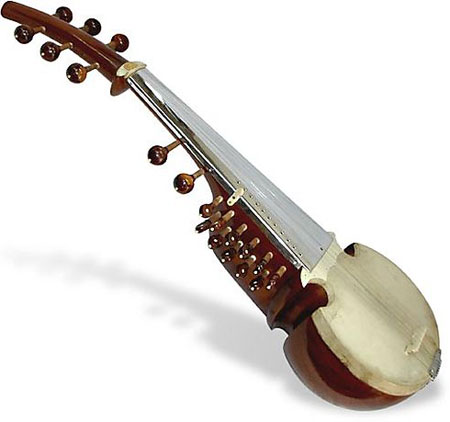
Sarod

Overall, I like the music quite a lot.  It’s certainly new agey, but not treacly new age or anything.  It showcases some cool world music without resorting to clichés.  However, I admit to not caring much for the spoken lyrics of the opening track,  “Sometimes.”  His voice is deep and distracting, especially over such mellow music.  Despite the very Indian feel of “Sometimes,” the rest of the disc explores other sounds as well.  “Kokou” has a 70s kind of organ and bongos (with more appropriately world musicy chanted vocals).  “Raindance” has a cool flute over some bongo beats (all very soothing…with crickets).

Veena

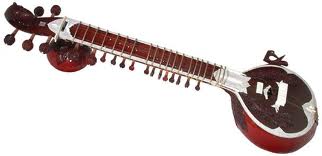
I really like “Girl from Orissa” with its cool Eastern instrumentation.  There’s a sarod, a veena and a sitar on the disc.  (Orissa is located on the eastern side of India).  “Khali Gandaki” also features this cool instrumentation. (The Khali Gandaki valley is in Nepal).

“Mswati” opens with some percussion. But this track differs because of the interesting riff that plays throughout the song (whether guitar or keyboard, I can’t tell).  “Touba” has a nice bassline, which really stands out on a disc with minimal bass. It also has some neat wah-wahed guitars.  And “Preaching of Buddha” has a kind of Dead Can Dance feel to the vocals (they’re my go-to band for world music).

Sitar

“Katarajama” (a pilgrimage site for Sri Lankans and South Indians) has a great riff to it, and it’s even better when the other instruments play along.  “Patan Part 1” also has a cool sitar riff.  Although if Part 1 is 8 minutes, how long is  the whole song?

The final song, “Sufi Kalaam” has a somewhat more sinister or perhaps just movie soundtracky sound (low bass chords underpin the beginning of the track).  There are chanted vocals and lead vocals in another language.  I rather like the song, but it doesn’t really fit on the disc.

The whole disc is definitely a background/new agey kind of deal.  I can hear it all (except the first and last songs) working well for a relaxing evening of massage.  Just don’t listen to it while driving!

[READ: February, 17 2012] “Lorry Raja”

“Lorry Raja” won Narrative magazine’s “30 Below” contest for 2011.  After the wonderful stories that came in second and third place I expected something pretty amazing to win.  And I was maybe a little disappointed by this story because of it.  And I think I have to blame a cultural disconnect for that.

This story is set in Karnataka, India, a poor state in the south of the country.  People there are so poor that they live in tents and work in the mines–smashing up rocks to get at the iron ore inside.  The children can’t afford to go to school, there’s no electricity and everyone is covered in a red dust from all of the dirt in the mines.

Madhuri Vijay is able to create a compelling story out of this harsh environment.   The story concerns one family as they struggle to survive under these conditions.  The father (I had a really hard time keeping the names straight, so I’m not going to include them here) had an accident and cannot work to his full capacity, so he is stuck working less lucrative jobs. The mother works smashing up iron ore.  The middle son, 12, works and plays around the mine (collecting a few rupees each day).  They put some money aside for his eventual education.  The older brother has just gotten a job as a lorry driver for the mines–he takes the ore out to the port cities.  He is only 14, and, being 14, he takes especial care of his lorry–cleaning it from all the red dust and driving it in a very proud manner.  So much so, that everyone starts calling him Lorry Raja.  There’s also a baby brother who doesn’t play much of a part except (in the way I read it) to show off how hopeless things are (the boy is playing in the dirt and when it is time to feed him, his mother just takes her breast out in front of everyone).

The story is narrated by the middle son.  And we watch as he grows jealous of his brother–the Lorry Raja.  We see the narrator break up rocks, spy on his mother, spy on his father (who is lowered by a rope in to a deep mine (!)).  And we see him talk to the owner of the mine (who has a car, a generator and drinks Pepsi).  And finally we see him spend some time with his brother’s ex-girlfriend (they broke up more or less once he started driving his lorry).

When the girl casually remarks that the narrator should get his lorry license and then he could drive her to China, that sets a new part of his life in motion.  (They are thinking about China because the “Lympic Games” (“Whatever they are” he says) are being played there this year). (more…)

Read Full Post »

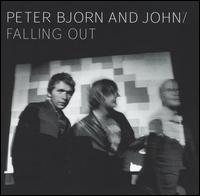
SOUNDTRACK: PETER BJORN AND JOHN-Falling Over (2005).

This is Peter Bjorn and John’s second album.  I enjoyed Writer’s Block and Living Thing and when I read that their earlier discs were just as good, i had to check them out to be sure.  Their first two discs are less polished, less slick.  Normally I’d say that automatically makes them better, but PB&J’s sound is pretty great with or without the production values.  This disc feels like  a transition disc, like something big is going to be coming soon (which it did).

The opening song is a pop masterpiece in the tradition of The Beatles (or more accurately, The Monkees–who wrote great pop songs with just a little less panache).  It is catchy right out of the block, with some interesting slower parts to add drama.  And Peter’s voice is perfect for this kind of pop convection.  It even opens with a Speak n Spell!  “Money” has a harder riff, but the chorus is trippy and fun.  “It Beats Me Every Time” is a darker song with a melody (and vocal style) that reminds me of Michael Penn (especially the chorus).  [I love Michael Penn and think he is vastly underrated].

“Does It matter Now?” is the first song that isn’t awesome.  It’s a fine song and there’s some great backing vocals in the middle of the track, but it’s not as good as the first three.  But “Big Black Coffin” springs back with a wonderful melody and chorus (and more Michael Penn style).

“Start Making Sense” is 2 minutes long and that’s fine, but it would probably drag if it were longer.  But then “Teen Love” is great, with a cool drum section that bridges to the a great chorus.  “All Those Expectations” is a slow guitar ballad.  It is sweet but a bit too long.  “Tailormade” ends the record on a good note, an interesting keyboard-based song with multiple parts and although the verses seems long the pay off in the chorus is worth it.

Strangely, the disc actually ends with what sounds like a demo, “Goodbye, Again Or.” If it’s not a demo, then it sounds like he’s in the next room. Maybe with the door shut.  I can’t really grasp the song as I’m so distracted by the recording.

My version of the disc has five bonus tracks.  I’m not sure that this is the kind of disc you want bonus tracks for, (my first listen I couldn’t believe this album was so long!) but, really, who says no to free music?

“(I Just Wanna) See Through” has a rock n roll guitar intro.  “The Trap’s My Trip” starts out slowly but adds drums with a wonderful introduction after two minutes and then brings in a  great rocking guitar.  It’s a wonderful b side.   “Punk’s Jump Up” is a fun little jam/practice.  While “Unreleased Backgrounds” is a slow guitar song.  These are nice bonus tracks.  Not essential but enjoyable.

This is a solid record from PB&J.  Even though some of the early songs are really catchy, nothing is as immediate as “Young Folks.”  But it’s still really strong.

[READ: February 15, 2012] “The Silence Here Owns Everything”

Continuing with Narrative magazine’s “30 Below” winners for 2011, this story won second place.  It was deceptively simple and I enjoyed it quite a lot.  The story was broken down into several sections (which I like), although all the action takes place over one  weekend.

It’s written in the first person from the point of view of a high school sophomore (I gather).  She and her best friend Kendra are walking home from school on a Friday afternoon.  Kendra has bruises on her face, which we assume are from her father.  It’s obvious that despite Kendra’s difficulties, the narrator looks up to her quite a lot (she may even have a crush on her, but that’s not really an issue).

The bulk of the story centers on the girls as they walk home, as they hang out at Kendra’s house, as they smoke some weed and as they fall asleep–you know, a typical high school weekend.  And Clodfelter captures the tone and details of the setting perfectly.  It feels completely real.  Especially when Kendra reveals that her boyfriend is coming over in the morning and the narrator wishes (but doesn’t say) that it could be just the two of them instead. (more…)

Read Full Post »

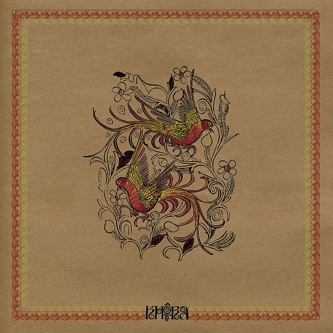
SOUNDTRACKKHÔRA’s-Silent Your Body Is Endless [CST071] (2011).

This is the third and final disc from Constellation’s MUSIQUE FRAGILE 01 collection.  Khôra is Matthew Ramolo doing solo work on the guitar.  But unlike any other guitar album you may have heard, this one is processed and manipulated so that much of the album sounds nothing like a guitar.

Most of the sounds on the disc are washes and waves of guitars that grow and fade.  Although the opening track “Natura Naturans” has a recognizable acoustic guitar melody, the washes are all processed guitar sounds.  This sound also has an echoing church bell, the kind of sound that would bot be out of place on a black metal album although this is as far from black metal as you can get.

The church bell, by the way is a field recording, and in addition to the guitars there are plenty of field recordings on the disc.

He generates a wonderfully expansive amount of moods as well.  There are haunting melodies like on “Body Aperbut also beautifully upbeat ones like on “Hushed Pulse of the Universe”

I find the artwork that accompanies the Khora album to be the most satisfying of all three.

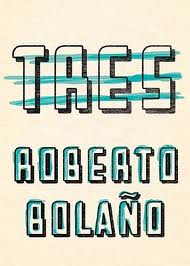
[READ: February 15, 2012] Tres

Another month, another posthumous Roberto Bolaño release.  Tres is so-called because there are three pieces in it.  They are described as poems, although I have a hard time seeing them as such.  It has the Spanish title because it was originally published as Tres and the English version is actually a bilingual version with facing Spanish and English pages (translated by Laura Healy–I guess if Laura Healy translated it, it must be poetry as she is Bolaño’s poetry translator).

Tres is also amusing to me because it is so clearly a way to make a very small book seem bigger.  In addition to the facing pages of the text, most pages have a paragraph or two at most (short ones at that).  So it’s total 173 pages is really half that and then, given how much white space there is, it’s easily half that as well.  None of this is a complaint, it’s just an observation.

The reason I’m confused about calling it poetry is because of the three pieces only one “looks” like poetry (with line breaks and what not).  Indeed, the first piece, “Prosa del otoño en Gerona” literally translates as “Prose from Autumn in Gerona.”  The second piece (the one that looks like poetry) is called “Los neochilenos” or “The Neochileans” and the final one is a series of numbered paragraphs (again, with no poetry conventions) called “Un paseo por la literatura” or “A Stroll through Literature.”  I read each of these pieces three times primarily because I found them hard to follow and wondered what I was missing.  Multiple readings did help, although I find with Bolaño’s longer short pieces, the details are exquisite while the overall picture is a bit confused. (more…)

Read Full Post »

« Newer Posts - Older Posts »