Feeds:
Posts
Comments

Archive for the ‘Constellation Records’ Category

SOUNDTRACK: LAND OF KUSH’S EGYPTIAN LIGHT ORCHESTRA-Monogamy [CST066] (2011).

The Land of Kush makes music that I would describe as challenging to Western ears.  Sam Shalibi has always played middle eastern music (he’s a master of the oud) and he has usually incorporates it with varying degrees of poppiness into a western style.  The LoKELO is one of the most overt blendings of the two styles.

Land of Kush pretty much throws all rules into the wind.  My first listen to this record I thought it was just too all over the place to be any good.  But after really digging in to it…man, is it solidly cool.

The first track “The 1st and the Last” has a robotic voice reciting a modified lyric of “Helter Skelter” which seems to be called Helter Smegma (“When I get to ass I go back to top….you may be a dancer but you ain’t no porno.”)  The more you listen to the voice, the more you realize the lyrics are just really vulgar and obscene.  This creepy computer voice is layered over the top of a middle eastern keening female voice.  (I’m sure there’s a name for this kind of singing, but I don’t know what it is).  There’s beautiful middle eastern music in the background, but the combination is very unsettling.  Then there’s 2 minutes of simple oud instrumental.

The song morphs into the 17 minute “Scars.”  “Scars” opens with a hypnotizing middle eastern melody and sultry vocals from Elizabeth Anka Vajagic.  After about 7 minutes, the computerized voice comes back.  At the 11 minute mark, the music stops and Vajagic comes back with some solo vocals–she has a very beautiful voice.  The song ends with a somber string section (which I assume is not a violin).

Track 3, “Boo” is listed as an improvisation of clarinet and contrebasse based on “Scars.”  I don’t really see the connection and although I like imrov, I actually prefer the written out pieces on the disc.

Track 4 is the 9 minute “Tunnel Vision.”  It opens slowly with Katie Moore’s delicate voice singing over acoustic music and bird sounds.  At about 7 minutes, a wild saxophone solo kicks in.  It’s low and bassy and very different from the rest of the song, as is the tempo, provided by some wild drums.

“Fisherman” brings back the computer voice (“How I love to fuck a dyke…” this is the easiest to understand and probably the dirtiest.  It really seems like lyrics from another song, but I can’t find it online–although  listening closely there is some spin on “Magic Bus” going on (“stick in the test tube to impregnate you–too much magic bus…I’m so nervous because all the while–too much magic bus–you don’t know you’re going to pop out a child”)).  After about 3:15, the song proper starts.  This is my favorite song of the bunch.  Ariel Engle’s vocals are transcendent.  I’m still not even sure what she’s singing about but her voice is amazing.  There’s an intermission of computer voice which rewrites the lyrics to “Total Eclipse of the Heart”–think x-Rated Weird Al than anything else.  And then at the 9 and a half-minute mark, Engle returns with an amazing vocal line over a great baritone sax riff.  And when Engle starts wailing, it is amazing. I could listen to that section for ten minutes easily–shame it’s only two.  But there’s another beautiful middle eastern string solo at the end of this song too.  Must be the oud.

“Monogamy” opens with a slow and steady drumbeat while Molly Sweeney sings a fascinating alphabet (B is for Beelzebub…F is for the fucking that you did, outside).  There’s a cool chorus to this recitation, it’s another real highlight of the disc.  The middle section sounds a bit like Pink Floyd’s “Several Species of Small Furry Animals Gathered Together in a Cave and Grooving with a Pict”

The final track is “Like the Thread of a Spider.”  It is a slow acoustic song with vocals by the people of the Syrian Arab Republic. It’s a beautiful somber ending to an exciting disc.

This is not for everyone; it’s not even for most people.  But if you’re looking for something adventurous, try this out.  It’s challenging and rewarding.

[READ: December 14, 2011] “Stone Mattress”

I haven’t read a Margaret Atwood piece in a while and this one was totally worth the wait.

It’s a very simple story and it opens with a wonderful grabber: “At the outset Verna had not intended to kill anyone.  What she had in mind was a vacation, pure and simple.”

Verna decided to go on a trip to the Arctic.  We learn through the course of the story that Verna chose the Arctic because although she is older, she’s still quite fit–not bathing suit in the Caribbean fit, but certainly arctic wear fit.  And since she’s just lost her 4th husband, she’s sort of on the prowl again.

As the story progresses we learn a bit about Verna’s history.  She’s been married four times, and in each case her husband has died–never under suspicious circumstances, although, maybe, Verna’s medical knowledge could have assisted in saving (or dispatching) them.  But that’s all the past.  She’s a wealthy older woman now.  (more…)

Read Full Post »

SOUNDTRACK: SISKIYOU-Siskiyou [CST067] (2010).

Siskiyou is a fascinating band whose debut album was released on Constellation last year.  The main guy in Siskiyou is Eric Huebert, who was drummer for the Great Lake Swimmers.  He quit the band and moved to an organic farm in British Columbia. And while farming he created this album (which is named for the California mountain range and is not, as a I imagined, a play of the phrase Sick of You (which I will still think regardless of the truth).

There’s a wonderful article at Paste about this album, where I learned a lot about the disc.  The disc was recorded in stairwells (which seems so cool) and at field recordings on the beach.  It was made on the cheap and very independently.  And I love it.

It feels very much like a small solo project (although he is quick to point out that he had help from another Great Lake Swimmer, Erik Arensen, as well as his wife and some friends.  But really, it feels like a vulnerable man singing in his wavering voice over some stark acoustic songs.

But unlike a poppy folk album, this one feels awkward.  The melodies are beautiful, but the lack of polish and production makes the recordings feel more fragile than they might otherwise be.

Indeed, Huebert’s voice, while always on pitch, threatens to just collapse under the strain of recording that first song, the gorgeous “Funeral Song.”  But it’s the second song that tells you this isn’t just a home recording.  “Everything I Have” feels like a great Lou Barlow/Sentridoh song–recorded on lo-fi equipment, until you hear the gorgeous horns come in a play the simple yet very winning melody over the loud folk guitars.  Again, if this had been over-produced it might have veered in cheesy, but the lo fi sound (and the cool lyrics) make this one of the best folk songs I’ve heard in ages (and it’s only 2 minutes long, too).

This is followed by two delicate songs: simple melodies, on either banjo or piano and shuffle drums.  My favorite song is “It’s All Going to End.”  Horns give it a kind of mariachi feel, but lyrically it’s wonderful: “I don’t like you one little bit, keep that shit up man, you’re gonna get hit.” All sung in his delicate wavery voice (and again, under 2 minutes long).

Another highlight is the “cover” of “This Land is Your Land.”  Called “This Land,” it opens with a slow piano melody that doesn’t sound anything like the original.  And then he begins whispering the lyrics–once again totally unlike the original.  But mid way through he changes the lyrics, to a new type of song about how he is never going home.  It turns the song mournful and rather powerful.

“Never Ever Ever Ever Again” is a wonderful song of repetition.  And the two short (just over a minute) tracks, “Inside of the Ocean,” and “We All Fall Down” are charming interludes before the lengthy “Big Sur.”  “Big Sur” starts with an upbeat banjo riff but then settles down into a slow (slightly out of tune) guitar piece.  The slow pace is particularly amusing given the incredibly slowly sung lyrics “So let’s party.  Let’s party.  Let’s party.  Party all night long.”

The disc ends with “Brevity and Insult” a song of static and banjos.

Typically I don’t like slow music, but this album adds so many interesting aspects that it doesn’t actually feel slow to me, it feels interesting and challenging  and strangely uplifting.  And I’m looking forward to their next release.

[READ: October 19, 2011] “Snake

This (surprisingly short) story packs so many different ideas into it that it really jostles the reader’s emotions.   It opens with a woman in a car. She’s in the parking lot of a supermarket waiting for her boyfriend, when she begins watching two boys.  They are playing with something on the ground, although she can’t quite tell what it is.

After seeing them lifting a stick, she realizes that it is a mostly-dead snake that they are playing with.  They don’t see her and she watches them decide what to do with the creature.  They decide to play a prank.  The boys test all of the cars in the parking lot and when they find an unlocked door they drop the snake in. (more…)

Read Full Post »

SOUNDTRACK: COLIN STETSON-New History Warfare, Vol. 2: Judges [CST075] (2011).

When you learn that Stetson played saxophone for Tom Waits, it makes perfect sense.  The middle of the second song, “Judges” sounds like the instrumental break for any of Waits’ newer songs.  Of course, once Stetson starts really wailing you realize that Stetson doesn’t need Waits’ lyrics to tell a story. With just one big-assed bass saxophone, Steston can say quite a lot.  He plays with circular breathing, meaning that he doesn’t have to stop to take a breath, he breathes in through his nose and out through his mouth at the same time (this is of course impossible).  The bass saxophone weighs some 20 pounds and is massive and Stetson makes it sound like everything from an oil tanker to a field of runaway horses.  Oh, and he also has pretty melodies and songs that sound longing.

This disc is part two of a trilogy, but this is the first of his records that I bought (thanks to a release via the folks at Constellation–I wonder if they will redistribute Pt 1).  There is a story that runs through these discs, although honestly, I’m not entirely sure what it is.  But that doesn’t matter to me, what matters is Steston’s amazing skills.

There are evidently a couple of overdubs on this disc, but for the most part it is just him and his saxophone (and 24 microphones).  The microphones were placed all over the room, on the instrument itself (to pick up the clacking of the keys) and even on his throat (when he makes those “voices muffled by a pillow” sound, that’s the throat mike picking up voice–singing while he is playing (which is impossible)).

The album features a couple of spoken word sections by Laurie Anderson, whose clipped, non-inflected voice gives this otherworldy music an even more otherworldy feel.  And there’s two songs sung by Shara Worden.  Other than that, it’s just the man himself.

Prepare to be amazed by this man’s talent.  But also prepare to be a little frightened by what you hear.  This is not timid music by any stretch.  There’s some scary stuff on this record, especially if you listen in the dark.  More especially if you listen loud (which you absolutely must do to hear all the nuances).  On first listen, this may sound like a noisy jazz record, but the more you get into it, the more amazing it becomes.

[READ: October 11, 2011] Moby Dick-in Pictures

Matt Kish has accomplished an amazing thing.  He has drawn a picture a day (more or less) to accompany every page of the 552 page paperback version of Moby-Dick.  He takes a small passage from each page and renders an image for it.  One thing this book is not is an illustrated version of Moby-Dick.  It doesn’t purport to be.  You won’t get the whole story from this book.  It’s not a cheat sheet for high school students.  If you haven’t readMoby-Dick, this will give you a taste for the story–almost like a preview for a movie.  And hopefully it will compel people to read the original.  If you have read Moby-Dick, this is a wonderful companion.  Not only will the pictures give you fascinating insights into the story (and into Kish, of course), but seeing sentences excised from the book to stand alone makes you aware of the book in ways you just aren’t when you’re reading it as a novel.

Kish admits he is not an artist, which while not false modesty, is certainly selling himself short.  He has an awesome style of illustration.  I am especially excited by his vast pictures with small details (lots of pages where there are small circles with lines in them or, for instance, the details on Queequeg’s face) and when he uses bold lines to create vast, weighty iconic pictures.  Here’s one example of his awesome use of multiple straight lines.  I mean, it’s gorgeous.

But I also love the whole conceit that an artistic shortcoming for him has turned out to be an absolute boon.  Kish says he cannot render the human form and so he made the conscious decision to make the seamen more like avatars than people.  It’s daring and a little odd, but it works wonders.  I admit that I was a little less than excited by the very first page of the book–I was disconcerted by Ishmael and his utter lack of features. (I actually like the way he is rendered later in the book better–call it an artistic growth).  But by the time her gets to Queequeg, or the  gorgeous Tashtego  it’s obvious that his decision was genius.  Just take a look at the marvel that is is Ahab (left).  First off, the colors are amazing.  As are the details of the whale in the corners.  But look at him–he’s a metal machine–shiny and tough–part ship, part whale.  Look at the awesome shading and detailing of the blue “coat” that he’s wearing.  He’s even got the badge of Moby-Dick on his belt!  And then there’s the pegleg–the most beautifully drawn pegleg ever.  It’s really stunning.

Now you’re also noticing that there’s all kinds of diagrams behind Ahab.  Kish used to work at a bookstore and he hated seeing old pages of books thrown away (he has since become a librarian, which makes sense–although as I librarian I learned that librarians are actually quite cavalier about throwing away old books once they are beyond use).  So he brought these pages home.  And, given the density of the layers of meaning in Moby-Dick, he decided to draw his pictures on these old pages.  So on virtually every page you can see something in the background.  Most of the time they are these circuital diagrams, which are wonderful. But there are several drawings where the found pages are pages of text from books.  And I have to say if these were serendipitous findings then he has amazing fortune.  Some of the pages tie in so perfectly it is wonderful.

Like the page that is headed “Cetology” and is from what, a textbook on whales?  Or several other pages that I wish I had taken notes on, because they were really wonderfully chosen.  He even has a drawing on a title page of Moby-Dick. I have to ask, did he really find that or did he buy it for the project? (more…)

Read Full Post »

SOUNDTRACK: TINDERSTICKS: Falling Down a Mountain [CST065] (2010).

Another Tindersticks album comes out from Constellation!  This one features a bit more dissonance than I’m used to hearing from them.  Not crazy noisy dissonance, just sprinkles of it that make the album feel slightly askew: horns that are abrasive, strings that are foreboding and even Stuart Staples usually mellow singing is filled with vibrato (!) at times.

The opening song is an unusual track: a six and a half minute mostly instrumental which ends with some repeated chanting/singing of the title.   Given that this is the Tindertsicks, a band which at this point is possibly known more for its soundtrack work than anything else, it’s not all that surprising to hear an instrumental from them, but there’s something about the structure of the song that sounds different for them–it’s a slow builder with lots of horns. It’s really cool.

“Keep You Beautiful” is a slow, quiet number.  A beautiful showcase of that side of Tindersticks–harmonies and melodies aplenty.  “Harmony Around My Table” is a beautiful shuffling song which sounds like classic Tindersticks.  The twist is that Stuart kind of vamps around the end of the song.  It’s a catchy number with lovely backing vocals and some cool lyrics ( “I found a penny, I picked it up / The other day I had some luck / That was two weeks last Tuesday / Since then there’s been a sliding feeling.” ).

“Peanuts” is a sweet duet with the elusive Mary Margaret O’Hara it has some very sweet lyrics: “You say you love peanuts / I don’t care that much / I know you love peanuts / And I love you / So I love peanuts too.”

“She Rode Me Down” is the best song on the album and one of their best songs in a long time. It features some great mariachi style rhythms (handclaps, castanets, a flute) and wonderful brass section.  There’s also a nifty bass string (viola?) that adds an unexpected melody line.   There’s also the fun to sing bridge: “she rode me, she rode me, she rode me.”

“Hubbards Hill” is an actual instrumental.  It reminds me a bit of an acoustic Air song, all moody and tense.  “Black Smoke” has some creepy violins and Staples’ slightly askew vocals–he seems to be really straining, and it ends up with a wavery vibrato.  “Factory Girls” is a slow, delicate piano song.  It’s similar to some of their older songs, but it seems even more quiet than usual.  The final track, “Piano Music” is a great instrumental.  It’s slow and melancholy with some wonderful piano sprinklings throughout.

Again it’s hard to be surprised by anything Tindersticks do, their output is so varied, but this disc has some real surprises to it.  It’s not unusual for Tindersticks to create instrumentals (they do all those films scores after all, but I kind of associate the band with Staples’ voice.  That there are almost three instrumentals here is unexpected.  It feels like a transitional record, as if perhaps their next one will totally kick ass.   But at the same time, this one is really good too.

[READ: August 1, 2011] “Above and Below”

This story was surprisingly long.  It just seemed to keep going and going.  And that was fine, except that the story was basically about a girl who seemed to fall hard on her luck and then find some kind of circumstance that picked her back up again. And then up and down and then up and down.  Dumb luck seemed to keep her from hitting rock bottom.

So anyway, the main character (unnamed as far as I recall) was until recently a TA in Florida.  When she lost her job, and her funding, she decided to say “the hell with it all.”  She took the last few items she had, piled into her station wagon and took off.  She called her mom and told her not to worry, that she’d call again when she got settled.  Of course, her mom is kind of spacey and unresponsive and the narrator hates her stepdad, so the actually calling part may not really have been that high a priority.

First, she stays in her car until she eventually shoved off by the police.  She finds a new beach and a hotel with a gym where she can shower.  She basically has no intention of doing anything.  She should hit rock bottom but then the first of the unreasonable coincidences occurs: “She was baking on the beach when a leaf slid up over her stomach.  She caught idly at it, and found that it wasn’t a leaf at all but a five-dollar bill.”  Really?  A five dollar bill?  We should all that happen to us.  My suspicions were immediately raised by that detail, although I let it pass. (more…)

Read Full Post »

SOUNDTRACKTINDERSTICKS-Claire Denis Film Scores 1996-2009: White Material [CST077] (2009).

White Material is the most recent soundtrack that the Tindersticks created for Claire Denis.  It was recorded between their “reunion” album The Hungry Saw and their latest album Falling Down a Mountain.

This is a very moody soundtrack.  The guitars set a brisk but desperate-sounding pace.  There are feedback squalls that echo for even more tension.  The feedback could be any number of things as well: squeaky machines, industrial noise, or simply disconcerting sounds.

There is a repeated motif throughout the score that morphs and blends with the tone.  The overall feel of the soundtrack is unified but it never sounds like you’re listening to the same few notes repeated (which is actually what it is, the songs use a very limited palette).

For such a limited palette of music, they really manage to give a diverse picture of the movie.  The way “Andre’s Death” builds, using those same few notes and feedback is truly amazing.  The tension that has been building throughout the score really comes to a head in those 2 minutes.  Contrarily, the flute that plays over those same notes in “Children’s Theme 2” is a haunting exploration of the theme.

This soundtrack isn’t as industrial/weird as L’intrus, but it is probably more intense and spooky.  It’s amazing how evocative these guys are.

[READ: June 22, 2011] Merit Badges

Sarah brought this book home, but she didn’t read it.  It sounded pretty good (I mean it won the 2009 AWP Award for the Novel), so I decided to give it a go.

The book seemed strange to me in the way it was set up: it seemed to have a very specific structure but it didn’t always follow it exactly. So, there are four main protagonists who write chapters of the book.  But they don’t each get a turn, in fact one, Barbara doesn’t really have much to say until much later when her story becomes very compelling.  It also advanced over the years with no real explanation of pacing or even of when a new narrator has jumped ahead several years.

I assumed this was going to be a story of four people looking back on their high school years.  But indeed, it’s about four people looking back on their whole lives, as they grow together, drift apart, come back into each others lives and then disappear again.  In that way, it was also a bit hard to get my bearings.  It was also hard for me to keep all of the characters straight.  Because even though there are four narrators there are many many more kids introduced in the beginning of the story.

Each chapter opens by stating who the narrator is.  The first few narrators are Chimes Sanborn (Prologue), Quint (Woodwork), Slow Slocum (Cooking), Chimes (Drafting), Barb Carimona (Music), Quint (Mammals), Quint (Crime Prevention) etc.  So it’s not consistent.

But also, as you can see, all of the chapter titles are named after Merit badges (which I liked quite a bit).  The subtitle describes what you have to do to achieve the badge (and the chapter does indeed kind of work within that stricture).

So far so good, but we’re also introduced to ancillary characters who appear quite often: Dickie Burpee, Pooch Labrador, Smash Sarnia, and a psychopath named Tulep.  With all of the nicknames and rotating narrators, I admit to losing track of who was who, which I fear lessened the impact of some of the events.

Of course, that’s all structural.  And while I felt like I probably missed out on moments of impact, the overall storyline was not hard to follow.  And, indeed, complaints aside, the story was pretty intriguing.  It is set in the (fictional) small suburb of Minnisapa, Minnesota.  It feels very true to me (having lived in a small town, myself) as do the choices (bad and good) that the kids make. (more…)

Read Full Post »

SOUNDTRACK: TINDERSTICKS-Claire Denis Film Scores 1996-2009: L’Intrus [CST077] (2004).

This score comes from Claire Denis’ 2004 film L’Intrus.  The soundtrack was done by Stuart Staples.  In the booklet he talks about how conventional scoring just didn’t seem appropriate for the film, so he chose this rather noise-filled style.

It is a noisy, menacing work (L’Intrus means The Intruder, so that makes sense).  The sounds are clanky and squeaking, creating an ominous atmosphere.

But what’s most interesting about the score is that despite this limited collection of sounds, he creates a musical work out of it that is interesting to listen to on its own.  The track “Horse Dreams” is full of discordant notes and screeches.  While “The Black Mountain” features a solo horn over the noises.  It’s not easy listening, but it is certainly evocative.

This score is also very short about 25 minutes or so).  The movie is 130 minutes.  I wonder what other sounds are in the film?

[READ: June 15 2011] “Madame Poirer’s Dog”

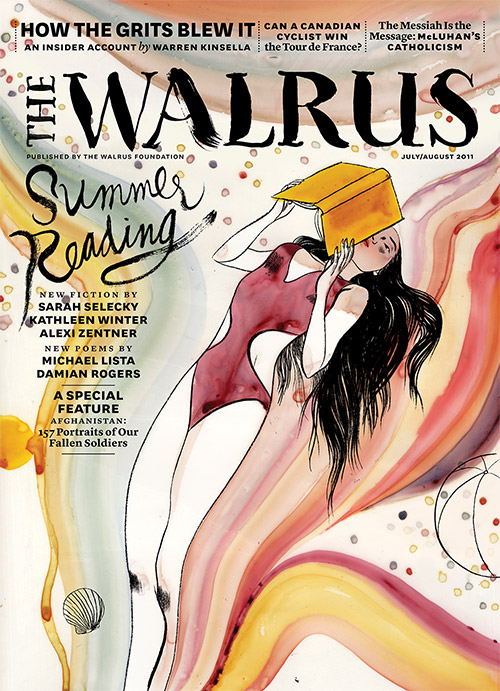
This is the second story in The Walrus’ Summer Reading issue.  As I mentioned, the intro states: “We asked five celebrated writers to devise five guidelines for composing a short story or poem. They all traded lists–and played by the rules.”  Kathleen Winter was given rules by Alexi Zenther (which I posted below).

I didn’t enjoy this story all that much.  More specifically, I enjoyed the story within the story, but the full, proper story was a little too indistinct to me: It felt kind of all over the place.  In some ways this is appropriate as the story is set in an old folks’ home.  The titular dog comes into play throughout the story and the hard and fast facts of the dog’s tale give some grounding to the story.

The dog’s story is told in a just-the-facts, not-the-details style.  And the dog’s story is a funny story.  It involves a chastity belt (for the dog), and another dog’s skill at the belt’s removal.  But  the funniest part came at the end when the narrator criticized her son’s wife because she would be the kind of person who would ask for details “that no one cares to remember: what exactly does it look like, a chastity belt for digs, and of what material is such a thing made?”

The bookend parts that surrounded the story just kind of fade from my memory.

The five rules from Alexi Zenther: (more…)

Read Full Post »

SOUNDTRACK: TINDERSTICKS-Claire Denis Film Scores 1996-2009: Vendredi Soir [CST077] (2002).

This score was created by Dickon Hinchliffe and the liner notes indicate that it was something of a jumping off point for his future film scores.  This was the third score that the band created for Denis (after Nenette & Trouble).  Stuart Staples was working on the latest Tindersticks album so Dickon took over all of the duties on this one.

This is a beautiful, melancholy soundtrack, full of gorgeous swelling strings and simple piano notes.  It doesn’t remind one all that much of  Tindersticks, but it’s not terribly far removed from their sound either.

The whole score (which is paired here with the score from L’Intrus) is 25 minutes, which made me wonder whether this is a full length film, or just a film with lots of silence (or, perhaps non-Hinchcliffe music that wasn’t included here).  [The film is 90 minutes long].

Pairing it with L’Intrus makes sense in terms of space, but the two scores could not be more different from each other.

[READ: June 15, 2011] “The Cat”

This is the first story in The Walrus’ Summer Reading issue.  As I mentioned, the intro states: “We asked five celebrated writers to devise five guidelines for composing a short story or poem. They all traded lists–and played by the rules.”  Sarah Selecky was given rules by Kathleen Winter (which I posted below).

The first line of the story really sets up the whole thing: “I am not at all surprised that my father has come back to earth in the form of a grey and white cat.”  And indeed, the rest of the story discusses her relationship with her father (those awful fishing trips when she could neither speak nor move) and how he never seemed to be pleased about her.

Now that he’s back as a cat, the dynamic has changed.  Although there’s still fish in their relationship.

I really enjoyed this story,  For although it was brief, it was wonderfully evocative.

Kathleen Winter imposed these rules on the story: (more…)

Read Full Post »

SOUNDTRACK: TINDERSTICKS-Claire Denis Film Scores 1996-2009 [CST077] (2011).

Constellation Records just released a 5 disc box set of Tindersticks movie scores.  Fans of the band will know the soundtracks for Nenette et Boni and Trouble Every Day which were released years ago.  Those are included here, along with four other soundtracks (on 3 discs).  The entire set includes Nenette et Boni (1996) White Material (2009), 35 rhum (2008), Trouble Every Day (2001) and two solo soundtracks: Stuart Staples’ score for L’intrus (2004) and Dickon Hinchliffe’s score for Vendredi Soir (2002).

As with most Constellation releases, this one is packaged beautifully.  The box is lovely with an opening for the top cover to show though. Each disc gets a cardboard sleeve with a cool still from the film.  And the booklet that accompanies the set is bilingual with lots and lots of still from the films and a cool interview with Denis and members of the band.

I have never seen any of Denis’ films.  So I was confused that some of these scores were only half an hour.  I thought maybe they were short films.  But indeed they are not.  35 Shots of Rum is 100 minutes for instance, even if the soundtrack is a third of that.

I’m going to review each score shortly, but since I’ve already discussed Nenette et Boni and Trouble Every Day, I’ll just put links to them.  In the meantime, the scores are really beautiful and moving.  Tindersticks are a very cinematic band to begin with, so it’s no surprise that they would make good soundtracks.

And the booklet is really interesting, showing how the band was introudced to Denis in the first place.  She loved the music of ‘My Sister’ and asked if she could use it for a film.  They said, well, maybe we can make a soundtrack for you instead.  And they began working together.  The combination proved so successful that they have scored virtually all of her movies since.  I really must get around to watching them some day.

In the meantime, I can just imagine what they are like from the music.

Here’s the opening credits for Trouble Every Day

[READ: June 24, 2011] Five Dials: Your Valentine’s Day Card

This Five Dials special issue doesn’t appear on the Five Dials home page.  I only found it while reading their news feed.  It’s not an issue per se.  Indeed, all that this valentine’s card is is one poem from Joe Dunthorne, and a cool cover illustration from Sophia Augusta. (more…)

Read Full Post »

SOUNDTRACK: EVANGELISTA-Prince of Truth [CST061] (2009).

This is the second disc by Evangelista, the band fronted by Carla Bozulich. This disc continues in the vein or the previous disc, which is a little disappointing.
The disc is chock full of a lot of noise: stringed instruments, textures, layers, but they all add up to very little.  Bozulich’s voice is in another location entirely.  On most of the songs, there’s no real connection.

Two songs in the middle, “You Are a Jaguar,” and “Iris Didn’t Spell” are more reasonable attempts where Bozulich’s wild vocals are wedded to a more standard musical composition.  And those tracks work pretty well.  But when there’s so much directionless stuff floating around on the disc, it’s hard to want to listen to it.

[READ: May 25, 2010] “Afraid to be Men”

This is a conversation between two men.  They are given no context and are speaking abstractly.  These two things combines make for a less than satisfying read.

Admittedly, this piece is excerpted from a longer piece called “Manifesto.”  I’m not planning to read the longer piece, so I’ll never find out of context is given. (more…)

Read Full Post »

SOUNDTRACK: VIC CHESNUTT-At the Cut [CST060] (2009).
Vic Chesnutt died in December.  I have limited exposure to him, although I really enjoyed his previous Constellation release North Star Deserter.

This release (his second to last) shows him playing with much the same line up as North Star.  And it is just as harrowing and passionate as the other.

It opens with the fantastic “Coward” in which, stating how courageous it can be to be a coward her proudly sings “I am a Coward!”.  This track is one of the rocking ones on the disc, which is split pretty evenly between cacophonous rockers and slow moody acoustic pieces.  Another great rocker is “Chinaberry Tree.”  The lyrics are simple and the chorus is just the words Chinaberry Tree, but it is fantastic.

My preferences run to faster music, so I enjoy his noisier tracks to the simpler, acoustic ones.  And yet, lyrically, his songs are so moving that I easily get sucked into the narratives.  The most notable song on the disc is “Flirted with You All My Life” which is about death, specifically about his past suicide attempts.  It’s really moving.  And even the seemingly simple “Granny” is a well-written mood piece.

Chesnutt had all kind of physical problems (when he was 18 he was in a car accident and had been mostly paralyzed) and he had been in pain most of life.  It’s a shame he felt compelled to end his life, but we still have his music to enjoy.

[READ: March 27, 2010] Fever Chart

About half way through this first-person book, the narrator has a mental breakdown and tries to bite his hand off.  That should tell you right off the bat whether or not you want to read the book.  (Add to that that the narrator also has terrible bowel problems).

I had received an excerpt from McSweeney’s over the summer, and of all three books in the sampler, I enjoyed this one the most.  Little did I know how utterly surreal the story would get once that excerpt was over!

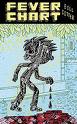
The cover of the book shows a man walking down the street with blood dripping from his hand.  This seemed like an odd choice to me.  However, for the bulk for the story, the narrator seems to be walking down streets with blood dripping from his hand (the one he eventually tries to bite off) so it perfectly encapsulates the tone of the book.

The story opens in the middle of a series of events from the narrator’s past (the first few sections are written in a wonderfully disjointed way that keeps the reader off balance).  Jerome Coe is currently living in an Apartment in Boston.  It has no heat.  His toilet is frozen solid and he is sleeping between his mattress and box spring to keep warm.  After ages of complaints to his landlord, one day the heat kicks on.  Full blast.  And Jerome cannot turn it off.  Soon, wallpaper is peeling of the walls and steam is flowing from his windows.  He is naked in his apartment and is preparing to run outside into the freezing weather just to escape the heat.

While he is standing outside, half-naked, a car pulls up and the driver, a woman named Tommy, asks him to jump in. (more…)

Read Full Post »

« Newer Posts - Older Posts »