Feeds:
Posts
Comments

Archive for the ‘Old Age’ Category

 SOUNDTRACKLONELY LEARY-“Flaneur” (2018).

At the end of every year publications and sites post year end lists.  I like to look at them to see if I missed any albums of significance.  But my favorite year end list comes from Lars Gottrich at NPR.  For the past ten years, Viking’s Choice has posted a list of obscure and often overlooked bands.  Gottrich also has one of the broadest tastes of anyone I know (myself included–he likes a lot of genres I don’t).  

Since I’m behind on my posts at the beginning of this year, I’m taking this opportunity to highlight the bands that he mentions on this year’s list.  I’m only listening to the one song unless I’m inspired to listen to more.

One of the things that I love about Lars, and this list is a great example, is how effortlessly multicultural he is.  He doesn’t listen to music because it’s from somewhere, he listens to music wherever it;s from because he likes it.  So this band, with the decidedly English-sounding name Lonely Leary is actually from China.  Lars says that the

The excellent label Maybe Mars documents the current Chinese underground music scene, from the psych-rock of Chui Wan and surfy shoegaze of Dear Eloise to P.K. 14, Beijing’s experimental rock pioneers.

Lonely Leary is a post-punk band which sounds like they would fit right in with Protomartyr or even The Fall, Sonic Youth or Joy Division.  The fact that they are from China and sing in Chinese doesn’t affect the tone and overall feel of the music, it somehow makes it more intense (to my ears).

Lars describes their debut album as one “where noise needles into perversely kitschy surf riffs and hoarsely barked punctuation marks.”  Although I hear less kitschy and more Dead Kennedy’s guitar and feedback noise.

The sounds they achieve throughout the album are great.  “Flaneur” opens the disc with a screaming feedback followed by a rumbling bass.  There’s some great guitar lines from Song Ang (which remind me of Savages) and then Qiu Chi barks his dissatisfaction through to a satisfyingly Dead Kennedys-ish chorus.  There’s even some Savages-esque chanting as the song squeals to and end.

This is great stuff.

[READ: January 4, 2019]  “Father”

Here is a new year and a new essay from Sedaris that perfectly mixes emotional sadness and hilarious light-heartedness.

The night before his fathers 95th birthday, his father turned in the kitchen and fell.  David’s sister and brother-in-law discovered him the next day and brought him to the hospital.  They felt the most disturbing thing was his disorientation, including getting mad at the doctor: “you’re sure asking a lot of questions.”  He was lucid the following day, but he was quite weak.

David was in Princeton on the night his father fell [at a show that I could have been at–we opted not to go this year].   He called his father and said that he needed him to be alive long enough to see trump impeached.

A few months later, his father moved into a retirement home.  David and Hugh visited and at first he seemed out of it, but hr recognized both of them instantly.  The thing was that he was no injured.  He had tried to move his grandfather clock (one of the prized possessions he brought to the home) and it fell on him (for real).  Many family members called the clock Father Time, so David said to Hugh “When you’re 95 and Father Time literally knocks you to the ground, don’t you think he’s maybe trying to tell you something?” (more…)

Read Full Post »

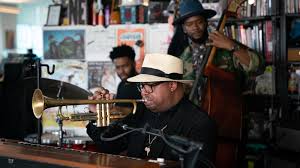
SOUNDTRACK: NICHOLAS PAYTON TRIO-Tiny Desk Concert #801 (November 2, 2018).

I feel like the Tiny Desk hasn’t had a good old-fashioned jazz trio on in a while.  With the Nicholas Payton Trio you get drums, upright bass and Payton on organ, trumpet and sampler.

All three compositions in this set are from Payton’s 2017 album, Afro-Caribbean Mixtape. “It is often said that New Orleans is the northernmost region of the Caribbean,” says Payton on his website. “Africa is the source of all rhythms. The Afro-Caribbean Mixtape is a study of how those rhythms were dispersed by way of the Middle Passage throughout Cuba, Haiti, and Puerto Rico, then funneled through the mouthpiece of New Orleans to North America and the rest of the world.”

The first song is “Kimathi.”  I love the simplicity of the organ that he plays while the rhythmic precision of his band mates keeps the song going.  Drummer Jonathan Barber is going pretty nutty (albeit gently) on that minimal kit and bassist Ben Williams is playing nonstop.  And then around four minutes, Payton switches to trumpet, playing a melody and then echoing it on the keys.

Just to impress even more, while playing a melody on the keys, he holds a note on the trumpet for 25 seconds.

Payton dazzled the audience, simultaneously playing his trumpet and a Fender Rhodes. It’s his signature, resonant sound.  Payton’s genius virtuosity captivated both faithful fans and anyone in the NPR crowd just discovering his music for the first time.

The nine-minute song is an incredible start.  It’s followed by “Othello” a song that starts off so quietly that Barber plays the cymbals with his fingertips.  Even Payton’s trumpet feels subdued on it.

This song has vocals (from Payton) which I like less than a good instrumental.  While this seems like it would fit well in a smoky night club, it’s too slow for my tastes.

The final song “Jazz Is A Four-Letter Word,” comes from the title of a book Max Roach was working on before he passed away.  The song features samples of Roach speaking.  There’s a great bass line and gentle keys as Roach speaks.  I feel like Payton singing the title is a bit redundant since the samples are so effective (if not a little overused).

Racial constructs are notably relevant in the last tune, “Jazz Is A Four-Letter Word,” which was inspired by the autobiography of drummer and activist Max Roach. You can even hear Roach’s sampled voice, fused into the infectious groove, a narrative of black consciousness on display. Ideology aside, the music was on point and the audience couldn’t help but sing and clap as the trio took us out on a soulful rhythmic vamp.

The middle of the song is great as the tempo picks up and the bass is just walking all up and down the fret board as Payton jams along.  And although I initially dismissed Payton singing the title, the end sing-along is pretty cool.

[READ: December 10, 2018] “Chaunt”

“Chaunt,” the story tells us, is a place.  A place where there was an old chapel–more rubble than chapel now.  It was a place that Jane Click’s son Billy and his friend Jerome rode their bikes to all the time.

The boys say that the place is full of animals and not made-up animals, either.  Not an elephant or a lion or a polar bear, not exactly.  “They were waiting, but they weren’t waiting for us.”  The boys watched the animals and then the animals became motionless “but still animals.  All the animals you’d ever hope to see.”

It’s a weird story.  But it’s also a horrific story because we find out pretty early on that these two boys have been killed.  They were riding their bikes home from Chaunt and were both struck by a car.  The driver was not found at fault (which I think is impossible) because he couldn’t see them in the dusk. (more…)

Read Full Post »

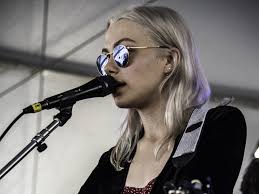
SOUNDTRACK: PHOEBE BRIDGERS-Live at Newport Folk Festival (July 28, 2018).

I saw Phoebe Bridgers three days after this set at Newport Folk Festival (I had no idea).  She plays five more songs at my show than here (yay, me).

The size of the crowd does’t seem to intimate her in any way and she sounds just as great (and intimate) as she did in the small club where I saw her.

A few songs into her sun-drenched Saturday Newport Folk set, Phoebe Bridgers paused and proclaimed, “I am a puddle of sweat.” It was a one-liner that primed those huddled at the Harbor Stage for the 2018 Slingshot artist’s catalog: details delivered with specificity and a subtle sense of humor.

I will say the one thing about this recording is that I don;t think you can hear all of the percussion as clearly as I could at Asbury Lanes.

The show started much the same as mine did with a beautiful languid version of “Smoke Signals” and a try-to-hold-back-the-tears reading of “Funeral.”

For the next song, “Georgia,” she brought out songwriter Christian Lee Hutson who is “going to help me sing harmonies.”  Whether it was the song itself of Hutson’s addition, but Bridgers’ voice really soars on this song.

Even Bridgers’ stage banter reflected her striking style, mixing straightforward address and astute observation. “This song is about how every time I smoke weed, I remember why I don’t smoke weed,” she said of the plainspoken plea “Demi Moore.”

She continued: “I face plant and my brain is erased for many hours and I think I’m thinking too loud.”

There’s some gorgeous harmonies on the darkly sweet song, “Killer.”  Then she played “Steamroller” solo on the acoustic guitar.

Later, she called “Steamroller,” a devastatingly candid cut from her 2015 EP, Killer, “another dark love song, thanks.”

Introducing Gillian Welch’s song “Everything Is Free” she said. “This is my friend Marshall.  We’re going to sing my favorite song about music streaming ever written.”  I loved hearing this live and it sounds just as solid here.

Up next was a song she did not play at my show.  She welcomed Christian Lee Hutson (playing guitar with Jenny Lewis) and Sharon Silva (from The Wild Reeds) played bass with me for exactly one week and I waited for a really bassist…Emily.  Chris wrote this song for me.”  The chorus goes “”lets get the old band back together again, and there’s even a line, “with Emily on bass, it doesn’t feel the same.”

The crowd reacts strongly, as they should to her awesome song “Motion Sickness.”

Despite its venom, it’s a song that unspools with a sonic ease that feel refreshing, even for an overheated festival audience.

The songs sounds great live and she holds a 17-second note just for kicks.  The sets ends (as did ours) with “Scott Street.”  She says “This is about L.A. where we live;  where it’s hot all the time.”  It’s a quiet song, sounds and represents her music pretty perfectly–quiet, sad, with clever lyrics.

At our show, we got two encores after this, so again, yay for us.  But this is a great example of her live show.

[READ: April 22, 2016] “Playing with Dynamite”

Back in February of 2017, I posted about an essay by George Saunders from 2009 in which he remembers John Updike “Remembering Updike“.  He says that back in 1992:

 It was going to be in Tina Brown’s first issue and they marked this occasion by running two stories contrasting the new writers (Saunders) with the established.  Of course the establishment writer was going to be Updike.  Saunders said he was chagrined because he knew the contrast would go something like this:

Wonderful, established, powerful representative of the Old Guard kicks the butt of the flaky, superficial, crass poseurish New Guy.  Saunders’ story was “Offloading for Mrs. Schwartz.”

I can see why they paired the George Saunders story with this particular Updike story.  Both stories deal with grief and memory loss, although Updike’s does so in a very different way.  On the other hand, their writing styles are so very different that it’s nearly impossible to compare the two stories.

The story begins with an interesting image from childhood: “one aspect of childhood Fanshawe had not expected to return in old age was the mutability of things–the willingness of a chair, say, to become a leggy animal in the corner of his vision.”  But living now “in death’s immediate neighborhood” he allowed that things like that might happen and it wouldn’t be the end of the world.

There is then an episode in Fanshawe’s day when his wife, who was younger and more spry than he, passed him going down the stairs.  She caught her heel on her dress and fell down the stairs.  It was only after all the guests had left that she said to him, “Wasn’t I good, not to tell everybody how you pushed me me?” (more…)

Read Full Post »

SOUNDTRACK: BRIAN BLADE AND THE FELLOWSHIP BAND-“Landmarks” (Field Recordings, August 14, 2014).

Here’s yet another Field Recording at the Newport Jazz Festival [Chorale For Horns And iPad App, In The Pouring Rain].

The 2014 Festival must have been a rainy one, because some of the other Recordings seem wet as well.  The blurb explains

We had hoped to get the great drummer Brian Blade to give us a little private exhibition after his set at the Newport Jazz Festival this year. The weather, however, was proving much less generous than he and his band were. Early that morning, a steady all-day rain settled in over coastal Rhode Island, making it difficult to transport dry instruments anywhere. On top of that, a last-minute change to travel plans meant that Blade needed to get out of town quickly — to an airport over four hours away.

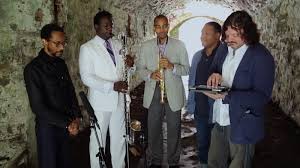
But he and the Fellowship Band — the group of guys Blade has been making music with for the better part of two decades or more — were game to figure out something for us. So we herded them into the shelter of a quiet tunnel in Fort Adams State Park.

Despite Blade being a drummer, they are unable to use drums or even bass.  So they decide to play a composition of the keyboardist.  Chris Thomas, the bassist, suggests that he could do an interpretive dance (but he does not).

As they get set up, Jon Cowherd starts tinkering on his iPad.  He gets a synth up and starts playing the opening to Van Halen;s “Jump” which gets everyone excited.  Then he starts playing a cool keyboard sound on the app and the two horns join in on the serene melody.

First Myron Walden starts playing the bass clarinet.  Then he is joined beautifully by Melvin Butler on soprano sax.  The song unfolds simply.  I love the way it just seems to grow and grow–slowly revealing more and more of itself.  But it’s over pretty quickly, with the notes fading in the tunnel.

So even though the featured performer, Brian Blades is not playing–and I still have never heard his drums, this was a nifty little piece.

[READ: April 17, 2016] “Land of the Living”

I had it in my head that Sam Shepard was a noir writer from the 1950s.

Well this story (and the surprising fact that the New Yorker published a second of his stories just a few weeks later) led to something entirely different.  This story is about a man who is going on vacation with his family.

It begins with a very funny exchange between the man and his wife,  She tells him, “It’s just amazing how friendly you become when you’re on Xanax”  And he agrees, “I feel this friendly person coming out in me and I wonder if maybe that’s my real nature.”

The family is currently waiting on a customs line in Cancun.  The heat is unbearable, especially since they have just come from Minnesota.

Their conversation is full of things that he says which she is surprised by: (more…)

Read Full Post »

 SOUNDTRACK: AJ DAVILA-“Es Verano Ya” (Field Recordings, September 24, 2014). 

AJ Davila is part of the “unhinged Puerto Rican garage-rock band” Davila 666. For this Field Recording [Garage-Rocker AJ Davila Unplugs In A Hair Salon] he plays an acoustic song in a hair salon.

Davila says that New York is like another town of Puerto Rico.  That people from Puerto Rico and the Dominican Republic have made their homes and communities here.

There’s a joke that says the biggest town in Puerto Rico is called New York. Several waves of diaspora have created a deep and complex relationship between Puerto Ricans and the city. Boricuas have had an immense influence on the Big Apple — its music, its literature, its landscape, and even its cuisine.

He says that a small place like a barbershop (or beauty salon) can feel like you’re in your house.  “This is a song about hanging out with your friends.  It’s a summer song.”

We asked Davila to delight a Spanish Harlem beauty salon with a summer song. It’s appropriate: He’s one of the warmest souls I know — someone with whom it’s a pleasure to discuss art and music, argue about politics or tell silly jokes. He’s also a uniquely talented musician, with a style that combines garage-rock, punk and even elements of hip-hop.

This song probably rocks, but this acoustic version is lighter, with some bouncy chords from the other guitarist Daniel Ortiz and delightful backing vocals from Lola Pistola.  It’s somehow even better when they laugh off a tiny mistake.

[READ: September 14, 2017] ”Sunrise, Sunset”

This is a story of three generations of a Haitain family.

Carole is elderly and is slowly forgetting a lot–a blank look comes over her face and she forgets that she put her keys in the fridge or that her daughter is related to her.

Her daughter, Jeanne, and son-in-law James (they were known as JJ) just had a son, Jude (now known as Triple J).  But Jeanne has been in the throes of post-partum depression. James is a saint about it but Carole is furious that her daughter is lying around.  Back in Haiti, Carole did not have the luxury of depression.

Carole lived under a dictator.  She watched her neighbors get dragged out of their houses by the dictator’s henchmen.  Carole’s father fled the country and she never saw him again. (more…)

Read Full Post »

SOUNDTRACKÓLAFUR ARNALDS-Tiny Desk Concert #767 (July 19, 2018).

Arnalds plays four songs in this Tiny Desk.  For most of them he uses his prepared piano.  But it’s prepared in a very different way.

“Árbakkinn” opens with Arnalds on the piano.  After about a minute, three of the four strings (Unnur Jónsdóttir (cello), Katie Hyun (violin), Karl James Pestka (viola)), enter the song followed shortly by Viktor Arnason on lead violin playing a haunting melody over the top.

Up next is “Unfold,” which is a bit happier a bit poppier.  It starts with pizzicato strings and has percussion by Manu Delago.   Arnalds at the electronic keyboard but when he plays it, the two pianos behind him start playing.  I’ll let the blurb fill in:

Somewhere about midway through this Tiny Desk, as Icelandic composer Ólafur Arnalds performed on his electronic keyboard, two upright pianos were playing lilting melodies behind him, absent any performer at the keys. …  About ten minutes into the performance Ólafur looked behind him at the two pianos, looked to the NPR crowd and said, “well I guess you’re all wondering ‘what and why,’ to which there’s no easy answer.” He hit the keys on his electronic keyboard and the two pianos behind responded with cascading, raindrop-like notes. “What I can say,” he continued, “is that I’ve spent two years and all of my money on this — to make my pianos go bleep-bloop.” What Ólafur was referring to is software that he and his coder friend, Halldór Eldjárn developed. A computer, loaded with this musical software (which Ólafur calls the Stratus system), “listens” to Ólafur’s keyboard performance and responds by creating patterns that are musically in tune with the chord or notes Ólafur performed.

So why do this? Basically, it’s a way to break out of the box musicians often fall back on as performers — the familiar responses that years of playing can reinforce. With that is the hope that the computer will create a response that is unfamiliar and, in some cases through speed of performance and the sheer number of notes played, impossible for a human to have made. So, it breathes new life into the music for the listener and the performer.

Arnalds can play the pianos while they are being remotely controlled as well, as he plinked out piano melodies while the computer was playing those raindrop notes.  The end of the song has a very interesting electronic tympani sound as well.

As the second song fades, “Saman” begins with Arnalds back at the piano to play this beautiful and haunting solo piano melody.

“Doria” is a tribute to Halldór Eldjárn the creator of the programming “and his beautiful code.” It was the first song he wrote using this new technology.  Arnalds plays the beginning on the keyboard while the other pianos play along.  The strings accompany him and then about half way through, while the pianos are continuing to play, he jumps in the middle and plays the main melody on one of the pianos.  It’s really quite lovely.

It was a gently stunning and memorable Tiny Desk. More of these creations can be heard on Ólafur Arnalds’ brilliant, fourth solo album re: member.

[READ: January 31, 2018] “Colin Kelly’s Kids”

This story was written after Elkin had a heart attack (he lived for almost 30 years after the heart attack).

The tale is basically one of an old man playing pickup baseball.  It had been a superb spring. This had been his fifth week playing and the teams (rotating payers every week) seemed to get used to him.  He wasn’t very good–had a lot of power but couldn’t connect.

But they did allow him to play first. He always played first whatever the teams, so he felt coldly like he was being traded to a new team each week–professional. (more…)

Read Full Post »

SOUNDTRACK: LAWRENCE BROWNLEE AND JASON MORAN-“There’s A Man Going ‘Round Taking Names” (Field Recordings, February 17, 2016). 

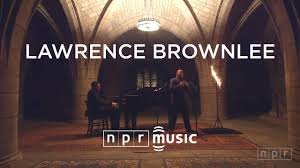
I know of Brownlee from a Tiny Desk Concert.  But this is a whole other order of magnitude.  He and pianist Jason Moran are playing a spiritual about death in an active crypt.

Brownlee’s voice is powerful and soaring, but full of anguish.  And Moran’s piano is so intense, especially at the end.  He plays the melody but he allows for a lot of overtones and echo to nearly overpower the music.

At the very end, he plays some high notes by literally chopping at the keys like a karate chop–powerful, sharp and dissonant.

Here’s the blurb for more context:

Opera singer Lawrence Brownlee is known for portraying kings and princes. But lately he’s been thinking about real people: Trayvon Martin, Michael Brown and Freddie Gray, to name a few.

He’s been thinking about the Black Lives Matter movement and an old spiritual called “There’s a Man Going ‘Round Taking Names.” Decades ago, singers like Paul Robeson and Lead Belly recorded it. Brownlee, with jazz pianist Jason Moran, revives the old song to tell a new story for the 21st century.

“Jason and I chose this song because we felt it accurately captures a growing sentiment that’s in society today,” Brownlee says. “So many senseless deaths of young African-American men.”

A crypt, they thought, would be an appropriate setting to perform their version of the song. So we took our cameras and microphones — and a lovely piano — deep into the active crypt below the historic Church of the Intercession in Harlem. The 1915 structure at 155th Street and Broadway is a New York City landmark and a dramatic setting for occasional concerts, including a December 2015 recital by Brownlee.

“I know that the ashes of the parishioners of this church are here in this crypt,” Brownlee explains. “You can feel the weight of death, you can feel the sting. It adequately captures the atmosphere, the somber mood that we are trying to capture with this song.”

In this arrangement, an already solemn song becomes even more dark and agitated.

“What [Jason] has done with the piano part has made it build, and you feel the unrest, the turmoil, the tension that is underneath,” Brownlee says. “This is something that is painful and difficult to deal with.”

Woah.

[READ: January 31, 2018] “Self-Portrait with Beach”

This is the story of an older couple who have been together for a while.

They go to the beach, she removes her top and asks “Is the body the house for the soul or are body and soul and one and inseparable.?”  He looks at her and says, “Your body is my soul.”

She laughs that his soul is bound for decay but he continues, ‘Nothing of you will decay as long as I am alive.”

Out of nowhere a man in white comes and offers his homemade beverages.  He says they have unique powers. (more…)

Read Full Post »

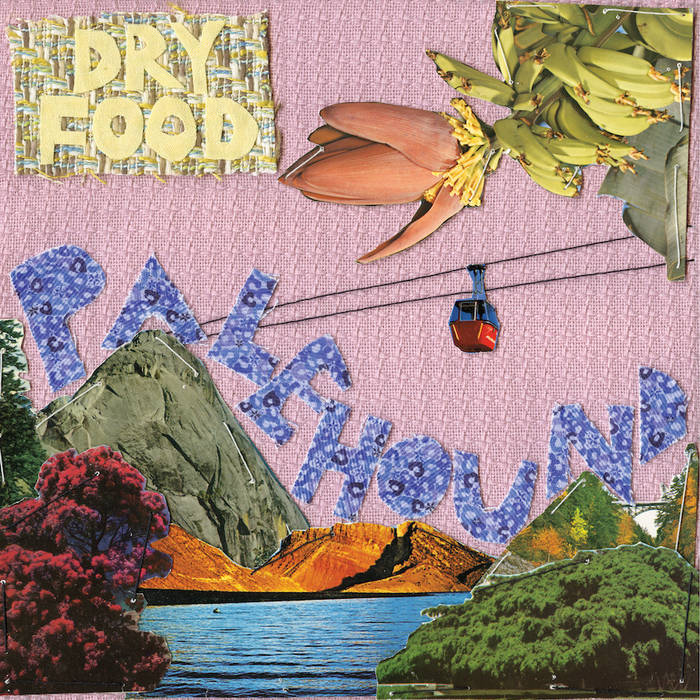
SOUNDTRACK: PALEHOUND-Dry Food (2015).

I have seen Palehound twice, once as a headliner and once as an opening band (in that order).  I love Ellie Kempner’s guitar style and her slackerish vocals.  Her lyrics are usually incisive and the way she pulls all of that together is really terrific.

Her recorded output is pretty stellar.  She has a few EPs and/or singles and then this, her first album, which comes it at less than 30 minutes.  It features some of Kempner’s great guitar, prescient lyrics and really catchy songwriting–a potent combination.

“Molly” opens with a great rumbling bass line, a cool guitar riff and a wonderful overdubbed distorted guitars.  It’s immediately catchy.  The whole verse is crazy catchy and then after two lines, she adds a new riff before returning to the first one.  There’s so much going on and its all terrific.  Next up is a cool bridge followed by a third part with yet another great guitar soloing type of riff and loud chorus of “ooooohs.”  There is so much going on in this song, I was shocked to see that it’s under 3 minutes long

“Healthier Folk” starts out as a kind of bedroom-sounding acoustic guitar song, but after a verse there’s a trippy chorus with soaring guitars

Mouth ajar, watching cuties hit the half pipe
I only feel half-right
Around healthier folk
But oh, why don’t hold me?
They just
Cradle me like a homesick child

Mid way through, the guitars get louder with a heavy riff before returning to that trippy middle section.

Even though Kempner rocks out, she also has some slower songs.  “Easy” is a slow song with this great line: “I’m pushing back your tongue / With my clenched teeth home security system.”  I love how the chorus (and more) is just a blast of noise without speeding up the tempo of the song.  Two thirds of the way through, the song picks up briefly (“All I need’s a little sleep”).  And the last thirty seconds are a wild, chaotic-sounding series of riffs (with a noisy feedbacking guitar solo).

“Cinnamon” has yet another terrific riff.  Live, this song absolutely scorches–vocally and guitar wise.  This version is a little tamer, but you can really hear what a great guitarist she is.

“Dry Food” starts slowly, with a pretty guitar line and a cool vocal delivery.  I love the way the verses are slow and the chorus builds into a strangely catchy melody without really picking the tempo up.

“Dixie” is a quiet confessional with some great lyrics and a catchy chorus.

And people that I’ll never meet
Have been showing up naked in my dreams
And I try to close my eyes but I really want to see
Their breasts like eyes are staring back at me

The hair that’s in my shower drain
Has been clogging up my home
And I try to scoop it up but I retch until I’m stuck
To stare and gag into a Dixie cup (with a cough on the repeat of this line)

“Cushioned Caging” is a more aggressive rocker, but her vocals don’t really match the guitar loudness, making you lean in to hear her.  The disc ends with “Seekonk,” the longest song on the disc (nearly 5 minutes).  It’s slow with a couple of different parts to flesh it out.

Kempner really showcases the various aspects of her songwriting.  It’s a really solid album and could easily be much longer.

[READ: January 15, 2018] “The Little Boy”

This short story was interesting in that it seemed far more about an old woman than a little boy.

Mrs. Bea Davis is walking through an airport after visiting her daughter Megan in upstate New York.

We learn a lot about her and her daughters Megan and Susan as well as her ex-husband.  We learn some about her because she is talking to her self.  A woman with a small boy passed and the boy turned to look at her.

The trip had been okay, as best as could be expected. Bea felt that Megan and her husband enjoyed making fun of ugly people (“That guy is like an anteater in leisurewear. That girl, she can’t wear that dress, look at her stomach.”)  the way Bea’s own sisters Tomasina and Livia would go to Woolworth’s and comment on the ugly poor people.    (more…)

Read Full Post »

SOUNDTRACK: DAVID BECKINGHAM-Live at Massey Hall (December 5, 2017).

I don’t know Beckingham or his main band Hey Ocean.

Beckingham says that he and Ashleigh Ball from the Hey Ocean started playing together in their early 20s.  They met Dave and formed Hey Ocean and it took off in a surprising way.

He’d always wanted to do something solo but felt he wasn’t ready and then they took time from Hey Ocean and worked on it.  But he never expected to play Massey Hall.

The show begins with “Explosion” which has a sweet vocal line and a very friendly sound with strings.  As he starts “Window Frame” they interrupt it with an interview in which he says that Hey Ocean is more around Ashleigh and her vocals while the solo stuff is more personal.  He feels a lot more exposed physically as well as with the material.

Adi’s Song is a quiet powerful ballad

Late in the evening
She starts to cry
She’d been down on her luck since summer now she’s stuck
In the longest ever winter of her life

She called the doctor
Asking for pills
To make it all seem far away like the stars in outer space
She says the feelings doesn’t hurt, she says it kills

And the salt in her tears carves a line down her cheeks
So when the drops reach her mouth, well you’ll almost believe she was smiling

Just when the light hits it right

During “Slowly” he gets the crowd to sing along “don’t it take the words from you sometimes.”

The final two songs are his biggest: “Soldier” and “Forest.”  His music is quite consistent–pretty and folkie without a lot of drama.  But these last two songs have something extra.  The bridge in “Soldier” bombs overhead / trying my best to find you / I was blind and deaf is really powerful with the strings.  “Forest” has a distinctive catchy melody up front, which a lot of these songs don’t.

He’s joined by Mike Rosen on the keyboards and a small string section Michelle Farhermann (cello) Rachael Cardiello (viola) and Kelly LeFaive (violin) and he thanks them for pulling this all together in a few days time.

[READ: January 7, 2017] “Stuff”

“Stuff” is a terrible name for a story.  But this story is pretty much full of stuff, so maybe it does work here.

I’m not really sure what happened to this story because it started out so linear and interesting (a little weird, yes, but interesting) and then it turned into something else–much more weird.

Henry was in the doctor’s office.  His own doctor was not there, so he was seeing a new doctor.  This new doctor told Henry that he had lung cancer and would die soon.

Henry talked about the cigarettes he smokes–called the work sticks because they help him write. (more…)

Read Full Post »

SOUNDTRACKTANYA TAGAQ-Live at Massey Hall (December 1, 2015).

This show begins the third season of Live at Massey Hall.  There are ten episodes in all.  And the first one is with the otherworldly whirlwind of Tanya Tagaq.

Tanya Tagaq is an Inuit singer.  She works with throat singing, but in a new (and somewhat controversial) manner.  She pairs the deep growls and grunts with high-pitched wails.  Her songs become primitive and raw and she seems to become possessed by the music.

This performance is simply amazing–there’s probably been nothing like it.  And what is most remarkable about the performance is that it is all improvised.

But none of this would work if the music were subpar or uninteresting and here’s where she is to be commended for selecting this group of musicians.  Including the 50 voice Element Choir.

Jesse Zubot plays violin like no one else, often as a percussive instrument and with all kinds of effects. Bernard Falaise plays guitars in washes of sound.  he’s also manipulating everything to create otherworldly effects.  And Jean Martin plays drums like no one I have seen.  It’s so much fun to watch.  And the way he punctuates things on and off the beat is really inspired.

The performance is intercut with an interview from before the show.  Its kind of a shame to interrupt the flow of the performance, but she’s also got a lot of interesting things to say.

The show opens with Zubot’s amazing violin, which includes him sliding the bow up and down the neck sideways to make a kind of scraping (but pleasant) sound.

She tells us (paraphrasing)

The combination of the venue and the audience impacts the music which is improvised.  They fall into the groove of the place–a cement box of mosh pits will come out differently from a seated hall.

I’m pretty grounded and I’m lucky because I spend half my time in the air.

Indigenous people are having a voice.  When I was growing up there was more shunning of our own culture.

Around 3:40 she starts singing/fluttering her voice. The choir is filling in behind her.

Around 5 minute she starts doing some real deep vocals and the drums kick in.

Martin is an amazing drummer.  He keeps the beat constant but is playing all over the cymbals and snare on polyrhythms with lots of clacks and rim shots.

Things get really intense around 8 minutes with the choir singing and the lights swirling and Tanya hitting cool high notes.

A kind of natural quieting moment occurs around 10 minutes and she talks about throat singing.

13 minutes she gets into a kind of rhythmic breathing with some cool sound effects from….someone.

After 19 minutes things start to build in intensity. It is so much fun watching the musicians play everything especially Martin–the way he is practically out of his seat hitting things.  Tagaq is singing in a  high voice, on her hands and knees.

Around 24 minutes things build to a peak that lends to a quieter moment and it cuts to her cracking up over

having people give me shit for not being traditional…. over the internet

Then the show comes back until the end.  She makes animal noises sounding like she’s having a conversation, with finger-animal-horns on her head.  Ecstatic moans and animalistic groans evoke a kind of call and response with the choir.

The final uninterrupted ten minutes are just an amazingly tense exercise.  Between the lights, the tension of the guitar the thumping of the drums and Tagaq herself being possessed where you can hear her “human voice” coming through the growls.

At 31 minutes she starts howling, and it sounds like a wolf–not a person doing a wolf.  The chorus is answering her as she poses and distorts her body.   And then she starts her circular breathing.  The sound of her breathing in and out is so intense–is she being chased, is she in the throes of passion.  Combined with the motions she makes and again the amazing percussion the last ten minutes are just mesmerizing.

Then it’s all denouement as she comes back into herself with thunder rumbling and crackling as she breathes.

I sure hope Owen Pallett didn’t have to follow that!

[READ: May 15, 2018] “Slingshot”

This is a story about love and how people perceive it.

The narrator explains that she was 70 when she met Richard who was thirty-two at the time.

Richard moved in next door and had lots of parties.  He was a fun-loving kind of guy and he had lots of lovers.

But he also stated that there is no such thing as love.  The narrator’s granddaughter Rose claimed to be in love all of the time and would then wind up crying by the phone.  The narrator herself had been in love–she had been married once some thirty years ago. (more…)

Read Full Post »

« Newer Posts - Older Posts »