Feeds:
Posts
Comments

Archive for the ‘NPR/PRI/PBS’ Category

SOUNDTRACK: ILL CAMILLE-Tiny Desk Concert #746 (May 25, 2018).
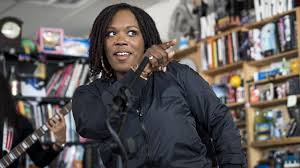
I don’t know if Ill Camille’s style is West Coast, but it definitely differs from a lot of rappers.  Her style is smooth, almost gentle.  “Her voice is like a cool drink on a summer’s day: smooth, clear and replenishing.”

But her lyrics are powerful and thoughtful:

Her refreshing self-awareness and raw honesty are inherent in each song, pairing nicely with the jazzy, melodic rhythms provided by her close knit crew of musicians.

Ill Camille strays a bit from the hip-hop zeitgeist. She raps about love and family serving as the source of her strength, the importance of self-worth as a woman, and the necessity to nurture oneself from within. That core keeps her secure even when confronted by the despair of poverty and the difficult grind of a young artist. And you can hear all that front and center in her music.

She plays 4 songs with a live band.

The first two songs, “Spider’s Jam” and “Live it Up,” feature long time collaborators of Camille’s, Iman Omari on keys and drummer Greg Paul of Inglewood collective The Katalyst.

“Spider’s Jam” is about her uncle.  She sounds almost casual in her delivery, like she;s just speaking not rapping (which is why it’s so cool that it works so well).  The chorus of “handed it down” is pretty cool–very different from pop hip hop.

On “Live It Up,” Greg Paul plays a kind of lite jazz drums style.  Camille says, “This is my version of trap.”  Iman Omari on keys sings the chorus and adds a Jamaican flair to the song.

“Fight On” features guest vocals from emcee Damani Nkosi, who’s been rocking with Camille since her debut album.

Aneesa Strings, a bassist from the Bay Area, provided the low end foundation while also lending her rich vocals to “Fight On.”

I like the shout outs to everyone to fight on.

 “Again,” is an ode to happiness and self-actualization.  It’s got a cool funky bass line.  The break it down section is pretty great and when it comes back out to that great bass line, the song is very cool.

[READ: May 22, 2018] “Stay Down and Take It”

This is a story about an older couple fleeing a storm and something else.

James is home early and he says “goddammit we seriously need to pack.”  They are to “pack light and pack smart.”  Despite the clear skies, something mean and serious is barreling down on them.

James is very stressed and prefers that she not speak on the phone while they are evacuating.  She is annoyed by this but also realizes she is the passenger and the driver should not be stressed out–for her own sake.

She admits “I guess I want James to die.  I don’t want this actively.  Or with malice.  But in a dim and distant way I gently root for James’ absence so that I can proceed to the other side of the years I have left.”

(more…)

Read Full Post »

SOUNDTRACK: JUANES AND MON LAFERTE-Tiny Desk Concert #746 (May 23, 2018).

Juanes did a solo Tiny Desk Concert back in 2011.  Amusingly, seven years ago the blurb said: The blurb says that “he usually plays arenas and large venues, so it’s a treat to see him up close like this,” (see the third quoted paragraph below).

Colombian pop star Juanes and Chilean singer Mon Laferte recently wrapped up a sold-out tour of the United States, which (lucky for us) included a stop at the Tiny Desk.

Laferte began the concert solo with the torch song “Pa’ Dónde Se Fue” (Where Did You Go?). She sang the break-up story with a smirk that belied the heartache hiding in her poignant lyrics. Then… Juanes joined her to perform the duo’s sultry single, “Amárrame” (Tie Me Up).

It’s rare to see Juanes in such an intimate setting. After almost two decades of performing solo, the Latin pop star is more of a stadium and arena kind of guy. It’s a treat to hear his voice unencumbered by loud speakers or crowd noise, and to see his facial expressions as he sings lyrics that many of us know by heart. This marked a return to the intimacy that fueled his earliest days and that’s still present in the personal lyrics that have sold millions of records.

That intimacy was heightened by the presence of Laferte. The duo performed a PG-13 version of “Amárrame,” a passionate pop song with lyrics reminiscent of 50 Shades Of Grey. You can sense an obvious chemistry between the two during that song, as well as on the Juanes classic “Fotografia” (which originally featured Nelly Furtado).

Juanes closed out the concert solo with a stripped-down version of “Es Tarde” from his last album, Mis Planes Son AmarteThe performance demonstrates why Juanes and Laferte’s duet tour sold out across the U.S. this year. There is a magic here that makes for repeated viewing. It’s that much fun to watch.

SET LIST

  • “Pa’ Dónde Se Fue” (Where Did You Go?) by Mon Laferte. She sings and plays guitar and has a beautiful, powerful voice.
  • “Amárrame {Tie Me Up} [feat. Juanes]” by Mon Laferte.  An additional guitarist plays the cool funky riff while Mon Laferte sings (and rolls her r’s beautifully).  Juanes sings (and makes some asides, “Mon Dios!”) the (beautiful, soaring) chorus and alternating verses.  They sound fantastic together, with his voice being particularly sultry and steamy.
  • “Fotografía [feat. Mon Laferte]” by Juanes.  This is a sweet ballad, with again both singers playing off of each other and joking with each other (there’s a phone gag that is pretty funny).  It’s delightful.  And their voices meld perfectly once again.
  • “Es Tarde” by Juanes.  It’s just him singing on this one (with the guitarist on accompaniment).  His voice has a slight gravel to it but is mostly smooth and delightful.  The middle of the song has a kind of whispered spoken word.  It’s quite obvious why he is a megastar.

[READ: January 22, 2017] “The End of the End of the World”

This is an essay about birding in the Antarctic and the death of Franzen’s Uncle Walt.  Both of these stories were fascinating.

Two year earlier, Franzen’s Uncle Walt died and left hims $78,000.  Wow.  (My uncle left me a pitchfork and sheep shears).  He wasn’t expecting it, so he decided to do something special with it in honor of his Uncle.  He had been planning a big vacation with his longtime girlfriend, so this seemed like the thing to us it for.  When he suggested a deluxe cruise to Antarctica, she was puzzled but agreed.

After booking the cruise, he was filled with reservations, and so was she.  Her concerns were more serious–an ailing parent–and his were just nerves.

He intersperses this trip with memories of his Uncle.  Like in August of 1976 when he found out that Walt’s daughter had died in a car crash.  Walt and his wife Irma were his godparents, although his mother couldn’t stand Irma (Franzen’s father’s sister).  She said that Irma had been spoiled at the expense of his father.  Walt was far more likable anyhow. (more…)

Read Full Post »

SOUNDTRACK: THE BAND’S VISIT-Tiny Desk Concert #745 (May 21, 2018).

After nearly 800 Tiny Desk concerts, The Band’s Visit is the first Broadway musical ever to play the series.

The show opens with four men in powder blue uniforms (the Alexandria Ceremonial Police Orchestra–Garo Yellin-cello; Sam Sadigursky-clarinet; Harvey Valdes-oud; Ossama Farouk-darbouka) playing “Soraya,” a lively instrumental.

From the first note strummed on the oud, Yazbek’s nominated score transports the Tiny Desk to the Middle East with traditional instrumentation and melodies, and weaves in beautiful theatrical ballads.

The Band’s Visit insists that it’s OK, even essential, to get “stuck” with strangers who have different perspectives. It serves as a poignant reminder that our common connection to music can rise above the noise of intolerance

The composer David Yazbek comes out to explain the scene:

The story of The Band’s Visit,  told the Tiny Desk audience, “is about hope and faith and silence and music.” It tells the tale of Egyptian musicians stranded in a small Israeli village. The townspeople have no choice but to take them in. Eventually, the love of music allows the characters to see past their differences and form an unlikely bond in a single night. The musical was adapted from the 2007 film and has been nominated for 11 Tony Awards.

He introduces Katrina Lenk (nominated for a Tony Award).  For this song, she is reminiscing about her childhood growing up in the middle of nowhere in Israel.  The main cultural delight was through her mothers radio and TV via Arabic music and movie stars like Umm Kulthum and Omar Sharif.

“Omar Sharif” is a beautiful song with a wonderful really compelling melody.  It’s noy musical-like at all.  It is very passionate with one big moment but never over the top.  Her accent as she sings is wonderful.  I love the lyric

honey in my ears / spice in my mouth

The song features Andrea Grody on piano and Alexandra Eckhart on bass.

Although it’s a Broadway smash hit, it lacks the opulent, bring-down-the-house song and dance numbers. It’s a more intimate show with some universal messages that fit the up, close and personal space of the Tiny Desk.

Dina interacts with Tewfiq the leader of the orchestra, “the swarthy, handsome Tony Award nominated Tony Shaloub.”

She asks him to sing something and he offers an Arabic poem (a capella).

Yazbek’s poem Itgara’a, translated here from Arabic and sung a cappella by Tony Shalhoub, sums up the show’s philosophy:

When you drink, drink deeply / Drink deeply of the moonlight / drink deeply of the dark / of the loneliness / of the joy.
You will never drain the moonlight / you can never end the dark. /  In your eyes, the flash of joy / in your mouth, the sweet shock of honey.
You are the joy / you are the loneliness. / Drink deep.

It’s followed by a wild and fun instrumental “Haj-Butrus” with pizzicato violin, some wild oud work and an amazing darbouka solo.

For the final song he tells us about a character.  The telephone guy.  He’s off at the side of the stage at a pay phone waiting for it to ring–for… days? weeks?  He’s waiting for his girlfriend to call.  The last song is a culmination of everyone yearning for human connection and something deeper.

“Answer Me” features “telephone guy” who is Adam Kantor.  Kristen Sieh (who plays Iris) representing the cast of thousands and George Abud who plays Camal (and the violin solo earlier) plays some oud in this song.

Kantor has a lovely high voice.  After a brief instrumental break, Lenk sings and then with the backing players as a chorus Shaloub joins in as well.  Although of all of the songs played, this is my least favorite.

The crew from the show, which opened last November at the Ethel Barrymore Theater, descended on NPR at 8:30 a.m. — seven musicians, five actors, a wardrobe department, a make-up artist, a publicist, a music director, the composer and even a vlogger. We started early so they could hustle back to Manhattan for a 7 p.m. curtain.

The musical sounds wonderful and I’d like to hear the rest of the soundtrack.

[READ: July 7, 2016] “The Midnight Zone”

I found this story to be mostly good but there was something that didn’t resonate with me.  The whole story is told in a very detached, first-person style.

The story opens with a family staying in an old hunting camp.  They are told that a Florida panther was seen in the camp a few days earlier, but things were pretty quiet for them.

“we had lunch, then the elder boy tried to make a fire by rubbing sticks together, his little brother attending solemnly….  Then dinner, singing songs, a bath in the galvanized-steel horse trough…and that was it for the day.”

The father/husband gets a call that he has to return home for an emergency.  He said he’d be back in two days.  And so it was just the wife and her two (very) young sons. (more…)

Read Full Post »

SOUNDTRACK: PARTNER-Tiny Desk Concert #744 (May 18, 2018).

I know of Partner from the All Songs Considered podcast.  Their song “Everybody Knows” (about being high) is pop-punk catchy and really funny.

That’s the only song I knew from them, but I assumed this Tiny Desk would be of a rollicking hilarious similar vein.

Imagine my surprise to hear them do pretty much everything but pop-punk.  There’s a theme song, a country song, a song for Céline Dion and a song that makes the lead singer cry:

This is one of the sweetest, funniest and most endearing Tiny Desk performances I’ve seen. From the moment they began playing, it was clear best friends Lucy Niles and Josée Caron, who perform as the Canadian rock band Partner, were there to leave their mark and have a whole lot of fun doing it.

Known for their sense of humor, joyful spirit and screaming riff rock, Partner opened their Tiny Desk not with their guitars plugged in, but with kazoos and a goofy little piano piece they dubbed the “Tiny Desk Theme.” Dressed like she was in an ugly sweater contest, Caron bounced along behind the keys with a beaming smile while the group (including drummer Brendan Allison, Kevin Brasier on keys and Daniel Legere on guitar) sang, “It’s the best Tiny Desk!”

The theme song is but a minute long and will hopefully be used for every future Tiny Desk endeavor.  It comes complete with bopping piano, kazoo and cowbell.

The impish left turns didn’t stop there. Immediately following the makeshift theme, Caron peeled off her sweater (revealing a Tegan and Sara T-shirt) and grabbed an acoustic guitar as the band broke into “Tell You Off” its first-ever country song, a track they’d premiered at a live show just days earlier.

Lucy Niles picks up the bass and plays a simple riff.  The rest of the band joins in (with Legere playing a very country guitar solo).

They could barely contain their laughter while singing “Tell You Off,” a boom-chicka story song about giving a good tongue-lashing to anyone who gets in your way:

“I heard what you said about my dog / that he shit on your lawn / well that’s not my fault / say it to my face or I’ll be pissed off / I’ll come over to your house and tell you off.

The third song is the one that Caron hope Céline Dion will sing.  She says it was inspired by a poem that her boss wrote.  “It’s a bad ass poem about going to down to hell to face your greatest fears and to reclaim a peaceful life for yourself.  The life that you deserve.”

In addition to playing a great rocking solo, Caron sings the final verse in French (for Céline to sample).

Partner closed out its set with a surprisingly emotional version of “Creature In The Sun,” a reflection on appreciating the gift of just being alive.

Caron plays a cool intro riff with a guitar slide.  And the song is the most rocking of the bunch.  And then

About halfway through the song, Caron took a moment to tell the audience why it was so special to them. Choking back tears, she said she wrote it about freeing the mind of desire. “It’s a very healing place… And you can just experience the fullness of life. I just wanted to… remind everyone that that stuff is right there with you all the time.”

It’s surprisingly emotional and Caron is clearly embarrassed at her emotional outpouring, but the audience is receptive and she still manages to play that great slide guitar apart tat the end.

And, to break some of the emotional tension the drummer hits a nice cowbell sound at the end.

This is a very surprising set, and one that I imagine is unique in their live performances.

[READ: May 21, 2018] “The Long Black Line”

This is the story of Jesuit Priesthood, circa 1954, and a man trying to join.

Finn is described this way: “priests were still thought to be holy, and Finn…Well…”

When Finn is close to completing his term of study one of the Brothers, Brother Reilly who is manuductor (he who leads by the hand) seems to think poorly of Finn.  Reilly wrote in his diary that Finn seemed self-important.  And then Brother Reilly went to confess these thoughts.  Brother Reilly’s superiors felt that Reilly was not suited to the role of manuductor and therefore it was useful for him to be given the task.

Father Superior told them: “feelings are always to be distrusted.  The good Jesuit may feel excited or depressed, but–remember–he never shows it.  He is never singular. He disappears into the long black line [of priests]….  If you feel sad, smile.  If you feel elated, exercise self-restraint.  If you dislike someone, pray for him.” (more…)

Read Full Post »

SOUNDTRACK: KHRUANGBIN-Tiny Desk Concert #743 (May 16, 2018).

The sound of the guitar that Khruangbin create is so dead on for an old sixties band that as they started this set I thought perhaps it was a sample they were opening up with.

But it was all live.  And as the camera comes on for “Maria También” we see this trio jamming this really groovy instrumental song (with whispered words from bassist Laura Lee).  The guitar melody is full of circular riffs but when it shifts to the main body, I love the way the bass and guitar play the same thing but it sounds like a fresh addition of low-end (his guitar seems to eschew the low-end entirely).  The middle of the song is a cool guitar solo with lots of hammer-ons and chords thrown in to generate a really wonderful sound–the tightness of the ending is really cool too.

So Khruangbin is a

trio from Houston, Texas heavily inspired by 1960s and ’70s funk and soul from, of all places, Thailand. That musical passion has taken them on a journey that, these days, incorporates music from Spain, Ethiopia and the Middle East. Khruangbin’s largely instrumental music is grounded in Laura Lee’s bass, with Mark Speer playing those melodic, richly reverbed guitar sounds and Donald “DJ” Johnson on drums and piano.

“August 10” is a jazzier number with lots of slow but evocative bass. The main part of the song is gentle chords with some cool riffage.  The middle slows things down with some very gentle na na na nas from all three members. Johnson’s drums are pretty simple and standard throughout–keep the beat and add some accents.  It’s that funky bass line that is so great.

Two of the three songs performed at this Tiny Desk Concert are from their 2018 album Con Todo El Mundo, which is dedicated in part to Laura Lee’s Mexican-American grandfather. He’d often ask her how much she loved him and the response that pleased him most was when she would say, “con todo el mundo,” (with all the world.)

The third track in this performance is one of the band’s first forays into vocals, from their 2015 debut album, The Universe Smiles Upon You. “White Gloves” gently pays homage to a “classy lady” who was “a fighter” and who “died in a fight.” Its open-ended lyrics could imply a battle that was violent or an illness. It isn’t clear.

“White Gloves” is more mellow and less jamming.  I am fascinated that Johnson switched to piano (no drums on this track) for this song. Unlike the other two songs, this one needed to grow on me, but I enjoyed it by the end.

[READ: January 28, 2018] “The History of The History of Death”

This story is written as a speech given at a Symposium held at the University of Melbourne, 2— The Symposium was called “Postmortem of the Printed Word.”

The speaker announces that in 490 BC Hermodorus tried to refute Heraclitus’ claim that “everything changes and nothing remains still.”  He did so by writing a History of Death in which “only those things which had ceased to change” would be recorded.

After writing the first volume, he died of a seizure.  Another scribe had just recorded Hermodorus’ death when he himself fell ill and died.

Future writers chronicling this History of Death also died in complex ways.  One was trampled by a horse, one died of stomach cancer.  When it was translated into German, it became like something of a light for moths as so many scholars wound up dead. (more…)

Read Full Post »

SOUNDTRACK: THE RURAL ALBERTA ADVANTAGE-Live at Massey Hall (July 8, 2014).

The video opens with Nils Edenloff saying that this concert is an amazing posterity thing.  That it’s ungraspable for them right now, but they’ll look back after the fact and say, “Oh wow, I looked great then.”

“As a scrappy indie band it feels wild to be allowed to set their gear on stage for a spell.”

I have hears some songs by the band, but, wow, live they are a powerhouse.

The way “Luciana” opens is incredible: Drummer Paul Banwatt is a maniac sounding like two or three drummers as he crashes through some snare drum pattern variants and cymbals galore.

Nils Edenloff’s guitar has a great loud sound–very electric and large.  It sounds like the strings are loose wires smacking against the guitar and the fretboard (bot not detuned or anything).  And he sings with abandon.

Amy Cole’s keys are not as powerful as the rest but they provide a foundation for the rest of the band to play on

Muscle Relaxants has Cole singing backing vocals which fleshes out their sound even more.  They make a large racket for a trio that’s almost all acoustic.  Between songs, Nils comments:

“Wow you guys are quiet, no phones out, I guess.”

Don’t Haunt This Place is slower.  The vocal melody is familiar if not common, but the drums are just so thumping, it sounds great.  And the backing vocals are perfect.

Introducing “Tornado 87” he says

For those not from Alberta, you don’t have to sing Alberta songs if you’re from here, it’s just something we stumbled on.  Oddly enough we played part of this song last weekend at the Stampeders home opener and there happened to also be a tornado while we played this song.  Lets hope for the best tonight.

The song continues with the intensity of the other songs but it has a wonderful quiet middle section which erupts into an explosion at the end.

Two Lovers is solo, just Nils and his guitar.  It’s a nice break from the intensity.

“Terrified” is a new song that opens with just a guitar but then …boom…  great harmony vocals and a powerful chorus.

The show ends with “Stamp” which has a great clap-along section and wonderful ooohs to end the song.

This was the final video in Season One of the Live at Massey Hall series.   There are four seasons in total thus far.

[READ: May 9, 2018] ”Without Inspection”

This is the story of a man falling to his death: “It took Arnold six and a half seconds to fall five-hundred feet” is how it opens.

The story zooms in on Arnold’s mind for those six and a half seconds and the few seconds that remain before he actually dies.

He sees his son, Paris and Paris’ mother, Darlene.  And he flashes back to how they met, what has happened since they met and what he hopes will happen after he is gone.

The fall was unplanned and occurred when his left foot slipped off a scaffold and he fell out of the loosened (or broken) safety harness.

The story also details the fall–faster by the second. (more…)

Read Full Post »

SOUNDTRACK: NAIA IZUMI-Tiny Desk Concert #742 (May 14, 2018).

Naia Izumi won the Tiny Desk Contest and here he is with his full Tiny Desk Concert (note to those who submit–you’ll need to have more than one song handy if you win).

He and his band play three songs.

Naia Izumi won us over with his mind-boggling and unique style of guitar playing — a combination of tapping on the fingerboards and soul-filled whammy bar-note bending. And his multi-octave singing range blended so eloquently with his guitar stylings.

Naia is often a one-man band playing on the streets with a drum machine. But for his Tiny Desk Concert he brought bassist Adam Matijasevic and drummer Kynwyn Sterling. He’d met Kynwyn after submitting one of his songs to a math rock Facebook group. And that’s the thing: Naia’s music draws from so many spheres of sound. There’s that punctual, rhythmic, mathematical pulse to what he does, but there’s also a fluid, almost African Kalimba sound in there as well. They’re two sounds I wouldn’t often think of as coexisting.

“Soft Spoken” (the song that won the contest) starts off with him beat boxing and then playing that astonishing finger-tapping riff.  He seems very relaxed and comfortable playing the song in this setting.  And the addition of the bass and guitar really flesh out the sound nicely.  I particularly like the few extra bass fills.  And of course a live drummer is always superior to the machine (even if she looks a little disinterested).   The guitar solo is really pretty, too.

It’s a song, as I hear it, that speaks to the power inherent in the gentle and quieter voices that are often drowned out by the outspoken and boisterous ones. Its title was originally “Soft Spoken Woman” and, as we later learned, Naia had identified as a woman for nearly seven years. More recently, as he said in an interview with Washingtonian Magazine, “I’m not into that anymore because I just want to relax with biology and be comfortable with what I have.”

The other two songs are new to even Contest watchers.  Can he do it two more times? Indeed he can.

“As It Comes” features some very cool guitar seconds (lots of chords with vibrato).  It’s pretty neat to watch his hands fly up and down the neck of his guitar.  He does some more finger-tapping in the middle of the song and what I love about it is that he’s not showing off or trying to impress (although it is impressive).  It’s all in service of the song (especially if he was playing by himself).

But it’s Izumi’s vocals that really deliver on this song.  He sings the bridge with a wonderfully delicate whisper that soars into his high falsetto.

There seems to be a synth on this track although I can’t place it.

The final song is “Soul Gaze” and it sounds huge.  There’s something about the guitar effects that he uses on the chords that make this song explode  with a Jimi Hendrix kind of texture.  And his vocal delivery soars into Jeff Buckley territory.  I love that those two things drew my attention more than the finger-tapping (which also sounds great).

It’s a tremendous song and Izumi seems a more than worthy winner.

[READ: May 8, 2018] “You Never Really Know”

This piece is fairly slightly Eisenberg is always able to pull the funny out of seemingly slight premises.

As the title suggests, Jesse knows a lot about the N.B.A.  And that knowledge does come in handy in unexpected places.

Like with his prospective father-in-law.  The man is unimpressed with Jesse–no stable employment, no car or house as well as being emotionally unavailable,

Jesse doesn’t disagree with the man, in fact he confirms it and notes that this must be how the Detroit Pistons’ manager felt after drafting the disappointing Darko Miličić instead of Carmelo Anthony in 2003.

This catches the father’s interest: “You know the tertiary details of the Darko Miličić saga?”

In a second example, Jesse was speeding –going ninety-one miles an hour in a sixty-five zone.  The difference is 26 mile per hour.

Jesse acknowledges his mistake and points out that 26 is also Kyle Korver’s jersey.

The officer is stunned that this guy knows the jersey number of the rotation player for the Cleveland Cavaliers.  But he explains he’s no savant, he reads about basketball all the time.

He stopped reading novels because it makes him feel competitive with other writers, whereas when he reads about basketball he knows there is no competition.

The office is sorry that he is plagues by this self-doubt and borderline hubris.

Finally, he is talking to the N.B.A Commissioner who wants to offer him a job “as a superstar player.”  Because what matters in a clutch situation?  Not quick reflexes but “an ability to name the assistant coaching staff of the Oklahoma City Thunder.”

Fun fact:

Michael Jordan an Scottie Pippen quizzed each other using flash cards.

Eisenberg always brings a smile to my face.

For ease of searching, I include: Darko Milicic.

Read Full Post »

SOUNDTRACK BELA FLECK & ABIGAIL WASHBURN-Tiny Desk Concert #741 (May 11, 2018).

I know and like Bela Fleck.  I know and like Abigail Washburn.  I had no idea they were married.

A very pregnant Abigail Washburn points to Bela Fleck at the Tiny Desk and says “and just so you know, this is his fault.” I won’t spoil the video by telling you his response.

Bela Fleck and Abigail Washburn are two American musical treasures. This husband-and-wife banjo duo write original tunes steeped in the roots of folk music. Their playing is sweetly paced with melodies interweaving through their intricate, percussive picking all while Abigail soars above it all with her discerning, yearning voice.

I also had no idea how political they are.

Their first tune, “Over the Divide,” was written at the height of the Syrian Refugee Crisis. They’d read a story about a Jewish, yodeling, Austrian sheep herder who helped Syrians out of Hungary, through the backroads that likely only sheep herders know.

Lyrical content aside, the music is just stunning.  The banjo is oft-mocked for its twang, but these two play such beautiful intertwining lines, it is just magical.   The opening melody is just jaw-droppingly lovely.

They each switch banjos to rather different-looking ones–deeper more resonating sounds

The second tune, “Bloomin’ Rose,” is a response to Standing Rock and the Dakota pipeline that is seen as a threat to water and ancient burial grounds. The intensity and thoughtfulness in Bela Fleck’s and Abigail Washburn’s music is why it will shine for a good long while, the way great folk tunes stay relevant over the ages.

But Abigail isn’t just banjo and vocals,

For the third tune, Abigail waddled over to a clogging board. And before she began her rhythmic patter, told us all that “my doctor said that what I’m about to do is ok! I have compression belts and tights on that you can’t see.” [Bela: so do I].  They then launched into “Take Me To Harlan,” another one of their songs from their 2017 album Echo In The Valley.

She says that they met at a square dance in Nashville, and she loves dancing and movement.  Bela plays and Abigail sings and taps for this jazzy number.  The middle of the song features a call and response with Bela on banjo and Abigail tapping [“Eight month?  No problem.”].

For the final song, “My Home’s Across the Blue Ridge Mountains,” Abigail says it’s usually done in a perky bluegrass country style but they listened to the lyrics and decided it was not perky at all.  So they turned it into a different thing.  It’s a somber song with Bela on a relatively slow banjo (with a slide that he sneaks on near the end) and Abigail singing mournfully (she can really belt out a tune).

Although as Steve Martin pointed out, with a banjo almost everything is upbeat.

The parties at their house must be a hoot.

[READ: January 21, 2018] “Active Metaphors” and “Death By Icicle”

“Active Metaphors” is one of Saunders’ funniest pieces that I’ve read.  And whats strange about that is that it was an essay published in the Guardian newspaper.

There are two headings: “Realistic Fiction” and “Experimental Fiction”

“Realistic Fiction” begins with the narrator in a biker bar.  He overheard two bikers, Duke and StudAss discussing these two types of fiction. –they’d purchased their “hogs” with royalties from their co-written book Feminine Desire in Jane Austen.  There was some verbal sparring during which they threw Saunders out a window “while asking questions about F. Scott Fitzgerald’s fallen American utopia.”

The narrator explained his theory of realism to them–everything happens the way it actually would and then suggests that maybe a central metaphor would help define things.  There’s an impotent farmer and every time he walks past the field, the corn droops.  An active metaphor like this helps the reader sense the deeper meaning of the story.

As they ride off with him on their hog, the bikers use some great professorial language–the end is hilarious. (more…)

Read Full Post »

SOUNDTRACK: DARLINGSIDE-Tiny Desk Concert #739 (May 4, 2018).

I genuinely can’t believe that Darlingside hasn’t done a Tiny Desk Concert before as they are a perfect band for it–four guys playing primarily acoustic instruments, singing gorgeous harmonies around one microphone–perfect..

But here they are for the first time sounding somehow bigger than they do live (must be the small space and the surprisingly loud bass).

If you’re Darlingside and you have three albums out (but two that fans really love) and you can only play three songs, what do you choose? You must choose something from Birds Say, of course, but what?

They chose “The God of Love” one of several gorgeous songs on the album and a showcase for Don Mitchell’s 12 string guitar and Auyon Mukharji’s violin.

I did not know that

“The God of Loss” was inspired by the Arundhati Roy book The God of Small Things, and by the main character’s attempts to preserve humanity in the face of competing forces.

As is standard practice, Harris Paseltiner give the opening introduction.  He speaks of being up since five and drinking decaf and eating a delicious quiche.  Don quips, “don’t worry you only have to hear about Harris’ morning in minute detail, not he rest of us.”

And then it’s time to move on to the new album.  The current single “The Best of the Best of Times” allows them to show off the new electronic gizmo that adds sounds to the album as well as Auyon’s mandolin.  It’s also really catchy, and Don throws in all kinds of unexpected dissonance with that little electronic thingy.

Auyon introduces the band by saying how they are similar to Bob Boilen (I did a little research on the internet).

Don: Tiny Desk Concert is named after a band that Bob was part of (Tiny Desk Unit) with a friend named Michael Barron.  Don has a friend named Michael with whom he plays music (Michael Cohen, different Michael, same idea).

Don: has a friend name Michael who whom he played music.  (Michael Cohen, different Michael, same Idea)

Harris: Bob grew up around Italian people and uses his hands to speak.  So does Harris.

Dave: thinks about the sound of words and how good it feels to say things and Bob’s “stage name” Bob Boilen is very pleasant to say so they probably gave that in common.

Auyon: Bob sometimes wears bolo ties I also sometimes wear bolo ties.

The end the set with Harris on cello and Auyon on violin playing the gorgeous, melancholy “Extra life” which

starts off the album with these lines:

“It’s over now
The flag is sunk
The world has flattened out
Under the under grow
I’ve always found
A level further down
As I begin to lose hold of
The fiery flowerbeds above
Mushroom clouds reset the sky
Extralife”

After the string-filled opening Harris jumps back to guitar and Auyon is back on mandolin while Dave Senft is playing the little electronic gadget this time

The opening is nearly a capella so that when the band kicks in, the full instrumentation on the second verse, it feels huge.

Through these end-of-time lyrics comes deep appreciation for what we have and what’s worth holding on to. And through it all Darlingside’s humor shines, with in-between chatter about quiche and common bonds. Don’t miss this band’s music. This is the perfect introduction to Darlingside, right here.

Every time I’ve heard them they’ve been great.  The only downside to this show is that it’s so short.

[READ: March 30, 2018] “Find the Edges”

This was a very sad, rather short story about death and a family disintegrating.

The central metaphor of putting a puzzle together was really effective without being obvious.

His wife loved jigsaw puzzles.  She always said to find the edges and work your way in. But the kitchen table, which usually held her puzzles was now filled with papers, bills for wreaths and the like.  Also on the table was a pie from the Rendons next store. (more…)

Read Full Post »

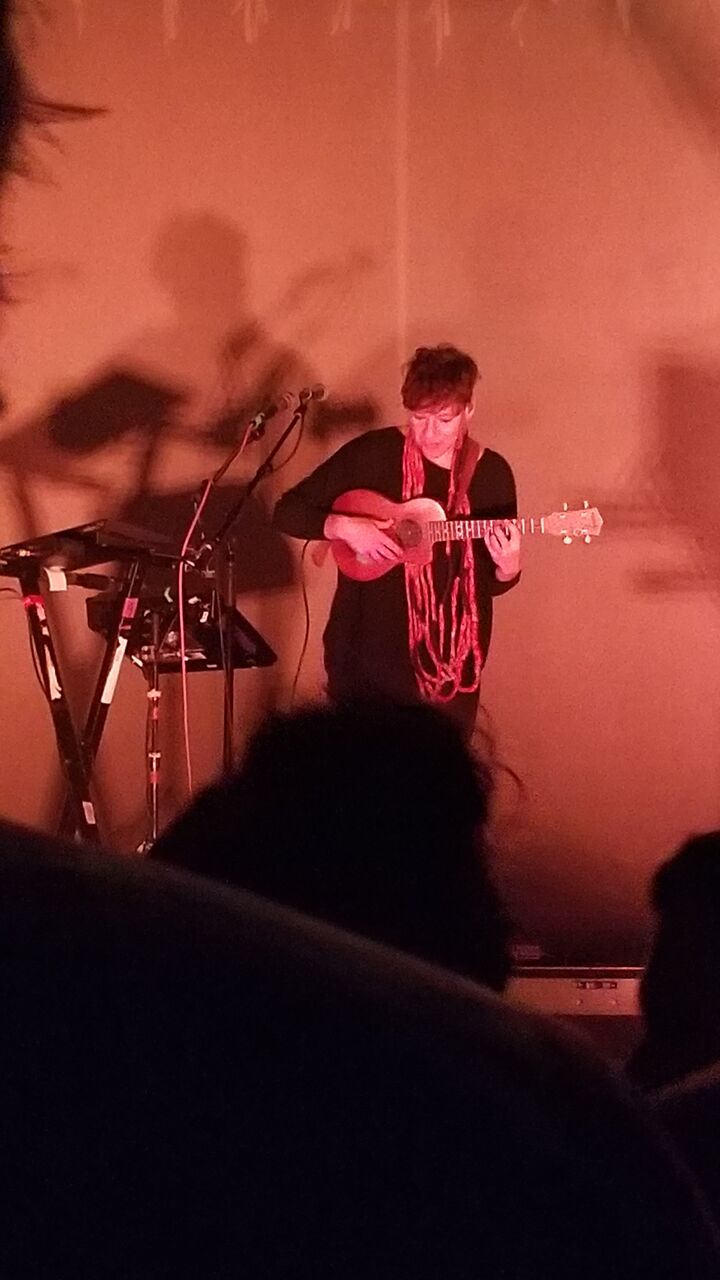
[ATTENDED: May 10, 2018] tUnE-yArDs

When I first saw tUnE-yArDs on a Tiny Desk I was really impressed by Merrill Garbus’ set up.  I loved that she looped things so much–she may have been my first real exposure to that much looping.

I also loved that she played a kind of modified ukulele.  And I really liked her voice which was so unexpected for someone who looked like she does.  When I first heard them I assumed she was African American.

I loved the album w h o k i l l, but hadn’t really heard that much from them since.  There’s a new song that WXPN has been playing “Look at Your Hands” which I liked, but I didn’t hear anything else from the album.

So based on the Tiny Desk, tUnE-yArDs had been very high on my list of bands to see.  But that was many years earlier.  I still had high expectations and I found myself not exactly disappointed but like something of an outsider at the show.  Because while I didn’t know that much of her new music, the rest of the crowd knew everything and danced accordingly.

I had hoped to get tickets to see her club show at Boot & Saddle.  I don’t know how different that small show was but this show was simultaneously large and small.

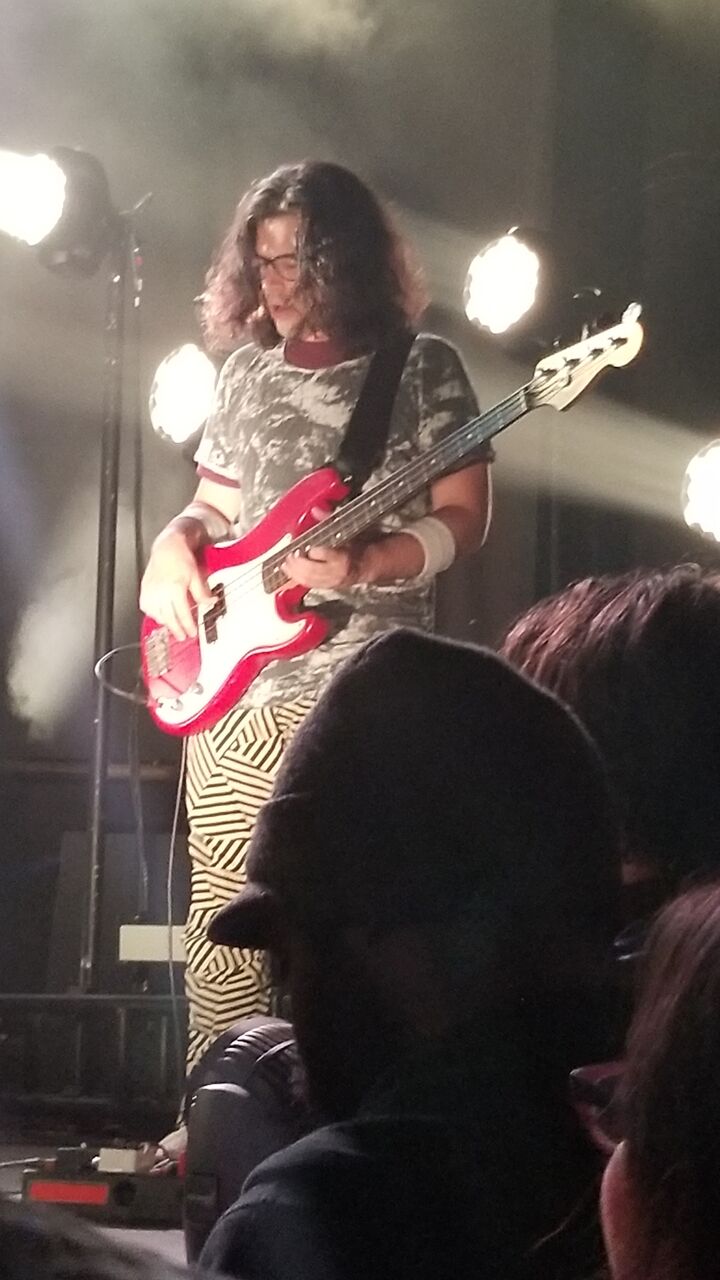
I had heard that there were previously saxophones, background vocalists and percussionists on stage with her.  For this show there was only Hamir Atwal on drums and her musical partner Nate Brenner.

The stage set up was sparse: a big white backdrop and Garbus on a raised platform.  The drums on her right, the bass on her left.

Garbus still loops with abandon.  Indeed, Shara Nova made a comment about Garbus’ feet.  The key to Garbus looping (and there was plenty), is that she does a lot of the work with her feet.  However, there was a monitor in front of her feet so you couldn’t watch what she was doing up there.  That kinda stunk.

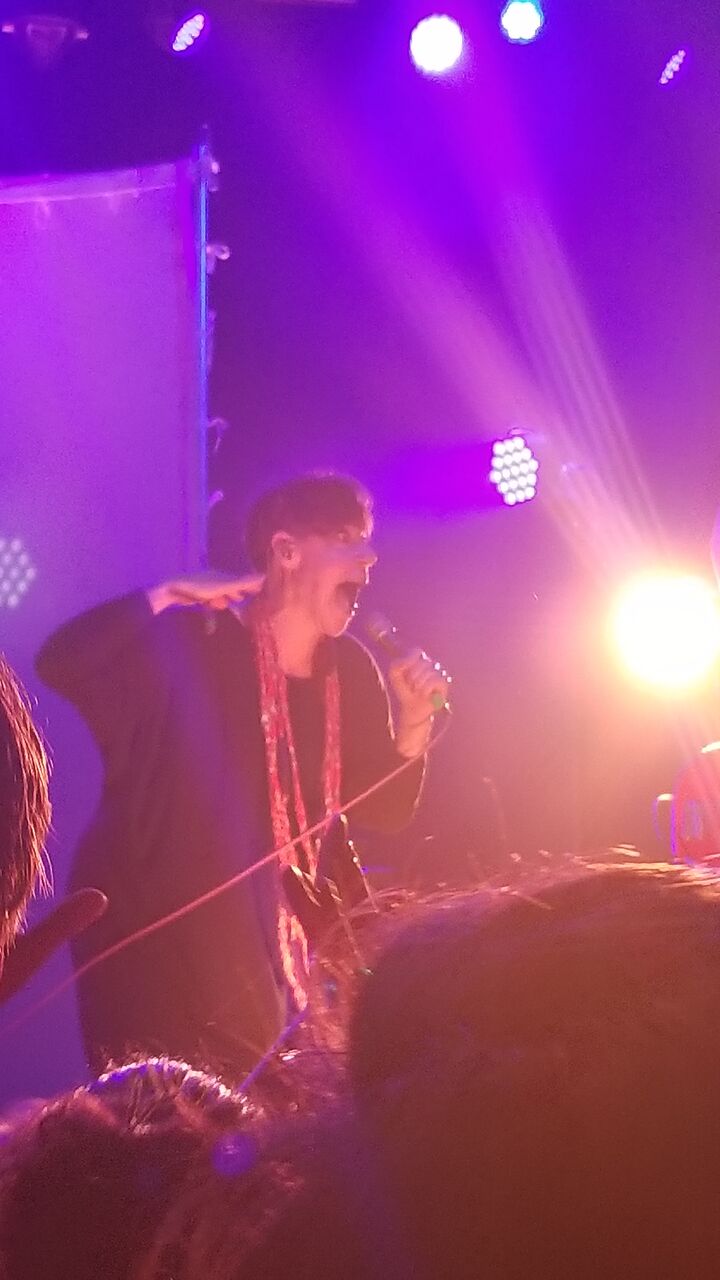
But she had a ton of energy.  She played a small drum pad a modified ukulele and those loop pedals.  She danced around on her platform and occasionally, briefly came down to the audience and danced a bit before heading back to her station.

Garbus and crew recreated three songs from the new album.  And everyone around me sang along.

I thought that Nate Brenner’s bass was too loud in the mix, but when he played a high riff it sounded great.

I loved hearing “Look At Your Hands” live where the dynamic was seven more dramatic than on record.

She played only one song from Nicki Nack, the catchy and pointed (like nearly every other songs) “Water Fountain.”

And then it was on to the songs from Who Kill that I was really excited to hear: “Es-So ” and “Powa.”

I had heard a lot about her new album which explores the nature of her relationship to African culture.  I’d always wondered about her voice and her intonations, just how African it sounds.  So in a recent interview in GQ she says:

When I was in college I studied Kiswahili, translating plays from Swahili into English and taking lots of African Studies classes and African American literature classes. I went to Kenya and was just so disgusted by the role of white people in colonial history—and, most importantly, present day postcolonial dynamics—that I just shut down. For years I felt like, “There’s no way I can make the music that I want to, which is all influenced by black music.” Bird-Brains, the first tUnE-yArDs album, was almost called White Guilt. So from the beginning of tUnE-yArDs, I have been grappling really awkwardly with that. The song “Jamaican,” a lot of it was me talking to myself: What’s going on here? Do you have a right [to make this]? Why is this music coming out of me? What will people think?

She grapples with serious issues of white guilt and colonization  (like the song “Colonizer”).  These songs are powerful and thoughtful.  And yet for the most part they are incredibly dancey.

In that interview she said:

I want people to dance. Really. That seems so simplistic an answer, but I really value the ceremony of bringing people together into a specific space and not thinking so much. [laughs] Ironically. I know there’s a lot to think about with this music, but when essentials of music take over… seeing people be literally on the same wavelength? It’s super powerful. I felt like making people dance was the right thing.

The audience enjoyed the show tremendously and there was ample dancing.  and I enjoyed hearing her make the music, but  I never quite felt on the same wavelength as everyone else.  Her appropriations of African culture (even how she danced) made me unconformable.  I knew what she was trying to address, but the music was more in my head than in my body.,

Knowing that she has bona-fides in the area makes things better, but can’t change the way I felt about the show.

Having said that, the encore of “Bizness” was totally killer.

This is a setlist from a few shows earlier, but I think it’s pretty spot on.

  1. Honesty*
  2. Look at Your Hands*
  3. ABC 123*
  4. Water Fountain
  5. Es-So
  6. Powa
  7. Colonizer*
  8. Coast to Coast*
  9. Gangsta
  10. Heart Attack*
  11. Encore
  12. Hammer*
  13. Bizness

Read Full Post »

« Newer Posts - Older Posts »