Feeds:
Posts
Comments

Archive for the ‘NPR/PRI/PBS’ Category

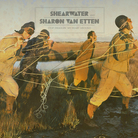
harpers maySOUNDTRACK: SHEARWATER & SHARON VAN ETTEN-“Stop Dragging My Heart Around” (2013).

Shearwater-Sharon_RSDEverybody knows this song.  It was  way overplayed (overplayed enough that Weird Al parodied it in 1983).  So I can’t say I was all that excited to hear this cover.

What’s nice about it though is that if you’ve heard a song a million times, hearing a slightly (not radically) different version can reintroduce it to you in a new way.

It’s noisy and clunky in the music–giving a more folkie vibe.  And while Sharon sounds a bit like Stevie Nicks—she gives that same raspy quality to it–she’s definitely not trying to be Stevie.  The Shearwater vocalist does moderate mimic of Petty—enough to show that he knows what the original sounds like without duplicating it.  The whole feel has a kind of tossed off, less polished vibe that really works with the lyrics.

It turns out that this version is live and it was released on a  7″ single (but NPR gives it to us for free).  I like this version quite a bit although I do miss the “Ah ha has” and “Hey hey heys” in the bridge.

[READ: May 29, 2013] “The Gift”

This was a very strange little story.

In it, a woman wakes up after her house has flooded.  Not entirely, but there was certainly a few feet of water (she can see the residue marks).  What’s also strange is that she had not left her apartment for five days and she had just spent nearly $90 (the bulk of her grocery money) ordering a box of glacé apricots from Australia–in gold foil at extra cost–no less!

She feels guilty… but they just looked so good in the catalog.  Of course, so did the mosquito netting–but really what use had she for that?

She spent some time thinking about the Australians working in the glacé apricot factory–did they ever steal an apricot?  Were they hungry? Somehow she imagined them enshrouded in the mosquito netting.

She was awoken from her reverie by the water rushing around her living room–and the piglets grunting around in the mud. (more…)

Read Full Post »

5.20SOUNDTRACK: SAVAGES-Live at KEXP (May 16, 2013).

savagesI heard some songs from the Savages album, and I loved them–that combination of 80’s punk and goth all wrapped up in current technologies and attitude.  A couple of their songs are some of my favorite of the year so far.  I’d also heard that they were even better live.  So here are four songs played live in the studio from KEXP.  And while the audio is awesome, they are a lot of fun to watch.

In fact, the more I watch the less I know who I am most impressed by–the amazing guitarist?  the great unaffected bassist?  the wild drummer?  They’re all a pleasure to watch.

But it also sounds great.  There’s some great soaring guitar sounds on “City’s Full” which really has a Patti Smith meets Siouxsie vibe.  And there’s that whole goth feel–the bass up front and dominant but with really big guitar chords and cool riffs.  And the drums, man she rocks out in the whole first half of “City’s Full.”   Then listen to the fabulous bass line that runs through “Shut Up.”   I love the way the low bass plays off the high guitars  (and the vocals sound very Siouxsie there).    And the drummer is amazing at the end of the song.

A great 80s echoey riff opens “She Will.”  I love when the song almost stops and it’s all fast cymbals and faster guitar (which is really cool in and of itself) until it builds back up.  And just look at her drumming at 10:20.  Wow. 

And the closer, Husbands” just gets more and more intense.  Like the crazy noisy cymbals.  And the way her voice soars and soars until it just stops.  Wow.

[READ: May 23, 2013] “The Dark Arts”

Julian is sick. Very sick.  So sick, in fact, that American doctors can’t seem to help him, can’t even seem to effectively diagnose him.  So he and his girlfriend Hayley have traveled to Europe for new medicines that the AMA hasn’t approved yet.  They travel to a few places first as a kind of romantic vacation and their ultimate destination is Düsseldorf.  It’s there where Julian will have his bone marrow drawn out, then boiled and tinkered with and then injected back into him.

Ouch.

But there’s been a snag.  On their way to Düsseldorf, they had a fight and Hayley stayed behind.  So Julian went to Düsseldorf to a hostel.  Every day he goes to the train station hoping to see Hayley show up.  He imagines what he must look like to the locals–a skeletal American wearing what must look like a death shroud.  He barely eats, he barely does anything.  In fact, he has more or less given up.

But his father and Hayley, they believe in him, they believe that these cures can help.  Indeed, his father has been so great through all this offering him anything he needs–money they don’t really have and unwavering support.

And then the story gets even more interesting–we find out that American doctors not only couldn’t diagnose him, but actually believed that there as nothing wrong with him. (more…)

Read Full Post »

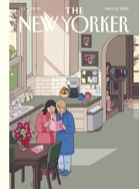
CV1_TNY_05_06_13Schossow.inddSOUNDTRACK: BOY-“Little Numbers” (Live at The Current, April 6, 2013) (2013).

boyI am totally hooked by this single–a song which sounds like the next huge Feist hit.  It’s got a great piano melody that just grabs on and won’t let go.

So how does the song hold up on acoustic guitars?  In a recent interview the two Swiss/German band members, Valeska Steiner and Sonja Glass, say that the song was originally written in this slower more acoustic vein.  On first listen this version is not very appealing–there’s something so bubbly and bouncy and joyous about the single version.

The immediacy of the song is gone and the “woah-o” section seems more mournful than joyous.  I suppose it is actually more true to the original intent of the song (I read your name on every wall, is there  cure for me at all).  Although this version features Boy’s beautiful harmonies, especially the concluding moments, I still prefer the more upbeat single version.

[READ: May 21, 2013] “The Gray Goose”

When this story started, I was a little concerned that it was going to be another story about a repressed childhood under the thumb of an oppressive Jewish mother.  It begins by telling us that Miraim’s father left in 1948, when she was little.  One of the only presents she had been given was an album by Burl Ives.  And that album could be played on her family’s hi-fi/radio housed in a rosewood cabinet—“the most fantastical item of furniture in their lives.” Her father hated that they gave into consumerism to buy such a thing, but it was revered.  And all vinyl was held very delicately, as if a breath of air might warp it.

“The Gray Goose” was her favorite song and she listened to it often, trying to scrutinize the songs—just what was this gray goose that could not be killed, Lord, Lord, Lord.  (The traditional meaning of the gray goose that could not be killed appears to have something to do that with the hunter went hunting on the Sabbath, so the goose could not be killed). Although in the story, Miriam’s mother, Rose, says that the goose represents the heart of the working class.  For Rose and her husband, Albert were fiercely Communist.  We learn about Rose and Albert’s marriage—they were passionate about their beliefs, and this passion seemed to transmit to each other.  And then Rose got pregnant, so they married.  And then Rose had a miscarriage, but now they were stuck with each other so they decided to have a child—Miriam.  (His parents didn’t approve of any of it, especially Rose).

Then Albert was offered a job back in Germany—the only Jew to return to Germany so soon, and Rose and Miriam were on their own.  Well, Miriam was on her own, Rose had many many suitors, although none could stay the night.

That’s all back story for the evening of the action—the evening that Miriam and some friends have gone to Greenwich Village to a jazz club.  Miriam is precocious, having finished school a year early and started college (and apparently already dropped out).  She is out with some friends, the wonderfully named Rye Gogan, the horn-rimmed glasses-wearing Porter, assorted girlfriends and Miriam’s boyfriend who is referred to hilariously as Forgettable.  As in “of course Forgettable weighed in with, ‘What?’” (more…)

Read Full Post »

2013_05_13_p139SOUNDTRACK: ELEANOR FRIEDBERG-“Stare at the Sun” (2013).

efI don’t know Eleanor Friedberg, who is part of the Fiery Furnaces.  This song is fast and bright.  It’s a pretty standard rock song with bright guitars, and there is definitely folk feel to it.

The real selling point of the song is Friedberg’s voice.  She sounds a bit like a 60’s-era male with a high voice (indeed, she reminds me a little of Russel Mael from Sparks).  Maybe I’ll think of her as a mix of Kirsty MacColl and Sparks.

I like this song.  It’s not amazing, but it has a real bouncy summer feel.  An enjoyable romp that bears repeated listens.

[READ: May 21, 2013] “Art Appreciation”

I read this story in two parts.  And when I finished the first part (about four pages in–the paragraph that ended “and he kissed her there for the first time”), I thought it was a delightful story.  A sweet story of young romance.  True, the main character is a bit of a douche: “Henry Taylor had always known he would have money one day, and this confidence was vindicated when his mother won the lottery.”  But I thought that maybe Eleanor, Ellie, would somehow make him a better person.  And that sweet kiss seemed like a wonderful start.

The year is 1961, the place is Australia (it took me a little time to figure that out).  Henry is a gambler–but a mostly winning gambler–he goes to the dog tracks on Friday nights, the horses on Saturday.  But Henry, who is 28,  is also a working man–a mid-level employee at an insurance firm.  And even after his mother won the lottery he didn’t quit his job (it was of course douchey to assume that his mother would somehow give him the money but that’s what he thought).  Despite his confidence about the money, he also didn’t want to show off about it.

Ellie had recently started working in Henry’s office. She was very attractive and he thought that “now that he had money, he would marry her” (geez, he gets douchier by the minute).  Soon enough he has asked her out.  And she happily accepts.  Ellie is 20.

Finally one Sunday Henry’s mother says that she is moving to Victoria with her sister and giving him the house–she wants to see him settled.  He imagined selling the house and buying something closer to the city.

That night he visited Kath.  Kath is his un-serious girlfriend.  He tells her that their fun is over, that he is dating Ellie now so this will be their last fling.  He also has the douchiness to tell her that he has won the lottery.

Soon we learn what the title refers to, Ellie goes to art appreciation classes on Friday nights.  She asks Henry to walk her to class, which he does.  Henry stays for this one and doesn’t like it.  He sits with another bloke who asks if he was dragged there, too.  But she is so excited by the class, art is her passion.  They have a nice dinner together and they kiss for the first time.

And I thought that was nice.

But there’s more. (more…)

Read Full Post »

bikesSOUNDTRACK: ARCHIE PELAGO-“Avocado Roller” (2013).

archie-563227e1389d31573229dc9d8c7651d5cda681a0-s1I’d never heard of Archie Pelago (get it?).  This is an instrumental that begins with lots of electronic percussion, creating  complex rhythms and beats. It’s funky, but mildly funky.  Then after about a minute or so, there’s some music thrown on top–layers of sounds that are interesting. Then comes a weird sax solo–is this suddenly smooth jazz?  Then we gets some voices and spoken word, all working to create an instrumental soundscape.

I can see this in a movie, although I wouldn’t choose to listen to it myself.

[READ: May 19, 2013] Bicycles Locked to Poles

I recall when this book came out from McSweeney’s and I remember thinking what a weird idea–a book of pictures of bicycles locked to poles.  I thought it sounded … I don’t know… weird.  So, when I saw it used for a penny I decided to check it out.  And indeed, nearly ten years later it’s still weird.

It is an incredibly audacious book as it is literally just pictures of bicycles locked to poles (and an occasional tree).  The book is broken down into four parts, although there is no difference between the parts–it’s just more pictures.  And there is no text at all.  Except for a chart on the front and back inside cover which shows what pats of the bike were left in the picture (an unusual index which could be useful if you were doing some kind of study of the state of bicycles left to poles, but something which is not terribly useful in this book).  Categories include: Frame, fork, front wheel–spokes, steering–grips, comfort–saddle, options–front basket. (more…)

Read Full Post »

5.20SOUNDTRACK: RASHANIM-“Bahir” (2005).

Masada_RockSpeaking of John Zorn, there was a nother clip on NPR about the release of his album Masada Rock in 2005.  Clearly I stopped listening to Zorn’s new stuff around this time because I didn’t know this record.  It features the band Rashanim.

This is a wonderful little mashup of surf rock and noir played by a kind of stripped down rock trio.  The main riff is very noir, something Zorn specializes in.  It’s funny to me that this is a Masada album as it feels decidedly unJewish to me.  But it sounds very Zorn.  The band packs a ton of stuff into this 4 minute piece.  There’s a lengthy, fairly sloppy guitar solo that goes through much of the song.  And the end is a frantic workout.

I liked this song quite a bit and thought I’d see just what Zorn has been up to since I last watched his discography.  I’d say that in the last ten years he has released around 100 albums of various styles and genres.  I think my wallet is happy I stopped paying attention.

[READ: May 16, 2013] “Poker Face”

The five brief pieces in this week’s New Yorker are labeled as “Imagined Inventions.”  And in each one, the author is tasked with inventing something.

I didn’t know Nolan before reading this.  This was my least favorite of the five essays—kind of like a final skit from Saturday Night Live.  Essentially he raves about how useful emoticons are—very current, yes.  Well, he precedes this by saying how in texting it’s even harder to detect sarcasm than it was in emails.  He has a friend who uses exclamation points to show sincerity, so Thanks. Could be ironic but Thanks! is sincere.  I find I do the same thing, so I appreciated that. (more…)

Read Full Post »

5.20SOUNDTRACK: PAT METHENY-“Mastema” (2013).

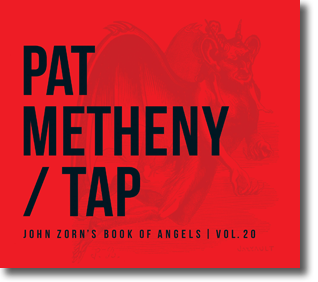
Itap-cd-cover don’t know all that much about pat Metehny.  I know he’s a jazz guitarist held in high regard by some and in less high regard by others.  This song is Metheny playing a John Zorn composition–indeed, it comes from an entire album of Zorn covers called Tap: John Zorn’s Book of Angels, Vol. 20.  I have been a huge fan of Zorn for decades, and yet some time ago I had to stop following him–his output is just too huge.  So this Book of Angels series by the Masada String Quartet is unfamiliar to me.

Knowing what I do about Zorn, this piece is quite an interesting statement–it’s got a lot of the wildness that Zorn throws into his music, but it’s also got the pretty melodies that Zorn writes as well as the Jewish melodies that saturate the Masada albums.

Strangely enough this song reminds me more of Frank Zappa than John Zorn.  That may have to do more wbecause it’s a guitar and not a sax, but it also has something to do with the bass guitar that is playing along–it’s got a very Zappa sound to it.

I feel like I’d rather just listen to Masada, but I’d have to really compare the two to see how this holds up.  It’s a pretty wild guitar workout though, if you like that sort of thing.

[READ: May 16, 2013] “Vision Quest”

The five brief pieces in this week’s New Yorker are labeled as “Imagined Inventions.”  And in each one, the author is tasked with inventing something.

Karen Russell is the first of the five authors whom I did not recognize (although I have read a few short pieces of hers in the New Yorker).  She describes her last invention, which was for the seventh grade science fair. It was called the Roller Solar Cream—she poured sunscreen on a roll-on deodorant stick.  It got a C+.  So she explains that she’s not much of an inventor, but she’s going to give it a try.  She also states that she doesn’t know how any of these inventions would work, nevertheless she proposes four.

Number 1 is a “Trapster” for social situations.  The original trapster is an app to alert you to speed traps and the like (I’ve never heard of that).   Her app would alert you when you are heading into a socially dangerous situation (be careful what you say around this person, her dad is famous).  Number 2 is called “Last Wishes Glasses” which upon wearing allow you to know what your dead relative would actually think of your plans/ideas (“she would have wanted it this way” is no longer needed).  I have to admit I find this invention to be pretty nonsensical.  Number 3 is the one I like most.  It’s called “Baby Roshambo” and it’s a program that allows you to see what a baby’s life will be like depending on what name you give him or her—see how Ashley, Bubbles, La’Dynasty and Gertrude would turn out differently just because of their names.

(more…)

Read Full Post »

5.20SOUNDTRACK: BLACK ANGELS-Evil Things (2013).

blackangelsThis song has a 70s era metal sound (with a heavy early Black Sabbath feel).  It opens with a big riff and surprisingly quiet vocals (the vocals are not really sung loudly, they’re almost whispered, and they are very clean–it’s a nice contrast to the big buzzy guitars).  But for al the buzzy guitars (and the wonderfully dated to 1967 keyboard sound), there are passages that are quiet and almost gentle.  Indeed, there’s a lot going on in this song.  It’s a nice marriage of heavy metal and psychedelia.

I love the way the end seems like it’s uncontained–like they couldn’t control the feedback.  It’s interesting that Bob and Robin on NPR relate this more to psychedelic bands of the late 60s and yet I hear more Black Sabbath–of course, Sabbath was a lot more psychedelia than we let on.

I’d like to hear more from these guys

[READ: May 16, 2013] “Cats Robo-Cradle”

The five brief pieces in this week’s New Yorker are labeled as “Imagined Inventions.”  And in each one, the author is tasked with inventing something.

Since Atwood wrote Cat’s Cradle, I wasn’t sure what to expect from this piece—the title of which was just kind of odd.  As with many magazine titles, I feel like perhaps she didn’t come up with the title because that’s not what she calls her invention–someone just tried to tie it into her famous novel.

Anyhow, she begins her piece by talking about the fascinating-sounding Museum of Failed Products in Ann Arbor, Michigan.  She says that there are so many interesting things there, some of which she feels must be better than her own invention, and must be better than Pop-Tarts.  She says she predicted the failure of Pop-Tarts because when her family first tried it, the jam exploded all over the toaster.  So she knows from good and bad ideas.

Her idea has to do with the death of so many birds and rodents from feral cats.  Recall that birds are predators of insects so their dwindling number is affecting forests and garden.  When cats kill the birds (and the rodents that larger birds eat), they are permanently impacting the climate.  Her idea is for a safe (to the cats) trap which she calls the Robo-Coyote. (more…)

Read Full Post »

5.20SOUNDTRACK: IGGY AND THE STOOGES-“Job” (2013).

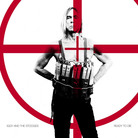
iggyNickelodeon’s favorite dad has just released a new album.  In the lead up to this song on NPR, Bob Boilen said that the live show that NPR streamed from Iggy and the Stooges was a matinée and there were kids as  well as adults there.  Who takes a kid to see Iggy Pop? Even if he was on The Adventures of Pete and Pete?

So this song is a dopey punk song and I love the guitars as the song starts–just classic punk sound and riffage. And then Iggy’s unmistakable voice “I gotta job…but it don’t pay shit.  I gotta job… and I’m sick of it.”  Is there any sentiment less authentic than Iggy Pop singing this?  Probably not.  And yet it’s a fun song for any working class guy to sing along to

And it’s frankly amazing that Iggy and the Stooges are still putting records out.

[READ: May 16, 2013] “Just Drive”

The five brief pieces in this week’s New Yorker are labeled as “Imagined Inventions.”  And in each one, the author is tasked with inventing something.

Shteyngart’s is clearly the most practical and is based on something the he knows already exists. He explains that he is unabashedly a terrible driver: “My greatest failure in life has been my inability to drive a car safely between two locations.”  This is despite the fact that he has always loved cars.  Right from the day that his father bought their first car and he saved up to buy a similar matchbox car (more similar when they painted it the same color), he has loved t he freedom that cars represented.  And I loved the idea that he and his family felt that although America was a large country, the road atlas made it seem like you could drive anywhere.

But Shteyngart’s driving problem seem to be more fundamental—an inability to tell left from right (the way his father tried to teach him is quite funny… if misguided).  And now that Shteyngart lives in the country, he needs to drive more than ever. (more…)

Read Full Post »

dreadSOUNDTRACK: PIÑATA PROTEST-El Valiente (2013).

elvaliente-frontrgbOn the Pogues album If I Should Fall from Grace with God, they sing a song called “Fiesta” that is more or less a punk Spanish song which, while very Spanish sounding, still retains a feeling of Irishness.  Piñata Protest, a band from San Antonio who sing in Spanish and English, sounds like a similar mix of Mexico, Ireland and punk (especially on the second track, “Vato Perron”).  I feel like the Ireland comes from the accordion (one of the primary instruments on the disc), while the punk lasts throughout (the whole album is 9 songs in 20 minutes).

The band plays loud guitars at a fast pace.  And it’s amazing how well the accordion brings it all together.

The band sings a few really fast songs and a couple slower ones.  Interestingly, the slower songs (“Tomorrow Today” and “Guadalupe”) are probably the most conventional and, consequentially, of the least interesting songs on the album.  They sound like pretty typical punk pop, albeit with touches of accordion.  It’s the more fast songs like “Vato Perron” and “Life on the Border” (with the great lead accordion and the fun “Hey!” refrain) which really stand out.

“Volver Volver” is a traditional song which starts out slowly (with big guitars) and after a few verses and a very long held note, the punk can’t be contained any longer and the song ends in a blur.  The title track is a great rocker with some interesting guitar sounds an a cool accordion solo.  Then there;s the rocking (and amusing) cover of “La Cucaracha.”  It starts out as a blistering punk song with no real connection to the original until about mid way through when a lone trumpet begins laying the familiar melody.  It’s only a minute long and so is the final cut “Que Pedo” which is just a blistering punk song with lots of screaming.

And with that album is done.  It’s a fun an unexpected treat of an album, and if you like your punk musically diverse, it’s worth checking out (NPR is streaming it this week).

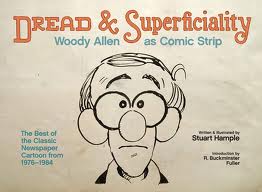
[READ: May 11, 2013] Dread & Superficiality

Sarah got me this book for my birthday.  If you have ever seen Annie Hall (and if you haven’t, go watch it now), you’ve seen Woody-as-cartoon.  Hample is the person who created the cartoon for the movie.  Around the time that that happened, Hample was pushing Woody to have a comic strip based around him (Hample had a moderately successful strip at the time already) and also convincing newspapers that this was a good idea.  All parties agreed and Inside Woody Allen ran from 1976 to 1984.  1984!  I can’t believe I never saw this in a newspaper.  My parents were daily subscribers to two newspapers and I know I read the comics.  Of course, I didn’t care about Woody Allen until I went to college, so maybe I did see it but ignored it.

Anyhow, this book collects a bunch of those strips (I have no idea how many but I would venture around 200–which is a far cry from the nearly 3,000 that would have been produced over those years.  But hey since there’s no other place to see these strips (there were three books published but they are all long out of print), this is a good place to start and a nice collection.  But more than just the strips, most of the book collects the original proofs of the strips, so you can see Hample’s lines and notes (there are several pieces that deal with his color choices and notes on the same).

The book is broken down into subjects and is in no way chronological.  This makes sense as it’s good to see him dealing with the same topic in different ways, but it makes for weird continuity issues (something that will obviously occur when you only select random strips).  Woody is with various women over the strip and it’s hard to know if he was after Laura for a few months or the duration of the strip.  Of course, the sections aren’t really all that different–they all deal with Allen’s philosophical attitude, his attempts to woo women, his therapist and his parents.  However, the breakdowns, while somewhat arbitrary are enjoyable. (more…)

Read Full Post »

« Newer Posts - Older Posts »