Feeds:
Posts
Comments

Archive for the ‘All Songs Considered’ Category

TNY 10.6.08 palin cvr.inddSOUNDTRACK: WEED-“Silent Partner” (2013).

weed-deserve-0f8161c881e522aba0f28701cda87e9a558f9727-s1This song started off a recent All Songs Considered podcast and it starts with a bang–a big wall of fuzzy guitars and the vocals mixed way back in the song.  It has a very early 90s vibe–a slow song despite the loud buzzy guitars.

It reminds me of a lot of bands from that 90s era–Swervedriver, Screaming Trees–although it has a few moments (bridges maybe) in which the guitars plays faster, almost a heavy metal riff.  And yet the chorus is expansive (if still distorted)–bringing together a lot of interesting elements.  And I love the way the song ends with nearly 30 seconds of feedback.

I definitely want to hear more from these guys.

[READ: August 9, 2013] “The Idiot President”

This story seems to be referenced in Alarcón’s recent short story “Collectors.”  In “Collectors” we meet Henry, the author of the play “The Idiot President” and we hear how he was jailed for performing the political piece.

In this story, apparently written five years before “Collectors,” we meet an actor who has worked with Henry and who has acted in “The Idiot President” (which was well received by audiences, especially the big reveal at the end).  They were in an acting troupe called Diciembre and for this “tour” three of them–Henry, the narrator and Paralarga–went to small villages to perform the play.

While Henry and Patalarga were in Diciembre for real, the narrator knew he was going to be leaving the country soon.  His brother lived in California and promised him a visa…soon.  So the narrator just assumed that nothing he did had any real consequence.  And while traveling around and acting seemed like a good idea, doing it in the winter with very little in the way of provisions was not the best idea.  He lost weight and was always chilled and sickly.

There are a number of brief episodes in this story (which I assume is actually an excerpt). The first involves Tania.  Tania is Patalarga’s second cousin and Henry’s ex-wife (from many years ago). After their performance in Tania’s city, she sings for them during the after party (with a beautiful voice that the narrator falls in love with).  It is clear that the narrator is bewitched by her–while the other two just seem bemused by everything.  She takes pity on him and walks him back to his bed.  And just when he thinks she is “interested,” she makes it clear that she was just walking him to his bed. (more…)

Read Full Post »

Miskatonic University Press Weird Tales compendiumSOUNDTRACK: YUCK-“Rebirth” (2013).

Yuck-Rebirth-608x608-88e4ecb86a2dbcb086211620179bd14d6dbe5221-s1Yuck put out a great albumin 2011.  And then a principal songwriter and singer Daniel Blumberg left the band.  So they regrouped and are coming out with Rebirth (due in the fall).  This track is very My Bloody Valentinesque–big echoey guitars with gentle vocals on top of them.

The big difference comes in the bridge which seems a little more pop than most MBV songs. The chorus also has a few guitar notes that stand out as unechoed notes which also break the shoegaze vibe in a very interesting way.  The biggest surprise comes at the end when the song turns into mostly drums with a bit of a keyboard/dancey feel. It’s just a touch to show that they are not simply mimicking shoegaze, they are using it in their own way.

I’m excited to hear what else the come up with.

[READ: August 8, 2013] “The Horror at Martin’s Beach”

This short story was written by H.P. Lovecraft’s wife, Sonia H. Greene.  Apparently Lovecraft then edited/reworked it before publication in Weird Tales (when it was titled “The Invisible Monster”) although it seems every anthologized version has the “Martin’s Beach” title.  For more about Weird Tales issues, check out Yankee Classic.

I’m not sure how much work Lovecraft did on this story as it doesn’t have any of the hallmarks of his own work.  Indeed, it is a fairly straightforward story with none of the gods and supernatural eerieness that Lovecraft puts in his work.  Which is not to say that this story doesn’t have  supernatural elements, it’s just not Lovecraft’s supernatural elements.

In this short story, a group of sailors of the coast of Gloucester fought with an undersea beast for 40 hours before subduing it. The beast was huge–nearly fifty feet long and ten feet in its cylindrical diameter.  Although it was clearly a fish, it also had small forelegs.  Its skin was thick and, most peculiarly, it has one, giant eye.  After it was dissected, scientists determined that despite the enormity of the creature, it was only a baby–simply a few days old. (more…)

Read Full Post »

CV1_TNY_08_05_13Cuneo.inddSOUNDTRACK: JACKSON SCOTT-“Evie” (2013).

jacksonscottWhat if My Bloody Valentine were a little creepier–playing with the speed of voices and using their hazy shoegaze sound to slightly more sinister ends.  You’d get something of what Jackson Scott sounds like on this track.

I don’t know who Jackson Scott is, but the NPR podcast that introduced me to him makes him sound like a very interesting guy (and that Melbourne is kind of a downer album.

This is a lo-fi recording (his first) that’s then played around with on the computer.  His voice is pitch shifted (which is what gives it a creepy feel).  But the guitars are beautiful and dreamy, floating to the outer reaches.

[READ: August 6, 2013] “Paranoia”

When I saw that Shirley Jackson was the author of this story I thought. “Isn’t she dead?”  [She is}.  And then I thought, “Did she write anything other than “The Lottery”?” [She did—6 novels, 4 short story collections and, gulp, 4 children’s stories].

I’m always confused when the New Yorker publishes a story like this.  Has it never appeared before?  Is it anthologized and they just wanted a story to fill the space?  Are they contractually obligated to run a “classic” song twice a year?   Whatever the case, I adored this story—which makes me think I should be reading more Jackson.

What I loved especially about this story is that as soon as I started reading it, I knew it was an older story—not because of any internal clues (it’s not until ¾ of the way into the story when he pays a nickel for a bus ride that an approximate date can be pegged to the story), but just the style, the spookiness without graphic-ness.  It’s psychological without being violent or necessarily creepy.  It feels like people don’t write psychological thrillers like this as much as they did.  And sure the thrills are mild, but they are definitely psychological.

The story is a simple one, an average man, Mr Beresford, looks like all the other average men coming home from work in NYC.  But Beresford remembered his wife’s birthday and is delighted that he bought her candies.  He plans to take an early bus home and take her out to dinner.  He’s very happy and looking forward to a nice night.

Until a man in a light gray hat, with a small mustache) approaches him.  He makes eye contact, seems to frown at Beresford and then moves on.  Beresford is confused by this, but puts the gray hat man out of his mind until he goes to climb on the bus and the same man pushes him from behind very hard until the gray hat is on the bus and the doors are closed in Beresford’s face.

Beresford is puzzled and more than a little annoyed. But he decides that his day is too good to be ruined by this man, so he puts him out of his mind and looks for another way home.

But then he sees the thin man again. And the man seems to be coming at him.  So Beresford hops into a souvenir shop to escape the man, but when he tries to leave the clerk accosts him and engages him to look at more things.  Then Beresford sees the gray hat man is approaching as well.  Now Beresford is really freaking out.  But what does this man want? (more…)

Read Full Post »

SOUNDTRACK: ROEDELIUS SCHNEIDER-“Umstuden” (2013).

Irs picked this song because I thought he had the same name as the character in this story, but he doesn’t.  Rats.

So this collaboration between electronic music pioneer (whom I’ve never heard of) Hans-Joachim Roedelius (who is 78!) and Stefan Schneider (who is much younger).  This piece is a largely a simple piano motif played over a pretty bassline.  (I assume this part if Roedelius).  Then after a few minutes come the effects and drums.  They are quiet and they add more texture than anything else.  But they also modernize this ambient track in a really interesting way–keeping it from getting too soporific (although the melody itself isn’t really soporific at all).  It keeps it lively and a little unexpected.

Although I’m not a huge fan of ambient music, I could see listening to more of this album.

[READ: August 5, 2013] “Collectors”

This story is constructed in a fascinating way.  Set in Peru, it opens with the story of Rogelio, a skinny boy who fails at school (later he is unofficially diagnosed with dyslexia).  He is unhappy at home, especially when his older brother Jaime moves to San Jacinto.  At age 13 Rogelio quit school and moved to San Jacinto to be with his brother.  They worked together making delivers and fixing up vehicles (and making a profit).  It slowly dawns on Rogelio that not everything they do is entirely legitimate, (especially since Jaime seems to have so much cash).  But he;s okay with that and asks no questions.

Then the story informs us in the middle of the second paragraph that Rogelio will wind up in Collectors prison (which I assume is infamous although I’m not actually sure if it’s real).   And sure enough about midway through the story we find out how it happened–Rogelio was carrying something (he didn’t know what) and he was searched by the police (who were looking for weapons).  We’re also told about Rogelio’s cellmate, Henry, who is nice to him.

Then we learn about Henry and how he wound up in prison.  He was a playwright.  And he wrote a (not very good) play called “The Idiot President” which the President (or someone) found offensive.  And soon Henry was regarded as a terrorist.  He considered it an absurd joke at first until the weeks turned into months and he was eventually shunted of to Collectors.

We learn about Collector’s prison, how Rogelio initially didn’t even have a cell–he slept under the stairs–until he was able to buy a cell (with money from Jaime).  Henry, because he had some money, was able to afford a cell and was very lucky to get a kindred soul like Rogelio.  The two actually become friends–talking and reading–and eventually become, dare they say it, lovers.

And they manage to survive in the prison by never upsetting the status quo and being able to read the feeling of the place (Rogelio grew especially good at that when he had nowhere to hide). (more…)

Read Full Post »

CV1_TNY_07_01_13Brunetti.inddSOUNDTRACK: AMANDA PALMER–Live at Newport Folk Festival (2013).

palmernewAmanda Palmer has been in the news a lot lately, although more for her actions than for her music.  First she crowdsourced for her album (earning praise and vilification), she gave a TED talk about the experience and recently made the British tabloids because her nipple popped out at the Glastonbury Festival.  (Of course, unlike another famous incident like that. Palmer handled it wonderfully, criticizing not only the Daily Mail but also the entire media industry for caring so much about (female) nudity).  I’ve gained a lot of respect for Palmer in the last year or so and yet I (still) didn’t know all that much about her music.

So there she is at the Newport Folk Festival.  I don’t really know what her “normal” music sounds like, but nearly this whole set was performed on a ukulele (as befits a folk festival).  She plays a few songs on piano and also has some surprise guests–her dad (duetting on Leonard Cohen’s “One of Us Cannot be Wrong” and Neil Gaiman (her husband) coming out to sing the very disturbing song “Psycho”).  She also did a Billy Bragg cover (which was actually a cover of a cover, but Bragg’s version is more well known) of “The World Turned Upside Down.”

The rest of the set included, as I said, mostly ukulele songs (with an occasional foray into piano).  Some highlights include “Map of Tasmania” (a very funny song based on Australian slang) and “Coin-Operated Boy” a Weill-ian song (which is very vulgar).  The rest of the songs are long(ish) meanderings about Palmer and her reactions to life.  Her songs are interesting in their story-telling sensibilities.   Like, “The Bed Song” and “In My Mind” and “Bigger on the Inside” (which is her response to things around her and a fan’s questions to her–it’s very long and rather samey, but lyrically it’s quite effective).   Her delivery is a bit over the top (in perfect theatricality that some will hate).  Her melodies are quite nice (although it must be admitted the piano based song “The Bed Song” has some of the prettiest music)–you can’t really do a lot with melody on the ukulele.

My favorite song is “Ukulele Anthem” a funny song about rocking the ukulele.  I think it speaks to Palmer’s strengths–stream of consciousness, funny and sardonic lyrics set to a simple melody.  It’s a fun song to listen to and see how it evolves.

So overall I enjoyed this set quite a lot.  Although interestingly I still don’t really know what her music normally sounds like.  I assume she doesn’t often play the ukulele, but who knows.  This was an interesting set and Palmer is proving to be a fascinating person.

NPR had this show online although I don’t see it anymore.

[READ: July 30, 2013] “Mastiff”

I read this story the day after I read “Stars,” and while I know there’s no connection between the two, this story also features a woman walking in the woods.  She is also something of a misanthropist (“Sometimes, in the midst of buoyant social occasions, something seemed to switch off.   She could feel a deadness seeping into her, a chilly indifference…and the coldness in her would respond, I don’t give a damn if I ever see any of you again).  And there is a big dog (never described like a wolf but it is about as a big).  That’s a bit too much coincidence for me.   In fact, JCO is so prolific I wouldn’t be surprised if she read McGuane’s story on Monday and wrote her response to it for the following issue.

This story begins with a man and a woman on a trail.  They see a huge mastiff pulling a youngish guy up the trail.  The woman is terrified of the beast (and is embarrassed to have shown that to her boyfriend), but she has a huge sense of relief when the dog and the young man take a different trail.

Her companion makes a joke about the woman’s unease.  They have been dating for a short period and she hated her role in their relationship (she also hated that she was petite which tended to keep her submissive, anyhow).  She resents his comments but says nothing.  They continue hiking.

The man loved to hike and he asked her on this hike as a special treat.  He had told her to pack accordingly but she didn’t listen—no backpack, no extra layer, not even a water bottle.  This seemed to upset him (and made him patronize her).   [We have a third person narrator who is mostly with the woman but occasionally seems to peek into the man’s head—I found this a little disconcerting].  After a few minutes when they reached a plateau (and she was ready to leave), he took out his camera and started taking pictures—more or less ignoring her.

While the man is taking pictures she muses about him and her bad relationships in the past.   She as popular among her fiends, but she was insecure especially around men.  After the dog incident, she had made a point of being friendly to other dog owners (there were a lot on the trail)—just to show him, you know, that she wasn’t afraid.  She also spoke to the strangers, although he wondered, “What’s the point of talking to people you’ll never see again.”

As happens in a story named “Mastiff.” they run into the dog again.  There’s a part earlier in the story where we learn that she was attacked unprovoked by a German Shepard.  Once again, we have an unprovoked dog attack–the mastiff charges at her growling and snarling [although the breed is not known for this].  But then the man jumps in to save her—absorbing much of the abuse himself.

And suddenly the story goes in another direction, with the woman accompanying the man to the hospital, going through his things to find his cards and suddenly feeling much closer to him than she felt that far—being rescued will do that.

There were some wonderful turns of phrase that I liked: “Naked and horizontal, the man seemed much larger than he did clothed and vertical.”  Although I had to take issue with this character owning an art gallery—that easiest of cliche professions—although it wasn’t really relevant to the story.  But aside from that, this was an enjoyable fast paced story.  It explored people’s darker moments and used the dog as a catalyst for human interactions.

Read Full Post »

CV1_TNY_06_24_13McGuire.inddSOUNDTRACK: NICK CAVE AND THE BAD SEEDS-Live at SXSW [excerpt] (2013).

caveNick cave performed at SXSW and NPR was there to record the show.

But for reasons only some people know, we only get to hear three of the songs. (Well, technically you can hear the whole thing here, but they only had three songs available for download–the video for which is also at the above link)

“Jubilee Street” builds from a slow piece to a wild and raucous explosion.  It is perfect Nick Cave.  I liked the record’s version okay, but man, live the Seeds just do no wrong—this version is better than the record by a long shot.  “From Her to Eternity” is a blast of excitement belying the age of the song (and of the performers).  It sounds as fresh and raging as it ever did.  “Push the Sky Away” ended the set, and it is a perfect ending to a show.  It’s an atmospheric masterpiece—moody and evocative, stark and enveloping—perfect in this live setting.

I was supposed to see Nick Cave live right after 9/11, but he cancelled his show.  I feel like I missed out on a good one. Maybe I’ll be able to catch him next time.

[READ: July 29, 2013] “Stars”

This story has got to be an excerpt.  There’s just way too much going on and a completely unsatisfying ending for it to be a short story.

As it opens, Jessica is walking through the mountains of Cascade Creek.  She is pleased to be alone—she is something of a misanthropist [“She didn’t play well with others.”].  But as she reaches a meadow, she sees a wolf trapped by its back leg to a stake.  And a man with a  gun.  She immediately runs over and tells the man he can’t kill the wolf [the way this section was set up, i knew she would say this and found her reaction unconvincing at best]. To her surprise, the man is soft-spoken and tells her calmly that even if she were to let it go, it would not show her the same mercy.  She says she’d happily shoot him so that he doesn’t shoot the wolf.  So he gives her the gun and says she’ll never do it.  Which she doesn’t.  And then the man kills the wolf.

The scene shifts to a coffee shop early in the morning.  She looks at the people walking around, and those walking their dogs and thinks maybe she would have been better off is she were a dog.  She is simply different from others. She walks fast everywhere—often people think she is rude when she barges past (and I guess she is– someone called her a “douche cannon” which is bizarre and rather amusing).  And yet for all her difficulties, she was currently seeing someone—Andy.  Andy was boyish and light, the opposite of Jessica’s darkness.  She wasn’t sure if Andy had a job (they hadn’t been dating long), but he did have an office—where she discovered he frequently bedded women.  (more…)

Read Full Post »

mermaSOUNDTRACK: HEY MARSEILLES-Live at the Newport Folk Festival (2013). 

heymar For reasons I’m unclear about, the first two songs (at least the first two listed on the NPR web page, (“To Travels & Trunks” and”Gasworks”) ) are not included in the download.  But we do get the band’s introduction of themselves.  So maybe the NPR list is wrong?  Weirder things have happened.

The band drove all the way from Seattle and are pleased to announce that they are the first band to play the Festival (a nice, if insignificant piece of trivia).

Regardless, we get a solid 35 minute set.  The band opens with “Heart Beats,” a folky song.  Indeed, Hey Marseilles continues the tradition of large bands (6 members at last counting) who play folk music with lots of unexpected(ish) instruments.  But the singer sounds quite a bit like Ben Gibbard.  Indeed that first song sounds like a less commercial Death Cab for Cutie—you keep expecting a big commercial chorus to come but it doesn’t, and there’s something very satisfying about them not giving it to us.

Although the band does sounds quite a bit like DCFC (both in the voice and the arrangements), their instrumentation brings an unfamiliarity to the songs that makes them so intriguing—like when the accordion pops up put of nowhere in “From a terrace.”  Or other songs where strings fill out a song–not in a “look we’re unplugged” sort of way but as  natural part of the song.  I really enjoyed their songs and may track down their CDs (and their cool scarf).

[READ: July 3, 2013] Mermaid in Chelsea Creek

This was the second YA book that McSweeney’s has released.  It is (say it with me) the first book in a trilogy.   And I have to say that I really didn’t like the first 100 pages.

There were a number of small things that kept me interested, but for the most part I found the story pretty dreadful.  On a personal note I really didn’t like that the Chelsea Creek was not revealed to be in the Boston area until very far into the story.  I hated that it was so specific (Chelsea) and yet so generic (which of the dozens of Chelseas was it?).  But more importantly I hated that Sophie (the protagonist) and her friend Ella, play the ‘pass-out” game.  In the game, one of the girls chokes herself until she passes out.  The other girl watches and wakes the first up after about 30 seconds.  This is what they do for fun  This is their cheap high.  And it constitutes a large part of the beginning of the story.  So much so that when her mother finds out about it, she tells her doctor.  And what made it all the crazier was that her doctor reveals that not only did she play the pass out game as  a girl but she is sure her mother did too.  And her mother says yes.  What the fuck?  Oh and her mother is mean and overworked and exhausted and generally always ready to fight with Sophie.

I imagine that if I had another book with me on vacation I would have put this down and read that one instead.  But I pressed on, mostly because when Sophie passed out she saw a mermaid in Chelsea Creek, a filthy sewage filled river.  (The fact that Ella is a germophobe is quite funny, especially when Sophie falls into the creek when she passes out).  That kept me interested as did Dr Chen (the above doctor).  Because the Doctor keeps pigeons on her roof and she has tied flutes to some of their tails so that they make beautiful music when they fly.  This scene was so good–so briefly magical–that I forgave the rest of the book and gave it a blank slate.  I was bummed when the pigeons went away, but was delighted when they came back a little later, once the magic began for real.

And there is magic aplenty.  Especially as Sophie learns more and more about her family and neighborhood. (more…)

Read Full Post »

SlexOUNDTRACK: FRANK TURNER & THE SLEEPING SOULS Live at the Newport Folk Festival (2013).

frakWhenever NPR streams and saves festivals shows, I like to check out the bands I love (of course), but I also check out some of the bands I’d never heard of before.  And sometimes it leads to a fantastic discovery.  Like Frank Turner.  I had no idea who he was, but he was described as folk-punk which is quite accurate.  He reminds me of Billy Bragg in his younger, harder days.  Turner is British, he has a very thick accent when he sings and while he is nowhere near as political as Bragg, he treads in that same line of folkiness.

His lead off track, “Four Simple Words” (the words are “I Want to Dance”) begins as a folkie song, but it quickly morphs into a rollicking stomper (louder than most bands at Newport, he theorizes).  But a song like “Try This at Home” seems to speak to his overall ethos—music for the people by the people:

Because there’s no such thing as rock stars There’s just people who play music
And some of them are just like us And some of them are dicks
So quick, turn off your stereo Pick up that pen and paper
Yeah, you could do much better Than some skinny half-arsed English country singer

There are a few more specifically pointed messages like “Glory Hallelujah,” whose chorus goes “There is no-o-o God, so clap your hands together.”  As well as a funny (but not really) song which he introduces as being written because he read Gene Simmons’ autobiography.  Simmons says he slept with 4,600 some women which he knows because he has taken a Polaroid of each one.  Turner is appalled “what an ass” and wrote “Wherefore Art Thou, Gene Simmons” as a response.

But the majority of songs are about love and life, going home again and playing music.  And, in this live setting Turner is fantastic—getting the crowd to sing along, having great banter and being a wonderful showman.

The final song is a great sing-along with the simple but effective chorus of: “I won’t sit down and I won’t shut up.  And most of all I will not grow up.”  I’m totally enjoying Turner’s music and now I’m going to have to check out his actual releases (he has four or five).  See more about him at his website.

[READ: July 20, 2013] Lexicon.

Virginia Woolf has gotten a hold of a word which has caused untold destruction in a small town in Australia.  W.B. Yeats has sent T.S. Eliot and a non-poet named Wil to get the word back and, if possible to kill Virginia Woolf.

Intrigued?  Yeah me too.

I saw this book in Barnes & Noble and was really excited that Barry had a new book out.  And when I pointed it out to Sarah she said , “I already have a hold on it.”  So, when it came in I took it from her pile and now it has to go back before she gets a chance to read it.

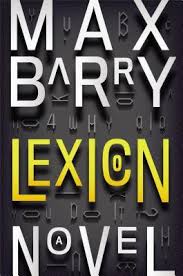
Imprinted in the crazy cover image are a series of odd characters and amid them it says 4 why did you do it.  I was trying to figure out if there was more to this secret message, but there isn’t.  However, it is a clue to what lies inside.

I guess in the grand scheme of things, the story is pretty simple (if not a little confusing).  What I laid out above is the skeletal outline; however, Barry interweaves the story with past and future (and a whole lot of mind control) and he begins the book right in the middle of utter chaos. (more…)

Read Full Post »

walrusjulySOUNDTRACK: SARA NEUFELD-“Forcelessness” (2013).

neufeldSara Neufeld has a new album coming out on Constellation Records.  Neufeld is the violinist for Arcade Fire–not someone you think of as a “special” violinist or someone who necessarily stands out in the band.  But her violin here is haunting and beautiful.

The album is pretty much her and her violin with occasional accompaniment.  On this track she is accompanied by pianist Nils Frahm (whom I don’t know).  The song was recorded in a parking garage giving it an incredibly expansive sound.

It opens is a somber tone with repeated triplets.  But once the pianos come in, the triplets become slightly more positive.  For a time.

There is something very simple and yet very pleasing about this track–it doesn’t alter itself very much over its three minutes and yet the subtle variations in notes can really affect the mood of the song as it is playing.

[READ: July 15, 2013] “The Eviction Process”

I don’t know why I’m always surprised by stories that go dark.  But this story is very dark indeed.

It begins with two men and an autistic boy (who proves to be the son of one of the men) visiting The Champ in the hospital.  The Champ is one of their roommates and they have come to tell him that he is being evicted.  They are nervous as anything because The Champ is not afraid to use his considerable strength in a fight (and the narrator has a stashed bottle of vodka in his pants that he would hate to see smashed).

But The Champ takes it very well, considering he is now homeless.

Their next stop is back home where the eviction process continues.  The next person is Morgan, but Morgan is passed out from huffing keyboard duster.  So, they’ll get him later. (more…)

Read Full Post »

julySOUNDTRACK: BECK-“I Won’t Be Long” (2013).

beckSo Beck has a new song out, too (on NPR they’ve been saying this is the year of the cicadas–bands are resurfacing after years of dormancy).  I’ve actually heard this a few times on WXPN, but I never realized it was Beck and it has left no impression on me.

It’s tough to say it doesn’t sound like Beck since every album is different, but this song really doesn’t sound like him.  The drums are cheesy drum machine drums (like from the early 80s), the keyboards are cheesy keyboards (like from the early 80s), and the song is really really simple (with a strange instrumental break in the middle).  And its five minutes long.  It just doesn’t make a big splash like Beck usually does.

This is all leading me to say I don’t love it.  I usually really like Beck’s gamut of music, but this is a little too bland for me (the last minute or so adds some more details which are more interesting).  I suspect if it wasn’t Beck it wouldn’t get played at all.  I wonder if this is going to be a whole album of this style of music.

[READ: July 11, 2013] “Mini Ching”

This is an excerpt from “How to Be Good When You’re Lost.”  In it, Heti interprets six of the sixty-four hexagrams that comprise the I Ching.  I don’t know exactly what the I Ching is.  I mean, I know vaguely what it is but not exactly.  I assume that there is no real explanation for the hexagrams?

The four excerpted here are #53 Gradual progress; #24 Return  #49 Revolution #33 Retreat.

Again, I don’t know how many others have “interpreted” these mystical hexagrams.  But Heti creates are wise fortune cookie-sounding advice for each one. (more…)

Read Full Post »

« Newer Posts - Older Posts »