Feeds:
Posts
Comments

Archive for the ‘Rheostatics’ Category

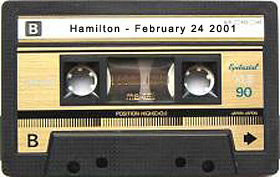
ny2015SOUNDTRACK: RHEOSTATICS-Hamilton ON (February 24 2001).

hamiltonThis is a show that there is no real information about.  In fact, I have to wonder if it is actually from the date that it says because during the set someone (very casually, I think) mentions that their album came out today (it was released on October 23, 2001).  It is also really short (just over an hour) and is clearly not the entire show.  I assume the first half was lost, but it’s hard to know.

Despite the brevity, there is a great sound on the disc.  The first two songs sound amazing.  And “Stolen Car” is scorchingly good.

There’s a funny discussion about the washroom, which turns into a joke that the “washroom rocks.”  And there’s some wonderfully funny “ads” for Snapple, Marlboro “the smoke that hurts,” and even a Gibson “the guitar for depressed musicians.”  “Feed Yourself” is particularly long with lots of chatter in the middle and they joke about Martin playing with “millennium technology,” some gadget that makes his guitar sound different.

“Four Little Songs” has a very funny refrain about Martin’s “device” which they now call the robot dog–there’s even a silly riff at the end.

It’s a great show, even if it is brief and it’s a good collection of older songs (which is weird if their new album came out that day).

[READ: April 21, 2015] “Major Maybe”

This was the second short and breezy story I read this week, which was kind of fun.

This story is so simple, it’s even told quickly, as if the narrator just had to get it out.

“Major Maybe” is the name of a dog in her neighborhood.  She and her roommate Eagle Soars (his real name) are living in Chelsea in New York.  He is a wanna be actor and she helps him with his lines.

One day they were rehearsing in their usual spot in front of their building.  Their building was quite nice, the first floor resident was a therapist and he decked out the front stoop very nicely with flowers and chairs.  As they were rehearsing the red-haried homeless lady came by.  She was known to have good days and bad days  Today was a bad day. (more…)

Read Full Post »

aprilSOUNDTRACK: RHEOSTATICS-The Horseshoe Tavern Toronto (February 16, 2001).

horseshoeThere are seven live shows from 2001 on the Rheostatics Live website.  In this block, I’m going to talk about the first four shows because the final two of the four are drummer Don Kerr’s final shows with the band.

There is a lovely introduction by the club owner, who thanks the Rheostatics for playing there so much.  The sound quality is great and the crowd is really into it.  At one point someone shouts out “Californication” (which is a line from “California Dreamline”) and Martin says that the Red Hot Chili Peppers are playing down the street.  Another funny line is when someone shouts out “Jessie’s Girl” and Dave says that there’s a trend in shouting out bad songs.  Nobody wants to hear the “Rheos do Rick Springfield.”  That’s just bad energy.

“Fat” sounds great and it’s quite a long version.  The vocals for the next few songs are fun.  Martin is crazy on “CCYPA.”  “When Winter Comes” has a great and fun intro.

The notes say that song 12 is “We Went West” but it is actually a cover of a Celtic Blue song  “Heading Out West” with Alun Piggins (from Celtic Blue) on harmonica.  It works well with them.

“California Dreamline” has some funny banter.  Dave says he loves the way Martin says “Sowthern” California.  Martin says English is not his first language.  But that he is wearing an amazing shirt.

They have a lot of fun with “Legal Age Life” which they open with a “pa pa ooh mow mow” refrain and in the middle they throw in some “I Wanna Be Sedated.”  This show also has one of the best versions of “Claire” that I’ve heard.

This is the first version of “Mumbletypeg” that I’ve heard where it includes the spoken word part (like on the record).  And I love that they throw in “PROD” into the end of “Four Little Songs.”

This show was simulcast online (which is pretty high tech for 2001, no?).  You can also watch the simulcast on the Rheostatics live site.

[READ: April 20, 2015] “If You Cannot Go to Sleep” 

I enjoyed that this story was pretty much a fictionalized version of many people’s insomnia.  It opens, “First she tries counting.”  As it progresses through a series of nights, we encounter her fears, both reasonable and excessive.

But interestingly, before it even gets into her dream fears, she has a long unsleeping thought about the difference between working at a discount store and an upscale store–the discount store must be depressing, but the upscale store must be full of insufferable people–what would be worse?.

Then we learn a bit about her life.  She studied French and even lived in Paris for a time. Now she works translating technical manuals and she hates it.  Her husband finally quit the job that he hates–something she hoped he would do for years.  But now that he did that he has moved to France–without her. (more…)

Read Full Post »

harp jan SOUNDTRACK: RHEOSTATICS-CBC Studios (1999, 2000 or 2001).

cbcrheoThis is a hard event to document.  According to the Rheostatics Live website, this show was broadcast on Sonic 102.9 in 2000, but it appears to be a rebroadcast of a live show that the band recorded at CBC2 Studios in 1999 or, possibly, even in 2001 (according to the link to the video below which states Rheostatics CBC In Session October 26 2001 Just Concerts. Vancouver BC Studio 2, although that may just be a cut up version of the audio–so confusing!).

Whatever the case, the sound of this in-studio live show is tremendous.  It is one of the few instances where you can totally hear Dave’s acoustic guitar in the mix.

Kevin Hearn is there too, so they play a number of songs that they might not be able to without him.  And Michael Philip Wojewoda is on drums. (This complicates my understanding of the recording too, since Don left in 2001, but MPW often played with them anyway).

The audio version contains eight songs and two interview segments.  The interviews are funny (of course) and informative (although Tim sounds totally high), but it’s the music which is the highlight.

They play “Wieners and Beans,” “Martin’s Waltz (Blue Hysteria)” and “Kevin’s Waltz” form Music Inspired by the Group of 7.  They play “Easy to Be with You” “Monkeybird” and “Song of the Garden” from Harmelodia and then “Stolen Car” and “P.I.N.” as “new” songs.

The video below (which is the best video version of these recordings I’ve seen) has “Song Of The Garden” “Easy To Be With You” “Martin’s Waltz (Blue Hysteria)” “Stolen Car” and “Wieners and Beans.”  No word where the other three songs went.  But I love watching the video to see the way Martin makes the crazy sounds out of that little Steinberger guitar.

This is the last Rheostatics show I have for 2000.   I’ll be resuming with some shows from 2001, including Don Kerr’s final shows in a few months.

[READ: March 9, 2015]: “Two Parts”

I have only read two things by Dixon–the two McSweeney’s-released books I and End of I.

This story is a reflective look at regrets and decisions. It is told, as you might guess, in two parts.  He asks if he should start with his father or with Lotte.  He decides to start with his father.  He says he was thinking about something and he decided to talk at Abby about it. This framing device is used throughout the story.

The story about his father is from back when he was about ten and his father was about 51.  His father had always been in good health, but he had a temper.  Especially when it came to the narrator.  And while the father never hit the narrator with his hand, he did whack him with a rolled up newspaper. (more…)

Read Full Post »

sardineSOUNDTRACK: CENTENNIAL SECONDARY SCHOOL MUSICAL THEATRE-The Story of Harmelodia (2000).

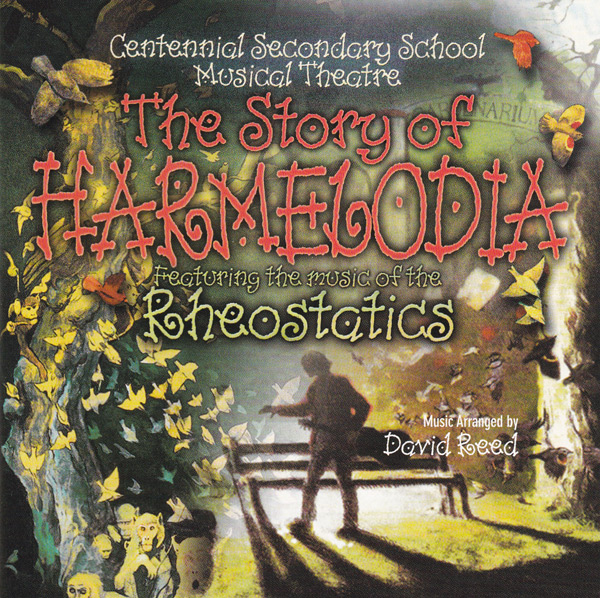
Cover-CSSMT-HarmelodiaAs mentioned in yesterday’s post.  The Centennial Secondary School and Choir released their version of The Story of Harmelodia. This CD (which to the best of my knowledge is no longer available for purchase anywhere) is newly available from the Rheostaticslive website.  While the (very cool) cover is there, there’s no information about the musicians.

The disc is about 35 minutes long and it recreates most of the music from the original CD.  For reasons which I’m sure have to do with rights, they do not include “Monkeybird” (everyone’s favorite song) and the songs about the Wingophone.  Those songs were all written by Kevin Hearn. I’d be very surprised if Hearn didn’t give them the rights to the songs, so there must be something else at play.

They also do not include the narration.  This of course makes the story a lot less clear–although at this point I feel like the songs are just fun and sweet, even if they story is lost.

The school’s version is quite good.  The band sounds great (with a whole host of instruments).  While the opening music on the first track sounds a bit high school bandish (perhaps because it so spare) as soon as the choir kicks in it really ratchets up the quality of the music.  And it stays high throughout.

The choir is outstanding, and the variety of instruments (I can hear all the brass, an autoharp, synths (there’s some fun spacey keyboard sounds on “I am Drummstein”) and some electric guitars) makes for a really compelling collection of songs.

One of the biggest difference is that many of the songs have horns playing the main melodies. “Invisible Stairs” has a flute as the lead instrument.  It’s very pretty and I like that it plays the “twinkle twinkle” melody as a counterpoint to the proper melody. It’s a very pretty version.  I also love the way “The Music Room” came out.  And the mostly instrumental “The Sky Dreamed” sounds really lovely.

I don’t know how many lead singers there are (or what their names are, although judging by the concert, I assume it is the same kids).  The female lead as featured on “Home Again” is great.  I like the male lead a little less.  He sounds a but too stiff to me.  Although I do like that on many songs he gives his own reading of the material.

The final song, “Song of the Garden,” sounds terrific.  I love the way the two singers harmonize and the way they place a cool horns section (which reminds me of The Beatles) as the song trails out.

I am of course curious why the couldn’t release those missing songs.  But I’m more impressed that the school (presumably with different people) performed a stage version of the show in 2004 which was played live in several places.

[READ: December 5, 2014] Sardine in Outer Space 2

Sardine is a children’s book published by First Second.  It was originally published in France (and in French) and was translated by Sasha Watson.  There are six Sardine books out.

This time the inner flap says “No Grownups Allowed (Unless they’re pirates or space adventurers),” and I found that I enjoyed book 2 quite a bit more than book 1. Perhaps the jokes just appealed to me a bit more–there were a number that I thought were very funny.

I enjoyed the double cross (well they pretty much all have a double cross) in The Brainwashing Machine.  But I really got a kick out of The Cha-Cha Fly.  When the fly bites you, you get stupid dance songs stuck in your head.  Nice premise–even funnier that the flies are named Britney, Christina, Justin and Clay. (more…)

Read Full Post »

deafoSOUNDTRACK: RHEOSTATICS-Centennial Secondary School, Toronto, ON, (November 30, 2000).

martin-anthonyYes, the Rheostatics played a show at a high school.  What I love about this show is that the Centennial Secondary School’s band plays along with them.

Why?  because the School band had recorded a version of The Story of Harmelodia and the Rheos came to play with them.  It is amazing what a few extra instruments (and voices) can do to a song.  This show is utterly unique in the Rheos’ live catalog.  And that is apparent right during the first song, “Saskatchewan,” when the school choir joins in on the “Home Caroline Home” refrain–it sounds amazing!

The next surprise comes during the next song, when the school’s horn section plays the riff of “Soul Glue” (and there’s a sax solo too).  The surprises get bigger when they play “Rain Rain Rain” and the band plays the opening drum/handclap melody (that’s never really done live).  They play “Claire” which gets a great treatment from the choir.  This is the first song where I wish the choir was louder–perhaps Tim is too loud on the song?  I wish you could hear the kids doing the “Ba Ba”s more.  Although overall the volume of the band and the choir is just right.

The final huge surprise comes when they play “Shaved Head” and there is flute accompaniment–it sounds tremendous, bringing a totally different feel to the song.

From that point on, they play a bunch of Harmelodia songs.  And they let the school band really shine–there’s guitar solos from the kids, there’s vocals from Tim Crawford on “Monkeybird” (and he holds a note for 25 seconds!).  Lauren Moorehouse sings lead on “Loving Arms,” and Janine Plott (I don’t know how to spell any of these kids’ names, sorry guys), sings on “Home Again.”

There’s a fun addition of accordion on “What’s Going On?” and more flute on “Take Me in Your Hand.”  The final song, “Legal Age Life,” brings back all the kids for various solos–guitar, sax and the like.  It’s a super fun night.

The more I thought about this the more emotional I got about it.  How cool to have a high school band do a version of your record.  how cool to then be the band that shows up to play with these kids.  And imagine if you were in the school band and really liked the Rheostatics ahead of time, and here they are playing with you.  What a cool night.

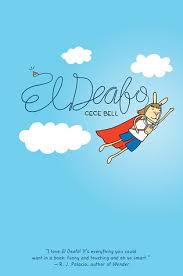
[READ: March 11, 2015] El Deafo

Sarah brought this home and then Clark read it and now I read it (Tabby, who is reading like a fiend will likely read it next year).  And we all really enjoyed it.

It is the true(ish) story of Cece Bell who is El Deafo!  Okay, she is actually a woman who lost the majority of he hearing at age 4 (circa 1976) from spinal meningitis (which is really scary).

She could hear sounds (if they were loud enough) but couldn’t really understand words.  The doctors outfitted her with a box with cords (that fit into her ears) and after adjusting the knobs, she is able to hear.  Which is pretty awesome (but she is very self-conscious about those cords).

And indeed being self-conscious is one of the main themes of the book.  I assume that anyone wearing this strange contraption would feel awkward and ungainly (especially in the mid 1970s).  But Cece was extremely anxious about it.  She believed that everyone was staring at her.  And they probably were, although more out of curiosity than malice, I’d imagine. (more…)

Read Full Post »

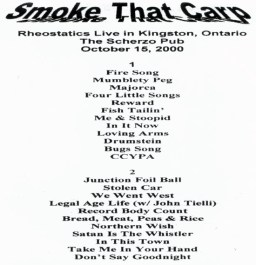
harp febSOUNDTRACK: RHEOSTATICS-Scherzo Pub, Kingston, ON (October 15, 2000).

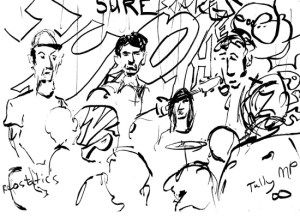
rheoscerzoThis show has some fun art work to go with it.  The notes say:

“Rare original drawing by local artist “tully” drawn during the october 15 2000 rheos gig at the now defunct scherzo pub, kingston, ontario. the story goes that “tully” goes to shows, does a drawing of the band, and just leaves it on a random table for someone (like me!) to find it. i actually found it on the floor!”

The other joke on the set list over here is the Smoke that carp joke which is from Martin talking about something before the set even starts.

They play a lot of songs from the then unreleased NotSS.  The version of “Four Little Songs” is crazy fun–lots of wildness, and a superfast ending.

In addition to playing “Majorca” they play two songs from Introducing Happiness and then talk about Martin’s guitar with the maple leaf on it.  They challenged Gordie Johnson from the band Big Sugar to put a leaf on his guitar. Dave says that not only did he put the leaf on his guitar (on the back) but he plays O Canada at every show now.

In the middle of “Junction Foil Ball” Dave talks about how much he struggled to get the riff (earlier Martin said Dave was very proud of the riff).  It’s a very lengthy talk with demonstration about the riff–quite amusing.

The end of the show has what sounds like an acoustic unplugged set.  Not quite acapella, but Don is only playing the tambourine.  It sounds like perhaps they are in the crowd or near the crowd or something.

Srheoscerzo2o for “Record Body Count,” the crowd sings along beautifully and “Bead, Meat, Peas and Rice” is also done in this format.  For “Northern Wish” Martin say he’s going to start it acoustic while the rest of the band goes back to their instruments.  It’s a great version of the song. In fact all three are wonderful, and it’s cool to hear them sounding so different.
There’s another long chat from Martin about Burton Cummings and how they saw him playing a casino.  It’s very funny.  Then he insists on a “golden drag” on his cigarette before starting the next song.

The disc ends oddly with “Take Me in Your Hand” also done in that acoustic format as the earlier songs–which makes me think it should have been earlier and was placed at the end by mistake.  It sounds great either way.

This is definitely a great show and one for any Rheos fan to enjoy.

[READ: March 5, 2015] “Family Life”

I had recently read something about Zambra that made me want to read him, and then, here he was in Harper’s.  I like serendipity.

This story was translated by Megan McDowell, and I gather is part of a collection of stories called My Documents which will be out soon from McSweeney’s.

This story is a simple one, although it has an unusual beginning.

Martín is headed to a house for a job.  He is to house-sit for a family while they are away for four months.  I enjoyed the way the family members were laid out for us to meet: in alphabetical order: Bruno, the husband, Consuelo the wife (well, actually not the wife, because they never married although they act like a married couple) and Sofía their daughter.

We learn that Bruno sand Martín ‘s fathers were cousins.  Martin’s father has just died.  They barely know each other, although they did know each other when they were kids.  But Bruno tries to strengthen this familial connection, because it builds trust.  Otherwise they have a stranger in their house for four months.

When Martín arrives Sofi runs past him (“These days kids don’t say hi”) chasing the cat Mississippi.  Consuelo is friendly and gives him instructions, which largely entail looking after the cat (who has a swinging door which is open all the time).  When Martín looks at a large hour glass, Sofi runs up and says it last 12 minutes.

To pass the time Martín plays Sofi in chess.  And when they get bored, he changes the rules so that the object is to get beaten, which Sofi enjoys more.

While Sofi is going to bed, Martín and Bruno talk.  Bruno suggest that he “use the time to have ago with one of the neighbors.”  Martín thinks (but thankfully doesn’t say out loud) that he’s like to have a go with Bruno’s wife.

After they leave, Martín discovers a photo of Consuelo and puts it up on the wall.

Martin plans to try a different route every day (different stores, different roads) so as not to make an impression on anyone in the town. But one day Mississippi doesn’t return from his nightly stalking.  Two days go by and Martín grows concerned. So he puts posters up around town.  But when he emails Bruno he doesn’t say anything.

A few days later he sees that someone has posted lost dog posters up over each one of his lost cat posters.  He calls the number (while drunk) and talks to Paz, the woman who put up the posters. He complains about what she has done. The next day she does around moving her posters off of his.  He gets some courage and goes to talk to her about their lost animals.

A week later he sees a dog that looks like hers and he calls her.  They go looking for the dog but don’t find it.  Then, after a month, Mississippi returns. He is beaten up , bloody and gross.  Martín takes him to the vet and gets medicine that he must apply to Mississippi every night.  When Paz calls him, he tells her about the cat and she comes over.

Paz scrutinizes his house–the photo of Consuelo–and he creates and elaborate fiction about his former life with Consuela and their daughter.  How they are broken up and he is reluctant to date.  Later, they have sex and start seeing each other every day.

Things are going quite well, although of course, it is all based on a lie. And the time of Martín’s departure (and Bruno’s family’s return) is coming up.  But the sex is great and he really like her.  She even invites him to go to a wedding with her.

What will happen when it’s time for Bruno and Consuela to return?

This is an unusual story (I guess) to start with because I’m not sure if Zambra’s other fiction is anything like this.  This story was erotic and a bit salacious and was predicated on a lie.  I enjoyed the idea of the main character being someone else and then realizing that he could be that person forever.  (Even if that’s not an original concept).  But Zambra’s handling of the story was really good and I’m interested to read more from him.

Read Full Post »

harp febSOUNDTRACK: RHEOSTATICS-Commodore Ballroom, Vancouver, BC (August 18, 2000).

commThe band went back to the West Coast again (man, they’re everywhere).  They must have played a few shows out there, but this is the only one we’ve got. It’s over two hours and the sound is amazing (thanks so much for soundboard recordings).

Michael Phillip Wojewoda is with them on this leg, playing keyboards.  Which allows them to open with “Monkeys Will Come.”   This is the only other place I know of them playing it after Canada Day.  The recording quality is much better than the Harbourfront show so you can really get a good sense of the song.

Tim Vesely gets two songs in a row with “Remain Calm” and “We Went West” (which they have been extending to nearly 7 minutes).

When they play Satan is the Whistler, Dave says they’re not welcome back in Whistler anymore.  The crowd is rowdy and fun, but at one point someone shouts out for a moment of silence for the Russian Sub (I had to look this up, it was the Kursk disaster).  Dave says, everyone prays in their own way.

“Horses” continues to throw in the “Still Waiting” section from the Talking Heads during the middle improv.  And “Dope Fiends and Boozehounds” has a drum solo and an interesting synth part, along with a very brief coda of “Alomar!”

The set has a weird dancey bit at the end, which seems like maybe the songs are out of order.  It’s hard to be sure, but the set is great nevertheless.

One programming note is that the set list states “RDA” but it’s not.  It’s actually “Song of the Garden.”

[READ: March 5, 2015] “The Moronic Inferno”

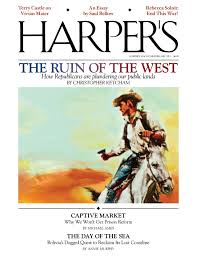
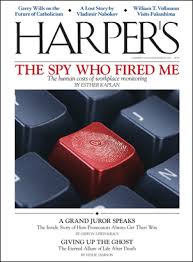
As I had done with the New Yorker, I had also done with Harper’s.  Namely, I had put off reading several months worth of issues.  So I’m doing a run through of the last eight months or so.  The good news is that Harper’s is a monthly, so there’s a lot fewer issues to worry about.  Although I do find that I typically write about three or four pieces per issue.  The February 2015 issue had two worthy pieces.

This is an excerpt from Revulsion: Thomas Bernhard in San Salvador, translated by Lee Klein.  It is described as fiction, although Moya appears to be a character.

I have no sense of what the full book is like, but this expert (which is barely a whole page) is one long paragraph with the character of Vega ranting at Moya.  The rant is all about how horrible San Salvador has grown.   (more…)

Read Full Post »

harp marchSOUNDTRACK: RHEOSTATICS-Call the Office London, On (August 11, 2000).

calltheofficeCall the Office sounds like a great live venue.  It sounds small and intimate and, for this recording anyway, the sound quality is great.

The band is in great form with a ten minute version of “Fat.”   Then there’s a bunch of new songs: “In It Now” (the first time I’m aware of them playing it), “CCYPA” and a great version of “The Fire.”

Then they jump back to an old song and play “Torque Torque” with a very funny introduction about how they wrote this back in the early 60s and that it out-dorks the Doors (the Doors had no bass player).  Dave also says they’ll never play Full Moon Over Russia because it’s too hard.

There’s a lengthy introduction to “Satan is the Whistler” in which Martin tells about writing it–how it was originally going to be about Bigfoot (he used to read Bigfoot books as a kid) and the scariest thing about the Bigfoot stories was when people heard whistling.  The intro devolves into some funny talk about Whistler, the city, and extreme sports.  Someone eventually winds up describing the song as Ian Anderson skiing.

There’s a sadly aborted “Junction Foil Ball.”  Not sure if they just never played it or if there’s a problem with the recording.

There’s also an “off color” joke about Michael Jackson and Bubbles and Dave teases the jokester (Don Kerr?) saying that a guy with neck beard shouldn’t make off color jokes.

“Feed Yourself” a song they don’t play often enough sounds great here with some awesome soloing chords and effects in the middle.  And “Legal Age Life” also has some funny silly parts in the solos.

“Horses” (which the fans have been cheering for all night) sounds fantastic–a great version of it.  The middle section has Dave talking and ranting (all with his voice echoed).  It’s quite intense.  As is the final “Moon” high note at the end of “Dope Fiends and Booze Hounds” which they cap off with another fast run through “Satan.”

As I said this is a great sounding bootleg (and the notes on the site agree: “This is one of the best sounding Rheos boots I have heard. Listen to Don’s drumming. It is awesome. I loved seeing him play.”

[READ: March 2, 2015] “No Slant to the Sun”

I have read so many stories by Boyle, and they are all so very different that I never really know what to expect–or even where they will go.

This story begins with the title–“there as no slant to the sun–it was just there, overhead.”  It is about a man, Sten, and his wife Carolee on vacation.  They are on a cruise and are currently taking a day trip to an island garden path (although he seems unsure where they are–not Mexico or Guatemala or Belize–somewhere with a lot of rum where they listen to reggae).

They, along with everyone else, are on a bus, being driven maniacally by a man wearing earbuds (listening to reggae) as he flies over potholes and around harsh left and right turns.

Sten refuses to drink the water here even though everyone else does. And despite his thirst he sticks only to the rum based drinks (and so is a bit drunk and parched).  He will only drink bottled water, but he forgot his bottle.  When Carolee falls asleep he roots through her purse for her water (which he then drops and it rolls under another seat).

All the people on the bus (mostly older retirees) are unhappy with the driving.  Finally Sten gets up to say something to man and even flicks out his ear buds.  But the man ignores him, clearly disgusted by the white people on the bus.  He grudgingly says they can have a restroom break in five minutes, although it’s more like 15 before they get to the site of their hike–something that Sten now regrets given the heat and his thirst.

As soon as they settle in, a car roars up next to them and some local boys get out.  One has a gun.  And the boys start demanding everybody’s wallets and jewels.

It’s then that we learn that Sten was once in the military.   And he has to decide if he should react to this insolence.

The story went in a direction I absolutely did not expect.  I enjoyed it, especially the way the ancillary characters react to what happens.  I never intentionally seek out Boyle, but I always enjoy his stories (and I am astonished at how prolific he is).

Read Full Post »

harp marchSOUNDTRACK: RHEOSTATICS-Cowichan Theatre, Duncan British Columbia, (January 23, 2000).

cowichanWhoops, slightly out of order here, but no one’s counting.

This third night in BC was at the Cowichan Theatre.  This night was held as a benefit for the Women’s Coalition Institute’s campaign against GM food.  Luke Doucet’s band Veal opened, there were families and young kids in the crowd and Dave even talks about buying some art that was for sale.

Amazingly, the band plays nine songs that they hadn’t played the two previous nights.  The only bad thing about this show is that 6 songs are missing from the posted recording (including a night-ending “Shaved Head.”)  But the set still clocks in at an hour and fifteen minutes.

I found the audio a bit muffled on this recording.  In fact, for the first few songs I thought Martin was hard to hear.  Especially on “Stolen Car.”  But he seems to get louder as the show goes on.

There’s a joke about Martin’s shirt–(like he took Greg Keelor’s shirt (Keelor was in Blue Rodeo).  Martin admires his “cowboy look” and jokes about big city folks.  There’s also a funny bit later about the Beatles where he seems to forget George Harrison’s name and says he was going to call him “Gino.”

Martin was still experimenting with the slower opening of “Northern Wish” here, which sounds cool.  “Claire” sounds great (it’s the first time they played it in the three nights) although I wish the quality were a little better.  There’ s great noisy solo inserted into it as well.  And “Self Serve Gas Station” totally rocks.

It’s a shame that “The Wreck of the Edmund Fitzgerald” was cut off, along with the end oft he set but it s a good sampler of some different songs.

[READ: March 5, 2015] “The Man Stopped”

The introduction to this story says that it may be the last complete unpublished short story by Nabokov.  It was written in 1926 and is believed to be a parody of the then current crop of Soviet writers who wrote in an ornamental pseudo folky style.  The story is full of “rustic idiom” which has been translated to very rough English idiom by Gennady Barabtarlo.

Given that Barabtarlo describes the story as a parody I expected it to be funny, but to my ear it isn’t.

Indeed, it’s a very simple story of a man on a journey who is constantly set upon (verbally) by the locals. (more…)

Read Full Post »

harp marchSOUNDTRACK: RHEOSTATICS-Harbourfront Toronto, Canada Day (July 1, 2000).

harbourThis recording comes from an outdoor venue in honor of Canada Day.

As I understand it, the band was asked to write a new song for the Canada Day celebration and they came up with “When Monkeys Comes.”  It opens with a kind of disco version of “Also Sprach Zarathustra” and then morphs into a jamming Rheos song.  It doesn’t sound awesome on this mix (although the rest of the disc does), so it’s hard to get a real sense of what’s happening.  It feels a little meandering.  And since it doesn’t really appear anywhere else (except for an upcoming show), it’s hard to really parse it.

This show is interesting in that the band doesn’t talk very much–usually they’re very chatty.  Dave Bidini says that since their set is short (barely over an hour), they didn’t want to talk to much, so it’s all about the music.  They play the first seven songs without saying a word in between songs.  Also interesting is that those first seven songs are all new–not yet recorded for the Night of the Shooting Stars album.

There is a drum machine or at least a lot of electronic drumming on a couple of songs, which I believe are supplied by Michael Phillip Wojewoda, erstwhile extra member of the band for years, and official drummer in a few months.

After playing the new songs, the band does play some older songs.

They are still doing songs from Harmelodia (“I Fab Thee” and “Song of the Garden”) and this crowd, which I assume is all ages, is probably a good place for them.  They also play “The Ballad of Wendel Clark” which is super fun (and not played that often).  There’s some great versions of “Stolen Car” and “Self Serve Gas Station.”

It’s a good set (with good sound quality), especially if you like NotSS.

[READ: March 6, 2015] new movies

I rarely talk about movie or movie reviews here.  But since I like Galchen, and I’ve mentioned most of her writings so far, it seemed like a worthwhile inclusion.  And she’s talking about Paddingon, a movie I’d like to see

What I liked about Galchen’s review was that it’s not so much about the movie (which she likes and says is silly and smart and witty and pretty) as it is about the story of Paddington.

I don’t know the plot of the movie (or the books, actually, although I do know the premise of who Paddington is), but it sounds like a fun farce, with Hugh Bonneville (Mr Crawley on Downton Abbey) dressing as a cleaning lady to aid Paddington on “an essential fact-finding mission.”

But Galchen talks about how the movie (like the book by Michael Bond) pays attention to money (the cost of marmalade for instance) and to the African-Caribbean immigration to London in the 1950s.  Paddington is from darkest Peru (evidently Bond was going to have him be from Darkest Africa but there are no bears there).  And its this immigrant story which the movie focuses on.

Galchen also talks about how characters like Paddington (or Curious George or Pinocchio) are stand ins for children. But if they were actual children in the stories we would be repelled by them.

It turns out that Galchen has visited darkest Peru on a research mission.   They were checking fecal samples of the native chickens–looking for antibiotics.  They also conducted a kind of socioeconomic census of the region, which was, of course, ridiculous as none of the natives had much of anything.  Although she notes that the most common name for boys was Israel and the most common among girls was LadyDi.

This article didn’t make me want to see the movie any more than I do (because I am looking forward to it already), but it was certainly an interesting perspective and certainly one I wouldn’t be reading in Entertainment Weekly.

Read Full Post »

« Newer Posts - Older Posts »