 SOUNDTRACK: OS MUTANTES-Fool Metal Jack (2013).
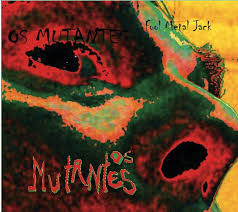 I first heard this album streaming on NPR. I really enjoyed it and was surprised by how diverse and yet still kinda 1970s hippie-feeling it was.
I didn’t know anything about the music of Os Mutantes before hearing this disc. In a nutshell (and the details seem pretty complicated), they released 6 albums from 1968-1974 and then broke up. They reunited in 2009 and this is their second album after reuniting.
I don’t know what any of them did during the intervening years, but it is clear that the psychedelic vibe they explored the first time around never fully left them. Because even though there are rocking numbers, there are plenty of groovy organs and songs about love on the disc. And yet the first songs I heard from the album were really quite rocking, so I was surprised by the mellow vibe as the album progresses.
There’s precious little information about the record on the record jacket, but I do know that Sérgio Dias wrote all the music and is the lead singer. The disc opens with a kind of introductory song, “The Dream is Gone.” It has a slow opening with cool bass lines and Dias’ voice which is soft and kind of worn sounding. There are some cool electronic effects sprinkled around and big harmonies. This leads to the second song, the stomping anti-war track, “Fool Metal Jack” (which I talked about here). It’s got a big fat bass and menacing riff (as befits a war song). The song is graphic and ugly (with a loud cough in the midst of a verse). It’s followed by the big old sloppy sounding rocker “Picadilly Willie” with big 70s sounding vocals (I’ve mentioned before that it sounds like Frank Zappa song to me, and it still does). These two songs are so loud and noisy they really belie the psychedelic vibe that the rest of the disc presents.
“Gangjaman” has a reggae feel (with a big round bass) and fun backing vocals. While “Lookout” has a kind of Santana live at Woodstock vibe–a slinky rocking guitar and big chords. There’s also some traditional (I assume) Brazilian native singers. “Eu Descobri” is sung by a female vocalist (in Portuguese I assume) it is a pretty, slinky song with flutes and a cello and echoed vocals. It hearkens back to the late 60s but still sounds contemporary.
“Time and Space” has more big bass (the bass really sounds great on this disc), but this one is a slow acoustic umber with excellent harmonies. I love the layered vocals that reminds me of good prog. “To Make It Beautiful” is an absolute hippie track with lyrics like: “I need to create love with you my love.” It has his great falsetto and buzzy guitars. It is so far away from the early rockers and yet to me the album doesn’t feel disjointed. “Once Upon a Flight” is a synthy/guitar rocker, but in a very 70s style. It’s also got a big cello solo at the end. “Into Limbo” is a jangly slow guitar song with Dias’ voice sounding great.
“Bangladesh” has a long acoustic guitar intro with a very middle eastern feel. By the middle it turns into a kind of prayer with a repeated chorus of: “Hare Jesus Hare Buddha Hare Judas Hare Rama Hare Krishna Hare Lucifer.” The final song “Valse LSD” is a complex acoustic song with male and female vocals. It’s quite pretty. It doesn’t really feel like the end of the disc (I would have ended with “Bangladesh”), but it’s a good summary of the album as a whole.
Since I am unfamiliar with Os Mutantes’ earlier work, I can’t really say how this fits into their discography, but I think this is just a great album and I’m looking forward to hearing more of their earlier works.
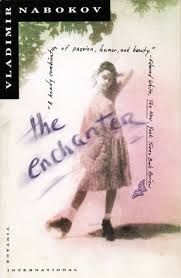
[READ: October 2, 2014] The Enchanter
 I have had Nabokov on my list of authors to read for a long time. I have read and enjoyed a few of his books and planned to read his oeuvre at some point, just not quite yet. And then, as serendipity would have it, I stumbled on a book of his novellas (the Penguin classic edition) and decided to read them. Because they aren’t really meant to be taken as one item, I’m going to mention them individually.
The Enchanter was Nabokov’s final work written in Russian. It was never published during his lifetime. The Notes to the story in the book suggests that Nabokov had a vague recollection of the story (with many details incorrect), but that he believed he discarded the original version when he moved to America. He evidently found it after publishing Lolita, but did not feel compelled to publish it. It was his son who translated and published it after his death.
The Enchanter is something of a precursor to Lolita in that it involves a man who is obsessed with adolescent girls. What separates this from Lolita (although there are many similar plot contrivances) is the mental state of the protagonist. He is disgusted by himself. He knows what he does is wrong, he even imagines himself in animalistic ways. And yet he cannot help himself. (This is not to say that that is not present in Lolita, just that it is more or less the focus here). (more…)






 I Just Read About That...