 SOUNDTRACK: ULVER-Themes from William Blake’s The Marriage of Heaven and Hell (1998).
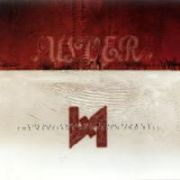 Suffice it to say, if it were not for this album I wouldn’t have read this piece by Blake. I have been aware of it through the “doors of perception” quote that created the band name The Doors, but I never had any compelling reason to read it before.
Of course when I first listened to this, I had no idea that it was literally the entire work of Blake’s piece set to music. And I had no idea that there would be so many diverse styles of music on the album. I’m going to focus more on the music, as I’ll address the “lyrics” later.
The first song starts out in a kind of synthy way–maybe early Depeche Mode. But it quickly become more sinister, with a heavy guitar section and then a spoken word over industrial keyboards like early Nine Inch Nails. Track two, simply called “Plate 3” is a mournful guitar solo which plays behind a woman reciting plate three. Strangely enough, this plate is split in two parts where Blake references the bible and so Ulver end the spoken part in the middle but keep the ominous music going for the final two minutes of the track. The next track picks up with “Plate 3, Following,” a slower piece with creepy echoey male vocals that echo the female lead.
“The Voice of the Devil, Plate Four” is a very delicate guitar part. The female voice introduces the piece and the male voice recites the statements . It;s the most easily understood of all the tracks (the vocals are crystal clear). When the parts are done, the song turns in to a heavy metal guitar solo over some heavy chords. It’s a really great mix. “Plates 5-6” is also a very clearly spoken/sung track. Over a classical guitar with occasional heavy beats, the voice narrates (with amusing mispronunciations (there are many thoroughout the piece, but hey English isn’t their first language)).
“A Memorable Fancy (Plates 6-7)” is the first of five fancies. This one has a very electronic feel (later period Nine Inch Nails). This one even creates its own chorus by repeating “fires of hell” where the words do not belong. “The Proverbs of Hell” is probably the most complex and multifarious musically. It goes through many different musical and vocals styles. The opening is barely audible while later parts are spoken clearly. Other lines are hidden under a fog of noise. Musically it’s very engaging, but it’s a shame to miss out on the poetry without a lyric sheet.
“Plate 11” also opens virtually inaudibly, with a crazy echo placed on the female vocals. Half way through the voice become clearer and the music, which was quiet and mellow, picks up, but retains the simple melody it had. “Intro” is an instrumental, an odd thing to include if they are following the book so specifically, as there is no intro. It is simple, repeated waves of chords which grow louder for 3:30. It ends with some maniacal drumming . However, it is a nice breather as we head into “A Memorable Fancy Plates 12-13,” which opens with a very slow piano. It turns into a largely drum-based song with a clear spoken word. Until about half way through when the voice is heavily distorted until the end.
“Plate 14” is a percussion heavy electronic track with heavily distorted vocals (this is where “the doors of perception” bit comes from). It leads to “A Memorable Fancy (Plate 15)” which opens with more low rumblings (like “Intro” above). When the vocals come in, after 3 minutes, they are distant and tinny, but very clear.
Disc 1 (did I mention there were two discs) ends with “Plates 16-17.” It opens with quiet music that slowly grows louder and more electronic. The vocals are echoed and distorted and hard to understand. The end of the track picks up the electronic beat for about a minute.
Disc two opens with the eleven minute “A Memorable Fancy (Plates 17-20)”. It opens with a cool beat and a dark tone with vocals that are mostly understandable. After a couple of minutes, the song settles into a late period Depeche Mode style–distorted guitars and vocals that sounds not unlike Dave Gahan’s. By the end, it’s a pretty standard heavy metal chugging guitar (with a simple but interesting solo).
This is followed by another “Intro,” this time a rather pleasant guitar solo over picked guitars. “Plates 21-22” is quite enjoyable as the vocals are clear and emphatic over a standard heavy metal song. It feels like comfort food after all of the different styles of the disc.
“A Memorable Fancy Plates 22-24” has a great weird keyboard style (kind of Marilyn Manson). The penultimate track is another “Intro.” This one has some swirly minor-key guitars that sound a bit like the guitar outro to Rush’s “Cygnus X-1.” It goes through several iterations before ending in distorted waves that lead to “A Song of Liberty Plates 25-27”. There are three guest vocalists on this track: Ihsahn and Samoth from Emperor and Fenriz from Darkthrone. The interesting thing about this is that Garm (the male vocalist on all the tracks) has so many different styles of singing/speaking throughout the album that it’s hard to even notice that there are guests.
It start as mainly electronic piece with heavily distorted vocals (Ihsahn sounds like he is being strangled). In the second part, the vocals are clearer. The drums gets louder (sounding like the Revolting Cocks, maybe). By the third part (Fenriz) the song turns into a guitar solo and the style of recitation reminds me of Allen Ginsbregr’s Howl. His section ends with a distorted voice chanting the final lines and then twenty minutes of silence (the track is listed as 25 minutes, but there’s only 5 minutes of song and then 30 seconds at the end). The final “Chorus” of the book is pretty well inaudible.
Despite the complexity of the album and the hard to follow lyrics and all of that, the entre work is really something. It is powerful and complex and runs through so many wonderful pieces and movements. I have no idea how to classify it as it has pieces of metal and electronica as well as classical. Perhaps it’s safe to just call it a soundtrack.
I’ve spent a lot of time talking about this CD, but I barely scratch the surface of what could be said about it. Check out this amazing review from Encyclopaedia Metallum who go into wonderful depth and a thorough comparison of the music to the text.
[READ: November 27, 2011] The Marriage of Heaven and Hell.
The Blake piece is available online in several places, although I got my copy from the library. Mine contained several critical essays which I looked at briefly but decides they simply weren’t all that compelling, especially since Blake’s work (aside from details that simple footnotes might hep to clear up) is pretty understandable.
In total, Blake’s work is 27 plates long. Each plate is hand written (in a fancy script) and many have illustrations (also hand drawn and colored). There are allusions to many different things and it helps to be familiar with the Bible and with Emanuel Swedenborg’s theological work Heaven and Hell which is directly referenced several times. Indeed, this work is clearly a response to that one; the opening states “and it is now thirty-three years since its advent” when Swedenborg’s book was published 33 years before Blake’s.
The gist of Blake’s piece is that God did not intend for man to separate the sensual and physical from the spiritual and mental. It is basically a plea to hedonism, although not even seemingly to excess. More like an “if it feels good, do it” attitude. And he lays out these ideals pretty clearly in many of the passages. True, there are many passages that are inscrutable (like the crazy opening–don’t be put off bu Rintrah), but when he gets to his main points, he is quite clear. Blake attacks established religion but does not condemn God or endorse atheism. So we get quotes like this:
“Attraction and Repulsion, Reason and Energy, Love and Hate, are necessary to Human existence.
From these contraries spring what the religious call Good & Evil. Good is the passive that obeys Reason. Evil is the active springing from Energy.
Good is Heaven. Evil is Hell.” And shortly after: “Energy is Eternal Delight.” Blake cites Paradise Lost as a history of the separation of these two ideas and concludes “that the Messiah [Reason] fell, & formed a heaven of what he stole from the Abyss.” (more…)
Read Full Post »
 SOUNDTRACK: JOHNNY CASH-“Hurt” (2002).
 I had never heard the Johnny Cash version of this song, but since it was mentioned in the article, I wanted to check it out. I’ve never been a huge fan of Cash. I like some of his stuff, but I’m not on board with the whole iconic man in black thing. But I understand his tough guy schtick.






 I Just Read About That...