Feeds:
Posts
Comments

Archive for the ‘Neil Peart’ Category

SOUNDTRACKRUSH-“La Villa Strangiato” (from Rush: Beyond the Lighted Stage) (2010).

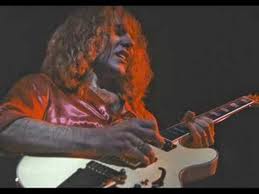
In the bonus features of the DVD for Rush: Beyond the Lighted Stage, we see (in addition to some awesome live footage of Rush in 1974 with original drummer John Rutsey) a fantastic live clip of Rush playing “La Villa Strangiato,” one of the best instrumentals around.

The camera angle focuses mainly on Alex Lifeson.  And man does he rock!

It’s common knowledge, even among Rush haters, that Geddy Lee and Neil Peart are (or at least were) always at the top of the list of “Best” bassist and drummer respectively.  And yup, they are pretty amazing.  But this has always left Alex in the shadows.

Admittedly, there are thousands of great, amazing, ear melting guitarists.  And, typically, the bassist and drummer are kind of dull, so it makes sense that Alex’s playing is in the shadows of the other two.  But I fear that he is often labelled as just not very good.

This video should totally prove that suggestion incorrect.  He plays quickly and with amazing accuracy, in a multitude of styles.

And speaking of the movie, I always wondered if their families minded that Alex and Geddy changed their names for the band (it’s never addressed in the film). It seems like a weird thing to have done circa 1974 in Canada, although Kiss did the same thing at the time in New York (removing the Jewishness of their names).  I just love the name Živojinović, and it’s a shame it’s not better known.  (Huh, although Wikipedia tells me that Lifeson is a sort of literal translation of Živojinović.  Who knew?)

[READ: July 29, 2010] “Grokking Rush”

Since Rush has been everywhere lately, I figured I’d mention this recent article in The Believer.  There’s nothing terribly new in the article.  In fact, it seems like something of an introduction to the uninitiated, giving a basic history of the band and their lyrical themes.

The only thing I didn’t know, which is teased out in the subtitle, was that so many academic papers have been written about the band. Dissertation titles include “Permanent Changes: Rush, Musicians’ Rock, and the Progressive Post-Counter-Culture” and “Grand Designs: A Musical, Social and Ethnographic Study of Rush.”  They have also been written about in The Journal of American and Comparative Cultures and Popular Music and Society.  And, they are the only band ever to be cited in the Journal of Ayn Rand Studies. (more…)

Read Full Post »

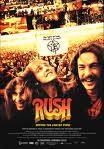
[WATCHED: July 11, 2010] Beyond the Lighted Stage

I had heard about this film around the time that I read .  I was pretty excited about it, and then evidently everyone I know went to the TriBeCa Film Festival and saw it (except me).  And then everyone saw it on VH1 (except me), so I bought the DVD instead.

This film is really fantastic.  Obviously, it helps if you’re a Rush fan, but Geddy and Alex in particular are funny and interesting (even if they think they are boring).  And the film is expertly edited.  They cover 40 years of Rush’s history in 90 minutes.  This leads to a rather cursory look at their history, so the film doesn’t get mired in details, but there are tidbits of fun for die-hards. (more…)

Read Full Post »

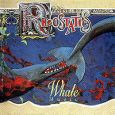
SOUNDTRACK: RHEOSTATICS-Whale Music (1992).

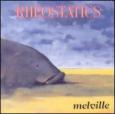
The Rheostatics are from Etobicoke Canada.  Their second album was called Melville (named after a town in Saskatchewan, but it has a whale on the cover so…).  Their third album (this one) is called Whale Music (inspired by the novel by Paul Quarrington).  When they made a film of Whale Music, the Rheostatics were asked to make the soundtrack for it, which they released as Whale Music.  So, the band have 2 albums called Whale Music and one called Melville.  Perfect soundtrack to Moby-Dick.

The album is chock full of all kinds of music: country tracks, folky tracks, metal tracks, and hooks galore.  And it’s all wrapped up in the oddity that is the Rheostatics.  This album features guest spots by the Barenaked Ladies and Neil Peart as well as horns, strings, spoken word parts, and “power tools”.

“Self Serve Gas Station” is a great opening.  It begins with swirling guitars and a beautiful solo (Rheostatics guitar lines sound so elemental as to seem like they’ve always been around).  But just as the vocals begin, the song becomes a sort of country track: a folkie song about adolescnece.  But it returns to a good rocking (and falsetto fueled) rock track.

“California Dreamline” is a wonderfully weird track, with more gorgeous guitar melodies.  It also has a disjointed section with squealing guitars.   While “Rain, Rain, Rain” opens with a lengthy percussion section (played by Neil Peart of Rush) with a weird time signature.  It’s a fun singalong.  “Queer” meanwhile has some great chugga guitars that turn into a rocking tale of an ostracized brother (and features the great line: “But I wish you were there to see it/When I scored a hat-trick on the team/That called you a fucking queer.”

“King of the Past” is another great track, with a wondrous string sound near the end.  It’s a gorgeous song with (again) different sections conveying shanties and jigs (and you can dance to it).  Like Moby from last week, Rheostatics, also bust out a fast metal track, but this one works well: “RDA (Rock Death America)” has a major hook and name checks everyone from The Beatles to The Replacements.

“Legal Age Life at Variety Store” is a great folky singalong (and features the piercing harmonies of Martin Tielli).  “What’s Going On Around Here?” is the most traditional song of the bunch, a poppy little ditty which avoids complacency with a rocking coda.

“Shaved Head” is a moody piece, wonderful for its roller coaster sensibilities, which is followed by the beautiful Tim Vesely sung ballad “Palomar.”  This track is followed by the humorous (but serious) shouted-word piece “Guns” which also features Neil Peart.

“Sickening Song” is an accordion based shanty song.  Followed by another pretty, poppy-sounding track, “Soul Glue.”  Drummer Dave Clark sings “Beerbash,” an upbeat song.  And tye final track is the epic, “Dope Fiends and Boozehounds.”  It opens with a beautiful acoustic intro and a wonderfully catchy wheedling guitar solo.  It ends delightfully: “Where the dope fiends laugh And say it’s too soon, They all go home and listen to
The Dark Side of the Moon.”

I had been listening to the band live a lot recently, and they play these songs a lot.  So it was quite a treat to go back and hear the original with all its full instrumentation.

[READ: Week of June 14, 2010] Moby-Dick [Chapters 62-86]

I never thought I’d ever say this, but I really enjoyed Moby-Dick this week.  So far, these twentysome chapters have been my favorite (even the gruesome whale sections), there weren’t any chapters that I thought really dragged.  So, good for me!

This week’s read begins with Ishmael stating that harpooners should not have to paddle and then be expected to harpoon as well.  They should save their strength for that last, all important act.  And that seems logical to me, although one also expects that the harpooners would feel kind of bad while everyone else is paddling. (more…)

Read Full Post »

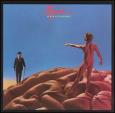
SOUNDTRACK: RUSH-Hemispheres (1978).

Or maybe this is my favorite Rush album.

And what’s not to like?  A naked man on the cover, a 20 minute song (in 6 parts (which is a sequel to a previous song!)), and a 9 minute instrumental.  It’s prog rock heaven.

The “title” track is a continuation of a song from the last album (and so is called Cygnus X-1 Book II; Hemispheres)).  It’s a thoughtful look at balancing the two halves of the brain: love and reason.  In true epic style, the forces are represented by Apollo, bringer of Wisdom and Dionysus, bringer of Love.  Apollo teaches the people how to fend and care for themselves.  They’re thrilled and delighted with themselves until they feel kind of empty inside.

Dionysus arrives: he teaches them love and music, dancing and drinking.  And they embrace this wholeheartedly.  But this leads to cold and starvation.

And so, as is natural, the people were split with the two sides coming forth [hey this sounds familiar].  And of course, they fight each other.

It gets a little confusing from there when the spaceship from Part 1 arrives and after telling his story of going through the black hole it unites the fighting forces (You can also hear musical snippets from Part 1).  And yet, musically it works wonders.  The epilogue is a peaceful, well-written acoustic bit that sums up the themes of the song quite nicely.

The second side has three tracks: “circumstances,” a short, heavy rocker that I have always loved.  I think the main reason is because each time they enter the chorus, Neil plays either 1, 2 or 3 cymbal crashes depending on which verse they’re in (math geek!).

The next song, “The Trees,” is another classic.  Starting quietly, with a classical style acoustic guitar, we learn that there is trouble in the forest.  As the song rocks to an end, the trees are all keep equal by hatchet, axe and saw.  Over the years I’ve thought of many different explanations for this song.  And to me that’s the mark of a good story.

The final song is probably my favorite Rush song.  “La Villa Strangiato” is a 9 minute instrumental with a dozen sections and is subtitled “An Exercise in Self-Indulgence.” It is a tour de force showcasing all their skills.  I was delighted that they had started playing it live again on their more recent tours.  And, I was even more delighted to see that the middle section featured Alex telling a ranting, random, crazy story.  Alex has always been very silly, but it hasn’t come out all that much musically. So, this was a great opportunity for him to let loose.  I have no idea what he was rambling about in any of his bits, but the snippets I’ve heard have all ben quite funny.

This was definitely the heyday of prog rock, and yes, it is sadly missed.

[READ:  March 28, 2010] “I.D.”

It’s been a little while since I’ve seen a Joyce Carol Oates story anywhere.  For a time, it seemed like I read one every few days.  So it’s nice to have her and her gruesome stories back.

This story focuses on a young girl, Lizette.  As the story opens we learn that she is feeling the effects of a beer buzz and it is making her 7th grade math class drag on.  (We later learn that she had about a quarter of a can of beer, but that’s still too much at 13)!

She is currently concentrating very hard on getting a napkin with her lipstick print to classmate, J.C.  J.C. has been left back and he is baaaad.  Lizette is wearing lipstick because her mother didn’t come home last night.  In fact, Lizette is not sure when her mom last came home.  It’s been a few days at least. But then, her mom has left her alone before, so she’s not terribly concerned. (more…)

Read Full Post »

SOUNDTRACK: RUSH-A Farewell to Kings (1977).

Although I recently said that Caress of Steel is one of my favorite Rush albums, I’m really torn between a number of their albums from the 1970s.  I’ve loved A Farewell to Kings since the time I got it: it’s over the top, and it showcases all of the band’s strengths.

The opener “A Farewell to Kings” features a wonderful classical guitar intro that morphs into a heavy rocking masterpiece.  There’s time changes galore and it’s all over in just about 5 minutes.

It’s followed by “Xanadu,” one of Rush’s all time great epics.  Tubular bells, cool guitar effects, Rush’s first great use of keyboards-as-effects, even a cowbell solo all open this song with sufficient grandeur for what’s to come.  A slow vocal intro leads to a super fast exploration of Coleridge’s “Kubla Khan.”  Whenever people wondered why Neil’s drumset was so big or why Alex (and Geddy) had doublenecked guitars, they needed only listen to this to be amazed that three men could play it all.  11 minutes long and not a wasted second.

One of Rush’s biggest hits and perennial favorite “Closer to the Heart” comes next and it still sounds pretty fresh all these years later.  “Cinderella Man” is an overlooked track on this disc, but it showcases Rush’s drift away from the individualism vs state of 2112, and move toward the individualism of doing what’s right for all: “he held up his riches to challenge the hungry.”  It also features a blistering solo from Alex.  “Madrigal” is a very short acoustic song, quite a departure for the time but a nice delicate track before….

“Cygnus X-1.”  The other epic on this disc.  And right from the start you know you’re in new territory here.  A fully distorted voice, bells echoing like they are floating at sea (or in outer space), all kinds of build-up lead to a noisy bass line coming from far away in the depths of space.  And after 2 and a half minutes of build up, the whole band kicks in with this off kilter heavy rocker.  It’s basically the story of a space ship flying into a black hole. It also features some of Geddy’s most screechy vocals.  I wish I could remember the exact quote, but my friend Joe’s bandmate had a wonderfully derogatory description of the end of this song.

But aside from the end, the main body is great.  From the 5 minute mark, the song is a catchy, driving song as the Rocinante flies through the galaxy.  From the 7 minute mark, the song is seemingly caught in the black hole, as the song drifts about, compressing the song into a manic session of fast fast fast riffs and Geddy’s tortured screams.  It’s pretty intense, and guaranteed to alienate as many people as it wins.

The album features so much experimentation, and it’s wonderful to see a band with so much creative energy release a disc with so many fantastic moments.  Very few records take risks like this anymore.

[READ: March 21, 2010] The Color of Heaven

This final book of the Kim Dog Hwa’s trilogy is a wonderful conclusion to this sweet story.  If you’ve read my previous two posts about these books, you know that this is the story of, Ehwa, a young woman as she matures in rural Korea several generations ago.  By this third book, she has turned 17 and has met the love of her life.  Sadly for her, Duksam has had to leave suddenly.  At the end of book two, he set sail in part because he was fleeing an angry mob, but also in an attempt to make money as a fisherman so that he can save up for his beloved Ehwa. (more…)

Read Full Post »

SOUNDTRACK: RUSH-Caress of Steel (1975).

Despite the fact that this album is largely considered a failure, it’s one of my favorite Rush albums.  There’s so much weirdness about it that I can see why it isn’t terribly popular but there’s so much goodness that it makes me a bit bummed that some glorious tracks are overlooked.

It opens with the one track people know from the disc: “Bastille Day,” a rough raw rocker that is heavy and really sets the tone for the first side of the disc. The heavy heavy riff is reminiscent of Black Sabbath and other early metal pioneers.  I also learned that they were touring with Kiss around this time, so maybe that’s where they got some of their heavy riff ideas from. I of course cannot imagine Rush and Kiss touring together.  That must have been a real trip.

The second song, the amusing “I Think I’m Going Bald” is rather obvious, especially the way he delivers the title line, but man the guitar solo just rocks and rocks and rocks.  “Lakeside Park,” a real location outside of Toronto is a gentle tribute to youth.   This quote amuses me no end, and is something I just read about.

The first real highlight for me is “The Necromancer,” a wacked out 12-minute mini epic.  It opens with a spoken word introduction, setting the tale of three travelers fording a river. The first part is pure psychedelia, with screaming guitars going from ear to ear.  The second part is heavy with a slow pounding riff and Geddy’s screamed vocals  It features a long headphone-happy guitar solo.  And just when you think it’s over, there’s some crazy sound effects and, yes more guitar soloing.

The third and final movement sees the return of By-Tor from “By-Tor and the Snow Dog.”  By-Tor is now a good guy and he scares off the Necromancer.  I always enjoyed playing this part on the guitar as the chord progression is really pretty.

Side Two is one song, a full side, their first proper epic. Called “The Fountain of Lamneth” it focuses on a man’s quest for this elusive Fountain.  It has six parts.  The first, “In the Valley” is a pretty, acoustic ballad that expands into a loud rocker.  It introduces our anonymous narrator, and by the end its sets the tone with a loud/quiet explanation of his satisfaction and dissatisfaction with his life.

It’s followed by the insane “Didacts and Narpets” (Teachers and Parents (anagram on Narpets).  It’s just drums and shouting.  Evidently it’s designed to show a young man fighting with teachers and parents, and sure why not.  It’s pretty out there, but it’s only 90 seconds long.  (I’ve always enjoyed it).

The middle sections are really quite mellow.  More of that beautiful classical guitar that Alex does so well.  The songs don’t remain mellow the whole time, with “No One at The Bridge” adding some loud aggressive bits.  But “Panacea” stays quite mellow, with some beautiful guitar harmonics.  The next bit, “Bacchus Plateau” is a really pretty song despite its ultimately downer message, and probably could have been a hit if tit weren’t part of  20 minute song..

The song ends with him finding the fountain.  And yet rather than rejoice, he’s exhausted.  But I’ve always enjoyed the “message” of the song: “Life is just a candle but the dream must give it flame.”  It’s inspirational and depressing at the same time.  It ends with a reprise of the opening acoustic bit. It’s a tidy song and a wonderful first attempt at an epic track.

The only reason I’m surprised this didn’t sell well is that it works so well as a trippy 70s disc, ideal for sitting around with headphones on in one of those round chairs.  I assume its the heaviness that turned away fans of Pink Floyd and the like.  And, well, probably the downer message and really weird title of the disc (what does Caress of Steel mean anyhow?) might have had something to do with it.

[READ: March 10, 2010] Rush, Rock Music and the Middle Class

I read about this book in an article from The Walrus. And I thought to myself, it’s geeky enough to love Rush, but how about reading an academic treatise about Rush? I’m so there.

Well, I haven’t really read a truly academic (as in published by a University Press) book in a while, but it didn’t take too long to get back in the swing of things.  Plus, if I may be so bold, ethnomusicology seems like a lot more fun than philosophy.

As the subtitle implies, this book looks at Rush as music for the middle class.  The only thing I had a hard time with the book was the definition of middle class.  It is specifically aimed at a U.S./Canadian middle class (although the UK does enter into it too), and with all of the definitions thrown around, middle class seems very broad.  The easiest breakdown to see was based on employment and the most prominent type of employment among Rush fans was “professional” (including librarians and IT people).  So, evidently I am middle class.  I only say this because for the most part classes are hidden in the US (they aren’t, of course, but there are many attempts to try to keep them hidden).

This concept of class obviously pervades the entire book.  But before we get too hung up on that, we must not forget that the real focus of the book: the music of Rush. (more…)

Read Full Post »
« Newer Posts