Feeds:
Posts
Comments

Archive for the ‘Mary Halvorson Quintet’ Category

cardboardSOUNDTRACK: MARY HALVORSON QUINTET-Tiny Desk Concert #267 (February 25, 2013).

maryI had never heard of Mary Halvorson before.  And that makes sense because she is an avant-garde free-jazz guitarist, a sound I like (sometimes) but one which I do not follow.  So a little background is in order:

As a sidewoman, [Mary Halvorson] is often tapped to play in open improvising situations….  Among her sonic signatures are craggy distortions, bent strings and delay-pedaled blurts through a hollow-body guitar….  Halvorson has now recorded two albums with her quintet, one with alto saxophone (Jon Irabagon) and trumpet (Jonathan Finlayson) up top. (The rhythm section is also among New York’s finest, with John Hebert on bass and Ches Smith on drums.) From the way her songs balance order and entropy, you can hear that she’s studied how golden-era hard bop blended those voices, and how later generations morphed, rephrased and imploded those ideas.

The Quintet plays two pieces.  I would have guessed they were improvised but not only do they have titles, they have sheet music!

“Love In Eight Colors” (No. 21) starts out as a slightly dissonant mellow jazz piece.  Then about 45 seconds in, Mary throws in an unusual guitar lick—a slightly weird note.  And then a minute later things get noisy until a simple trumpet solo takes over.  When the music resumes, Mary is playing some strangely discordant chords over the solo—everyone seems to be doing their own thing.  Around 4 minutes in, it turns into something new with an interesting, mesmerizing guitar solo riff.  When the band resumes, the sax takes over and the trumpeter literally stands stock still like a statue staring forward–it’s almost creepy.  At 8 minutes, they introduce a two-minute drum solo.  It’s fun to watch all the strange things he does—elbow on the drum head, vibrato with his hands changing the sound, clicking the sides of his drum.  Then the band resumes until the end.  And it’s more dissonance.

She introduces “Hemorrhaging Smiles” (No. 25) without smiling.  There’s a lot more melody in this song–the sax and trumpet sound groovy.  Even the guitar is pretty. Then she throws in a bizarre scale which cycles throughout the song.  It’s strangely addicting and I enjoyed hearing it every time it came back–even though it wasn’t exactly pretty.  The guitar has a lot of vibrato on it, although about six minutes in she switches the sound of her guitar to a bit more conventional sound and she plays a wicked solo. The second listen through made me appreciate what was happening a lot more.  Even if the song is pretty out there.

Mary Halvorson’ Quintet is not for everyone.  It might not be for many at all, but if you like your jazz free, check her out.

[READ: June 19, 2016] Cardboard

I’ve had mixed feelings about TenNapel’s books.  I loved Ghostopolis, and didn’t love Tommysaurus Rex.  So I picked this up with some hesitation.

But I found that I really enjoyed this weird book a lot.

For a kids’ graphic novel it’s actually quite long.  And, for a kid’s graphic novels there’s a few adult themes (like unemployment and widowhood) that a kid may not get or care about all that much (or maybe they would, what do I know).

As the book opens we see Mike, a big burly carpenter, begging for work.  But he gets nothing.  And as he walks away we see a very strange-looking man (TenNapel’s book are chock full of weird-looking characters) who offers to sell him a gift for his son.  Mike has no money, so he can’t buy the cool gift.  But the man says that for 78 cents (the exact amount in his pocket) he can have this giant cardboard box.

Mike is appalled at the idea of getting his son a box (even if it can be a creative play toy–ha!), but he’s got nothing else.  So he drives home with this box muttering “worst present ever.” (more…)

Read Full Post »

snSOUNDTRACK: FORGET ALL THAT AND JUST WAIL: New Music That Orbits Around Jazz (compilation The Believer July/August 2013).

bel This compilation came as a digital download with The Believer’s 2013 Music Issue (you need to get a physical copy of the issue to get the download code). Ross Simonini, the compiler, explains that he used to like jazz, but that he really doesn’t anymore.  And he finds himself attracted to these pieces that hover around jazz but which really aren’t jazz.  You can read Simonini’s thoughtful comments about all of these tracks here).  I enjoyed this compilation quite a lot and am considering getting a  few of these discs, or at least investigating them further.  And that’s want you want from a compilation.

COLIN STETSON-“The Righteous Wrath if an Honorable Man”
Any compilation that opens with Colin Stetson is okay with me.  This track was my introduction to the man last year and I still love it, in all of its insanity.

KARRIEM RIGGINS-“Double Trouble” is only 2 minutes long.  It’s got flutes and vibraphones and is super cool and retro sounding.  I really like it, although this track ends abruptly and I can’t decide if the actual song does or if it was cut short for the disc.

THUNDERCAT-“For Love  I Came” has some echoey keyboards and some great bass lines and cool/cheesy keyboard lines (it all sounds so gloriously 70s).  When the vocals come in, the whole track feels like Yes if Yes were inspired by jazz instead of classical (and had no drums—until about 2 minutes when the drums kick in and the song takes off and bass solo makes it very Yes-like).

THE BEN MONDER TRIO-“Red Shifts” is a classic style jazz guitar workout—the echoed effect is very jazzy.  And yet there is something very angular about the playing that keeps it from sounding smooth.   It’s a great track (which once again seems to get cut off very abruptly).

DAWN OF MIDI-“Ymir” is another trio—piano bass and drums.  The piano is muted (the pianist puts his hand on the strings) which makes it sound like another percussive instrument while it is also creating  the melody.  It’s very cool.  And I like the way over the 8 or so minutes the melody changes slightly, giving it a new sound almost accidentally.

GLOWS IN THE DARK-“Up and Down” starts as a fast but quiet guitar piece with some cool subtle horns over the top.  It features a rap by Count Bass D which i do not care for (The “I’m pissed/L.L. Cool J” verse is really awkward).  This is the first track on the disc that i really don’t like, which is a shame because the music is really cool.

STEVE RAEGELE-“Traingle (Daedalus)” is a weird, cool experimental sounding track.  Sounds are overlaid on each other with a lot of echoing that gives it a very dense structure.  Whether or not this is jazz is hard to say but it’s very intriguing.

MARY HALVORSON QUINTET-“Sea Cut Like Snow (No. 26)” Halvorson is a guitarist and this live track features some of the most traditional jazz on the compilation.  The song has cool melodies and some nice improvsiing (on various instruments).  It runs a little long though (I wish this had been truncated rather than the earlier ones) but it’s enjoyable.

FLYING LOTUS-“German Haircut” this is an electronically manipulated pastiche of songs with a sax solos placed over the top.  It’s an interesting concoction.

CHRIS CORSANO-“Famously Short Arms”  This is one of the most amazing drum videos I’ve ever seen–it is so creative and original.  As an audio track it is basically a  drum solo, but watching him and what he does on the drums is really mind expanding.

MATANA ROBERTS-“lulla/bye”  I have this track as well (two tracks from Constellation here).  It’s full of saxophones and longing in the singing.  It’s hard to define but it’s very evocative.

MICROKINGDOM-“Peppermint Crab” This is a weird and wild piece.  It opens with some manipulated and spacey vibes and electronics and then gets assaulted by a wild and screaming sax solo that would make John Zorn proud.

DIAMOND TERRIFIER-“Kill the Self That Wants to Kill Yourself” This song opens with some simple keyboard chords and some odd unsettling sounds thrown over them (waves of static and squeaking saxophone). Then comes some wild soloing.

This is a solid compilation of jazz-like music.  It veers into more extreme forms of jazz and will certainly alienate some listeners, but it’s an introduction to what else is out there on the fringes.

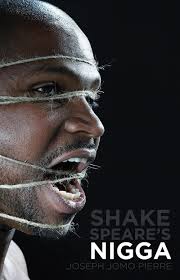
[READ: August 8, 2013] Shakespeare’s Nigga

The artistic director of the Obsidian Theatre Company (which put on this play) explains in the intro that with a title like that, you’re going to get attention.  In fact he initially said that they couldn’t use that title, because it was too much.  But they changed their mind because it really was…right.

This story looks at the two most prominent black men in Shakespeare: Othello (the Moorish general who is ruled by violent emotion) and Aaron (a Moorish slave who is basically pure evil—in Titus Andronicus).  As the artistic development coordinator of the Obsidian Theater says, Shakespeare is the authority on writing characters, thus these two men have become entwined in Black masculinity.  Which is a shame because “Moor” could basically be anyone who did not live in Europe and because Shakespeare likely didn’t know any black people (except as slaves).  It’s not really a good sample.

Playwright Joseph Jomo Pierre doesn’t seek to rectify this or upend this or decry Shakespeare.  What he does is much more subtle and much more powerful.

There are five characters in the play: Othello, Aaron, Tyrus (an older black male), Shakespeare and Judith (Shakespeare’s daughter).  Shakespeare and Othello are comrades (I won’t say friends, but it seems like Shakespeare relies on Othello for protection and advice).  Meanwhile, Aaron has tried to escape from his slavery and is currently chained up and beaten (usually by Othello). (more…)

Read Full Post »