Feeds:
Posts
Comments

Archive for the ‘Godspeed You Black Emperor’ Category

walrus marchSOUNDTRACK: GODSPEED YOU! BLACK EMPEROR!-Yanqui U.X.O. [CST024] (2002).

GybeyanquiuxoYanqui UXO is a single CD/double vinyl release coming in at about 80 minutes.  The lineup stayed the same, but there were a few changes.  First the band’s exclamation point moved from the end to after the “You.”  And second, this album was produced by Steve Albini.  Albini seems like an odd choice given his stripped down style and often brutal recording sound.  The album still sounds a lot like GYBE, but they have stripped out all of the field recordings and interstitial parts making a much smoother album.

The recording was described by the band as “just raw, angry, dissonant, epic instrumental rock.”  It’s hard to argue with that.

There are four or five songs on the record depending on if you have the LP or CD.  The first two songs “09-15-00, Part 1” and “09-15-00, Part 2” are merged into one on the LP.  “Rockets Fall on Rocket Falls.”  And then “Motherfucker=Redeemer, Part 1” and “Motherfucker=Redeemer, Part 2” (the LP removes the “parts” from the title, and just has the song “continued” on side 4—it’s also 5 minutes longer on the LP, primarily from ambient sounds that begin the song.  The LP also contains a hidden track called  “George Bush Cut Up While Talking.”

“09-15-00, Part 1” is 16 minutes long.  It opens slowly with what sounds like a harpsichord playing a rhythm while an echoed guitar plays a slow melody.  More instruments are slowly added as the song grows more intense.  At around 4 and half minutes a new melody enters from the bass.  It is complex but doesn’t alter the general tone of the song.  The song goes almost entirely silent at 6 and a half minutes, but a new melody starts—soft one note strings start as guitars creep into the sound.  Then a violin begins a melody that the guitar soon echoes.  The full band plays along with this melody at around 9 minutes and it gets more intense as the drums pick up speed.  This all drops away once more except for a martial beat and a bass line.  A guitar plays a melody over this simple section and then it builds and builds until the last few violin notes squeak out.

“09-15-00, Part 2” is six minutes long and is probably the simplest and most beautiful piece they have recorded.  There’s no build up, no drama, it’s just a pretty song full of strings and guitars.

“Rockets Fall on Rocket Falls” opens with a simple three note guitar melody and violins playing over the top.  The strings get bigger and more prominent and the rest of the band starts filling in.  Around three and half minutes in, the song gets really raucous…until it settles down again.  The song builds again, with the violins taking prominence.  At about seven-minutes, the song changes drastically with a lengthy descending series of notes (on horns) leading to a spare drum beat which lasts over a minute before the horns come back in.  After a minute or so of solitary horn notes, some guitars start playing in the background.  By around 13 minutes ominous chords have developed, overshadowing nearly everything else—and that steady drumbeat certainly causes some tension.  By 16:30 the tension has been released and the chords are welcoming and bright.  The song seems like it ends around nineteen minutes in, but there’s a gentle string section coda tacked on at the end.

“Motherfucker=Redeemer, Part 1” opens with gentle ringing sounds like a child’s toy.  After about 2 minutes, guitars start coming in—one playing staccato notes another playing chords and a bass playing as simple pattern.  At 3 and a half minutes the main riff comes it.  It is played on the violin and has vaguely Jewish feel to it.  There aren’t a ton of changes in this song, which more or less just builds around the same riff.  By 7 minutes there’s a soaring violin solo which screams over the top of the song.  There are moments when the song gets louder and quieter but it definitely feels like all one song until about 10 minutes when it more or less slows to a halt.  There’s some slow violin sounds an a simple guitar.  This second part of the song is similar to the first in that it is a regular guitar riff playing as the rest of the band fills in around it.  At around 13 minutes, a bigger fuzzier guitar takes over the riff.  The song continues in various forms until the end, when it is just a bass line.

“Part 2” is only ten minutes long (15 on vinyl).  It opens with the strings providing washes of music.  A new, fairly complex bassline opens the song.  The band builds the track with fast drumming and louder and louder strings.  It shifts tone at around 4 minutes.  And for the next 3 minutes it gets more intense until it seems to fade out, introducing a new guitar riff that works almost like a coda to the whole thing.  The drums are insane for this ending part and the band seems like they are just going nuts as the song comes crashing to an end.  The extra five minutes on vinyl come at the beginning of the song.  It starts with voices singing some basic “ahhhs” and then a guitar playing a ringing note.  It does add to the tension that builds up before the music begins properly and really should be checked out if you’ve only heard the CD version.

“George Bush Cut Up While Talking” is 3 minutes of a George Bush address cut up (it sounds like it is a skipping CD) interspersed with clapping that sounds like static and a voice saying “it is the predominant question, why am I here and what can I do to make it better how can I do what is right.”  (There’s a disconcerting video of this here.)

I think this album is really fantastic.  And while I enjoy their found sounds, I prefer that they’re just playing music.

After making this album the band would go on hiatus for…ten years.  Here’s the line up for Yanqui.

  • Thierry Amar – bass guitar
  • David Bryant – electric guitar
  • Bruce Cawdron – drums
  • Aidan Girt – drums
  • Norsola Johnson – cello
  • Efrim Menuck – guitar
  • Mauro Pezzente – bass guitar
  • Roger Tellier-Craig – guitar [replaced Mike Moya]
  • Sophie Trudeau – violin

[READ: April 11, 2016] “”Where the Yazoo Cross the Yellow Dog””

This is an except from a story about Jimbo and Rob.  The opening details Jimbo’s (James) parents, which I rather enjoyed.  Particularly the details about his father–his daily “three and three-quarter minute boiled egg served in a brightly coloured egg cup” and this statement:

‘I view hot toast,’ he said in one of his rare communications, pointing to the solitary Hovie slice lodged cold in the silver toast rack, ‘as offensively American.’

I also loved the dogmatic qualities of his father

‘What?’ said the Major.  ‘What?”
Which was his usual response top any reply short of complete agreement or grovelling.

And

“Don’t say ‘haven’t got,'” said the Major.  “It is both redundant and ill-bred.  ‘Haven’t’ will suffice.”

But the story is really about Jimbo and his friend Rob Forde (that cannot be a coincidence).  Jimbo was a teenager affecting sophistication (he wanted a smoking jacket) and he and Rob looked through junk shops for cigarette cases and art books. (more…)

Read Full Post »

janfeb2016SOUNDTRACK: GODSPEED YOU BLACK EMPEROR!-“lift yr. skinny fists like antennas to heaven!” [CST012] (2000).

330px-LiftyrskinnyfistsSo far GYBE had released an album and an EP, so why not follow up with a double album/double CD.  This collection has either 4 songs with multiple parts or many many songs.  (The CD release suggests 4 songs–two per disc each over 20 minutes).

Although on the accompanying sheet, there’s a diagram in which Efrim has mapped out each of the four tracks and indicated where each part (with its own title) begins.

The first song “Storm” opens slowly.  Part one “Lift Yr. Skinny Fists, Like Antennas to Heaven…” has strings and simple, quiet guitar riff which build for about three minutes.  Then the guitars kick in and the song soars to majestic heights.  The guitar riff continues through this section and then horns add to the music to make it feel even bigger.  It’s an amazing start to a disc.

“Gathering Storm/Il Pleut à Mourir [+Clatters Like Worry]” slows things down as the last cymbal crashes fade and a violin remains the sole sound.  Then a new guitar riff begins, slow and sweet, once again with a kind of nod to “Amazing Grace” in the melody. Then the strings swell and take over.  When the bass line begins, it heralds the arrival of the drums and the song rocks along.  After a few minutes, the strings bring in the real tension of the storm.  The drums really come to the fore with lots of pounding and cymbal crashes.  The intensity begins to slow down until it thuds to silence.

     “‘Welcome to Barco AM/PM…’ [ L.A.X.; 5/14/00]”  opens with a staticky voice welcoming you to Barco and then lets you know not to associate with people washing windows or soliciting.  This track is about a minute before the piano begins indicating the start of the final part “Cancer Towers on Holy Road Hi-Way.”  Behind the piano are simple mournful chords, although the staticky voices continue until the end of the song.

Track two “Static” opens with “Terrible Canyons of Static.”  There are truck horns and train noises followed by ominous chords.   The noise and static continues through “Atomic Clock,” and the recording “at the tone 3 hours, 21 minutes according to universal time.”  This merges into “Chart #3” which contains a clear speaking preacher (who says ‘penetrate’ a lot) with a very sad violin melody.  A guitar starts playing a different melody which indicates the beginning of “World Police and Friendly Fire.”  A bass line takes over and is accompanied by a violin and guitar.  There’s tension in the music as it builds and builds.  But the drum beat means the start of a new violin melody complete with glockenspiel.  This staccato rhythms keep up for a time until it is replaced by a loud feedbacking guitar solo.  It’s followed by a fairly conventional section of drums and bass complimented with strings.  This section feels like it is building to something and it all coalesces in the cathartic crashing of the start of “[…+The Buildings They Are Sleeping Now]” (this particular release is outstanding as they really drag out the climax).  The riff for this is fast and heavy with more screaming guitar.  It only lasts for a minute or so, but it’s fantastic.  The rest of this section is primarily feedback and silence.  There’s some percussive sounds and moments of louder noises, but at over 5 minutes this section is a little too long.

Disc Two, track 3 “Sleep” has only three parts.  “Murray Ostril: ‘…They Don’t Sleep Anymore on the Beach…'” is a one-minute opening with a man (Murray?) talking about how Coney Island used to be so amazing.  “Monheim”  opens with some slow guitar and mournful strings playing over the top.  When the violin fades, a new guitar melody, more upbeat, begins.   The song stays pretty quiet until about 7 minutes in when the drums enter and an interesting guitar section continues to build in waves, but stays fairly mellow and upbeat.  Around 8 minutes the same motif grows to supersize.  And the wavery guitar? violin? that runs through this whole section grows louder and louder as the music swells and swells until a martial beat takes over and the melody is repeated (albeit much faster) which acts as an unexpected and satisfying conclusion to all that tension.  This section starts to deconstruct, leaving only a siren like guitar and lots of static which indicates the beginning of the third part, “Broken Windows, Locks of Love Pt. III.”   Out of the noise comes a simple two note pattern.  The song grows more complex with as the rhythm is kept by a single chime.  When the drums kick in (all of a sudden) the song gains momentum.  And the cool bass line that propels the rest oft he song (complete with horns) is great.  At about 18 minutes the song quiets down with just the guitar and drums keeping things afloat for a bit until it settles down into a very pretty string melody.  Soon enough, the rest of the band kicks in and the song starts to build again.  But rather than reaching a huge crescendo, it begins to fade out, leaving just a hi-hat and some feedback to fill out the last minute.

“Antennas to Heaven” is the shortest piece at only 18 minutes.  It opens with “Moya Sings ‘Baby-O’…” which is (I assume) Mike Moya (who is not credited on the record, I don’t think) singing “Baby-O” and playing the acoustic guitar.  As that fades, waves of noise swell as the 58 seconds of “Edgyswingsetacid” rumbles through.  It is then replaced by the 47 seconds of “[Glockenspiel Duet Recorded on a Campsite In Rhinebeck, N.Y.]” which sounds otherworldly.  The final short section is “‘Attention…Mon Ami…Fa-Lala-Lala-La-La…’ [55-St. Laurent]”  which is one minute long and consists primarily of children chatting ion French.

The main body of this track is the nearly ten minute “She Dreamt She Was a Bulldozer, She Dreamt She Was Alone in an Empty Field.”  It begins with gentle waves of music pulsing in and out.  After about 90 seconds of this, the song bursts into a rocking section–drums and electric guitar playing a propulsive beat.  This doesn’t last long though as the sound of wind howling takes over the song and an ominous almost metallic ticking sound rings out.  This resolves into a two note motif with strings.  It turns onto more of a song proper with all of the instruments supporting a pretty guitar solo.  As the song fades to just violins, “Deathkamp Drone” picks up with various unsettling washes of sounds.  The final section “[Antennas to Heaven…]”  is a strange screechy-sounding guitar solo that echoes through to the end.

This disc is very big and very long, but aside from a few moments where the noise or drones lingers a bit too long, there’s just so much going on that the music never gets dull.  It’s quite an achievement.

Godspeed You Black Emperor has had a few lineup changes over the years.  For this double LP, they added a new guitarist (and a lot of supporting musicians), they changed violinists and lost the french horn. 

  • Thierry Amar – bass guitar
  • David Bryant – electric guitar
  • Bruce Cawdron – drums
  • Aidan Girt – drums
  • Norsola Johnson – cello
  • Efrim Menuck – guitar
  • Mauro Pezzente – bass guitar
  • Roger Tellier-Craig – guitar [replaced Mike Moya]
  • Sophie Trudeau – violin

[READ: January 26, 2016] “The Shomer and the Boreal Owl”

I find that Stephen Marche likes to really push boundaries.  And I find that some of his stories I like and others I simply do not.

And this one I did not.

The whole premise is weirdly unsettling.  Ephraim wakes up one day and finds that he gets really turned on by wild animals. He gets an erection when he sees a deer running through the woods.  What the fuck?

We meet this man who has had many troubled events in his life–the death of his daughter, his divorce soon after, the loss of his job and livelihood.  And now this. (more…)

Read Full Post »

nov2015SOUNDTRACK: GODSPEED YOU BLACK EMPEROR!-Slow Riot for New Zerø Kanada [CST006] (1999).

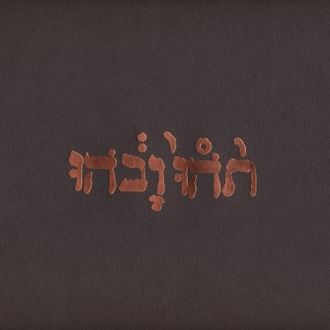
epAfter the success of their debut album, GYBE released an EP.  Being ever cryptic, the EP cover is a series of letters in Hebrew, with no mention of the band.  The Hebrew says: “Tohu va bohu” (formless and empty)

There are two tracks on this disc.  The first is called “Moya” and is something of a reworking of Gorecki’s third symphony.  The second is “BBF3” which refers “Blaise Bailey Finnegan III” the man who rants through much of the song.

“Moya” is ten minutes long (on vinyl it is played at 45 RPM).  Ominous strings open the song.  Indeed, much of the song is made of violin and cello passages intertwining.  Until about 4 minutes when the guitar starts playing.  Drums bring drama to the song about half way in.  And that’s when the guitars and strings intertwine to make a huge sound.  By around 7 minutes the song has built to a huge crescendo, but the addition of pounding bass makes everything even more intense.  It resolves with a great fast riff from the strings which the band plays for a few minutes until it settles down with just a cello and violin playing the end.

“BBF3” is a nearly 18 minute piece (on vinyl it is played at 33 RPM) with waves of music behind Finnegan being interviewed.  He tells about the American government and then about his speeding ticket (and what he told the judge–“shut your fucking mouth and listen”).  After about 3 minutes, the music changes to a new chord, a brighter sound.  As BBF3 declares that America is a “third world, third rate, third class slum,” the drums get very loud and then drop away to near silence.  The guitar pokes around quietly for a bit until it turns into a big song–drums and strings and guitars that only grows bigger as it progresses.  It builds more and more and then drops away again as BBF3 begins talking again, this time about his gun collection.  And then he reads his “poem” (which is actually the lyrics to an Iron Maiden song, “Virus”).  And then the song builds once again.  This time faster and more intensely.  It more or less grinds to a halt at around 15 minutes and then resumes after a few second of silence with some strings resuming a mournful melody until the end.

This is a pretty intense collection of music. And according to Wikipedia, Users of the website Rate Your Music rate it as the greatest EP of all time.

Godspeed You Black Emperor! has had a few lineup changes over the years.  For this EP, they changed violinists and lost the french horn. 

  • Thierry Amar — bass guitar, double bass
  • David Bryant — guitar, tapes
  • Bruce Cawdron — drums, percussion, keyboards
  • Aidan Girt — drums, percussion
  • Norsola Johnson — cello
  • Efrim Menuck — guitar, keyboards
  • Mike Moya — guitar
  • Mauro Pezzente — bass guitar
  • Sophie Trudeau — violin [replaced Christophe – violin]

no longer with the band: Thea Pratt – French horn

[READ: January 26, 2016] “How to Become a Mascot”

This story is indeed a how-to account of becoming a mascot.

It is even told in a technical manual type of style.  Although the beginning is pretty unexpected: “First, quit you day job and go back to school, even though you’re thirty-two already.  Do this because your boyfriend is dead and you will never get to run your fingers trough his curls again.”

But aside from this rather dark opening, the rest of the story is kind of funny.

The narrator is aware of a gingerbread man costume at the local outdoor shopping centre–her aunt works administration there.  No one knows how the costume got there, but she thinks it would be a good idea to take it on as a job–$15 an hour.

The first few paragraphs describe fitting it and getting used to wearing it.  “Burn 700 calories trying to undo the zipper.”  Then you must learn routines and dances. (more…)

Read Full Post »

walrusSOUNDTRACK: GODSPEED YOU BLACK EMPEROR!-F♯ A♯ ∞ [CST003] (1997).

faGYBE is more or less the flagship band for the Constellation label.  Their band has spawned many other bands, and nearly every member has played on someone else’s record or released a solo album.  Which is why it’s surprising to realize just how few albums they have released.

This first album caused quite a stir.  It was released on vinyl and then released (with an extra 29 minute song) on CD.  Few bands sounded like this before, and a whole new genre was created around their brand of multi-piece, sorta orchestral post-rock.

There are three songs on this record, but based on some information given in the CD, the songs have been informally broken into parts.

The Dead Flag Blues.  The song opens with “The Dead Flag Blues (Intro).”  It features a rough-voiced man speaking what I have recently learned is a script by Efrim Menuck.  Backed by a string melody, the speaker describes a derelict city, where the government is corrupt and the inhabitants are drunks.  After the strings fade, two guitars play a repeating motif with occasional string fills and then a slow solo violin section which fade to silence

For part 2 “Slow Moving Trains” / “The Cowboy…”  the sound of a train whistle interrupts the quiet.  It’s followed by a series of slow descending notes on a guitar.  After a few minutes a twangy guitar comes in to play a Western-ish motif.  The rest of the band slowly comes in and creates what sounds like the first real Godspeed sound—a full band making beautiful orchestral instrumental music.  It’s all too brief though as it melds into part 3.

Part 3 is known as “The Dead Flag Blues (Outro).  It opens with violin and glockenspiel playing a much more upbeat tune.  It lingers for around 2 minutes and then the songs ends.

“East Hastings” has three parts as well  “…Nothing’s Alrite in Our Life…” / “The Dead Flag Blues (Reprise)” opens with bagpipes and a man ranting.  It’s only 1 minute and a half before “The Sad Mafioso” kicks in.  This part builds slowly with spare guitars and waves of sound.  The guitar reconciles itself to a riff, slow and quiet, with a neat minor note in the middle.  It sounds like the kind of thing that is just building to something bigger, slightly more ominous.  And as the band kicks in again, the riff becomes much more meaty, but before it can totally take over, it gives way to strings and drums–playing a simple melody that continues the feeling of the guitars.  When this ends, far in the distance you can hear a voice singing the melody although it is quickly replaced by two guitars  playing the riffs while the strings keep jumping in.  And then they start working together, growing bigger and louder and faster.  Until it reaches its end with squealing feedback and a man saying “they had a large barge…” which opens up part three, “Drugs in Tokyo” / “Black Helicopter.”   This last part opens with a guitar playing harmonic notes along with washes of noise and feedback.  Some of the noise sounds, yes, like helicopters (and this is where the band makes some use of the coolness of headphones).  It’s a brief section that ends what is technically side one (although I see that the vinyl had about one minute extra at the end of the song).

Track three, “Providence,” is 29-minutes long and has five or six parts, depending on if you include the 3 minutes of silence.  “Divorce & Fever…”  opens with a lengthy spoken piece by “Blaise Bailey Finnegan III”, who will have his own track dedicated to him on the next GYBE release.  The music opens with distorted and backwards sounding guitars.  Organs add to the mix and then this short section morphs into part 2.  “Dead Metheny…” begins with some quiet guitar notes with the violins playing some mournful notes.  But the glockenspiel jumps into play a pretty, fast melody.  And then the drums start pounding away while harmonic chords are played over the top.  There are simultaneous guitar solos in each ear while the drums continue to play loud and fast.

Kicking Horse on Brokenhill” has a staticy/echoey/distorted voice singing lyrics that are really hard to hear to a melody that is similar to “Amazing Grace.”  After that fairly unsettling intro, the band begins a great section with multiple guitars and other instruments playing the same melody (this is the “Godspeed sound” in a nutshell.  By the middle of this, it has built to something enormous–full of guitar lines and drums with the support of what feels like the rest of the band.

“String Loop Manufactured During Downpour…” has a distant voice (I assume from a record based on the static) begins singing “where are you going” in a rather haunted echo).  The rest of the track is primarily washes of notes and stat icy noise until the 3 minutes of silence which precede the final proper track, “J.L.H. Outro” (stands for John Lee Hooker).  It begins with guitars and washes of sound.  The guitars begin exploring the main riff in different ways.  When the song finally builds to a full band, there are different drum beats in each ear, creating a big cacophony of sound while the guitar wails away.

It’s a pretty great album, with many different elements–weird spoken word and fantastic instrumentals sections.

Godspeed You Black Emperor has had a few lineup changes over the years.  They began with some 15 members and ultimately settled on these ten for F♯ A♯ ∞.

  • Aidan Girt – drums
  • Bruce Cawdron – percussion
  • Christophe – violin
  • David Bryant – guitar
  • Efrim Menuck – electric guitar
  • Mauro Pezzente – bass guitar
  • Mike Moya – guitar, banjo
  • Norsola Johnson – cello
  • Thea Pratt – French horn
  • Thierry Amar – bass guitar

[READ: January 26, 2106] “Cowan”

The previous Walrus story that Bertin wrote (back in 2013) was very dark.  And so is this one.  But whereas I found “The Eviction Process” compelling, this one I just didn’t like and couldn’t wait for it to be over.

This strikes me a kind of redemption story–the word guilt is mentioned once or twice.  And it seems like perhaps this was the author’s attempt to make amends for being a shit heel. Except there is no real sense of redemption or apology or anything of the sort.

The end even seems like the narrator is simply lying. (more…)

Read Full Post »

8 SOUNDTRACK: BLACK OX ORKESTAR-Nisht Azoy [CST038] (2006).

cst038webOn the second (and so far final) Black Ox Orkestar album, the songs are longer and the whole disc has a more polished feel.

It feels less like friends gathered on a night for music (which is what the first one seemed like) and more like a band playing the music in the studio.  There’s more precision in the instrumentation and more instrumentation overall.  The voices,  like on “Bukharian” are layered, bringing in bass voices that didn’t appear before.  The album also feels a bit more like a GYBE type of project–more building, more epicness.  “Tsvey Taybelakh” [Two Doves] is over 7 minutes long.  And even though a song like “Az Vey dem Tatn” [Sad Is the Father] is clearly Yiddish (the vocals are the big giveaway) they sound like more than folk songs, they sound bigger, more “important.”

“Violin Duet” has a slow mournful piece and then a sprightly fun dance piece.  “Ratsekr Grec” is a big instrumental dance piece that  sounds familiar but is not the song I’m thinking of (which is from a movie, I believe).  The 7 minute song actually has elements that feel a bit like Led Zeppelin’s “Kashmir” (with clarinet).  And the final song “Golem” begins like an epic with slow guitars and strings in a very traditional melody.  It has a number of false endings at around 3:30 and again at 5 minutes.  And since album has some translation of the lyrics, (which are still sung in Yiddish) we can see the lyrics move beyond traditional Yiddish yet are firmly grounded in them:

“We made a new golem/ We created our guard/ Without soul and without mercy/ He watches the gate/ Like the cameras on the fence/ Like the barbs on the wire/ Like the concrete barricades/ He becomes landscape/ But no. It can’t go on/ No. It can’t go on/ Not like this…,”

Again, if you don’t like traditional Yiddish music (or vocals sung in Yiddish) you won’t like this, although the adventurous may want to give it a chance.

[READ: May 6, 2014] 8

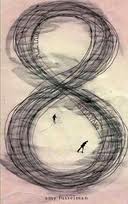
The cover above is actually not the cover of the version I read.  The McSweeney’s Two Books in One does not seem to have this cover for 8 anywhere (which is a shame because I like the way the covers of each book parallel each other (and make the infinity loop as well)).   Interestingly, the original version of the book featured the subtitle: “All True, Unbelievable.”  And that might be useful to include here too.

Amy Fusselman’s 8 is a sequel of sorts to The Pharmacist’s Mate.  In that book, she wanted to get pregnant.  In 8, she not only successfully gave birth to the boy from that first book, she has also had a second child.   And like many new parents, she understands that no matter how much you wanted children, sometimes for your own sanity you need to hide from them to have a few minutes to yourself.  It’s refreshing to read a normal person write about her children.  Especially when she and her husband try (and fail) to do sleep training.

But fortunately, that is not all Fusselman talks about.  She also talks about when she was raped as a shockingly young girl.  This tragic story is dealt with in a variety of ways and, surprisingly, never in a particularly dark or somber manner.  She calls her assailant “My pedophile” and spends a lot of the book working with alternative healers to come to grips with what happened to her.  And while this story is obviously hugely important in her life, it doesn’t seem to cloud everything she does.  (more…)

Read Full Post »

dec20133SOUNDTRACK: HANGEDUP-Clatter for Control [CST034] (2005).

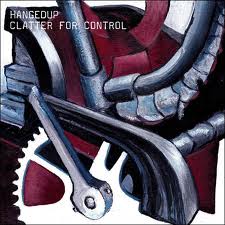
clatterClatter for Control is Hangedup’s third and (so far) last album.  As Kicker was an evolution from their debut, Clatter feels like an evolution as well.  It feels like a more experimental work with fewer “proper’ songs proper and more soundscapes and ideas.

“Klang Klang” is a fast, yes, klanging song.  The viola is slightly discordant and the riffs are abrupt and staccato and it builds into a frenzy.  “Alarm” is more spooky sounding with tape manipulation. “A Different Kind Of Function” starts with some staccato notes and then builds into merging lines of viola and feels almost like a remix song.  “Kick-Back-Hub” is 90 seconds of squeaking bowing and metal clanking along with some very fast drums. It melds into “Eksplozije” which is 2:25 and is more feedback and big noisy drums.

“Go Let’s Go” feels like an actual song with riffs and chords, while “Derailleur” is another short piece, just under 2 minutes of noise and rattling and wildly untuned viola sounds.  “Fuck This Place” has a bass guitar although you wouldn’t necessarily know it (there is more bottom end), it feels like the viola is actually vocal samplings which is neat. “How We Keep Time” is a slower song with languorous viola sounds and sparse drumming.  “Junk The Clatter” feels like the most song like of the bunch. After a minute intro a fully realized riff comes out.  There’s some beautiful melodies and when the song ends it has a cool rocking section.

I prefer Kicker in Tow, but there’s record is a lot of fun too, full of unusual and discordant sounds–if you like that sort of thing.

 [READ: May 5, 2014] “I Can Say Many Nice Things”

I wound up reading about 3/4 of this story in one sitting and I loved it.  But when I came back to finish the end, I didn’t really like it as much.  I though the first part was engaging and complex without being convoluted.  I was interested in the direction the story was going and I was disappointed that it went where it did.  The ending ultimately makes sense within the context of the story, but I enjoyed so much of what happened before that I guess I didn’t want it to end.

So what was so great?

Fleming is an writing teacher.  A disgruntled and unpopular writing teacher.  He has been given a chance to teach a writing class… on a cruise!  A five day cruise with all expenses paid and ten well-paying students signed up for a morning and afternoon class.  Everyone he knew thought he was so lucky (colleagues pretended to be jealous)–it would certainly be an easy way to rack up positive evaluations from happy cruisers?  But Fleming is a pretty miserable guy.  He’s even more miserable because he intended to get in shape for the cruise, but in fact he got fatter, and he feels lousy about himself.

Even though at heart this is a story about teaching and writing (typically not great story topics), the set up is unusual–especially as we slowly come to realize that he is trapped on this ship. And when you add in some of the other details, I thought this was a really interesting setup.

Here’s some details that i found compelling. (more…)

Read Full Post »

dec20133SOUNDTRACK: HANGEDUP-Kicker in Tow [CST022] (2002).

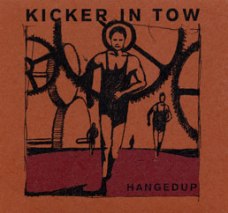
hanged2Hangedup’s second album is bigger and better than the debut (which was pretty good to start with).  This one is far more intense, and much better sounding.

I love the way the first song “Kinetic Work” starts out in such a fast and intense fashion and then shifts gears to a slower beat about 90 seconds in. Then it reverts back to a fast building song, growing very intense by the end.  “Sink” is a scattered affair with the drums taking “lead” playing all kinds of noises and rhythms over the slow beat of the strings. “Losing your charm” is more about tone and mood—with a steady pulsing beat and ever more energetic strings. It sends a middle eastern vibe too.

“View from the Ground” brings in some more unusual sounds—very machine like (with lots of echo on the percussion). And the strings sound a bit more like guitars here. “Moment for the Motion Machine” is a 1 minute 28 second precursor to the 13 minute “No More Bad Future.” If there was ever an epic instrumental of two instruments, it is this. Like a suite from GYBE, it builds slowly with grinding viola and occasional mechanical percussion.  The song changes pace and then assumes a kind of martial beat at around 5 minutes in. And then shifts gears growing more and more intense until the end.

“Motorcycle Muffler” is metallic and machine-like with interesting effects on the cool ringing tones–it sounds like he may be actually banging on a muffler.  “Automatic Spark Control” starts slowly but builds aggressively with the occasional ringing note as a progress bar. “Broken Reel” ends the disc with a slow series of viola chords (and overdubs). The title implies and the song sounds like an Irish dance, and it does, but one that is well, broken and several paces too slow.  It’s quite a change from the rest of the record, but it shows an expanding style and shows just how much they can do with two instruments. Hangedup is a very cool experimental band for those who like melodic noise.

 [READ: May 2, 2014] “Flight”

This story is about a very stoic couple breaking up.  It is narrated by the woman.  She says that her husband, Allan, left her about a year ago.

When they were first together he talked about her in a way that sounded like he felt they had a cozy life,

like the castles he used to build out of straw bales when he was a boy.  Inside the castle was a den in which to eat cookies and drink fruit juice while listening to the rumble of the combine in the next field.  That’s what being with me was like, Allan, said.

But it seems that it was really more suffocating than cozy.  Allan worked for a wind farm company and traveled the world as a technical consultant.  But he never told her anything about where he went–he found it hard to describe and explain.  So she eventually bought him a camera.  He took pictures and sent them to her from around the world.  But he got back he still had nothing to say to her.

dolly-sods-wilderness-west-virginia-hdr-photography-sunsetThe one place that is mentioned in the story is Dolly Sods, West Virginia, (see this cool photo to the right of Dolly Sods from Captain Kimono).  [I had never heard of Dolly Sods Wilderness, but it is protected land and is described : Dolly Sods is an area of high elevation wind-swept plains on the Allegheny Plateau. At elevations of 2,600 to over 4,000 feet, the area has extensive flat rocky plains, upland bogs, beaver ponds, and sweeping vistas. The plant life and climate on this high plateau resembles northern Canada, and many species found here are near their southernmost range].  The narrator explains how there are parts of Dolly Sods that have never been touched by human hands.  In the picture that Allan sent from there, he is next to a wind turbine that is going to be put up. (more…)

Read Full Post »

may20014SOUNDTRACK: EXHAUST-Exhaust [CST004] (1998).

exhaustExhaust’s self titled album was another early release from Constellation (disc number 4).  At this point Godspeed You Black Emperor had not defined the label’s sound yet (correctly or incorrectly), so we get Exhaust.  Aidan, who is 1-Speed Bike, which did not have very good drums, is the drummer for Exhaust.  And man, the drums are awesome here.  The drums are again, loud, and they have a great live feel to them–the beats are funky and different and while they anchor what’s going on they in no way keep things settled.

The rest of the band includes a bass, a guitar, a bass clarinet and samples.  The samples just aren’t loud enough anywhere on the album.  It’s a shame–you simply can’t really hear them, which I guess is the point, but then what’s the point of having them?  So the first song, “A History of Guerrilla Warfare” is interesting (again, those drums!), but it’s in song two “Metro Mile End” when that bass clarinet comes out that it totally rules. The third song “Homemade Maggot Beer” is a 20 second hardcore song with just drums and feedback.  Song 4 “We Support Iran in Their Bid to Win the 1998 World Cup” is a remix by 1-Speed Bike, and after listening to the full length 1-Speed Bike, it sounds like it– a little dull, a little slow and nowhere near as dynamic as the album.  And it has such a good title too.

“Two Years On Welfare” has louder samples–you can hear a kind of political rant going on, but it seems like it could have been used better.  But around 1;30 the sounds get really interesting.  Track six, “This Is Our (Borrowed) Equipment” is another 1-Speed Bike remix, and it is mostly drums again.  “Wool Fever” makes good use of harmonics and drums although it goes on a bit too long.  The 8th song, “A Medley Of Late Night Buffet Commercials” is the final 1-Speed Bike remix.  Unlike the others I really like this one.  True, I wish the song was more akin to what the title says, but the drums are funky and hammering and sound great.  “Winterlude” is 40 seconds of squealing radio sounds before the final track reintroduces us to that great clarinet.  “The Black Horns Of H2T” reminds us how good this album can sound.

So it’s a mixed bag, but the highs are definitely high.

[READ: April 14, 2014] “Humor”

This article appeared in the December 1958 issue of Harper’s magazine.  Mark Twain made over 100 contributions to the magazine (geez).  I have often thought that Twain is an author I need to read more of.  But when I hear he has contributed over 100 articles to Harper’s alone, my mind reels at the output.

Anyhow, this is an article about repetition in the art of humor.  Interestingly, he relates a story that happened forty years before writing this.  So the occasions of the joke he tells was in 1918!  Woah.

The article talks about the first and second lectures that he ever gave.  The first was a success but he was concerned about the second as he had very little in the way of humor to warm up the audience.  He decided to make use of an anecdote that everyone in San Francisco had heard many times and were undoubtedly sick of.  It had been overdone as long as five years ago.  But he decided that he would simply tells the very overdone story over and over until people started to laugh (the precursor of Saturday Night Live, obviously). (more…)

Read Full Post »

gorey SOUNDTRACK: 1-SPEED BIKE-Droopy Butt Begone [CST014] (2000).

1speed1-Speed Bike is a remix project by Adian Girt who has played in Godspeed You Black Emperor and Exhaust for Constellation Records.  This is his first release as 1-Speed Bike.  He has released several more on other labels but I haven’t heard any of them.

The most interesting thing about this disc are the titles of the songs.  And those titles are so clever that it gives one high hopes for the album.  I don’t know who Mauro and Elwy are (track 1) but the rest are certainly interesting if not confrontational.

1. The Day That Mauro Ran Over Elwy Yost
2. Seattle/Washington/Prague 00/68 Chicago/Nixon/Reagan Circle-Fighting Machine
3. Yuppie Restaurant-Goers Beware Because This Song Is For The Dishwasher
4. Just Another Jive-Assed White Colonial Theft
5. Why Are All The Dogs Dying Of Cancer?
6. My Kitchen Is Tiananmen Square
7. Any Movement That Forgets About Class Is A Bowel Movement

But what’s disappointing is that the album is comprised almost entirely of a drum machine and some other sounds.  The drums are very very loud in the mix, and there’s very little variation in each song (which befits a remix, I suppose).  And yet, the “musical” section is largely nonexistent.  There’s a lot of spoken word stuff, which is fun, but it also seems randomly thrown on there. The disc opens with him asking someone to be quiet because he has to flush the toilet.  There’s a lengthy declaration of love for his family and war against capitalism.  And that everyone else can fuck off if they don’t want to hear him talk politics.

There are samples sprinkled around the disc, but most of them are inaudible or played with so much that it renders them hard to figure out.  There are some interesting sounds in “My Kitchen is Tienanmen Square,” but the rest is kind of dull.  The end of the last song offers a voice mail message that gives you the title of the album.

Overall, not an exciting debut for 1-Speed Bike.

[READ: April 12, 2014] The Strange Case of Edward Gorey

I bought this book many years ago when I was on an Alexander Theroux kick (which actually means I wanted to read some of his books but did not, although I do hope to).  Anyhow, this book has been staring at me for some time so I decided to just dive in.  I actually know precious little about Theroux except that his novel are supposed to be weird or difficult or something.  I know slightly more about Edward Gorey, although little more than his drawing style (which I love) and his sense of humor (which I share).

So this book is a sort of a biography of Gorey by Theroux.  Theroux was one of Gorey’s close friends.  This is saying something because as a rule Gorey was rather a recluse and didn’t much like people (he did like cats, though).  The book is not a proper biography–a biography of his works or even of his life.  It is more of a biography of the man and his quirks.  There’s very little about his childhood, and not a lot about his books (except for Theroux’s admiration).  But mostly its about what it was like to hang out with Gorey–and to delight in the baroque and fun turns of phrase that Gorey used.

We learn a lot about what he liked (soap operas, classic movies [Metropolis, M, Sunrise, Gold Digger series], obscure horror films [The Town That Dreaded Sunrise, Women of Straw, Suspiria (at least I’ve heard of that one)], TV shows [The X-Files, The Golden Girls, Matlock, Buffy the Vampire Slayer] and of course, classic literature [he was well versed in many original languages].  We also learn what he most assuredly did not like.  He did not like Star Wars, he did not like Mel Brooks, he did not like Robert Altman or Woody Allen [Gorey was a film critic for a time].  And as for our foremost actress, Meryl Streep, he has this to say:

“Oh please!” said he, every time she opens her mouth, the critics insist Dostoevsky’s speaking!” He paused. “And who’s even dippier is Glenn Close. Sexless as a teabag. Neither man, not woman, nor in-between! Julia Roberts’s face looks like it’s made of rubber — remember those Snap, Crackle and Pop cartoon faces? And of course Streisand. God help us, I won’t even go to see.”  Gorey loathed her with a passion, even more than John Waters does.  I once heard him fulminate for a good half-hour on the impossible stupidity of her 1962 hit, “People,” a song that, with its mawkish, politically correct soul-sharing, shrinkingly embodies to a T everything that Edward Gorey utterly loathed:  “Pee-pull, pee-pull who need pee-pull are the luuu-kiest pee-pull in the wooooooorld!.”  I cannot honestly think of a single sentiment that would have driven Edward Gorey battier faster than the flaccid lyrics of that song with its, to him, canasta-closeness, hideous interconnectedness, and ultimate meaninglessness.

He also hated Andrew Lloyd Webber, the Marquis de Sade’s writing, right-wing talk show hosts, every movie Al Pacino ever made [Of Bobby Deerfield he cried out during the movie, “oh for Christ’s sake…what is this in aid of?”] and Martha Stewart.  And while he had great disdain for Barbra Walters and Maya Angelou, he was especially appalled by “the invincible vulgarity of the preposterous Kathie Lee Gifford and the host of miniature faces she was constantly pulling” (20) saying: “her facial contortions would be excessive on Daffy Duck” (44).

One thing to note about the book.  As you can see form the page numbers above, similar sentiments about Gifford are on page 20 and 44.  Theroux tends to circle back onto the same topics a number of times.  So the same names tend to pop up three or four times (Buffy comes up at least 3).  It feels like Theroux (who published this soon after Gorey died) wrote it in fits and just needed to get down as much as possible.  And while the book feels repetitive, it never feels flaccid or like it’s full of padding.  It just feels like a huge outpouring of information.  Or like an essay collections by a person who tends to revisit similar material.

Interestingly, the book isn’t necessarily for fans of Gorey.  I honestly haven’t read any of his works in years, but I found this book funny and strangely cathartic (if you like bitchy, opinionated scholar-types).  If any of the above appeals, you’ll get a kick of out Gorey, whether you like his drawings or not.  The book is also full of Gorey’s drawings (although nothing new), from his books and from some of his posters.

I was also intrigued by the fact that Gorey, clearly no friend of people, did not shy away from the outside world.  He lived on Cape Cod and New York City where his number was in the phone book the whole time.  He walked around Manhattan in a big beard and fur coat (until he gave up the coat for animal rights reasons).  When he moved full time to Cape Cod, he lived in a residential area and did not turn away any fans (he always had manners even if he knew the whole thing was kind of silly).  And apparently his house was simply chock full of fascinating geegaws and gimcracks.

For all of his proclamations about others, he did not have a large ego about his own work.  And the book gives the impression that he was just an opinionated guy who knew what he liked and was happy to share his thoughts with others (or his cats).

I just found out that Theroux reissued this book in 2011 and updated it from 68 pages (my version) to 168 pages.  I don’t know how much has changed.  In looking online it seems like maybe all he has done is make the original pictures larger, but there may be other textual changes as well.


Read Full Post »

SOUNDTRACK: ESMERINE-La Lechuza [CST080] (2011).

This album is a wonderful surprise.  I had not heard of Esmerine before this CD (they have put out two previous records on a different label).  All I knew about them was that violinist Becky Foon (who is all over the Montreal scene and who is really good) was one of the founders of this band.  So I expected some epic instrumentals ala all of the Constellation Recordings bands that she has played with (Godspeed, Silver Mt Zion, etc).

I was delighted by the opening fast marimba notes of “A Dog River”.  I’m not sure if the marimba can play minor key notes, but the melody that co-founder Bruce Cawdron plays is uplifting and mesmerizing.  When Becky adds her strings, it takes on a new element–a kind of wistfulness.  Then at nearly 3/4 of the way in, some loud guitars come in to give the whole song a feeling of urgency.  And all the while it is very filmic.  It’s a wonderful opening.  “Walking Through Mist” is a much slower piece, and the marimba adds contextual pacing–they’re still not minor key or sad marimba notes, but they are not as uplifting as on the first track.  “Last Waltz” introduces a vibrato’s piano as the primary instrument.  It is at once unsettling.   It’s also the first of three songs with vocals.  The vocals work well on this song–they fit the mood perfectly–especially the wordless singing at around 4 minutes.  But I have to admit that I like the instrumentals better.  The same can be said for “Snow Day for Lhasa” (another song with vocals) which I find a little too slow to be impactful (it actually reminds me of a very slow version of Broken Social Scene’s “Lover’s Spit”).

“Trampolin” introduces a harp and some vibrant percussion.  It’s uplifting and feels like a perfect song for a theatrical dance company to perform to.  “Sprouts” is an uplifting new-agey sounding track.  By itself it might veer uncomfortably into the new age scene, but amidst the songs of the album it works very well.  “Little Streams Make Big Rivers” returns to that slower sound from earlier.  But this song is short and feels like a slow building march.  By the half way mark when the drums kick in, the song is unstoppable.  The album proper ends with “Au Crépuscule, Sans Laisse” a slow filmic song that returns the album to the quiet sound it was toying with earlier.

I mentioned Lhasa earlier.  Lhasa was a Canadian singer who had international fame (from my own experience, I know that X-Files creator Chris Carter wanted to go see her live–I know this because I was friends with his assistant and she told me the tale of trying to find tickets for this show).  I checked out her stuff but it wasn’t for me.  Anyhow, Beckie and Bruce were supposed to tour with Lhasa for her 2010 album, but sadly, she died of breast cancer (at 37, Jesus), right after the album came out.  So this album is dedicated to her.  The final song “Fish on Land” is a previously unreleased version of a Lhasa song that was made with Bruce and Beckie.  I wish I liked it more, but as I said, she’s not my thing.

I absolutely love the instrumentals on this album and I’m going to have to check out their earlier releases, too.

[READ: May 24, 2012] “Referential”

This story is like a kick to the stomach.  When you’re lying on the floor.  After you’ve thrown up.  And I mean that as very high praise indeed.

You know you’re in for trouble when the story opens: “For the third time in three years, they talked about what would be a suitable gift for her deranged son.”  We quickly learn that the woman’s son was fine until he was about twelve years old when he stopped brushing his teeth and began muttering to himself.  By then Pete had been dating the woman for about six years.

Pete and the woman had been coping with her son’s placement in the institution for over three years now.  There were so many rules they had to follow when visiting the boy–almost nothing could be brought in for fear of its being used as a weapon–even the homemade jam was taken because it was in glass.  Similarly, the woman has stopped wearing accessories, as a kind of solidarity–she would just have to remove them anyway.  She is now aging naturally and (she fears/admits) not very prettily.  An amazing slap in the face comes at the end of the first section with this amazing sentence:  “‘To me, you always look so beautiful,’ Pete no longer said.”  [Ouch!].

Pete has lost his job and is clearly unable to handle the strain of her son any longer (there’s a wonderfully painful scene where the boy asks Pete why he hasn’t come to visit lately). (more…)

Read Full Post »

« Newer Posts - Older Posts »