Feeds:
Posts
Comments

Archive for the ‘Esmerine’ Category

persiaSOUNDTRACK: SALTLAND-I Thought It Was Us But It Was All Of Us [CST094] (2013).

Piles of salt mined by local residents sit on the surface of the world's largest salt flats, the Salar de Uyuni, near the village of Colchani November 20, 2007. Bolivian airlines Aerosur and the Canedos family inaugurated this week the first regular flights of its renovated Douglas DC-3S, or Super DC-3, to bring tourists to the Salar, one of the world's natural wonders, in a project that the airline considers a "trip back in time." Picture taken November 20, 2007. REUTERS/David Mercado (BOLIVIA)Becky Foon, who is one of the main creators of Esmerine has another band on Constellation called Saltland.  The big difference with this band is that she sings as well.  And that this album is much more mellow–full of droning sections and a slow, deep bass that keeps the songs moving along.

This disc is very mellow, with lots of slow beats and electronica sprinkled around it.  When Foon sings, she sings in a deliciously slow voice.  So this album is a good one for chilling out.

The disc opens with “Golden Alley” which has some big slow bass notes and strings urging the song along.   When she begins singing, he voice is deep and hushed–an almost whispered sound that feels practically percussive.  There are words, but her voice also works as part of the music.  A bit of a shift in the music occurs near the end that makes it seem like it’s going to be a long song–especially when Colin Stetson starts blowing some saxophone notes–but it actually just signals the end.

“I Thought It Was Us” is an instrumental which features harmonium and cello.  It also has some interesting noises from Stetson.  About a minute and a half in, it shifts to a really catchy melody that runs through much of the rest of the song while the saxophone solo takes off.  It’s a highlight.

“Treehouse Schemes” really stands out as something familiar.  I don’t know if it sounds like something else or if Foon’s voice is so much more distinctive.  But I really like this track a lot.  It has a slow bass line and some stretched out guitars and then Foon sings a simple and lovely melody line.

“Unholy” is a bit more droney with some well used kalimba and Foon’s voice providing mostly wordless notes.  I really like the way at about a minute and a half, fast drums come in and seem to push the song faster, although the tempo never actually changes.  Theres some great tension and then a nice denouement.

“But It Was All of Us” is another slow droning instrumental, with some wordless vocals and some occasional bass notes. It feels almost like Western movie but with a Middle Eastern feel, a Middle Eastern Western?

“Colour the Night Sky” has some quiet, heavily distorted vocals that swirl with the pulsing beat of the drums and bass.   And then about midway through there’s a clean section where the vocals shine through the din, with the words “I have a fairy tale that I read when I’m feeling down.”

“ICA” has some quiet cello swirls and low voices.  And the album ends on a highlight with “Hearts Mind.”  It’s another one with a prominent bass while swirls of sounds float around Foon’s vocals.   It’s the last-minute or so Foon’s multitracked voices create some lovely ascending ooohss.

This album feel s a lot longer than its 38 minutes, possibly because most of the songs are quite long.  It’s definitely a mood creating album, although not as despairing as the album cover hints at.

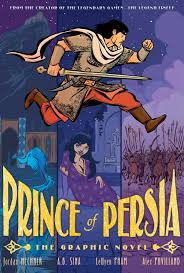
[READ:February 21, 2016] Prince of Persia

The evolution of this graphic novel is pretty fascinating.  And it is one I was completely unfamiliar with since I’m not a gamer.

Back in the 1980s Jordan Mechner created a video game called Prince of Persia.  It was popular and there was a sequel.  And then it kind of went away for a while, but people always loved it so then it came back again as a new series of games.  And a film (released in 2010).  Finally in, 2004 First Second (shoutout to #10yearsof01) contacted Mechner about making a story (not the same story as his games) into a graphic novel.  Mechner has always wanted to make a comic book (he had all the gear before he switches over to video games.  And here it is.

From what I gather, Mechner didn’t really write this story so much as inspire it (and I’m sure he had editorial control or whatever).  The book was written by A.B. Sina.  And it is a new story based on the nebulous ideas of the universe that Mechner had created.

I had actually not even heard of the video game (or the movie) so this was all lost on me. But that’s fine and is not necessary for enjoyment of the book.  Although I admit I found the story a little confusing (not because of not knowing the games), although by the end the way the stories linked up was pretty cool.

This story is set in two different eras (the 9th century and another prince in the 13th century) and has two stories paralleling each other.  The two men of the story are linked by a prophecy.  The story opens with Guiv, a (9th century) prince who had attempted to kill his brother Layth, fleeing the city of Marv after escaping death from Layth’s guards. The story then jumps to a young (13th century) woman, Shirin, who flees the city of Marv in an attempt to escape her father. She soon meets up with Ferdos,

Since Guiv was nearly killed by his brother he leaves the city.  He walks into the mountain where he is accompanied by a spirit animal (a peacock) and is able to fend off lions and boars until he encounters a door.  But inside is a pit made of human skeletons.

I was more interested in the story of Shirin.  She is a rebellious woman who would rather do gymnastic dances than hip shaking ones.  So she cuts her hair and leaves her palace behind.  Frankly her story of learning how rough things are outside of the palace was more interesting than the story of the men.   I guess it is also kind of that we follow her for many pages before she meets Ferdos and then his story takes over.  Not to mention, he seems like he’s just crazy for a while.

Ferdos is full of stories about Layth and Guiv and he imagines that he and Shirin will reprise the roles of these past rulers (Shirin will be Guian, the sister/lover–I’m a little unclear about that).

Eventually we learn that Ferdos has ties to the city of Marv, and that his story is linked to the past in unexpected ways.

The end o the story goes very fast with intense pacing and crossing of stories.  It definitely demands careful reading and maybe even a second reading, to see how the stories line up.

Th one great thing about the book is the way the two story lines are never visually confused–the color palates change depending on the century and the main characters all look different enough (especially Shrin, who looks incredibly sexy with her short hair and different colored eyes).

It’s a really clever and intricate story.   I wonder what fans of the game thought of it.

Read Full Post »

dirkSOUNDTRACK: ESMERINE-Lost Voices [CST116] (2015).

esmerine 2Esmerine’s previous album was recorded in Istanbul and featured a lot of Middle Eastern instruments.  This album was recorded in France and has an incredibly different tone than the previous one.   It doesn’t really have any unusual instruments.  Well, except for the darbuka (a drum) and the riq (a kind of tambouine), both of which appear on the track “Funambule.”  And these interesting items: the ekonting (a West African lute) and the sarod (an Indian lute).

This album has moments that rock a lot harder and louder than anything they’ve done before, but it also has some lengthy mellow moments too.

“The Neighbourhoods Rise” opens the disc with staccato strings and bass.  Then the cello and violin come in.  The song builds and grows more dynamic as drums enter the song, but at 3:30 the song bursts forth with big chords and loud drums.  There’s a great violin melody running through the exuberance.  Then the music all falls away leaving a lovely, sad cello and violin melody to take the song out.

“A River Runs Through This Town” opens with the most conventional sound of an Esmerine record–simple (loud) drumming and an acoustic guitar melody.  More instruments come in, adding complexity. I love that each instrument that comes in–marimba, cello–adds a new layer of notes to the mix until about 3 minutes in when it switches over to big chords.   The song works back and forth between these two styles and rocks much harder than any of their other songs.

“Pas Trop Pas Tropes” is a song of quiet marimba and lots of strings–the cello and violin are once again rather mournful, but very cinematic.  It doesn’t travel very far in its four minutes but it’s beautiful while its there.

“19/14” (can that be a reference to the time signature?) opens with marimba and drums and a deep upright bass (and I believe plucked cello).  When the staccato guitar (or is that the cello?) starts picking out notes the song gets even more interesting.  And then at 3 minutes an electric guitar solo bursts through the melody.  It’s probably the loudest thing the band has recorded yet.  Until the end of the song which gets even louder with pounding drums.  It’s fantastic.

After that, the album mellows out somewhat.

“A Trick of the Light” is but 2 and a half minutes.  It’s washes of keyboards and quiet cello/violin parts.  And then comes–a first for Esmerine, I believe–piano (played by Becky Foon).  The piano is simple but it stands out so dramatically on this track that it sounds amazing.

“My Mamma Pinned a Rose on Me” opens with a cool marimba melody and some ominous keyboard chords.  Some of the middle eastern instruments mentioned come out on this song.  It plays with variations on that simple marimba pattern with different instruments taking turns playing simple chords the top of it.  Somewhere round 5 minutes the song gets so mesmerizing that it nearly puts me in a trance.

“Funambule (Deux Pas de Serein)” opens with some thumping bass and rocks drums along with the Middle Eastern drum playing some cool accompaniment.   And then the nearly 8 minute song is off.   This song revisits the Middle Eastern sounds of the previous record, but with a difference–the drums make the song feel bigger and more intense until about 2 minutes in when the song shifts to a kind of screeching solo.  And then the song resumes with a much faster rhythm.  By 4 minutes the whole song is thudding away, powerful drums and a wall of sound.  When the wall wears itself out, the song’s denouement is more layers of cello and violin–beautiful intertwining melodies.

The final two songs are short.  “Our Love We Sing” is 3 and half minutes of synths and slow cello.  This song also features Becky Foon’s voice, singing wordless passages.  It builds and builds but has no grand climax.   The disc ends with “Lullaby for Nola” a simple piano twinkling and then strings accompany the lovely voice to create this slow, beautiful lullaby.

This album is not as cohesive as the previous one, but it really lets the band explore lots of different avenues.  I’m certainly looking forward to whatever they come up with next.

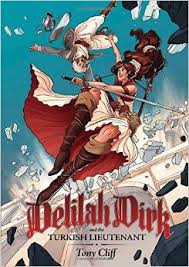
[READ: February 2, 2016] Delilah Dirk and the Turkish Lieutenant

I enjoyed this story quite a lot.  Cliff’s animation which was peculiar but ultimately very satisfying.  And more importantly, he tells a great story.

It opens in Constantinople in 1807.  The King has just begun a game in which the strongest men fight for as much gold and riches as they can grab

Then Chapter 1 shows us Delilah Dirk in prison.  And the guard Selim is reading off the extravagant list of charges against her.  These include–marksman, acrobat, swordsman, world traveler (alone!) and a woman with the ability to fly.  As we flashback to her meeting Selim in prison, we see her being quite cross at getting caught and just about to tell him.  Until she tastes his tea.  Then she reappraises him.

Turns out that Selim’s quite the man with a pot of spices.

As he relates Delilah’s exploits to the king, the king bursts out laughing–primarily because Delilah is a woman.  He doesn’t even think twice that she might try to escape until (and wee see this behind the scenes) she bursts through the wall to her rescue.  And takes Selim with her. (more…)

Read Full Post »

sculptorSOUNDTRACK: ESMERINE-Dalmak [CST096] (2013).

dalmakI really enjoyed Esmerine’s previous record–it was a delightful surprise from a band I didn’t know.  Since then, they have put out two albums.  Dalmak is a Turkish verb with many connotations: to contemplate, to be absorbed in, to dive into, to bathe in, to rush into, to plummet.

The album was recorded in Istanbul and after laying down the basic tracks, they added local musicians who contributed some great sounding Middle eastern and Turkish instruments–bendir (a drum), darbuka (another kind of drum), erbane, meh, barama and saz (a stringed instrument)–on tracks 2, 3, 4, 6, and 7.

“Learning to Crawl” opens the disc and consists of 3 minutes of beautiful swirling cellos and violins that create a wonderful atmosphere.  “Lost River Blues Pt 1” comes in next and it changes the whole tenor of the album with the first of the Turkish instruments.  The marimba keeps a musical rhythm as the other droning instruments play layers of music–creating an unexpected tension.  The repetitions of the rhythm is a wonderful undercurrent to the lovely cello and violin that play washes of music over the top.  Their melody adds a great deal of drama.  It is a 7 minute song and once it’s over it jumps right into “Lost River Blues Pt 2.”

Part 2 opens with some stringed instruments playing a great middle eastern melody alternating with some loud choruses of instruments.   The song grows quiet in the middle and the flute like instrument (the meh?) plays a melody before all of the drums kick in again (there are so many drums) the song grows more intense.

“Barn Board Fire” opens with some Middle Eastern strings again (the saz, I gather) and a simple two note bass to back in up. When the drums kick in the song really feels full.  There’s a cello solo that runs throughout the song and it’s quite lovely.  When the cello matches the rest of the music, there’s few measures that play with loud and soft and it’s quite cool.  It builds to a raucous ending before echoing out

“Hayale Dalmak” opens with some waves of keyboards, almost like a new age song.  it works as something of an intermission before the intense cello melody of “Translator’s Clos Pt 1.”  This time the first part is the shorter one, as the drums and cello play a great melody and rhythm together.  Again, it’s so scenic and evocative.  It builds to a great closure before switching to Pt 2 which opens with a great percussion intro (I need to know how they made those popping sounds).  This part is a little slower than the first, although the drums are still pretty intense.  In fact, even though there is a lot of cello in this song, the drums are really the highlight with all kinds of awesome percussion going on.  The middle of the song introduces the first vocals on the record–I assume they are in Turkish or Persian.

“White Pine” sounds like a western melody played on an Eastern instrument and a mournful violin played over the top.  It’s a neat twist. The final track “Yavri Yavri” opens with glockenspiel and strings.  The song swirls around before vocals come in again.  It stays like this for five or so minutes–always remaining somewhat mellow but never easy.

I really enjoyed this album.  And it gets better with each listen–the combination of Western and Eastern instruments works so well in these songs.  And of course, Becky Foon and Bruce Cawdron write some amazing melodies as well.

[READ: February 20, 2016] Sculptor

I know Scott McCloud from his excellent Understanding Comics, which does a great job in explaining how comics work to novices but also shows keen insight for fanboys as well.

I never really considered that he had created his own comics (even though the above book is also full of his drawings).  He had created a series called Zot!, but really not all that much more.

The premise of this book is fairly simple, but the details and twists and the psychological depth are really staggering.  As is the beauty of McCloud’s drawing. (more…)

Read Full Post »

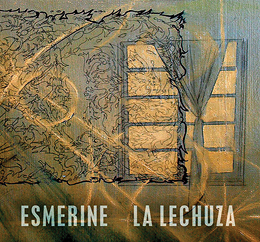
SOUNDTRACK: ESMERINE-La Lechuza [CST080] (2011).

This album is a wonderful surprise.  I had not heard of Esmerine before this CD (they have put out two previous records on a different label).  All I knew about them was that violinist Becky Foon (who is all over the Montreal scene and who is really good) was one of the founders of this band.  So I expected some epic instrumentals ala all of the Constellation Recordings bands that she has played with (Godspeed, Silver Mt Zion, etc).

I was delighted by the opening fast marimba notes of “A Dog River”.  I’m not sure if the marimba can play minor key notes, but the melody that co-founder Bruce Cawdron plays is uplifting and mesmerizing.  When Becky adds her strings, it takes on a new element–a kind of wistfulness.  Then at nearly 3/4 of the way in, some loud guitars come in to give the whole song a feeling of urgency.  And all the while it is very filmic.  It’s a wonderful opening.  “Walking Through Mist” is a much slower piece, and the marimba adds contextual pacing–they’re still not minor key or sad marimba notes, but they are not as uplifting as on the first track.  “Last Waltz” introduces a vibrato’s piano as the primary instrument.  It is at once unsettling.   It’s also the first of three songs with vocals.  The vocals work well on this song–they fit the mood perfectly–especially the wordless singing at around 4 minutes.  But I have to admit that I like the instrumentals better.  The same can be said for “Snow Day for Lhasa” (another song with vocals) which I find a little too slow to be impactful (it actually reminds me of a very slow version of Broken Social Scene’s “Lover’s Spit”).

“Trampolin” introduces a harp and some vibrant percussion.  It’s uplifting and feels like a perfect song for a theatrical dance company to perform to.  “Sprouts” is an uplifting new-agey sounding track.  By itself it might veer uncomfortably into the new age scene, but amidst the songs of the album it works very well.  “Little Streams Make Big Rivers” returns to that slower sound from earlier.  But this song is short and feels like a slow building march.  By the half way mark when the drums kick in, the song is unstoppable.  The album proper ends with “Au Crépuscule, Sans Laisse” a slow filmic song that returns the album to the quiet sound it was toying with earlier.

I mentioned Lhasa earlier.  Lhasa was a Canadian singer who had international fame (from my own experience, I know that X-Files creator Chris Carter wanted to go see her live–I know this because I was friends with his assistant and she told me the tale of trying to find tickets for this show).  I checked out her stuff but it wasn’t for me.  Anyhow, Beckie and Bruce were supposed to tour with Lhasa for her 2010 album, but sadly, she died of breast cancer (at 37, Jesus), right after the album came out.  So this album is dedicated to her.  The final song “Fish on Land” is a previously unreleased version of a Lhasa song that was made with Bruce and Beckie.  I wish I liked it more, but as I said, she’s not my thing.

I absolutely love the instrumentals on this album and I’m going to have to check out their earlier releases, too.

[READ: May 24, 2012] “Referential”

This story is like a kick to the stomach.  When you’re lying on the floor.  After you’ve thrown up.  And I mean that as very high praise indeed.

You know you’re in for trouble when the story opens: “For the third time in three years, they talked about what would be a suitable gift for her deranged son.”  We quickly learn that the woman’s son was fine until he was about twelve years old when he stopped brushing his teeth and began muttering to himself.  By then Pete had been dating the woman for about six years.

Pete and the woman had been coping with her son’s placement in the institution for over three years now.  There were so many rules they had to follow when visiting the boy–almost nothing could be brought in for fear of its being used as a weapon–even the homemade jam was taken because it was in glass.  Similarly, the woman has stopped wearing accessories, as a kind of solidarity–she would just have to remove them anyway.  She is now aging naturally and (she fears/admits) not very prettily.  An amazing slap in the face comes at the end of the first section with this amazing sentence:  “‘To me, you always look so beautiful,’ Pete no longer said.”  [Ouch!].

Pete has lost his job and is clearly unable to handle the strain of her son any longer (there’s a wonderfully painful scene where the boy asks Pete why he hasn’t come to visit lately). (more…)

Read Full Post »