Feeds:
Posts
Comments

Archive for the ‘Domenico Scarlatti’ Category

SOUNDTRACK: MAHAN ESFAHANI-Tiny Desk Concert #970 (April 27, 2020).

I love the sound of the harpsichord but always assumed that one played the harpsichord in addition to the piano, like for extra flavor.  That may be true, but Mahan Esfahani is not only “the instrument’s most ardent advocate,” he is also hilariously cocky about it.

For this Tiny Desk,

Esfahani, who grew up near Washington, D.C., but is now based in Prague, chose a double manual harpsichord — meaning two keyboards. This one was built by specialists Barbara and Thomas Wolf in 1991, but is based on a famous French instrument from 1770.

The harpsichord is a beautiful but notoriously fussy instrument. After we wheeled one behind Bob Boilen’s desk, it took the bulk of an hour to get the tuning just perfect for the very first Tiny Desk harpsichord recital. Given that our guest was Mahan Esfahani we were willing to wait.

His set began with classics: a pair of sonatas by Domenico Scarlatti, which share the same key but couldn’t be more opposite in personality. With elaborate curlicue ornaments in both hands, the opening sonata “Sonata in D, K. 534,” presents a sober, regal outlook. Its partner “Sonata in D, K. 535” is a flamboyant rocker, with the hands chasing each other across the two keyboards like a cat and mouse.

Before the next song Esfahani makes some wonderfully funny comments about the superiority of harpsichord players.

He says people thing harpsichordists take piano pieces and transcribe them for the harpsichord.  No, pianists take enough of our music; we’re a much classier bunch than them.  We have our own music.

He also tells us that there are many modern composers making harpsichord music.

But he also tells us that there modern composers making harpsichord music.  Composers are the best people as we all know.  It goes composers then harpsichordists, I think, then everyone else.

Mel Powell was a jazz pianist who worked with Benny Goodman. he then became a composer of “proper music” (as it was called in the 1950s).  he studied with Hindemith but unlike Hindemith, he’s not boring.

Angular and slightly jazzy “Recitative and Toccata Percossa,” from 1951, is a tour de force in this artist’s hands. It drives home a point he likes to make — that while the harpsichord had its heyday in the 18th century, it’s still a vibrant instrument and very much alive. “There are over 50 modern concertos for the harpsichord,” he told the audience.

He closes with a lesser known piece by a famous composer.  After giving the proper pronunciation of Pachelbel, he tells that Pachelbel was good enough to teach Bach’s brothers.

Esfahani closed with a little-known chaconne by Johann Pachelbel. Its steady bassline and colorful variations were a pleasant reminder of the composer’s one-hit claim to fame, “Pachelbel’s Canon.”

I’ve never seen a harpsichord that looked like this before.  It sounded great.  I love that there are muted passages in the Pachebel piece–I’ve nevee heard a muted harpsichord before.  This was another great Tiny Desk.

[READ: May 3, 2020] “What to Watch During the Lockdown: Month 38”

I used to really look forward to Nick Hornby’s (mostly) monthly columns in The Believer. I’m not really sure what he’s been up to since, but it’s great to see a new column from him.

This one features his delightfully obscure references to entertainment and football.

My wife and I are apparently the only people who will come out of this quarantine with even more shows to watch than we started with.  We have so much to do during the day–house fixing, yard prepping, reading–that we barely watch an hour of TV a night.  And there’s about 35 shows that I would like to binge.

So, I appreciate this essay intellectually, but not on a practical level (even if it is hilariously absurd). (more…)

Read Full Post »

SOUNDTRACK: DAVID GREILSAMMER-Tiny Desk Concert #676 (November 24, 2017).

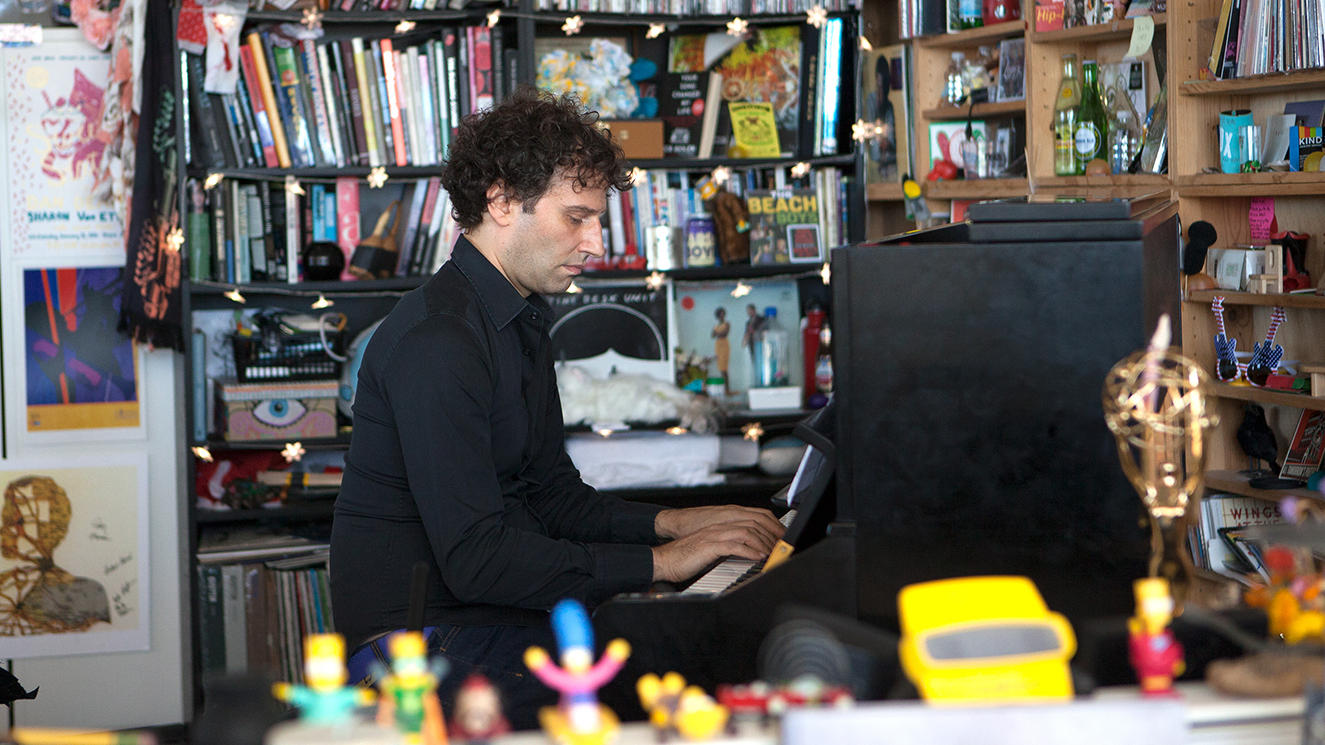
It has been quite a while since there has been a classical pianist on Tiny Desk.  I’m unfamiliar with the Israeli pianist David Greilsammer, but his playing is wonderful and his selections are quite fun and diverse.

For this Tiny Desk appearance, Greilsammer begins with his muse Domenico Scarlatti, the 18th-century Italian whose 500-some keyboard sonatas are compelling, colorful snapshots of his decades-long service to Spanish royalty. In the “Sonata in E, K. 380” you can hear a little street band processing along with trumpet fanfares.

Greilsammer describes the piece as sounding very contemporary.  Scarlatti lived 300 years ago and his music sounds ahead of its time.  He says it’s almost jazzy or pop-like harmonies.  He says it feels like he is playing a Beatles song.

Greilsammer follows by jumping ahead 175 years to the eccentric Frenchman Erik Satie, who not only owned seven identical gray velvet suits but, with a freewheeling spaciousness and humor in his music, is often thought of as the precursor to everything from minimalism to new age. His series of mysterious pieces called Gnossiennes strike a particularly sedate mood, capable of neutralizing any source of anxiety.

Greilsammer plays “Gnossienne No. 3” which he describes as full of pop and jazz and colors and harmonies.  He was writing these strange short pieces that at the time people in Paris didn’t understand.  Everybody loves Satie now but just over 100 years ago he was completely misunderstood.

I absolutely love the way the final notes ring out in this room–they are quite haunting

Lastly, Greilsammer takes a left turn to Leoš Janáček, the idiosyncratic Czech composer from the early 20th century, acclaimed for his operas. He set one of them on the moon; another, the dramatically taut and emotionally wrenching Jenůfa, is perhaps the most undervalued opera of a generation. But Janáček also wrote in smaller forms. His piano cycle On An Overgrown Path plays out like a diary of musings, nervous tics, simple pleasures and mysteries. Within the claustrophobic tension that pervades “The Barn Owl Has Not Flown Away,” you can hear the rustling of wings and the repeated four-note bird call.

Greilsammer says that Janáček lived in the Romantic period and all of his music is enigmatic, with many secretive things.  He wrote things related to dreams and wild scenes with things obsessively haunting him.  In “The Barn Owl Has Not Flown Away” (from On An Overgrown Path) the theme of the owl comes back many times.  Every time you try to get away from it, it comes back.

For Greilsammer, who recently performed in a working crypt in Harlem, threading these disparate musical fabrics together comes as naturally as, well, playing behind a desk in an office building.

These are some really beautiful and nicely unexpected pieces.

[READ: May 31, 2017] Audubon

I have really enjoyed most of the French graphic novels that come across my desk.  This book, translated by Etienne Gilfillan, is no exception.

It is a biographical sketch of John James Audubon (born Jean-Jacques Audubon in Haiti in 1785).  His story, aside from the whole birding aspect, is quite fascinating in itself. He was an illegitimate child (his father has seduced a servant) who was eventuality adopted by his father (!) and called Forgèére (which means fern).  His father wanted him to escape military conscription, so the boy was sent to Mill Grove in he United States in 1803.  He became a US citizen and there met his wife Lucy Bakewell.

The book actually begins in 1820 with Audubon and two other men sailing on the Mississippi river.  They hit bad weather but all he cares about are his drawings.

Then we jump back to 1812 in Kentucky.  Audubon climbs into a tree to study the swallows who are living in it–some 9,000. He took home more than 100 birds to study them.  And then he tagged some others to study their migratory patterns.

As the end of the book points out, Audubon was one of the world’s greatest naturalists who did a lot for birding. Except he was also responsible for the death of thousands of birds.  There’s a section where he kills two ivory billed woodpeckers.  He is so excited at his luck because they are becoming a rarity. (more…)

Read Full Post »

dispossesSOUNDTRACK: YOLANDA KONDONASSIS-Tiny Desk Concert #96 (December 8, 2010).

yolandaI have mentioned a much more recent Tiny Desk concert from Yolanda Kondonassis in which she duetted with Jason Vieaux (from 2015).  This show is just Kondonassis and her harp.

And it is absolutely gorgeous.

Kondonassis plays three distinct styles of music to show the variety of music a harp can make.  It is amazing to watch her play as well.  She closes her eyes and simply knows where everything is, absorbed in the music.

Her first piece is by Domenico Scarlatti: “Sonata in A Major, K. 208,” which is considered a rather “traditional” harp piece (I love hearing her do the “fast notes” a the end of each section.

She introduces the second piece by saying that she wanted to compose a piece and through meeting a Chinese composer wound up arranging this traditional Chinese piece called “Small River Flowing.”  And it is amazing to hear the Chinese melodies immediately from the high notes.  But perhaps my favorite part of this song is that she hits the low bass notes to make them ring out almost like a gong.  I have never seen anyone do this before with a harp.

She says the final piece is by Carlos Salzedo: “Chanson dans la nuit” which crosses over into almost world music.  And in a short time, it really shows off all of the different sounds and colors that the harp is capable of.  She’s absolutely right.  While the song begins with some very traditional sounding harp music, she seems to also play some harmonics (who even knew you could do that on a harp) as well as some sounds of just her nails running across the strings–bringing a fascinating texture–as well as some very fast, loud chords and indeed, actual percussive sounds as she taps on the body of her (truly beautiful looking) harp.  The song is not as pretty as the others since there is so much going on, but it’s a wonderful song and it’s great to watch her play it.

I never knew I wanted a CD of harp music before, and now I do.

[READ: November 12, 2015] Dispossession

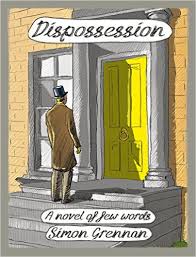
This graphic novel has a fascinating origin.  It is based on the novel John Caldigate by Anthony Trollope.  And in fact, it follows that story pretty faithfully.  However, it eschews massive amounts of the book (the original is quite long) and also adds a subplot of Wiradjuri peoples (which includes dialogue in Wiradjuri translated into English by Cheryl Riley).  There’s also a Postface (which is very helpful for explaining the origin of the story and how Grennan modified the original) by Jan Baetens and Ortwin de Graef.

The subtitle, A Novel of Few Words, proves to be accurate.  For the most part, each page has six panels, and the only words are sparse dialogue.  Grennan really has the story move quickly through these images, which tend to jump ahead pretty quickly.

We first meet John Caldigate.  Caldigate is a wealthy man, soon to be heir to his father’s fortune.  But he is unsatisfied in England.  And he decides to sell off his inheritance and to set off for New South Wales with his friend Ned.  There they will seek their fortune in the gold mines.

There is a woman he has left behind, Hester, the daughter of a local family.  She is certainly desirable, but it’s unclear how Caldigate feels about her because he wishes to find his fortune elsewhere.

Then the men set sail for Australia, two bachelors on a lengthy sea voyage.  Aboard the ship is Mrs Smith, a divorced actress who is also heading to Australia.  Mrs Smith is considered somewhat disreputable aboard the ship–and several people warn him against her.  But he cannot be denied. (more…)

Read Full Post »

parkSOUNDTRACK: ELIOT FISK AND PACO PEÑA-Tiny Desk Concert #364 (June 14, 2014).

eliotIt may not be correct to say that these two guitarists rock, but man do they rock.  I have a  couple of Eliot Fisk CDs but nothing prepares you for watching his fingers fly on that big old classical guitar.  And Paco Peña plays an amazing flamenco guitar.  Watching them play together is really something magical.

It’s especially fun to see Fisk so clearly enjoying himself as his hands fly all over the neck of the guitar.  It’s also interesting to compare Fisk’s guitar with the flamenco guitar, just to see how differently the instruments sound.  There’s little more that I can say about this except that it is really amazing.

Together, they play four pieces:

Domenico Scarlatti: Sonata in D Major K.33; Bach: Prelude in F major, BWV 927; Sabicas: “Farruca” and
Peña: “El nuevo día (Colombiana)”

Watch below:

[READ: June 17, 2014] Trust No One

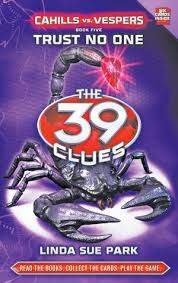
All along through this series I felt that perhaps it was too old for my nine-year old.  And this book really felt like it pushed this book clearly into the YA realm.  It opens with a talk about the Twin Towers’ destruction, which I realize is before a nine-year old was even born, but it still feels very sensitive.  But, most intense of all, a beloved character dies.  I won’t say which one, but suffice it to say I was really shocked.  In the first series, people got hurt, but this time people actually die.   It’s pretty rough.

As for plot, this book really brings a lot of plot threads out into the open.

First, we learn who the mole is.  Second we learn who Vesper One is.  And third we finally see what’s going to happen with the serum that Dan has been collecting ingredients for.

I haven’t mentioned the serum in the other reviews.  It has been going on throughout the books, but was never near the forefront until now.  Because the mole tries to sneak it away from Dan.  And by the end of the book, Dan has mixed all the ingredients together.

But first we go back to New York where the kids have hired a cab to take them to Yale (for $600).  On the way there they are stopped by a motorcade, which they assume is the Vespers.  But it proves to be a far more shocking piece of information.  After fleeing the scene (and Amy getting a chance to use some of her physical training, they make it to the Yale library where they see out the Voynich manuscript.  One thing I love about this series is that all of the locations and artifacts are real.  like this Voynich manuscript (which you can certainly read about on Wikipedia). (more…)

Read Full Post »